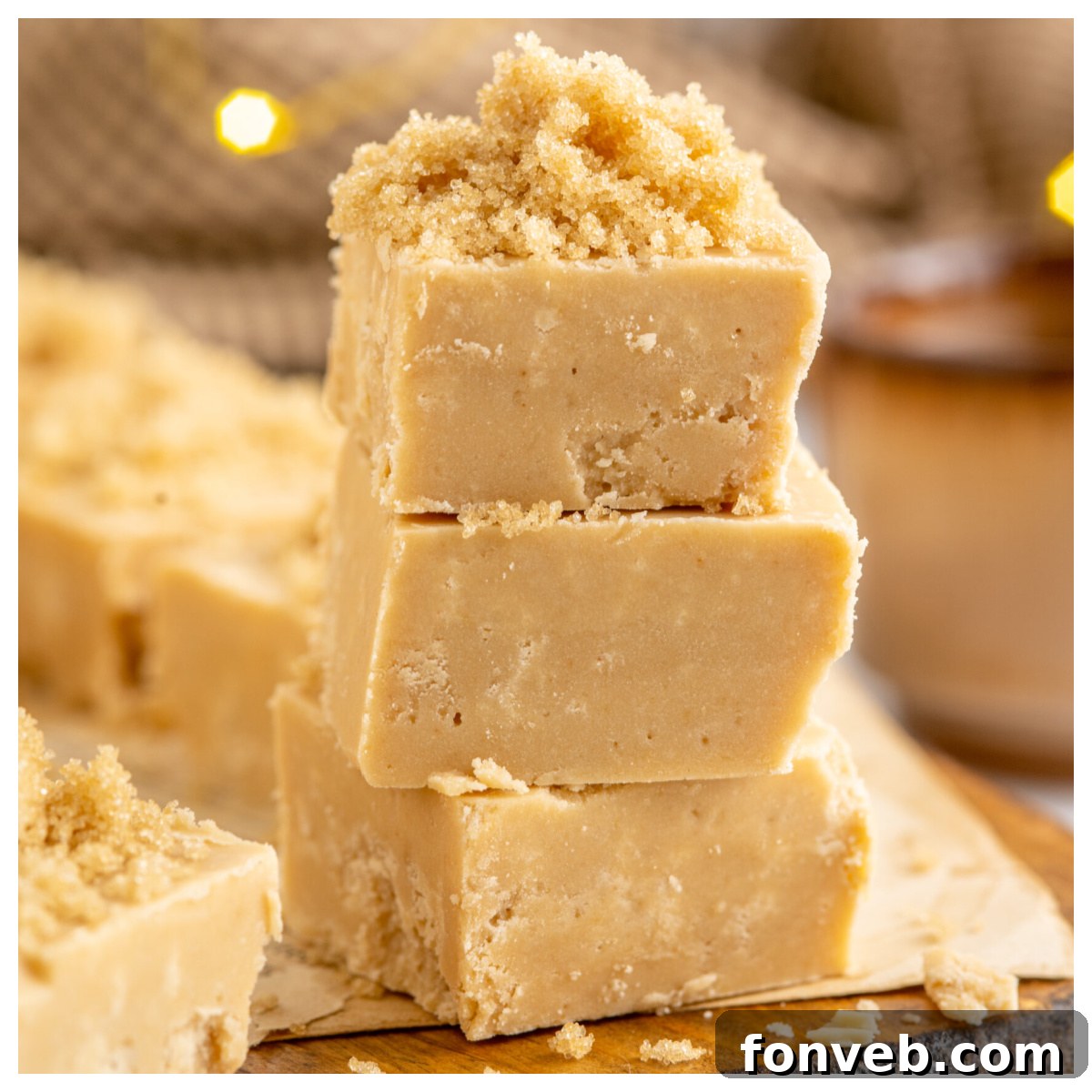
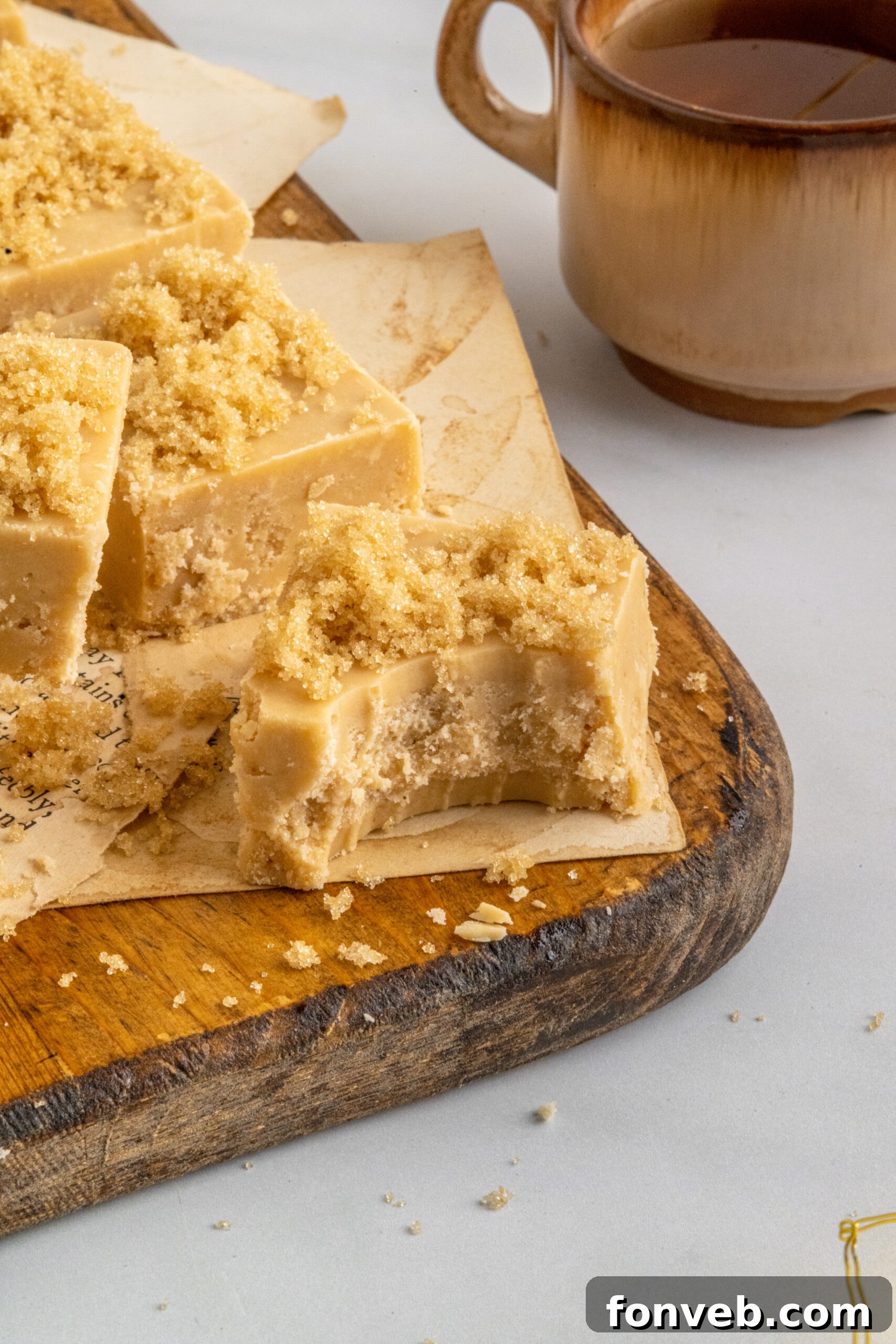
As the holiday season draws near, the delightful tradition of making homemade fudge takes center stage, and this year, a true classic, Penuche Fudge—also affectionately known as Brown Sugar Fudge—is topping the list. This sweet, buttery confection is an absolute dream, perfect for gracing your festive dessert trays or simply enjoying with a warm cup of coffee on a cozy afternoon. Crafted with the rich, caramel notes of brown sugar, creamy evaporated milk, a hint of salt, and a few other carefully selected ingredients, this Penuche Fudge recipe promises an irresistible treat that’s surprisingly simple to master.
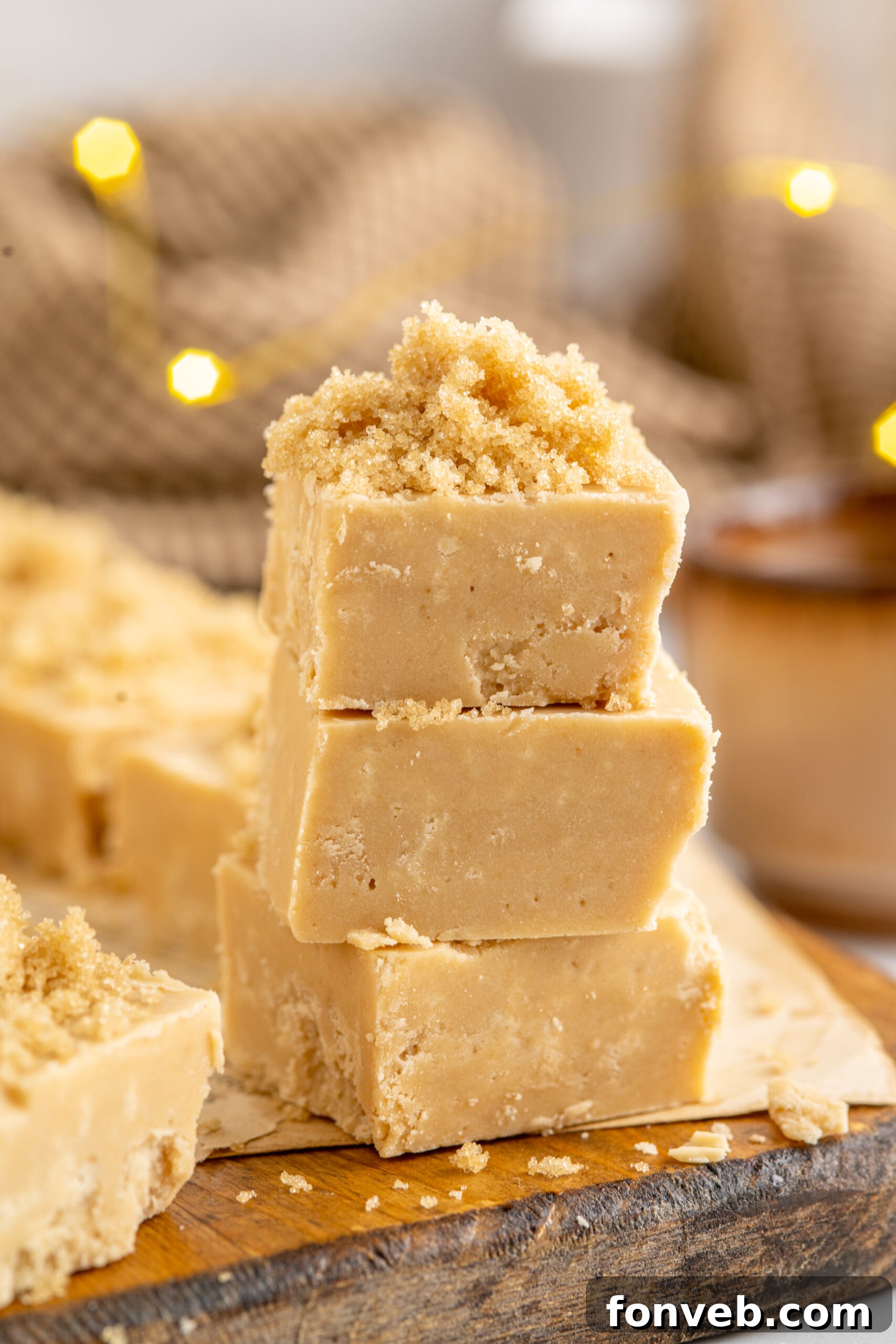
There’s something uniquely comforting about a batch of homemade fudge, and Penuche Fudge, with its distinct flavor profile, truly embodies that warmth and sweetness. It’s more than just a dessert; it’s a nostalgic journey, a taste of tradition that brings smiles to faces young and old. What makes this particular fudge so special is its brown sugar base, which imparts a deep, molasses-rich sweetness and a wonderfully smooth, melt-in-your-mouth texture that sets it apart from traditional chocolate fudges. The best part? You can easily customize this classic recipe to suit your personal preferences, adding nuts, spices, or different extracts to make it truly your own.
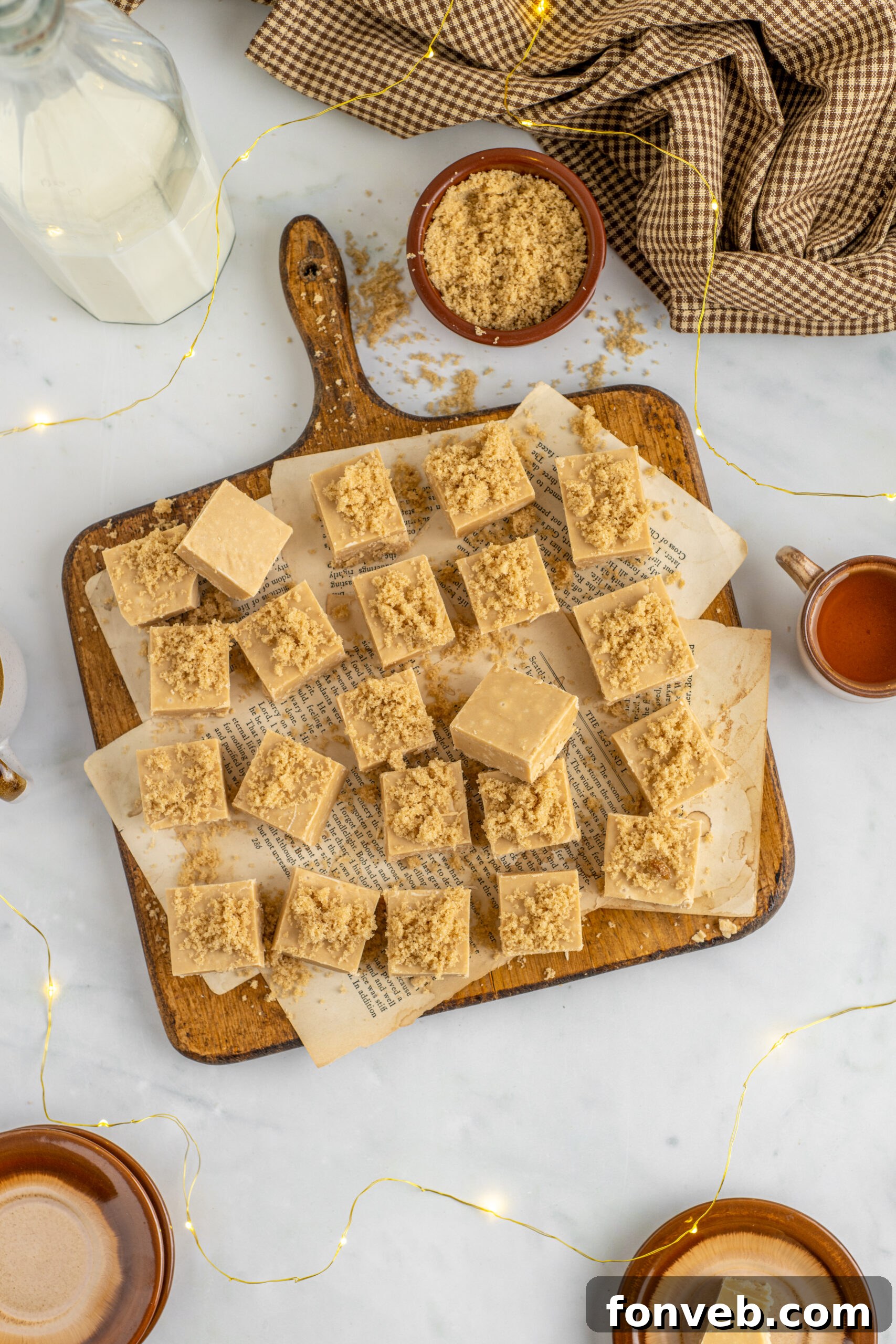
With just a handful of readily available ingredients and a few straightforward steps, you can whip up a delectable batch of this homemade brown sugar fudge. Imagine the tempting aroma of simmering brown sugar and vanilla filling your kitchen, creating an atmosphere of pure delight. Once set, slicing into these rich, creamy squares feels like a small triumph, ready to be shared or savored in quiet indulgence. Whether you’re an experienced candy maker or a novice in the kitchen, this Penuche Fudge recipe is designed for success, delivering a delicious result every time.
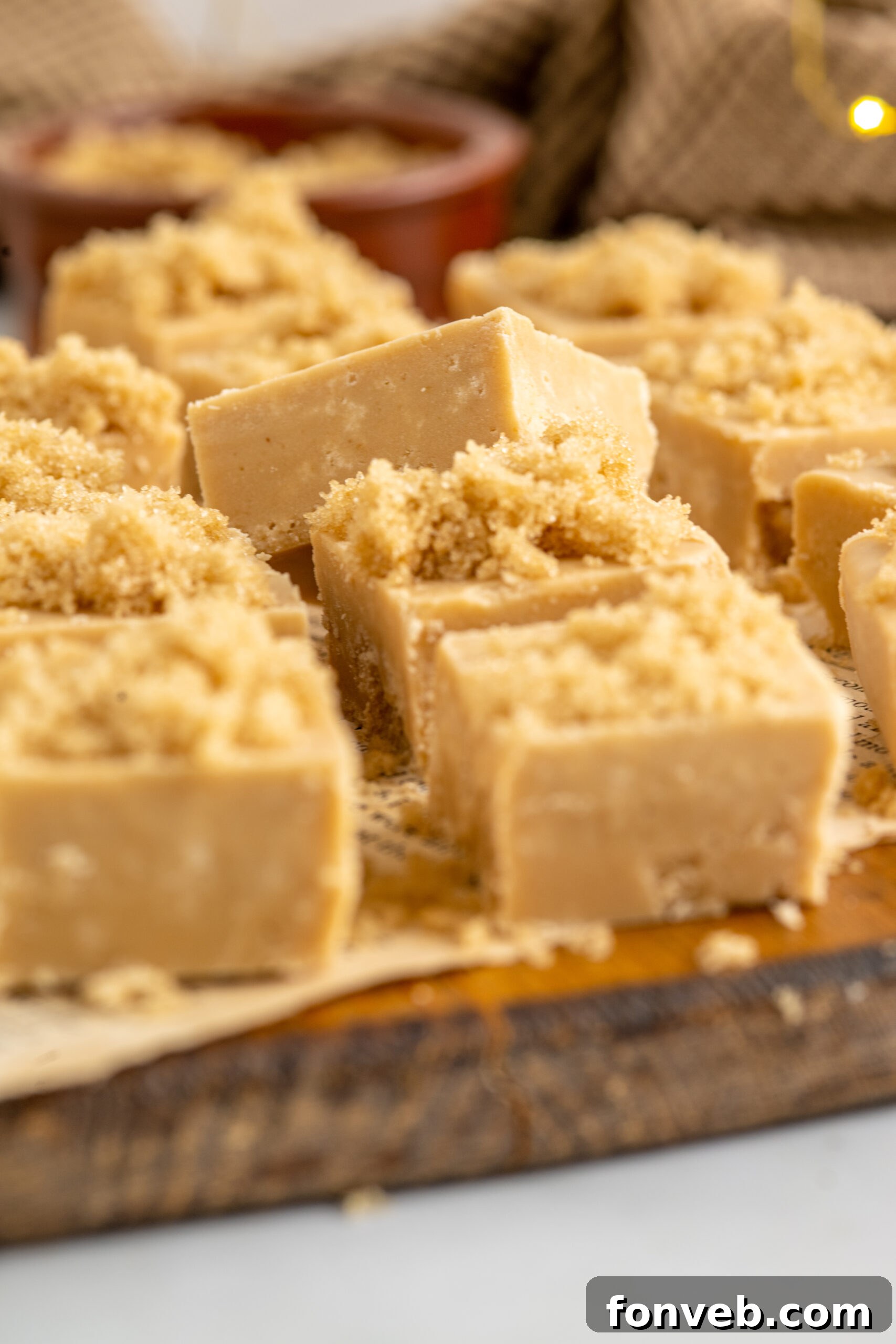
What is Penuche Fudge? A Sweet Dive into History and Flavor
Penuche fudge is a distinctive variety of fudge celebrated for its incredibly creamy, slightly sticky texture and its signature brown sugar and butterscotch-like flavor. Unlike typical chocolate fudge, penuche (pronounced puh-NOO-chee) derives its unique character primarily from brown sugar, which caramelizes during cooking to create a rich, deep, and utterly irresistible taste. The name itself is believed to have fascinating origins, possibly stemming from the Spanish word “panocha,” referring to a cone or loaf of unrefined brown sugar, or even from the French word “panachee,” meaning “to mix or stir,” hinting at its meticulous preparation process.
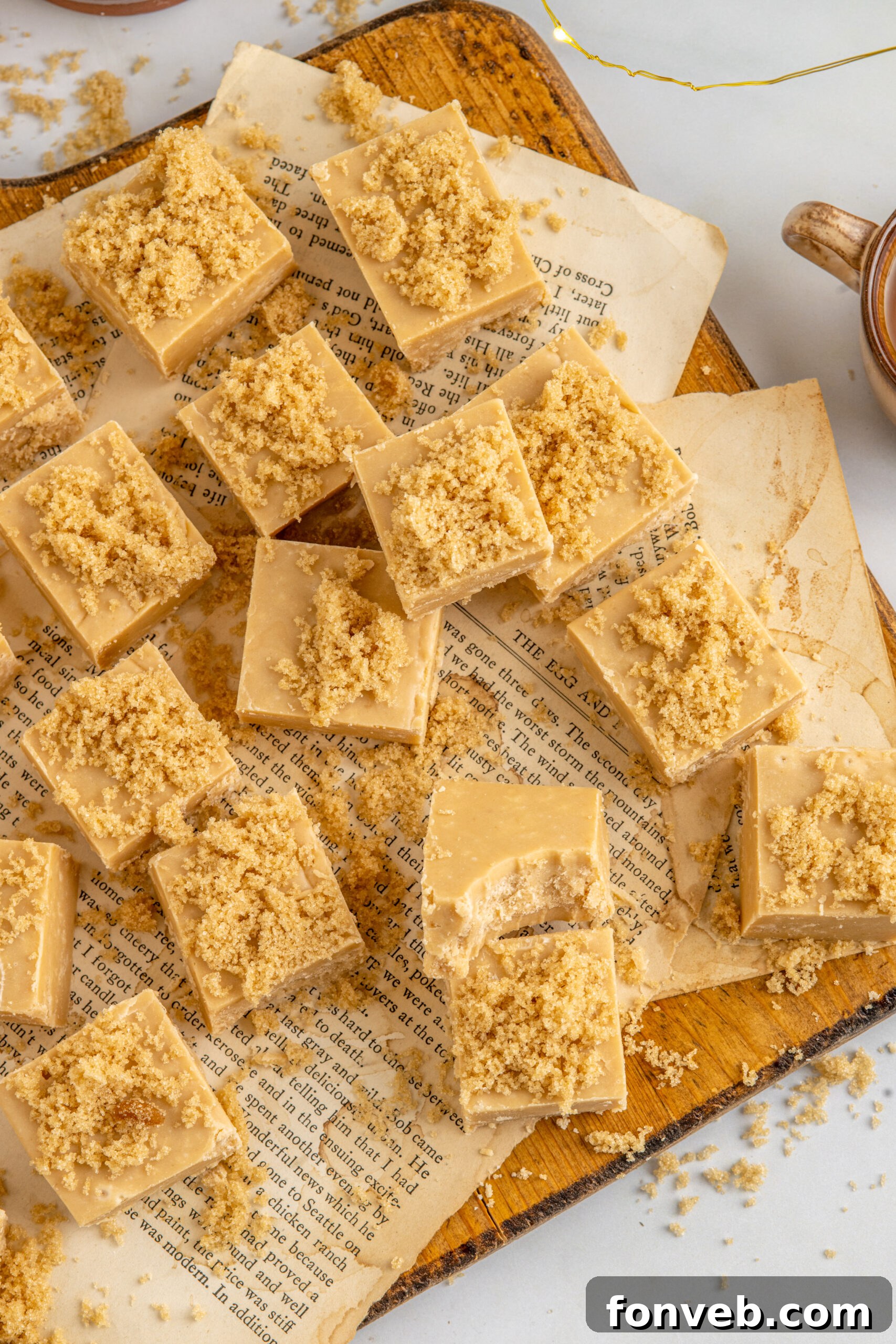
This traditional confection has been a beloved part of American culinary heritage for generations, particularly popular in New England and the Southern United States. It’s an old-fashioned treat that evokes memories of grandmother’s kitchen and simpler times. The foundational elements of penuche fudge typically include brown sugar, milk (often evaporated milk for extra creaminess), and butter. These ingredients are cooked to a specific temperature, then beaten until thick and creamy, resulting in a dense, smooth, and incredibly satisfying candy. Its alluring golden-brown hue and a flavor reminiscent of caramel, toffee, and butterscotch make it a standout on any dessert table, offering a delightful alternative to its chocolate counterparts.
Essential Ingredients for Your Penuche Fudge
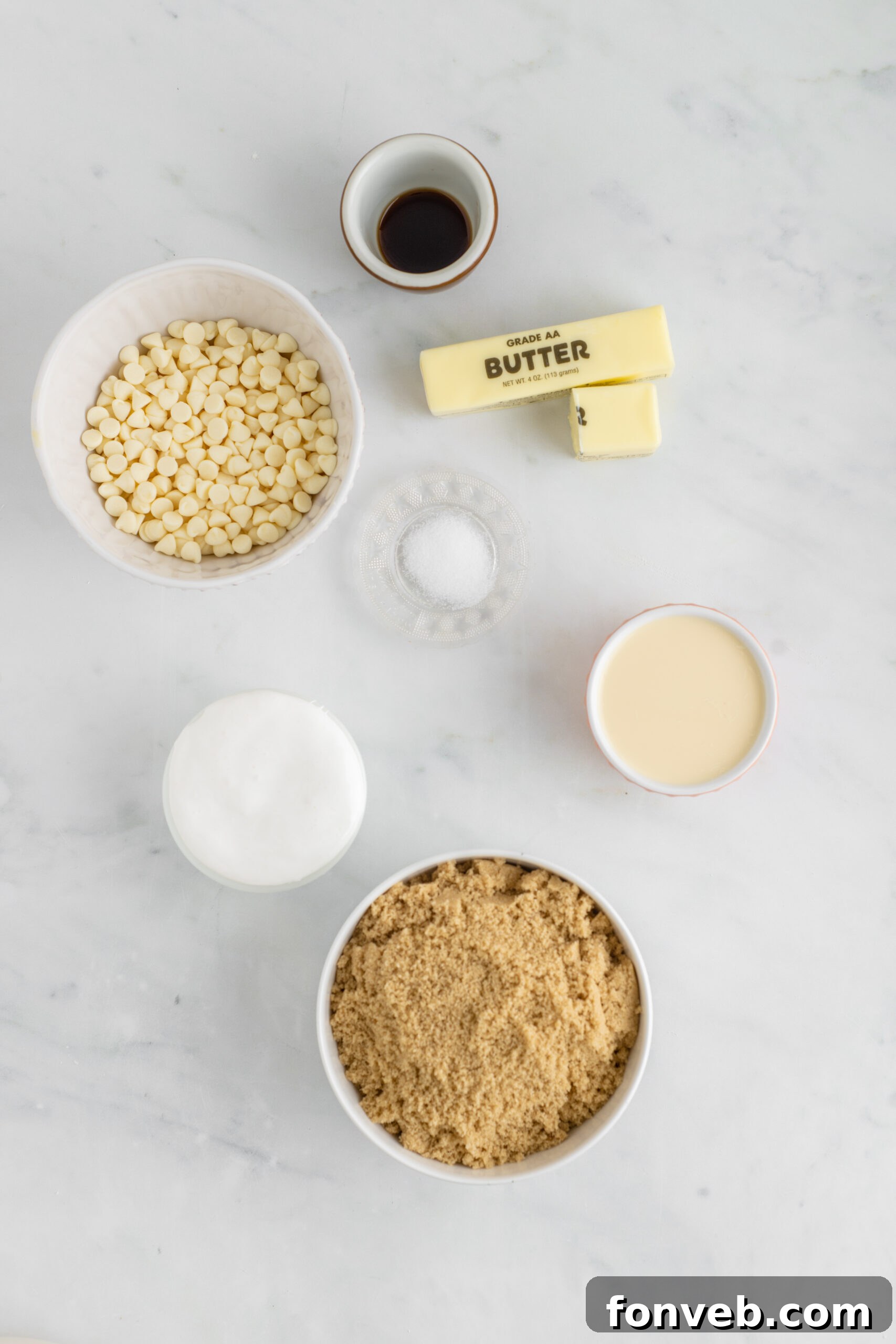
Crafting perfect Penuche Fudge begins with a careful selection of ingredients. While the list might seem simple, each component plays a crucial role in achieving that rich flavor and ideal creamy consistency. Remember to always check the full recipe card for precise measurements and instructions.
- Brown Sugar: This is the star of our Penuche Fudge, the ingredient that gives it its signature deep, caramel-like flavor and beautiful golden-brown color. Using fresh, soft brown sugar is key for the best results.
- Salted Butter: Butter adds richness and helps create that desirable smooth texture. Using salted butter enhances the overall flavor balance, cutting through the sweetness with a subtle savory note. If you only have unsalted butter, simply add an extra ⅓ to ¼ teaspoon of salt to the recipe. Make sure your butter is at room temperature for easier incorporation.
- Evaporated Milk: This concentrated milk is fundamental for achieving the incredibly smooth and creamy texture characteristic of authentic Penuche Fudge. Its lower water content compared to regular milk helps create a denser, more luxurious fudge. While some recipes might suggest regular milk, evaporated milk truly makes a difference.
- White Chocolate Chips: These chips contribute to the fudge’s silky texture and add a subtle sweetness that complements the brown sugar without overpowering it. They help the fudge set beautifully and lend a gentle vanilla undertone.
- Marshmallow Fluff: A secret ingredient for many fudge recipes, marshmallow fluff (or crème) is a game-changer. It helps prevent crystallization, ensuring your fudge is super smooth and not grainy, and adds a delightful lightness to the texture.
- Vanilla Extract: A generous amount of pure vanilla extract is essential for enhancing the complex flavors of brown sugar and butter. It adds depth and aromatic warmth, making the fudge even more irresistible.
- Salt: Just a pinch or two of salt is vital to balance the sweetness and bring out the full spectrum of flavors in the fudge. It elevates the caramel notes and creates a more well-rounded, addictive taste.
Expert Tips for Crafting the Perfect Penuche Fudge
Making homemade fudge can feel like a delicate art, but with these expert tips, your Penuche Fudge will turn out perfectly smooth, creamy, and utterly delicious every single time. Pay close attention to these details for success:
- Choose High-Quality White Chocolate Chips: The quality of your white chocolate chips significantly impacts the final texture and flavor of your fudge. Brands like Ghirardelli or Nestle are highly recommended. High-quality chocolate melts more smoothly and incorporates seamlessly into the mixture, contributing to that coveted creamy, non-grainy consistency. Avoid cheaper, waxy white chocolate, as it can result in a less satisfying texture.
- Embrace “Low and Slow” Cooking: Patience is paramount when cooking fudge. Resist the urge to rush the simmering step by cranking up the heat. Cooking Penuche Fudge over medium-high heat initially, then reducing it to a gentle simmer, allows the brown sugar to dissolve properly and caramelize evenly. Rushing this process can lead to undissolved sugar crystals, resulting in grainy or crumbly fudge once it sets. Allow the mixture to come to temperature gradually for the smoothest finish.
- A Candy Thermometer is Your Best Friend: For successful fudge, accuracy in temperature is non-negotiable. A reliable candy thermometer is an indispensable tool for this recipe. It is absolutely crucial to reach the exact target temperature of 236°F (113°C), also known as the “soft ball” stage. Going over this temperature can result in hard, brittle fudge, while falling short will yield fudge that doesn’t set properly. Clip the thermometer to the side of your saucepan, ensuring it doesn’t touch the bottom, and monitor it closely.
- Prepare Your Pan in Advance: Before you even start cooking, ensure your baking dish is properly prepared. Lining a 9×9 inch baking dish with parchment paper is vital. Leave an overhang on the sides, which will act as “handles” to easily lift the cooled fudge out of the pan. A light greasing of the parchment paper itself can also prevent sticking, though it’s often not strictly necessary. This step makes slicing and serving a breeze.
- Resist the Urge to Stir While Simmering: Once your fudge mixture begins to simmer and you’ve taken it off the boil, avoid stirring it constantly. Stirring during the simmering stage can introduce air and encourage crystallization, leading to grainy fudge. Allow it to cook undisturbed until it reaches the desired temperature. Once it reaches temperature and you add the other ingredients, then you can stir vigorously.
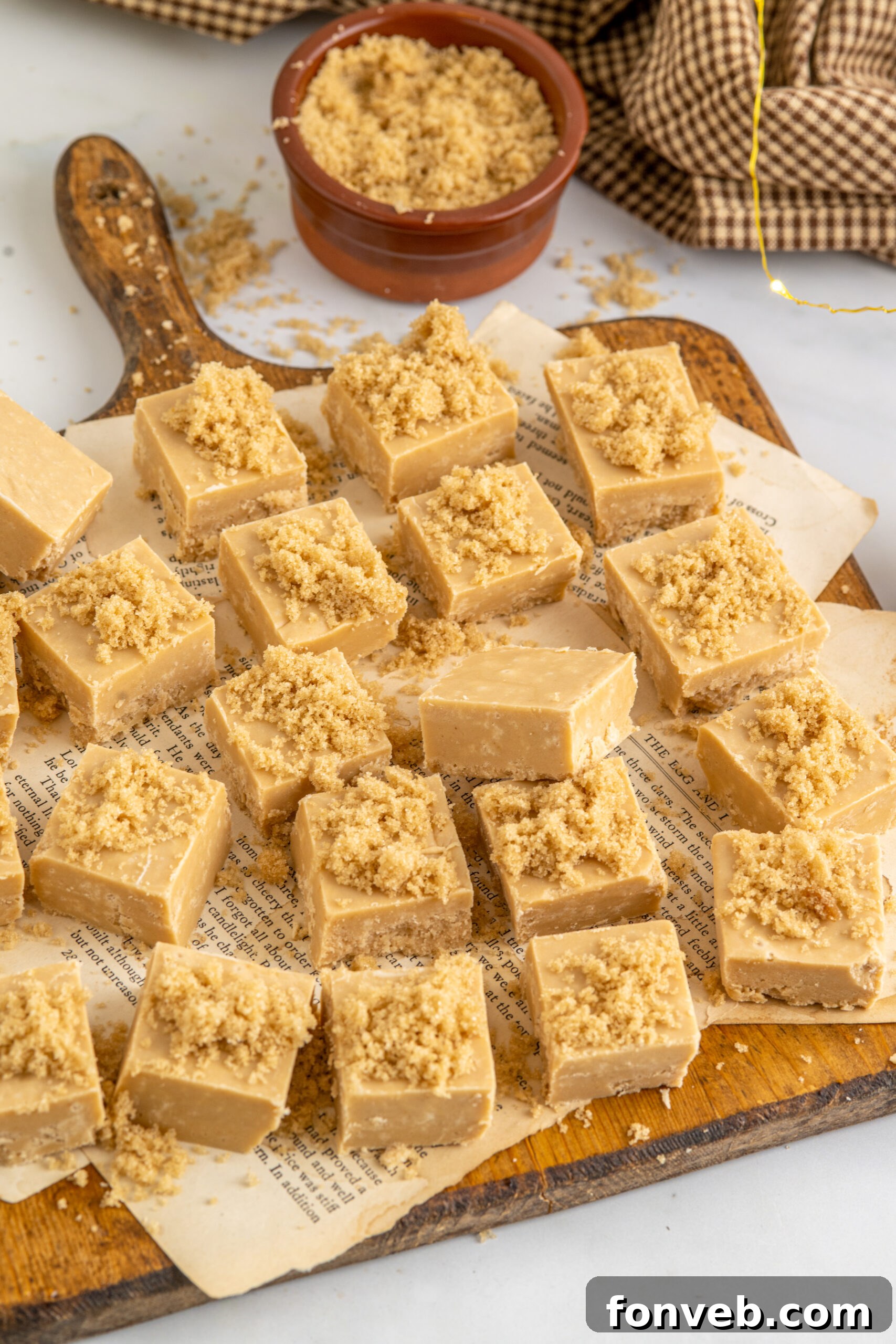
- Optional: Sprinkle with Extra Brown Sugar: For an extra touch of decadence and to really highlight that signature brown sugar flavor, consider sprinkling a light dusting of brown sugar over the top of your finished fudge bars once they have been poured into the pan, but before they set. The more brown sugar, the better, for those who truly love the rich, molasses notes!
How to Store Your Delicious Penuche Fudge
Proper storage is essential to maintain the freshness, texture, and flavor of your homemade Penuche Fudge. Once your fudge has fully set and been cut into squares, you’ll want to store it correctly to enjoy it for as long as possible. For best results, wrap individual pieces tightly in plastic wrap or place them in an airtight container. This prevents the fudge from drying out and absorbing odors from other foods. Stored at room temperature, Penuche Fudge will remain fresh and delicious for about one week. For extended enjoyment, it can be refrigerated for up to two weeks, or even frozen for up to three months. If freezing, make sure it’s in a well-sealed, freezer-safe container to prevent freezer burn. Thaw frozen fudge in the refrigerator overnight or at room temperature for a few hours before serving for the best texture.
Common Questions About Penuche Fudge
What is the typical texture of Penuche Fudge?
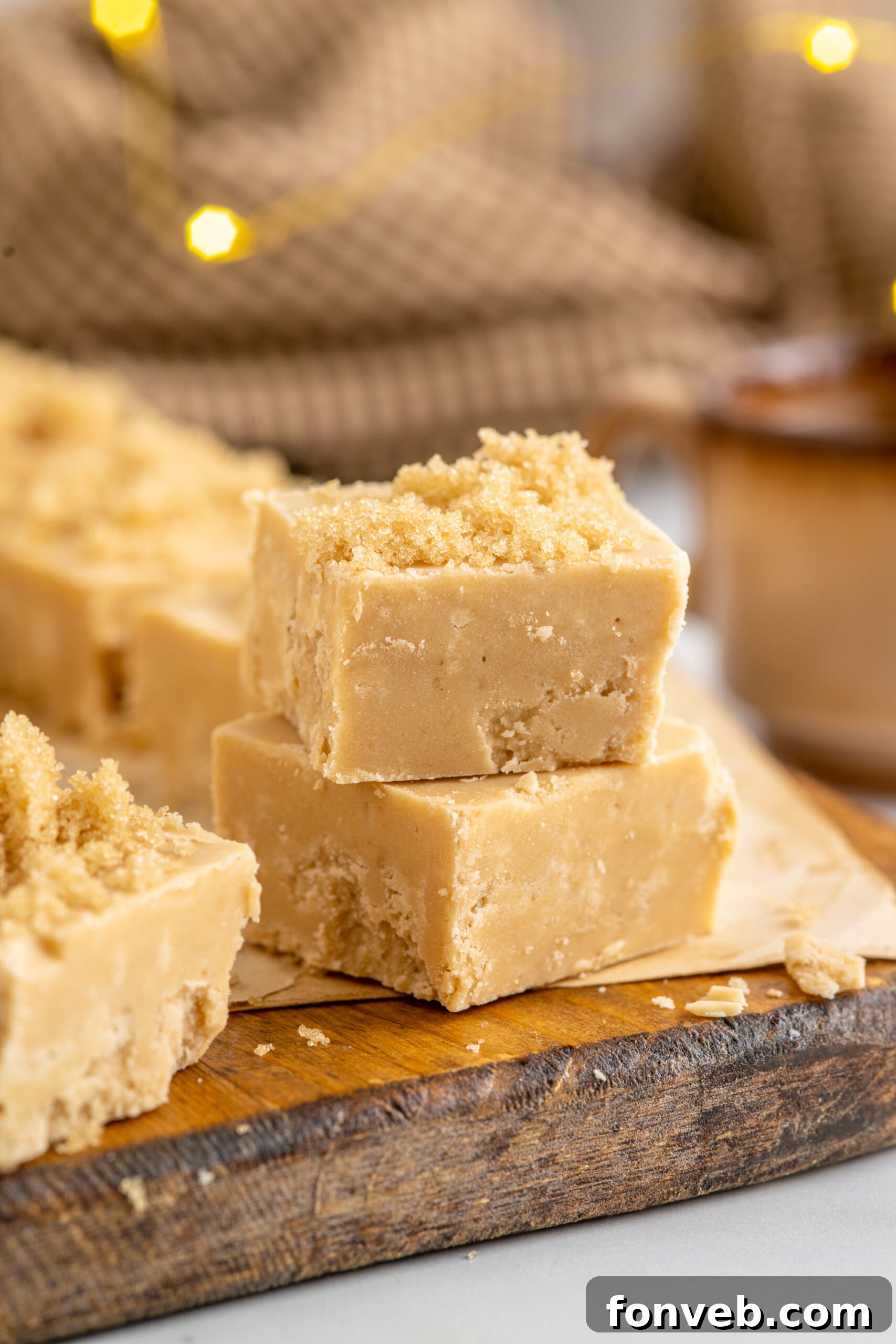
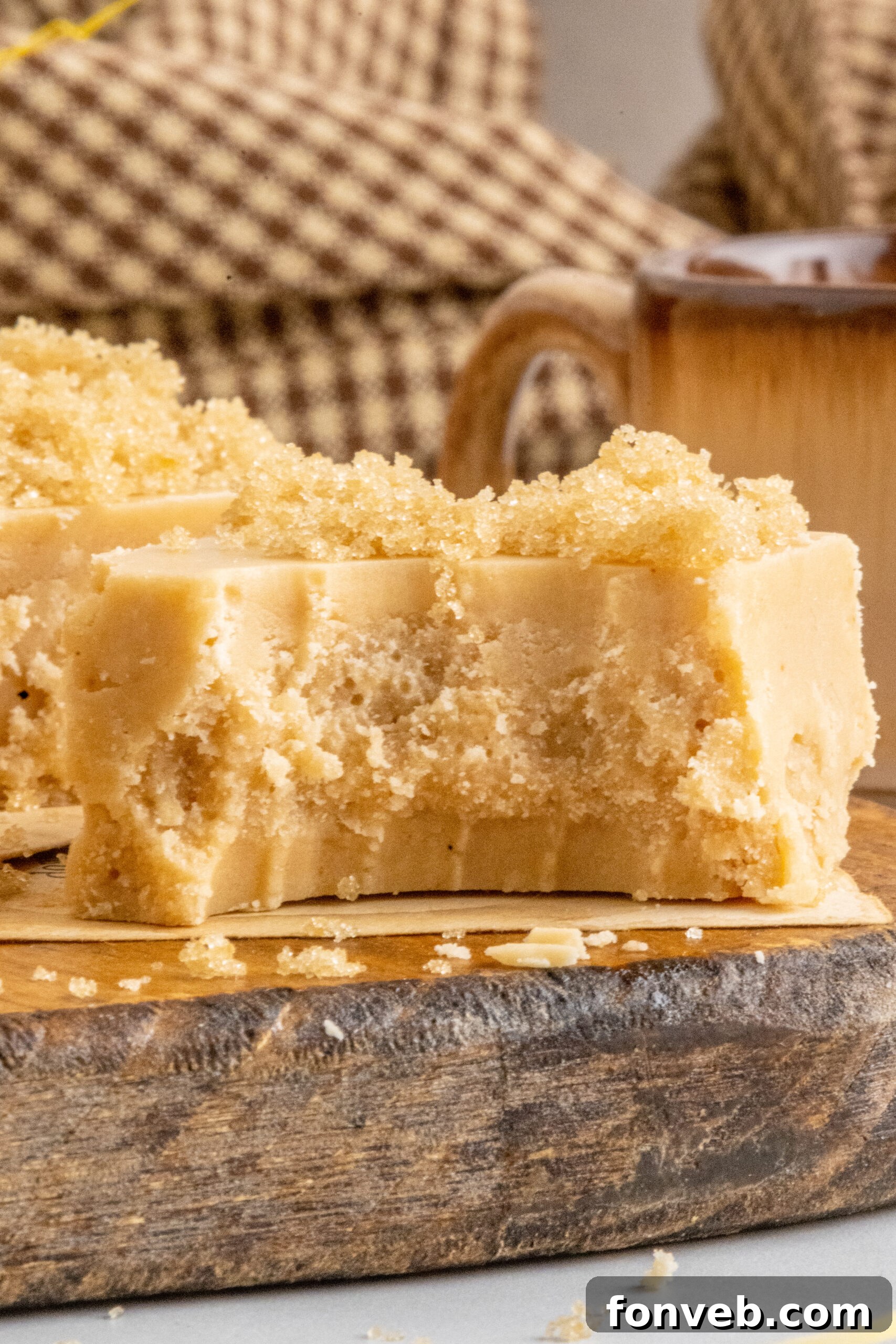
Penuche Fudge is renowned for its luxuriously soft, chewy, and thick texture. It boasts a rich, buttery consistency that truly melts in your mouth, often described as having a unique chewiness. This delightful texture, combined with its profound sweetness, makes it an ideal pairing with a robust cup of hot coffee or a soothing tea, offering a perfect balance to its richness. It should never be brittle or hard; instead, it yields gently when bitten, revealing its smooth interior.
Is Penuche Fudge difficult to make for beginners?
Absolutely not! Making Penuche Fudge is surprisingly straightforward and relatively easy, even for those new to candy making. The recipe primarily involves combining and cooking a few simple ingredients to a specific temperature, then incorporating other elements. The key to success lies in careful measurement and attentive monitoring of the cooking temperature, preferably with a candy thermometer. While it requires a bit of patience, the steps are not complex, and the rewarding outcome makes the effort well worthwhile. You can even personalize the recipe by introducing your favorite flavors or spices, such as a hint of cinnamon, nutmeg, or even a touch of sea salt for a salted caramel twist.
What flavor profile can I expect from Penuche Fudge?
Penuche Fudge offers a distinctly rich, buttery flavor that is profoundly sweet but wonderfully balanced by notes of deep caramel and a subtle, delightful resemblance to toffee. Its primary flavor comes from the brown sugar, which, when cooked, develops into a complex, molasses-infused sweetness that is far more nuanced than plain white sugar. The addition of butter and vanilla further deepens these flavors, creating a warm, comforting, and incredibly satisfying taste experience. The smooth and creamy texture perfectly complements this rich flavor, making it a truly exquisite treat for any time of day.
What does the word “Penuche” mean or where does it come from?
The origin of the word “Penuche” is quite interesting and debated among culinary historians. One popular theory suggests it derives from the French word “panachee,” which translates to “to mix or stir,” possibly referring to the diligent mixing required during the fudge-making process, or perhaps its naturally gooey, mixed texture. Another widely accepted explanation links it to the Spanish word “panocha,” which traditionally refers to a sweet, dark brown loaf or paste made from unrefined sugar, often associated with Mexican confections. Both origins point to the fundamental role of brown sugar in this delicious candy, highlighting its historical and cultural roots as a brown sugar-based sweet.
How can I prevent my Penuche Fudge from becoming grainy?
Grainy fudge is a common challenge, but easily avoidable. The main culprit is sugar crystallization. To prevent this, ensure all sugar crystals are fully dissolved before the mixture comes to a rolling boil. You can achieve this by stirring gently while the mixture heats up initially, and using a pastry brush dipped in water to wash down any sugar crystals that cling to the sides of the saucepan above the liquid line. Once the mixture is boiling and reaches temperature, avoid stirring it until after it has cooled slightly and is being beaten. Additionally, cooking to the precise temperature (236°F / 113°C) is crucial, as is using marshmallow fluff, which acts as an anti-crystallization agent.
More Irresistible Fudge Recipes You Will Love!
If you’ve fallen in love with the magic of homemade fudge, explore these other delightful recipes to expand your candy-making repertoire:
Classic Fantasy Fudge Recipe
Decadent No-Bake Cookies & Cream Fudge
Simple 3-Ingredient Fudge (Customize Any Color!)
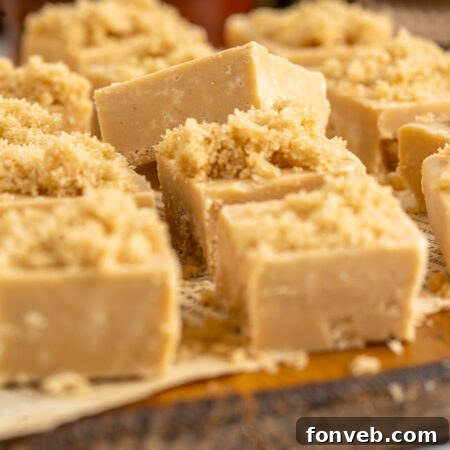
Penuche Fudge (Brown Sugar Fudge)
Ingredients
- 2 2/3 cups Brown sugar
- 2/3 cup Salted butter room temp
- 2/3 cup Evaporated milk
- 1 cup White chocolate chips
- 1 cup Marshmallow fluff
- 1 1/2 tsp Vanilla
- 1 tsp Salt
Instructions
- Line a 9×9” baking dish with parchment paper, leaving an overhang on the sides for easy removal, and set aside.
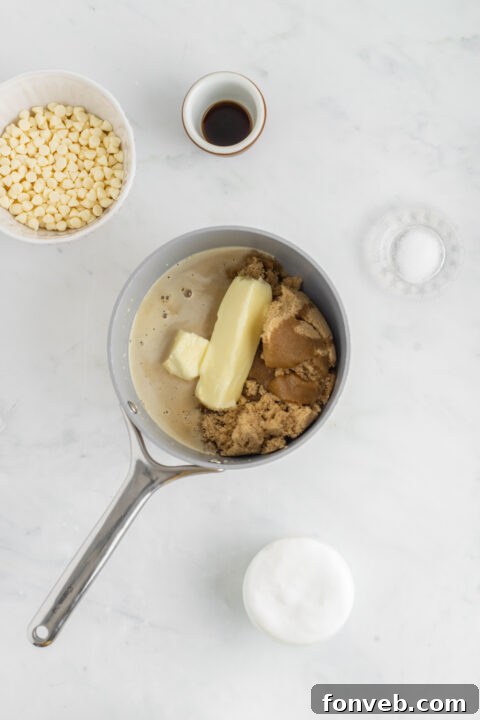
- In a medium-sized heavy-bottomed saucepan, combine the brown sugar, room temperature salted butter, and evaporated milk.
- Bring the mixture to a full rolling boil over medium-high heat, stirring occasionally to dissolve the sugar. Once boiling, reduce the heat to a steady simmer. Insert a candy thermometer, making sure it doesn’t touch the bottom of the pan. Continue to simmer without stirring until the temperature reaches precisely 236°F (113°C), which typically takes about 20-25 minutes.
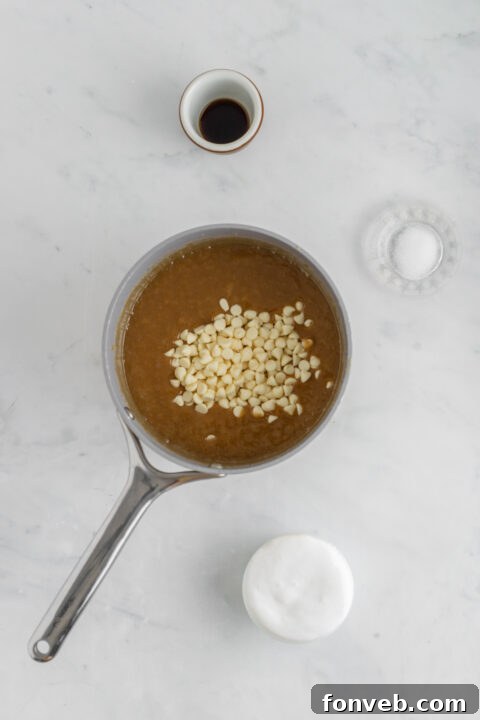
- Once the mixture reaches 236°F, immediately remove the saucepan from the heat. Add in the white chocolate chips and stir continuously until they are completely melted and the mixture is smooth and glossy.
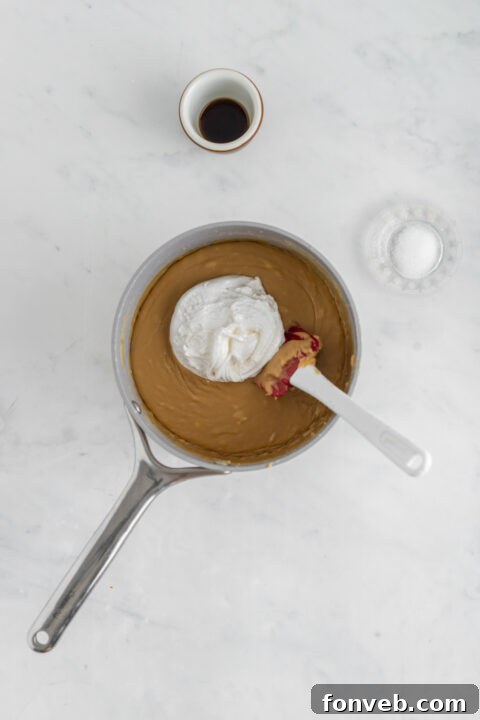
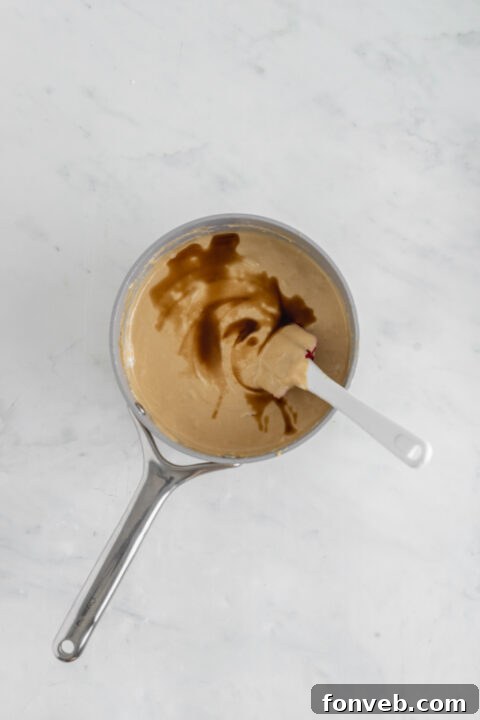
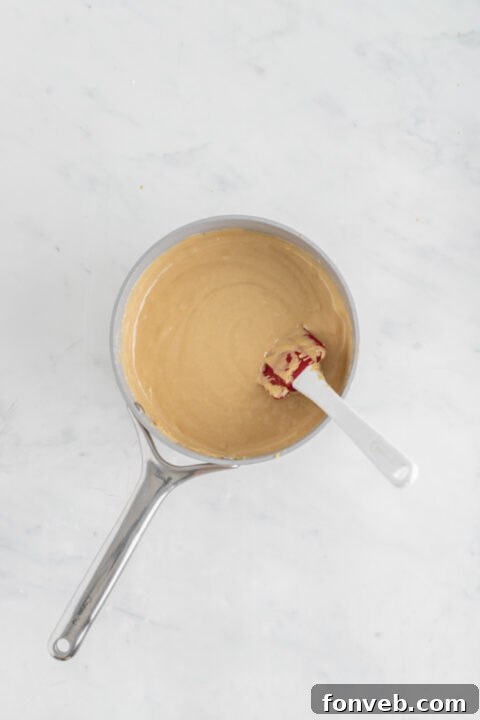
- Next, add the marshmallow fluff to the mixture. Stir vigorously until it is fully combined and incorporated, creating a uniform texture. Finally, stir in the vanilla extract and salt until evenly distributed.
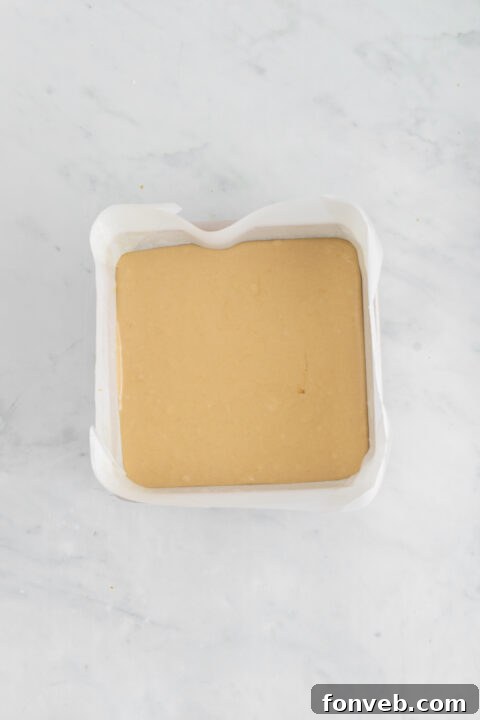
- Quickly transfer the hot fudge mixture into your prepared 9×9 inch baking dish. Spread it evenly using a spatula. Allow the fudge to sit undisturbed at room temperature for at least 4 hours, or until it is completely set and firm. Once set, use the parchment paper overhang to lift the fudge from the pan, then slice it into squares and serve.
Did you make this recipe?
Make sure to follow on Pinterest for more recipes!
Pin Recipe
Share on Facebook