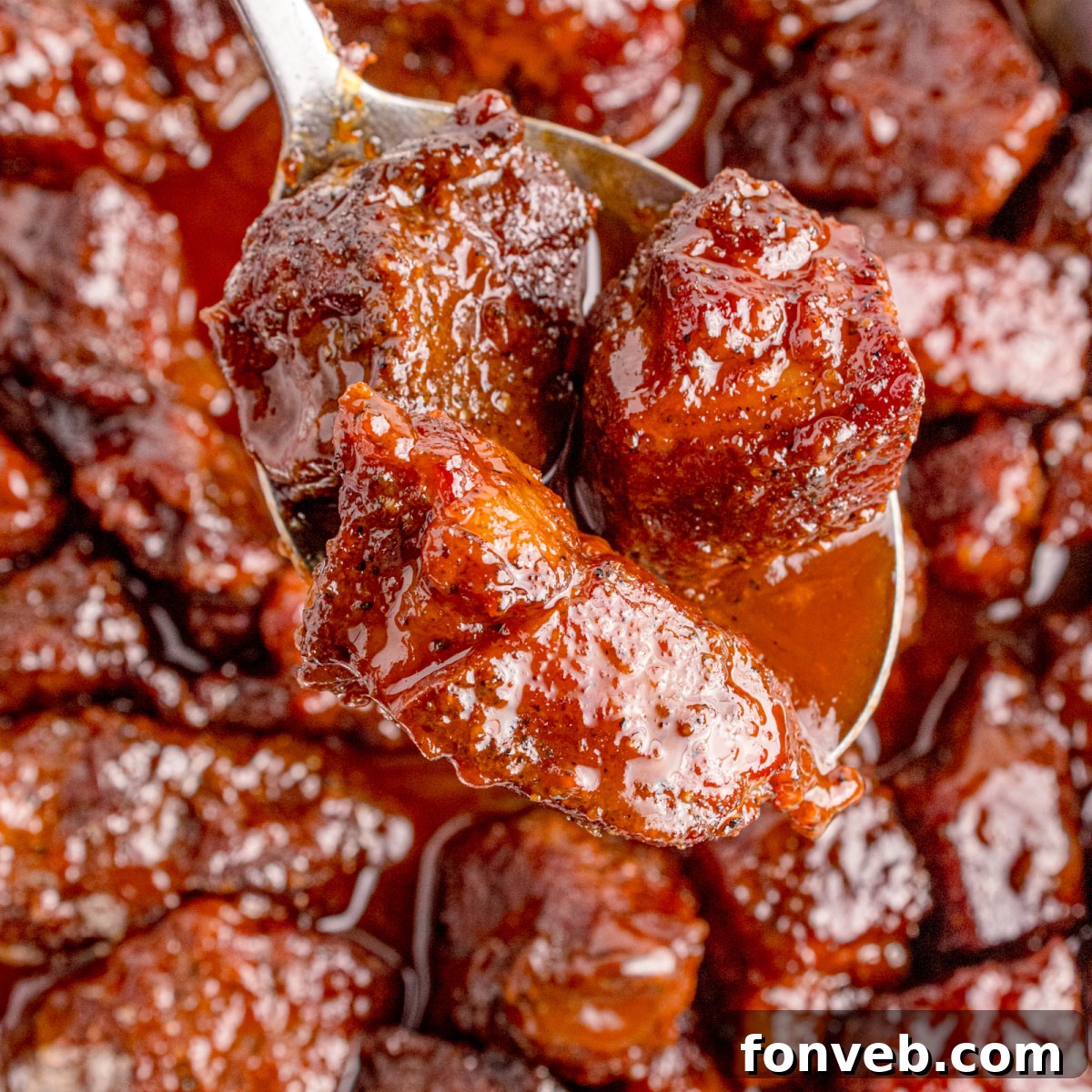
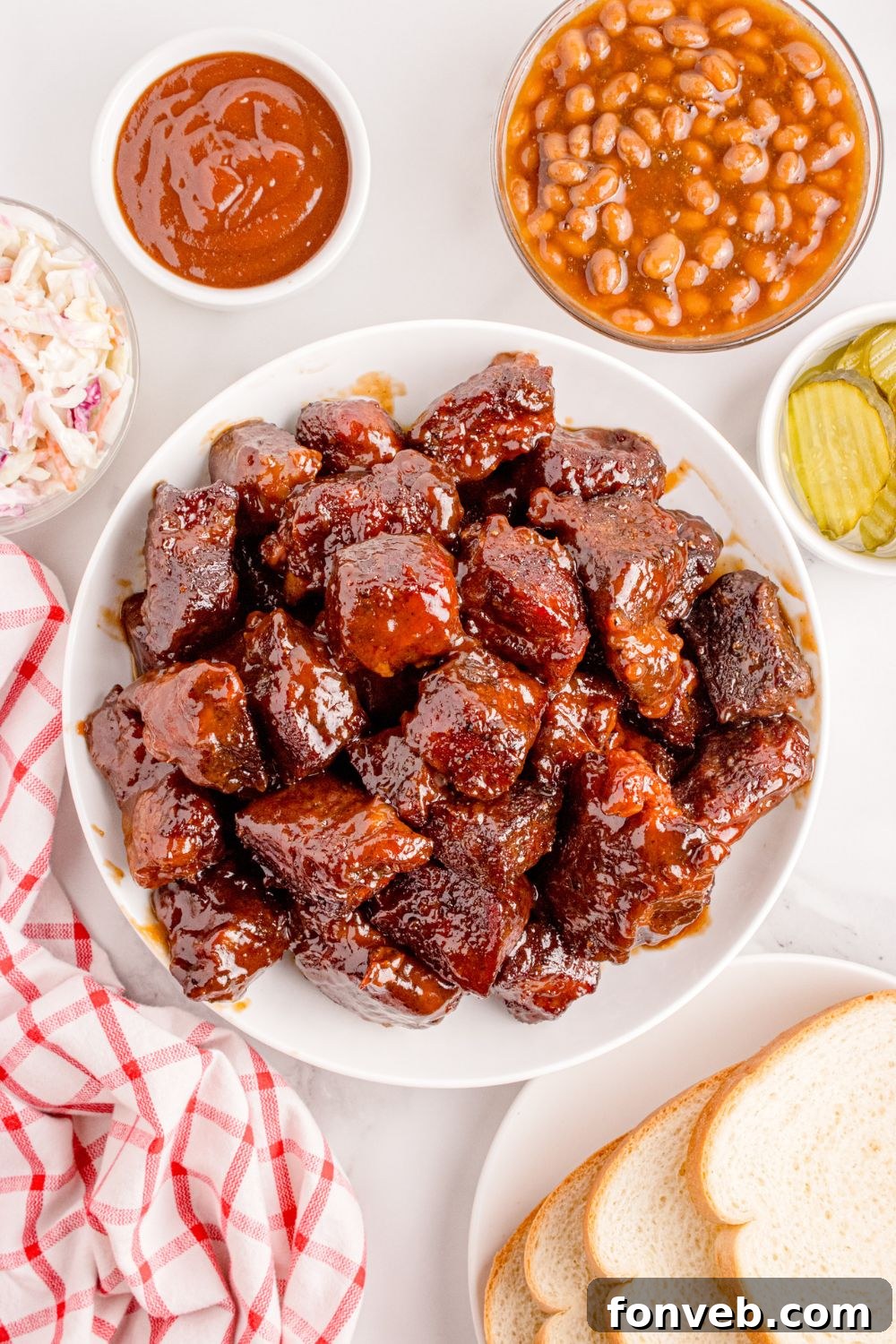
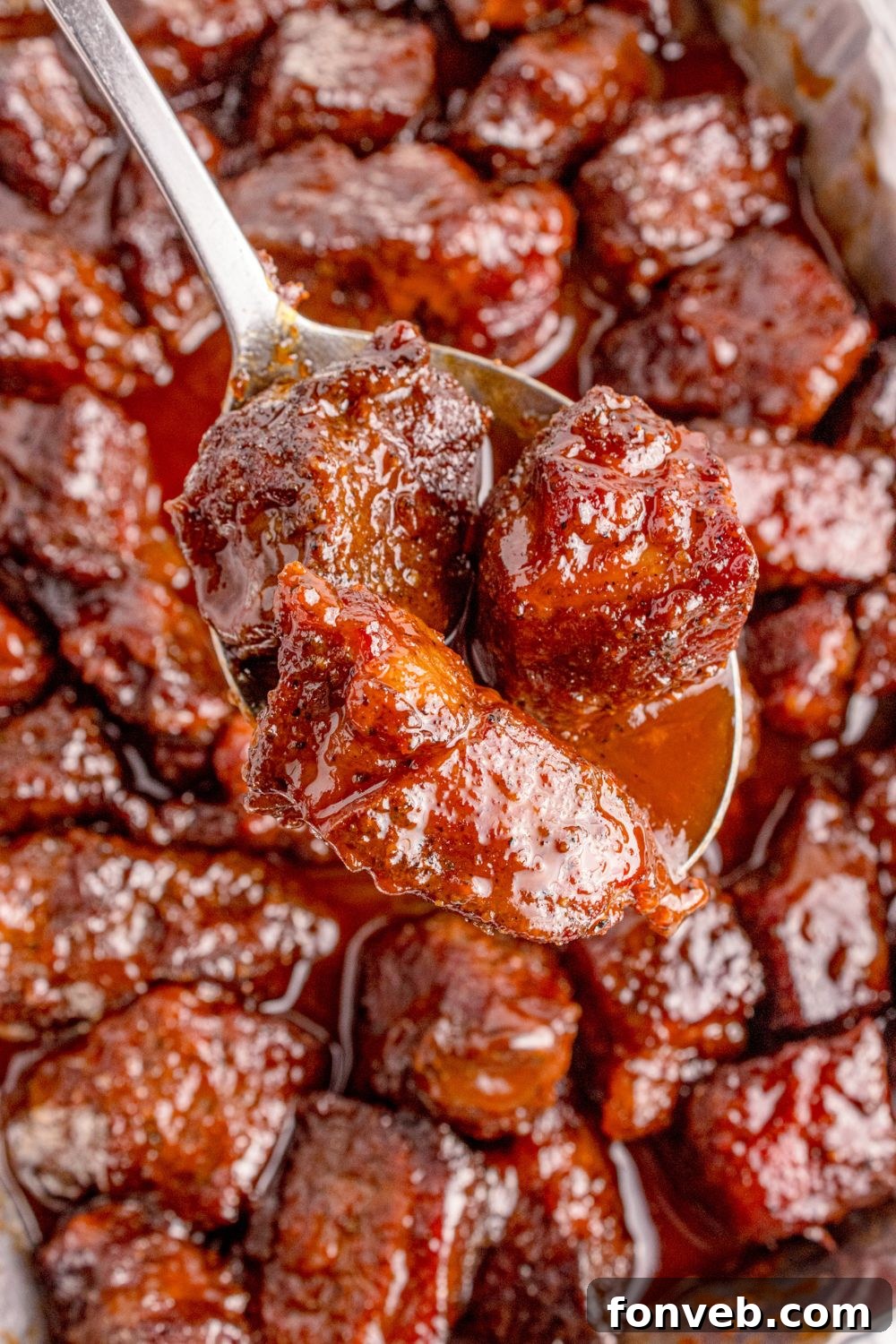
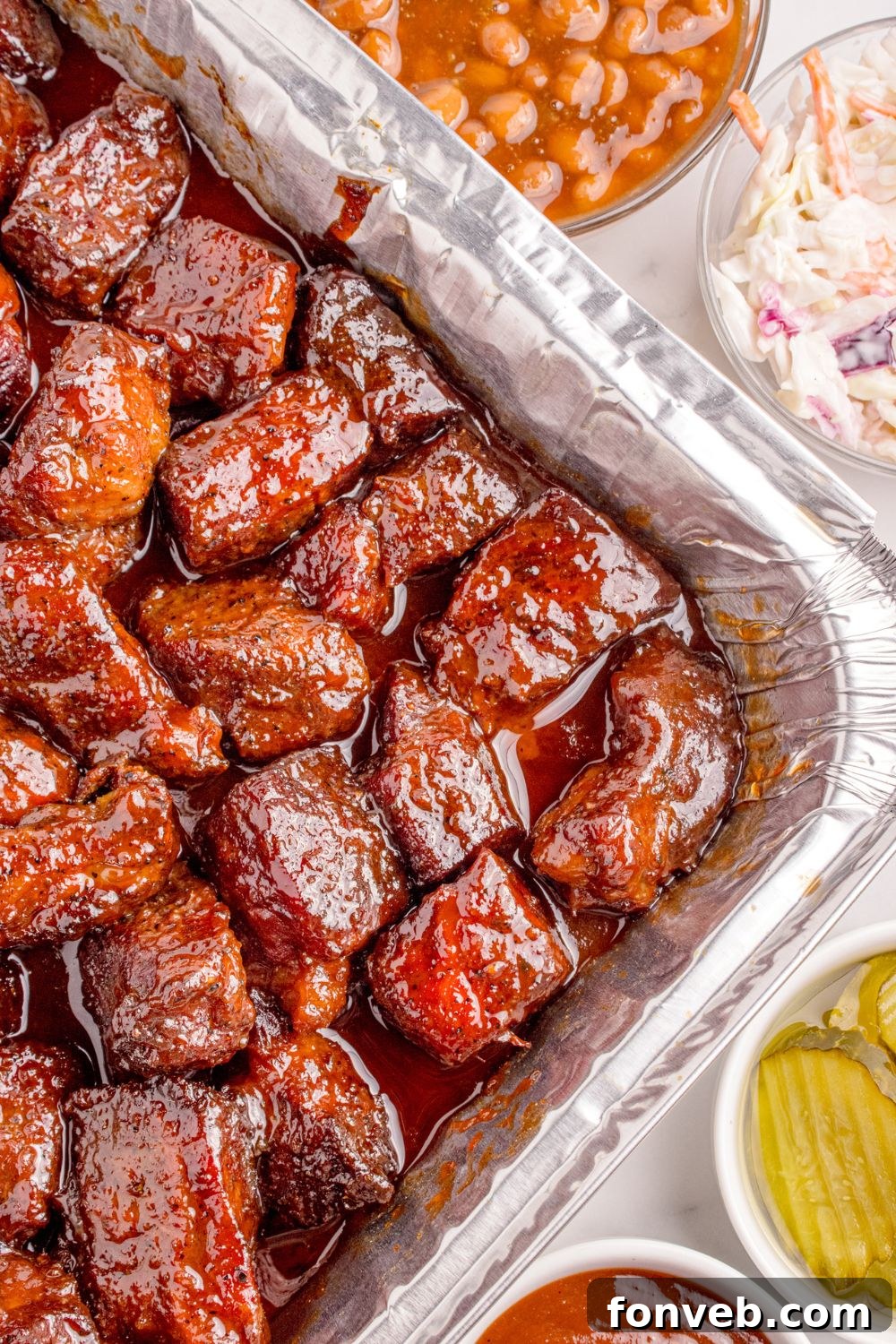
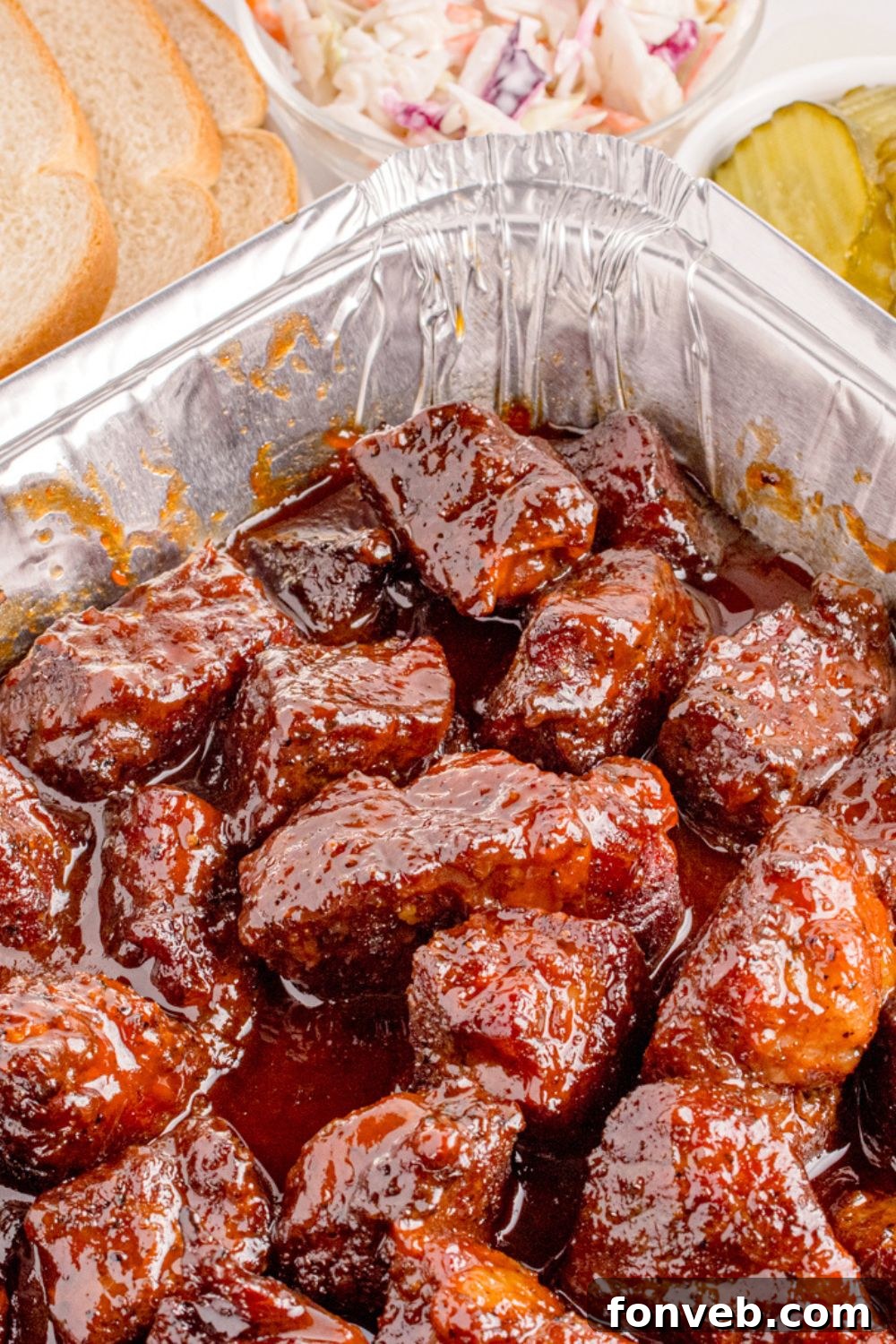
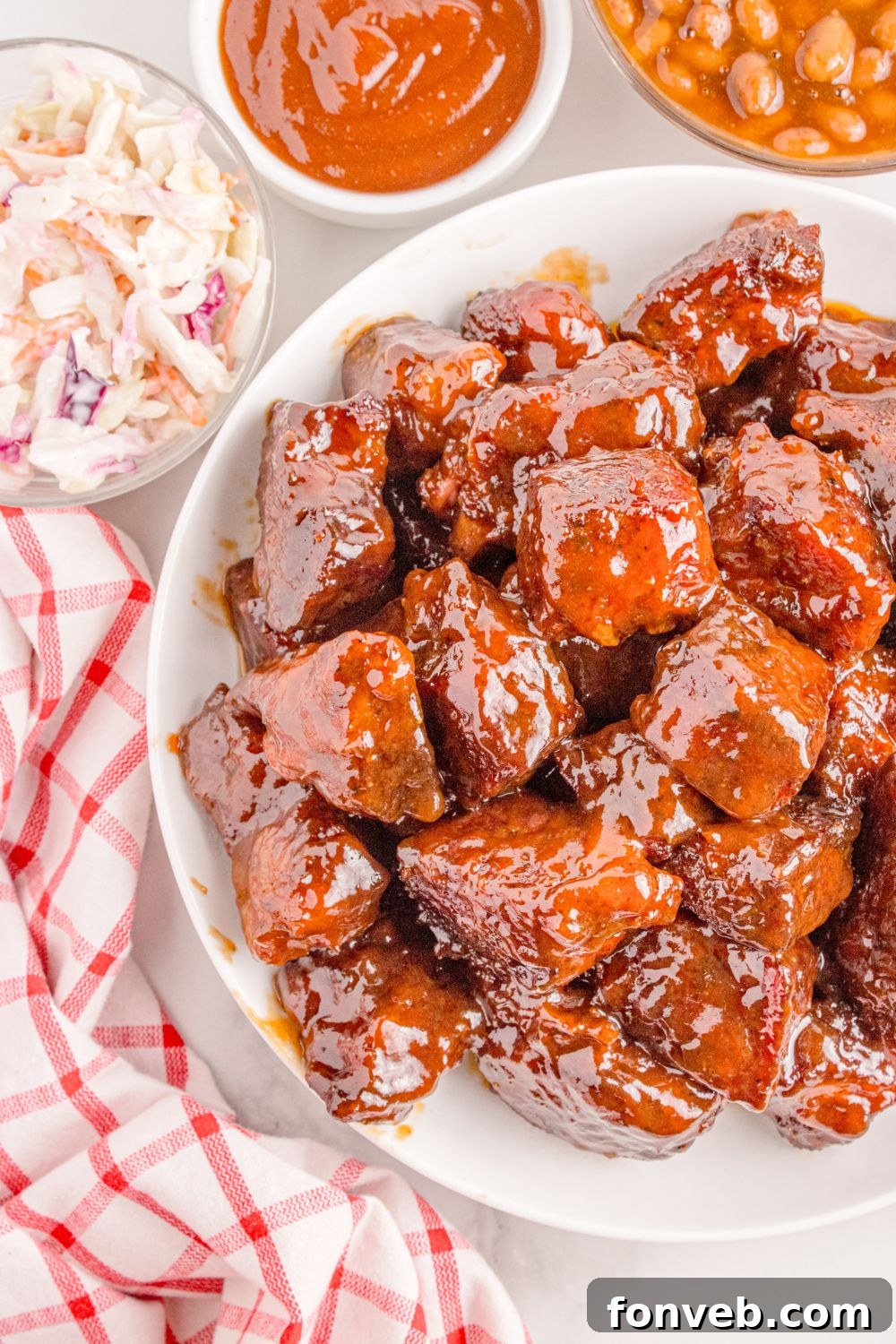
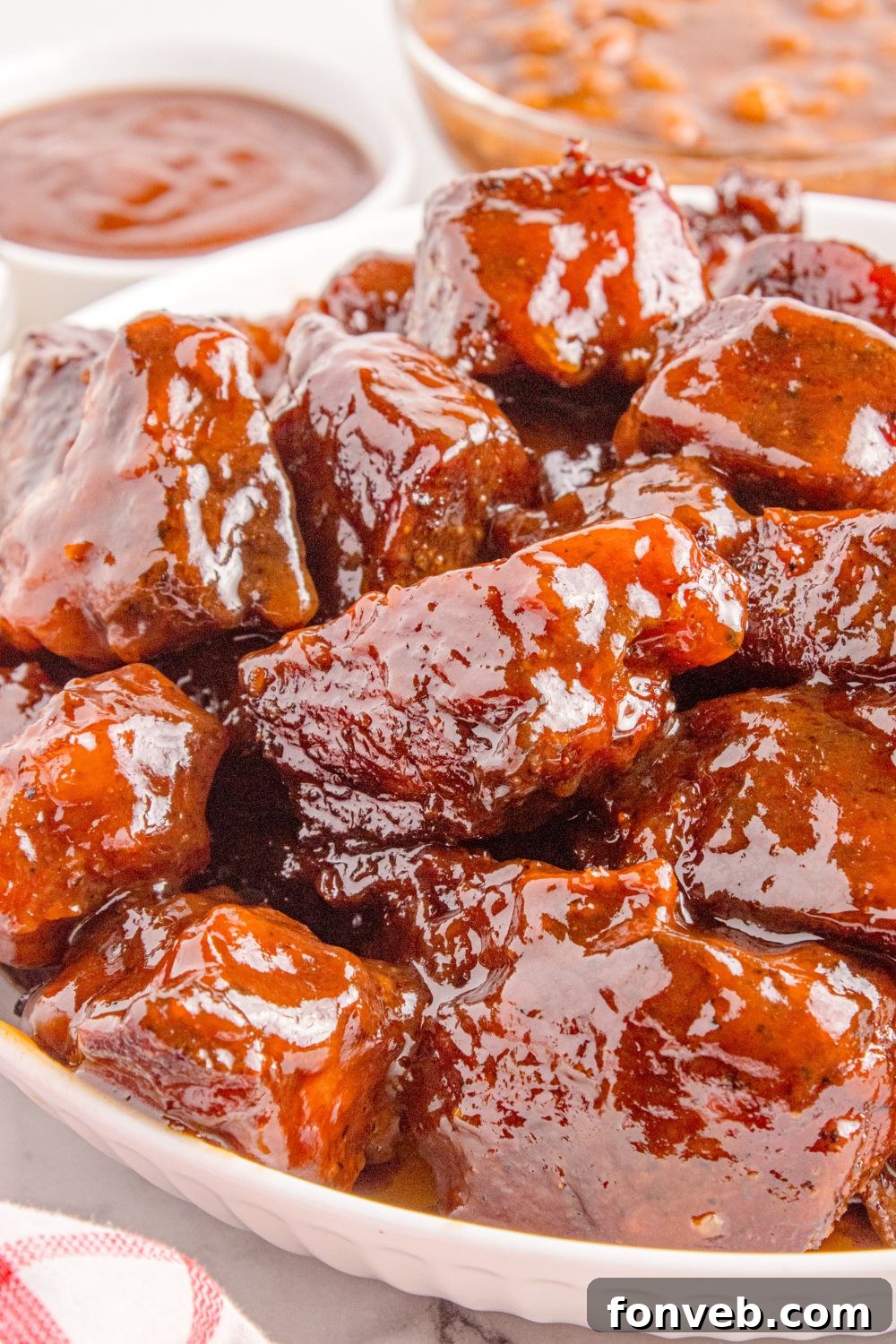
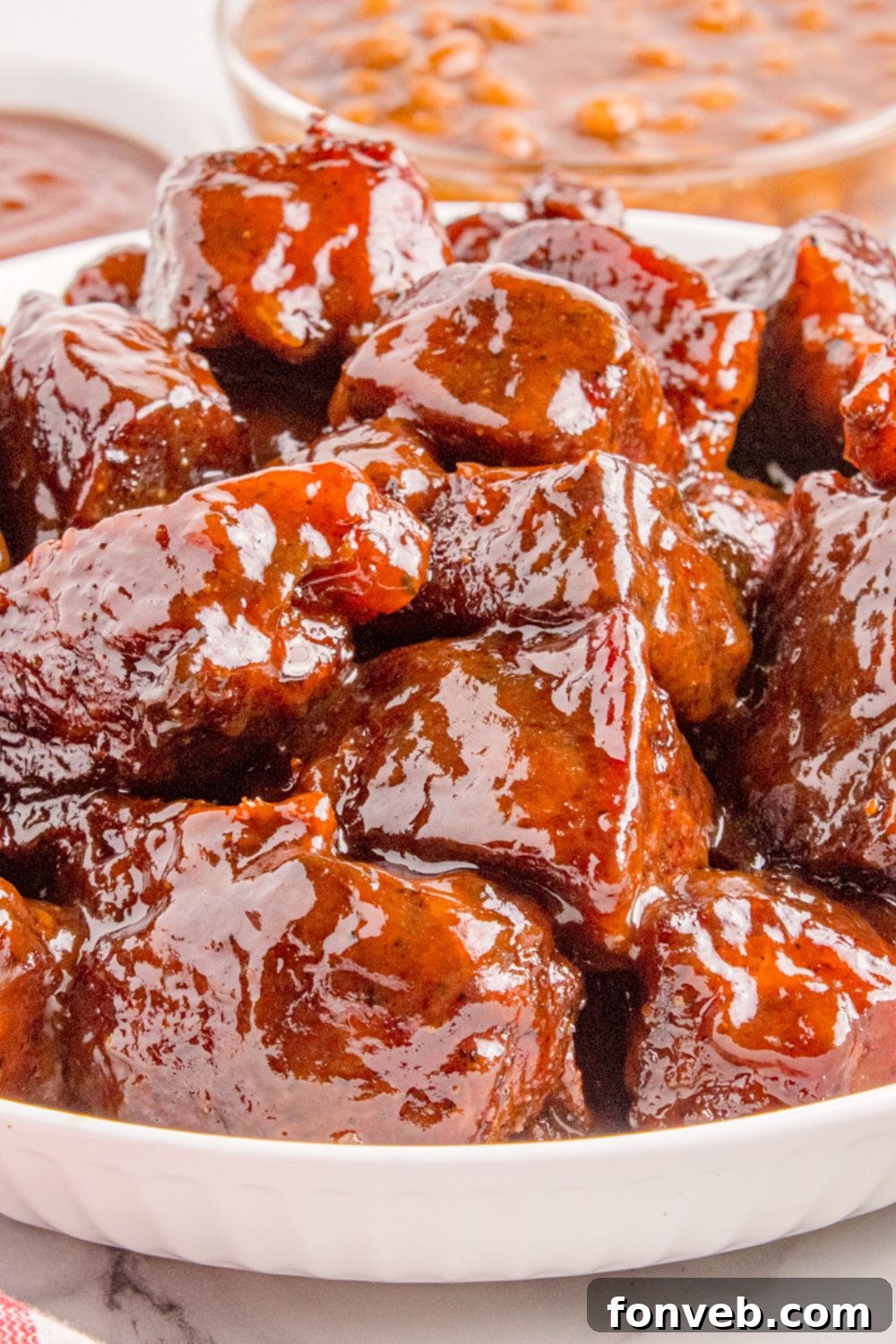
Imagine this: a bite of perfectly smoked beef, coated in a rich, sticky, and sweet BBQ glaze, so tender it practically melts in your mouth. That’s exactly what you get with my incredible Chuck Roast Burnt Ends—lovingly dubbed “Poor Man’s Burnt Ends” because they deliver all the craveable flavor and texture of traditional brisket burnt ends, but without the premium price tag or the marathon cooking time. Crafted from an economical chuck roast and cooked low and slow on your grill or smoker, this recipe effortlessly brings authentic, restaurant-quality barbecue right to your own backyard, making gourmet BBQ accessible to everyone.
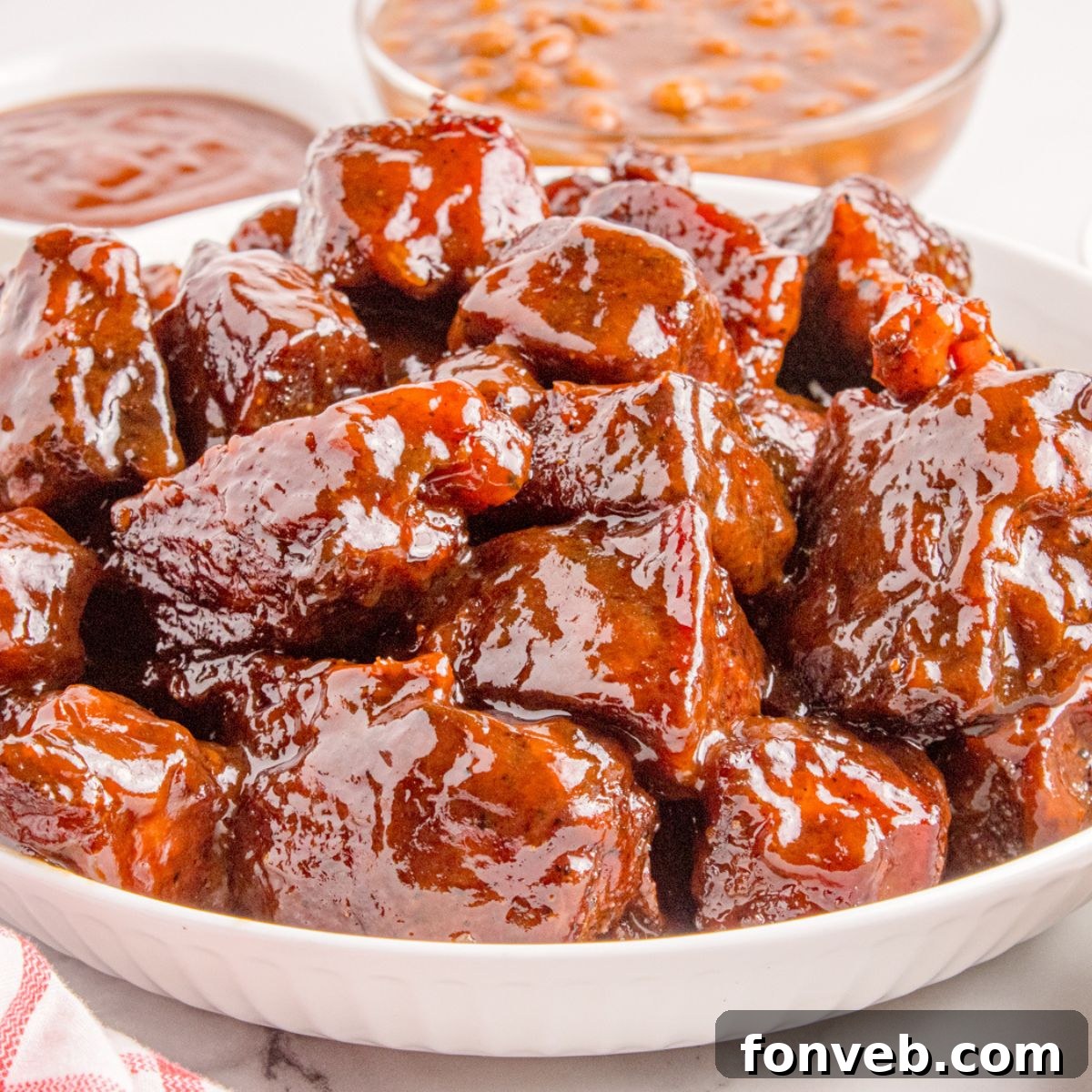
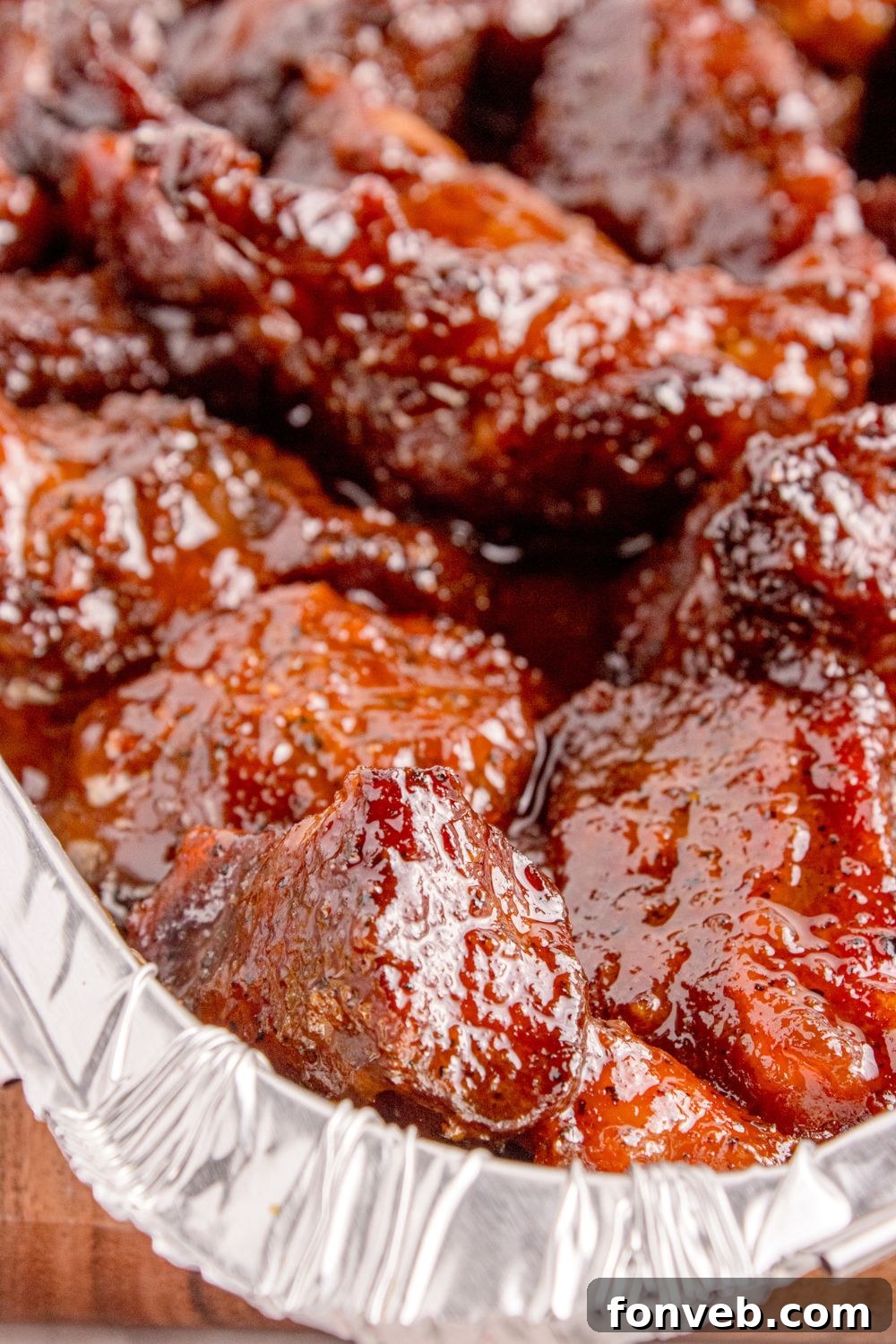
My husband and I are absolutely obsessed with creating these culinary masterpieces on our XL Big Green Egg. The results are nothing short of magical: a deep, mahogany-colored bark that’s packed with smoky flavor, followed by a luscious, caramelized BBQ glaze that is utterly irresistible. And when I say the aroma fills the air as these are cooking, I mean it’s the kind of scent that makes neighbors want to pull up a chair outside and savor every whiff. This isn’t just a recipe; it’s an experience—one you’ll make once and then find yourself constantly being begged to recreate for every gathering.
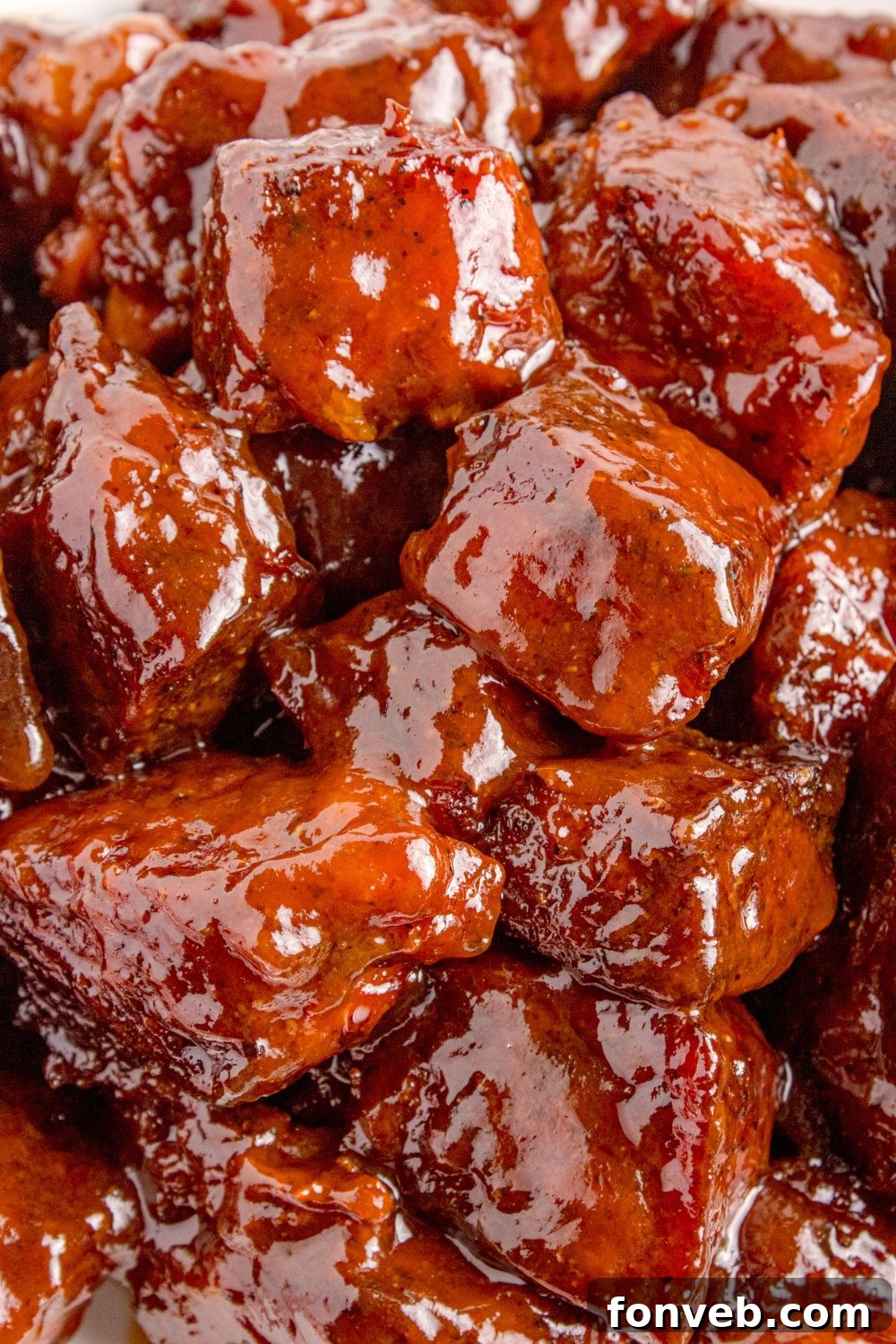
What Are Chuck Roast Burnt Ends? A Deep Dive into This BBQ Delicacy
To truly appreciate Chuck Roast Burnt Ends, it’s helpful to understand their origins. Traditional burnt ends are a highly prized delicacy in the world of barbecue, typically sourced from the “point” end of a slow-smoked beef brisket. This particular section of the brisket is known for its incredible marbling of fat and connective tissue, which, after many hours of smoking and rendering, transforms into intensely flavorful, melt-in-your-mouth nuggets of beef with a crisp, savory “bark” on the outside and a sticky, caramelized glaze.
Our Chuck Roast Burnt Ends offer a brilliant and much more accessible alternative to this BBQ classic. Instead of an expensive and time-consuming whole brisket, we utilize a more budget-friendly 3–4 pound chuck roast. This versatile cut is cut into convenient 1.5-inch cubes, generously seasoned with a robust dry rub, and then slow-smoked to develop that signature smoky flavor and impressive bark. The magic truly happens in the second phase, where these cubes are braised in a luxurious mixture of rich butter, sweet honey, and your favorite tangy barbecue sauce until they reach an unparalleled fall-apart tenderness. The result is a deeply flavorful, textural delight that perfectly mimics the complex taste and sensation of traditional burnt ends.
These Poor Man’s Burnt Ends don’t just mimic the real deal; they deliver all the rich flavor, deep smoke, and satisfying bark of authentic burnt ends—all without the need for a massive full-packer brisket or the daunting 12+ hours of cook time. It’s truly a barbecue lover’s dream come true, making this once-exclusive dish achievable for any home cook, regardless of their experience level or budget.
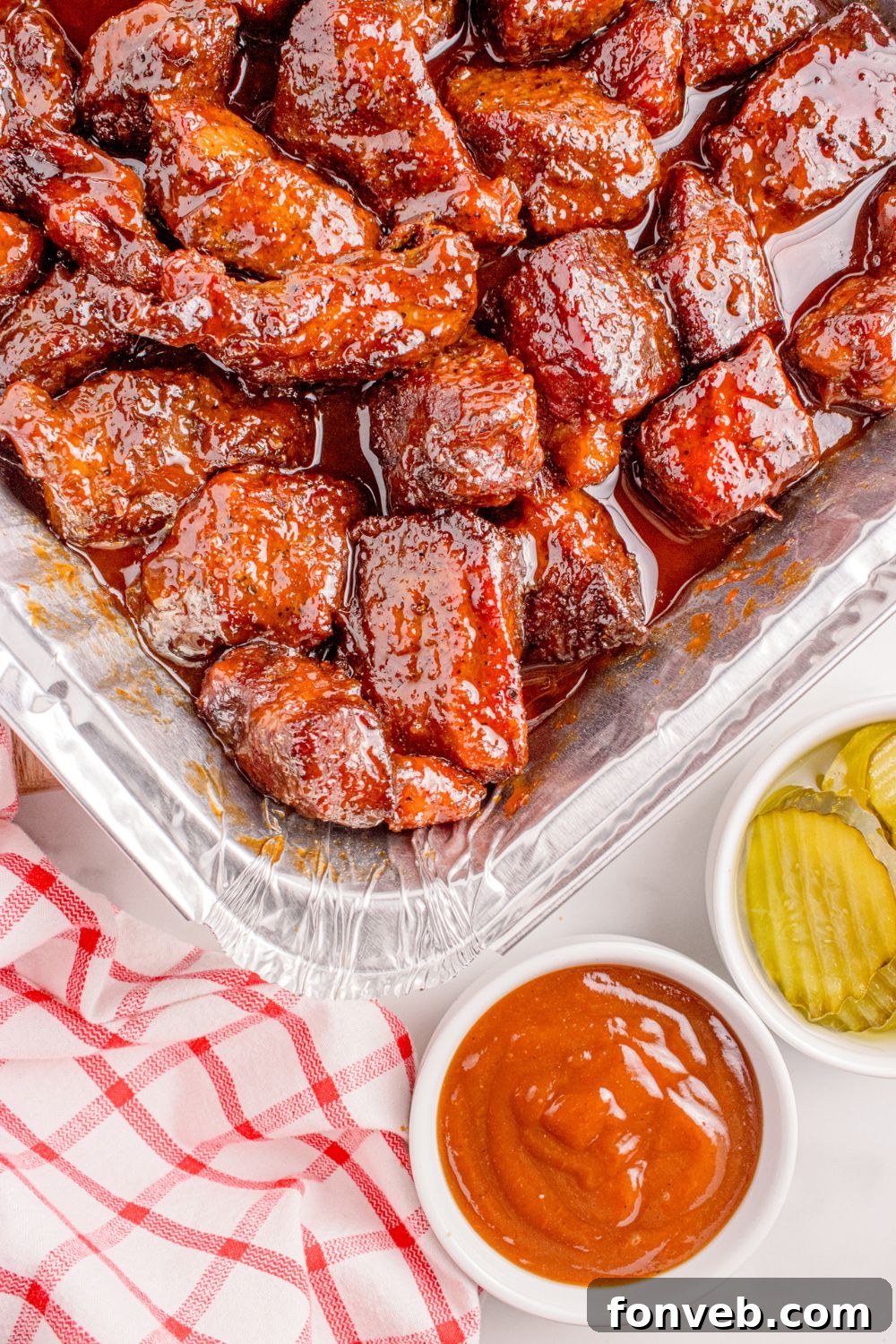
When to Serve Chuck Roast Burnt Ends: Perfect for Every Occasion
The versatility of these smoked chuck roast burnt ends makes them suitable for a wide array of occasions. Their crowd-pleasing appeal and relatively straightforward preparation mean you can bring a gourmet BBQ experience to almost any event without the stress.
- Backyard BBQs or Summer Cookouts: These are an absolute showstopper. The smoky aroma alone will draw everyone in, and the tender, flavorful bites are guaranteed to be a hit.
- Game Day Parties: Forget wings; these burnt ends are the ultimate finger food for cheering on your favorite team. They’re easy to eat and packed with flavor, making them perfect for sharing.
- Family Gatherings or Casual Weekends: When you want to elevate a relaxed meal into something special, these burnt ends fit the bill. They’re a fantastic way to impress family and friends without spending all day hovering over the grill.
- “Wow” Factor Dinners: Any time you want to impress guests with minimal effort, this recipe is your secret weapon. The rich flavor and tender texture feel incredibly luxurious, yet the actual cooking process is largely hands-off.
- Meal Prep for Versatile Dishes: Beyond a standalone main, these burnt ends are fantastic for meal prepping. Shred them or keep them cubed for delicious sandwiches, wraps, loaded baked potatoes, or vibrant BBQ bowls throughout the week.
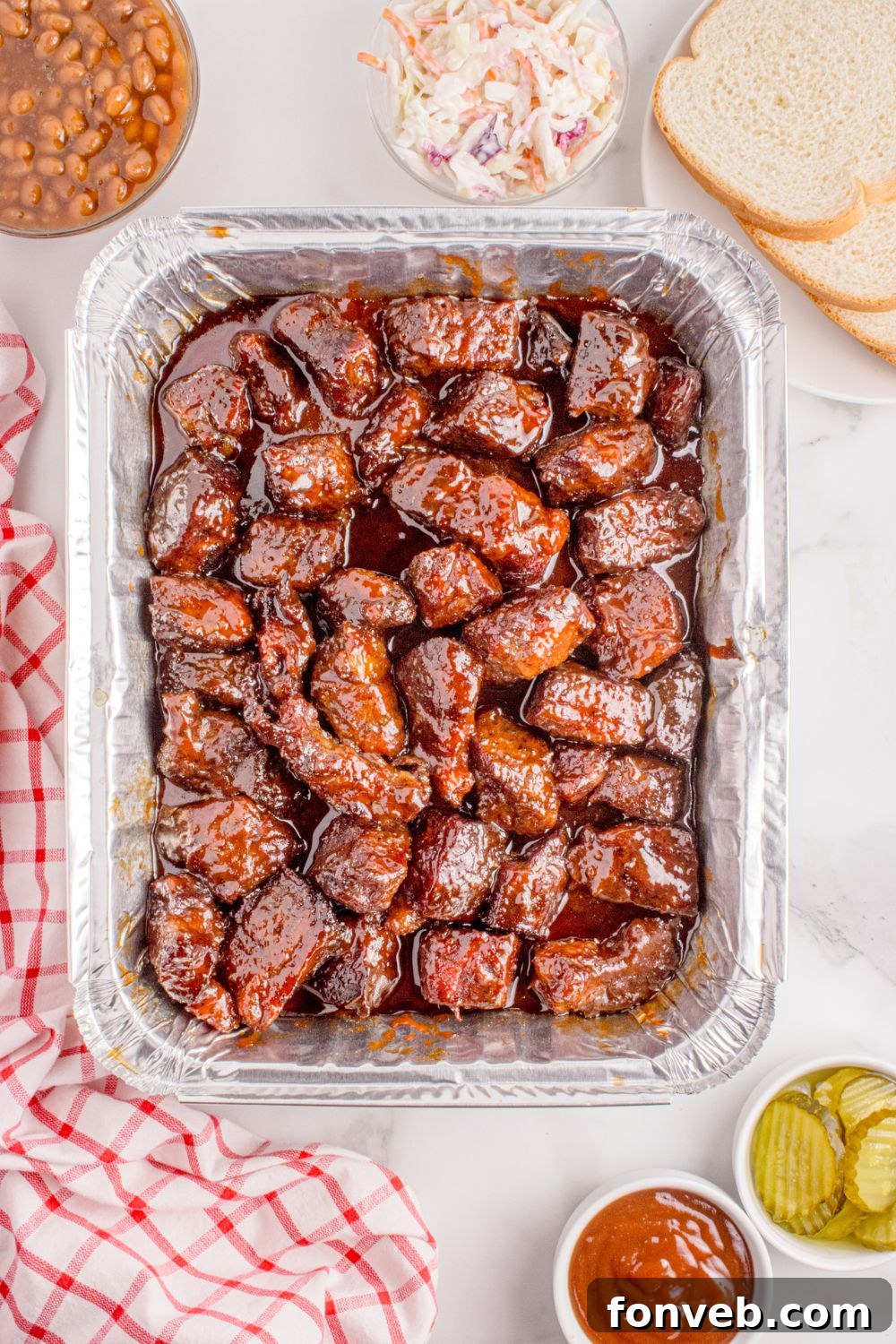
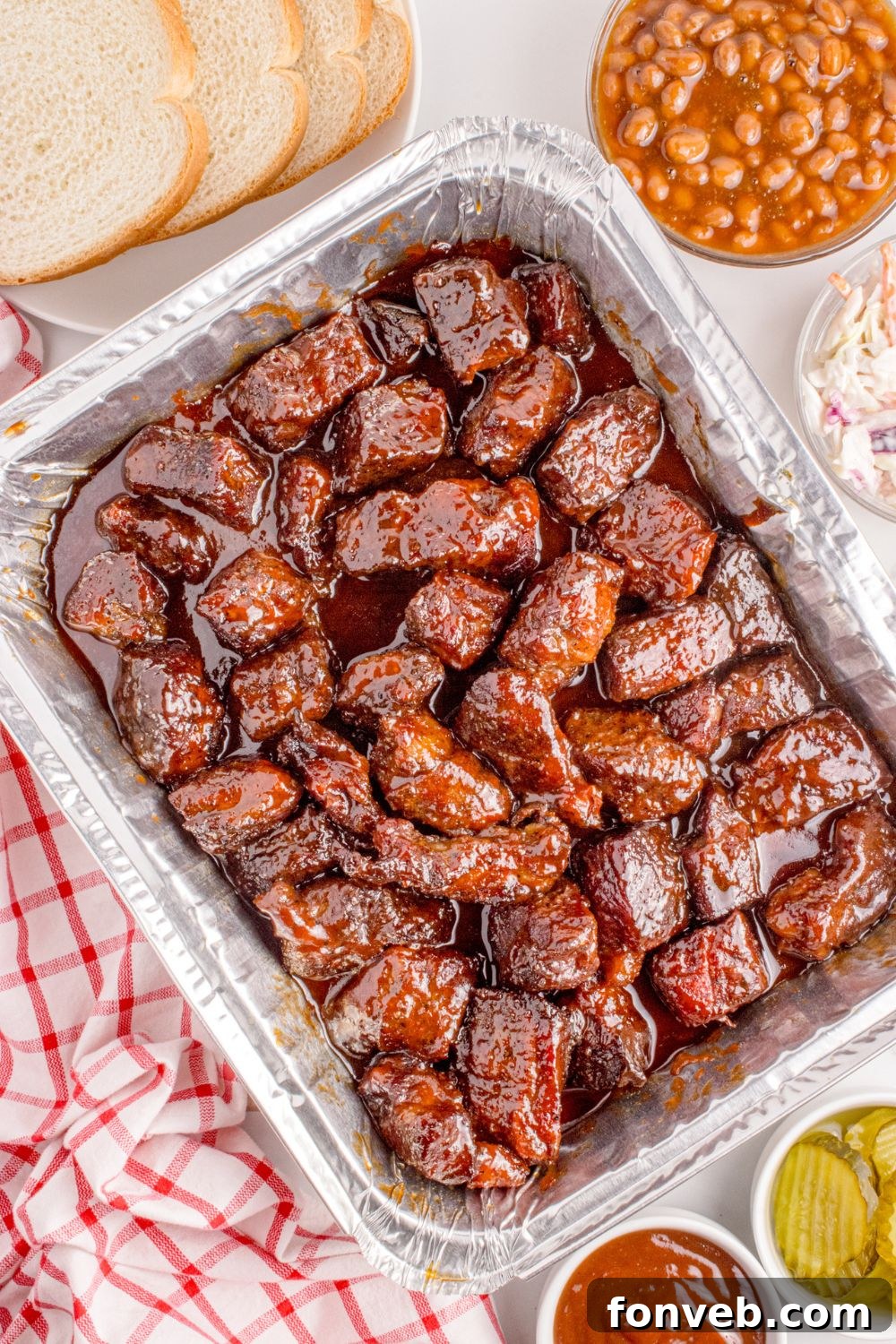
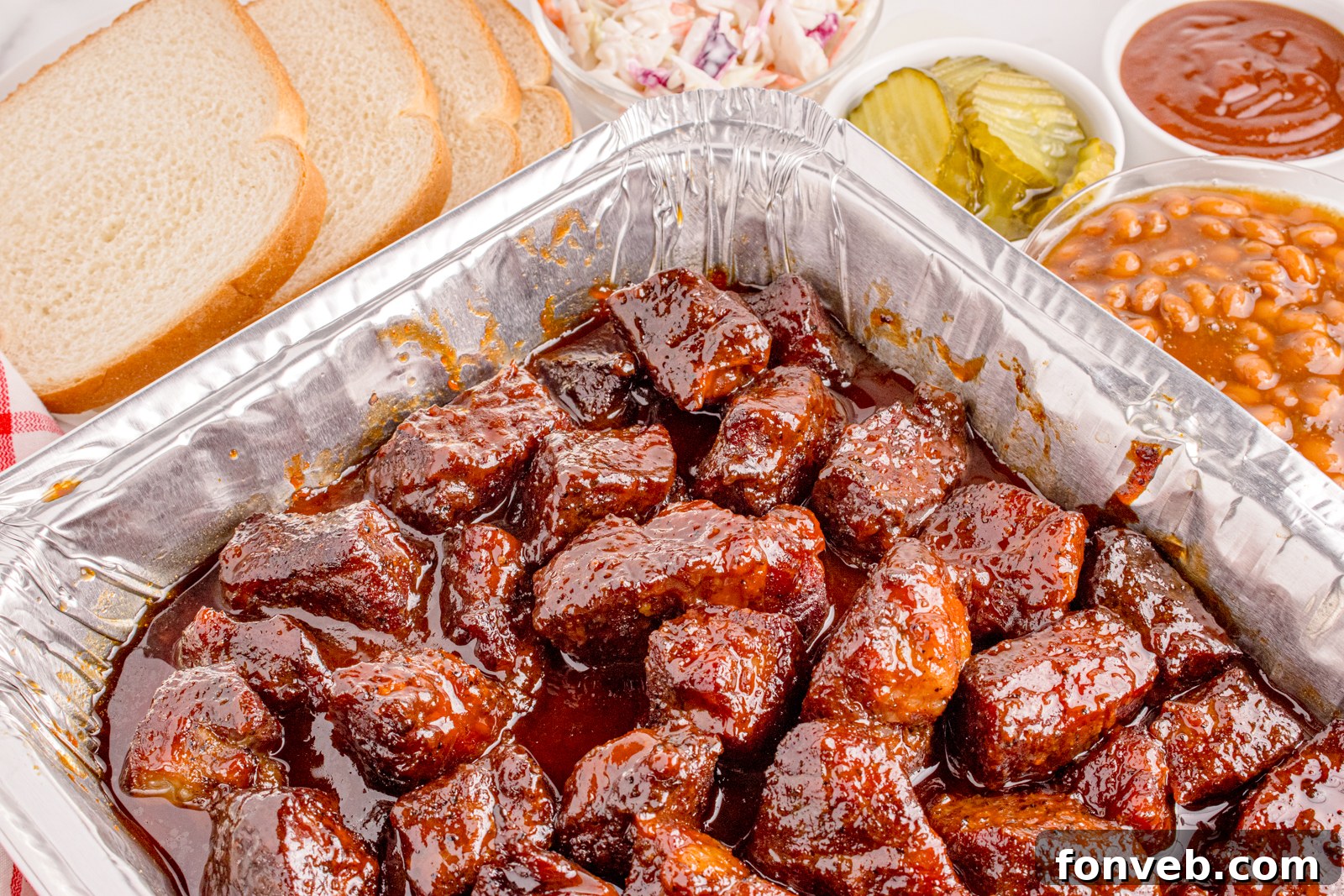
They also shine as an incredible main dish when paired with classic barbecue sides. Imagine them alongside creamy, homemade mac and cheese, a scoop of tangy potato salad, a refreshing coleslaw, or even fluffy cornbread. The rich, savory meat perfectly complements the comforting textures and flavors of these beloved accompaniments, creating a truly satisfying and memorable meal.
Why You’ll Fall in Love with These “Poor Man’s” Burnt Ends
Once you try these Poor Man’s Burnt Ends, they’re guaranteed to earn a permanent spot in your recipe rotation. Here’s why this recipe stands out and captures the hearts (and stomachs!) of everyone who tries it:
- Unforgettable Flavor Profile: Each bite is a symphony of tastes—deeply smoky from the slow cook, beautifully sticky from the caramelized glaze, wonderfully sweet with hints of honey and BBQ sauce, and savory from the well-seasoned beef. It’s an explosion of classic barbecue flavors all at once.
- Remarkably Budget-Friendly: This is one of the biggest wins! Chuck roast is significantly more affordable per pound than brisket, allowing you to create a high-end BBQ dish without breaking the bank. It’s truly a gourmet meal on a budget.
- Straightforward, Simple Ingredients: You won’t need any exotic or hard-to-find items. The dry rub relies on common pantry staples, and the finishing glaze uses everyday ingredients like butter, honey, and your favorite BBQ sauce.
- Effortlessly Hands-Off Smoking: While the overall cook time is a few hours, the majority of it is hands-off. Once the seasoned chuck roast is on the grill, it requires minimal intervention, freeing you up to enjoy your day while the magic happens.
- Guaranteed Crowd-Pleaser: From adults to picky eaters, everyone adores these tender, flavorful bites. Their universal appeal makes them perfect for any gathering, ensuring there are never any leftovers.
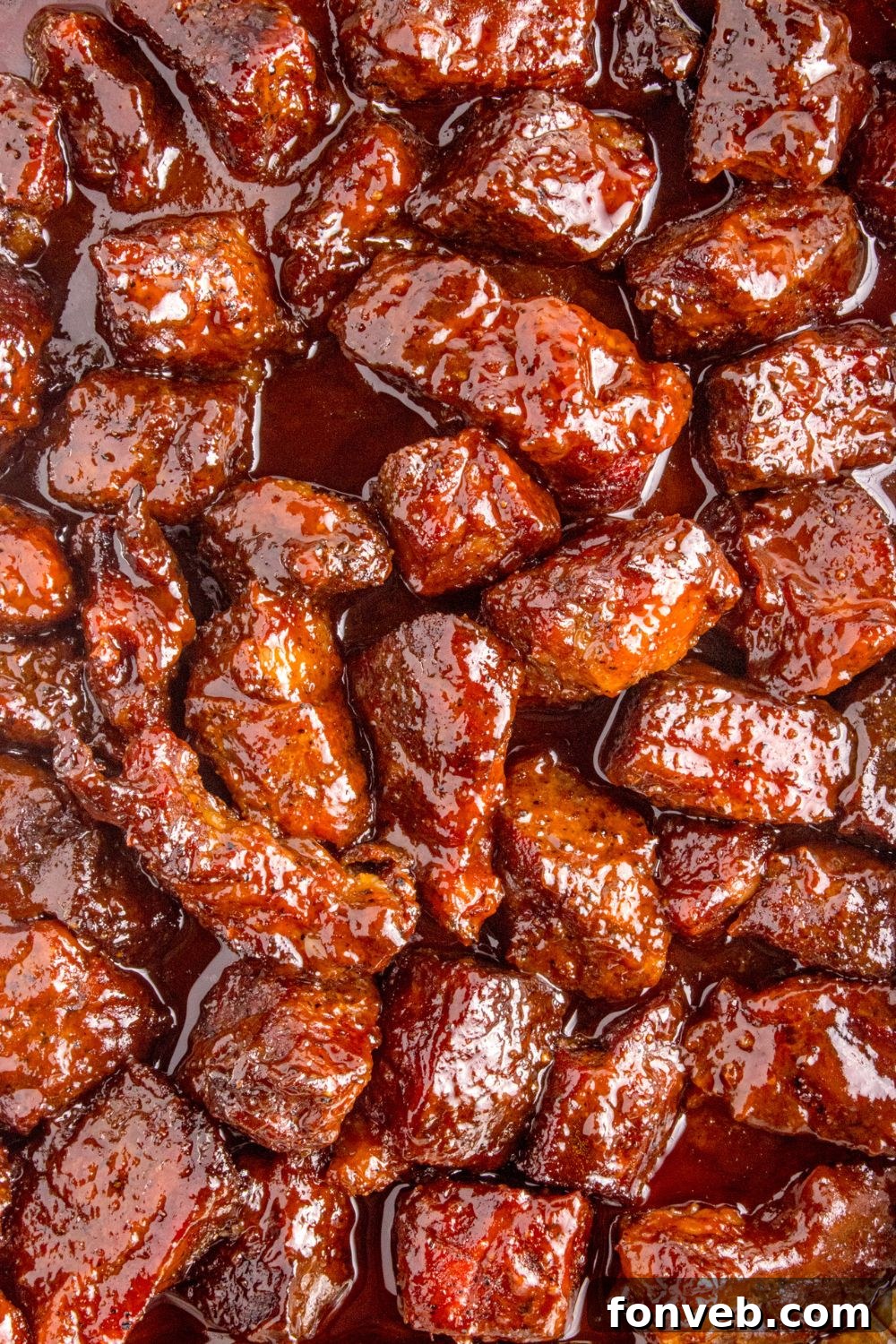
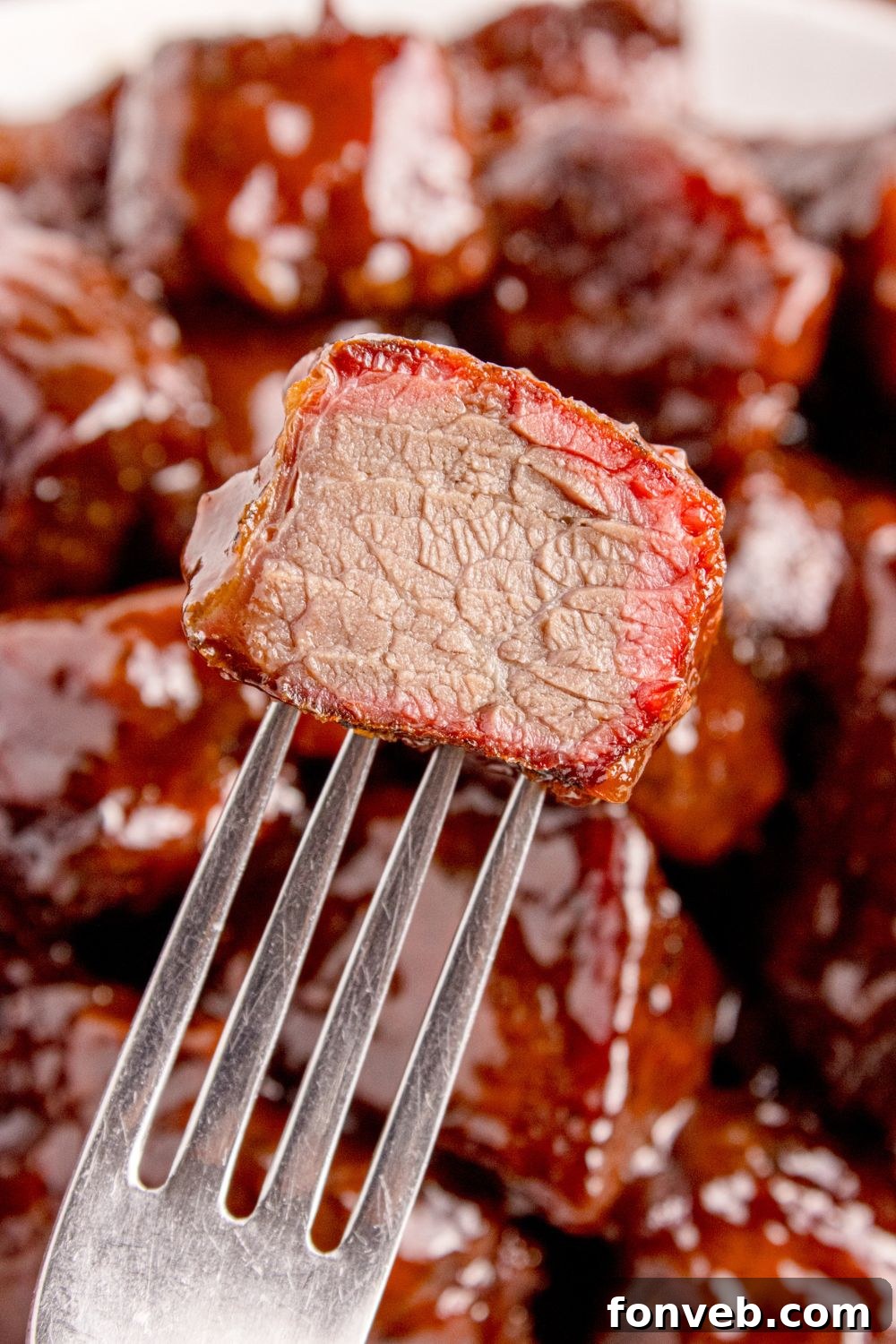
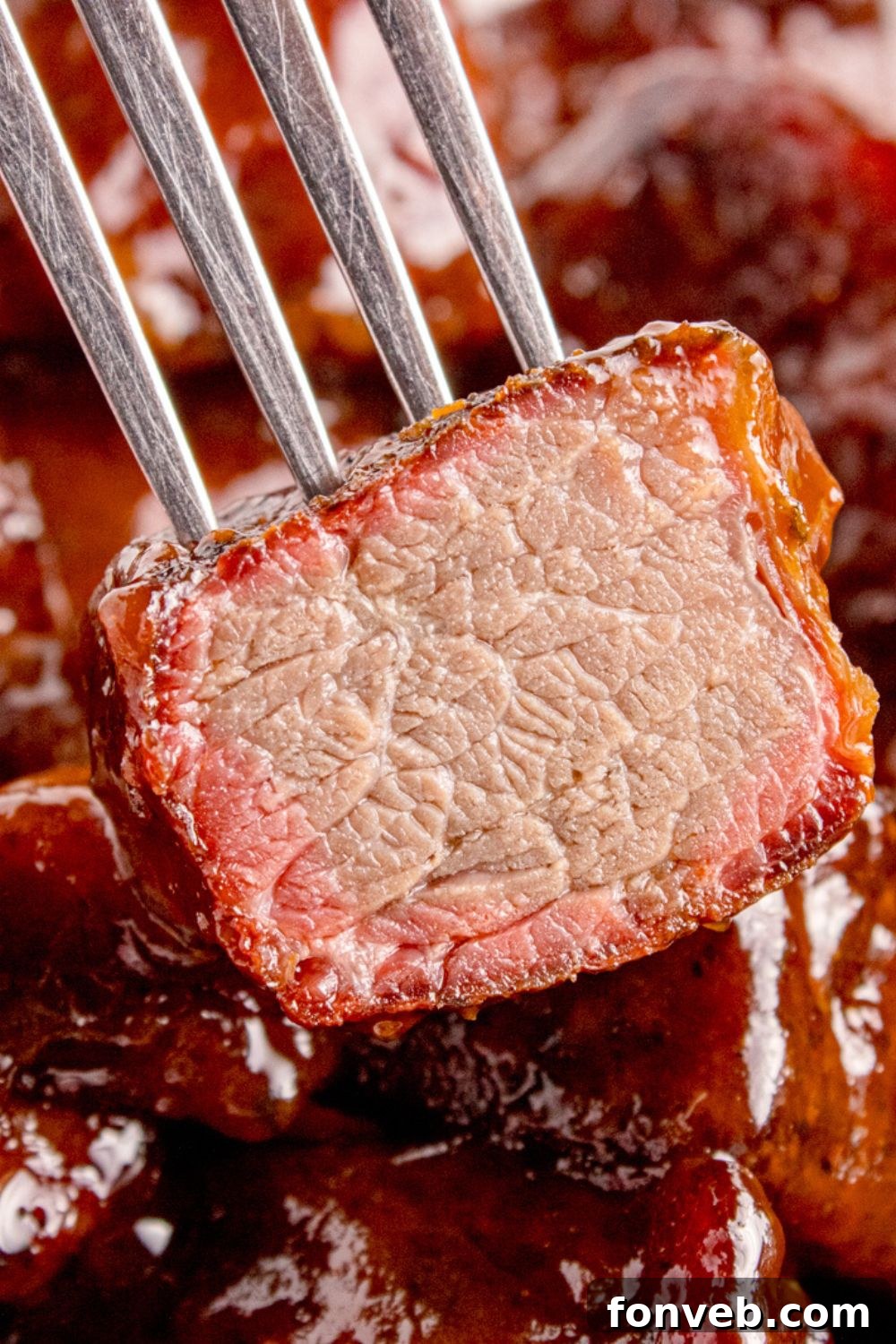
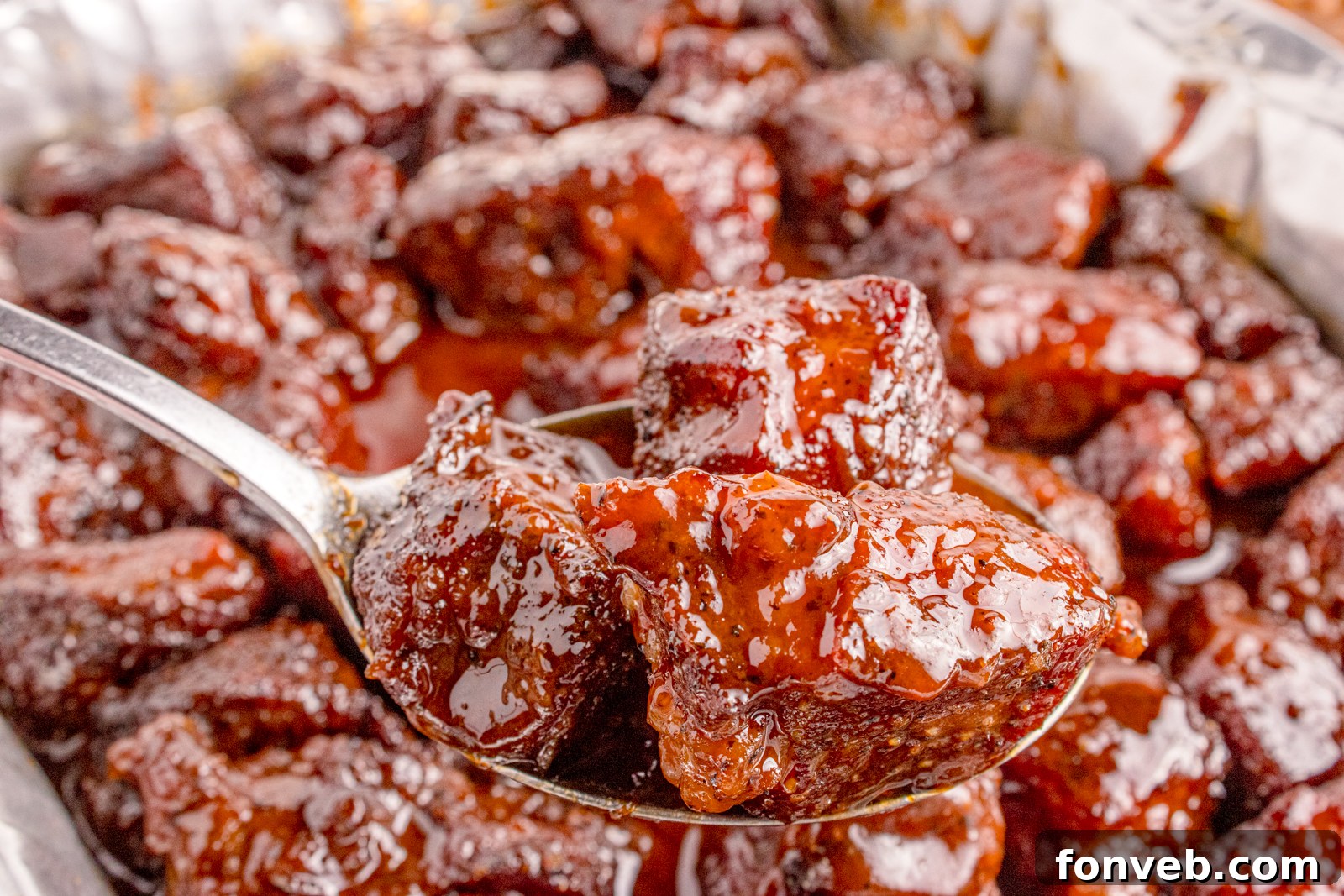
- Absolutely Perfect Texture: This is where these burnt ends truly shine. You get that exquisite, savory “bark” on the outside, providing a slight textural contrast, while the inside remains unbelievably buttery and tender—a combination that is nothing short of unreal.
Ingredient Breakdown: The Building Blocks of Epic Burnt Ends
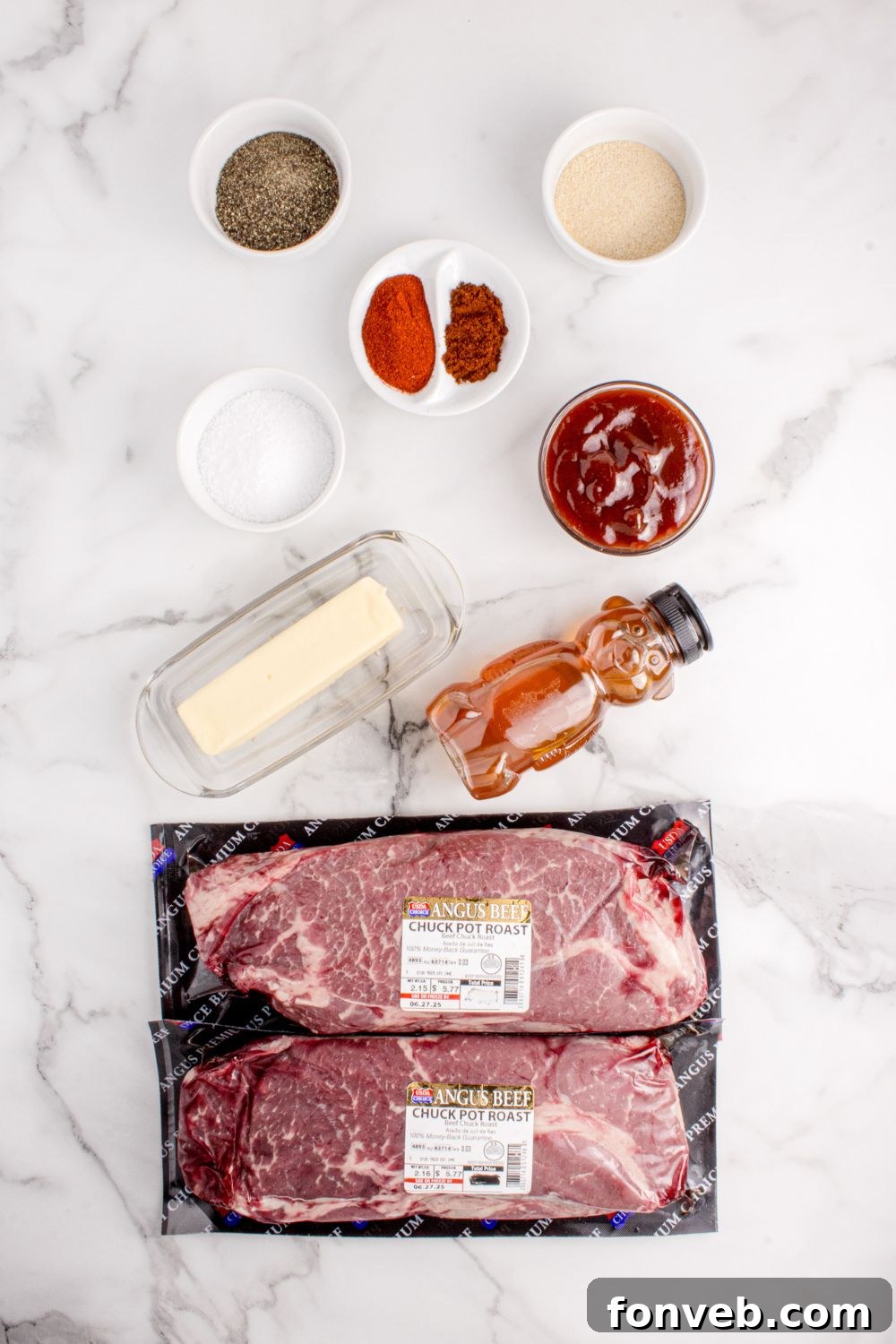
Crafting these exceptional burnt ends requires a thoughtful selection of ingredients, each playing a crucial role in developing that signature smoky, sweet, and tender profile. Let’s take a closer look at what you’ll need:
For the Star of the Show: The Meat
- Chuck Roast (3–4 lbs): This is the hero of our “poor man’s” version. Choose a well-marbled chuck roast, as the fat and connective tissues are key to achieving that melt-in-your-mouth tenderness during the long, slow cooking process. Cut it into uniform 1.5-inch cubes. The consistent size ensures even smoking and braising, preventing some pieces from drying out while others are still cooking.
The Flavor Foundation: The Rub
- Kosher Salt: Essential for seasoning the meat deeply and helping to draw out moisture, which contributes to the formation of a flavorful bark.
- Black Pepper: Provides that classic, pungent bite and forms the backbone of any good beef rub. Freshly cracked black pepper offers the best flavor.
- Garlic Powder: Infuses a savory depth that complements the richness of the beef and enhances the overall BBQ flavor.
- Smoked Paprika: This is a secret weapon! It adds a beautiful reddish hue to the bark and a wonderfully smoky undertone, even before the meat hits the smoker.
- Chili Powder: Contributes a gentle warmth and earthy complexity without introducing overwhelming heat, balancing the sweet notes of the glaze.
The Irresistible Finish: The Glaze
- Unsalted Butter (5 Tbsp): During the braising stage, butter adds unparalleled richness and helps keep the meat incredibly moist, contributing to its fall-apart texture. Using unsalted butter allows you to control the overall sodium content.
- Honey: The natural sugars in honey are crucial for creating that signature sticky, sweet, and caramelized exterior on the burnt ends. It also adds a lovely depth of flavor.
- BBQ Sauce (½ to ¾ cup): This is where you can personalize! Use your absolute favorite brand, whether it’s sweet, tangy, spicy, or a mustard-based variety. Alternatively, a homemade BBQ sauce will elevate the dish even further. The sauce ties all the flavors together, creating a luscious, irresistible coating.
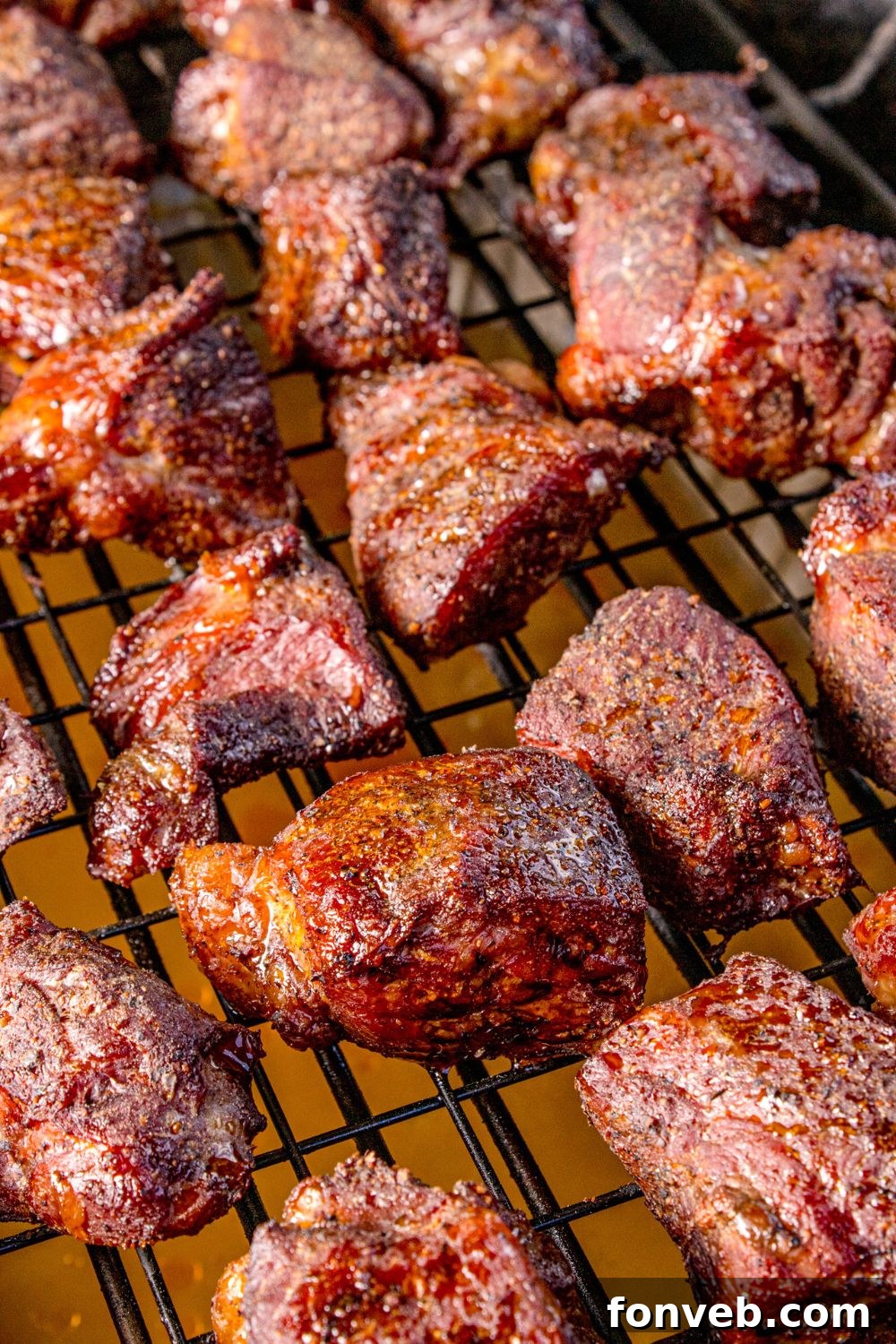
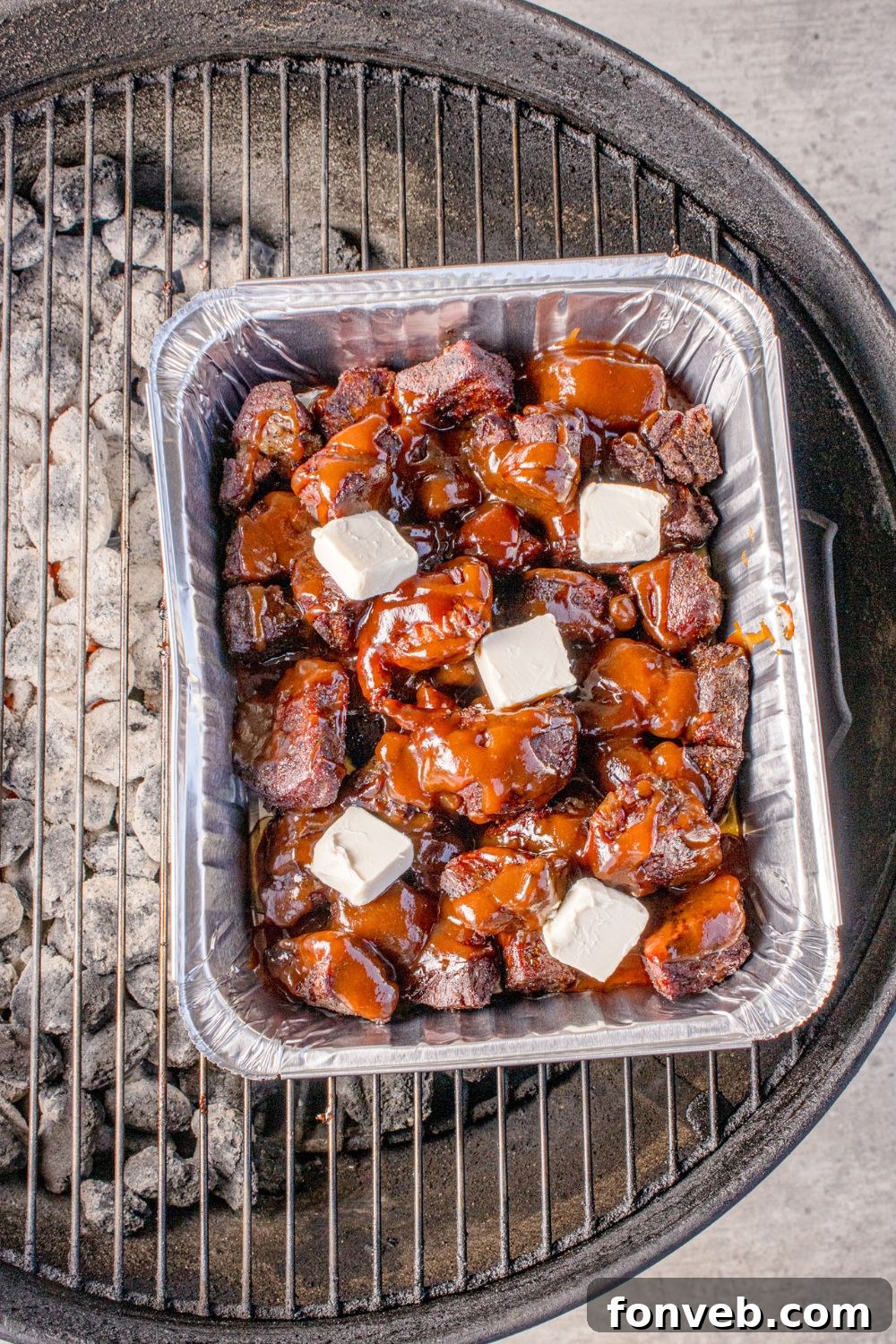
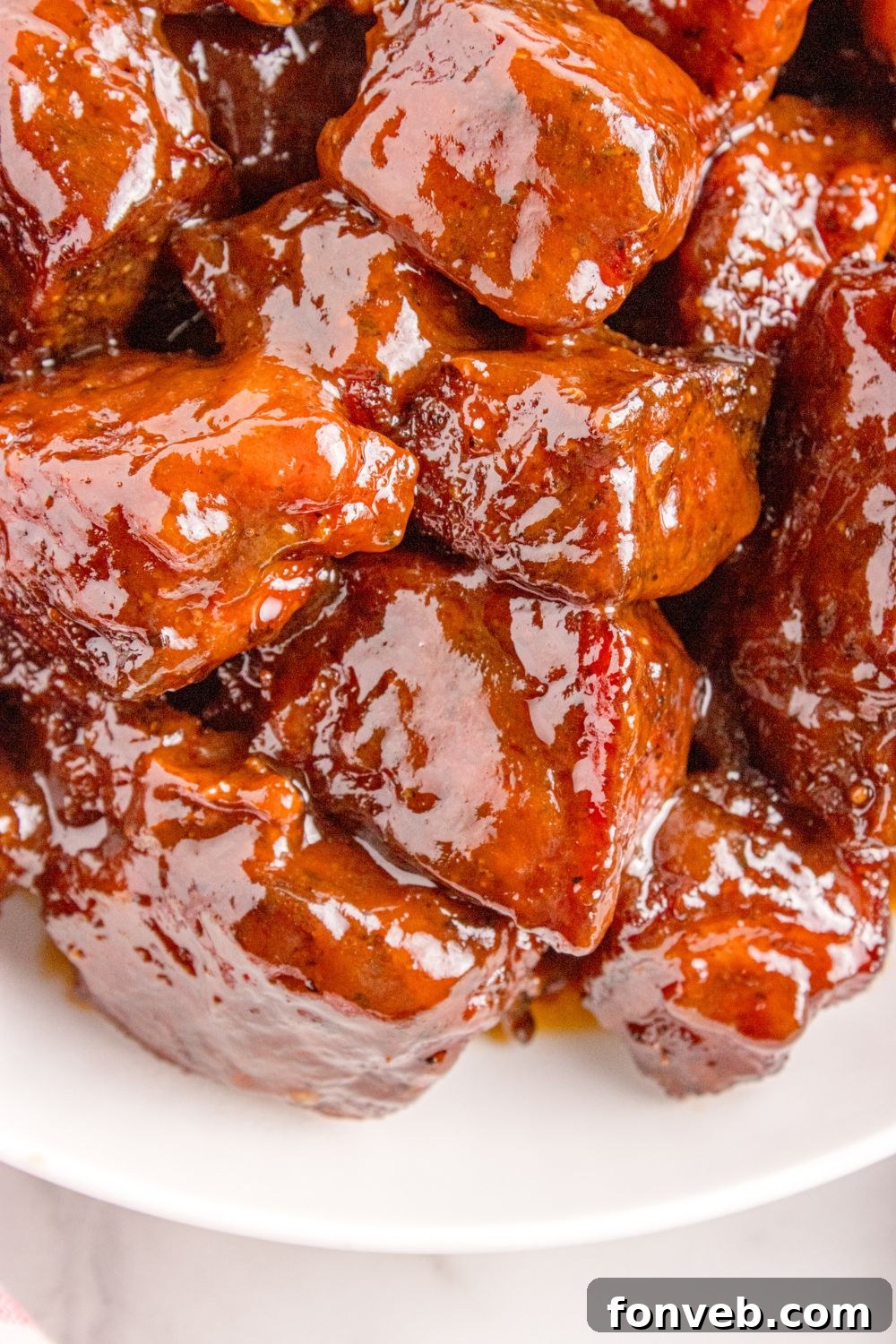
Grill Setups: Achieving That Perfect Smoky Bark and Tender Meat
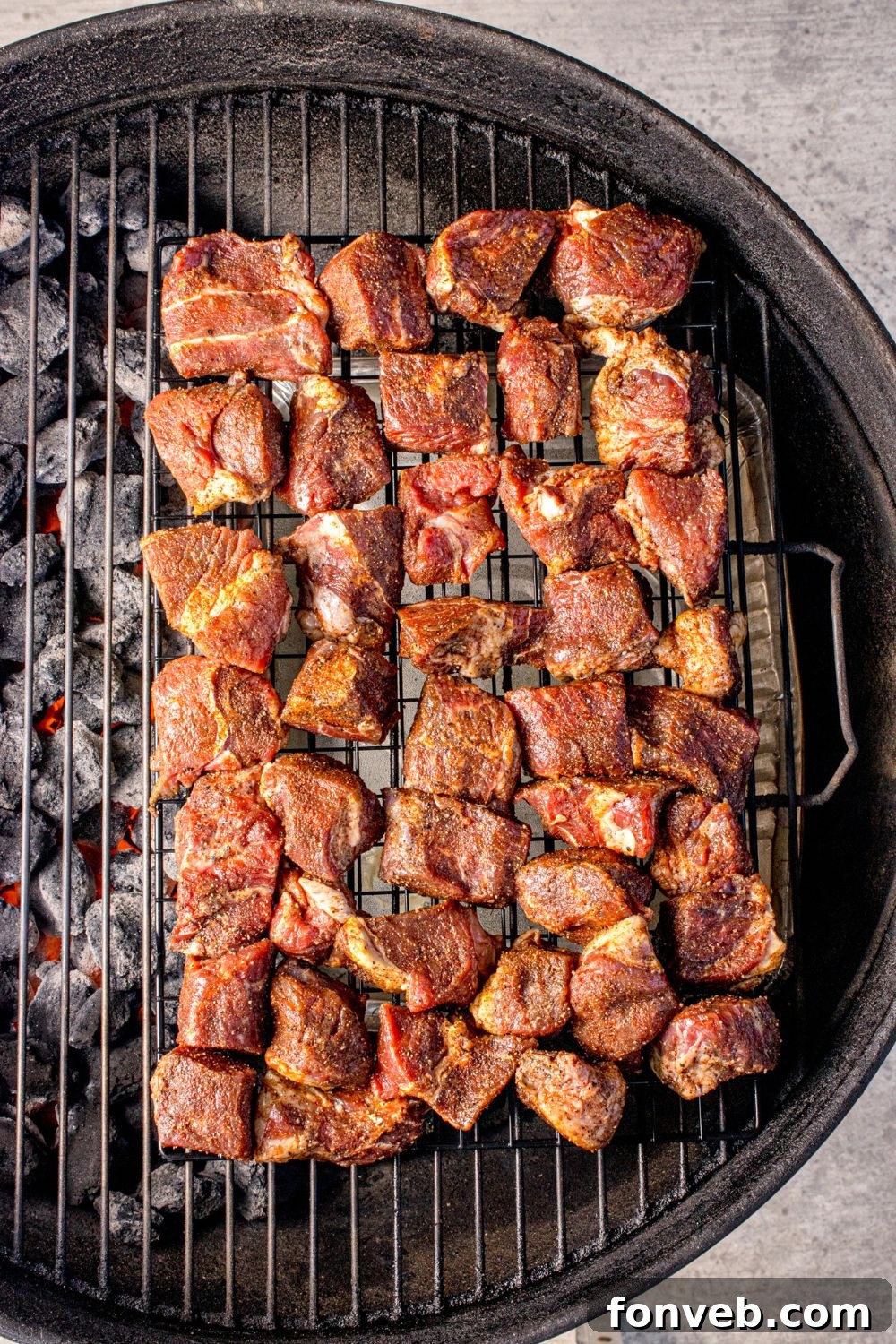
The key to perfect Chuck Roast Burnt Ends lies in a precise cooking environment. A “two-zone fire setup” is essential to achieve that coveted balance of smoky bark and incredibly tender meat. This method allows you to both smoke and braise your meat effectively, ensuring consistent results without drying out the beef.
For Charcoal Grills (or Dedicated Smokers like a Big Green Egg):
- Charcoal Preparation: Start by lighting a full chimney of your preferred charcoal. Once the coals are fully ashed over (glowing red with a layer of grey ash), carefully dump them onto one side of your grill’s charcoal grate. This creates your “direct heat” zone.
- Indirect Zone: Leave the other half of the grill empty. This will be your “indirect heat” or “cool zone,” where the meat will slowly smoke without direct exposure to flames.
- Temperature Control & Moisture: Place an aluminum pan filled with water on the indirect side of the grill, directly over the empty space. Close the grill lid and adjust your top and bottom vents to maintain a consistent internal temperature between 225–250°F (107-121°C). The water pan serves a dual purpose: it helps stabilize the grill temperature, acting as a heat sink, and it introduces moisture into the cooking chamber, preventing the meat from drying out during the long smoking process. For an added layer of smoky flavor, consider placing a few chunks of your favorite smoking wood (like hickory, oak, or cherry) directly on the hot coals.
For Gas Grills:
- Setting Up Indirect Heat: To create an indirect cooking zone, turn on only one side of your gas grill burners to medium-low heat. Leave the burners on the opposite side completely off.
- Preheating: Close the grill lid and allow the grill to preheat thoroughly until the internal temperature reaches approximately 225–250°F (107-121°C). This temperature is crucial for slow cooking and smoke absorption.
- Moisture Management: Just like with a charcoal grill, add a foil water pan to the cooler side of your gas grill. This will help regulate the heat more effectively and add much-needed moisture to the cooking environment, ensuring your burnt ends remain juicy. To introduce smoky flavor on a gas grill, you can use a smoker box filled with wood chips or wrap a handful of wood chips in foil, poke holes in it, and place it directly over the lit burner.
This carefully calibrated two-zone setup is fundamental. It allows the meat to cook low and slow, rendering fat and connective tissue into tender goodness, while absorbing a rich smoky flavor, all without the risk of overcooking or drying out.
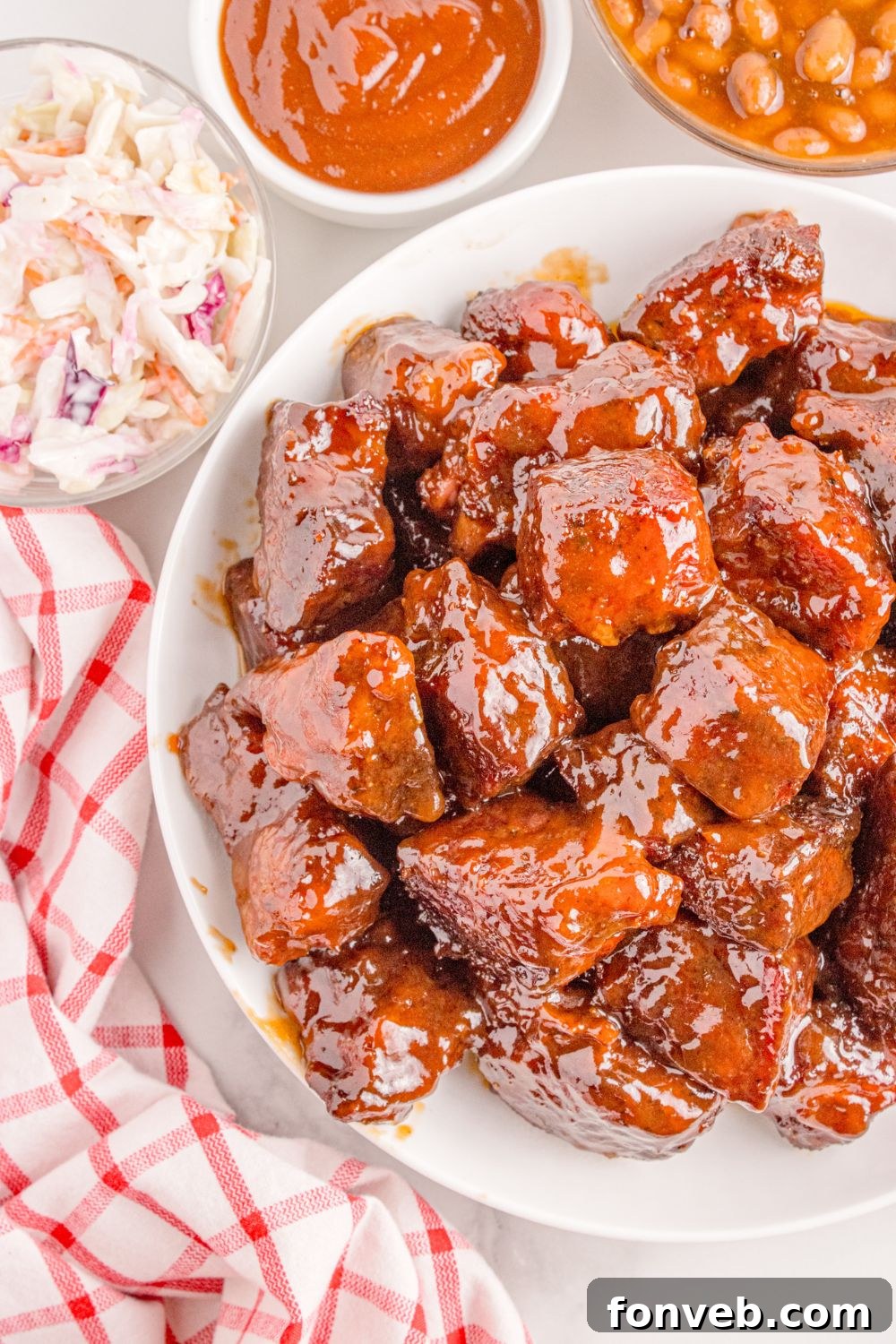
How to Make These in the Oven: Bringing Smoky Flavor Indoors
Don’t have a grill, a smoker, or the perfect outdoor setup? No problem at all! These incredible Poor Man’s Burnt Ends can still be made indoors with truly delicious results using your everyday oven. While you might not achieve the same deep, authentic smoke ring and intense smoky flavor that a dedicated smoker provides, you will still end up with spectacularly tender, deeply caramelized, and incredibly flavorful BBQ bites that hit all the right spots. The oven method is perfect for those who want that irresistible burnt end experience year-round, or simply prefer indoor cooking.
Oven Method: Step-by-Step Guide
- Preheat Your Oven and Prepare for Roasting: Begin by preheating your oven to a consistent 275°F (135°C). Prepare a large baking sheet by lining it with heavy-duty foil for easier cleanup. If you have one, place a wire rack on top of the foil-lined baking sheet. This elevated rack is crucial as it allows for proper airflow around all sides of the meat, promoting the development of a better “bark” and more even cooking. Arrange your seasoned chuck roast cubes on the wire rack in a single layer, ensuring they are not overcrowded.
- First Bake for Bark Development: Bake the chuck roast cubes uncovered for approximately 2 to 2.5 hours. During this initial phase, you want to observe a nice, dark bark developing on the exterior of the meat. Use a meat thermometer to check the internal temperature; it should reach around 160–170°F (71-77°C) before moving to the next step.
- Transfer to a Foil Pan for Braising: Carefully transfer the partially cooked, bark-laden cubes to a sturdy aluminum foil pan. This pan will hold all the delicious braising liquid. Now, generously add the cubes of butter, the honey, and your chosen BBQ sauce over the meat. Stir gently to ensure all the cubes are coated. Cover the pan tightly with aluminum foil to trap all the moisture and steam.
- Second Bake for Tenderness: Return the tightly covered foil pan to the oven and continue baking for another 1.5 to 2 hours at 275°F (135°C). The goal here is to achieve ultimate tenderness. The meat should be “probe tender,” meaning a skewer or a meat thermometer slides into a cube with very little resistance, feeling like soft butter. The internal temperature should reach 200–205°F (93-96°C).
- Rest and Optional Broil: Once the meat is perfectly tender, remove the pan from the oven and let it rest, still covered, for 20–30 minutes. This resting period is vital for the juices to redistribute, resulting in incredibly moist and flavorful burnt ends. After resting, uncover the pan. For an extra caramelized and slightly crispy glaze, you can optionally broil the burnt ends for 5–8 minutes. Keep a very close eye on them during this stage, as the high heat can quickly burn the sugars in the BBQ sauce.
Pro Tip for Oven Smoked Flavor:
To infuse a subtle hint of smoky flavor into your oven-baked burnt ends, even without a smoker, be strategic with your ingredients. Always use smoked paprika in your dry rub; its rich, savory notes will deepen the flavor profile. Additionally, opt for a smoky-style BBQ sauce. Many commercial sauces are labeled as “hickory smoke” or “mesquite smoke” flavored. For an even more pronounced smoke essence, you can add a few drops of high-quality liquid smoke to your BBQ sauce mixture. Start with a very small amount (1/4 to 1/2 teaspoon) as liquid smoke is potent, and adjust to your preference.
Variations & Flavor Swaps: Customize Your Burnt Ends
One of the best things about this Chuck Roast Burnt Ends recipe is how adaptable it is. Feel free to experiment with these variations and flavor swaps to truly make the dish your own and cater to different palates:
- For a Spicier Glaze: If you love a kick, introduce some heat! Stir in a pinch of cayenne pepper, a few dashes of your favorite hot sauce, or a teaspoon of chipotle powder into the BBQ sauce mixture before braising. Chipotle powder will also add a lovely smoky depth.
- For a Sweeter, Richer Finish: For a molasses-like taste and deeper sweetness, swap out half or all of the honey for an equal amount of dark brown sugar. This will enhance the caramelization process and create a richer, stickier glaze.
- Bourbon BBQ Glaze: Elevate the sophistication by adding a splash (1-2 tablespoons) of your favorite bourbon to the BBQ sauce and honey mixture. The alcohol will cook off, leaving behind a wonderfully complex, oaky, and slightly sweet finish that pairs beautifully with beef.
- Carolina-Style Twist: For those who prefer a vinegar-forward, tangy profile, consider using a mustard-based BBQ sauce. This variation offers a brighter, zestier flavor that cuts through the richness of the beef, a signature of South Carolina BBQ.
- Herbaceous Notes: A touch of fresh rosemary or thyme, finely chopped and added to the braising liquid, can introduce an aromatic layer that complements the beef beautifully.
- Coffee or Cocoa: For an unexpectedly deep and rich flavor, a teaspoon of instant coffee granules or unsweetened cocoa powder can be added to the dry rub. These ingredients don’t make the meat taste like coffee or chocolate, but rather enhance the savory, umami notes of the beef.
Troubleshooting Tips: Achieving Burnt End Perfection Every Time
Even seasoned grill masters can run into occasional issues. Here are some common troubleshooting tips to ensure your Chuck Roast Burnt Ends turn out perfectly delicious and tender every single time:
- Is the meat dry and tough? This is usually a sign of cooking at too high a temperature. For melt-in-your-mouth tenderness, it’s crucial to stick to the recommended temperature range of 225–250°F (107-121°C). Additionally, ensure you don’t skip the braising step, as the butter, honey, and BBQ sauce are vital for moisture retention. Always use a meat thermometer and aim for the correct internal temperature before moving to the braising phase.
- Is the smoke flavor bitter or acrid? Bitter smoke often comes from using too much wood or from “dirty smoke.” Ensure your wood chunks are smoldering, producing a thin, wispy blue or white smoke, not thick, billowy white or grey smoke. If the smoke is too heavy, remove some wood or open vents slightly to increase airflow.
- The meat isn’t tender enough—it’s still chewy. Patience is key with burnt ends! If the meat isn’t falling apart, it simply needs more time. Continue cooking until the internal temperature reaches the ideal range of 200–205°F (93-96°C) and, most importantly, until it’s “probe-tender.” A skewer or thermometer should slide into a piece of meat with virtually no resistance. Don’t rush this final braising step.
- My glaze is too thin and runny. If your BBQ sauce mixture feels too watery after braising, remove the foil cover from the pan for the final 10–15 minutes of cooking (or during the optional broiling step). This allows some of the liquid to evaporate, concentrating the flavors and thickening the sauce to a perfect sticky consistency.
- The bark isn’t developing well. For a good bark, ensure the meat is properly dried before applying the rub, and that the rub is applied generously. The initial smoking phase should be at the correct temperature, and the meat should be exposed to smoke and indirect heat for the full 2 hours without being covered too early.
Storage and Serving Tips: Maximizing Your Burnt End Enjoyment
These Chuck Roast Burnt Ends are so delicious that leftovers are a rare luxury, but if you do happen to have some, here’s how to store them and enjoy them later, ensuring every bite is just as fantastic as the first:
- Refrigerator Storage: Allow any leftover burnt ends to cool completely to room temperature before storing. Transfer them to an airtight container. They will keep beautifully in the refrigerator for up to 3-4 days. The sauce often thickens slightly overnight, enhancing the flavor.
- Freezer Storage: For longer preservation, these burnt ends freeze exceptionally well. Once completely cooled, place them in a freezer-safe, airtight container or a heavy-duty zip-top freezer bag. For best results, press out as much air as possible from the bag to prevent freezer burn. They can be stored in the freezer for 2–3 months. Thaw overnight in the refrigerator before reheating.
- Reheating Methods:
- Oven (Recommended for Best Texture): Preheat your oven to 300°F (150°C). Place the burnt ends (with any leftover sauce) in an oven-safe dish, cover tightly with foil, and reheat for 15–20 minutes, or until warmed through. The foil helps retain moisture.
- Microwave (Quickest Option): For a single serving, place the burnt ends in a microwave-safe bowl, cover with a damp paper towel to prevent drying, and microwave on medium power for 1–2 minutes, stirring halfway through, until hot.
- Skillet (For a Sightly Crispier Edge): Heat a skillet over medium heat. Add the burnt ends with a splash of beef broth or extra BBQ sauce to prevent sticking. Stir gently and cook until warmed through and the sauce has caramelized slightly.
- Serving Suggestions: Serve these burnt ends hot, garnished with a sprinkle of fresh chopped parsley or cilantro if desired. They are fantastic as a stand-alone appetizer, a main course with your favorite BBQ sides, or as a flavorful addition to sandwiches, tacos, or salads.
Make-Ahead and Freezing Tips: Plan Your BBQ Feast
- Make-Ahead Strategy: To streamline your BBQ day, you can prepare a significant portion of these burnt ends in advance. Smoke and cube the chuck roast through the first phase (until it develops bark and reaches 160-170°F internal temperature). Allow the smoked cubes to cool completely, then refrigerate them in an airtight container for up to 2 days. On serving day, simply transfer the cubes to a foil pan, add the butter, honey, and BBQ sauce, and proceed with the braising and final glazing steps on the grill or in the oven. This cuts down on active cooking time dramatically on the day of your event.
- Freezing for Future Feasts: For optimal results, freezing the smoked cubes *before* adding the sauce and braising works best. This allows you to braise fresh when ready to serve. However, full leftovers (smoked, braised, and sauced) can also be frozen. Just ensure they are thoroughly cooled, packed tightly to prevent air exposure, and thawed overnight in the refrigerator before reheating low and slow to maintain tenderness.
Budget Breakdown: Indulgent BBQ That Won’t Break the Bank
One of the most appealing aspects of this easy burnt ends recipe is its exceptional affordability, especially when compared to ordering traditional brisket burnt ends at a restaurant. Here’s a detailed cost estimate based on average U.S. grocery prices, demonstrating just how much value you get:
| Ingredient | Estimated Cost |
|---|---|
| 3–4 lb Chuck Roast | $15.00–$20.00 |
| Kosher Salt, Black Pepper, Garlic Powder, Smoked Paprika, Chili Powder (pantry staples) | ~$1.50 |
| Unsalted Butter (5 Tbsp) | $0.75 |
| Honey (¼ cup) | $0.90 |
| BBQ Sauce (½ to ¾ cup) | $1.50 |
| Charcoal or Propane (for grilling) | ~$3.00 (approx.) |
Estimated Total: $22.65 – $27.65
Cost Per Serving (for 6–8 servings): Approximately $2.83 – $4.61 per person
As you can see, this homemade version is not only far more affordable than even a single restaurant serving of brisket burnt ends, but it also yields a generous quantity—more than enough to feed a hungry crowd or provide delicious leftovers. It’s a testament to how you can achieve gourmet flavors on a practical budget.
Frequently Asked Questions (FAQ) About Chuck Roast Burnt Ends
What exactly are burnt ends?
Burnt ends are highly sought-after, flavorful, and incredibly smoky chunks of meat that were traditionally made from the fattier “point” end of a slow-smoked beef brisket. They are revered for their crunchy, bark-like crust and a rich, sticky, caramelized BBQ glaze. In this particular recipe, we’re crafting a more accessible and equally delicious version using chuck roast, which is often referred to as Poor Man’s Burnt Ends.
Why is chuck roast a good choice for burnt ends?
Chuck roast is an exceptional and highly effective alternative to brisket for burnt ends. It’s much easier to find in grocery stores, significantly more affordable, and naturally packed with rich beefy flavor. This cut contains just the right balance of lean meat, marbling, and connective tissue. When cooked low and slow, these elements break down beautifully, resulting in incredibly tender, juicy meat that perfectly mimics the texture and richness of traditional brisket burnt ends. It offers a similar experience without the commitment of a full brisket.
Can I prepare these burnt ends on a gas grill?
Absolutely! You can certainly make delicious burnt ends on a gas grill. The key is to set up your gas grill for indirect heat. This involves turning on only one side of the burners to a medium-low setting, while leaving the burners on the opposite side off. You’ll then preheat your grill to maintain a consistent temperature of 225–250°F (107-121°C) with the lid closed. To help stabilize the temperature and infuse some moisture, place an aluminum pan filled with water on the cooler, unlit side of the grill. For added smoky flavor, you can use a smoker box with wood chips or a foil packet of wood chips placed over a lit burner.
What is the ideal internal temperature for tender burnt ends?
For truly tender, fall-apart burnt ends, you should aim for an internal temperature between 200–205°F (93-96°C) after the braising stage. The most reliable way to check for doneness isn’t just the temperature, but also the “probe tenderness.” When a meat thermometer or a skewer slides into a cube of meat with very little resistance, feeling like it’s piercing butter, your burnt ends are perfectly ready.
Can I prepare this recipe in advance?
Yes, these burnt ends are fantastic for making ahead! You can smoke and cube the meat through the initial phase (when it develops bark and reaches 160-170°F). Once cooled, store the smoked cubes in an airtight container in the refrigerator. The next day, simply transfer them to a foil pan, add the butter, honey, and BBQ sauce, then proceed with the covered braising and final glazing steps on your grill or in the oven until warmed through and tender. This strategy significantly reduces your cooking time on the day you plan to serve them.
Are these burnt ends suitable for a low-carb diet?
Yes, this recipe can be easily adapted to be naturally low in carbohydrates! As long as you make a couple of simple swaps, you can enjoy these delicious burnt ends guilt-free. Use a sugar-free BBQ sauce (there are many excellent options available on the market) and substitute the honey with a keto-friendly alternative such as monk fruit syrup or erythritol-based syrup. Even without modifications, this dish is a fantastic protein-packed option, making it a satisfying meal for keto or low-carb eaters who still crave bold, smoky BBQ flavor.
Can I use a different cut of meat for burnt ends?
While chuck roast is undoubtedly the best and most recommended substitute for brisket point when making “poor man’s burnt ends” due to its fat content and how it breaks down, you can certainly experiment with other cuts for different types of burnt ends:
- Brisket Flat: While leaner than the point, brisket flat can still yield decent burnt ends, though they might be slightly less fatty and require closer attention to moisture during cooking.
- Pork Shoulder (Boston Butt): This is an excellent choice for making “Pork Burnt Ends,” a popular variation that is incredibly tender and flavorful. The process is very similar to beef burnt ends.
- Beef Short Ribs: For a more luxurious and richer twist, short ribs can be cut into cubes and prepared similarly. Be aware that short ribs are generally a costlier option than chuck roast.
Just be prepared to adjust your cooking times, temperatures, and perhaps the amount of braising liquid, as different cuts will react differently to the low-and-slow process.
How should I store any leftover burnt ends?
To store leftover burnt ends, first ensure they have cooled completely to room temperature. Then, transfer them into an airtight container and refrigerate for up to 3–4 days. For extended storage, you can freeze them in a heavy-duty zip-top bag or a freezer-safe container for up to 3 months. When reheating from frozen, it’s best to thaw them overnight in the refrigerator and then warm them gently in the oven or on a skillet with a splash of extra BBQ sauce to revive their juiciness.
Do I need a dedicated smoker or a Big Green Egg to make these?
While a dedicated smoker or a ceramic grill like a Big Green Egg will undoubtedly deliver the richest, most authentic smoky flavor (especially with the addition of wood chunks or chips), they are by no means essential. You can achieve fantastic results on any standard grill, whether charcoal or gas, as long as you can effectively set it up for indirect heat and maintain a consistent low temperature (between 225–250°F / 107-121°C). The key is the slow cooking and moisture management. For those without a grill, the oven method (detailed above) is also a viable and delicious option!
Lightened-Up Version Breakdown: Enjoying Burnt Ends Mindfully
For those looking to enjoy these delicious burnt ends with a lighter touch, it’s entirely possible to adapt the recipe without sacrificing too much of the incredible flavor. Here’s how you can create a more health-conscious version:
- Choose a Leaner Cut and Trim Excess Fat: When selecting your chuck roast, look for one with less visible marbling. Before cubing, meticulously trim away any large pockets of excess fat. While some fat is essential for moisture and flavor, reducing the overall amount can significantly lighten the dish.
- Reduce Butter and Opt for Lower-Sugar BBQ Sauce: You can slightly reduce the amount of butter used in the braising liquid; even a tablespoon or two less won’t drastically affect the tenderness. More importantly, switch to a lower-sugar or sugar-free BBQ sauce. Many brands now offer excellent options that cut down on sugar without compromising on flavor.
- Use a Sugar-Free Honey Substitute: Replace traditional honey with a keto-friendly, sugar-free honey alternative, such as monk fruit syrup or an erythritol-based syrup. These substitutes provide the necessary sweetness and stickiness for the glaze without the added sugars and carbohydrates.
By implementing these small adjustments, your burnt ends will still be wonderfully rich, deeply smoky, and incredibly flavorful, but with a profile that aligns better with mindful eating and dietary goals, proving that delicious BBQ can also be a healthier choice.
Beginner Mistakes to Avoid: Ensuring Success with Your First Batch
Making burnt ends for the first time can seem daunting, but by avoiding a few common pitfalls, you can ensure your Chuck Roast Burnt Ends turn out perfectly on your very first attempt. Pay attention to these details:
- Unevenly Cut Cubes: This is a major factor in uneven cooking. If your chuck roast cubes are not roughly the same size (aim for 1.5-inch), smaller pieces will dry out and overcook, while larger ones might remain tough. Take the time to cut them uniformly.
- Cooking Too Hot: Impatience is the enemy of tender BBQ. Cooking the meat at too high a temperature (above 250°F / 121°C) will quickly dry out the chuck roast, making it tough and chewy instead of succulent. Stick religiously to the low and slow temperature range.
- Skipping the Rest Period: After the braising phase, it can be tempting to dive right in. However, letting the meat sit, still covered in its juices, for 20–30 minutes is crucial. This resting period allows the muscle fibers to relax and reabsorb the flavorful juices, resulting in significantly more tender and moist burnt ends. Don’t skip it!
- Starting with Cold Meat: Placing very cold chuck roast directly onto a warm grill can lead to uneven cooking and can extend your cook time. For best results, let your seasoned chuck roast cubes sit at room temperature for 20–30 minutes before placing them on the grill. This allows the meat to start cooking more evenly.
- Not Using a Meat Thermometer: Guessing internal temperatures is a recipe for disappointment. A reliable meat thermometer is your best friend for any BBQ. It ensures you know exactly when the meat reaches critical temperatures for bark development (160-170°F) and ultimate tenderness (200-205°F).
Meal Prep & Leftover Ideas: Endless Versatility
Beyond being a show-stopping main dish, these easy burnt ends are incredibly versatile and can elevate a multitude of meals. Their rich flavor and tender texture make them perfect for transforming leftovers into exciting new culinary creations or for efficient meal prepping throughout the week:
- Serve Over Creamy Sides: Pile the warm, saucy burnt ends over a bed of fluffy mashed potatoes, creamy polenta, or cheesy grits for a hearty, comforting meal. The rich sauce will mingle beautifully with the starchy base.
- Mix into Breakfast Hash: Chop any leftover burnt ends into smaller pieces and mix them into a savory breakfast hash with crispy potatoes, sautéed onions and peppers, and a fried or poached egg on top. It’s an incredible way to start your day.
- Add to a Fresh Salad: For a healthier, yet still incredibly satisfying lunch, add chilled or warm burnt ends to a fresh green salad. Pair them with a tangy vinaigrette, crumbled blue cheese, and some crispy onions for texture. It offers a smoky protein boost that transforms a simple salad.
- Create Sliders or Quesadillas: Shred the burnt ends and use them as the star filling for mini sliders on soft brioche buns with a dollop of coleslaw, or layer them into cheesy quesadillas for a smoky, savory treat.
- BBQ Tacos or Burrito Bowls: Serve them in warm tortillas with your favorite taco toppings (salsa, avocado, pickled onions) or as the protein base for a loaded burrito bowl with rice, beans, corn, and fresh cilantro.
- Loaded Baked Potatoes: Spoon a generous portion of burnt ends over a perfectly baked potato, then add sour cream, cheese, and chives for a decadent and filling meal.
These easy burnt ends are truly endlessly versatile, ensuring that every last delicious morsel is enjoyed!
Low-Carb BBQ: Flavor Without the Guilt
For those managing carbohydrate intake, you’ll be delighted to know that these Poor Man’s Burnt Ends are inherently low in carbs. This makes them an excellent choice for individuals following a ketogenic diet or generally aiming for lower carbohydrate meals. The beauty of this dish is that it doesn’t sacrifice any of the bold, smoky, sticky, and deeply satisfying flavors typically associated with indulgent BBQ.
By simply making a few mindful adjustments, such as opting for a sugar-free BBQ sauce and substituting honey with a keto-friendly syrup like monk fruit syrup or sugar-free maple syrup, you can easily tailor this recipe to fit your dietary needs without feeling deprived. Even without any modifications, the core of this dish is a protein-packed, rich, and deeply flavorful meal that naturally doesn’t rely on starches or excessive sugars to be utterly indulgent and filling. It’s truly a perfect option for keto BBQ lovers or anyone seeking a meaty, high-protein main course that delivers huge flavor without the carb count.
Grilling Season is in Full Swing (And We’re Making the Most of It!)
As soon as the weather warms up and the days get longer, our household shifts into full outdoor cooking mode. We’re outside grilling as often as humanly possible—and these phenomenal Chuck Roast Burnt Ends have quickly risen to the top of our list of essential go-to recipes. My husband especially loves the ritual of firing up our trusty XL Big Green Egg on weekends, transforming our backyard into a delicious hub of activity. We seize every sunny day as an opportunity to cook, eat, and gather outdoors. Whether it’s slow-smoked meats, perfectly juicy burgers, vibrant and quick-grilled veggies, or even creative desserts, our summer menu almost exclusively lives on the grill.
In fact, over the last couple of months, I’ve been tirelessly working to expand our culinary horizons, adding a whole new lineup of exciting “Make on the Grill” recipes to the blog. Many of these have already become instant reader favorites, generating fantastic feedback and inspiring countless backyard cookouts. If you’re as enamored with this burnt ends recipe as we are, I wholeheartedly encourage you to explore all the fresh additions. From mastering the art of perfectly grilled ribeye steaks to perfecting tender smoked brisket, or whipping up convenient foil packet veggies, I’ve curated a collection designed to cover every possible cookout scenario, casual weekend meal, or festive family BBQ.
Our philosophy is simple: keep it simple, maximize flavor, and ensure every dish is a crowd-pleaser. So, whether you’re armed with a top-of-the-line grill, a basic charcoal setup, or even just a reliable oven, there’s something wonderful here for you to discover and fall in love with. Go ahead and delve into the latest collection of grill-worthy recipes and make this summer your most delicious and memorable one yet!
Final Thoughts: Your New Go-To BBQ Staple
If you’ve long been curious about experiencing the magic of burnt ends but felt intimidated by the commitment of a whole brisket, this Chuck Roast Burnt Ends Recipe is precisely the answer you’ve been searching for. It masterfully delivers all the smoky, sticky, and intensely caramelized goodness that makes burnt ends legendary, all with surprisingly minimal effort and a collection of ingredients you likely already have on hand.
We absolutely adore preparing these for our leisurely Sunday grilling days—the process itself is part of the enjoyment. My husband, in particular, practically hovers by the grill, eagerly awaiting the moment these tender morsels reach perfection. Without fail, the leftovers (if there ever are any!) vanish almost instantly, and everyone who has the pleasure of tasting them immediately asks for the recipe.
I genuinely encourage you to give this exceptional recipe a try. It’s more than just a meal; it’s an experience that will undoubtedly become your new favorite BBQ staple, delighting your taste buds and impressing everyone at your table!
More Grilling Recipes to Ignite Your Passion
- Juicy Grilled Pineapple
- Smoked Pork Belly Burnt Ends
- Grilled Chicken Thighs
- Marinated Beef Kabobs
Chuck Roast Burnt Ends
Course: Main Course
Prep Time: 15 mins
Cook Time: 4 hrs
Total Time: 4 hrs 45 mins
Servings: 8 servings
Chuck roast burnt ends are a “poor man’s” burnt ends that are incredibly delicious. You season and slow-smoke chuck roast cubes, smother them in a rich BBQ sauce, and then serve up a tender, flavorful meal that is sure to impress everyone. Try it out soon!
Ingredients
For the Meat
- 1 or 2 chuck roasts (totaling 3 to 4 pounds, cut into 1.5-inch cubes)
For the BBQ Rub
- 3 tablespoons kosher salt
- 2 tablespoons garlic powder
- 2 tablespoons black pepper
- 1 tablespoon smoked paprika
- 1 teaspoon chili powder
For Finishing:
- 5 tablespoons unsalted butter (cut into small cubes)
- ¼ cup honey
- ½ to ¾ cup barbecue sauce (your favorite BBQ sauce brand or homemade)
Instructions
- Prepare the Grill (Charcoal Method): Light a full chimney of charcoal. When the coals are fully ashed over (glowing red with a grey ash coating), dump them onto one side of the grill to create a hot, direct heat zone. Leave the other side empty to form your indirect heat (cool) zone. Close the lid and adjust the vents to maintain a consistent internal temperature of around 225-250°F (107-121°C). For added smoke, place a few wood chunks on the hot coals.
- Prepare the Grill (Gas Method): Turn on one side of your gas grill burners to medium heat, ensuring the other side remains off. Close the lid and allow the grill to preheat to approximately 225-250°F (107-121°C). For smoke, use a smoker box with wood chips over the lit burner or a foil packet of wood chips.
- Maintain Moisture: Place an aluminum pan filled with water on the cool side of your grill (indirect heat zone). This crucial step helps maintain moisture in the cooking environment and stabilizes the grill’s temperature, which in turn prevents the meat from drying out during the long smoking process.
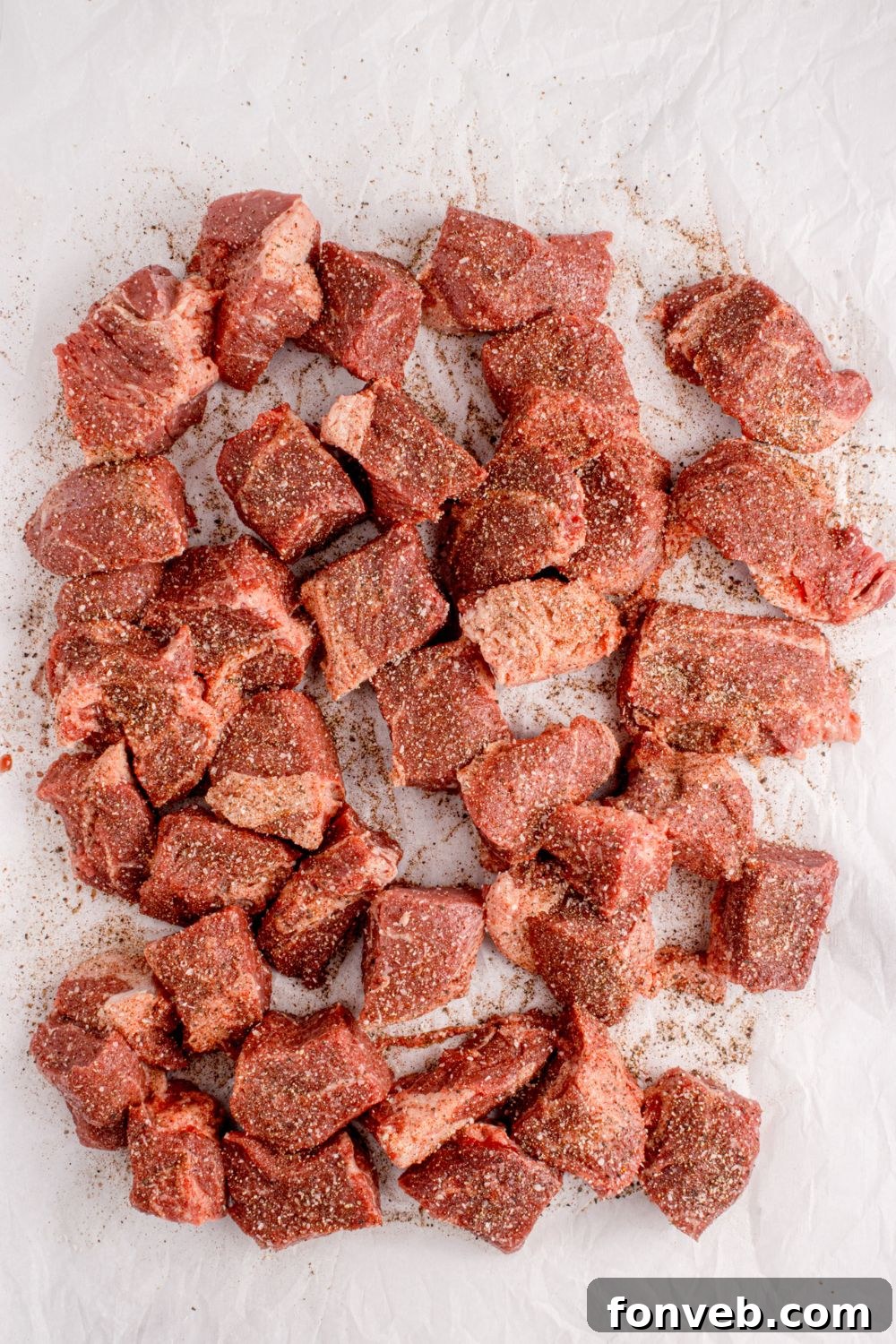
- Prepare the Meat: Cut the beef chuck roast into uniform 1.5-inch cubes. Uniformity is key for even cooking. In a small bowl, combine the kosher salt, garlic powder, black pepper, smoked paprika, and chili powder to create your BBQ rub. Sprinkle the rub generously all over the chuck roast cubes, ensuring every piece is well coated.
- First Smoke Phase: Arrange the seasoned chuck roast cubes on the cool side of your grill (indirect heat). Close the lid and smoke the meat at 225-250°F (107-121°C) for 2 hours. After this period, the meat should have developed a dark, smoky crust (or “bark”) and an internal temperature of roughly 160–170°F (71-77°C) when checked with a reliable meat thermometer.
Pro Tip: To prevent smaller cubes from falling through the grill grates, you can place them on a large wire rack set on top of the grates during this smoking phase.
- Braising Phase: Carefully transfer the partially smoked meat cubes into a disposable aluminum foil pan. Distribute the 5 tablespoons of unsalted butter (cut into small cubes) over the meat, then drizzle with ¼ cup of honey and pour ½ to ¾ cup of your favorite BBQ sauce. Stir gently to coat all the cubes evenly. Cover the pan tightly with aluminum foil and return it to the cool side of the grill. Continue cooking for another 1.5 to 2 hours, or until the meat is incredibly “probe tender” (a skewer or thermometer slides into a cube with almost no resistance). The internal temperature should now read 200–205°F (93-96°C).
- Rest and Stir: Once tender, remove the pan from the grill and allow it to rest, still covered with foil, for 20 to 30 minutes. This resting period is essential for the juices to redistribute throughout the meat, resulting in maximum tenderness and moisture. After resting, uncover the pan and gently stir the meat to ensure it’s thoroughly coated in the rich, sticky sauce.
- Final Glaze (Optional): For an even more intense, caramelized glaze, add an additional thin layer of BBQ sauce to the burnt ends and return the uncovered pan to the grill for a final 5-10 minutes. Watch closely to prevent burning the sugars in the sauce.
- Serve: Serve these magnificent Chuck Roast Burnt Ends hot, directly from the pan! They are sensational on their own, or paired with classic BBQ accompaniments like creamy coleslaw, decadent mac and cheese, or piled high into soft sandwich buns for an unforgettable meal.
Did you make this recipe?
Make sure to follow on Pinterest for more incredible recipes and culinary inspiration!
Pin Recipe
Share on Facebook