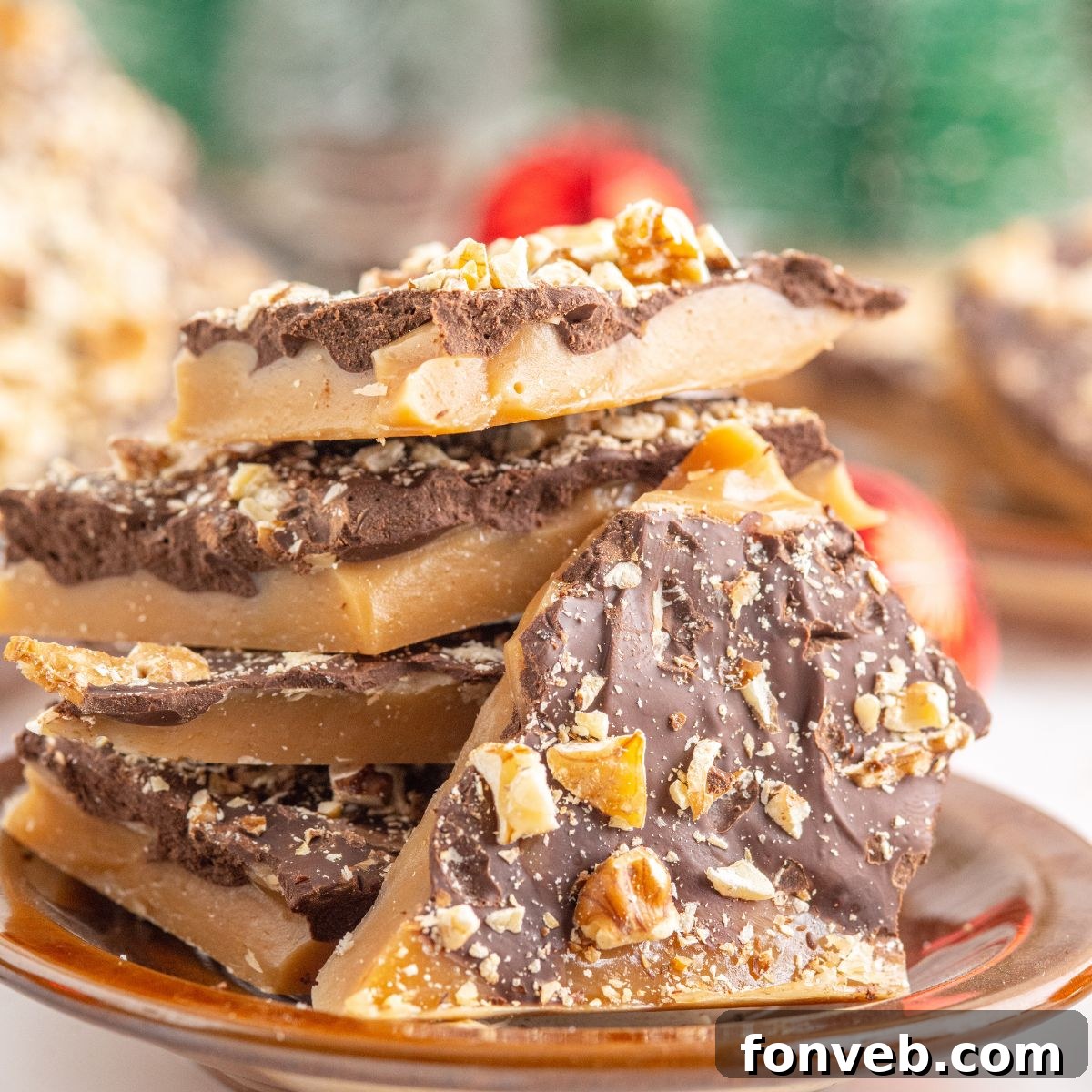
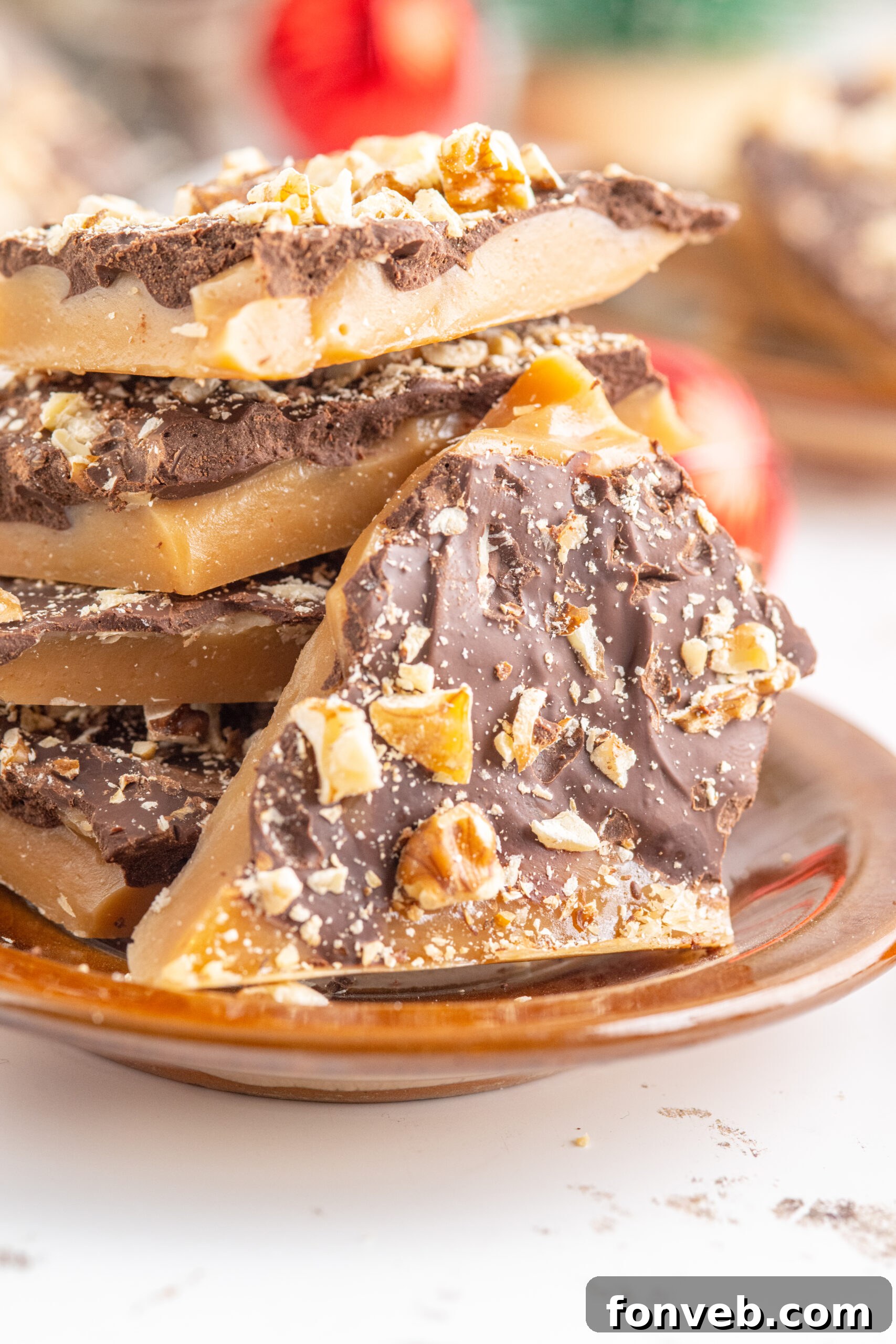
Indulge in the timeless charm of homemade Christmas candy with this irresistible **Old-Fashioned English Toffee recipe**. Imagine rich, golden, buttery toffee that shatters with a satisfying snap, generously layered with a velvety smooth blanket of melted chocolate, and crowned with an abundance of perfectly toasted pecans. This recipe isn’t just about recreating a classic holiday treat; it’s about perfecting it. We’ve distilled the nostalgic essence of traditional English toffee into a reliable, no-fail method that promises flawless crispness and unparalleled flavor every single time. If you’ve ever yearned for homemade toffee that rivals the iconic boxed holiday confections, yet boasts a freshness and depth of flavor only achievable in your own kitchen, then your search ends here. Crafted from real butter and simple pantry staples, and guided by the precision of a candy thermometer for guaranteed success, this is the kind of **gourmet toffee** people eagerly anticipate all year. It breaks beautifully into rustic, inviting shards, packs effortlessly into festive tins, and maintains its exquisite crunch and deliciousness for days, making it one of the most cherished **homemade Christmas gifts** you can create. Whether you’re curating lavish dessert trays, delighting neighbors with thoughtful presents, or simply expanding your collection of festive holiday sweets, this **classic English Toffee** is an absolute must-bake Christmas tradition!
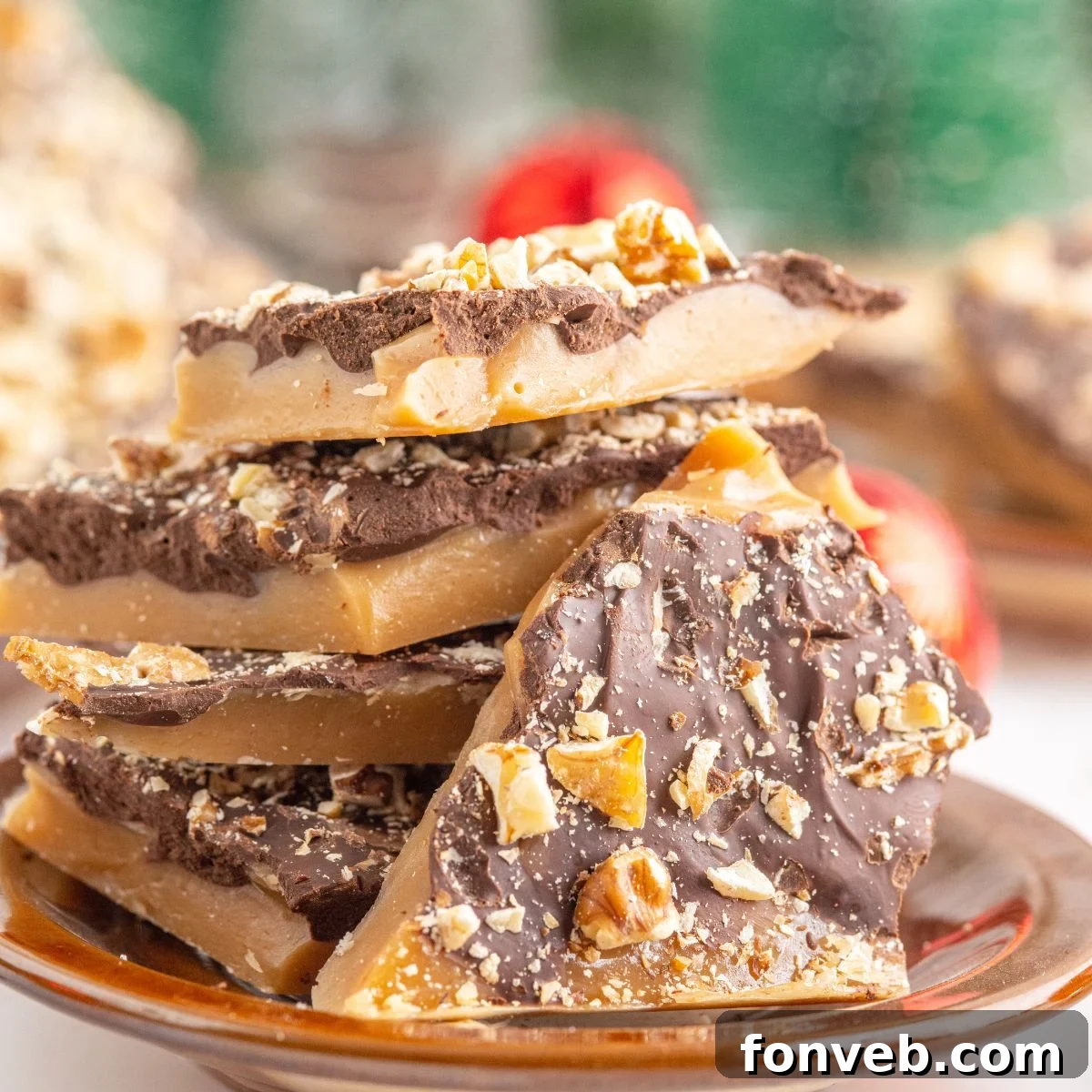
Discover the Best Old-Fashioned Homemade English Toffee for Christmas
This isn’t just any candy; this is the quintessential **English Toffee**, a beloved old-fashioned Christmas confection renowned for its deeply satisfying flavor and texture. At its heart, it’s a masterful blend of real butter and sugar, meticulously simmered to that signature golden hue and perfect, crisp “hard crack” stage. The toffee base is then elegantly topped with a silky layer of melted chocolate and finished with a generous scattering of toasted pecans, adding a delightful nutty depth and essential textural contrast. This recipe captures the very essence of the homemade toffee that graced vintage cookbooks and holiday candy tins of generations past—a treat that’s intensely buttery, impeccably crisp, and an undisputed star on any Christmas dessert spread.
What sets this recipe apart from mass-produced versions is the superior freshness and richer flavor profile, achieved with everyday ingredients you likely already have in your pantry. By utilizing a candy thermometer, this recipe eliminates guesswork, empowering even novice candy makers to achieve consistently perfect **homemade toffee** that will impress everyone who tastes it. Prepare to elevate your holiday baking with a recipe that’s as rewarding to make as it is delicious to share.
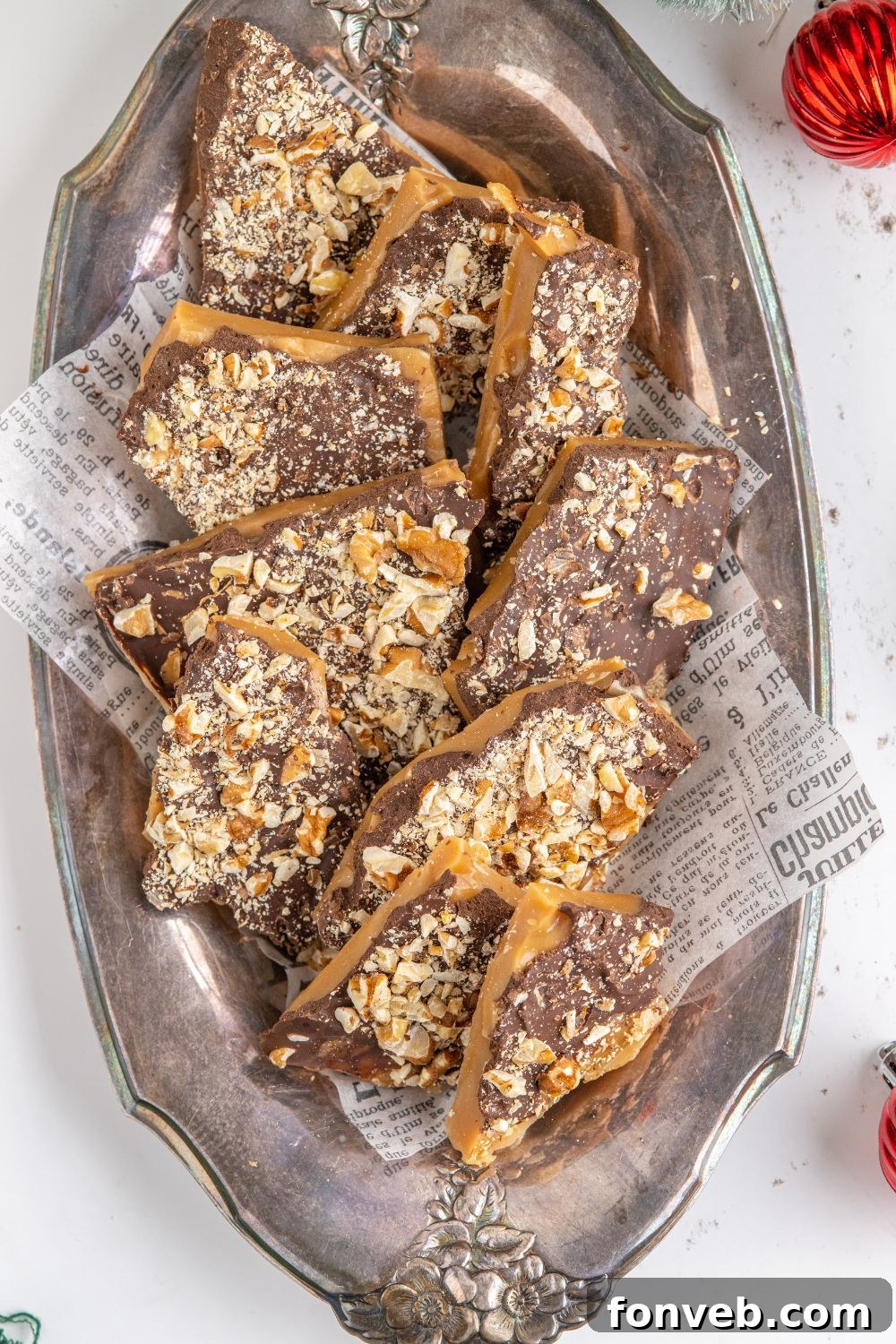
Why This No-Fail Toffee Recipe Guarantees Success
The magic of this **homemade English Toffee recipe** lies in its harmonious blend of time-honored candy-making techniques and clever reliability enhancers, ensuring a perfect batch every time. The crucial first step involves cooking the butter, granulated sugar, corn syrup, and a pinch of salt together until the mixture precisely reaches 300°F. This exact temperature is vital for achieving the “hard crack” stage—a state where the toffee is wonderfully crisp and brittle, yet never burnt. This precision is the cornerstone of its perfect snap.
A key ingredient in this formula for success is corn syrup. Its inclusion plays a critical role in preventing sugar crystallization, a common pitfall that can leave toffee with an undesirable grainy texture. Instead, the corn syrup ensures a smooth, glassy finish. The toasted pecans are not merely a garnish; they contribute a deep, earthy nuttiness that beautifully complements and balances the inherent sweetness of the toffee. Finally, the strategic layering of chocolate chips onto the still-warm toffee allows them to melt flawlessly from residual heat, creating a smooth, glossy, and beautifully tempered chocolate topping that slices cleanly once cooled. Every element, from the constant stirring of the pecans during toasting to the use of parchment paper for effortless removal, is intentionally designed to produce a foolproof version of this quintessential Christmas candy, transforming potentially tricky steps into consistently successful outcomes.
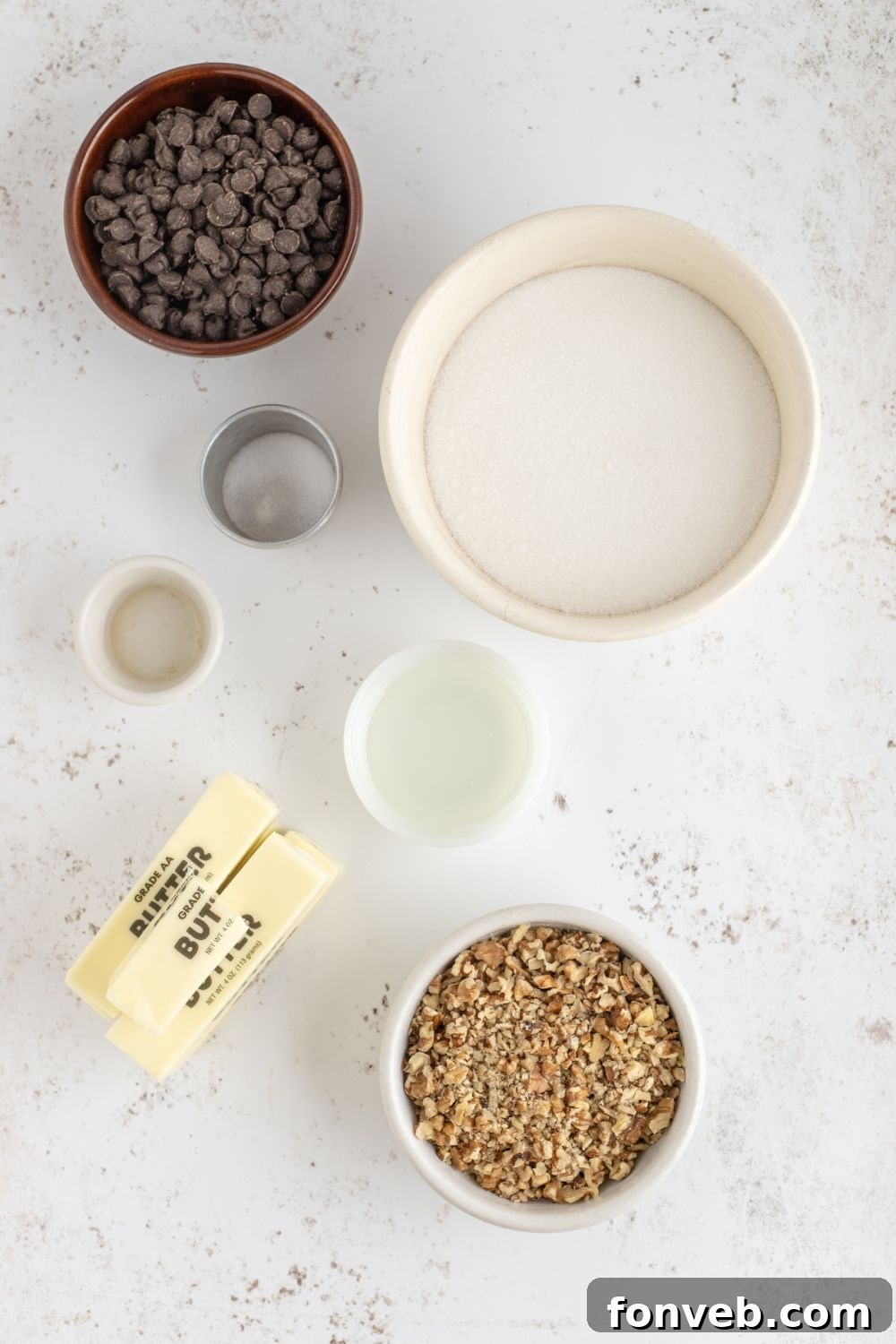
Ingredient Spotlight: The Role of Each Component in Perfect Toffee
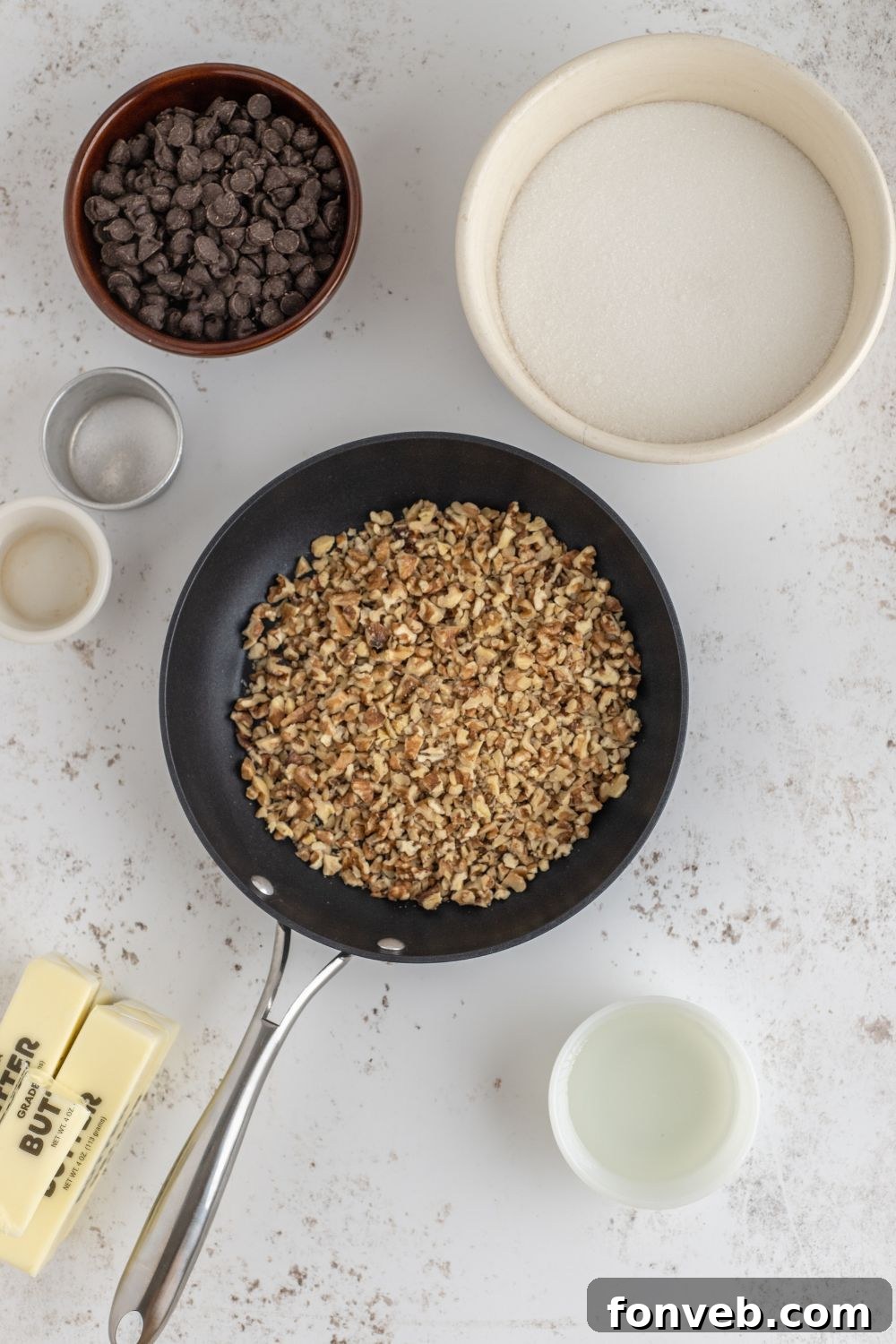
Crafting exceptional **English Toffee** begins with understanding the essential role each ingredient plays in creating its signature flavor and texture. This recipe relies on a few simple, high-quality items to achieve its gourmet results.
- Real Butter: This is the soul of your toffee, providing the rich, luxurious flavor and forming the fundamental structure that gives the candy its characteristic crisp snap. Using good quality, real butter is non-negotiable for achieving that classic, melt-in-your-mouth experience.
- Granulated Sugar: The backbone of the toffee, sugar caramelizes during cooking, transforming into the distinct golden brittle texture that defines this classic confection. It provides the sweetness and the necessary structure.
- Light Corn Syrup: Often underestimated, corn syrup is a quiet hero in candy making. It acts as an invert sugar, effectively stabilizing the granulated sugar and preventing it from recrystallizing. This is crucial for ensuring your toffee remains perfectly smooth and glassy, rather than grainy.
- Water: A small amount of water helps dissolve the sugar crystals evenly at the beginning of the cooking process. This ensures the sugar melts smoothly without seizing or burning prematurely, laying the foundation for a perfectly cooked toffee base.
- Salt: Just a touch of salt is transformative. It brightens and deepens the inherent buttery flavor, while also brilliantly balancing the intense sweetness of the sugar, creating a more complex and satisfying taste profile.
- Dark Chocolate Chips: These form the smooth, rich, and slightly bittersweet topping that beautifully complements the buttery toffee. Dark chocolate offers a sophisticated contrast that enhances the overall gourmet feel of the candy.
- Pecans: Toasted to perfection, pecans bring a crucial element of nuttiness and satisfying crunch. Toasting enhances their natural oils and deepens their flavor, providing a wonderful textural contrast and elevating the entire taste experience of the toffee.
The Science of Smoothness: How Corn Syrup Prevents Grainy Toffee
Corn syrup is indeed one of the unsung heroes of this **homemade toffee recipe**, and it’s the precise reason your confection achieves that coveted smooth, glassy finish rather than a sandy, gritty texture. At its core, when granulated sugar is heated to high temperatures, its natural inclination is to recrystallize. This means the tiny sugar molecules attempt to reform into their original crystalline structure, which can result in a coarse and dull texture in your candy. Corn syrup masterfully intervenes in this process. As a type of invert sugar, it introduces different sugar molecules (glucose and fructose) into the mixture. These varying molecules disrupt the ordered structure that pure sucrose crystals would normally form, effectively preventing them from bonding back together and crystallizing. This interruption keeps the sugar molecules separated and stable even as the mixture reaches the extremely high temperatures required for the “hard crack” stage. The beautiful outcome is that unmistakable translucent snap and buttery, melt-in-your-mouth texture that is the hallmark of truly exquisite **English Toffee**. If you’ve ever battled with grainy or cloudy toffee in past attempts, the strategic inclusion of corn syrup is likely the missing secret to unlocking consistent success.
Choosing the Perfect Chocolate for Your Toffee Topping
The type of chocolate you select for your **English Toffee** can profoundly impact its final flavor and appeal. While personal preference plays a role, understanding the characteristics of different chocolates will help you create your ideal holiday treat.
- Dark Chocolate Chips: These are often the preferred choice for a sophisticated and balanced toffee. Dark chocolate melts beautifully, sets firmly, and provides a delightful bittersweet contrast that elegantly cuts through the sweetness of the buttery toffee base. It delivers a rich, intense flavor that elevates the entire confection.
- Milk Chocolate Chips: If you’re aiming for a softer, sweeter, and more melt-in-your-mouth finish, milk chocolate is an excellent option. It creates a creamy topping that leans towards a more classic, dessert-candy profile, perfect for those with a sweeter tooth.
- Semi-Sweet Chocolate Chips: This variety offers a fantastic middle ground, providing a pleasant balance between sweetness and a subtle cocoa bitterness. Semi-sweet chocolate chips deliver that universally loved chocolate-toffee bite, making them a crowd-pleasing choice for most holiday trays.
Regardless of your preference, the paramount consideration is using **high-quality chocolate chips**. Lesser-quality varieties are more prone to separating, blooming, or developing an unappealing streaky appearance when spread over hot toffee. Superior chocolate melts more smoothly and sets with a beautiful, glossy sheen. Furthermore, dark chocolate, in particular, harmonizes exceptionally well with toasted pecans, contributing to every bite a rich, buttery, and subtly smoky finish that tastes truly gourmet.
English Toffee vs. American Toffee: Understanding the Sweet Distinction
While the terms “English Toffee” and “American Toffee” are often used interchangeably in casual conversation, there are actually distinct differences that set these two beloved confections apart. Understanding these nuances can help appreciate the unique character of each.
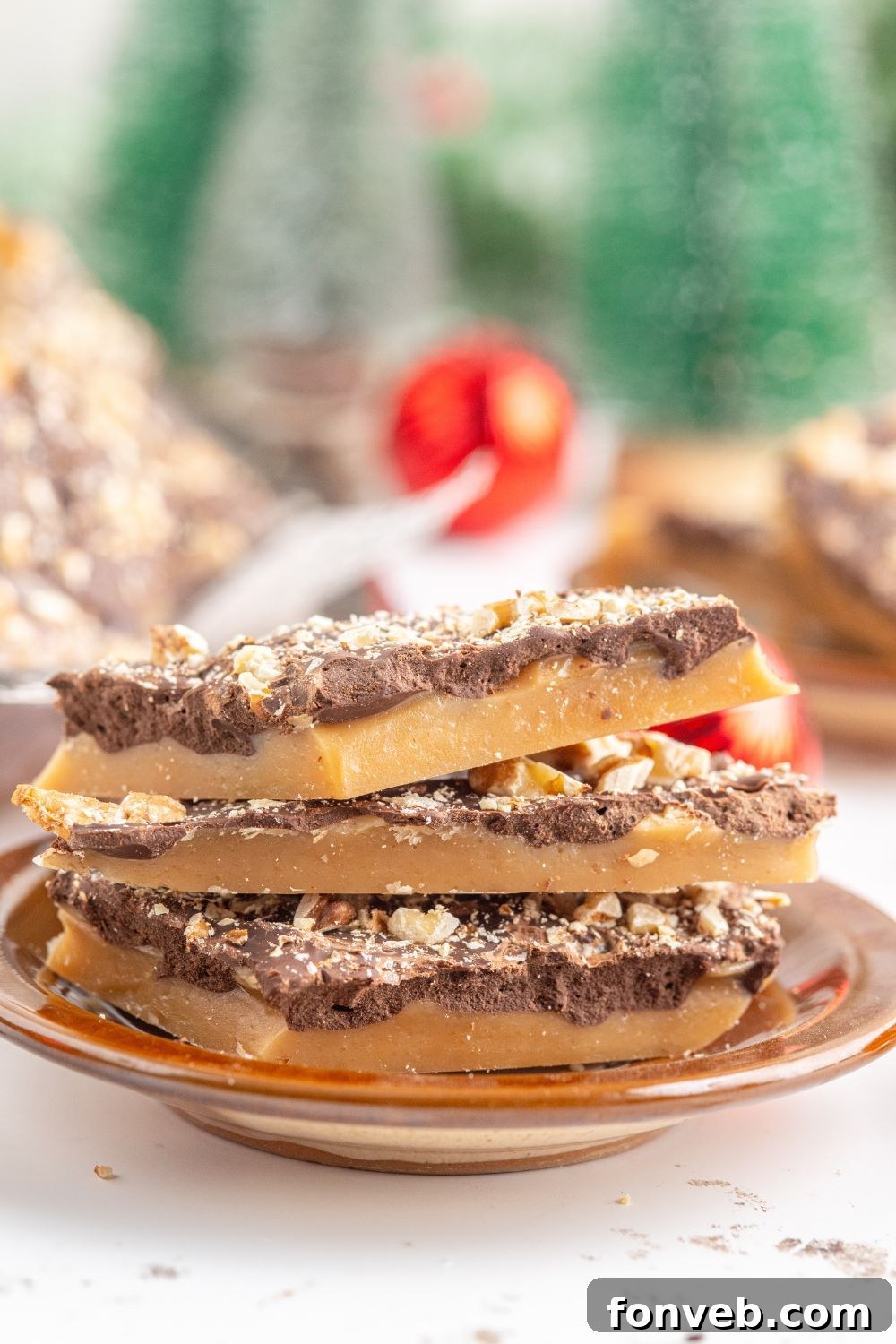
- Traditional English Toffee: Historically, authentic English toffee is characterized by its simplicity and purity of flavor. It is always made without nuts, allowing the rich, deeply caramelized buttery base to shine through entirely. In terms of texture, traditional English toffee tends to be softer and possess a slightly chewy quality, offering a gentler experience on the palate.
- American Toffee: This version, which is notably closer to what most home bakers in the United States prepare during the holiday season, almost invariably incorporates chopped nuts. These nuts are typically found both mixed into the candy itself and generously layered on top, often beneath a blanket of chocolate. The texture of American toffee is distinctively crisp and firm, delivering that irresistible “snap” when broken or bitten into.
This particular recipe, with its indulgent addition of toasted pecans and a luxurious chocolate topping, firmly aligns with the “American Toffee” tradition. However, its profoundly rich, buttery flavor profile pays a heartfelt homage to the original classic English confectionery, blending the best of both worlds into a holiday masterpiece. It’s a testament to how culinary traditions evolve and adapt, creating new favorites while still honoring their roots.
Expert Tips to Avoid Burnt Butter or Sugar in Your Toffee
Toffee making, while incredibly rewarding, is an art where precision and attentiveness truly matter. Given that the sugar and butter mixture cooks for an extended period at high temperatures, even a momentary lapse in focus can lead to the unpleasant bitterness of burnt butter or scorched sugar. Here are essential strategies to ensure your **homemade toffee** achieves a perfect golden caramelization:
- Constant, Gentle Stirring: This is your primary defense against burning. Continuously stir the mixture, but do so gently. The goal is to keep the liquid sugar and butter moving, ensuring even heat distribution throughout the saucepan. Avoid aggressively splashing the mixture up the sides of the pot, as these sugar crystals can burn and then fall back into the batch, initiating unwanted crystallization.
- Use a Heavy-Bottom Saucepan: Investing in a good quality, heavy-bottomed saucepan is crucial. Its thick base distributes heat much more evenly across the bottom of the pan, significantly minimizing the risk of hot spots where sugar can quickly scorch. Thin pans are notorious for uneven heating and are a common cause of burnt toffee.
- Maintain Medium Heat: Resist the temptation to rush the process by cranking up the heat. A steady, medium heat setting allows the ingredients to cook and caramelize gradually and evenly, giving you more control over the darkening process.
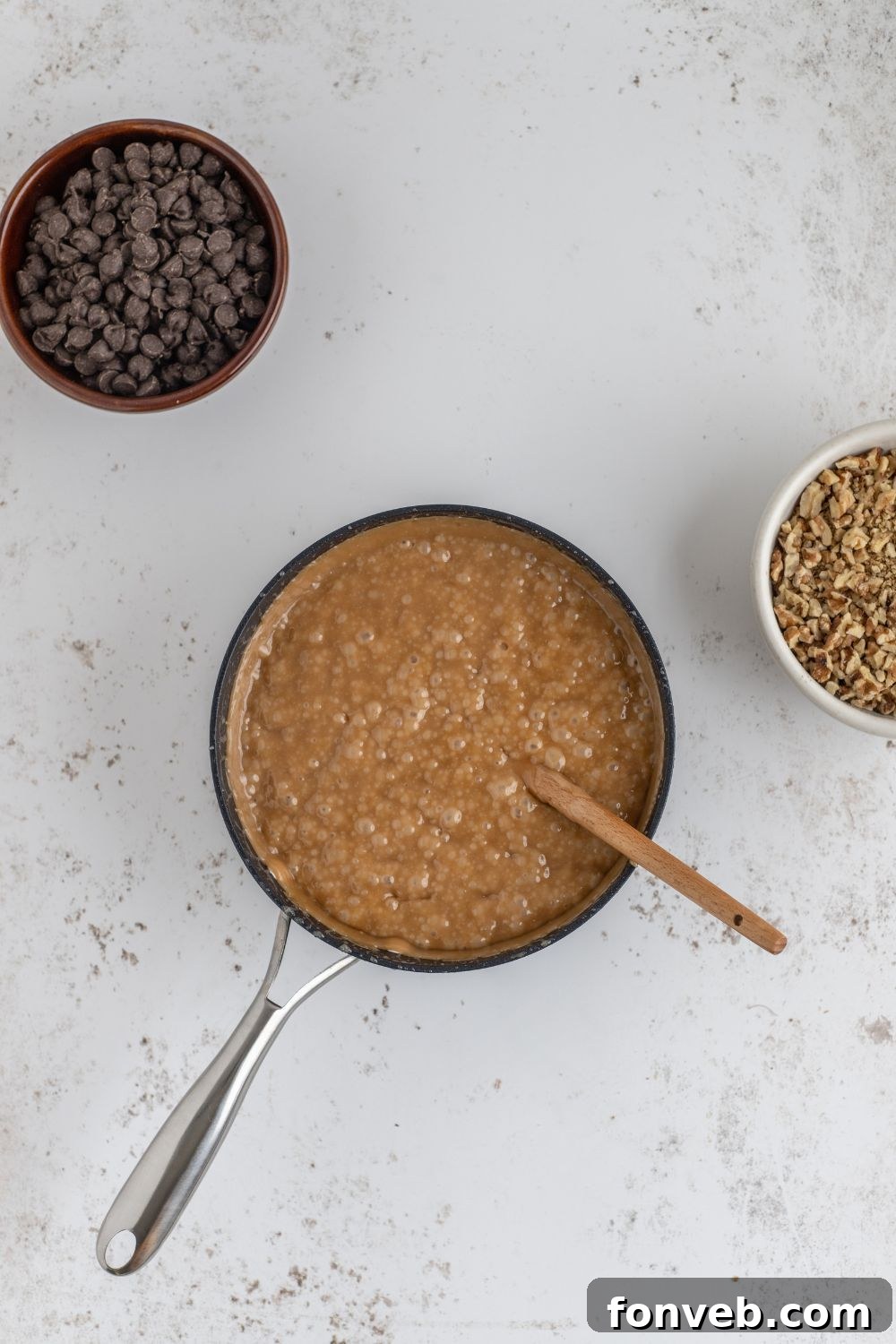
- Monitor Color and Aroma: Pay close attention to both the visual cues and the scent. The mixture will progress from pale yellow to a beautiful, deep amber or golden-brown. If you detect a distinct “nutty” or slightly acrid smell, or if the color rapidly darkens beyond a rich amber before reaching 300°F, immediately lower the heat. This is a sign that parts of the sugar are beginning to caramelize too quickly or burn.
- The Unforgiving Nature of Burnt Toffee: It’s important to understand that burnt toffee is not salvageable. Once the sugar scorches, its bitter, acrid taste permeates the entire batch. There’s no fixing it, so prevention is key. Remain present and attentive throughout the entire cooking stage; this vigilance is everything for a flawless batch of **buttery toffee**.
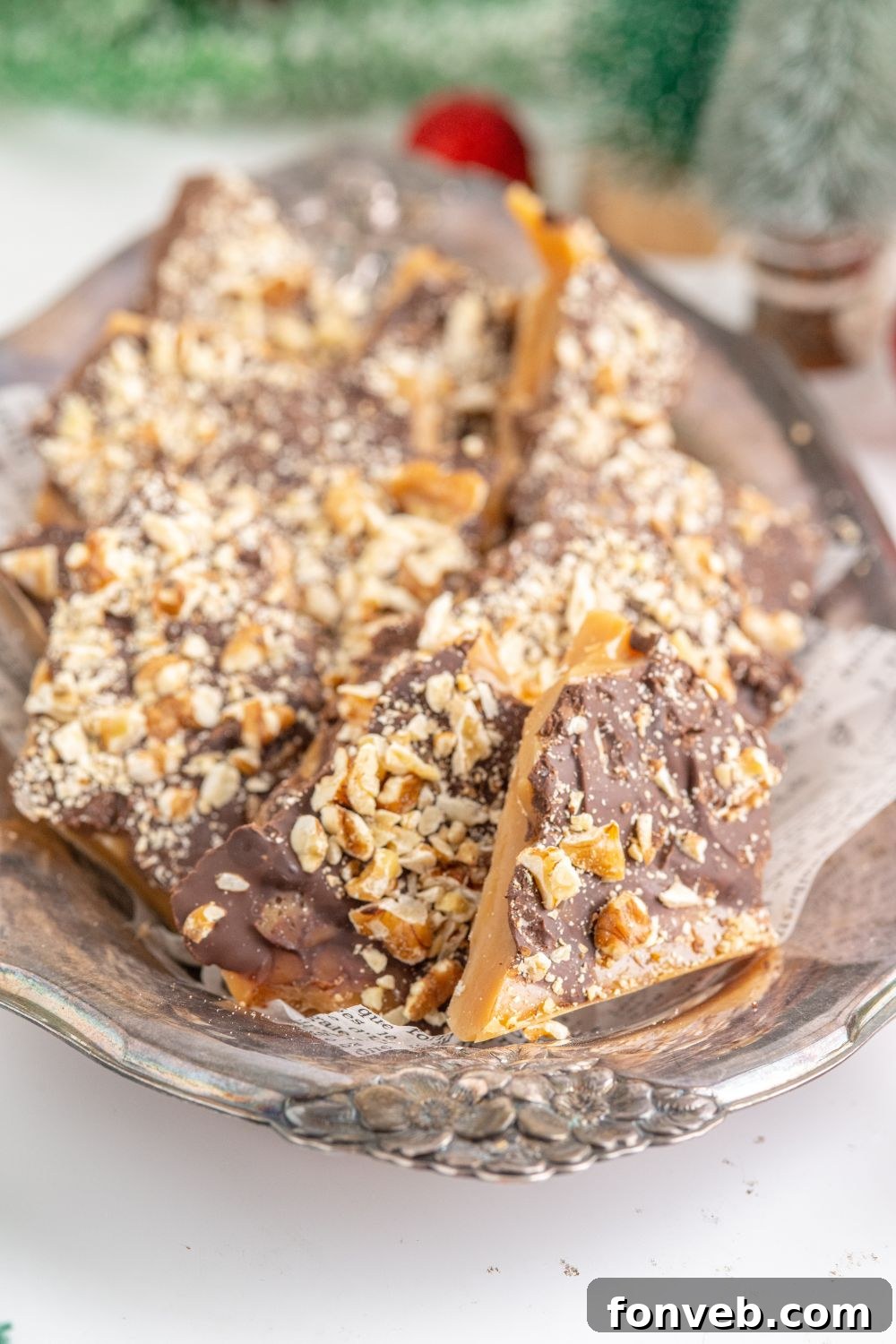
Perfect Moments and Creative Ways to Serve Your Homemade Toffee
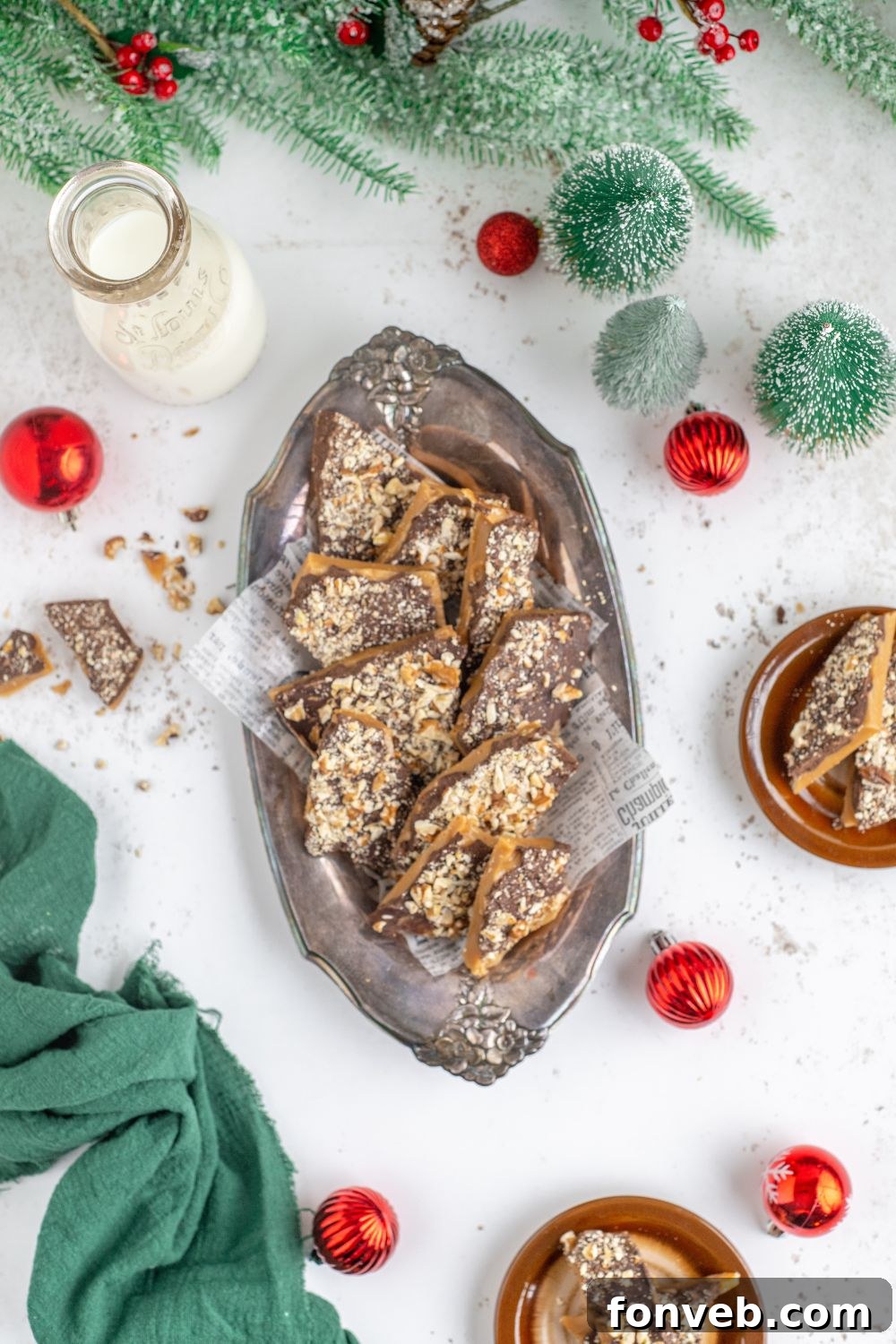
This **Old-Fashioned English Toffee** is more than just a sweet treat; it’s a versatile indulgence perfect for a myriad of festive occasions. Its robust flavor and delightful texture make it a welcome addition to virtually any holiday gathering or as a thoughtful gesture.
- Christmas Dessert Tables: A quintessential offering, its golden hue and festive toppings make it an instant showstopper alongside cookies and cakes.
- Holiday Parties: Break it into elegant shards and arrange it on platters for easy snacking and a sophisticated touch.
- Candy Tins and Gift Boxes: The ultimate homemade present, beautifully packaged toffee delights friends, family, and colleagues.
- Teacher, Neighbor, and Hostess Gifts: A heartfelt and delicious token of appreciation that everyone will adore.
- Cookie Exchanges: Stand out from the crowd with this impressive non-cookie addition.
- Holiday Charcuterie-Style Dessert Boards: Its crisp texture and rich flavor pair wonderfully with cheeses, fruits, and other sweet components.
- After-Dinner Holiday Treats: A perfect indulgent bite to round off a festive meal.
- New Year’s Eve Dessert Platters: Carry the holiday cheer into the new year with this delightful candy.
The beauty of this **buttery toffee** also lies in its excellent shelf stability, making it an ideal candidate for December-long baking and gifting. Prepare batches in advance, knowing they’ll remain crisp and delicious when it’s time to celebrate.
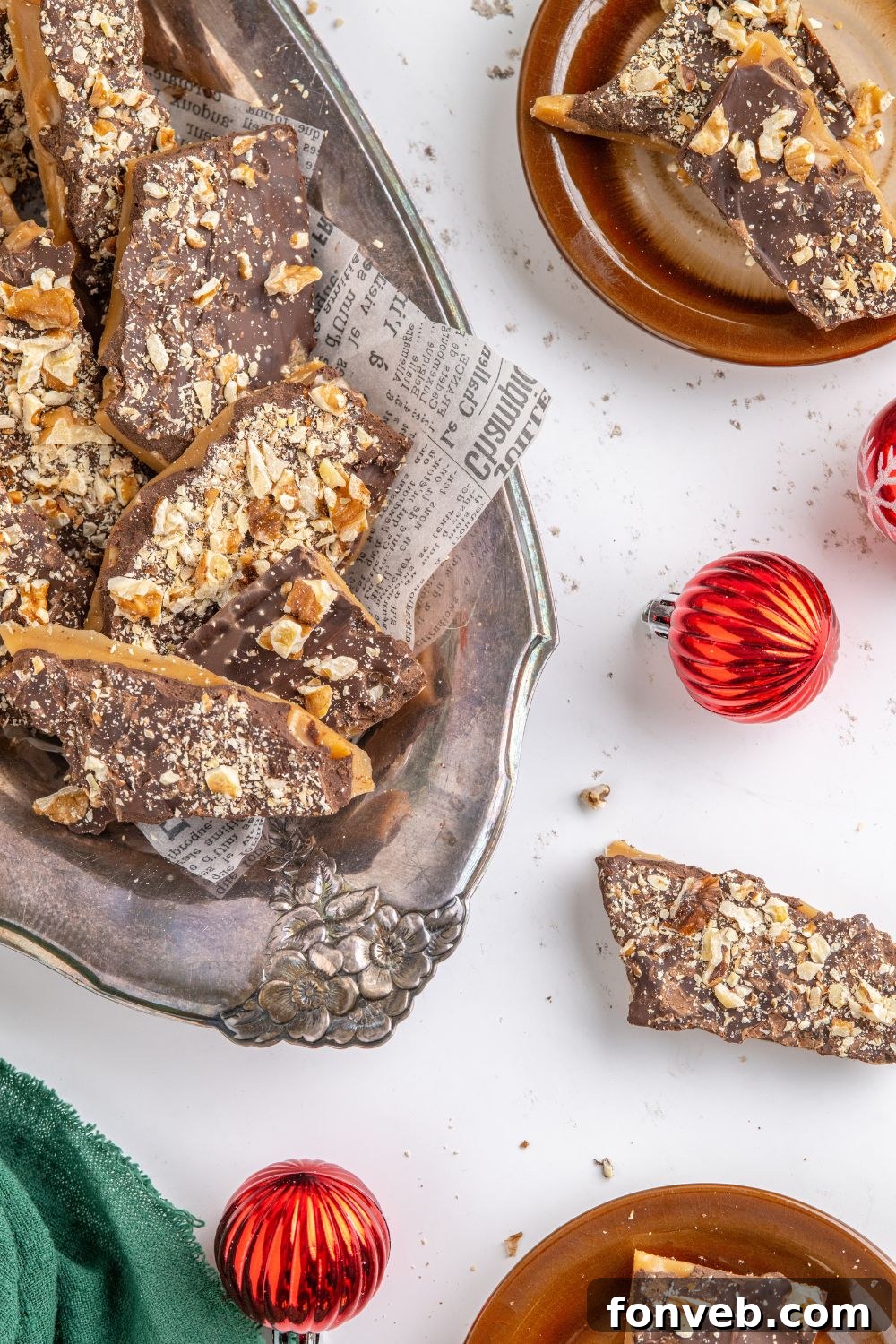
Make-Ahead & Storage Tips for Long-Lasting Freshness
One of the many appealing qualities of this **Homemade English Toffee** is its exceptional suitability as a make-ahead Christmas candy. Its inherent crispness and resistance to softening make it a fantastic option for early preparation, freeing up valuable time during the busy holiday season.
- Room Temperature Storage: For optimal crispness and flavor, store your toffee in an airtight container at room temperature. It will remain wonderfully fresh and delicious for up to 1 week. Ensure the container is truly airtight to protect against humidity, which can cause the toffee to become sticky.
- Preventing Sticking: If you plan on stacking multiple layers of toffee pieces in your storage container or gift tins, always place a sheet of parchment paper between each layer. This simple step prevents the chocolate topping from sticking to the toffee below and keeps each piece pristine.
- Refrigeration: While not strictly necessary for preservation, you can refrigerate the toffee if you prefer the chocolate layer to be extra firm, especially in warmer climates or if your home is particularly warm. However, be aware that cold temperatures can sometimes make the toffee slightly harder to break and impact its immediate texture.
- Freezing for Extended Storage: For long-term storage, toffee freezes remarkably well. First, wrap the completely cooled toffee tightly in parchment paper, then in aluminum foil, and finally place it in a freezer-safe bag or container. This triple-layer protection guards against freezer burn and odor absorption. It can be frozen for up to 2 months.
- Serving from Storage: Whether refrigerated or frozen, always allow the toffee to come back to room temperature before serving. This ensures the best possible “snap” and allows the flavors and textures to fully develop for the most enjoyable eating experience.
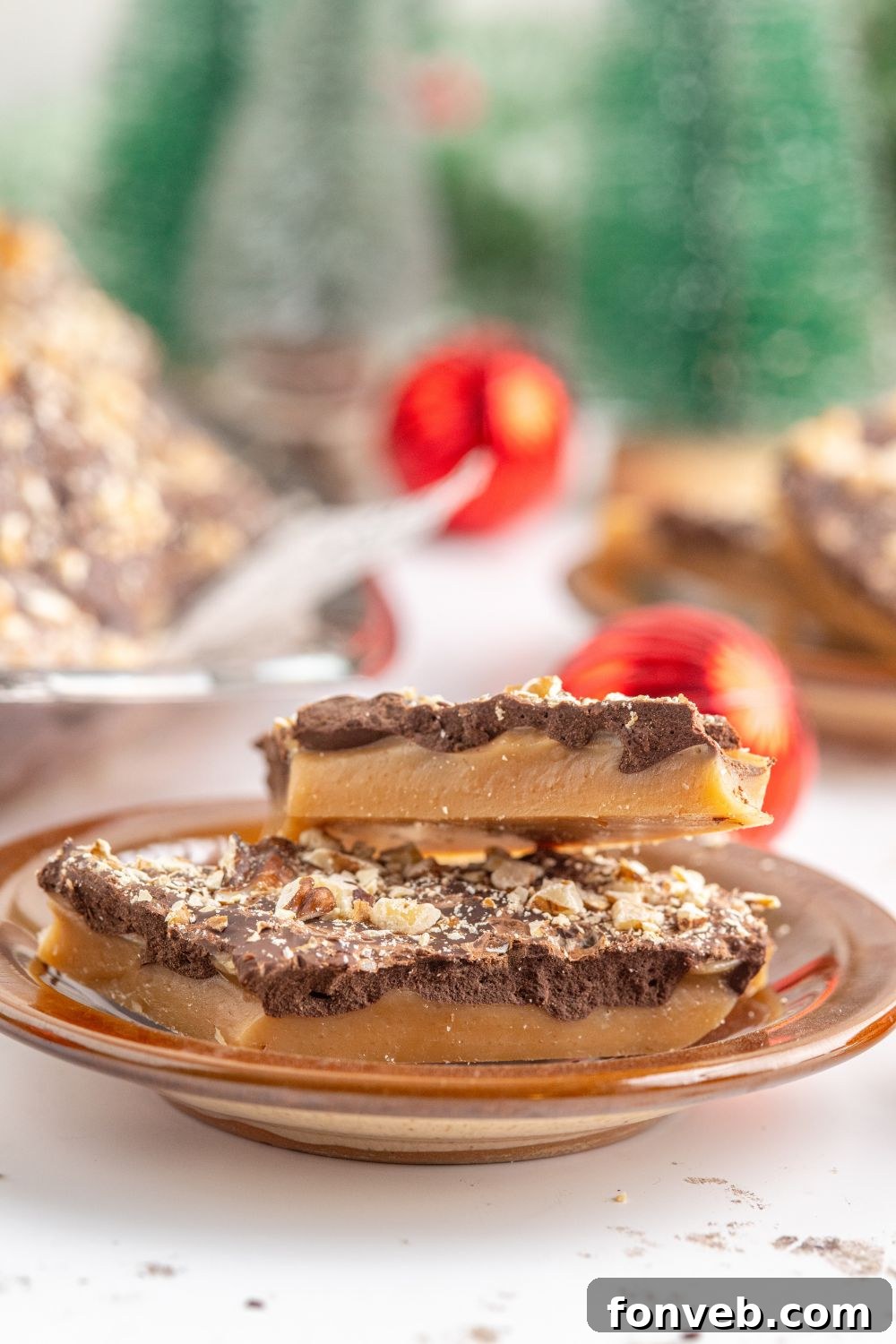
Why You’ll Fall in Love with This English Toffee Recipe
This **Homemade English Toffee** isn’t just a recipe; it’s an experience that delivers pure joy and delicious satisfaction. Here’s why it will quickly become a cherished favorite in your kitchen:
- Gourmet Flavor: It tastes remarkably like expensive, high-end holiday candy you’d find in a specialty shop, but with the unparalleled freshness of homemade.
- The Perfect “Toffee Snap”: Achieve that iconic, satisfyingly crisp snap every single time, a hallmark of perfectly made toffee. No more chewy or soft disappointments!
- Unmatched Flavor Combination: The divine pairing of rich chocolate with crunchy, perfectly toasted pecans creates a flavor profile that is simply irresistible and beautifully balanced.
- Foolproof Success: Thanks to the clear instructions and the essential guidance of a candy thermometer, this recipe is incredibly reliable, making it achievable even for beginners.
- Beautiful for Gifting: Its impressive appearance and long-lasting freshness make it an ideal and highly appreciated gift for friends, family, and colleagues during the holidays.
- Generous Yield: This recipe makes a full 9×13 inch pan of toffee, providing plenty for sharing, gifting, and enjoying yourself throughout the season.
- Simple Pantry Ingredients: You won’t need exotic or hard-to-find items; just basic, readily available ingredients transform into something extraordinary.
- Stunning Presentation: It’s a visually appealing addition that instantly elevates any Christmas cookie tray or dessert buffet, catching every eye with its golden glow and elegant topping.
This is truly the kind of timeless recipe that transcends mere cooking; it becomes a cherished yearly tradition, eagerly anticipated and lovingly prepared, bringing warmth and sweetness to every holiday season.
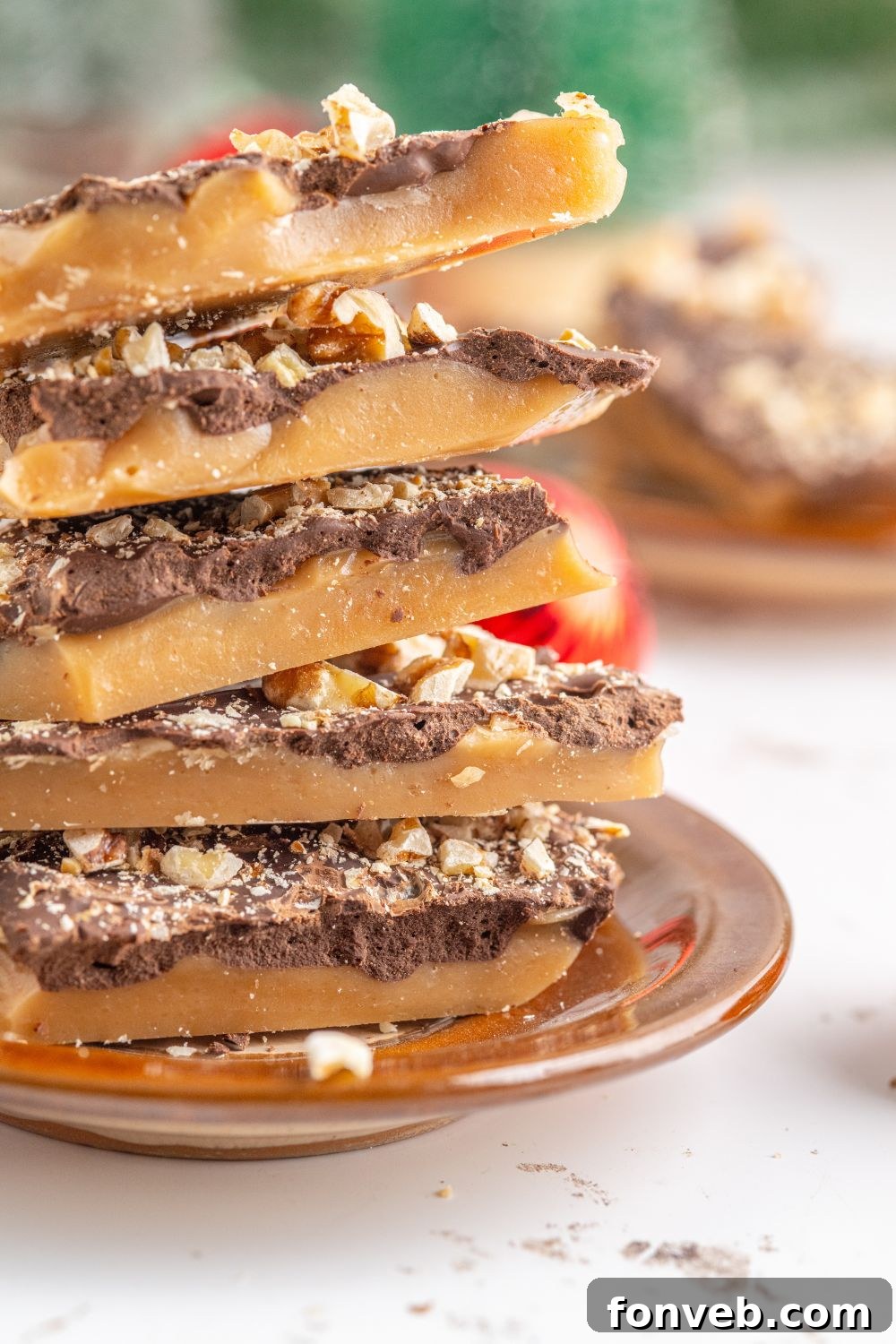
Frequently Asked Questions About Homemade English Toffee
Why is a candy thermometer essential for making perfect English Toffee?
A candy thermometer is absolutely indispensable for **English Toffee** because achieving the “hard crack” stage, precisely at 300°F (149°C), is the single most critical factor for its classic brittle texture. Unlike baking, where a few degrees deviation might be forgiving, candy making is a precise science. If the temperature is too low, your toffee will be disappointingly soft, chewy, or even sticky. If it goes too high, the sugar will scorch, resulting in a bitter, burnt taste and a dark, unappealing color. A candy thermometer removes all guesswork, providing an accurate, real-time reading of your mixture’s temperature. This ensures that even novice candy makers can confidently hit that perfect 300°F mark, making the recipe foolproof and guaranteeing consistent, professional-quality results every time.
Why did my toffee separate, with butter pooling on top?
Toffee separation, often appearing as a greasy layer of butter pooling on the surface, is a common issue that typically indicates an imbalance or inconsistency during the cooking process. This can happen for several reasons:
- Excessively High Heat: Cooking the mixture over heat that is too high can cause the butter and sugar to separate. The water in the butter evaporates too quickly, and the fats can’t emulsify properly with the sugar syrup.
- Inconsistent Stirring: If the mixture isn’t stirred consistently, hot spots can develop, leading to localized burning or separation. Uneven agitation prevents the fat and sugar from homogenizing.
- Butter Added Too Cold: Adding butter that is very cold can shock the mixture and make it harder for the fat to fully incorporate and emulsify with the other ingredients. Room temperature butter melts more evenly into the sugar mixture.
- Shifting Fat-to-Sugar Ratio: Any deviation from the recipe’s specified ratio of fat to sugar can disrupt the emulsion and lead to separation. Precision in measurements is key.
If separation does occur, don’t panic immediately. Sometimes, you can gently whisk the mixture back together over very low heat to re-emulsify it. However, the best prevention is always to maintain a steady, medium heat throughout the cooking process and stir evenly and consistently, ensuring all ingredients are well combined and heated uniformly.
Can I use different nuts or omit them entirely from this recipe?
Absolutely! While pecans are a traditional and wonderfully complementary choice for this **English Toffee**, you have complete flexibility to customize the nuts to your preference. Walnuts offer a slightly more bitter, earthy flavor that pairs beautifully with dark chocolate. Almonds provide a delicate crunch and a mild, sweet note. Even pistachios, with their vibrant color and unique taste, can create a gourmet variation. If you prefer your toffee without nuts, you can certainly leave them out entirely. In this case, consider adding a sprinkle of flaky sea salt on top of the warm chocolate layer for a delightful salty-sweet version that enhances the caramel notes of the toffee.
How do I achieve clean, even toffee pieces when breaking it apart?
Achieving aesthetically pleasing, clean-cut pieces of **homemade toffee** requires a little patience and technique. The key is to let the toffee cool and harden *completely* at room temperature. Rushing this step will result in sticky, uneven breaks. Once fully hardened, lift the parchment-lined toffee slab from the pan. You can then gently flex the parchment and toffee to encourage it to break into rustic, organic shards, which many people prefer for their charming, homemade look.
For a more uniform and polished appearance, particularly desirable for gifting, you can employ a scoring technique. Once the toffee has been poured into the pan and has begun to set but is still warm and slightly pliable (typically after about 5-10 minutes), use a sharp knife or a pizza cutter to lightly score lines across the surface, creating your desired square or rectangular shapes. Do not cut all the way through, just create guiding indentations. Once the toffee has cooled and hardened completely, simply break it along these scored lines. The toffee will snap cleanly, giving you neater pieces perfect for elegant presentation.
Why is it important to toast the pecans before adding them to the toffee?
Toasting the pecans before incorporating them into your **chocolate toffee** recipe is a simple yet crucial step that dramatically enhances the overall flavor and texture of the finished candy. Raw pecans, while edible, have a milder, sometimes slightly bland taste. Toasting them brings out their natural oils, intensifying their nutty aroma and deepening their flavor profile to a rich, complex, and earthy note. This elevated nuttiness beautifully complements the intense sweetness of the toffee and richness of the chocolate.
Beyond flavor, toasting also contributes to the texture. It helps the nuts remain crisp and crunchy after being sprinkled over the warm, moist chocolate layer, preventing them from becoming soft or soggy. This ensures that every bite of your **pecan toffee** offers a satisfying crunch alongside the brittle snap of the toffee itself.
Why is my toffee grainy, and how can I prevent it?
Grainy toffee is a common and frustrating issue, almost always caused by sugar crystallization. This happens when sugar molecules, once dissolved, start to re-form into crystals, leading to a gritty, sandy texture instead of the desired smooth and brittle snap. Several factors can contribute to this:
- Aggressive Stirring at Early Stages: Vigorously stirring the mixture, especially before the sugar is fully dissolved, can cause tiny sugar crystals to cling to the sides of the pot or be introduced into the solution. These rogue crystals then act as “seed” crystals, encouraging the rest of the dissolved sugar to crystallize around them.
- Sugar Crystals on Pot Sides: During cooking, sugar syrup can splash and dry on the inner walls of the saucepan. These dried crystals can fall back into the hot syrup, initiating crystallization throughout the batch. To prevent this, occasionally use a pastry brush dipped in warm water to gently wash down the sides of the pot.
- Lack of a Stabilizer: As discussed, corn syrup (or another invert sugar like glucose syrup) is a powerful crystallization inhibitor. If you omit it or don’t use enough, the sugar is much more prone to recrystallizing.
To prevent grainy toffee, remember to:
- Stir gently and only as much as needed, especially in the initial stages until the sugar is dissolved.
- Periodically wipe down the sides of your saucepan with a damp pastry brush to remove any errant sugar crystals.
- Always include corn syrup as specified in the recipe.
Can I make English toffee without the chocolate layer?
Absolutely! While the chocolate layer adds an extra dimension of richness and makes the **English Toffee** visually stunning, the buttery toffee base is utterly delicious on its own. For a pure, unadulterated toffee experience, simply skip the step of adding chocolate chips. If you still desire the textural contrast and nutty flavor, you can sprinkle the toasted pecans directly onto the hot toffee base after pouring it into the prepared pan. Press them down gently to ensure they adhere before the toffee fully hardens. This creates a more rustic, but equally delightful, nut-studded toffee that highlights the rich caramel notes.
Does English toffee ship well as a gift?
Yes, **Homemade English Toffee** is unequivocally one of the best homemade candies for shipping! Its inherent stability and crisp texture make it remarkably resilient during transit. Unlike softer candies, it doesn’t easily melt, soften, or break apart badly, nor does its flavor significantly degrade over short shipping times. The hard-crack stage ensures it holds its form beautifully. To maximize its shipping success, ensure you package it tightly. Place the toffee shards in an airtight container or a sturdy, parchment-lined tin, then wrap that container securely. If there’s any empty space, fill it with crumpled tissue paper or packing peanuts to prevent shifting. This robust packaging will help protect the chocolate layer from scuffing and ensure your delicious **gourmet toffee** arrives at its destination in perfect condition, tasting as fresh as the day it was made.
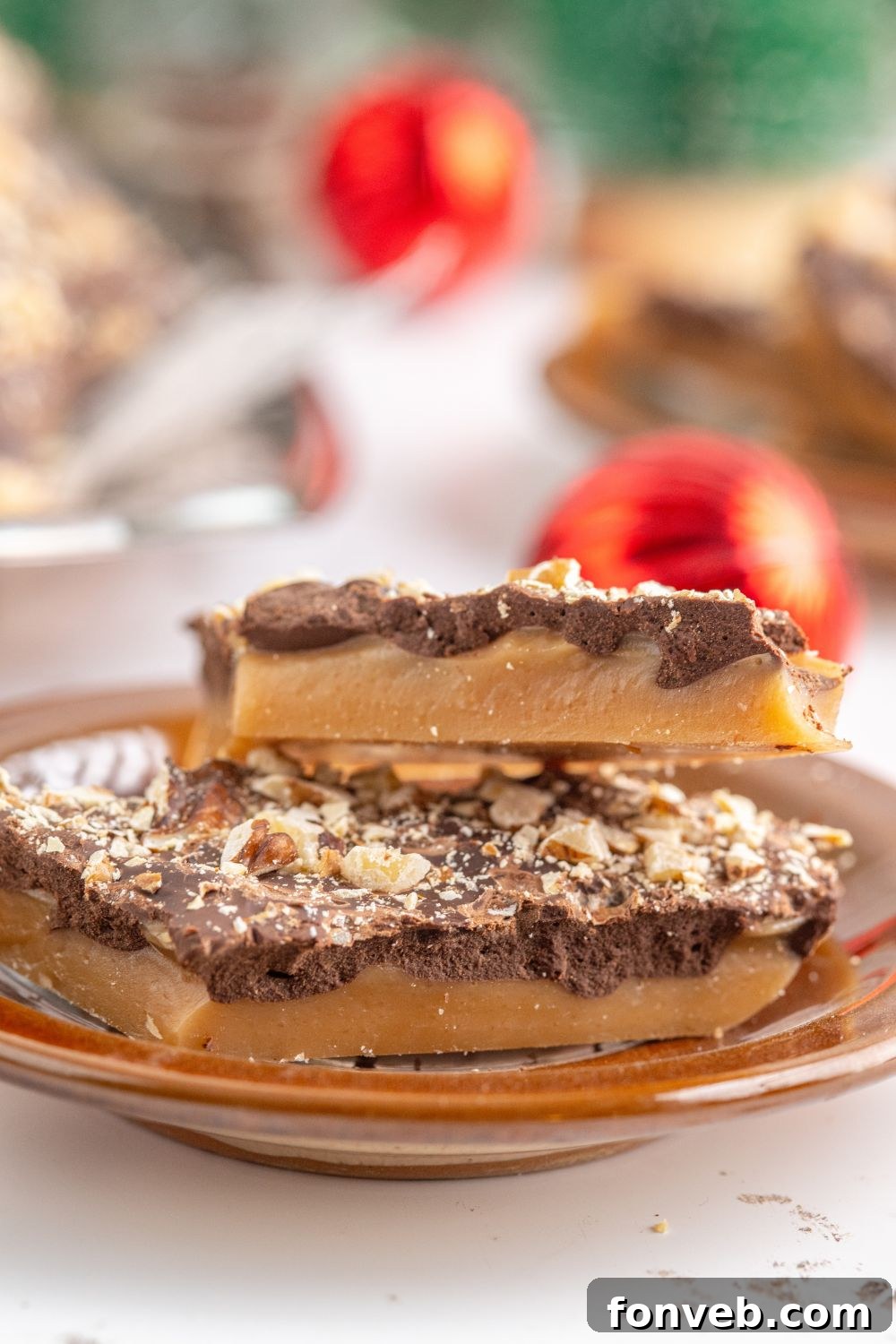
Creative Variations & Substitutions for Your Signature Toffee
This **classic English Toffee recipe** serves as a fantastic foundation for culinary creativity. While perfect on its own, a few simple tweaks can transform it into a unique, signature holiday treat. Don’t be afraid to experiment and discover your own favorite combinations:
- Chocolate Swap: Instead of dark chocolate, try creamy milk chocolate for a sweeter profile, or use white chocolate for a distinctly different flavor and aesthetic.
- Flaky Sea Salt: A generous sprinkle of flaky sea salt over the warm chocolate layer before it sets creates an irresistible sweet-and-salty contrast that enhances the caramel notes.
- Nut Alternatives: While pecans are traditional, toasted almonds, walnuts, or even pistachios can be substituted for a different texture and flavor.
- Flavor Infusions: Add a tiny pinch of ground cinnamon or espresso powder to the melted chocolate layer to introduce subtle, warm, and sophisticated undertones.
- “Turtle Toffee”: Drizzle homemade or store-bought caramel over the chocolate and pecan layer before it cools completely, creating a decadent “turtle” candy effect.
- Peppermint Twist: For a festive Christmas variation, sprinkle crushed candy canes over the warm chocolate. The cool minty crunch offers a delightful seasonal twist.
Budget-Friendly Indulgence: The Cost of Homemade Toffee
Making **homemade English Toffee** is not only incredibly satisfying but also surprisingly economical compared to purchasing gourmet versions. Here’s an estimated budget breakdown:
- Butter: $4–$6 (for quality real butter)
- Sugar & Corn Syrup: $2 (these are generally inexpensive staples)
- Pecans: $3–$5 (a key component, cost varies by brand/season)
- Chocolate Chips: $3 (for a good quality bag)
- Total Estimated Cost: ~$12–$16 for an entire 9×13 inch sheet of luxurious toffee.
To put this in perspective, comparable store-bought gourmet toffee of the same quantity would typically cost anywhere from $25–$35 or even more. This makes homemade toffee an excellent value, providing a high-quality, delicious product at a fraction of the price, especially when making multiple batches for gifting or entertaining.
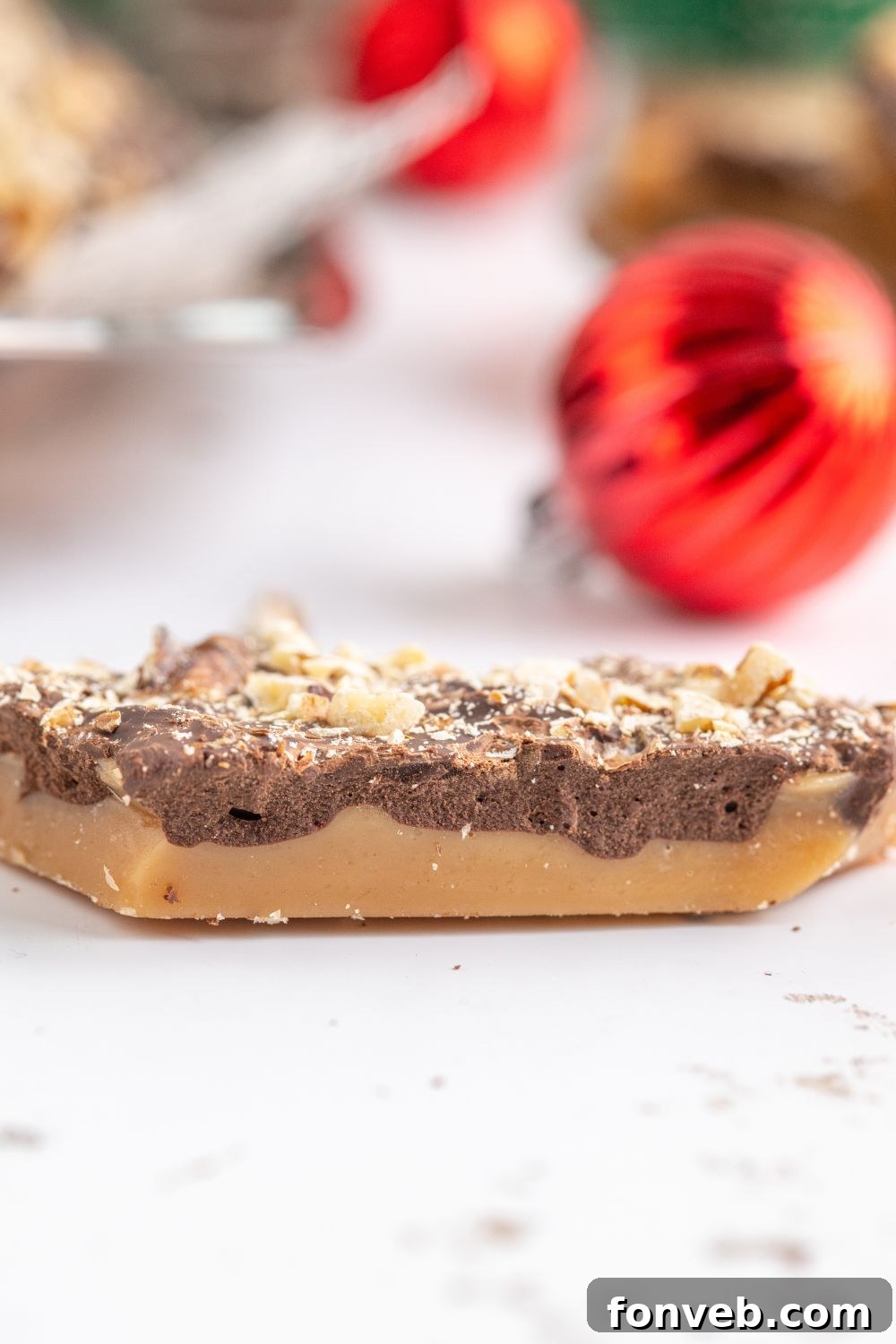
Troubleshooting Common Toffee Issues for a Perfect Batch
Even with a foolproof recipe, minor hiccups can occur in candy making. Here are quick solutions to common **homemade toffee** challenges:
- Toffee is too soft or chewy: This is the most common issue and almost always means the mixture didn’t reach the crucial 300°F (hard crack stage). A candy thermometer is key to preventing this. Unfortunately, once cooled, soft toffee cannot be re-hardened.
- Toffee tastes burnt or bitter: The heat was likely too high, or the mixture was cooked for too long past the desired temperature. Burnt sugar cannot be salvaged, so a new batch will be needed. Pay close attention to color and aroma.
- Butter separating or pooling: This usually indicates the mixture wasn’t stirred consistently, or the heat was too high. Try gently whisking the mixture to re-emulsify it. Reducing the heat to a steady medium and stirring continuously helps prevent this.
- Chocolate not melting smoothly over toffee: If your chocolate chips aren’t melting adequately from the residual heat, cover the pan loosely with aluminum foil for 2-3 minutes after sprinkling them on. The trapped steam and heat will help soften the chips, making them easier to spread into a smooth layer.
- Toffee sticking to parchment paper: While parchment paper generally prevents sticking, if you’re experiencing issues, lightly spray the parchment paper with a non-stick cooking spray before pouring the hot toffee mixture in your next batch.
Elevate Your Holiday Candy: Gourmet Flavor Variations
If you’re already a fan of the classic version and want to take your holiday candy trays to the next level, this **English Toffee recipe** provides the perfect blank canvas for exciting, gourmet twists. These variations allow you to maintain the reliable base recipe while offering a diverse range of flavors to impress every guest and recipient.
- Peppermint Bark Toffee: For a truly festive holiday treat, sprinkle a generous amount of crushed peppermint candies over the warm chocolate layer immediately after spreading. This creates a delightful “peppermint bark meets toffee” flavor, combining cool mint with rich caramel.
- Nutty Blends: Experiment with different nut combinations. Instead of just pecans, try a mix of finely chopped toasted almonds, walnuts, and hazelnuts for a complex nutty profile and varying textures.
- Mocha Toffee: Stir a teaspoon of high-quality espresso powder (not instant coffee granules) into your melted chocolate before spreading it. This creates a sophisticated mocha toffee that tastes incredibly decadent, reminiscent of a high-end bakery creation.
- Salted Caramel Toffee: After applying the chocolate layer, and if skipping other toppings, finish with a generous sprinkle of flaky sea salt. The distinct sweet-salted caramel profile is incredibly popular and adds a gourmet touch that is perfect for elegant holiday gift boxes.
- Spiced Toffee: A hint of warm spices can transform the chocolate layer. Try adding a pinch of ground cinnamon, nutmeg, or even a tiny dash of cayenne pepper for a subtle kick that will intrigue the palate.
These simple yet impactful variations allow you to customize your **homemade toffee** to suit various tastes, ensuring your holiday spread is not only delicious but also wonderfully diverse.
Nutrition Information (Estimated per square)
Please note, these values are approximate and can vary based on specific ingredient brands and portion sizes. This information is provided for general guidance:
Calories: ~280
Fat: 18g
Carbs: 30g
Sugar: 28g
Protein: 2g
(Will vary by brand and chocolate used, and how thinly it is spread or how many pieces you cut it into.)
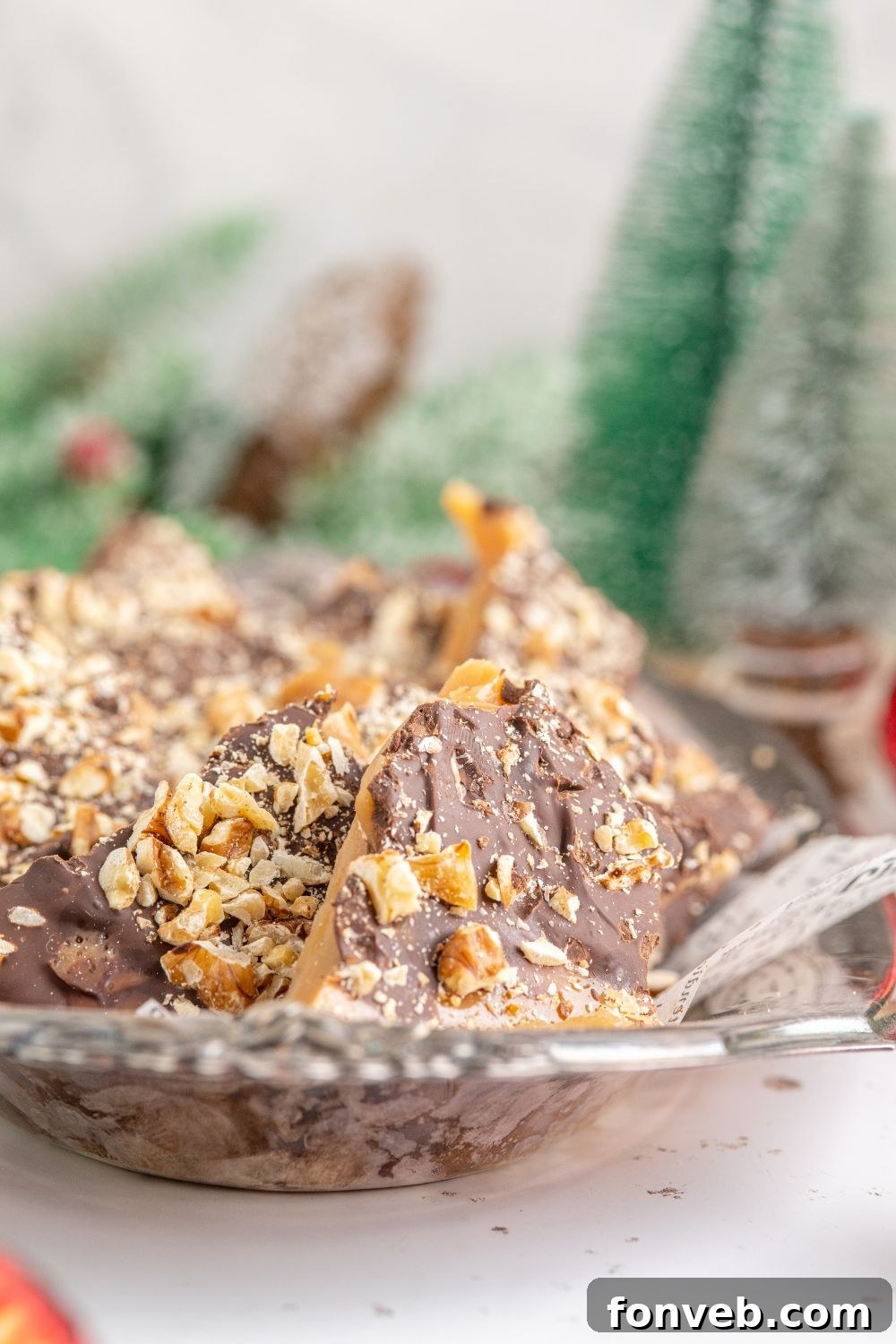
The Art of Gifting: Presenting Your Homemade English Toffee
Homemade **English Toffee** truly shines as one of the most thoughtful and impressive Christmas gifts you can give. Its resilience means it keeps beautifully, its appearance is inherently stunning, and its flavor tastes like a premium confection from a high-end candy boutique. Here’s how to package it for maximum impact:
- Rustic Shards for Charm: Break the cooled toffee into irregular, rustic shards. This organic look is part of its homemade charm and appeal.
- Festive Tins: Layer the toffee pieces in decorative holiday tins. Line the tin with parchment paper first to prevent sticking and ensure freshness.
- Parchment-Lined Boxes: For a more elegant presentation, arrange toffee in small, sturdy boxes lined with crinkled parchment or tissue paper.
- Cellophane Bags with Ribbon: For individual portions or smaller gifts, place a few pieces in clear cellophane bags and tie them with festive ribbons and a small tag.
- Christmas Treat Jars: Fill glass jars with toffee, sealing them tightly and adorning them with a bow for a charming, rustic gift.
- Cookie Trays and Dessert Assortments: Include a generous amount of toffee alongside other baked goods to create a varied and impressive holiday platter.
To further elevate the presentation, consider an extra sprinkle of toasted pecans or a light dusting of flaky sea salt right before packaging. A small, handwritten note accompanying your gift with simple storage instructions and perhaps a serving suggestion adds that personal, thoughtful touch that recipients truly cherish. It transforms a delicious treat into a memorable, heartfelt gesture.
My Personal Kitchen Notes for Toffee Perfection
When I first ventured into candy making, toffee seemed a bit daunting. However, watching the simple mixture transform from a pale, bubbling liquid to a rich, deep golden caramel is an incredibly rewarding experience. Over the years, I’ve gathered a few personal insights that truly make a difference in achieving a flawless batch of **homemade toffee** every time.
First and foremost, don’t underestimate the importance of toasting the pecans. It’s not just an optional step; it’s transformative. As you toast them, stir constantly and vigilantly. Pecans can go from perfectly fragrant to burnt in a matter of seconds, and even the slightest char will impart an acrid taste to your entire batch. A golden-brown color and a distinct, warm aroma are your cues.
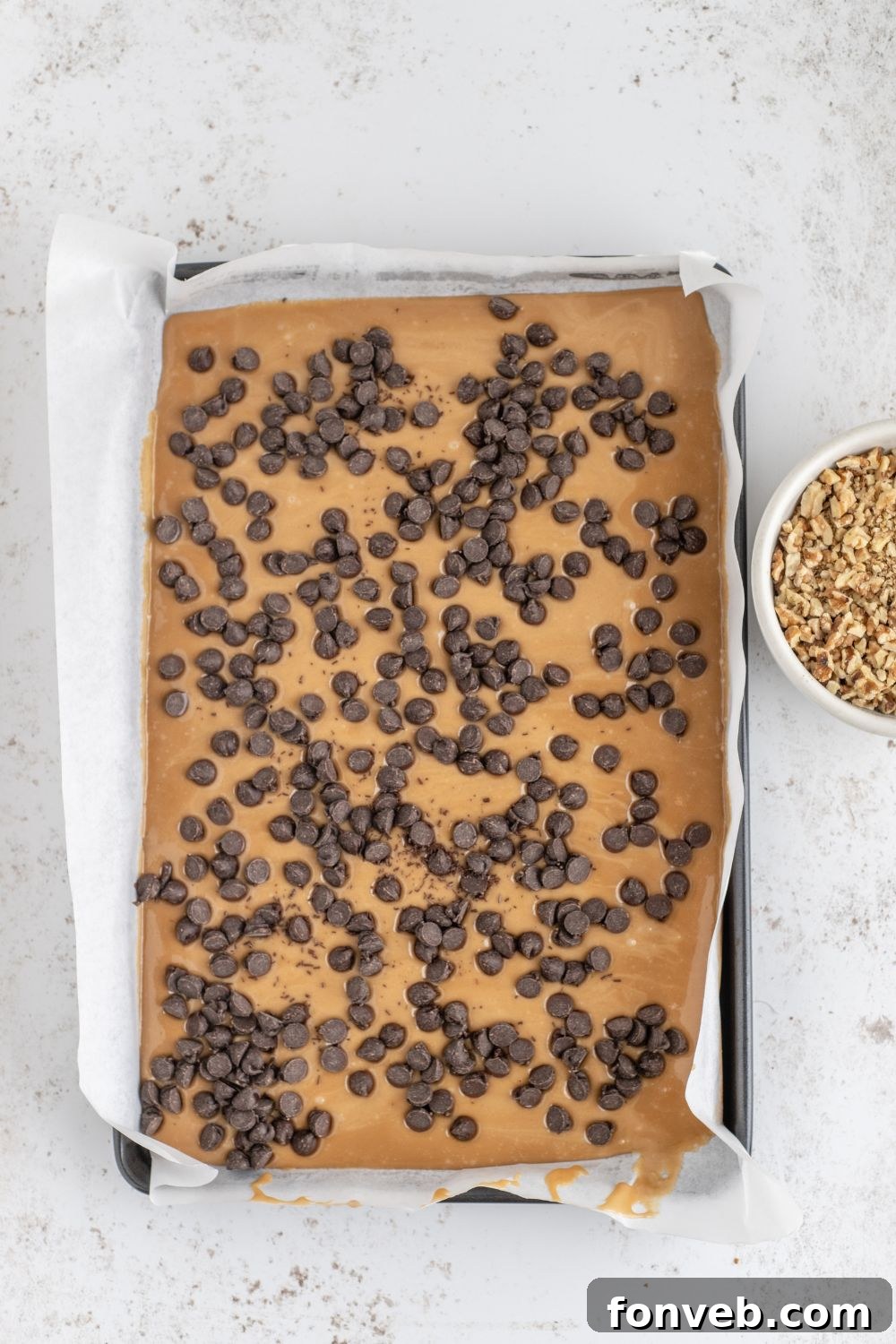
When it comes to the chocolate layer, patience is a virtue. Resist the urge to spread the chocolate chips immediately after sprinkling them onto the hot toffee. Allow the residual heat from the freshly poured toffee to work its magic for a full minute or two. You’ll notice the chips softening and becoming glossy. This brief waiting period ensures that when you finally begin to spread with an offset or rubber spatula, the chocolate glides smoothly into an even, beautiful layer without clumping or tearing the toffee beneath. Preparing all your ingredients and equipment ahead of time—mise en place—is also a game-changer. Having everything ready ensures the process flows smoothly, minimizing stress and maximizing your chances of achieving that flawless, crisp, and utterly delicious **chocolate toffee** every single time.
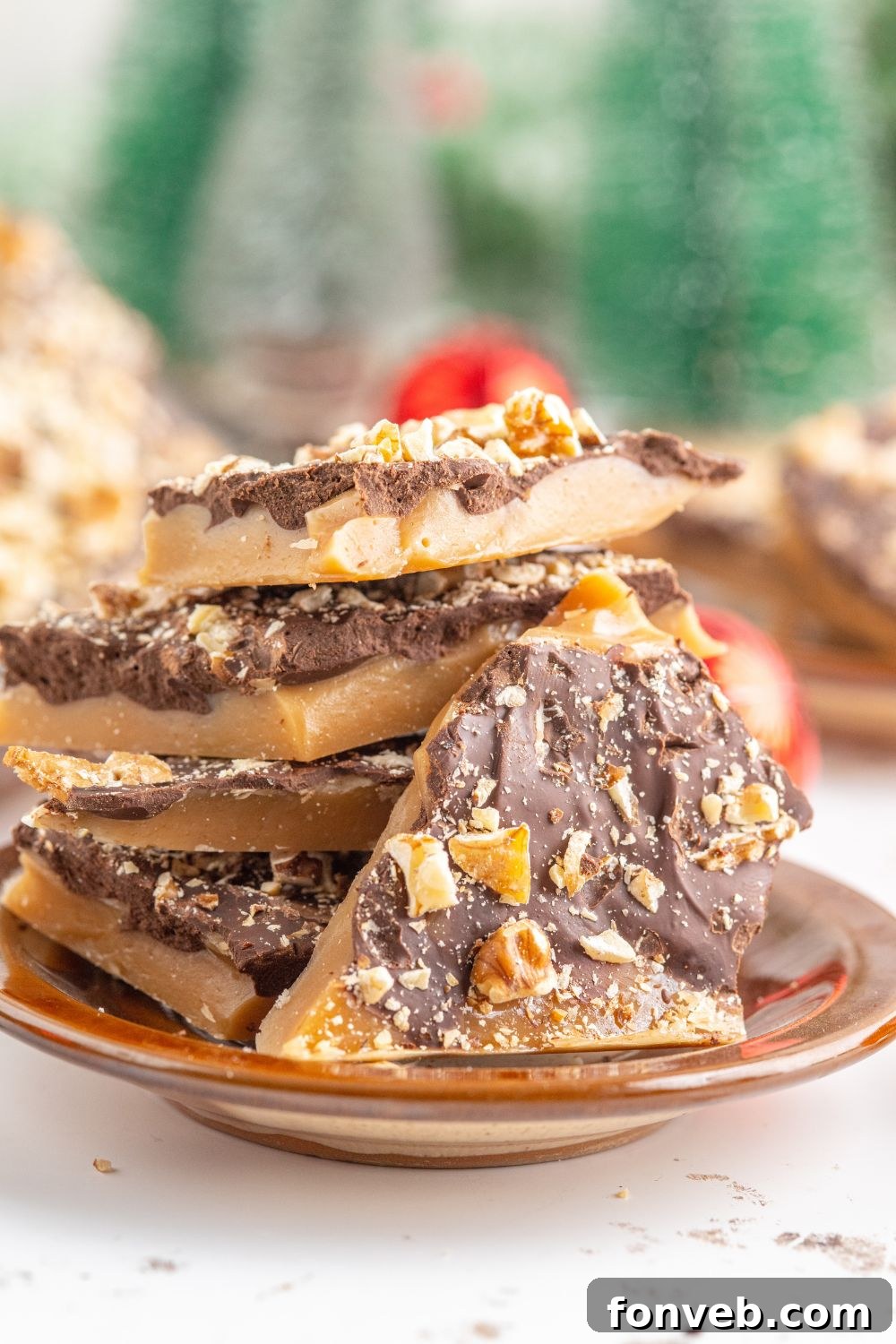
Final Thoughts: Your New Holiday Toffee Tradition
This **Old-Fashioned English Toffee** is precisely the kind of exceptional holiday candy everyone dreams of finding in a beautifully festive tin. It embodies everything one could wish for: intensely buttery, wonderfully crisp, sumptuously rich with chocolate, and perfectly balanced with the earthy crunch of toasted pecans. It’s a nostalgic confection that evokes warm memories, beautifully simple to create, and absolutely ideal for all your Christmas baking and gifting needs. With its dependable, no-fail results, a classic flavor profile that appeals to all, and an impressive homemade finish, this **easy toffee recipe** is destined to become a cherished and eagerly anticipated tradition in your home every single holiday season.
More Festive Christmas Recipes to Enjoy!
- Homemade Peanut Brittle
- Easy Linzer Cookies with Jam
- Christmas Tree Crack
- Giant Reese’s Cup Pie
English Toffee
Ingredients
- 1 1/2 cups chopped pecans
- 2 1/2 cups salted butter room temp
- 3 cups + 2 Tbs sugar
- 1/3 cup + 1 Tbs light corn syrup
- 2 Tbs water
- 3/4 tsp salt
- 4 cups dark chocolate chips
Instructions
-
Line a 9×13” baking dish with parchment paper, then set aside. Add the pecans to a medium sized skillet.
-
Cook over medium heat for 2-3 minutes, or until fragrant. Stir constantly to avoid any burning.
-
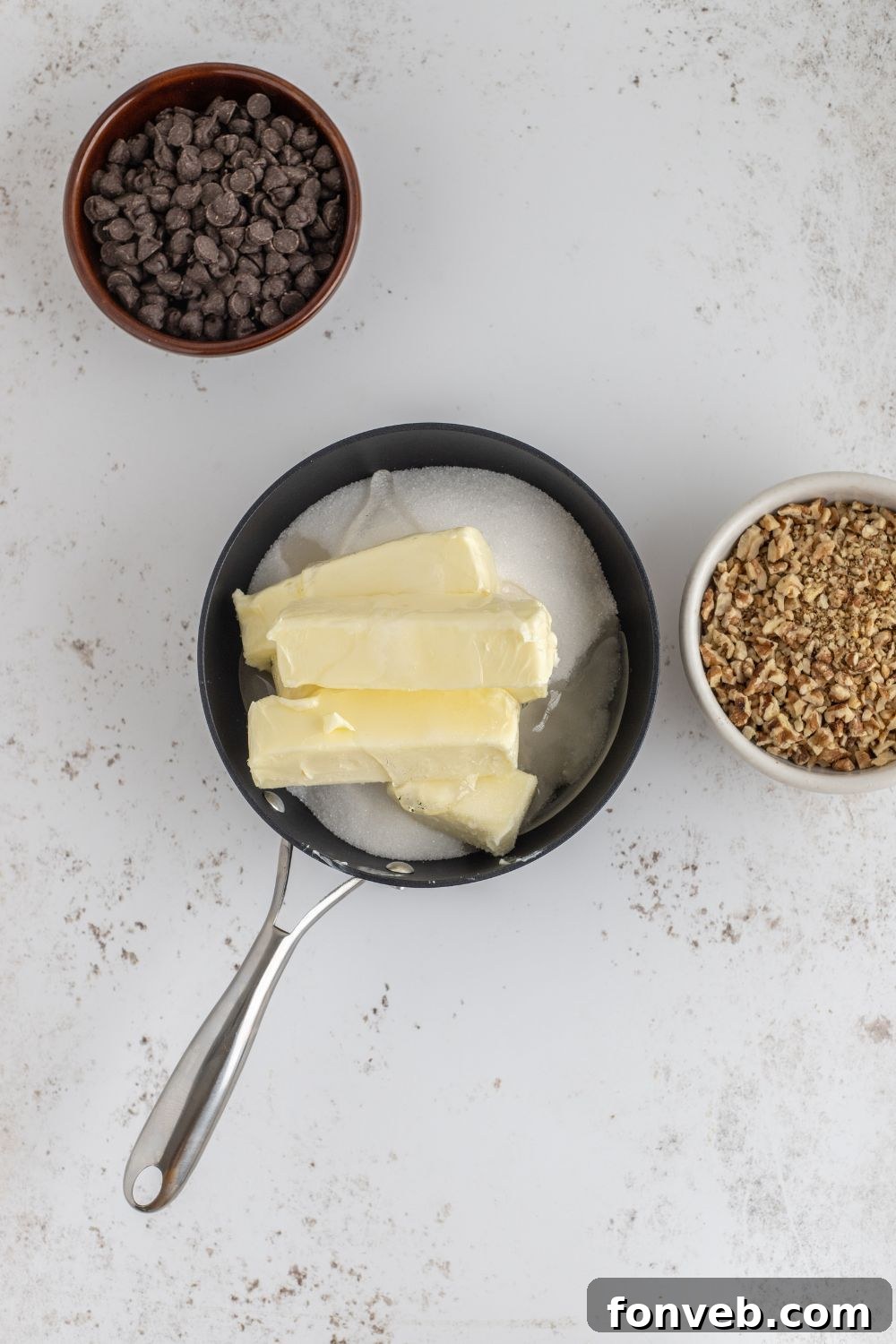
Once toasted, remove from the heat and let cool. Add the butter to a large saucepan and cook over medium heat until the butter has melted. Add in the sugar, corn syrup, water and salt.
-
Stir and bring to a simmer. Let the mixture simmer on medium heat for 30 minutes, or until it reaches 300°.
-
Pour the mixture into the prepared baking dish and spread out evenly. Let the mixture set for about 5 minutes.
-
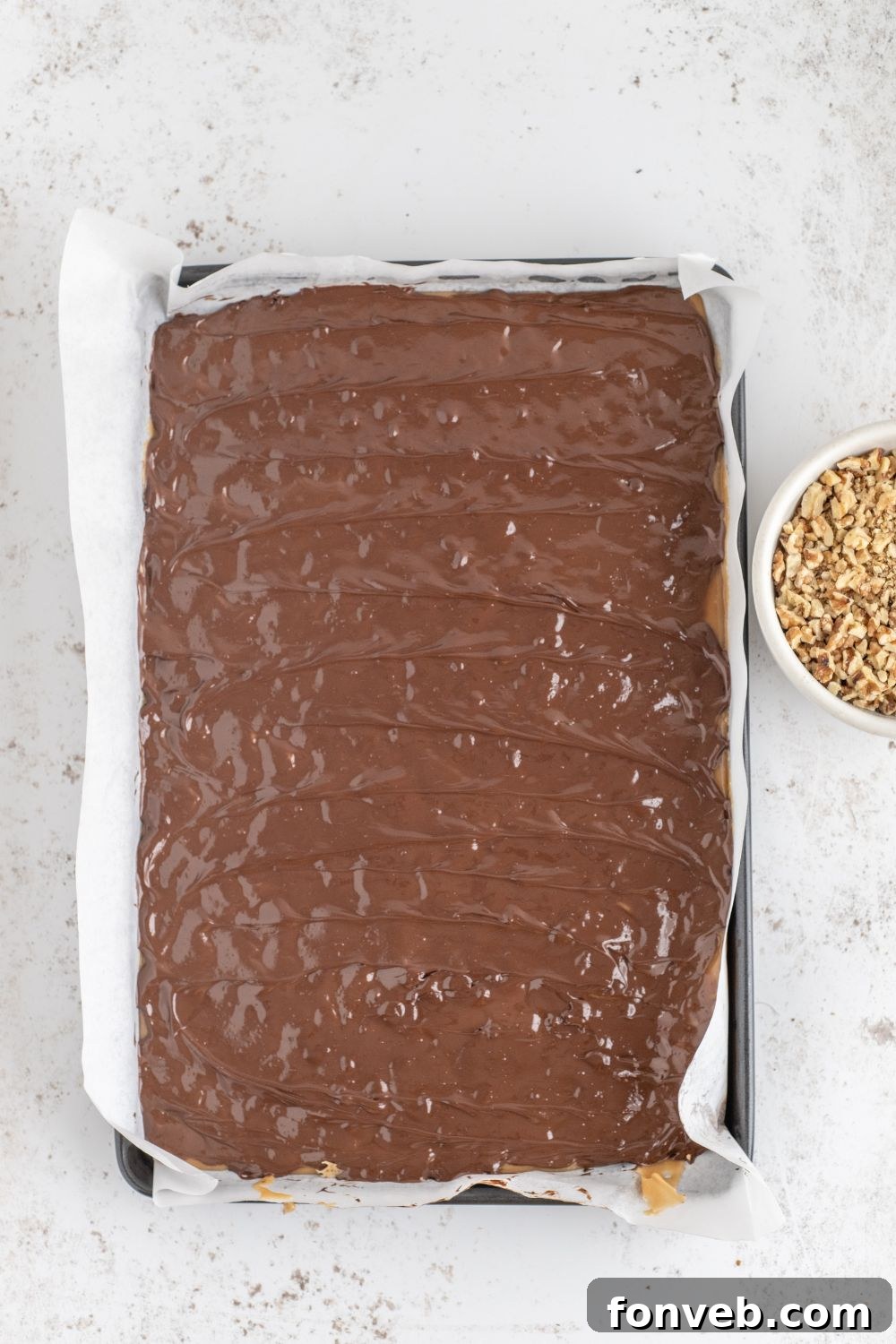
Sprinkle the chocolate chips on top in an even layer and let sit for 1 minute. Use an offset or rubber spatula to spread the melted chocolate chips out in an even and smooth layer.
-
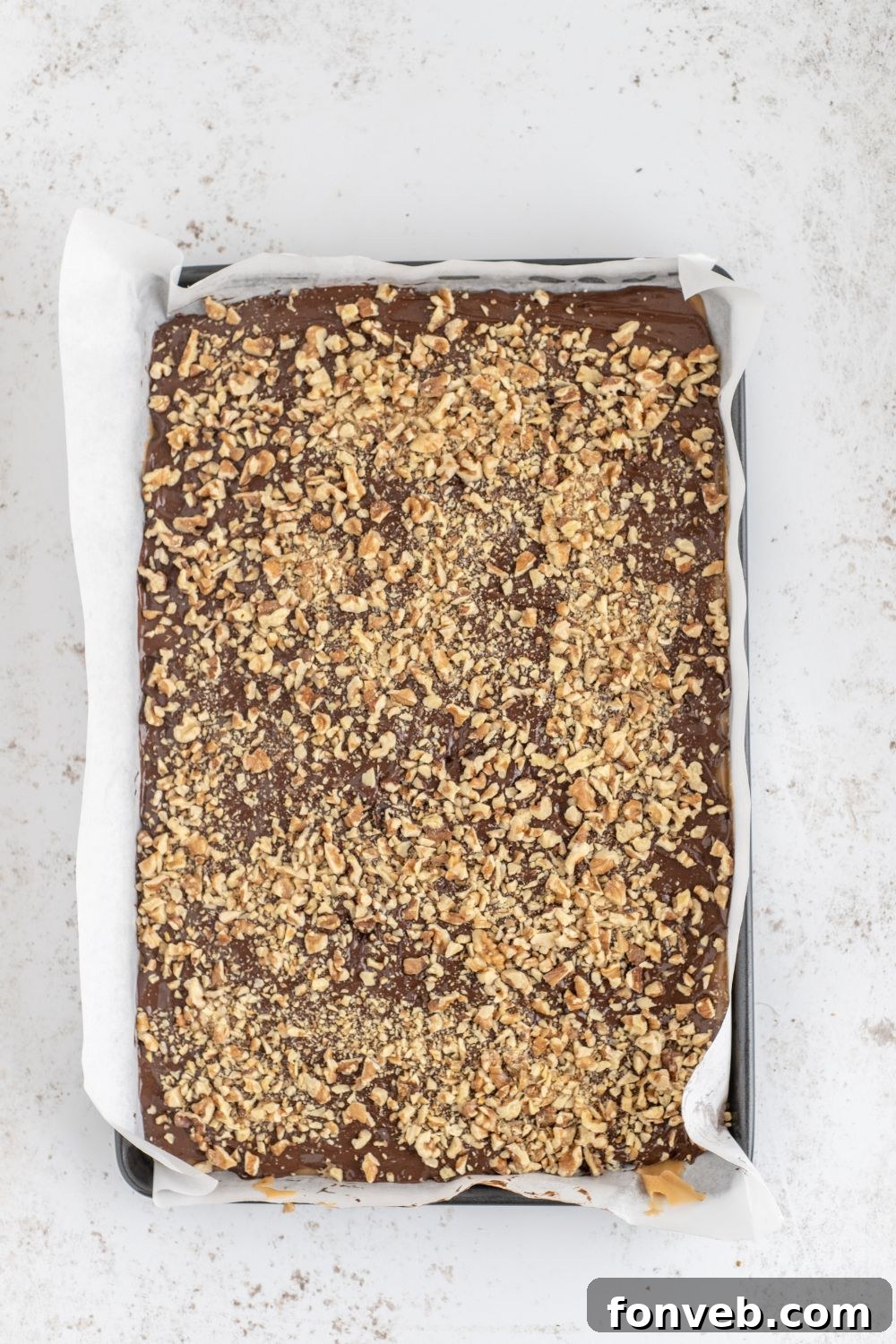
Sprinkle the toasted pecans on top, then let set for 1-2 hours or until completely cooled. Once completely cooled, break into pieces and serve.
Did you make this recipe?
Make sure to follow on Pinterest for more recipes!
Pin Recipe
Share on Facebook