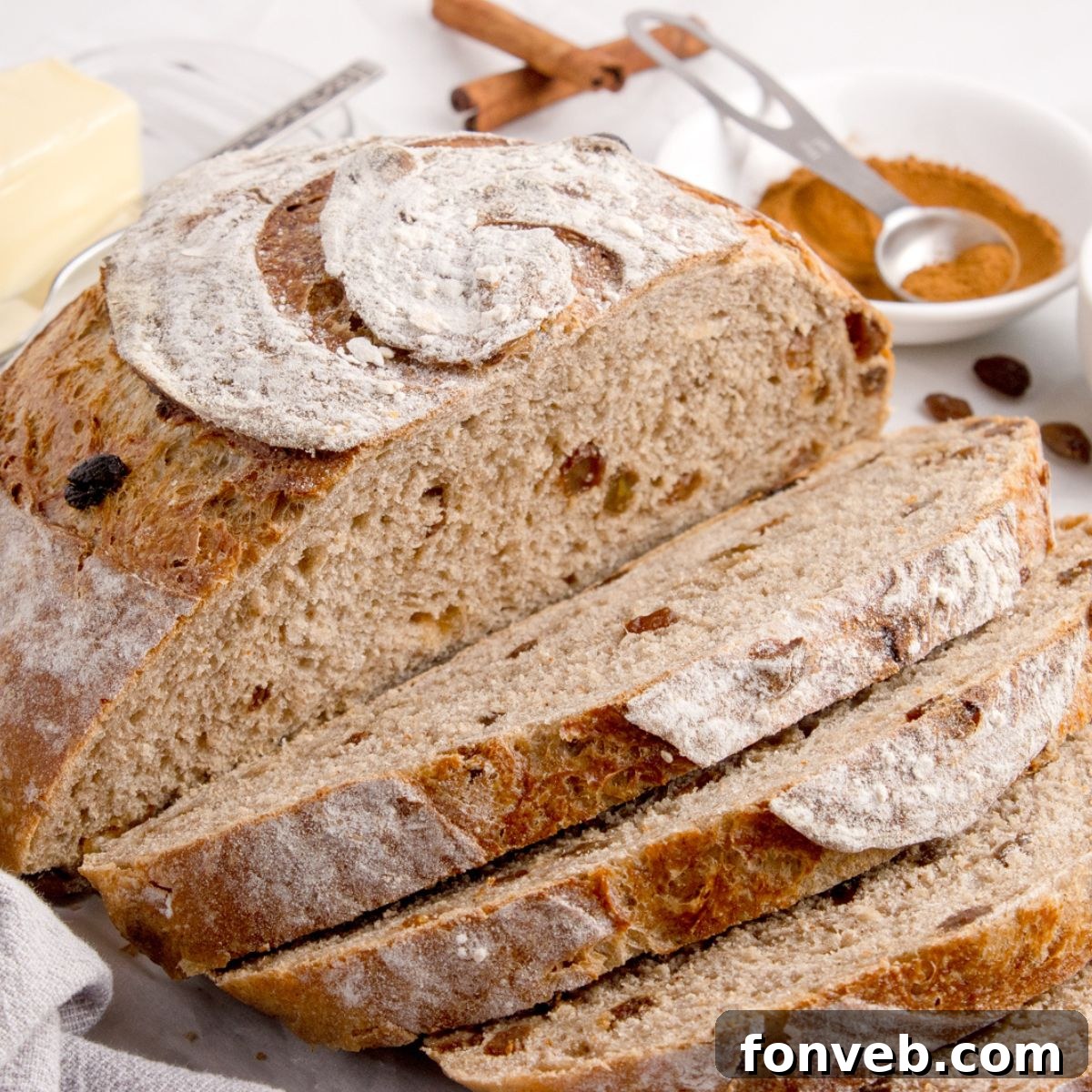
Are you searching for the ultimate no-knead Cinnamon Raisin Bread recipe that delivers on flavor and texture without the fuss? Look no further! This delightful homemade bread boasts a perfectly chewy crust and an incredibly soft, fluffy interior, studded with bursts of sweet raisins and swirls of warm cinnamon. Imagine the comforting aroma of fresh-baked bread filling your kitchen, a scent made even more enchanting when it’s this irresistible No-Knead Cinnamon Raisin Bread. Enjoy it slathered with butter, drizzled with honey, or simply plain – every bite is a little piece of heaven. And the best part? You can achieve bakery-quality results with absolutely zero kneading required!
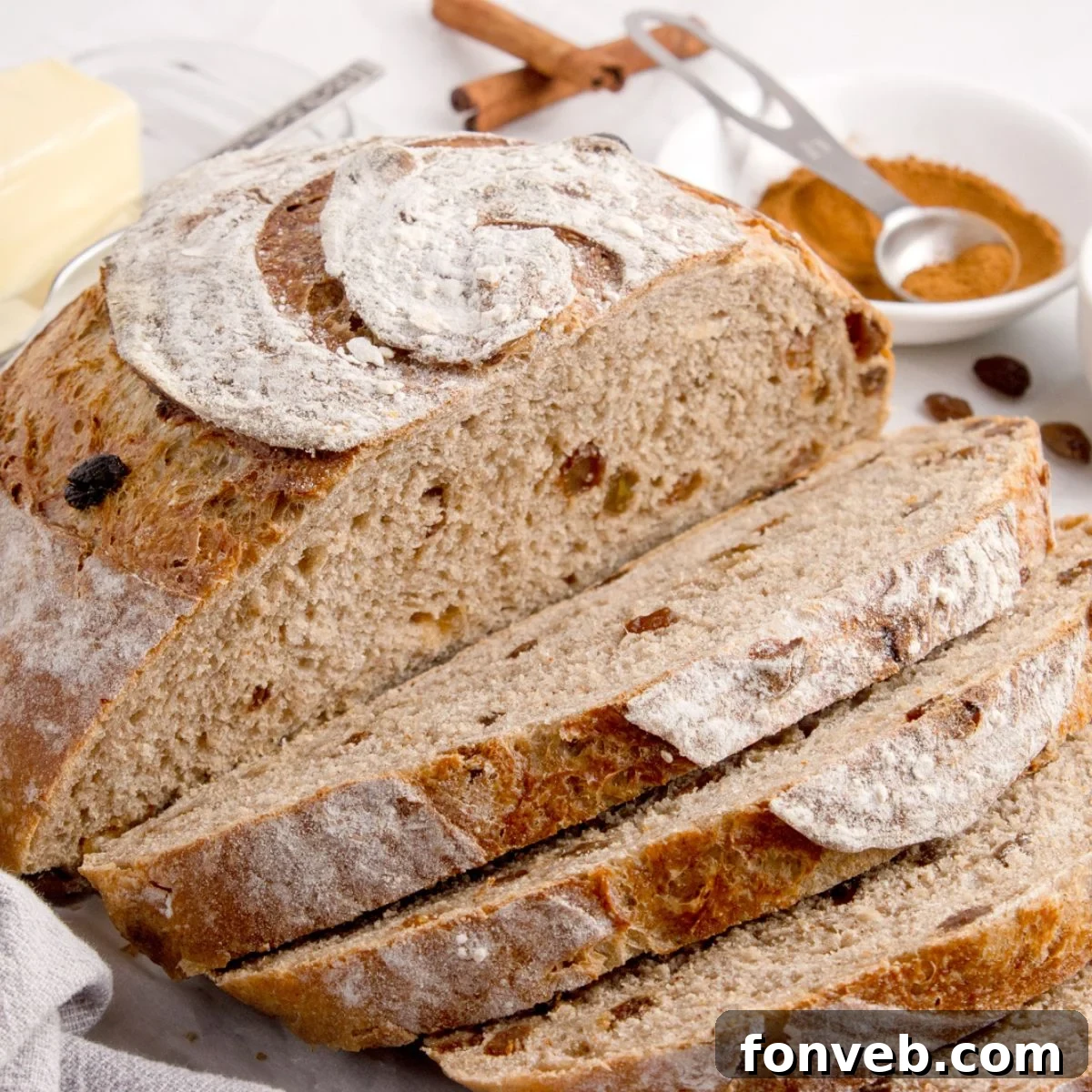
Baking bread at home often seems like a daunting task, reserved for experienced bakers with hours to spare. However, this revolutionary no-knead method simplifies the process, making it accessible even for complete beginners. The magic of no-knead bread lies in its hands-off approach. Instead of laboriously working the dough to develop gluten, time does all the heavy lifting. You merely mix the ingredients, allow the dough ample time to rise, and then bake it to golden perfection. This simple technique yields a loaf that is tender on the inside, with a sweet cinnamon swirl and juicy raisins in every slice, proving that extraordinary homemade bread doesn’t have to be complicated.
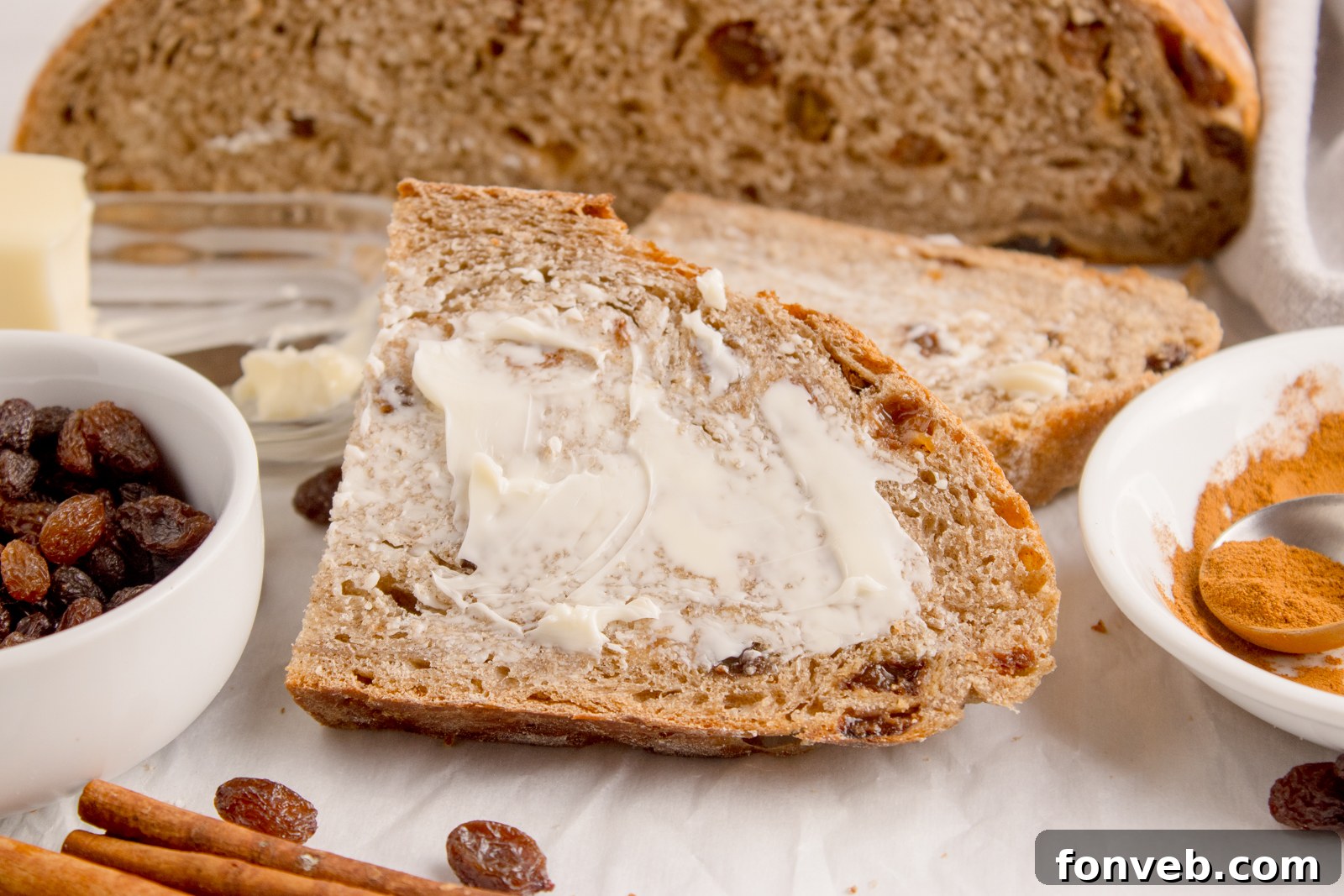
One of the most appealing aspects of this no-knead recipe is the minimal hands-on time it demands. After the initial mixing and the first long rise, your effort is largely confined to shaping and baking. This makes it an ideal candidate for meal prepping or baking ahead. Imagine waking up to the smell of freshly baked bread without having to get up at the crack of dawn! You can prepare the dough the night before, let it cold proof in the refrigerator overnight, and then bake it the following morning for a warm, fragrant loaf ready in a flash. It’s a versatile bread that shines at breakfast, as a satisfying snack, or even as a comforting accompaniment to hearty soups and salads.
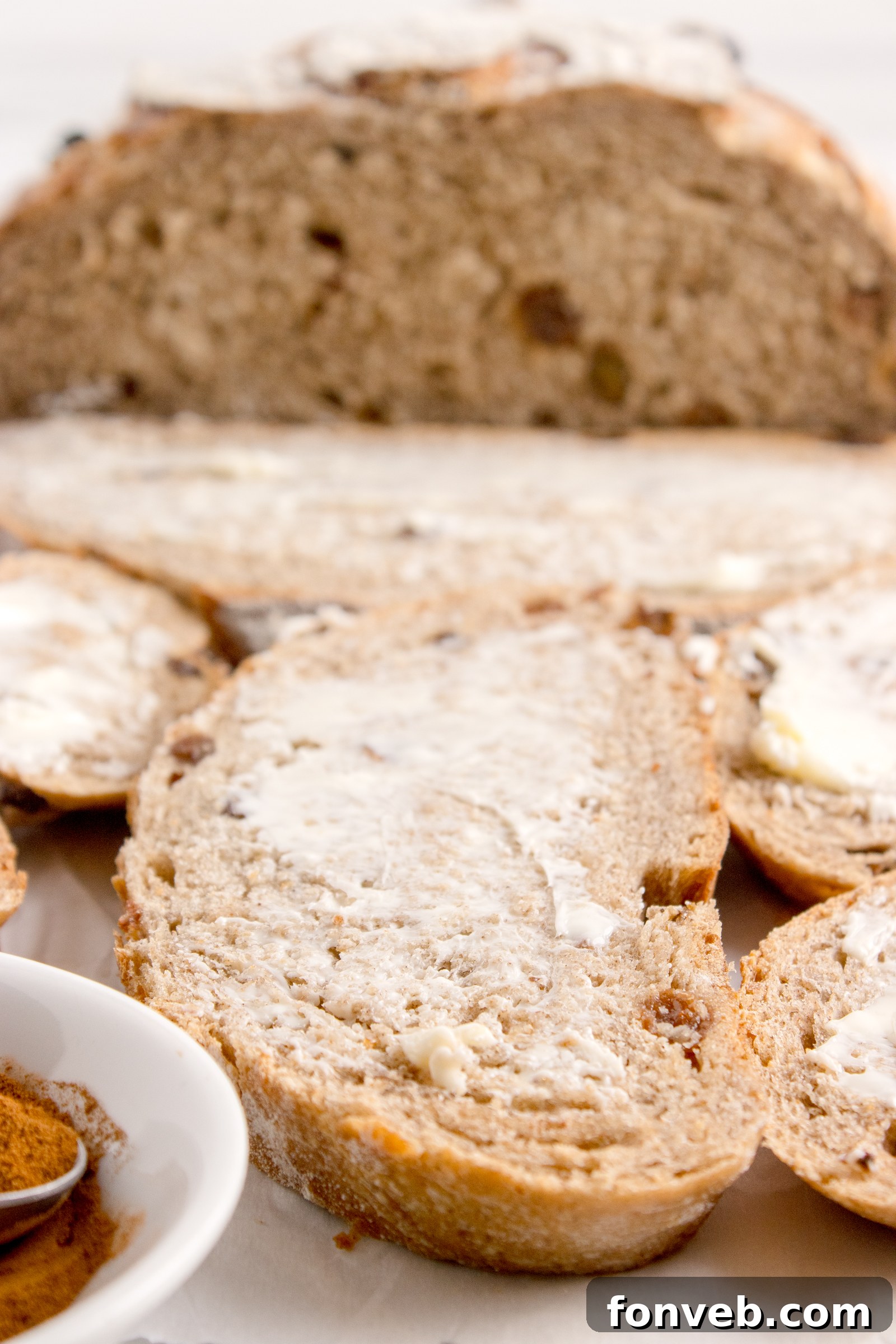
If you’re exploring the world of homemade bread, be sure to also check out my simple white bread recipe, which is incredibly easy and delicious. For another fantastic option, consider trying this popular Amish white bread recipe, known for its soft texture. And if you have a craving for something sweet and tangy, my lemon bread recipe is an absolute must-try. Each of these recipes offers a unique flavor profile and a rewarding baking experience for home cooks of all skill levels.
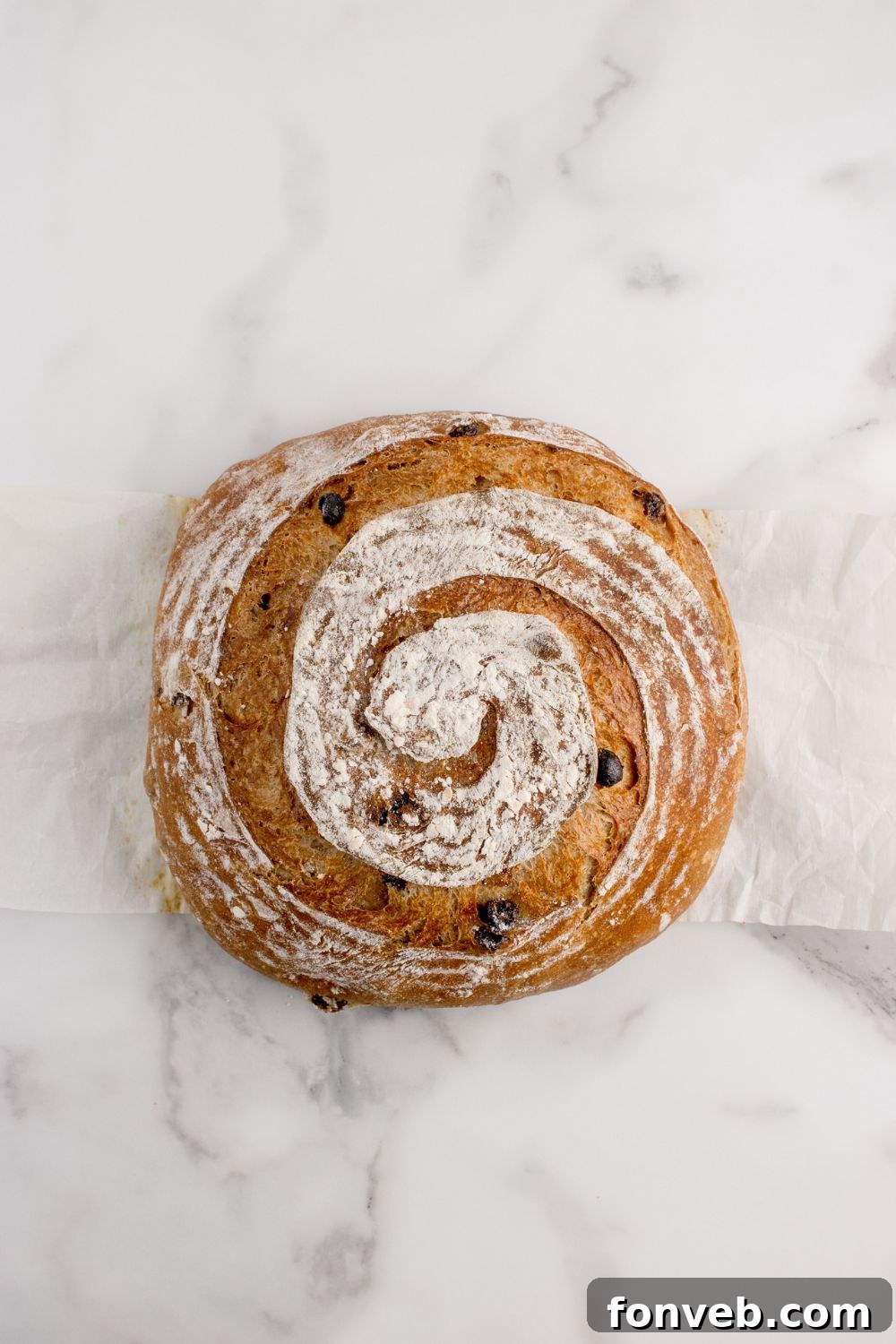
Why You’ll Love This No-Knead Cinnamon Raisin Bread Recipe
- Effortless Homemade Bread: This recipe truly lives up to its “no-knead” promise, making it perfect for novice bakers and busy individuals. It requires minimal hands-on time, allowing the dough to develop its delicious flavor and texture with time, not elbow grease. You’ll create an artisan-style loaf with significantly less effort than traditional bread baking.
- Irresistible Sweet Cinnamon Flavor: A generous amount of ground cinnamon combined with sugar infuses this bread with a comforting, aromatic warmth that perfectly complements the chewy sweetness of the raisins. It’s a flavor profile that evokes coziness and nostalgia, making it a beloved treat for all ages.
- Simple, Accessible Ingredients: You won’t need any fancy or hard-to-find ingredients for this recipe. All components—flour, yeast, salt, sugar, cinnamon, raisins, water, and oil—are common pantry staples, meaning you likely have most of them on hand already, ready to transform into a spectacular loaf.
- Versatile Treat for Any Time of Day: This isn’t just a breakfast bread; it’s a delightful dessert, a hearty snack, or even a unique side dish. Enjoy a slice with your morning coffee, toast it for an afternoon pick-me-up, or serve it alongside a cozy meal. Its balanced sweetness and comforting spices make it a crowd-pleaser for any occasion.
- Incredible Texture: Despite being no-knead, this bread achieves a wonderfully complex texture. The long fermentation process results in a rustic, chewy crust and a soft, airy crumb that melts in your mouth. The raisins add an extra layer of texture and sweetness, making each bite an experience.
- Wonderful for Gifting: A freshly baked loaf of homemade cinnamon raisin bread makes an incredibly thoughtful and appreciated gift. Whether for neighbors, friends, or family, a warm loaf from your kitchen is a gesture that truly warms the heart.
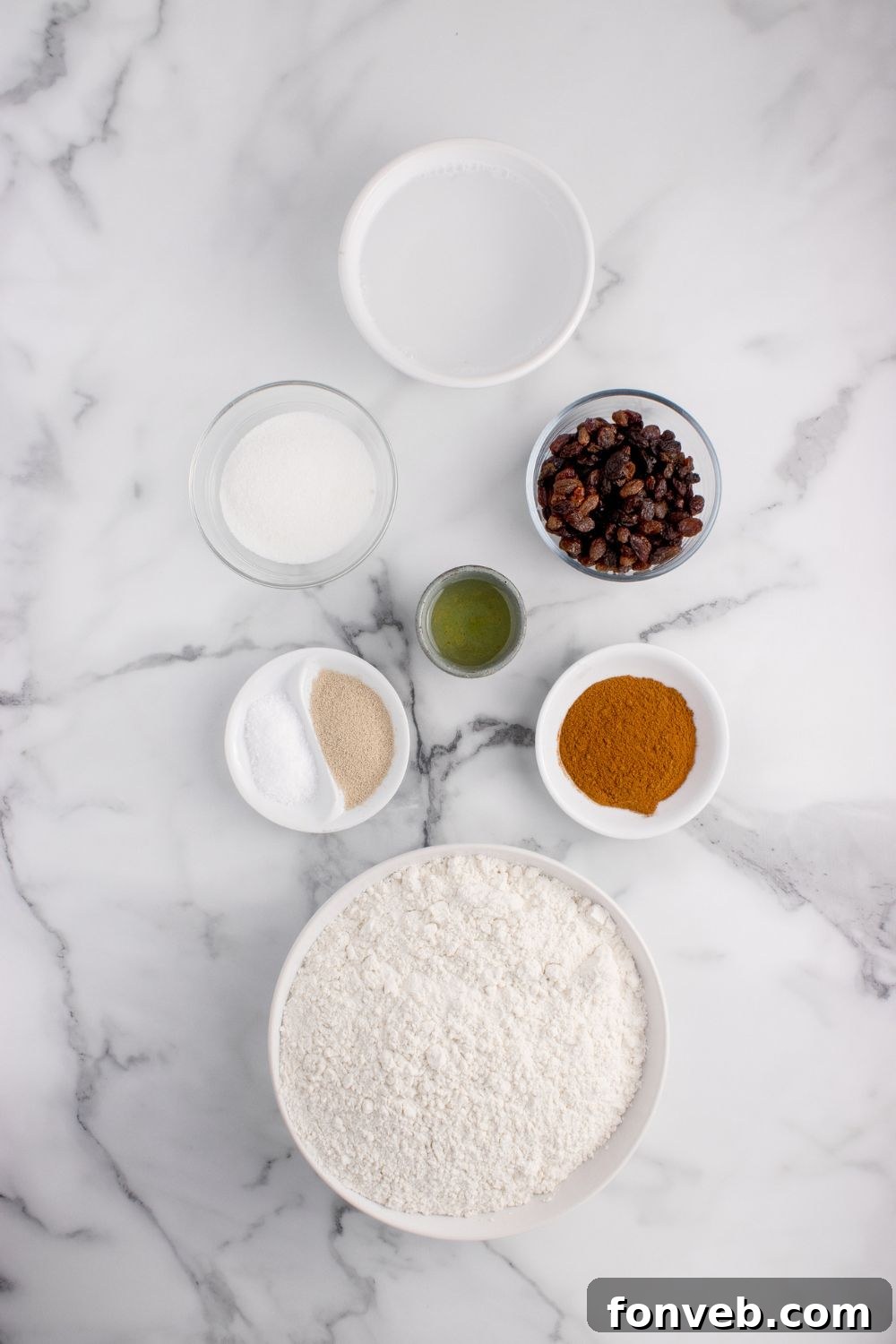
Essential Recipe Ingredients for Perfect Cinnamon Raisin Bread
Crafting this incredible no-knead cinnamon raisin bread requires just a handful of basic ingredients, each playing a crucial role in achieving its delightful flavor and texture. Here’s a closer look at what you’ll need:
- Bread Flour: The star of our show, bread flour, boasts a higher protein content compared to all-purpose flour. This higher protein level is key to developing a robust gluten structure, which is essential for that desirable chewy texture and open crumb in artisan-style bread. While you can use all-purpose flour for a slightly softer result, bread flour truly gives this loaf its signature character. For an even lighter option, a mix of whole wheat flour and bread flour can add a subtle nutty flavor.
- Instant Yeast (or Active Dry Yeast): Yeast is the living organism responsible for leavening our dough, creating those beautiful air pockets that lead to a light and airy texture. Instant yeast is incredibly convenient as it can be mixed directly with dry ingredients without prior activation. If you opt for active dry yeast, remember to “bloom” it first by dissolving it in lukewarm water (around 90-100°F / 32-38°C) with a pinch of sugar for 5-10 minutes until foamy. This ensures your yeast is active and ready to work its magic.
- Salt: Far more than just a seasoning, salt is vital for enhancing the bread’s overall flavor profile, balancing the sweetness of the sugar and raisins, and adding depth. It also plays a critical role in regulating yeast activity, preventing the dough from rising too quickly. For this recipe, kosher salt is recommended, but sea salt can be used as a direct substitute.
- Sugar: Granulated white sugar contributes to the bread’s lovely sweetness, making it a perfect complement to the cinnamon and raisins. Beyond flavor, sugar also helps tenderize the crumb and aids in browning the crust to a beautiful golden hue. Feel free to experiment with brown sugar for a deeper, molasses-like flavor, or a touch of maple syrup or honey for natural sweetness.
- Ground Cinnamon: The heart of our spiced bread! Ground cinnamon provides that signature warm, aromatic flavor that makes this bread so comforting and irresistible. For an even more pronounced cinnamon flavor, you can slightly increase the amount or even add a sprinkle of cinnamon sugar swirl during the shaping process.
- Raisins: These chewy, naturally sweet dried grapes are essential for this recipe. They provide bursts of fruity flavor and a wonderful textural contrast. While traditional raisins are excellent, golden raisins offer a slightly milder sweetness. If you want to get creative, dried cranberries or chopped dried apricots make excellent substitutions, adding their own unique tanginess.
- Lukewarm Water: Water is crucial for hydrating the flour and activating the yeast. The term “lukewarm” is key here; the ideal temperature range is 90-100°F (32-38°C). Water that is too cold will inhibit yeast activity, while water that is too hot can kill the yeast, preventing your bread from rising. This precise temperature ensures optimal yeast fermentation for a perfectly risen loaf.
- Oil: A touch of oil in the dough contributes significantly to a softer crumb and a richer mouthfeel. Olive oil is a great choice for a subtle fruity note, but vegetable oil or melted butter are also excellent options. Melted butter, in particular, will add an extra layer of richness and flavor to your finished bread.
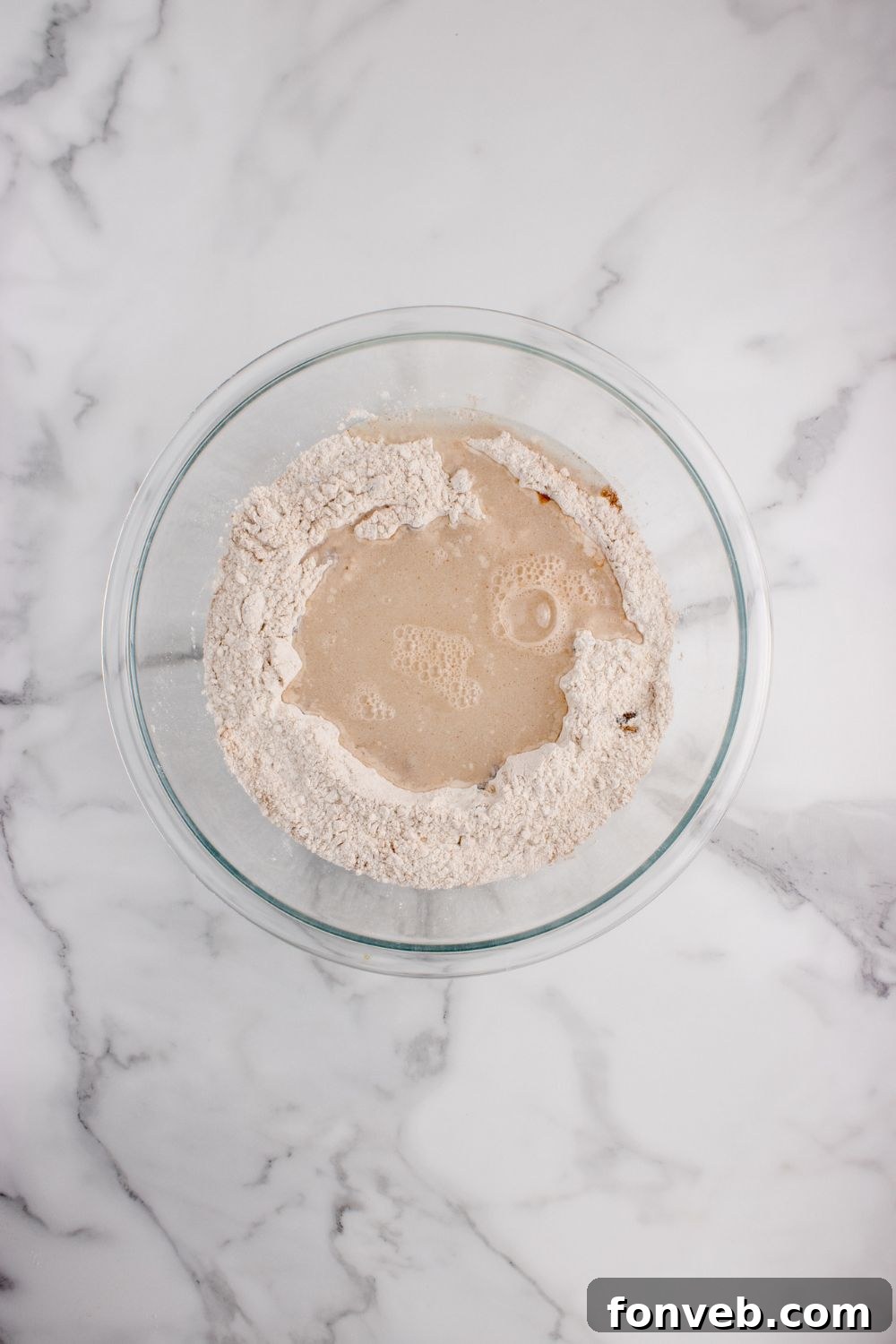
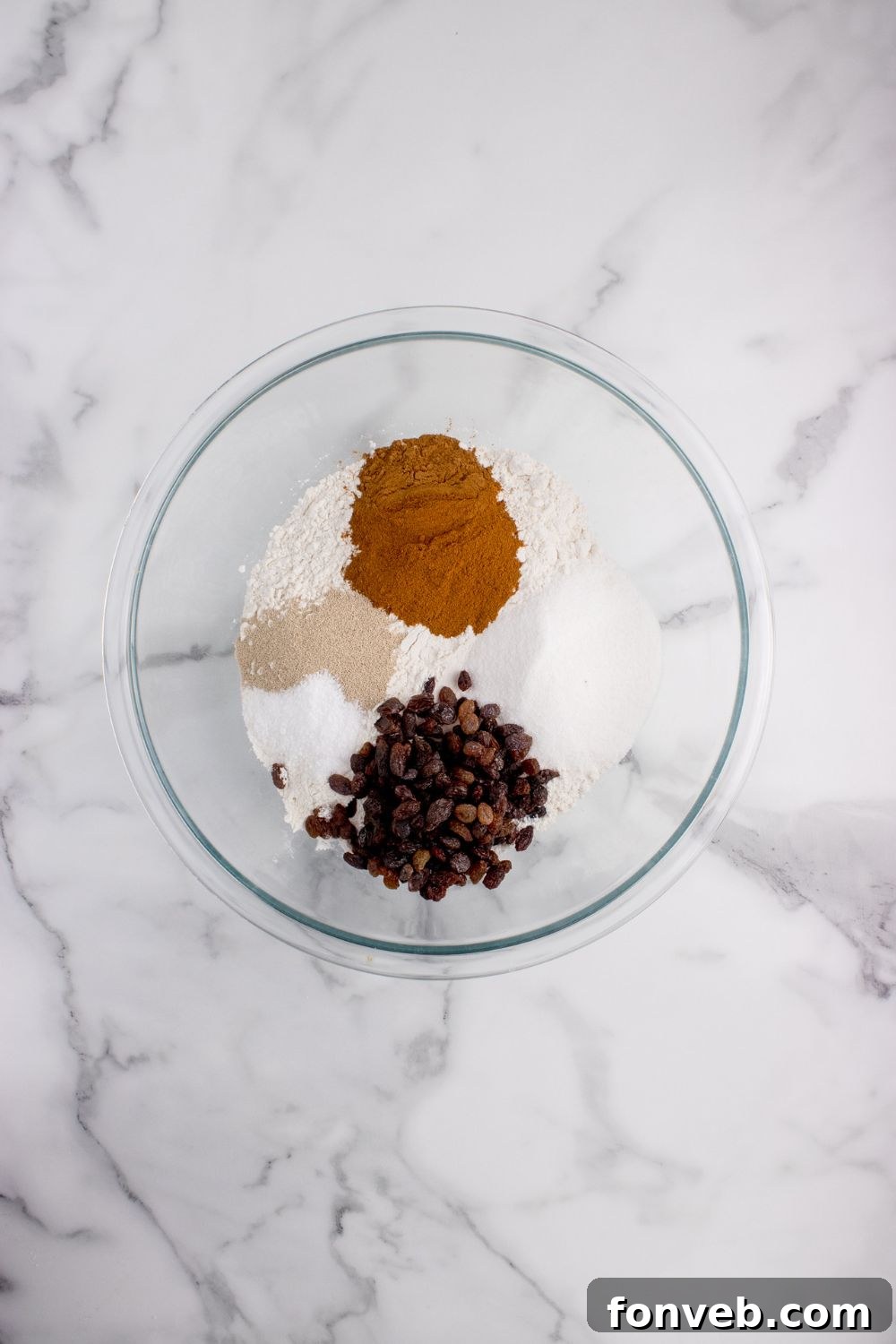
Expert Tips for No-Knead Cinnamon Raisin Bread Success
Achieving a perfect loaf of no-knead cinnamon raisin bread is simpler than you might think. Follow these tips to ensure your baking experience is smooth and your bread is nothing short of amazing:
Optimize Dough Resting and Folding: The stretch and fold technique is crucial for developing gluten in no-knead bread. Don’t rush these steps. Allowing the dough to rest between folds gives the gluten time to relax and strengthen, resulting in a more elastic and easier-to-handle dough. This method essentially mimics kneading without the effort.
Choose the Right Proofing Environment: Yeast loves warmth! For a faster rise, place your covered dough in a warm, draft-free area, such as a slightly warmed oven (turned off, with just the light on) or near a sunny window. If you prefer to develop deeper flavors and a more complex texture, opt for a slow, cold rise in the refrigerator overnight. This slower fermentation significantly enhances the taste of your bread.
Plan Ahead by Doubling the Recipe: This bread is so delicious, it disappears quickly! Consider making two loaves at once. You can enjoy one fresh and freeze the other for a convenient treat later. Freezing is an excellent way to save time on future baking days and ensures you always have homemade bread on hand.
Master the Art of Scoring: Scoring the top of your loaf before baking isn’t just for aesthetics; it’s functional. Use a very sharp knife or a specialized bread lame to make a cut about ¼-inch deep. This controlled incision allows the bread to expand predictably in the oven, preventing uncontrolled cracks and achieving a beautiful, professional-looking crust. A simple ‘X’ or a single diagonal slash are both effective and easy to execute.
Bake to Perfection, Not Dryness: Follow the recommended baking times, but always trust your oven and your senses. The goal is a golden-brown, crispy crust and a thoroughly cooked interior. If your bread appears done before the timer goes off, remove it promptly. Overbaking can lead to a dry, crumbly loaf, diminishing its soft and fluffy appeal.
Embrace the Dutch Oven: Baking in a Dutch oven creates a perfect steamy environment in the initial stages, which helps the crust stay soft and expand fully before crisping up. If you don’t have a Dutch oven, a heavy cast-iron pot with a lid or even a baking sheet with a pan of water placed on the bottom rack of the oven can mimic this effect, though results may vary slightly. The key is to trap steam around the dough for the first part of the bake.
Storage & Reheating for Optimal Freshness
To enjoy your homemade cinnamon raisin bread at its best for as long as possible, proper storage and reheating techniques are essential. Here are some simple ways to keep your bread delicious and ready for later enjoyment:
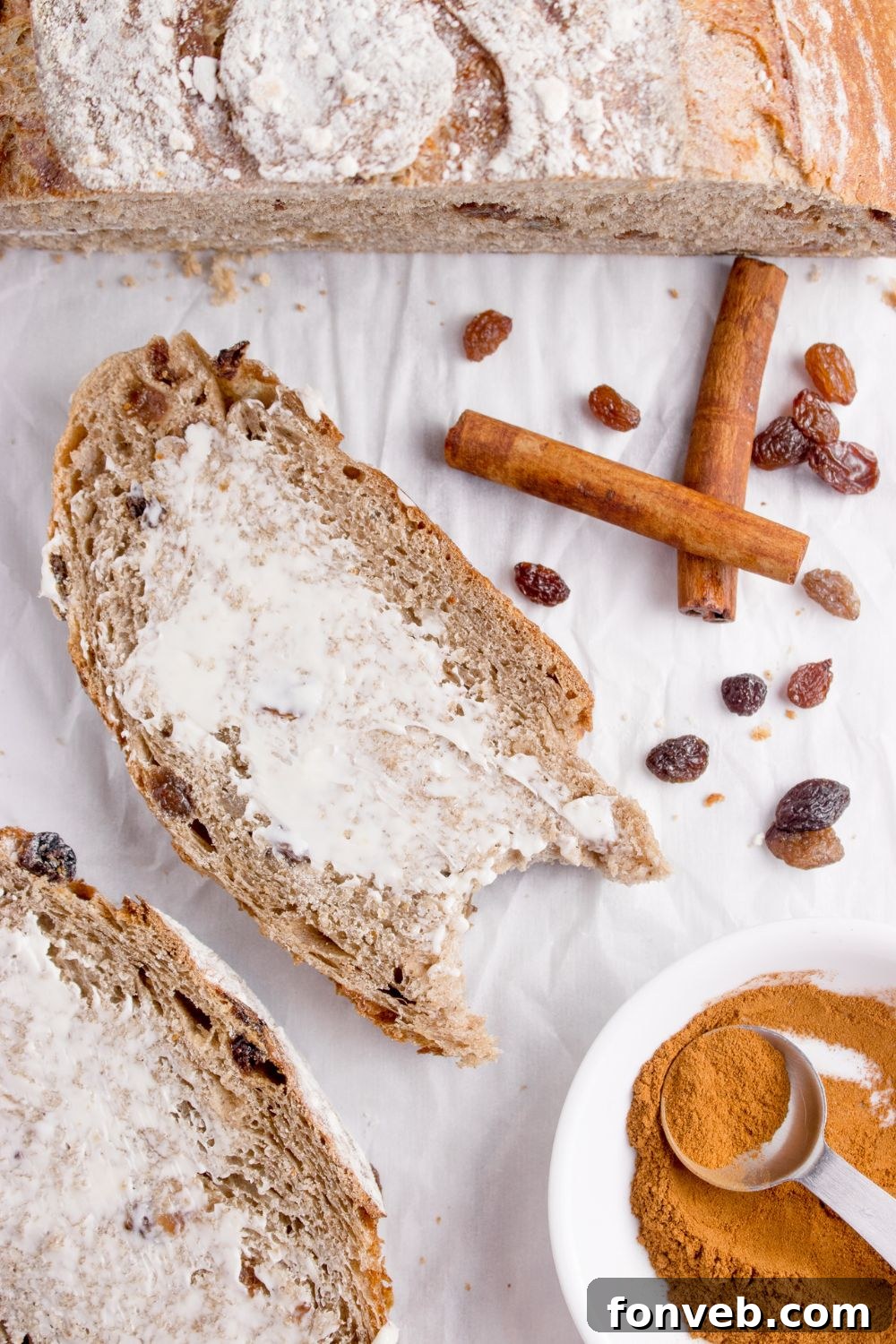
Room Temperature Storage: Once your bread has completely cooled, store it in an airtight container or wrap it tightly in plastic wrap. This helps to prevent it from drying out and maintains its soft texture. Stored correctly at room temperature, your loaf will remain fresh and flavorful for up to 3 days. For longer-lasting freshness, you can also consider a bread box, which provides a balanced environment.
Freezing for Long-Term Enjoyment: Freezing is an excellent option for extending the shelf life of your bread. After the loaf has cooled completely, wrap it thoroughly in plastic wrap, then place it inside a freezer-safe bag or aluminum foil. This double layer of protection guards against freezer burn. Your bread can be frozen for up to 3 months. When you’re ready to enjoy it, simply thaw the loaf at room temperature for several hours or overnight in the refrigerator.
Reheating for a Fresh-Baked Experience: To revive that delightful crispy crust and warm, soft interior, reheat the bread in a preheated 350°F (175°C) oven for about 5-10 minutes. This quick reheat helps to restore its freshly baked quality. Alternatively, individual slices can be easily toasted in a toaster or under the broiler for a few minutes until golden brown.
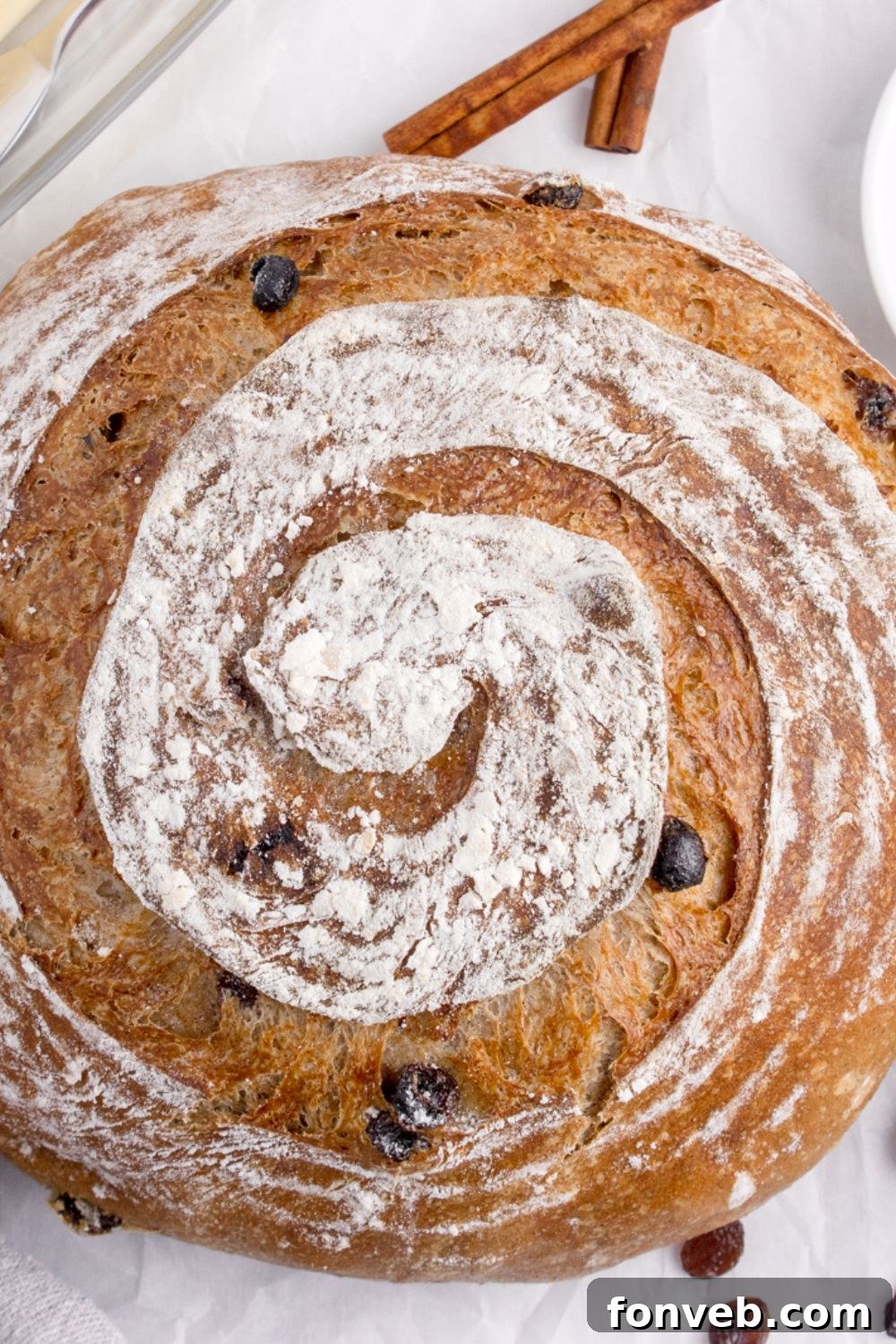
You don’t need specialized equipment to make this incredible bread. Don’t worry if you don’t have a fancy bread pan or even a Dutch oven; a regular baking dish, a cast-iron skillet with a lid, or even a round oven-safe pot will work beautifully. This recipe is wonderfully flexible and forgiving, designed to work with what you already have in your kitchen. The ultimate reward is still the same: a stunning loaf of homemade cinnamon raisin bread that tastes as if it came straight from a gourmet bakery, but with the added satisfaction of having baked it yourself.
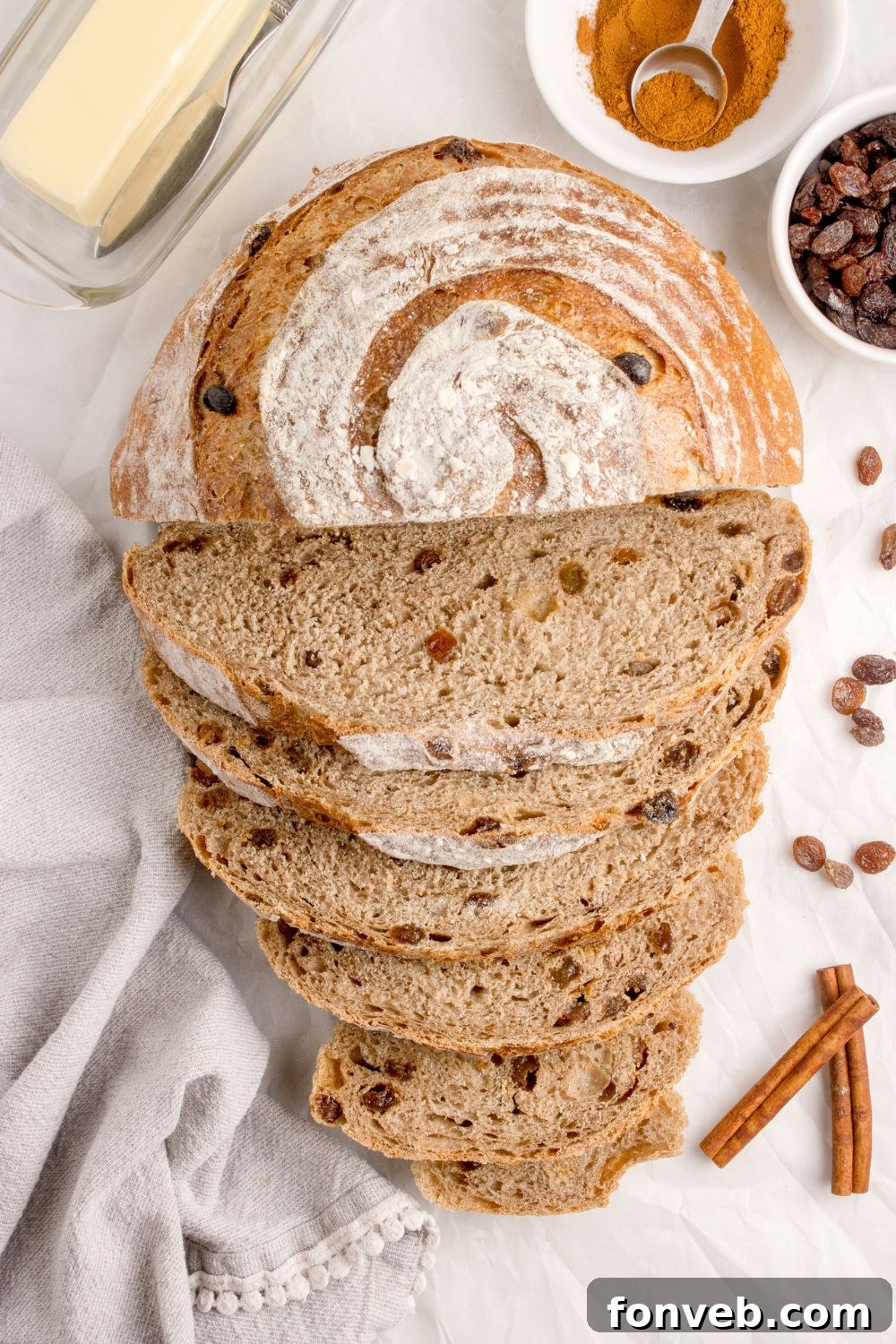
Creative Substitutions & Flavor Variations
One of the joys of home baking is the freedom to customize. This no-knead cinnamon raisin bread recipe is incredibly adaptable, allowing you to easily adjust ingredients to suit your taste preferences or dietary needs. Here are a few ways you can modify the recipe to create your own unique loaf:
- Flour Alternatives: While bread flour yields the best chewy texture, you can substitute it entirely with all-purpose flour for a slightly softer crumb. For a more rustic and hearty bread, try a mix of half whole wheat flour and half all-purpose flour. Gluten-free flour blends can also be used, though results may vary in texture and rise; look for blends specifically designed for yeast breads.
- Yeast Options: If you only have rapid-rise yeast on hand, you can use it as a direct substitute for instant yeast. For active dry yeast, remember to activate it in lukewarm water with a pinch of sugar first until foamy before combining with the dry ingredients.
- Sweetener Swaps: Beyond white sugar, you can experiment with various natural sweeteners. Brown sugar will impart a deeper, molasses-like flavor, while maple syrup or honey can add a unique aromatic sweetness. Adjust the quantities slightly based on your desired level of sweetness.
- Dried Fruit Varieties: While raisins are classic, feel free to get creative with other dried fruits. Dried cranberries offer a lovely tartness, chopped dried figs provide a rich, earthy sweetness, and even chopped dried apples can add a wonderful texture and flavor dimension. Ensure any large dried fruits are finely chopped to distribute evenly.
- Oil Enhancements: For added richness, melted butter is an excellent substitute for oil. Coconut oil can also be used, which will impart a subtle tropical note, especially if paired with other complementary flavors.
- Liquid Alternatives for Richer Flavor: Instead of water, consider using milk (dairy or non-dairy, like almond or oat milk) for a richer, more tender crumb and a subtly sweeter flavor. This is particularly good if you prefer a softer, less rustic bread.
- Spice it Up: Don’t limit yourself to just cinnamon! A pinch of nutmeg, cardamom, or allspice can add complexity to the warm spice profile. A touch of orange zest can also brighten the flavors beautifully.
- Add-Ins: For extra crunch and flavor, consider folding in a handful of chopped walnuts or pecans along with the raisins. A sprinkle of chocolate chips can transform this into a decadent dessert bread.
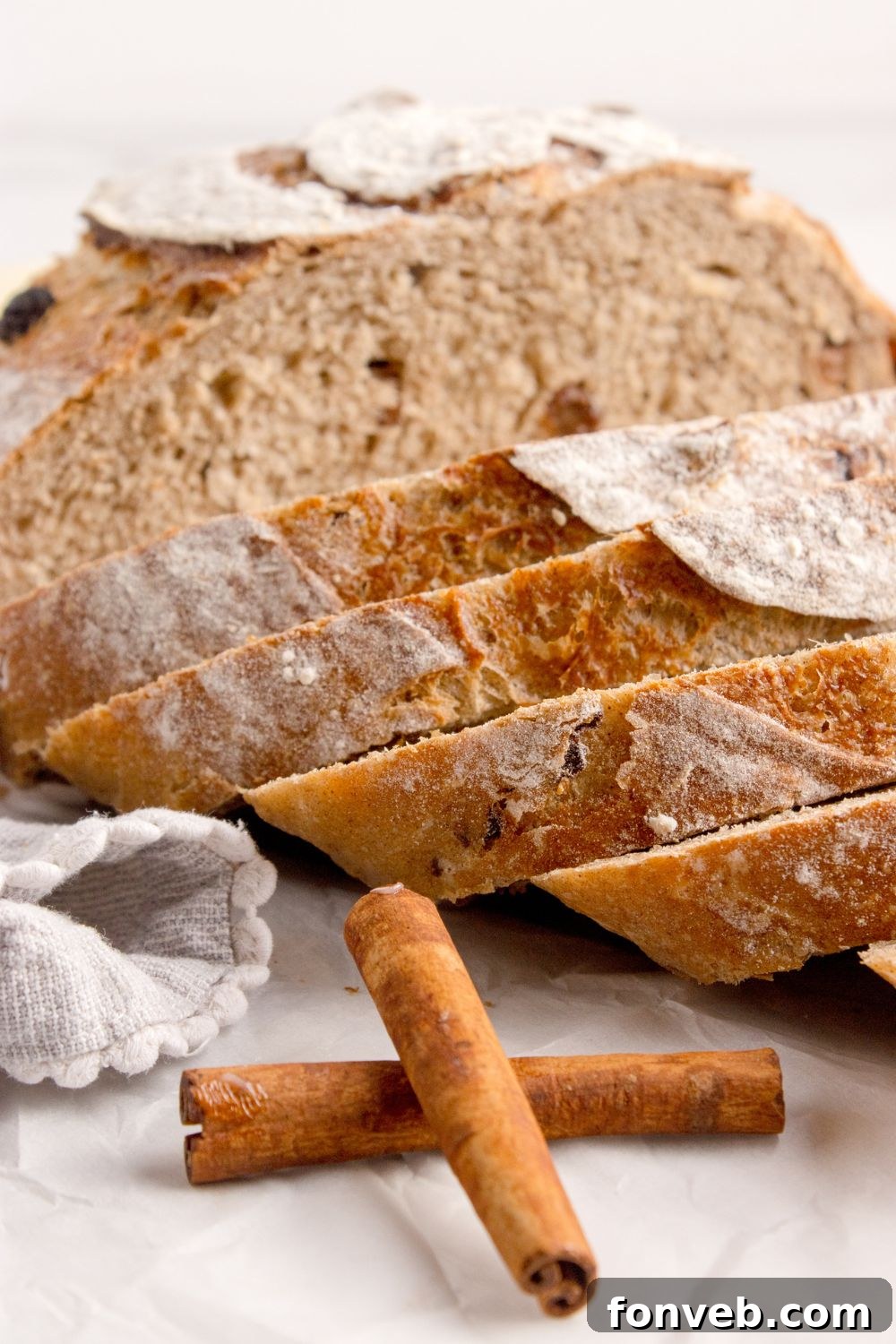
What truly elevates this Cinnamon Raisin Bread is the harmonious blend of robust, warm cinnamon and the delicate, natural sweetness from plump raisins. The dough itself, thanks to the no-knead method, is incredibly cooperative and forgiving, rising beautifully and developing an impressive structure with minimal intervention. When it emerges from the oven, you’re greeted with a loaf that is perfectly tender, wonderfully aromatic, and utterly perfect for toasting and slathering with butter, or simply relishing on its own. Whether you prefer thick, hearty slices or thin, delicate ones, each bite offers a comforting experience that feels like a warm hug.
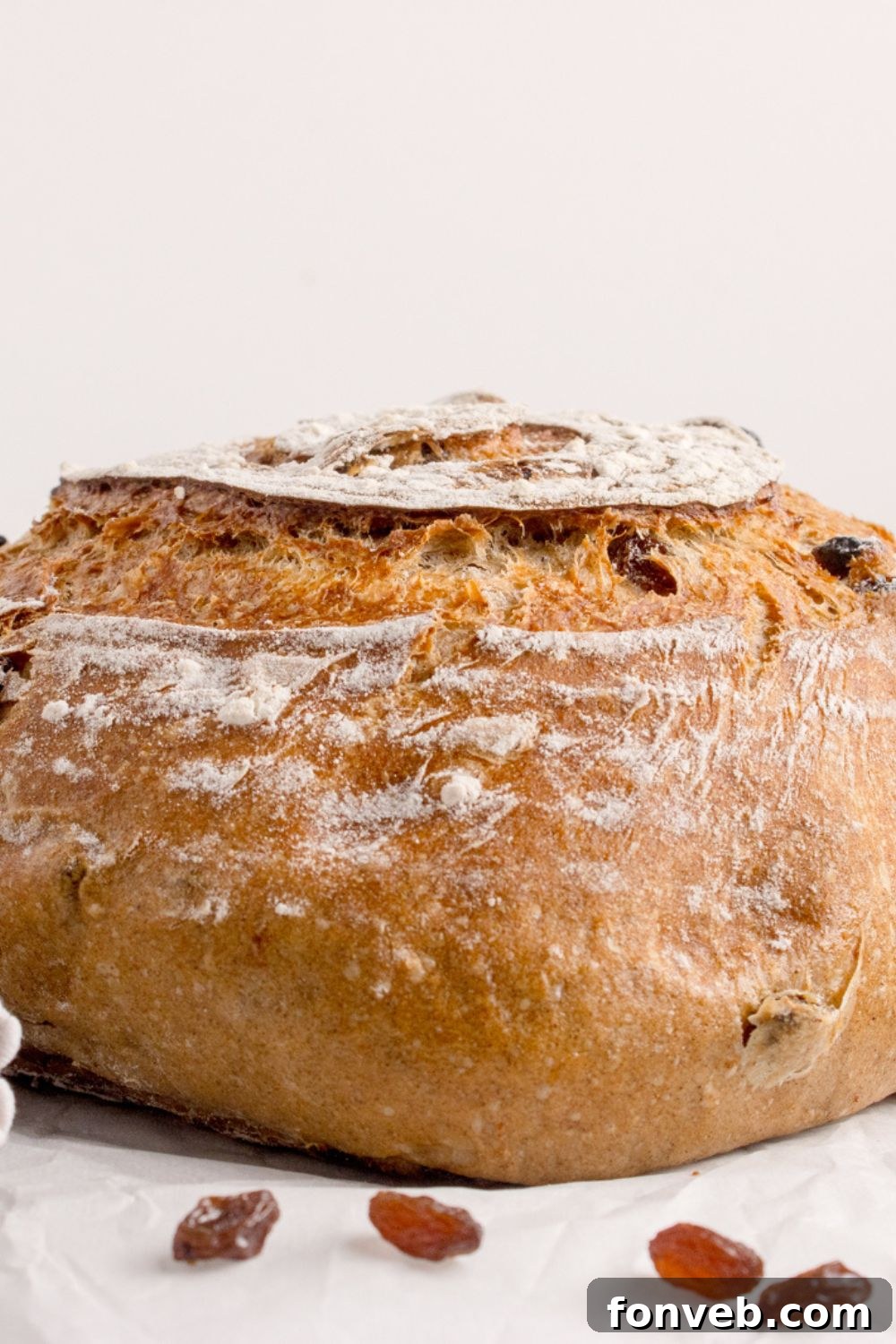
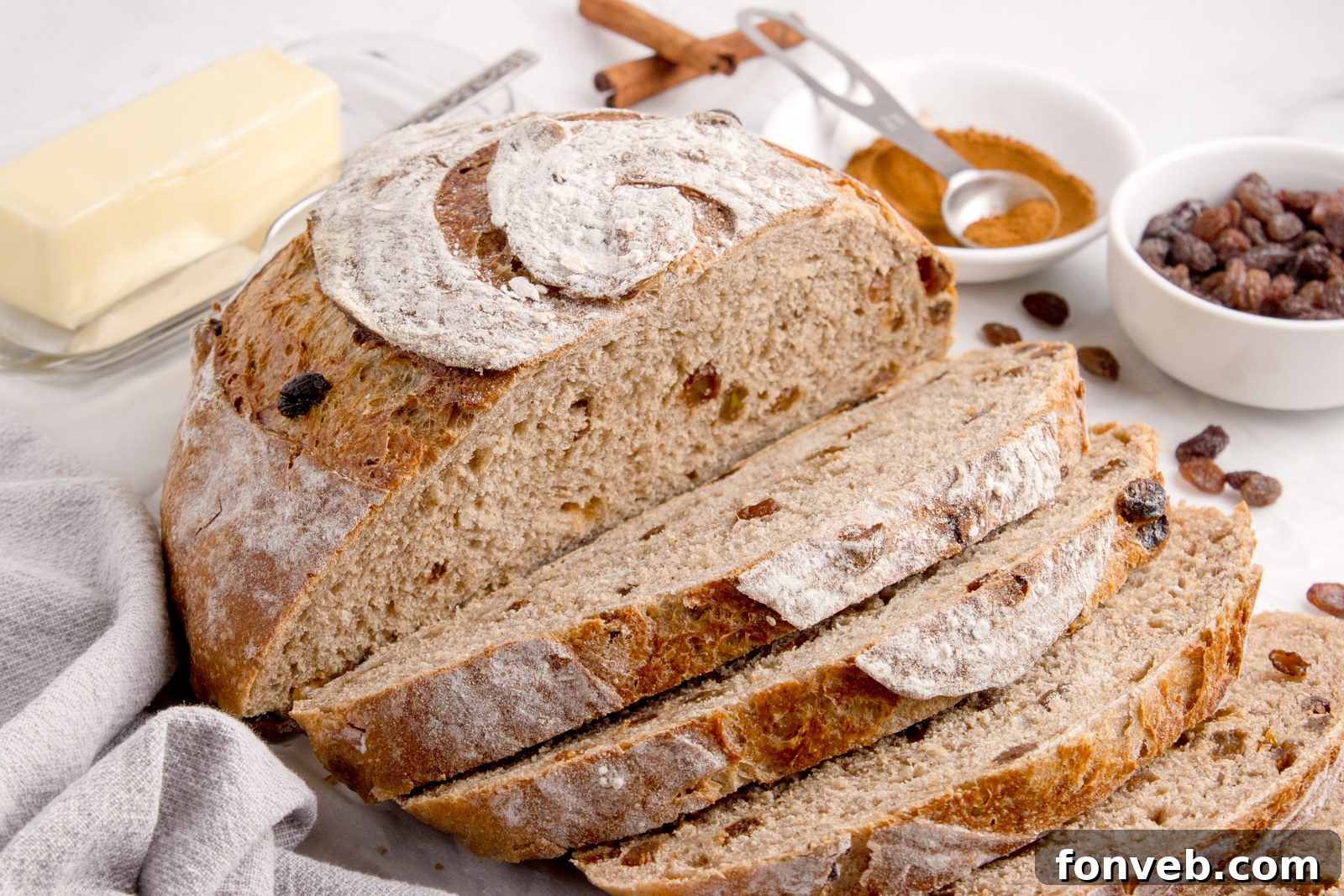
The versatility of this No-Knead Cinnamon Raisin Bread is another aspect that makes it truly exceptional. It’s fantastic straight from the oven, warm and fragrant with a simple spread of butter. For a classic breakfast, thick slices can be transformed into delicious cinnamon toast, or take it a step further by making French toast. Simply dip the slices into your favorite egg mixture and cook them for a sweet, spiced twist on a beloved breakfast staple. Should you somehow manage to have any leftovers – though that’s a rare occurrence with this bread! – it stores wonderfully, remaining soft, fresh, and bursting with flavor for several days. This makes it the perfect homemade treat, whether you’re sharing it with loved ones or savoring every slice on your own.
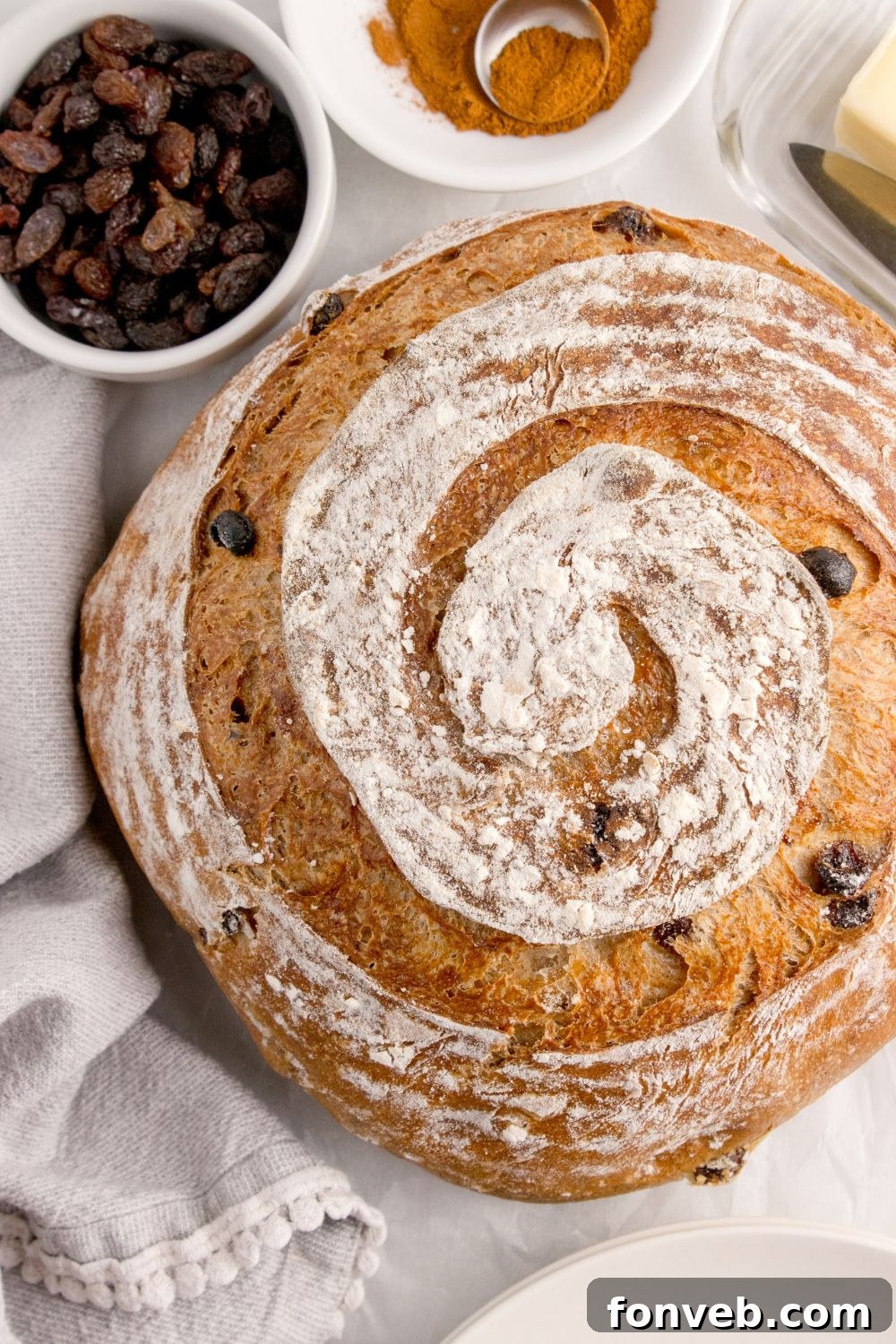
Frequently Asked Questions (FAQs) About No-Knead Cinnamon Raisin Bread
Can I use active dry yeast instead of instant yeast in this recipe?
Absolutely! If you’re using active dry yeast, you’ll need to activate it first. Dissolve the 2 ¼ teaspoons (7g) of active dry yeast in about ¼ cup of the lukewarm water from the recipe, along with a pinch of sugar. Let it sit for 5-10 minutes until it becomes foamy, indicating it’s active. Then, add this mixture to your dry ingredients along with the remaining lukewarm water and oil.
Is a Dutch oven essential for this recipe? What if I don’t have one?
While a Dutch oven is highly recommended for achieving that signature crispy crust and excellent rise due to its ability to trap steam, it’s not strictly essential. You can certainly bake this bread without one. Alternatives include a heavy-bottomed cast-iron pan with a lid, or you can even bake it on a regular baking sheet. If open-baking, a useful trick is to place a pan of ice cubes or hot water on the bottom rack of your oven during the initial baking phase. This creates a moist environment, mimicking the steam of a Dutch oven and aiding in the dough’s rise and crust development.
How do I know when my homemade cinnamon raisin bread is perfectly baked?
The best way to tell if your bread is fully baked is by checking its internal temperature with an instant-read thermometer. It should register between 190-200°F (88-93°C). Visually, the crust should be a rich, deep golden brown, and when you tap the bottom of the loaf, it should sound hollow. These indicators combined will confirm your bread is done to perfection.
Can I prepare and freeze the dough for later baking?
Yes, you can absolutely freeze the dough after its first rise. Once the dough has doubled in size, gently deflate it, shape it into a ball, and wrap it tightly in plastic wrap, then place it in a freezer-safe bag. It can be frozen for up to 2-3 weeks. To bake, thaw the dough in the refrigerator overnight, then let it come to room temperature, shape it, and allow it to undergo a second rise before baking as directed.
My no-knead bread turned out dense. What could be the cause?
Several factors can contribute to a dense loaf. Common culprits include: Under-proofing (the dough didn’t rise enough, so the yeast didn’t produce enough gas); using too much flour (leading to a dry, stiff dough that can’t expand); using old or inactive yeast (always check the expiration date and bloom active dry yeast to verify); or in rare cases for no-knead, over-handling the dough which can deflate it. Ensure your water temperature is correct and your rising environment is warm enough.
Can I add other spices or nuts to this recipe?
Yes, this recipe is very forgiving! A pinch of nutmeg, cardamom, or even a touch of orange zest can elevate the flavor profile. For added texture, fold in half a cup of chopped walnuts, pecans, or almonds along with the raisins during the initial mixing stage. This allows for wonderful customization to suit your personal taste.
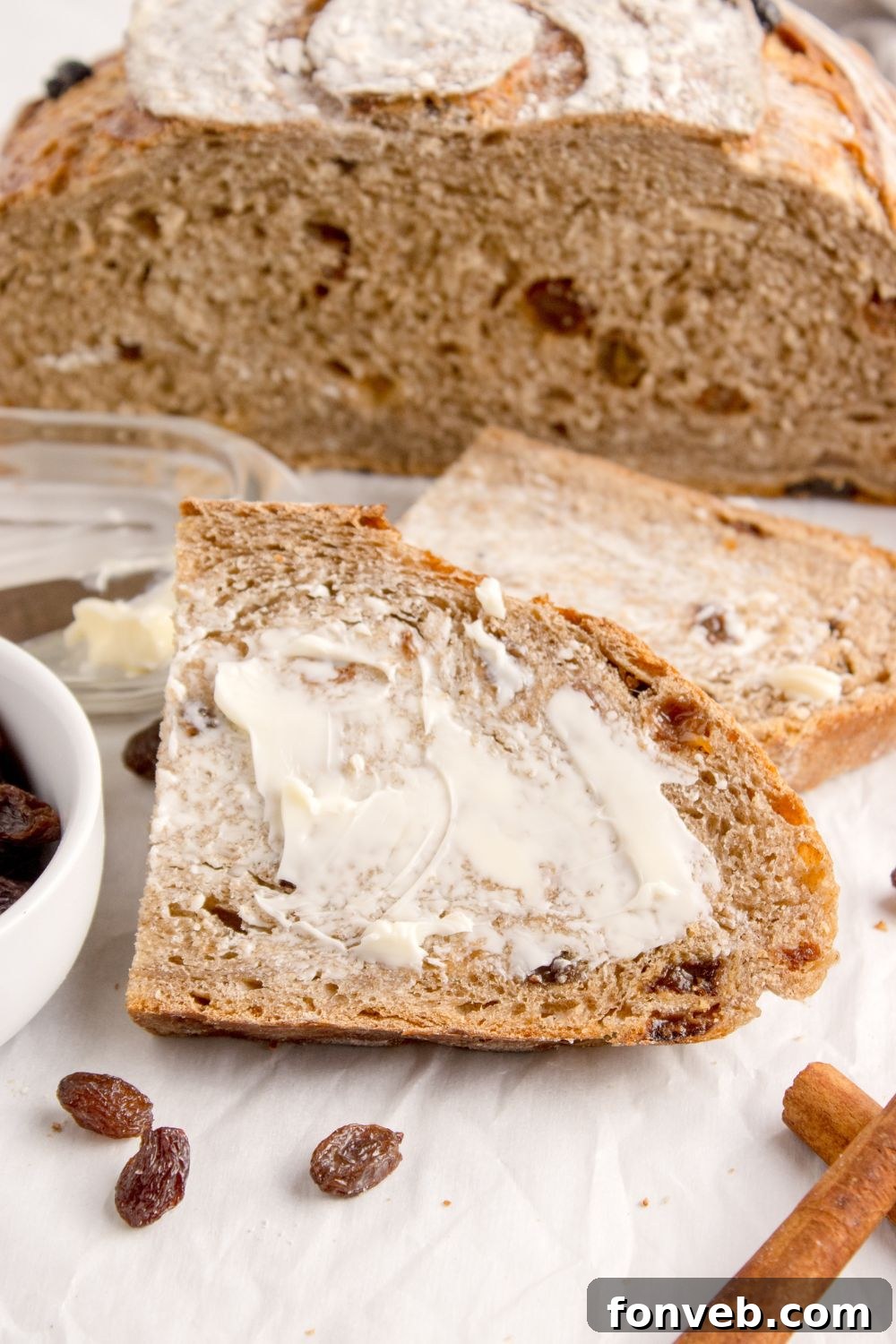
So, if the idea of baking homemade bread has always seemed too complex or time-consuming, this No-Knead Cinnamon Raisin Bread recipe is your perfect introduction. It’s incredibly simple, wonderfully delicious, and will fill your home with an aroma that is nothing short of magical. Give it a try – we’re confident you’ll be utterly captivated after just the first slice!
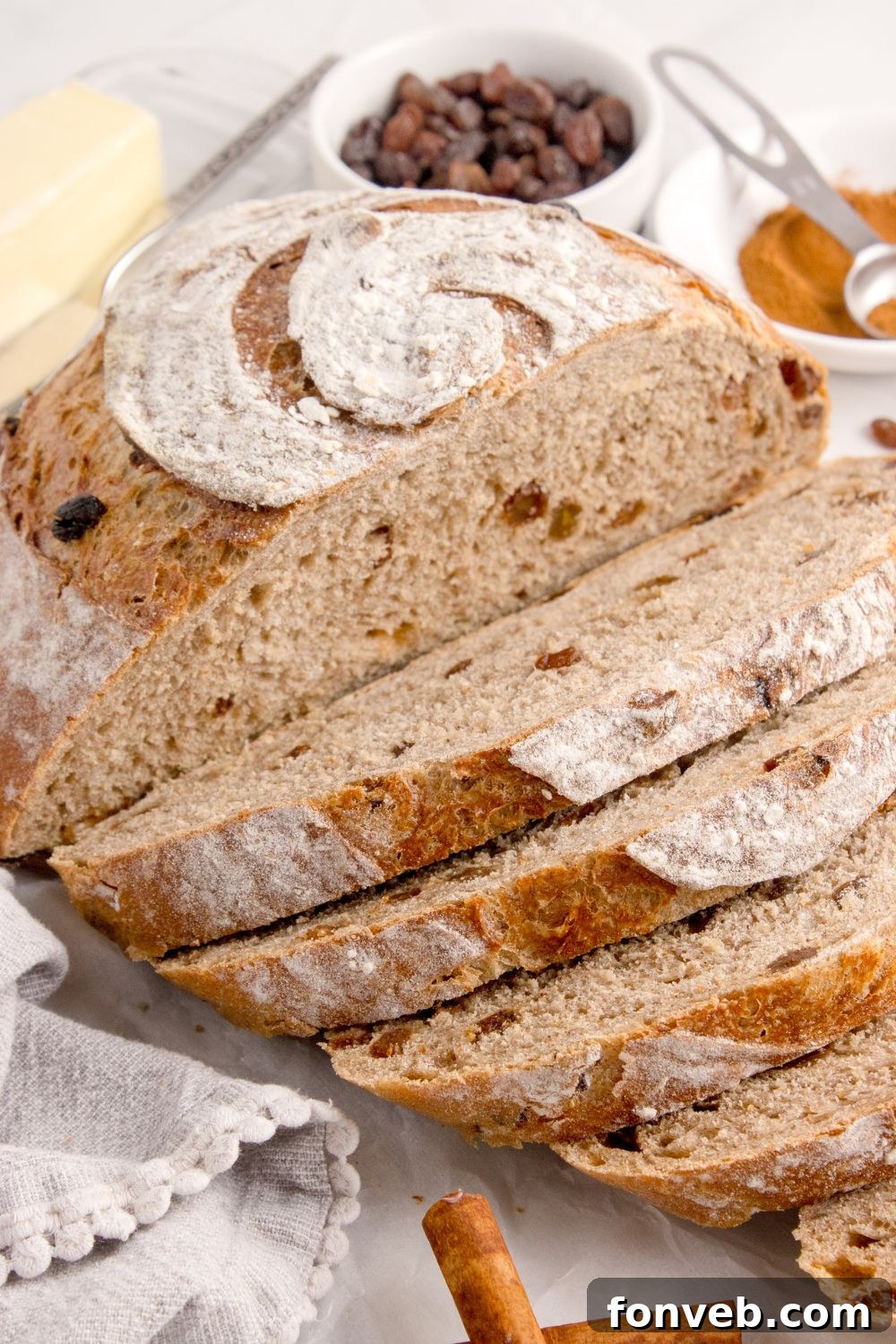
More Tasty Recipes To Try
- Cherry Blossom Cookies
- Blueberry French Toast Casserole
- Crumbl Key Lime Pie Cookies
- Cheeseburger Sliders
No-Knead Cinnamon Raisin Bread Recipe
Course
Side Dish
Prep Time
15 minutes
Cook Time
40 minutes
Total Time
4 hours 55 minutes
Servings
12 servings
Ingredients
- 4 cups 500g bread flour
- 2 ¼ teaspoons 7g instant yeast OR 2 ¼ teaspoons (7g) active dry yeast (see Step 1 for activation)
- 1 ½ teaspoons 8g Kosher salt OR 1 teaspoon (8g) table salt
- 3 tablespoons 38g white sugar (adjust for sweetness)
- 2 tablespoons ground cinnamon
- ⅔ cup 100g golden raisins
- 1 ¼ cups 300ml lukewarm water (90-100°F / 32-38°C)
- 1 tablespoon 15g oil (for a softer crumb)
Instructions
-
In a large mixing bowl, combine all the dry ingredients: bread flour, instant yeast (or activated active dry yeast), salt, sugar, ground cinnamon, and golden raisins. Whisk them together thoroughly. Add the lukewarm water (ensure it’s between 90-100°F / 32-38°C) and the oil. Mix with a sturdy wooden spoon or your clean hands until a shaggy, cohesive dough forms and no dry spots of flour remain. Cover the bowl loosely with a damp kitchen towel or plastic wrap and let the dough rest at room temperature for 30 minutes. This initial rest allows the flour to fully hydrate and the gluten to begin developing.
-
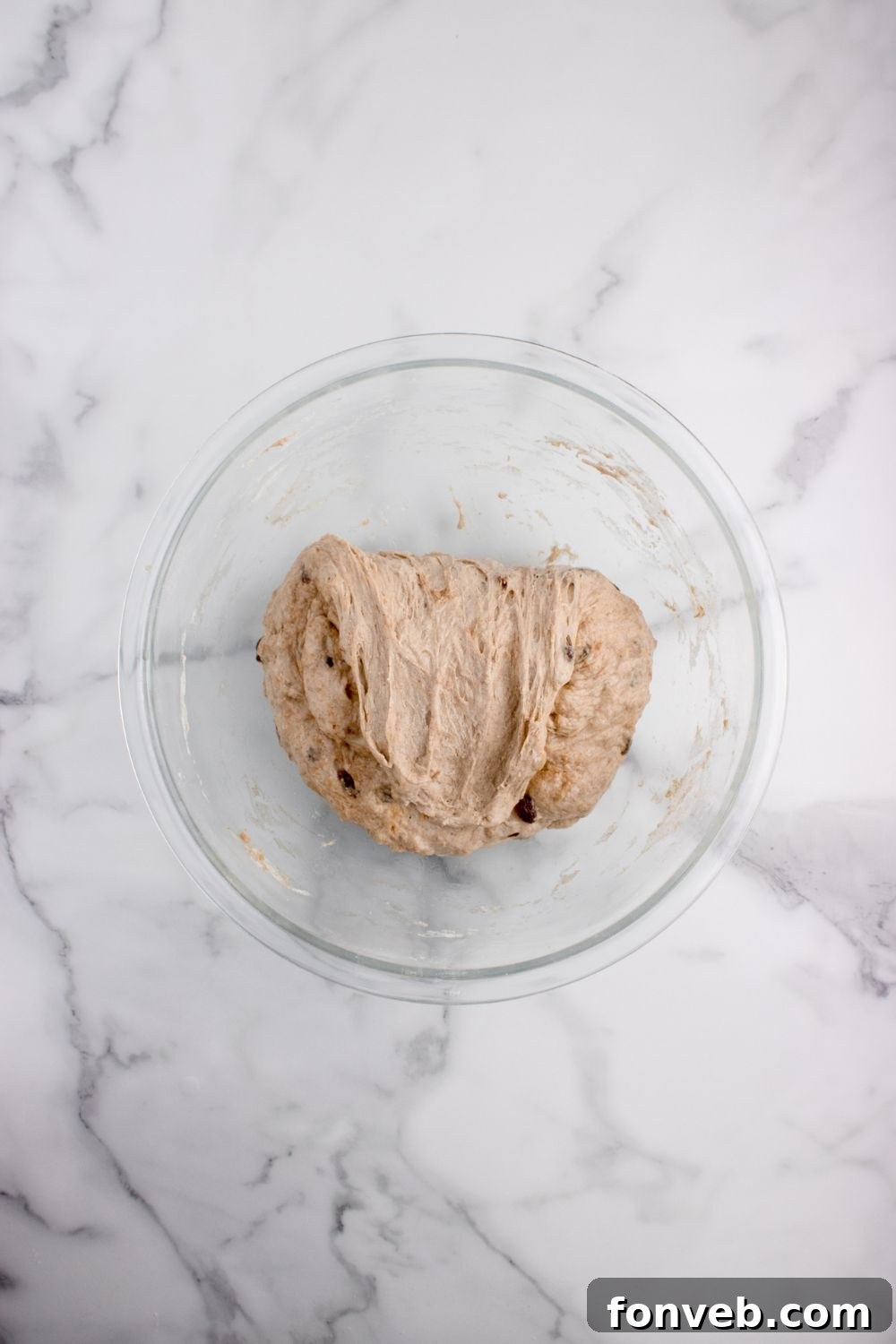
Perform the first “stretch and fold.” With wet hands, grab one side of the dough from underneath, gently stretch it upwards, and fold it over to the opposite side of the bowl. Rotate the bowl a quarter turn and repeat this stretching and folding action three more times, completing all four sides. This helps to build the dough’s strength without kneading. Cover the dough again and let it rest for another 20 minutes. Repeat this stretch and fold process two more times, allowing 20 minutes of rest after each set. This sequence of gentle folds and rests is key to developing a strong gluten network for your no-knead bread.
-
After the stretch and fold series, cover the bowl tightly with a kitchen towel or plastic wrap. Place the dough in a warm, draft-free spot (such as a proofing drawer, a slightly warmed oven with the light on, or simply on your countertop if your kitchen is warm) and let it rise. This first rise, or bulk fermentation, will take approximately 1.5 to 2 hours, or until the dough has noticeably doubled in size. This long rise allows for significant flavor development.
-
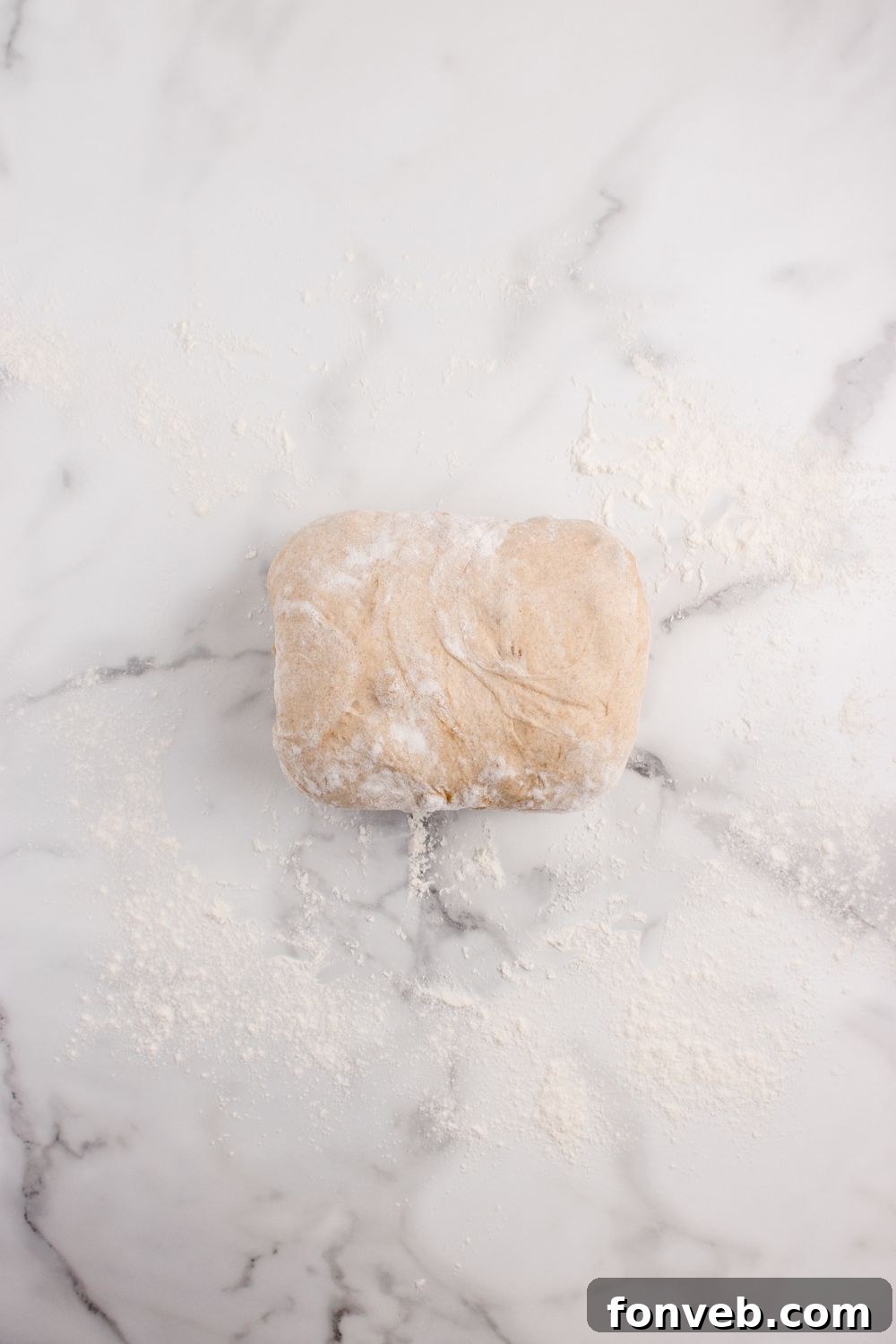
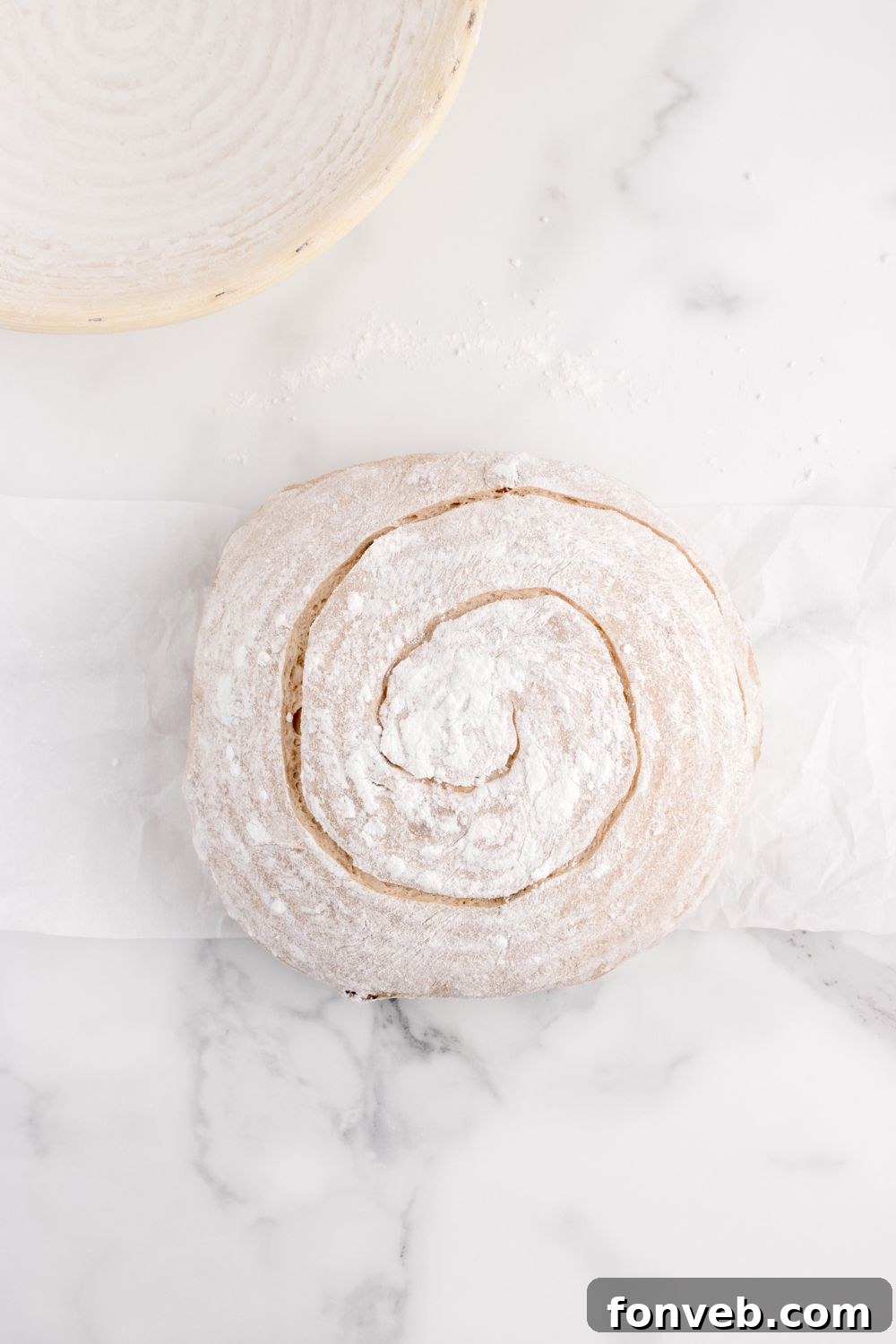
Lightly flour a clean work surface (your countertop is fine). Gently scrape the risen dough out of the bowl onto the floured surface. Avoid deflating it too much. Gently press the dough down to form a rough square or rectangle. To shape it into a round loaf, fold the edges of the dough towards the center, working your way around the perimeter, then gently flip it over and cup your hands around it, rotating to create a smooth, taut dough ball. This process is similar to rolling a burrito and aims to create surface tension. A bench scraper or dough scraper can be very helpful here.
-
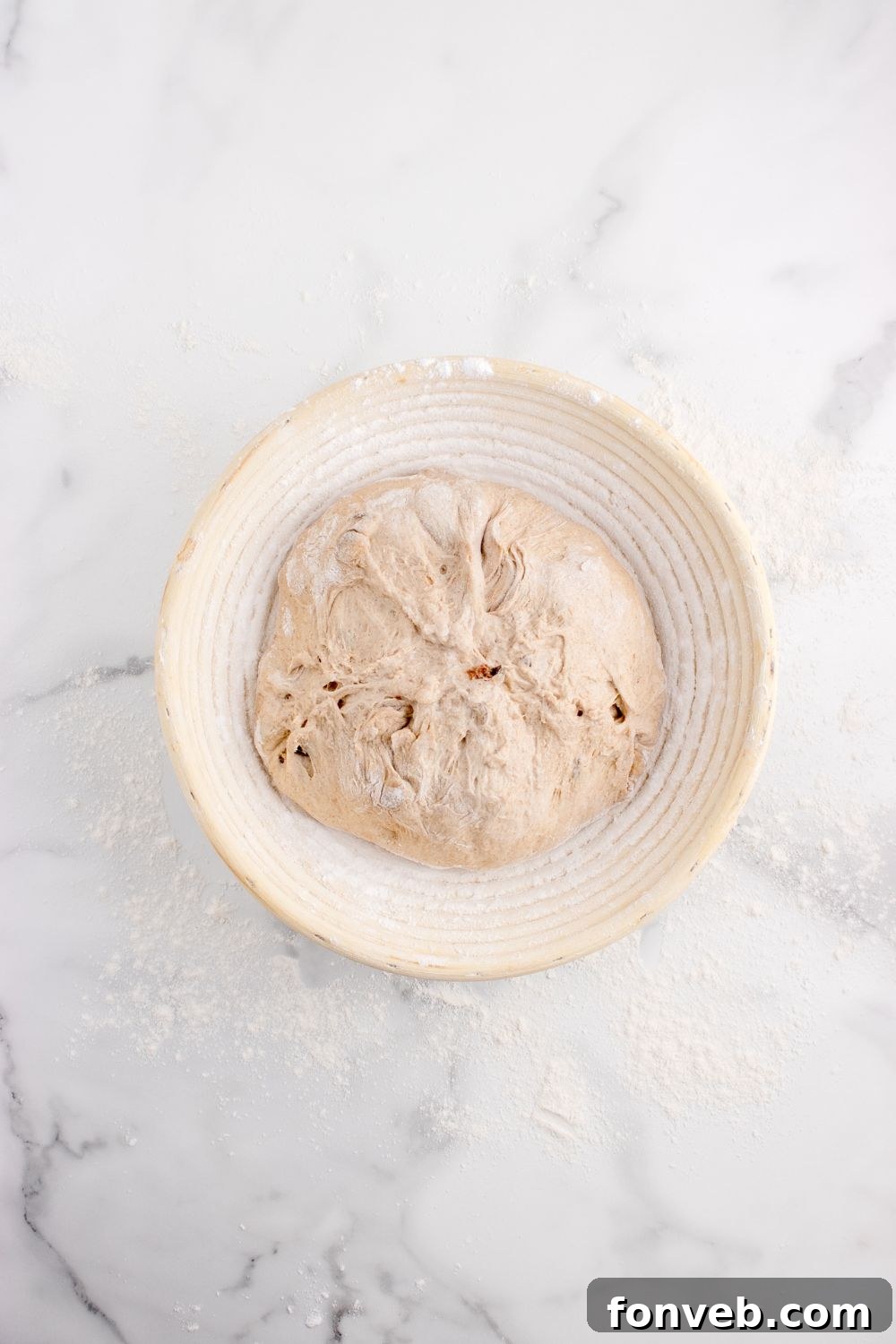
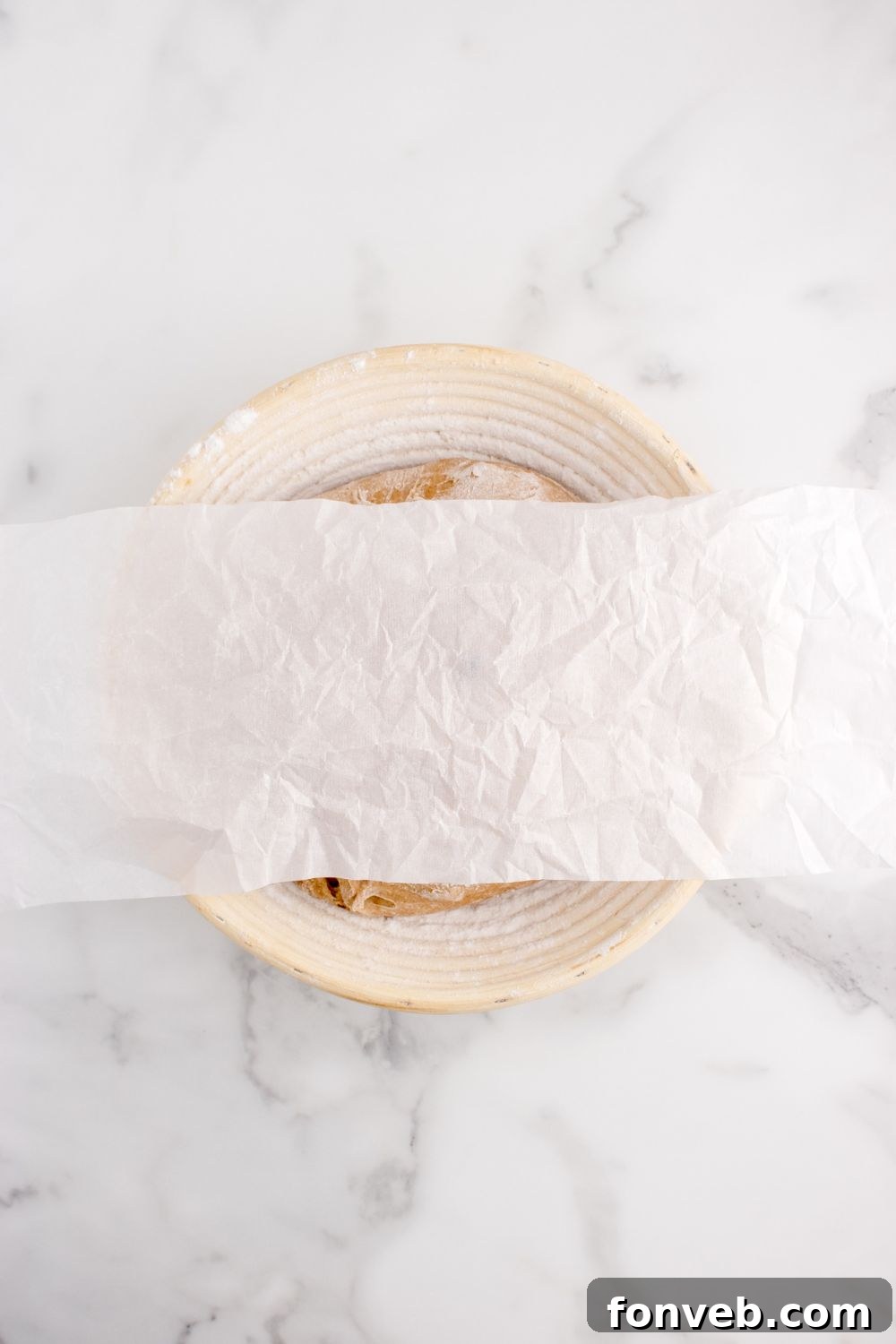
Prepare for the second rise (final proofing). Lightly flour a proofing basket (banneton) or a medium-sized bowl lined with a floured kitchen towel. Carefully transfer the shaped dough into the prepared basket/bowl, placing it seam-side up. This prevents it from sticking and helps it hold its shape. Cover again with a damp towel or plastic wrap and let it proof at room temperature for another 1.5 to 2 hours, or until it has increased significantly in size and feels light and airy. Alternatively, for a deeper flavor, you can cold-proof the dough in the refrigerator overnight (8-12 hours).
-
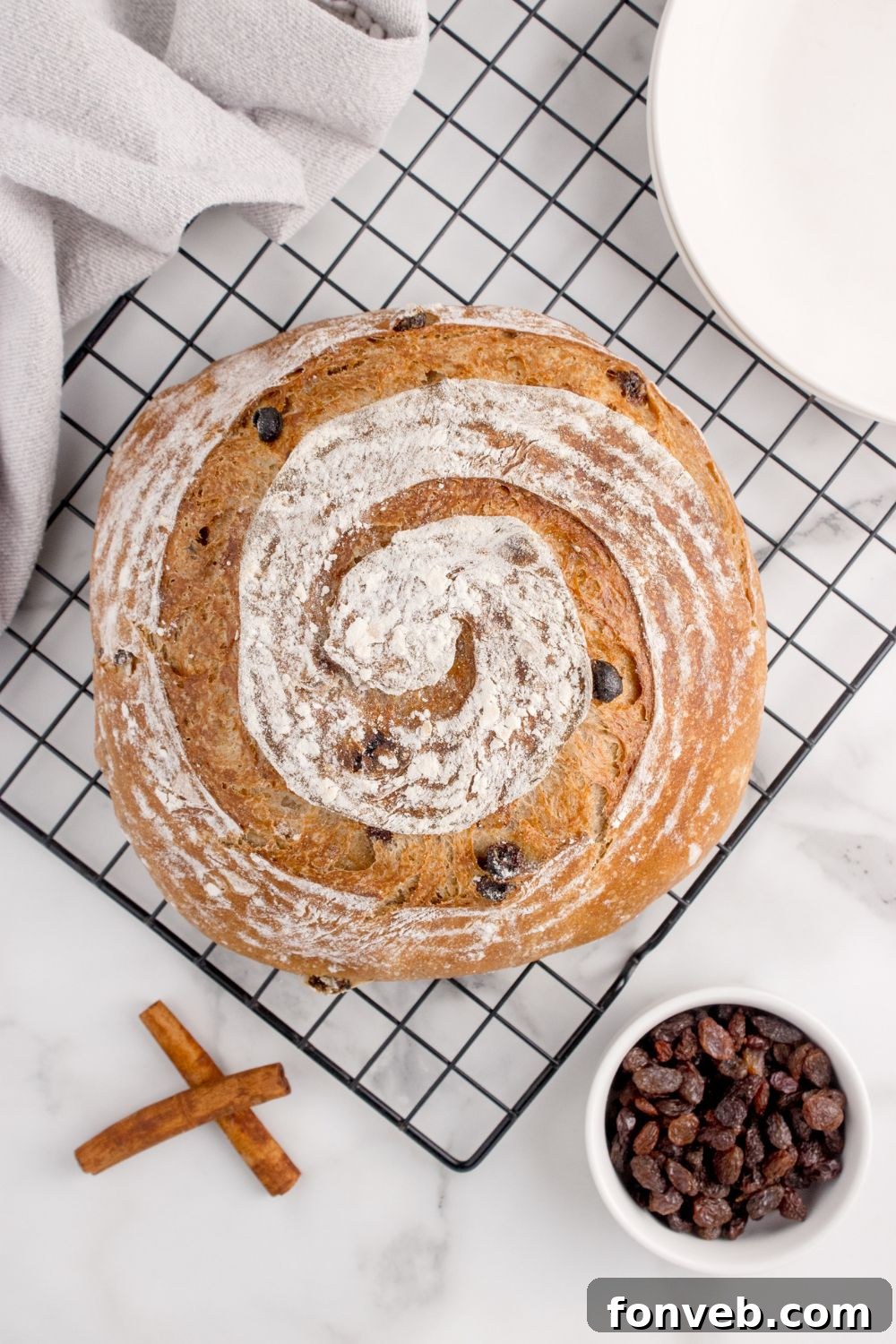
About 30 minutes before the final rise is complete, place your Dutch oven (or heavy cast-iron pot with a lid) into your cold oven. Preheat the oven to a scorching 450°F (230°C) with the Dutch oven inside. Heating the pot ensures an even bake and a fantastic crust. Once preheated, carefully remove the very hot Dutch oven using oven mitts. Turn the proofed dough out onto a piece of parchment paper, seam-side down. Score the top of the loaf with a sharp knife or bread lame (a simple ‘X’ or a single diagonal cut works well). Carefully lift the parchment paper with the dough and gently transfer it into the preheated Dutch oven. Cover the Dutch oven and bake for 25 minutes. After 25 minutes, remove the lid and continue to bake for an additional 15-20 minutes, or until the top of the loaf is a deep golden brown and has developed a crispy, irresistible crust.
-
Once baked, carefully remove the bread from the Dutch oven and transfer it to a wire rack to cool completely. This is a crucial step! Allow the bread to cool for at least 2 hours before attempting to slice it. Slicing warm bread can result in a gummy texture. Once fully cooled, use a sharp serrated knife to slice and enjoy this easy homemade bread with its sweet cinnamon flavor and juicy raisins!
Equipment
Did you make this recipe?
Make sure to follow on Pinterest for more recipes!
Pin Recipe
Share on Facebook