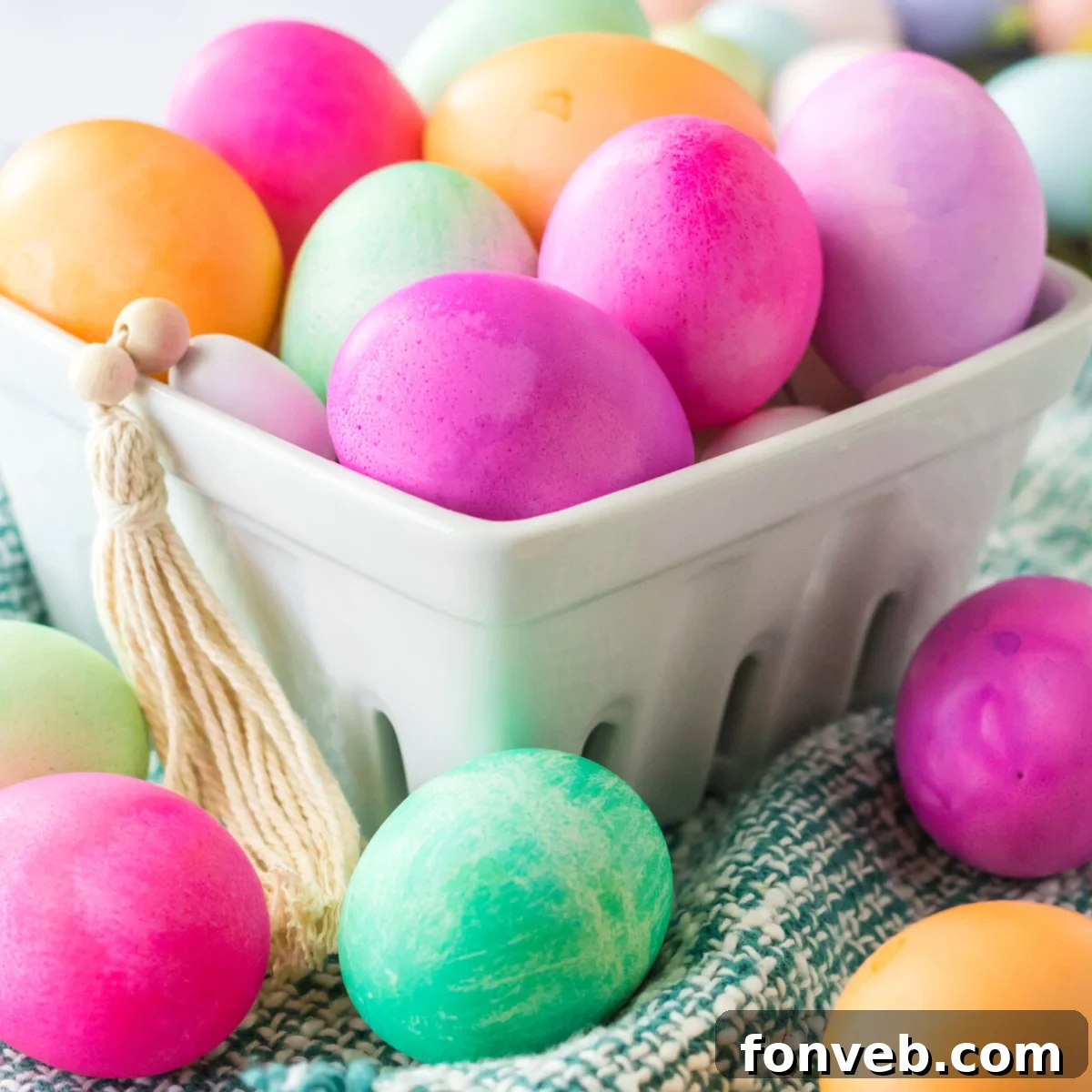
Easter is a time for celebration, joy, and, for many, the delightful tradition of dyeing eggs. But what if you could simplify this beloved activity, making it less messy and even more rewarding? Enter the innovative method of creating beautifully dyed Easter eggs right in your slow cooker! This clever technique not only yields perfectly hard-boiled eggs every time but also delivers vibrant, evenly colored shells without the usual fuss. Say goodbye to boiling water on the stovetop and worrying about spills; the slow cooker revolutionizes your Easter egg dyeing experience, making it an effortless “set it and forget it” affair.
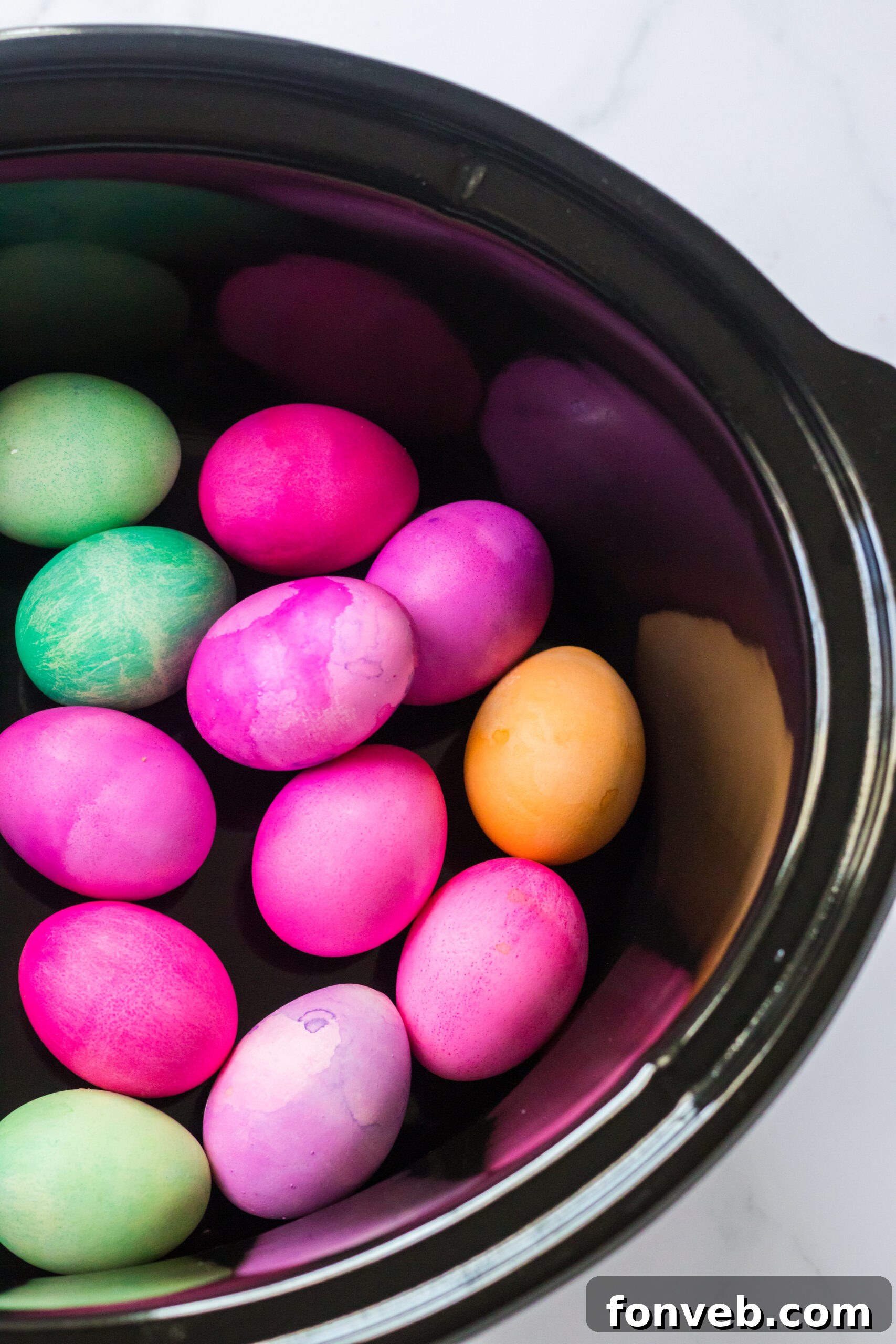
Imagine eggs that are not only perfectly cooked to a smooth, non-rubbery texture with a creamy yolk but also boast stunning, saturated colors. The gentle, consistent heat of a slow cooker provides the ideal environment for both cooking the eggs and allowing the dye to deeply penetrate the shells. This dual-purpose method means you no longer have to hard-boil your eggs separately before beginning the dyeing process. It’s a game-changer for anyone looking to streamline their Easter preparations and enjoy more time celebrating with family and friends. Get ready to discover how simple and safe it is to achieve spectacular results with slow cooker dyed Easter eggs.
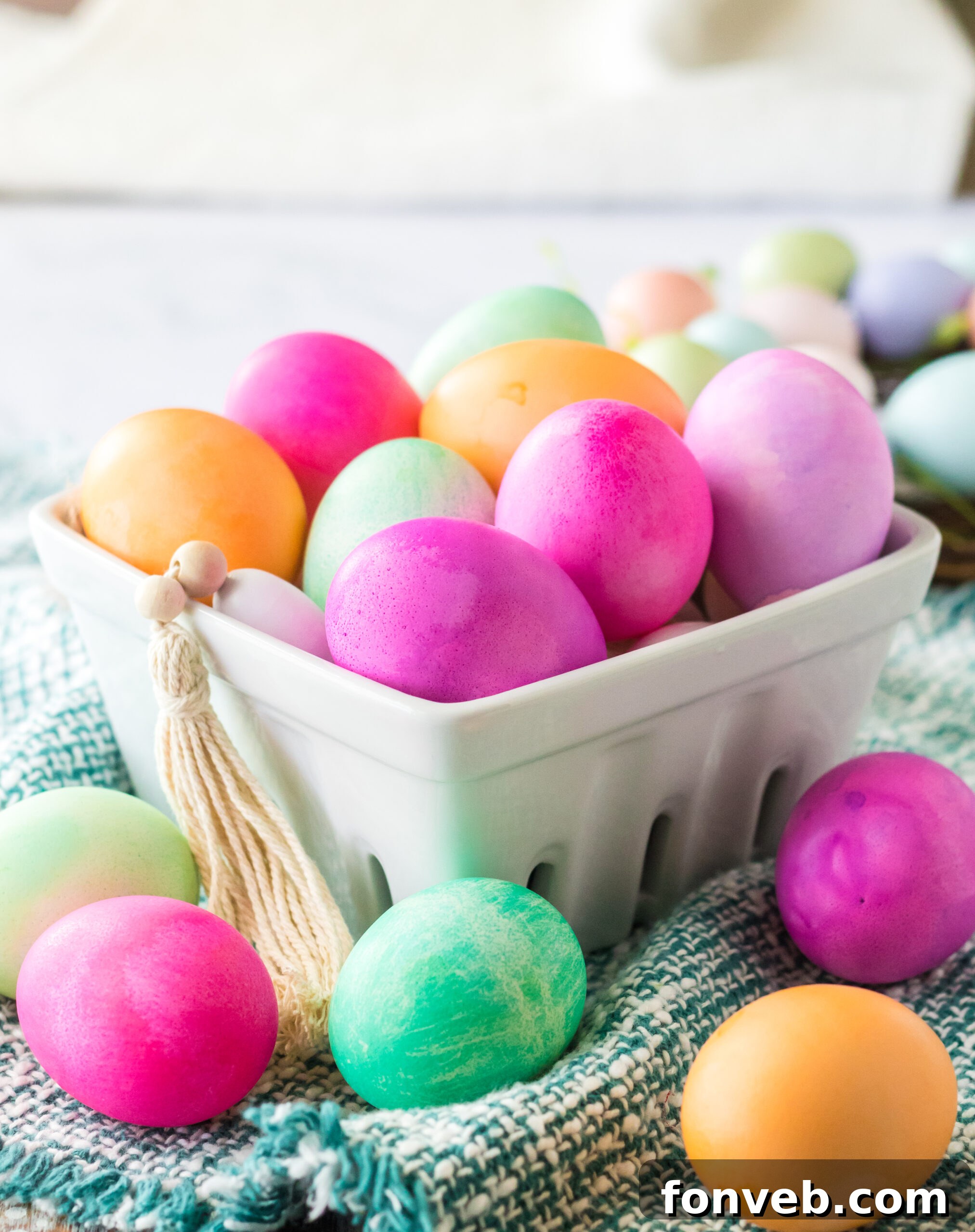
Why This Method Will Transform Your Easter
The slow cooker method for dyeing Easter eggs offers numerous advantages that make it a superior choice for holiday crafting. Here are some compelling reasons why you’ll absolutely love incorporating this idea into your annual traditions:
- Hands-Off Simplicity: This is perhaps the biggest draw. Once your eggs are in the slow cooker with the dye solution, your work is done. You can attend to other Easter preparations, enjoy time with your loved ones, or simply relax while your slow cooker magically transforms ordinary eggs into colorful masterpieces. It eliminates the constant monitoring required with traditional boiling methods, giving you precious time back.
- Perfectly Cooked Eggs, Every Time: Say goodbye to rubbery whites, greenish yolks, and cracked shells. The slow cooker’s gentle, low-heat cooking ensures that eggs are consistently hard-boiled to perfection. The even cooking prevents the thermal shock that often leads to cracked eggs in rapidly boiling water, and the prolonged, gentle heat results in a creamy texture that’s a delight to eat or decorate. These flawlessly cooked eggs are also often much easier to peel once cooled.
- Vibrant and Creative Colors: The extended soaking time in the warm slow cooker allows the food coloring to truly set into the eggshells, resulting in richer, more deeply saturated, and incredibly vibrant hues. This method often produces more intense and even colors compared to quick dips. You’ll be amazed at the spectrum of creative colors you can achieve, experimenting with different ingredients and combinations directly from your pantry. From soft pastels to bold, brilliant shades, the possibilities are endless.
- Minimal Mess and Easy Cleanup: The use of slow cooker liners and aluminum foil dividers creates a contained environment for each dye bath. This significantly reduces the risk of messy spills and stains on your countertops, clothing, and even the slow cooker itself. Once the dyeing is complete, you simply remove the liners, making cleanup a breeze. This mess-free aspect makes it an ideal activity for families with children, fostering creativity without the typical post-crafting cleanup dread.
- Enhanced Safety: With no need for boiling water on an open stovetop, this method inherently reduces the risk of burns and spills, making it a safer option, especially when little helpers are involved. The slow cooker operates at a lower, more controlled temperature, providing a secure way to create beautiful Easter eggs.
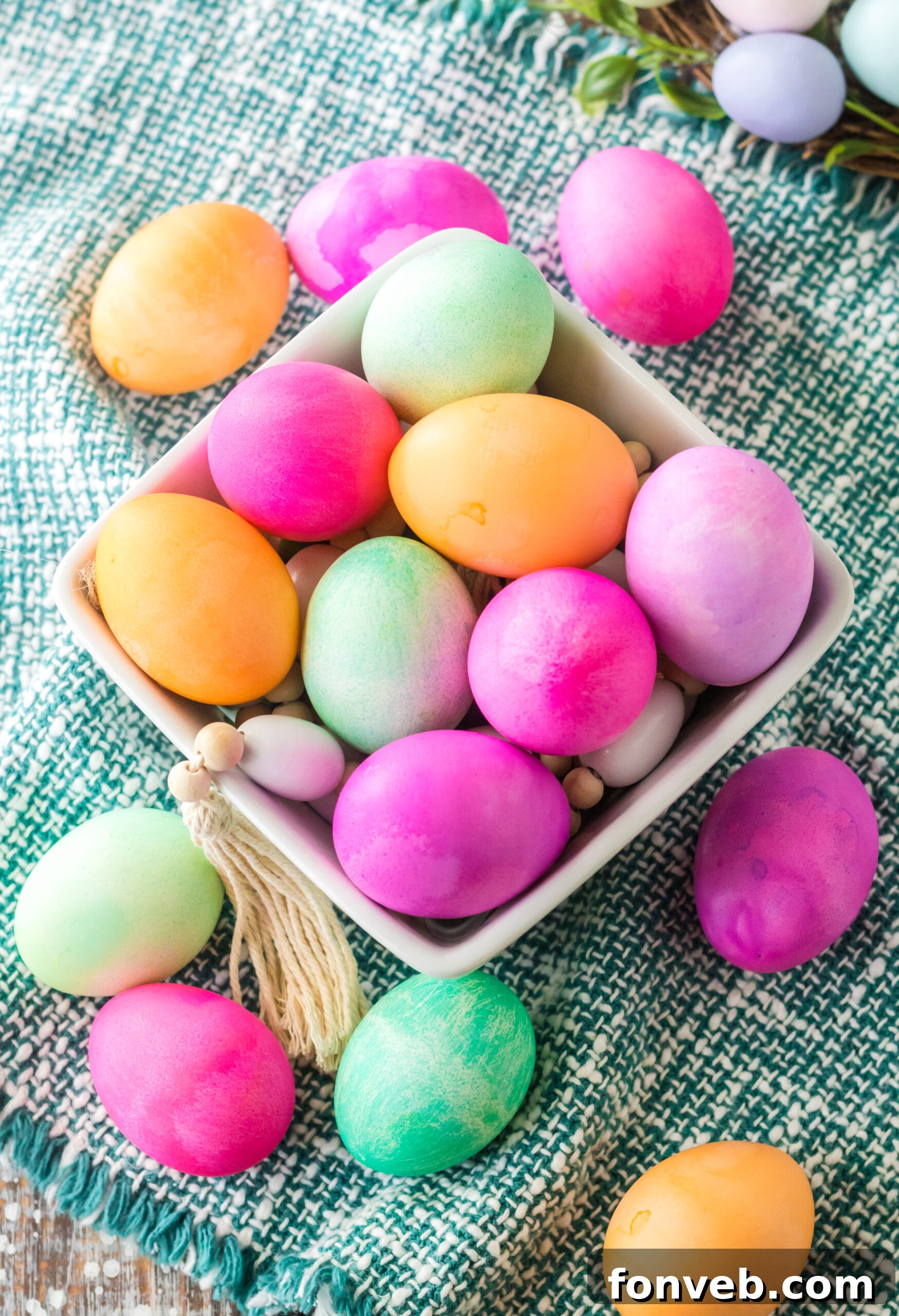
Essential Items for Your Slow Cooker Easter Eggs
Gathering the right supplies is the first step to a successful and enjoyable slow cooker egg dyeing experience. Here’s a detailed look at what you’ll need:
- Eggs: The star of our Easter celebration! You’ll typically want to use large, white chicken eggs for the most vibrant and true-to-color results, as their light shells provide a neutral canvas. However, brown eggs can also be used; just keep in mind that the base color might subtly alter the final dye hue, often resulting in deeper, more muted tones. Ensure your eggs are fresh for optimal cooking and easier peeling.
- Water: As the primary medium for both cooking and dyeing, water is indispensable. It will evenly distribute the food coloring and gently cook your eggs. The quantity will vary depending on your slow cooker size and the number of eggs, but the goal is to fully submerge the eggs in each section.
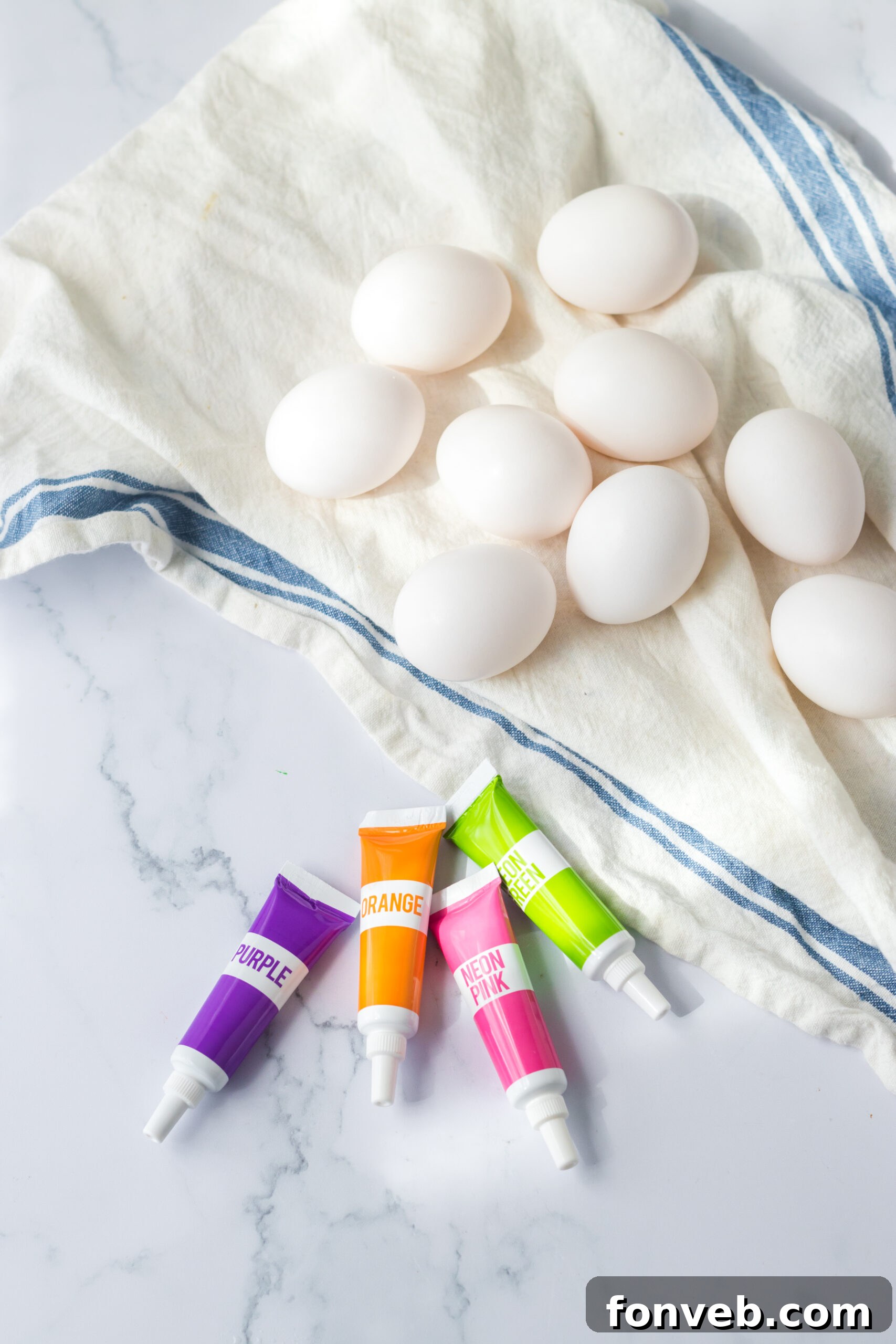
- Food Coloring: This is where the magic happens! Liquid food coloring is commonly used and widely available, offering a broad spectrum of colors. For more intense and concentrated hues, gel food coloring is an excellent alternative. Don’t be afraid to mix primary colors to create custom shades like teal, coral, or lavender. This festive addition transforms plain eggs into unique, eye-catching decorations for your Easter basket or holiday display.
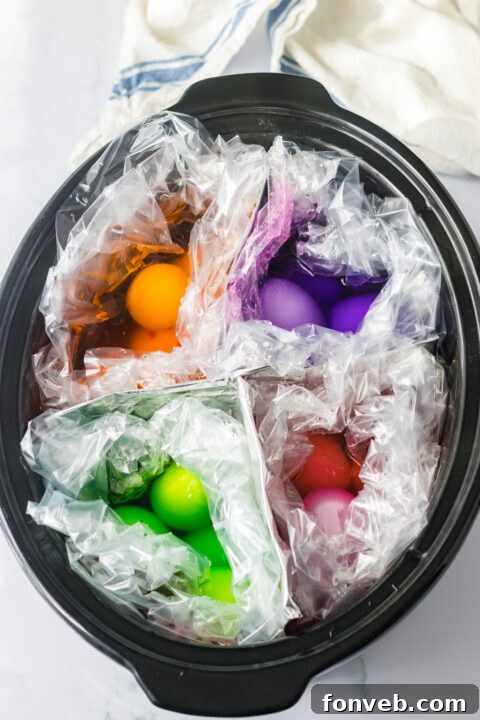
- Heavy-Duty Aluminum Foil: Essential for organization and mess prevention. Thick, heavy-duty foil is crucial for creating sturdy dividers within your slow cooker. These dividers will separate different colors of dye, preventing them from mixing and ensuring each egg receives its intended vibrant hue. The foil acts as a barrier, keeping your dye solutions neatly contained and preventing any color transfer to the slow cooker insert.
- Slow Cooker Liners: These are your best friend for effortless cleanup. Placed within each foil-separated section, slow cooker liners (such as oven bags or Crock-Pot brand liners) act as individual “dye pots.” They protect your slow cooker from staining and prevent dye from seeping into unwanted areas. After dyeing, you simply lift out the liners with the used dye solution, making cleanup as simple as discarding a bag.
- Optional: White Vinegar: While not strictly listed in the original recipe card, adding a tablespoon of white vinegar to each dye bath is a common practice in traditional egg dyeing. The acid in vinegar helps the food coloring bind more effectively to the eggshell, resulting in even brighter and more intense colors. If you desire exceptionally vibrant results, consider incorporating this into your dye solution.
Expert Tips and Creative Suggestions for Crockpot Easter Eggs
To ensure your slow cooker dyed Easter eggs are nothing short of spectacular, keep these expert tips and creative suggestions in mind. These insights will help you achieve the best results, maximize vibrancy, and make the process even more enjoyable.
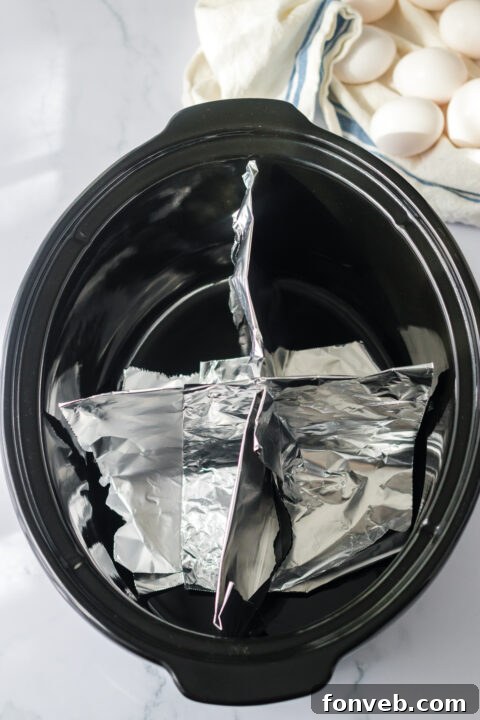
- Line Your Slow Cooker Meticulously: The importance of using heavy-duty aluminum foil to create secure sections cannot be overstated. Fold the foil into thick, sturdy squares or rectangles that fit snugly within your slow cooker, forming walls that effectively separate the different dye baths. These partitions are key to preventing colors from bleeding into one another, ensuring each egg is coated with a distinct, even layer of its chosen color.
- Utilize Separate Utensils: When placing or removing eggs from each dye section, always use separate spoons or tongs for each color. This simple step is vital to prevent cross-contamination of dyes. Mixing colors inadvertently can lead to muddy or unintended hues. Using dedicated utensils for each color ensures that every egg retains its unique and vibrant appearance.
- Start with Cold Water and Eggs: For the most consistent cooking and optimal dye absorption, begin with cold water and place your eggs directly into it before turning on the slow cooker. This gradual heating process helps prevent the eggshells from cracking due to sudden temperature changes, and it allows the eggs to cook evenly to a perfect hard-boiled state.
- Extend Soaking for Brighter Hues: If you desire exceptionally bright and deeply saturated colors, consider letting your eggs soak in the dye solution for an additional period after the cooking cycle is complete. The longer the eggs remain submerged in the warm dye, the more intense their color will become. Experiment with soaking times to achieve your preferred level of vibrancy.
- Cool Eggs Completely Before Handling: Once removed from the slow cooker, gently transfer the eggs to a paper towel-lined tray or cooling rack. Allow them to cool completely before handling them extensively or attempting to peel them. Cooling helps the dye fully set and reduces the likelihood of cracking the shells, especially if you plan to peel them for consumption. Rapid cooling can sometimes lead to cracks, so a gradual air cool is often best.
- Consider Room Temperature Eggs: While starting with cold eggs and cold water is ideal for cooking, some prefer to bring eggs to room temperature before placing them in the slow cooker with cold water. This can further minimize the risk of cracking.
- Polish for Shine: Once your dyed eggs are completely dry and cool, you can gently rub them with a tiny amount of vegetable oil or coconut oil using a paper towel. This adds a beautiful, subtle sheen that enhances their vibrant colors, making them even more attractive as decorative pieces.
- Experiment with Natural Dyes: For an eco-friendly approach, explore natural dyeing options. Onion skins yield beautiful oranges and browns, red cabbage creates blues and purples, turmeric produces bright yellows, beet juice results in pinks and reds, and spinach can give subtle greens. These natural dyes can be added directly to your slow cooker sections along with the eggs and water for a unique, organic coloring process.
Common Questions About Easy-Dyed Easter Eggs
Here are some frequently asked questions to help you get the most out of your slow cooker Easter egg dyeing experience:
Can you cook with dyed Easter eggs?
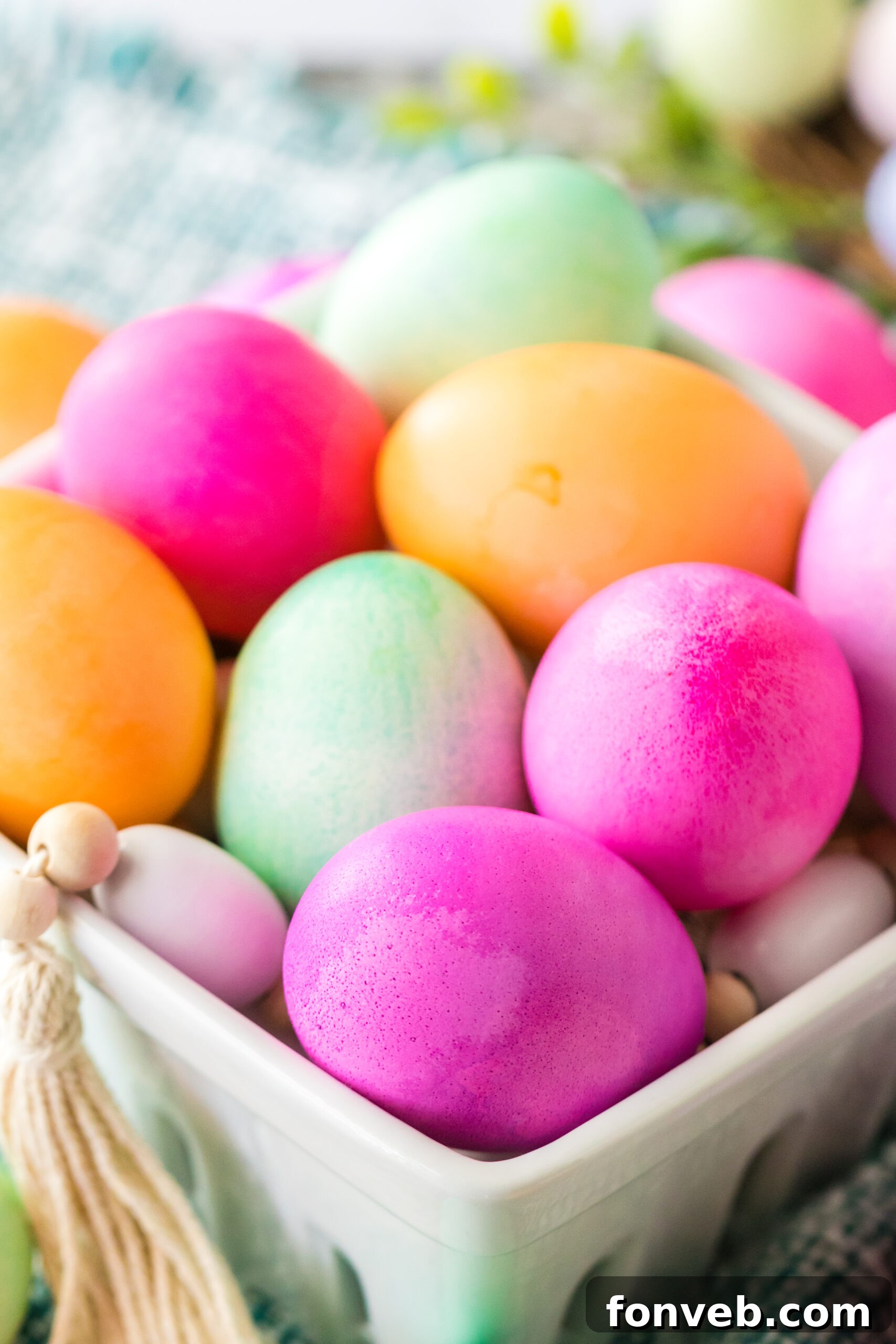
Absolutely, you can certainly cook with dyed Easter eggs! As long as you use food-safe dyes and the eggs were properly hard-boiled and stored, the color is only on the shell and does not affect the edibility or taste of the egg inside. Dyed eggs are fantastic for adding a festive touch to a variety of dishes. For instance, imagine the vibrant flair of traditional deviled eggs made with beautifully colored whites – a stunning presentation for any Easter brunch or gathering. You can also chop them up for colorful egg salads, slice them into vibrant additions for green salads, or even incorporate them into omelets for a playful visual element. If you’re feeling particularly artistic, consider arranging multi-colored hard-boiled egg halves for a unique and edible centerpiece!
Will food coloring and vinegar dye eggs?
Yes, the combination of food coloring and vinegar is a classic and highly effective way to dye Easter eggs. The vinegar, an acid, plays a crucial role in helping the food coloring adhere to the porous eggshell, resulting in more intense, even, and vibrant colors. Here’s a quick guide to using this method:
- Start by mixing about 2-3 tablespoons of white distilled vinegar with approximately ½ cup of room-temperature water. This creates your acidic base.
- To this solution, add about 20 drops (or more, depending on desired intensity) of your chosen food coloring. Stir well until the coloring is fully dissolved and evenly distributed.
- Gently place your hard-boiled eggs into the dye solution, ensuring they are completely submerged.
- Allow the eggs to soak for 10-15 minutes, or longer if you prefer a deeper, more saturated color. Regularly check the eggs until the desired hue is achieved.
- Once colored, carefully remove the eggs from the solution using a slotted spoon or tongs. Place them on a paper towel-lined tray or a cooling rack to dry completely before handling or storing. This method is incredibly versatile and can be applied to eggs hard-boiled via any method, including the slow cooker!
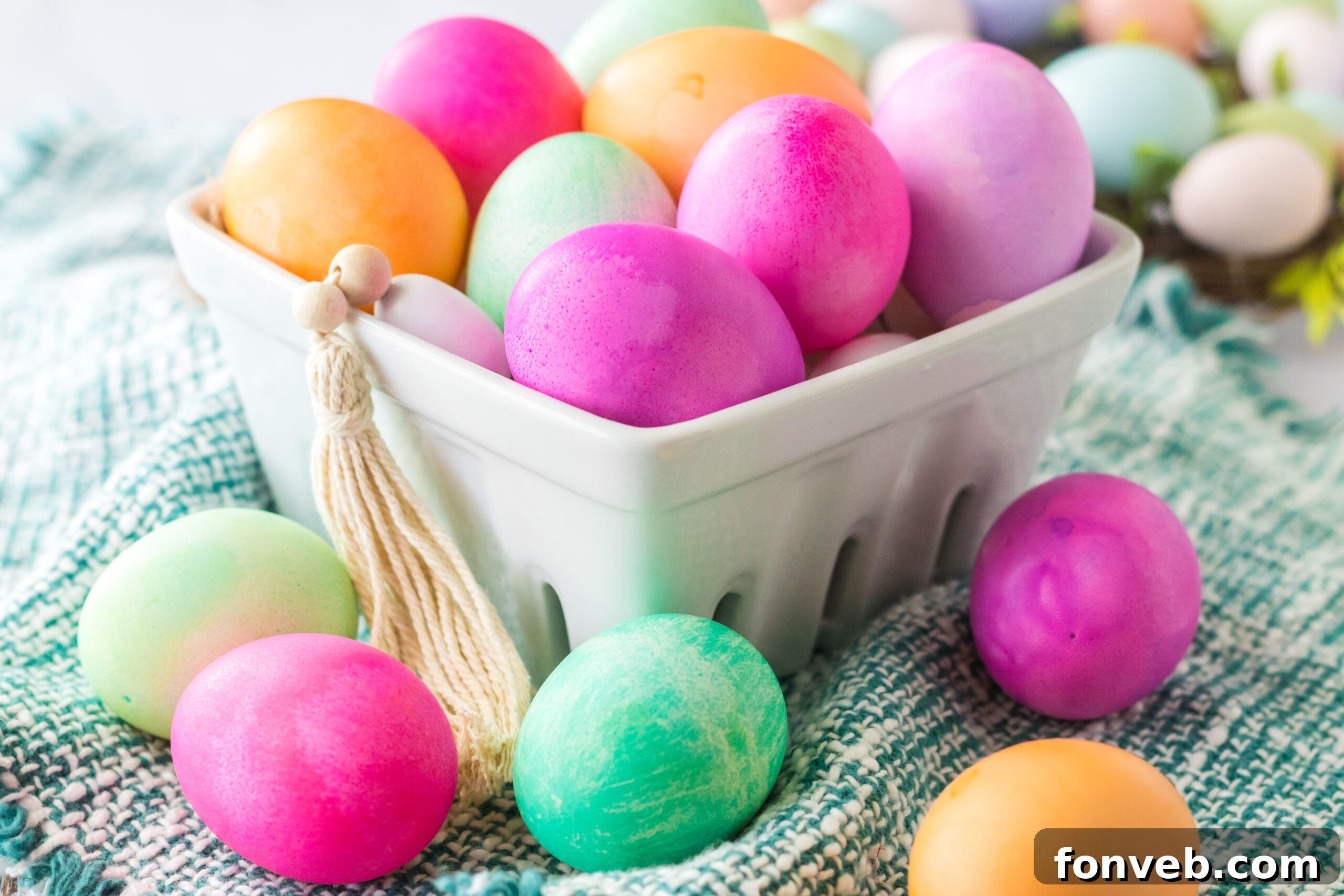
One of the most remarkable advantages of utilizing the slow cooker for dyeing your Easter eggs is its unparalleled ease. Unlike traditional dyeing methods that often involve boiling water on the stovetop, managing multiple dye cups, and inevitably dealing with spills, the slow cooker offers a hassle-free, “set it and forget it” approach. This means you can simply arrange your eggs and dye, turn on the appliance, and let it do all the work, freeing you up to focus on other holiday preparations or simply enjoy a relaxed pace. This simplicity makes the process accessible and enjoyable for everyone, regardless of their crafting experience.
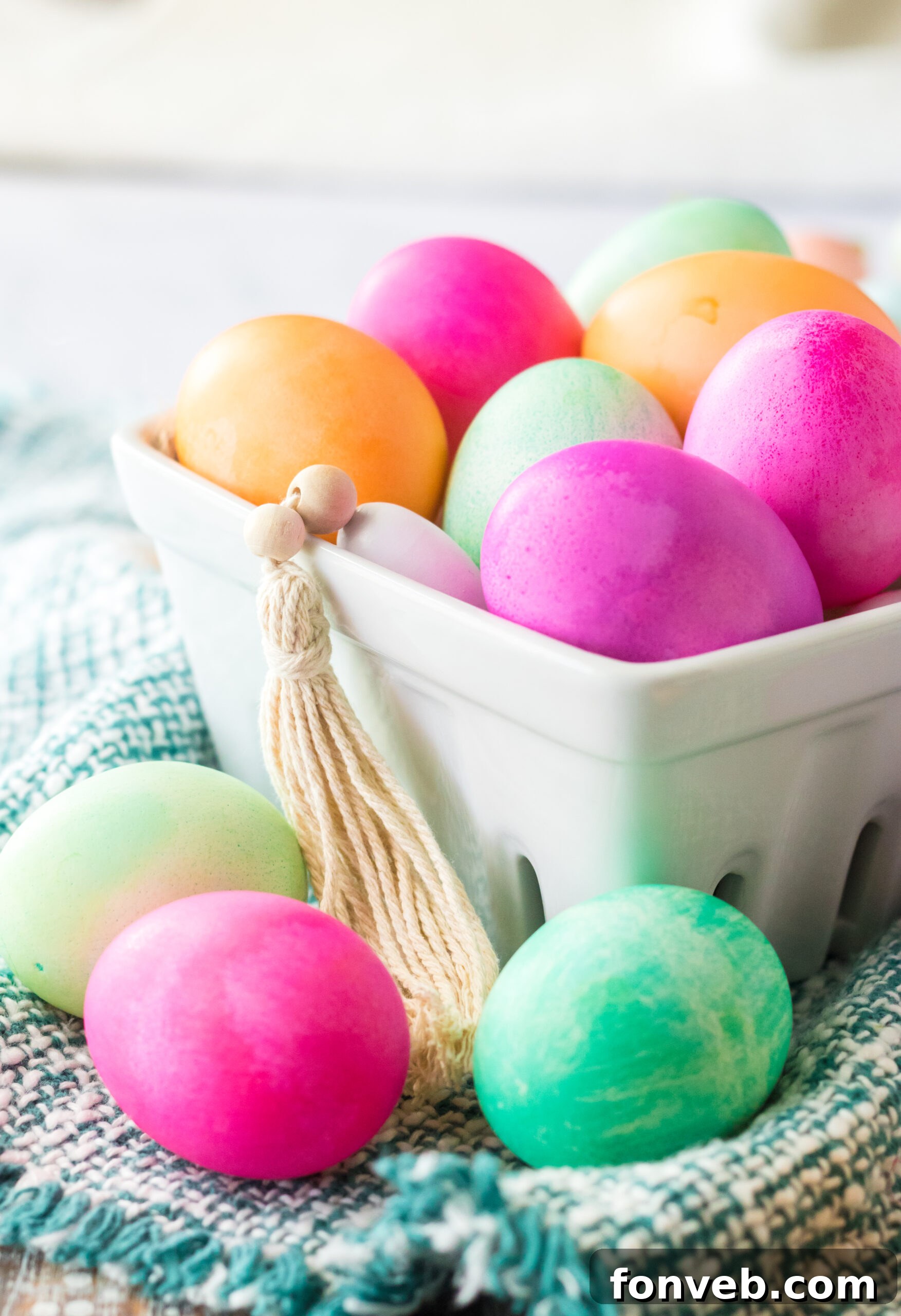
Beyond the ease, slow cooker dyed eggs consistently boast a more vibrant and evenly colored shell compared to eggs dyed using conventional methods. The prolonged, gentle heat of the slow cooker allows the dye to infuse more deeply and uniformly into the eggshell, resulting in richer, more saturated colors that truly pop. This superior color quality makes them stand out in any Easter basket or decorative display, adding an extra layer of visual appeal to your festive arrangements. For a truly easy, clean, and vibrantly colorful addition to your Easter festivities, giving slow cooker dyed eggs a try is an absolute must!
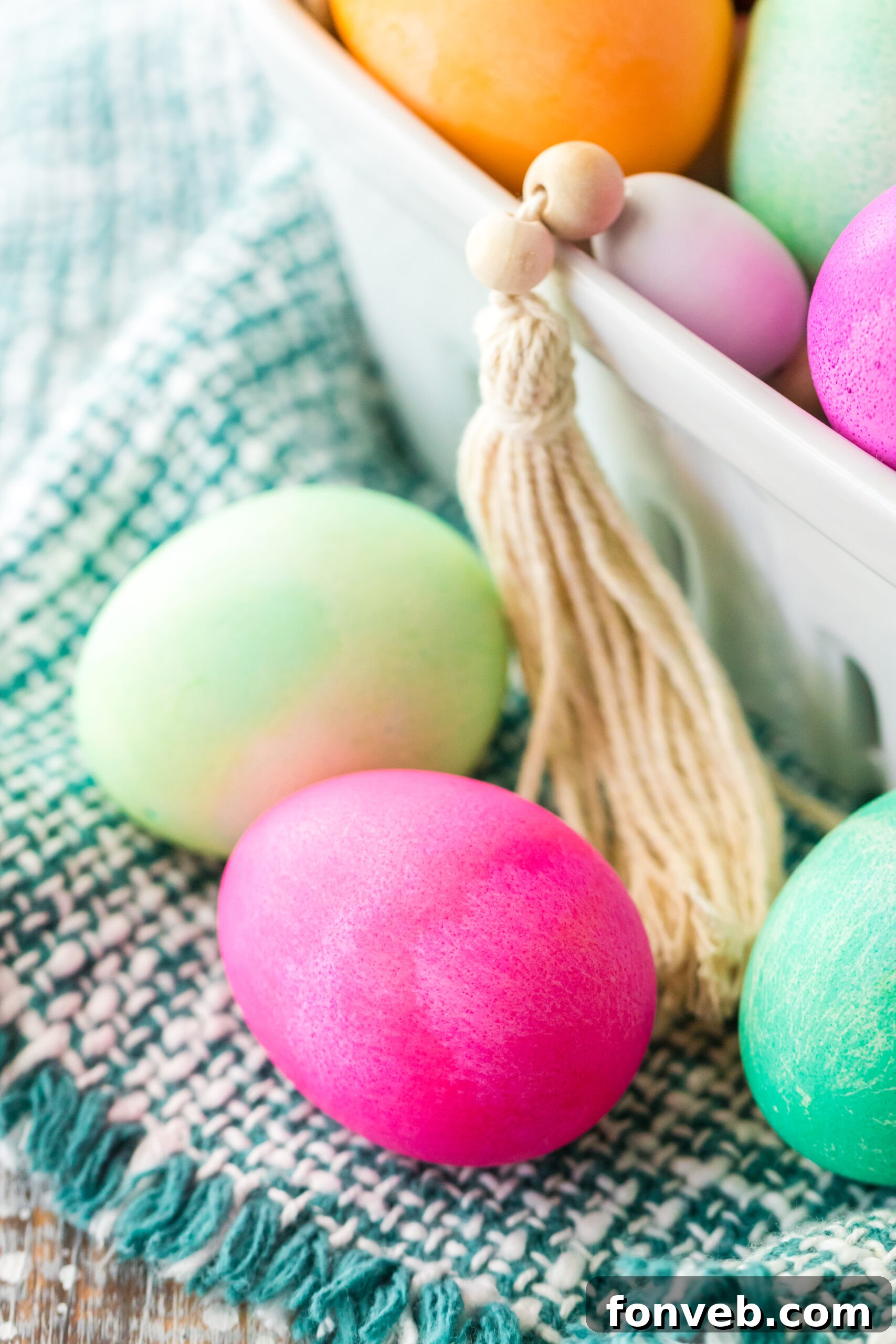
The slow cooker method also offers significant relief from the common frustrations associated with traditional egg dyeing. The contained environment created by the liners and foil dividers drastically minimizes the chances of dye getting everywhere, making the entire activity virtually mess-free. This means less time scrubbing countertops and more time admiring your beautiful creations. It’s an innovative alternative that prioritizes convenience, cleanliness, and consistently stunning results, transforming what can sometimes be a stressful chore into a genuinely enjoyable Easter tradition.
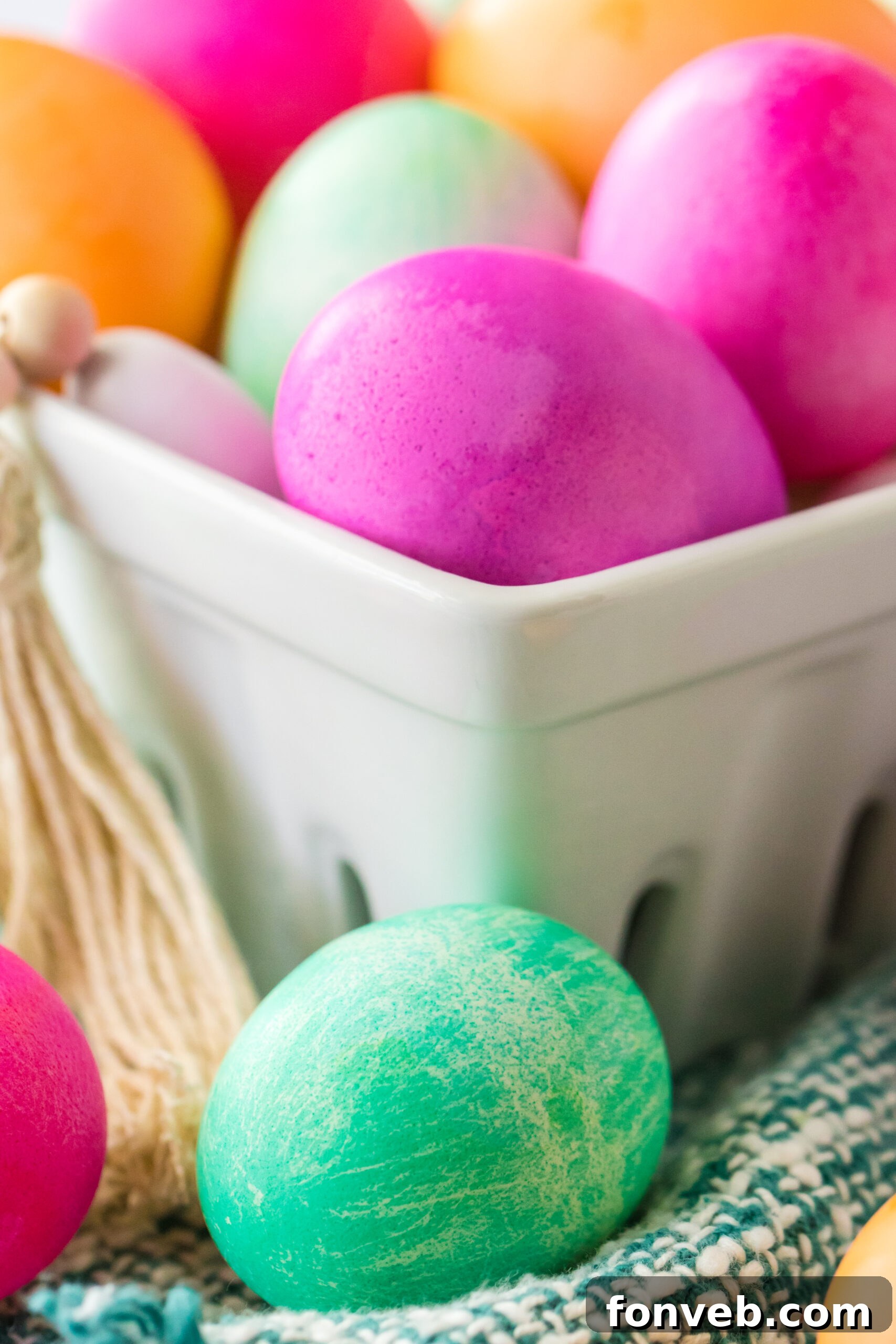
Finally, a truly exciting aspect of slow cooker dyed Easter eggs is the boundless potential for creativity and experimentation. This method invites you to explore various types of food coloring, blend different shades to create custom hues, and even dabble in unique patterns. For instance, you could layer colors to achieve a stunning ombre effect, or strategically add drops of different dyes to create beautiful swirling patterns on the eggshells. The consistent heat ensures that these experimental applications also adhere beautifully. Whether you’re aiming for a cohesive color scheme or a vibrant rainbow, the slow cooker provides the perfect canvas for your artistic vision, ensuring each egg is a unique work of art.
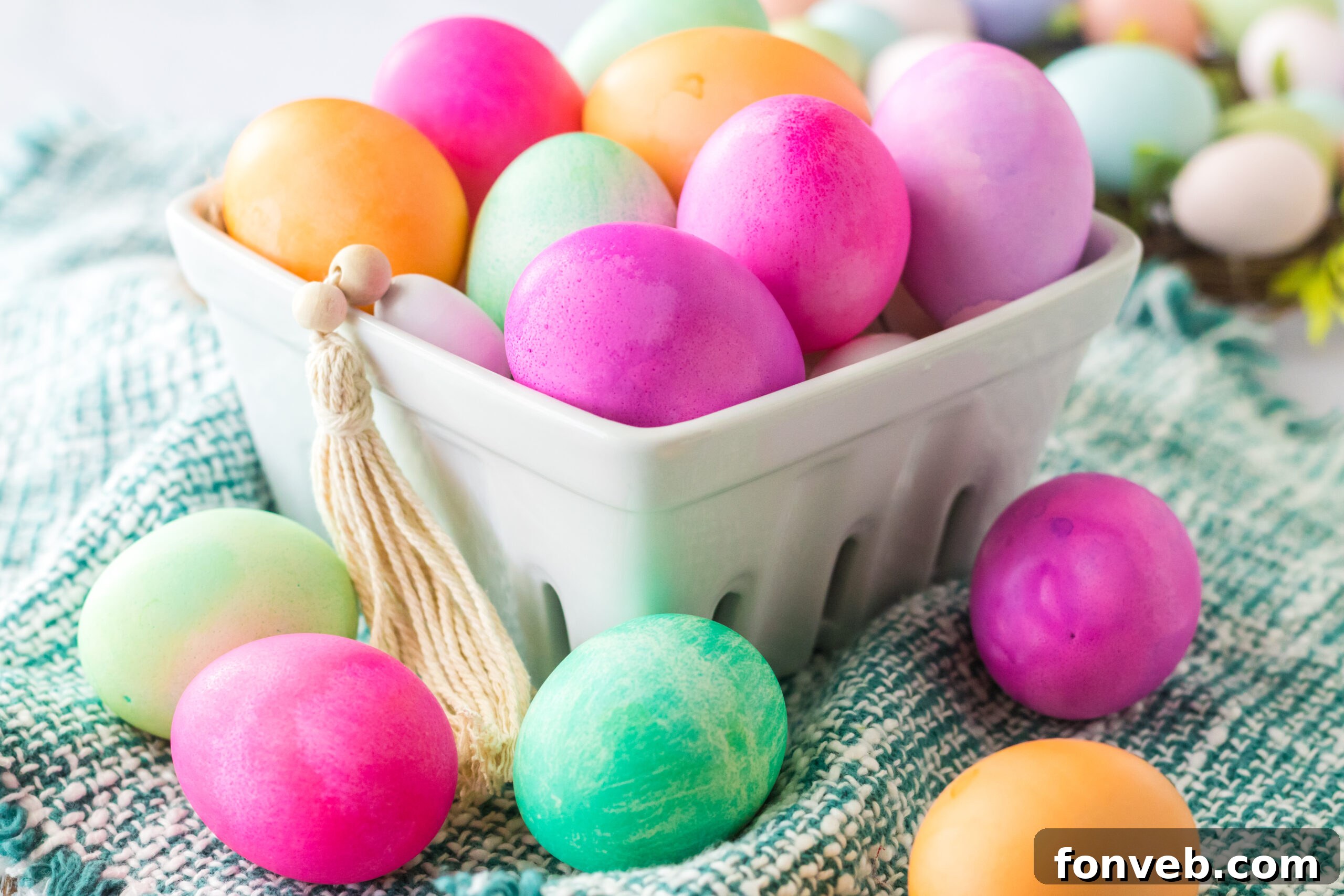
MORE RECIPES YOU WILL LOVE!
Dyed Easter Egg Potatoes
Tie Dye Easter Eggs
Bunny Pretzels
Slow Cooker Dyed Easter Eggs
Course: Side Dish
Prep Time: 10 mins
Cook Time: 6 hrs
Total Time: 6 hrs 10 mins
Servings: 16 Eggs
Now you can skip the messiness of dyeing Easter Eggs. Check out this Slow Cooker Dyed Easter Eggs recipe.
Ingredients
- 16 eggs
- 16 cups water
- 4 food colors
- Heavy duty aluminum foil
- Slow cooker liners
Instructions
- Fold over pieces of heavy-duty aluminum foil into sturdy squares or rectangles that fit securely into your slow cooker. Use these to create 4 distinct sections within the slow cooker pot, ensuring the dividers are tall enough to contain the dye solutions.
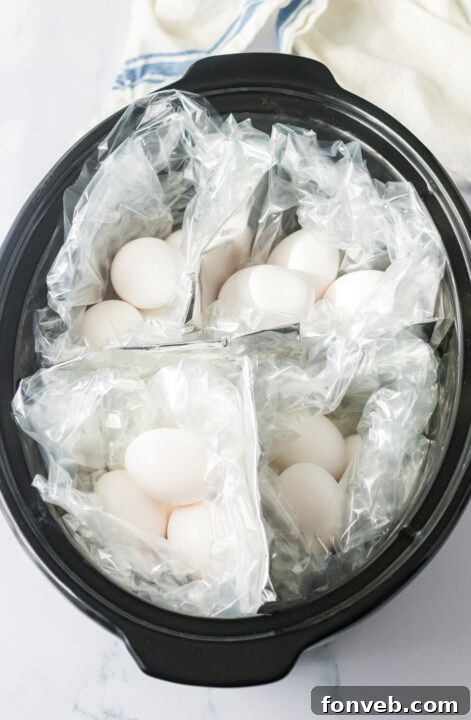
- Carefully place a slow cooker liner into each of the four sections created by the foil dividers. Roll the sides of the liners down over the foil and the rim of the slow cooker to keep them in place and prevent any spills or leaks.
- Gently place 4 eggs into each of the lined sections. Be careful not to overcrowd the sections, ensuring there’s enough space for the eggs to be fully submerged in the dye solution without cracking.
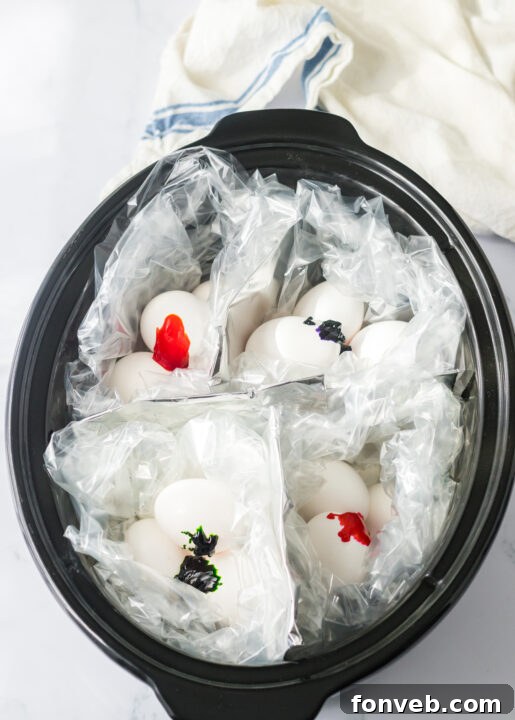
- Add your desired amount of food coloring into each section. For pastel colors, start with fewer drops; for vibrant, deeply saturated hues, add more. Feel free to mix different colors within a single section to create custom shades.
- Carefully pour 3-4 cups of cold water into each section, or enough to completely cover the eggs. Ensure the water level in each section is roughly equal to promote even cooking and dyeing.
- Cover the slow cooker with its lid and cook on the LOW setting for 4-6 hours. The extended, gentle heat will both perfectly hard-boil the eggs and allow the dye to deeply penetrate the shells.
- Once the cooking time is complete, carefully remove the lid. Using a slotted spoon, gently retrieve the dyed eggs from each section and place them on a paper towel-lined tray or a wire cooling rack to dry completely. Allow them to cool to room temperature before handling or storing.
Did you make this recipe?
Make sure to follow on Pinterest for more recipes!
Print Recipe
Pin Recipe
Share Recipe