
The Ultimate Guide to Baking Perfect Homemade Croissants: A Step-by-Step Recipe
There’s an undeniable magic in the aroma and taste of a freshly baked croissant. Those delicate, buttery layers, the satisfying crispness, and the soft, airy interior make it a quintessential French pastry and a truly luxurious treat. While the thought of making croissants from scratch might seem daunting, it’s a remarkably rewarding culinary adventure. With time, patience, and this comprehensive guide, you’ll be able to create bakery-quality homemade croissants right in your own kitchen.

The Irresistible Allure of Croissants: A Brief History and the Science of Flakiness
Croissants are synonymous with French patisserie, yet their origins trace back to Vienna, Austria. Legend has it they were created in 1683 to celebrate the defeat of the Ottoman siege of the city, shaped like the crescent on the Ottoman flag. French queen Marie Antoinette is often credited with introducing the “kipfel” (the Austrian precursor to the croissant) to France in the late 18th century, where it evolved into the iconic laminated pastry we adore today. They are fundamentally made from a yeast dough meticulously layered with cold butter, then repeatedly folded and rolled – a process known as lamination – to create hundreds of ultra-thin alternating layers of dough and butter. This intricate technique ensures that when baked, the butter melts and creates steam, separating the dough layers into that characteristic airy, flaky texture.

Croissant vs. Pain au Chocolat: A Delicious Distinction
While both are beloved French viennoiseries, the difference between a classic croissant and a pain au chocolat (often called a chocolate croissant) lies in their filling and shape. A pain au chocolat uses the exact same rich, laminated dough as a plain croissant. However, instead of being rolled into a crescent, the dough is typically cut into a rectangle, filled with one or two batons of dark chocolate, and then rolled up to enclose the chocolate. The result is a delightful pocket of melted chocolate nestled within the same flaky pastry, offering a sweet counterpoint to the buttery dough.

Essential Ingredients for Perfect Homemade Croissants
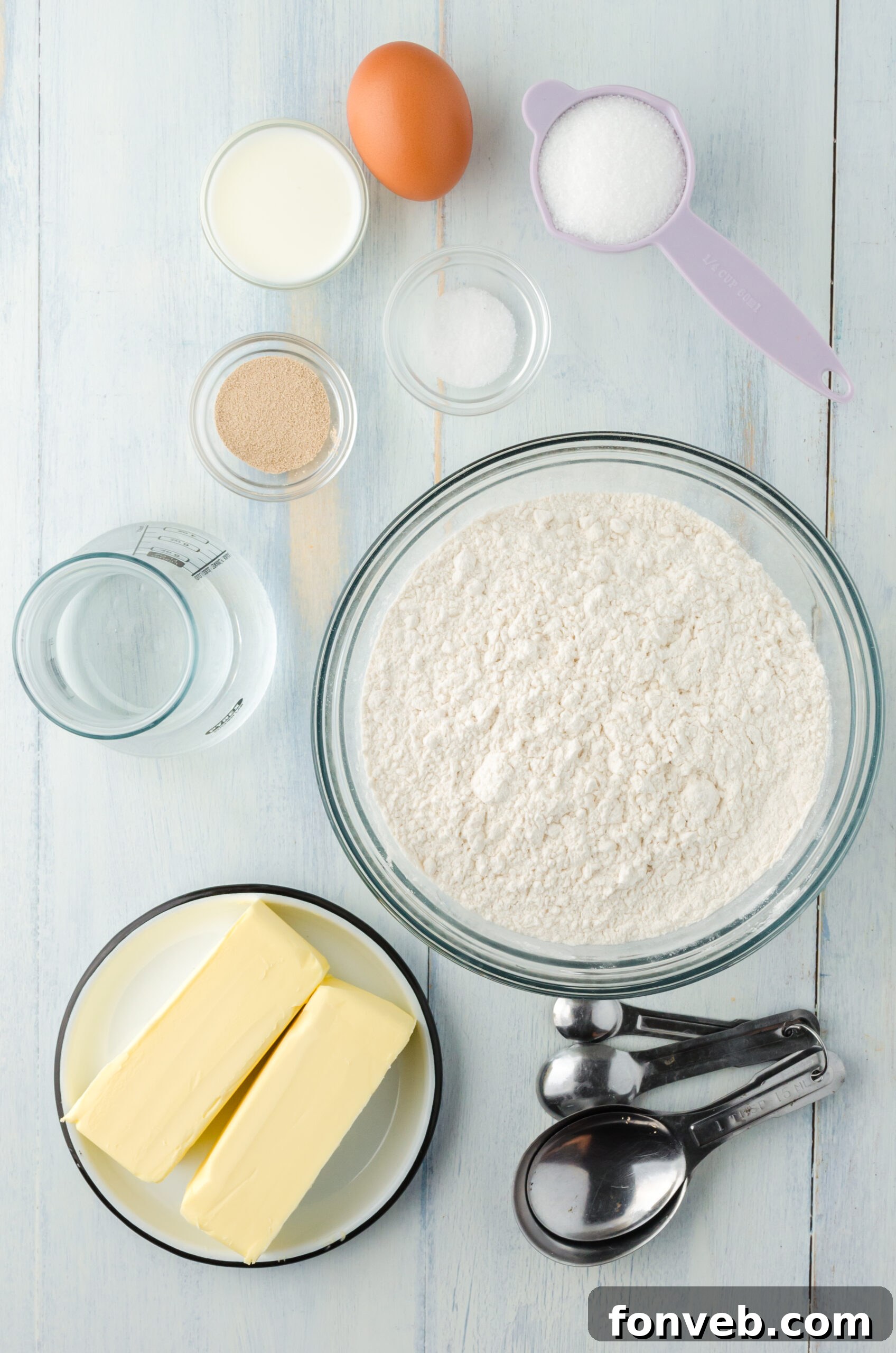
Crafting exceptional croissants begins with selecting the right ingredients. Each component plays a vital role in achieving that sought-after texture and flavor.
For the Croissant Dough:
- Water: Lukewarm water is essential for activating the dry yeast. It also helps to hydrate the flour, allowing gluten to develop correctly, which is crucial for the dough’s elasticity and structure.
- Dry Yeast: This is the leavening agent that makes your croissants rise. Active dry yeast needs to be bloomed in water first, while instant dry yeast can often be mixed directly with the dry ingredients. Ensure your yeast is fresh for optimal puffiness and rise.
- All-Purpose Flour: A good quality all-purpose flour provides the necessary protein content to form a strong yet elastic gluten network, which can withstand the repeated rolling and folding of lamination without tearing, ensuring those distinct layers.
- Granulated Sugar: Sugar serves multiple purposes. It acts as food for the yeast, helping it to ferment and produce gas for rising. It also contributes to the dough’s tenderness, adds a subtle sweetness, and aids in golden-brown crust formation during baking.
- Salt: Far from just a seasoning, salt is crucial for balancing the sweetness, enhancing the overall flavor, and strengthening the gluten structure in the dough. It also helps to regulate the yeast’s activity, preventing it from over-fermenting.
- Unsalted Butter: This is perhaps the most critical ingredient for lamination. Use a high-quality, high-fat unsalted butter (ideally European-style) that is cold and firm. Its plasticity and fat content are key to creating distinct, separated layers without melting into the dough too quickly during the rolling process. Avoid spreadable butter or margarine as they contain too much water and won’t laminate correctly.
For the Golden Egg Wash:
An egg wash gives your croissants that signature glossy, golden-brown finish.
- Egg: Typically a whole egg, beaten, provides the protein that helps create a shiny, richly colored crust.
- Milk: A little milk, added to the egg, helps to thin out the wash, making it easier to brush evenly and preventing a thick, rubbery coating. It also contributes to a slightly softer crust.
Why This Homemade Croissant Recipe Will Be Your Favorite
While many croissant recipes exist, this particular guide emphasizes techniques that ensure a superior result, making your homemade croissants truly stand out:
- Rich, Flavorful Dough: The dough is made with a precise balance of water and quality ingredients, creating a robust base flavor that perfectly complements the butter. The extended overnight chilling also allows for a slow fermentation process, developing deeper, more complex flavors.
- Achieving the Perfect Rise: By allowing the dough to rise twice – once during the initial chilling and again during the crucial proofing stage after shaping – we ensure a remarkably light, airy, and incredibly flaky pastry with a beautiful open crumb structure.
- Unrivaled Flaky Crust: Through careful lamination and controlled temperatures, these croissants achieve an exquisitely flaky exterior that shatters with every bite, revealing a tender, buttery interior. They are baked to a perfect golden brown, delivering both visual appeal and exceptional taste.
- Detailed, Easy-to-Follow Instructions: We break down each potentially challenging step into simple, manageable actions, providing clear guidance on everything from preparing your butter block to mastering the “turns” and achieving perfect croissant shapes.

Mastering the Art: Step-by-Step Guide to Baking Flawless Croissants
Baking croissants is a journey of precision and patience. Follow these steps meticulously, and you’ll be rewarded with a spectacular result.
Phase 1: Preparing the Dough and Butter Block
- Activate the Yeast: In a small bowl, combine the dry yeast with lukewarm water (ideally between 105-115°F or 40-46°C). Stir gently until the yeast is completely dissolved. Let it sit for about 5 minutes until a light foam appears on the surface, which indicates the yeast is active and ready to work.
- Combine Dry Ingredients: In a large mixing bowl (or the bowl of a stand mixer), add the all-purpose flour, granulated sugar, and salt. Whisk them briefly to ensure they are well combined.
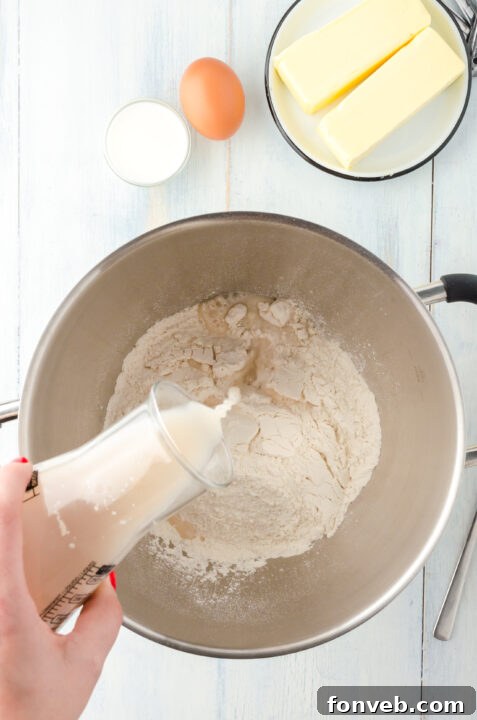
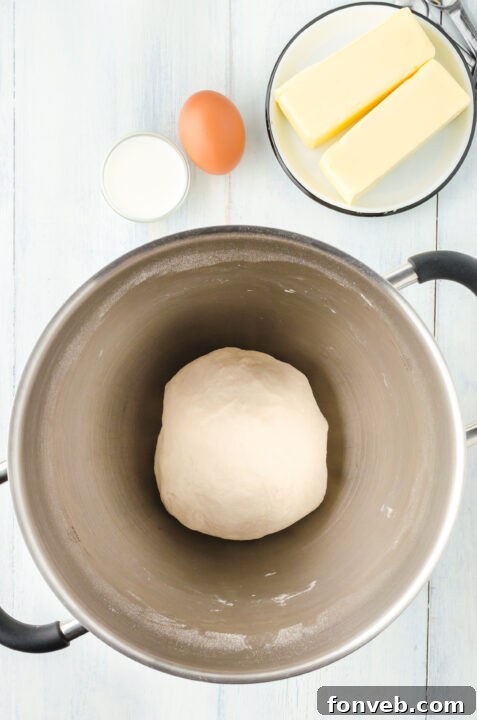
- Form the Dough: Pour the activated yeast mixture into the dry ingredients. Mix until a shaggy dough forms. Then, either knead by hand on a lightly floured surface for 4-5 minutes, or use a stand mixer fitted with a dough hook and knead on medium speed for about 5 minutes. The goal is a soft, smooth, and elastic dough that is not sticky.
- First Chill (Slow Fermentation): Place the dough in a lightly oiled bowl, turning it once to coat. Cover the bowl tightly with plastic wrap to prevent a skin from forming. Refrigerate the dough for at least 8 hours, and ideally overnight (up to 24 hours). This slow, cold fermentation develops deeper flavors and makes the dough much easier to handle during lamination.
- Prepare the Butter Block: While the dough chills, prepare your butter. Take two sticks of cold unsalted butter. Place them between two sheets of parchment paper. Using a rolling pin, pound and roll the butter into a precise 6×6 inch (approximately 15×15 cm) square. It’s crucial for the butter to be evenly thick and pliable (not too soft, not too hard).
- Chill the Butter: Keep the formed butter block wrapped in parchment paper and return it to the refrigerator for at least 30 minutes to firm up. This ensures it’s cold and firm enough for lamination without melting into the dough.
Phase 2: The Art of Lamination (Folding and Chilling)
- Prepare Dough for Lamination: After its long chill, your dough should have noticeably increased in size. Lightly flour a clean work surface. Roll the chilled dough into a long rectangle, roughly 12×18 inches (30×45 cm), ensuring it’s about twice the size of your butter square.
- Incorporate the Butter: Gently brush off any excess flour from the surface of the dough with a soft pastry brush or a clean towel. Place the chilled butter block precisely on one half of the dough rectangle, leaving a small border around the edges.
- Encase the Butter: Carefully fold the other half of the dough over the butter block, aligning the edges. Pinch and seal the edges tightly around the butter to fully encase it. This prevents butter from escaping during rolling.
- First Turn (Book Fold): Turn the dough 90 degrees so the sealed edge is facing you. Lightly flour your work surface and the top of the dough. Roll the dough again into a long rectangle, approximately 10×20 inches (25×50 cm) and about ⅛ inch (3mm) thick. Brush off any excess flour.
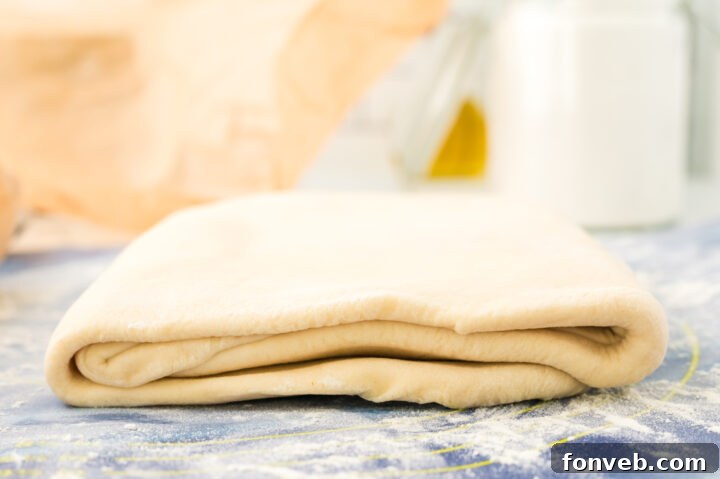
- Perform the First Fold: Now, perform the first “tour” or fold, often called a “book fold.” Fold one end of the dough towards the center, then fold the other end over the first, as if closing a book. This creates three distinct layers.
- Chill Between Turns: Wrap the folded dough tightly in plastic wrap or parchment paper. Place it back in the refrigerator for 30 minutes. This chilling period is vital; it allows the gluten to relax and the butter to firm up again, making the dough easier to roll without tearing or warming the butter too much.
- Repeat Lamination: Repeat steps 10-12 two more times, for a total of three “tours.” This means you will roll, fold into thirds, wrap, and chill two more times. After the third fold and chill, your highly laminated dough is ready for shaping.
Phase 3: Shaping, Proofing, and Baking
- Final Roll: On a lightly floured surface, roll your chilled, laminated dough one last time. Aim for a large rectangle, approximately 10×21 inches (25×53 cm) and about ⅛ inch (3mm) thick. Strive for even thickness across the entire sheet.
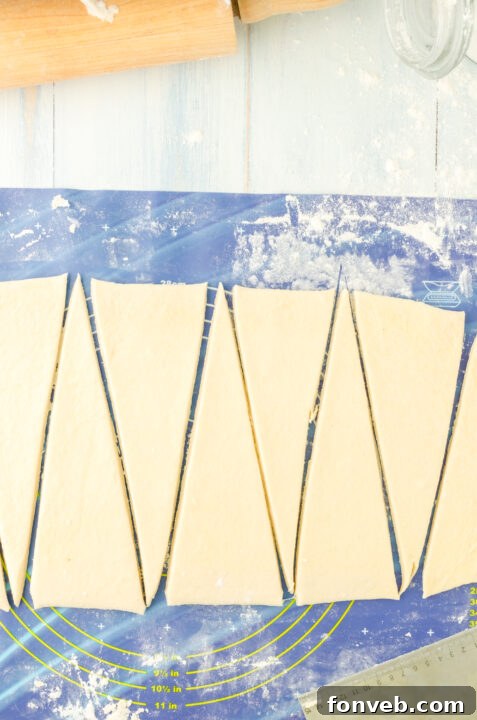
- Cut Triangles: Using a sharp knife or a pastry wheel, carefully trim the edges of the dough to create a perfect rectangle. Then, cut the rectangle into uniform triangles. For classic-sized croissants, the base of each triangle should be about 4 inches (10 cm).
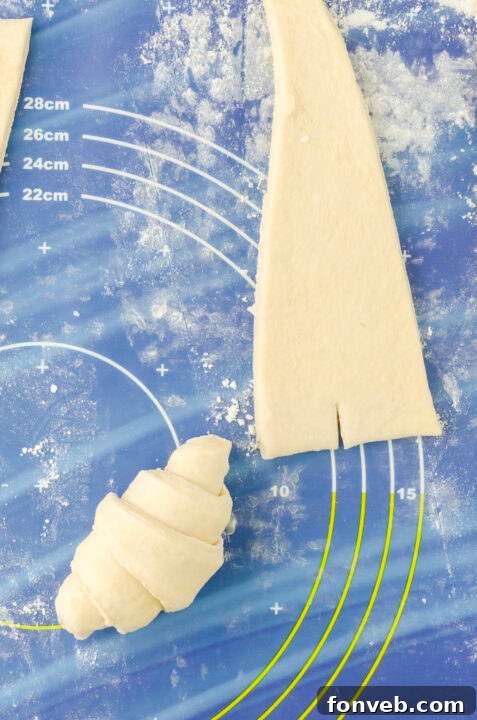
- Shape the Croissants: To shape each croissant, make a small slit (about ½ inch or 1 cm) in the center of the short (base) side of each triangle. Gently stretch the base outwards slightly, then tightly roll the dough from the base towards the point. Curve the ends inward slightly to form the classic crescent shape.
- Proofing (Second Rise): Arrange the shaped croissants on a baking sheet lined with parchment paper, ensuring ample space between each, as they will expand. Loosely cover them with plastic wrap or a clean, damp kitchen towel. Let them proof in a warm, draft-free place for 60-90 minutes, or until they have visibly doubled in size and feel light and puffy. This is a critical step for a light, airy crumb.
- Preheat Oven: While the croissants are proofing, preheat your oven to 360°F (180°C).
- Apply Egg Wash: Prepare your egg wash by lightly beating one egg with three tablespoons of whole milk until smooth. Gently brush the tops and sides of the proofed croissants with this mixture. Be careful not to deflate them.
- Bake to Perfection: Bake the croissants for 25-35 minutes, or until they are beautifully puffed, deeply golden brown, and sound hollow when tapped on the bottom. If they start to brown too quickly, you can loosely tent them with aluminum foil.
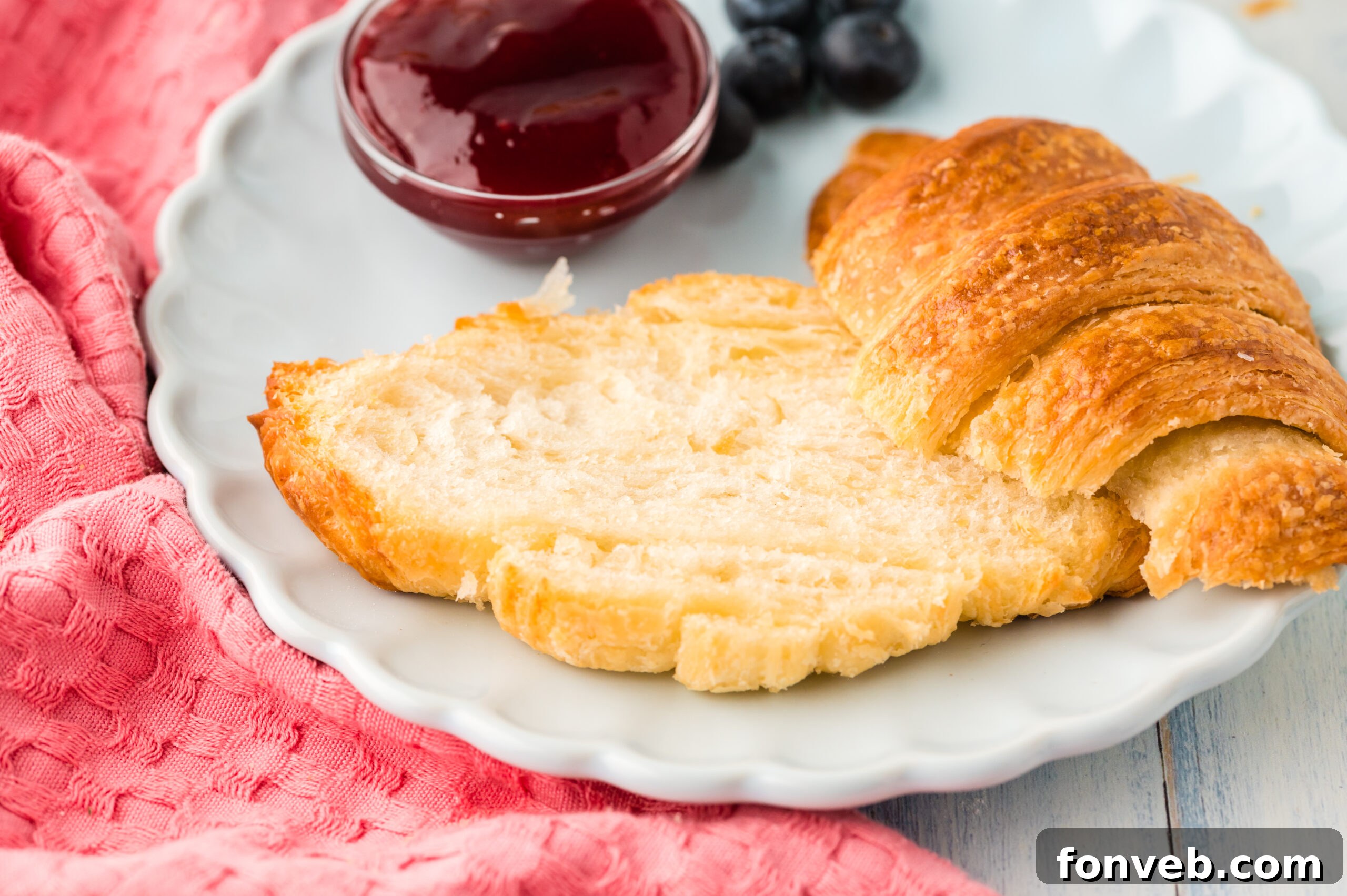
- Cool and Serve: Remove the baked croissants from the oven and transfer them immediately to a wire cooling rack to cool slightly. Croissants are best enjoyed warm, ideally on the same day they are baked, to fully appreciate their incredible texture and flavor.

Troubleshooting Common Croissant Challenges
Even experienced bakers face occasional challenges with croissants. Here are some common issues and how to avoid them:
- Butter Leaking During Rolling: This usually means your butter was too soft or the dough wasn’t cold enough. Ensure both are well-chilled, and work quickly. If it happens, quickly wrap and chill the dough to firm up the butter before continuing.
- Uneven Layers or No Flake: Inconsistent rolling or insufficient chilling can lead to uneven layers or butter incorporating into the dough. Always roll evenly and make sure the dough is thoroughly chilled between each turn.
- Hard, Dense Croissants: Overworking the dough can develop too much gluten, resulting in a tough texture. Also, under-proofing can lead to dense croissants; ensure they are visibly puffy before baking.
- Croissants Don’t Rise: Inactive yeast or an environment that’s too cold during proofing can inhibit rising. Make sure your yeast is fresh and proof in a warm (but not hot), draft-free spot.
- Burnt Exterior, Raw Interior: Your oven might be too hot, or the croissants are too dark on the outside while the inside is still raw. Reduce oven temperature slightly or loosely tent with foil if browning too quickly.
Frequently Asked Questions About Homemade Croissants
Can I prepare the croissant dough ahead of time?
Absolutely! The dough is actually best when made ahead. You can prepare the basic dough and let it undergo its initial long chill in the refrigerator for up to 2 days. This slow fermentation enhances flavor and makes the dough more manageable. Just be sure to bring it to room temperature for about 15-20 minutes before you begin the rolling and laminating process.
How long do homemade croissants stay fresh?
Croissants are truly at their peak the day they are baked – warm, crisp, and incredibly flaky. While their texture softens, leftovers will keep in an airtight container at room temperature for up to 2 days. For best enjoyment, gently reheat them in a warm oven.

Can these croissants be frozen?
Yes, you can freeze croissants! You have two main options:
- Freeze shaped, unbaked croissants: After shaping but before proofing, place the croissants on a baking sheet and freeze until solid. Then transfer them to an airtight freezer bag or container. They can be frozen for up to 2 months. When ready to bake, place them on a parchment-lined baking sheet, cover, and let them proof at room temperature until doubled (this will take longer than fresh proofing, typically 3-5 hours or overnight in the fridge before proofing at room temp). Then egg wash and bake as directed.
- Freeze baked croissants: Once completely cooled, wrap individual croissants tightly in plastic wrap, then in foil, and store in a freezer bag for up to 2 months.
What’s the best way to reheat frozen croissants?
To reheat frozen baked croissants, simply place them directly from the freezer into a preheated 350°F (175°C) oven for about 10-15 minutes, or until warm throughout and crispy. For previously unfrozen (room temperature) croissants, a few minutes in a 300°F (150°C) oven will refresh them beautifully. Avoid the microwave for reheating as it can make them chewy.
What are some of the best fillings for croissants?
The beauty of croissants lies in their versatility for both sweet and savory fillings! Some popular choices include:
- Sweet: Classic chocolate batons (for pain au chocolat), almond paste (for almond croissants), fruit jams or preserves, Nutella, pastry cream, or fresh berries.
- Savory: Ham and cheese (gruyere or cheddar work wonderfully), smoked salmon and cream cheese, spinach and feta, or even a simple pesto.
Visual Guide to Shaping Croissants
The shaping of croissants can feel like an art form. While our written instructions are detailed, visualizing the process can be incredibly helpful. Refer back to the image gallery above (specifically figures 23507-23509) for a step-by-step visual guide on how to handle the dough, cut the triangles, and roll them into their iconic crescent shapes.

Delicious Variations and Serving Suggestions
Once you’ve mastered the basic homemade croissant, a world of possibilities opens up! Here are some ideas to inspire your next batch:
- Almond Croissants (Croissants aux Amandes): Fill baked croissants with a rich almond frangipane, bake again until golden, and dust with powdered sugar.
- Savory Ham and Cheese Croissants: Before rolling, place a slice of ham and your favorite cheese (like Gruyère or cheddar) at the base of the dough triangle. Roll and bake for a delightful savory treat.
- Fruit Jam Croissants: Spread a teaspoon of your favorite fruit jam (raspberry, apricot, or strawberry work well) at the base of the dough triangle before rolling. The jam will slightly caramelize inside.
- Chocolate Hazelnut Spread: For a quick and delicious sweet option, spread a thin layer of Nutella or another chocolate hazelnut spread before rolling.
- Everything Bagel Croissants: Brush the shaped croissants with egg wash and sprinkle generously with everything bagel seasoning before baking for a savory, crunchy twist.
- Glazed Croissants: Drizzle a simple powdered sugar glaze over cooled croissants for extra sweetness.

Embarking on the journey of baking homemade croissants is an incredibly rewarding experience. The effort and patience involved are truly worth it when you pull those warm, buttery, and delicately layered pastries from your oven. Whether you enjoy them plain with a cup of coffee, filled with chocolate, or as the base for a gourmet sandwich, these croissants are sure to impress and become a showstopper. So, roll up your sleeves, embrace the process, and prepare to savor your magnificent creation!
Let us know how your croissants turn out in the comments below – we’d love to hear about your baking success! Happy baking!
More Delicious Recipes You Will Love!
Crescent Cheese Danishes
Italian Sub Crescent Bake
Pizza Pinwheels
Homemade Croissants Recipe
Course: Side Dish |
Prep Time: 1 hr |
Cook Time: 35 mins |
Total Time: 4 hrs 35 mins |
Yields: 11 Croissants
These Homemade Croissants are so delicious! You can fill them with your favorite fillings and you’ll love them even more.
Ingredients
- 1.5 cups water (lukewarm, for yeast activation)
- 2 teaspoons dry yeast (ensure it’s fresh for best results)
- 4 cups all-purpose flour
- ¼ cup granulated sugar
- 1 teaspoon salt
- 2 sticks unsalted butter (real butter, high-fat content recommended, very cold)
For the Egg Wash:
- 1 egg
- 3 tablespoons whole milk
Instructions
- Mix the yeast with the lukewarm water until the yeast has dissolved completely. Let it sit for 5 minutes until it appears foamy, indicating activity.
- Add the granulated sugar and salt to the all-purpose flour in a large bowl and stir quickly to combine.
- Pour the yeast mixture into the dry ingredients. Knead the dough by hand for 4-5 minutes, or use a kitchen machine with a dough hook for 5 minutes, until a smooth, soft, and cohesive dough forms.
- Place the dough in a lightly oiled bowl, cover it tightly with plastic wrap, and refriger refrigerate for at least 8 hours or, ideally, overnight (up to 24 hours is possible). This slow fermentation develops flavor.
- In the meantime, prepare your butter block: Place the 2 sticks of unsalted butter between two sheets of parchment paper. Roll and flatten the butter with a rolling pin into a precise 6×6 inch (15×15 cm) square, ensuring an even thickness.
- Place the prepared butter block (still wrapped in parchment) into the fridge for at least 30 minutes to firm up.
- After chilling, the dough should have doubled in size. Lightly flour your work surface and roll the dough into a long rectangle, roughly 12×18 inches (30×45 cm), which is twice the size of your butter square.
- Carefully remove any excess flour from the dough surface with a soft brush or towel. Place the chilled butter block on one half of the dough rectangle.
- Fold the other half of the dough over the butter, carefully sealing all edges to fully encase the butter. Turn the dough 90 degrees so the sealed edge is facing you.
- Roll the dough out again into a long rectangle, about 10×20 inches (25×50 cm). Again, brush off any excess flour.
- Now, perform the first “tour” (fold): Fold the dough into thirds, like a letter. Bring one end of the rectangle to the middle, then fold the other end over the first, creating three layers.
- Wrap the folded dough tightly in plastic wrap or parchment paper and place it in the fridge for 30 minutes to chill.
- Repeat the rolling and folding process (steps 10-12) two more times, ensuring a 30-minute chilling period between each round to relax the gluten and firm the butter.
- After the third round and chilling, roll your dough one last time into a large rectangle, approximately 10×21 inches (25×53 cm) and about ⅛ inch (3mm) thick.
- Trim the edges to create a clean rectangle. Then, cut the rectangle into triangles. For classic croissants, make the base of each triangle approximately 4 inches (10 cm) wide.
- To shape: Make a small slit (about ½ inch or 1 cm) into the center of the base (short side) of each triangle. Gently stretch the base outwards, then tightly roll the dough from the base towards the point to form crescent shapes.
- Place the shaped croissants on a baking sheet lined with parchment paper, ensuring enough space between them. Cover loosely with plastic wrap or a clean towel and let them proof in a warm, draft-free place for 60-90 minutes, or until they have visibly doubled in size and feel light and puffy.
- Preheat your oven to 360°F (180°C).
- Prepare the egg wash: Beat the egg with the milk until well combined. Gently brush this mixture over the tops and sides of the proofed croissants.
- Bake for 25-35 minutes, or until the croissants are beautifully golden brown and flaky. If they brown too quickly, you can loosely tent them with foil. Transfer to a cooling rack to cool slightly before serving.
Did you make this recipe?
We’d love to see your incredible homemade croissants! Share your experience or photos in the comments below. Don’t forget to follow us on Pinterest for more amazing recipes!
Pin Recipe
Share on Facebook