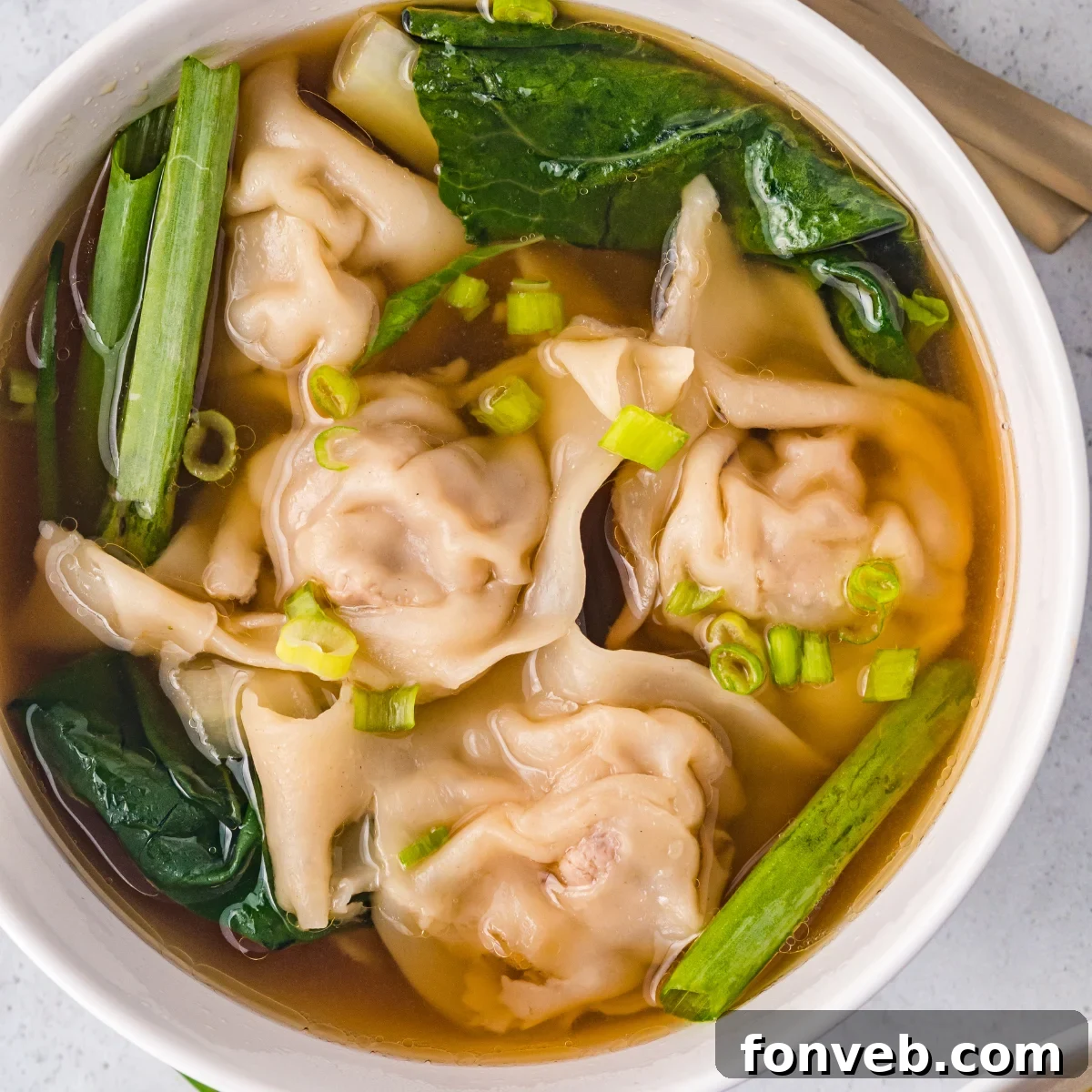
Ultimate Homemade Wonton Soup: A Comforting Classic from Scratch
There’s nothing quite like a warm, comforting bowl of Wonton Soup to soothe the soul, especially on a chilly day. This beloved Asian culinary classic, with its delicate dumplings swimming in a savory, aromatic broth, offers a therapeutic escape and a deeply satisfying meal. Forget the takeout menus; we’re bringing the authentic, restaurant-quality Wonton Soup experience right into your kitchen with this incredibly easy and delicious homemade recipe. Get ready to impress your taste buds and loved ones with a dish that’s both simple to prepare and profoundly flavorful.
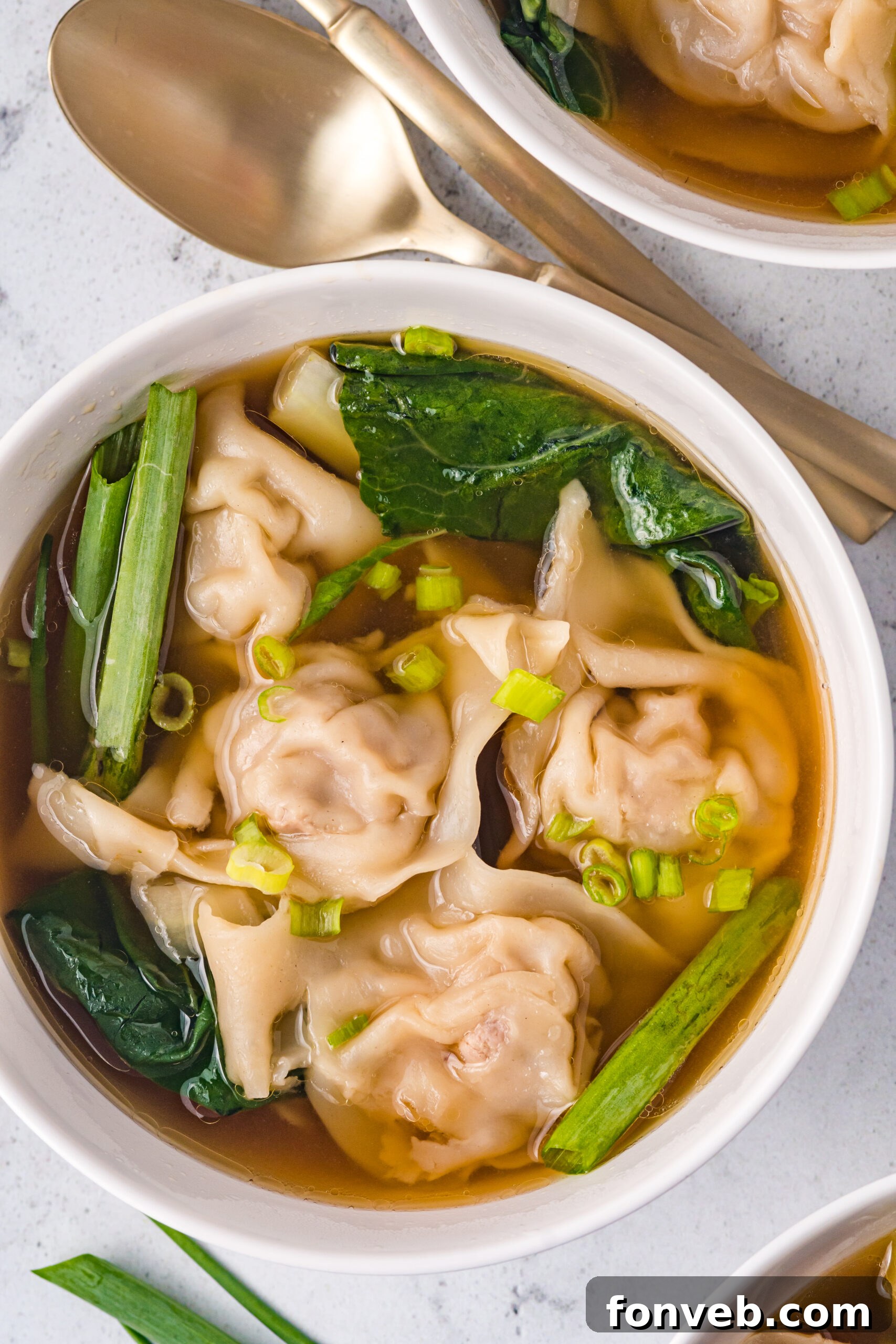
Why Embrace Homemade Wonton Soup?
Many people assume that crafting Wonton Soup from scratch is a complicated endeavor best left to professional chefs or their favorite local Asian eatery. However, that couldn’t be further from the truth! Preparing Wonton Soup at home offers a multitude of benefits, transforming a simple meal into an enjoyable culinary adventure.
- Unmatched Freshness: When you make Wonton Soup at home, you control every ingredient, ensuring peak freshness. This results in brighter flavors and a superior texture that simply can’t be replicated by store-bought or even many restaurant versions.
- Customization at Your Fingertips: This recipe is incredibly versatile. You can tailor the filling to your preferences, adjust the spiciness of the broth, and add your favorite vegetables. Dietary restrictions? No problem! Homemade means you dictate what goes into your bowl.
- Economical & Rewarding: Making soup at home is often far more cost-effective than ordering takeout. Plus, there’s an immense sense of satisfaction that comes from creating such a delightful dish from raw ingredients.
- A Warm, Nourishing Embrace: Wonton soup isn’t just food; it’s comfort. The warm broth, tender wontons, and wholesome ingredients make it an ideal meal for warming up on a cold evening or simply enjoying a light yet fulfilling lunch.
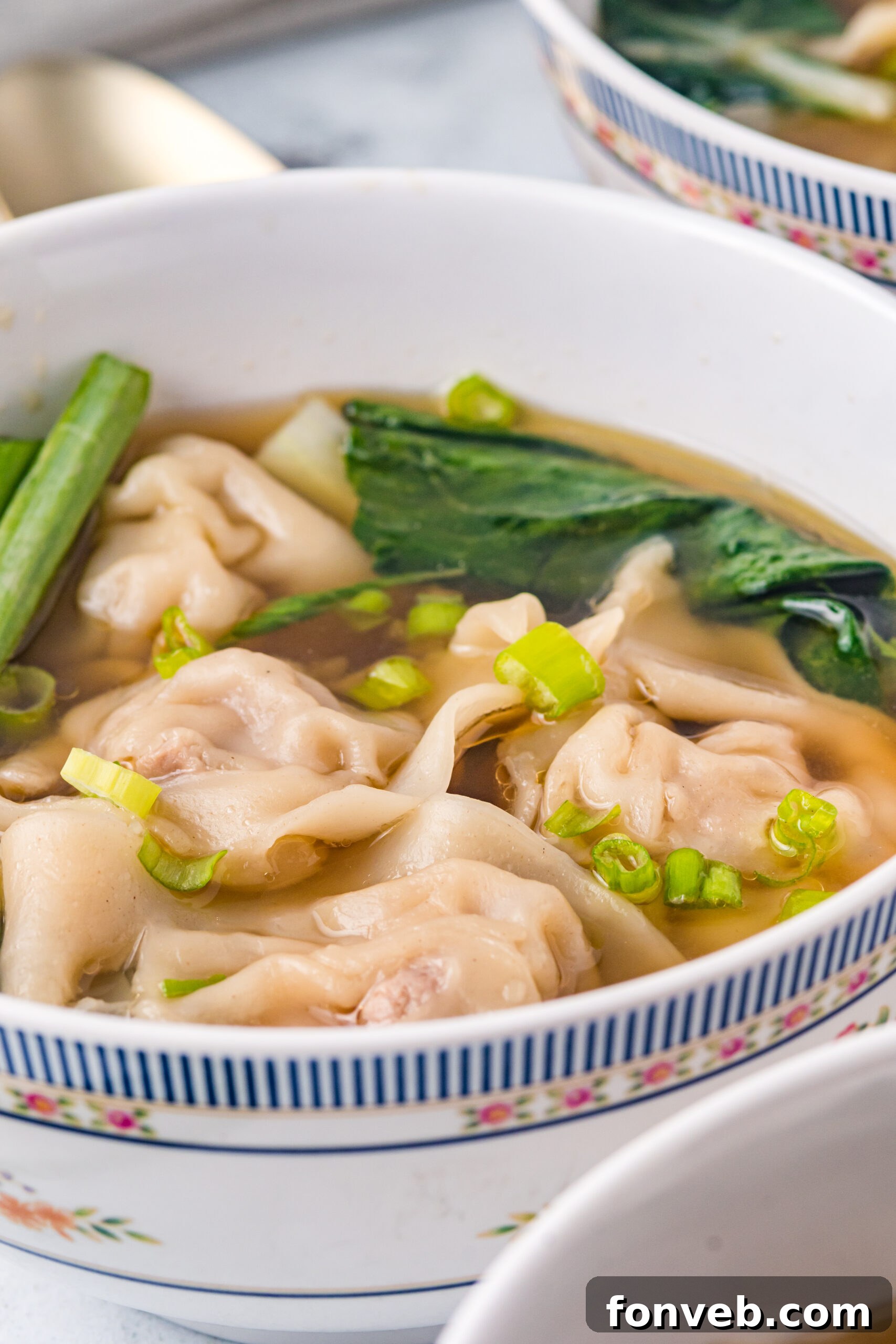
The Irresistible Allure of This Wonton Soup Recipe
This particular Wonton Soup recipe stands out for several compelling reasons, making it a guaranteed favorite in your culinary repertoire:
- Exquisitely Flavorful: This soup delivers a complex yet balanced flavor profile. The broth is a symphony of savory, sweet, and umami notes, perfectly complementing the rich filling of the wontons. It’s light enough not to feel heavy, yet deeply satisfying to the palate.
- Effortlessly Achievable: Don’t let the idea of making wontons intimidate you. This recipe breaks down the process into simple, manageable steps, proving that a gourmet-quality meal can be prepared without extensive culinary experience or a lot of fuss. You’ll be surprised at how quickly you can assemble this incredible soup.
- Endlessly Adaptable: Whether you’re a purist or an adventurous eater, this recipe caters to all. From swapping proteins to integrating new vegetables or adding a spicy kick, the possibilities are endless. Serve it with crispy wonton strips for added texture, or a drizzle of chili oil for an extra layer of warmth.
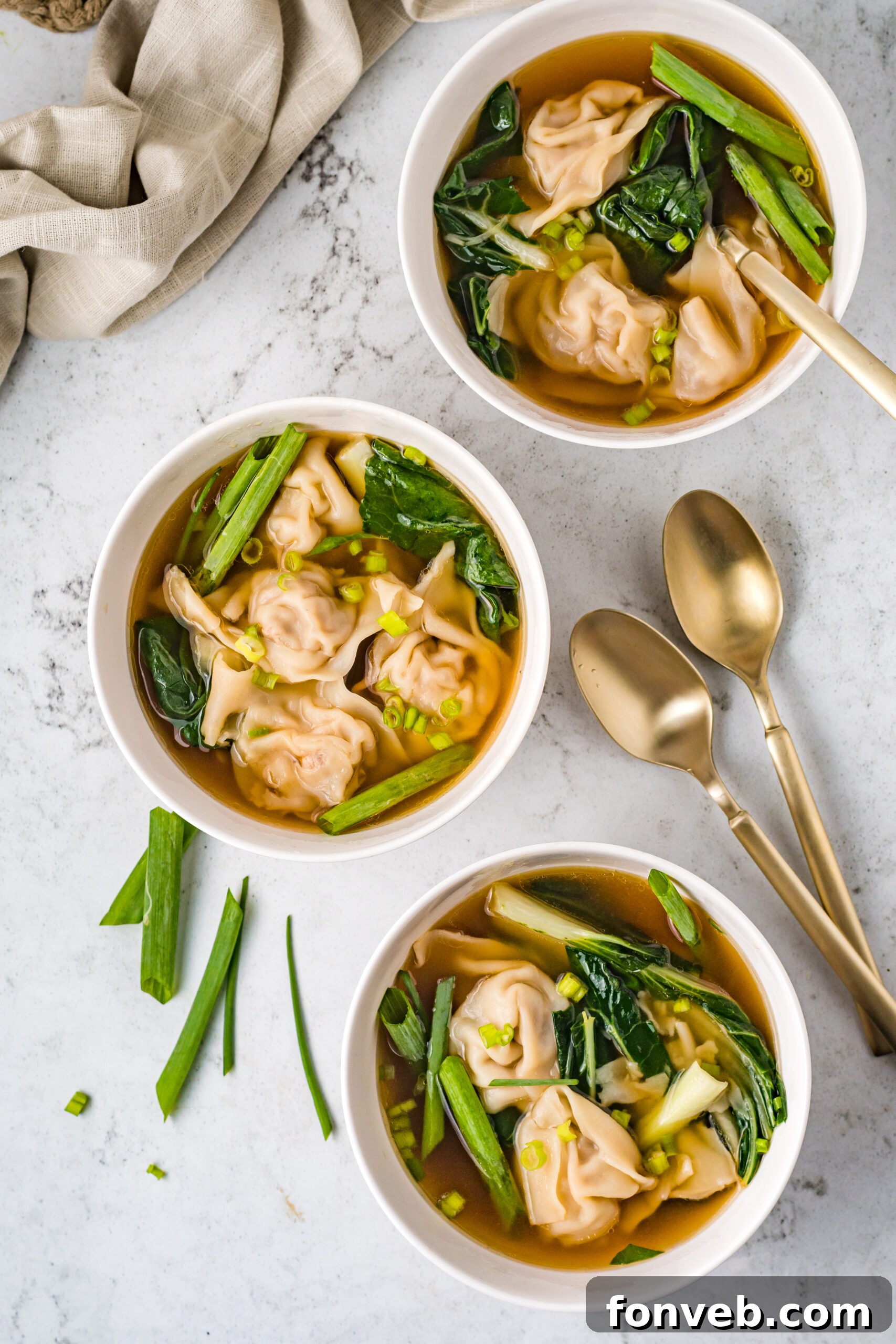
Essential Ingredients for Your Perfect Wonton Soup
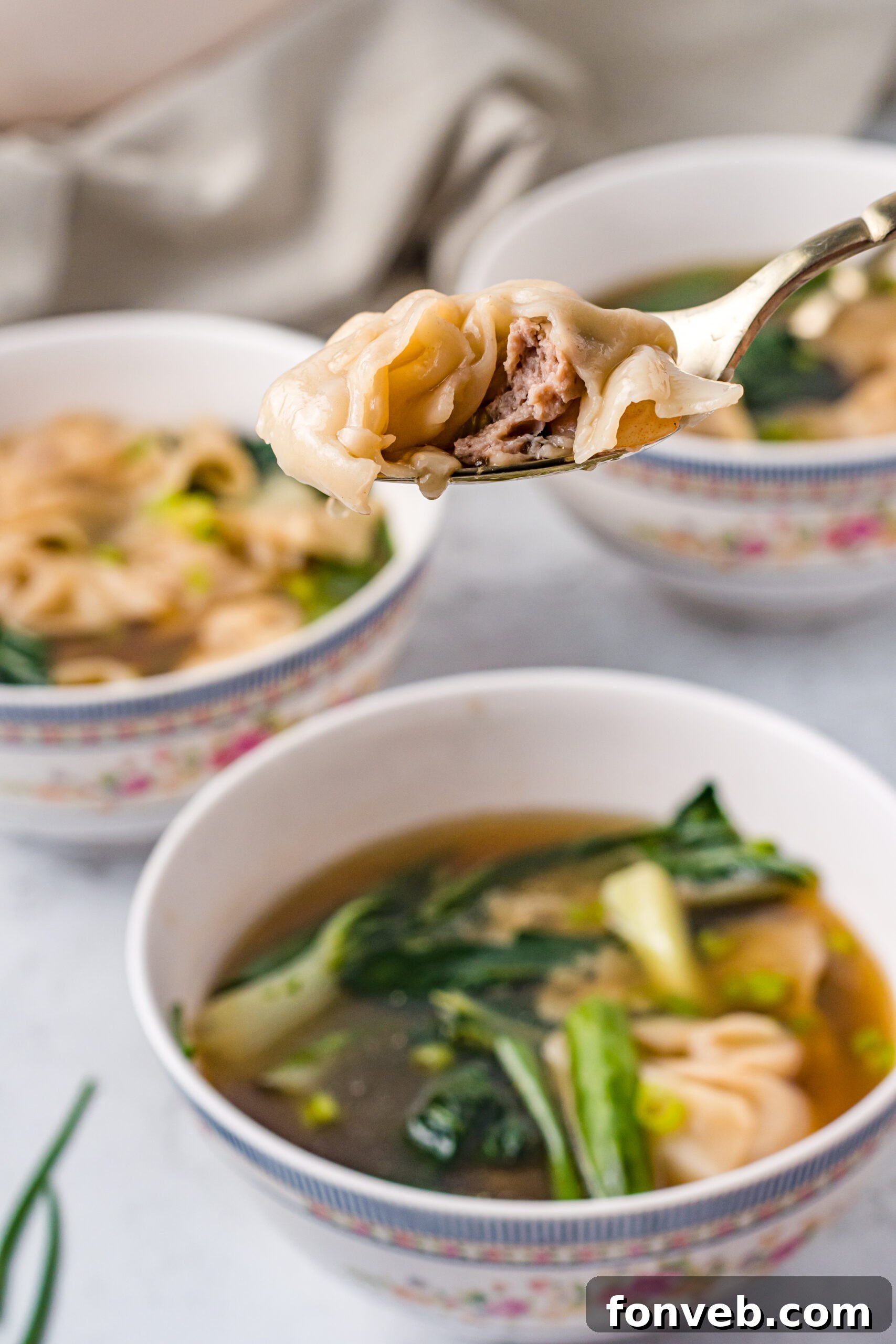
Crafting a truly exceptional Wonton Soup begins with selecting the right ingredients. Here’s a closer look at what you’ll need to create this top-rated recipe, along with some insights into their role in building flavor and texture:
For the Flavorful Broth:
- Sesame Oil: A foundational ingredient for authentic Asian flavors, just a teaspoon provides a nutty, aromatic base that elevates the entire soup.
- Garlic Cloves: Smashed garlic releases its pungent, sweet aroma, infusing the broth with depth. Always opt for fresh garlic for the best results.
- Fresh Ginger: Two slices of peeled fresh ginger are crucial for that warm, slightly spicy undertone that defines classic wonton soup. Its zest brightens the broth.
- Soy Sauce: This staple brings essential umami and saltiness to the broth. Use a good quality soy sauce for the best flavor balance.
- Granulated Sugar: A touch of sugar might seem surprising, but it’s a secret ingredient that balances the savory and salty notes, enhancing the overall deliciousness of the broth without making it sweet.
- Chicken Broth: The backbone of our soup. Opt for a high-quality chicken broth or homemade stock for the richest flavor. Low-sodium options are great if you prefer to control the salt content yourself.
- Green Onions (Scallions): Used both in the broth and as a garnish, green onions provide a mild, fresh oniony flavor and a vibrant pop of color.
For the Delicious Wontons:
- Wonton Wrappers: The star of the show! You’ll need about 30 thin, square wonton wrappers. These can be found in the refrigerated section of most Asian grocery stores or even large supermarkets. Ensure they are fresh and pliable.
- Ground Pork: A classic choice for wonton filling, ground pork offers a tender texture and rich flavor. Look for ground pork with a good fat-to-lean ratio for juicy wontons.
- Small Shrimp: Incorporating small shrimp adds a delightful sweetness and succulent texture to the filling. If your shrimp are large, simply chop them into smaller, wonton-friendly pieces. Fresh or frozen (thawed) shrimp work equally well.
- Grated Ginger: Freshly grated ginger in the filling mirrors the flavor in the broth, ensuring a cohesive taste profile throughout the dish.
- Green Onion (Thinly Sliced): Adds a delicate oniony bite and freshness to the pork and shrimp mixture.
- Soy Sauce & Sesame Oil: These seasonings bind the filling flavors together, adding umami and a signature aromatic touch to the pork and shrimp.
Creative Wonton Soup Variations to Explore
While the classic Wonton Soup is a culinary masterpiece on its own, its versatility allows for endless creative variations. Don’t hesitate to experiment and make this recipe truly your own:
- Protein Swaps:
- Ground Chicken or Turkey: If pork isn’t your preference or isn’t available, ground chicken or turkey make excellent, leaner alternatives for the wonton filling. They absorb flavors beautifully and result in equally delicious dumplings.
- Tofu or Mushrooms: For a vegetarian version, swap the meat with finely minced firm tofu, shiitake mushrooms, or a blend of both. Ensure to press excess moisture from the tofu for the best texture.
- Vegetable Boost:
- Shiitake Mushrooms: For mushroom enthusiasts, sliced shiitake mushrooms add a wonderfully earthy, umami depth to the broth. Add them along with the bok choy for a flavorful addition.
- Spinach or Napa Cabbage: Wilted spinach or shredded Napa cabbage can be added at the end, providing extra greens and a tender crunch.
- Carrots & Celery: A finely diced mirepoix (carrots, celery) can be sautéed with the garlic and ginger to add a subtle sweetness and texture to the broth.
- Spice It Up:
- Sriracha or Chili Garlic Sauce: For those who love a kick, stir a teaspoon or two of sriracha or chili garlic sauce into the broth.
- Fresh Jalapeños or Bird’s Eye Chilies: Thinly sliced fresh chilies can be added for a more intense, vibrant heat.
- White Pepper: A pinch of white pepper in the broth or filling can offer a subtle, traditional warmth.
- Noodle Integration:
- Egg Noodles or Vermicelli: Turn your soup into a heartier meal by adding some cooked egg noodles or thin rice vermicelli directly to the bowls before serving.
- Extra Toppings:
- Crispy Wonton Strips: Fry or bake extra wonton wrappers until golden and crispy for a delightful textural contrast.
- Fried Shallots or Garlic: A sprinkle of fried shallots or garlic adds a savory crunch and intense aroma.
- Cilantro: Fresh cilantro provides a burst of herbaceous freshness.
Expert Tips for Wonton Soup Success
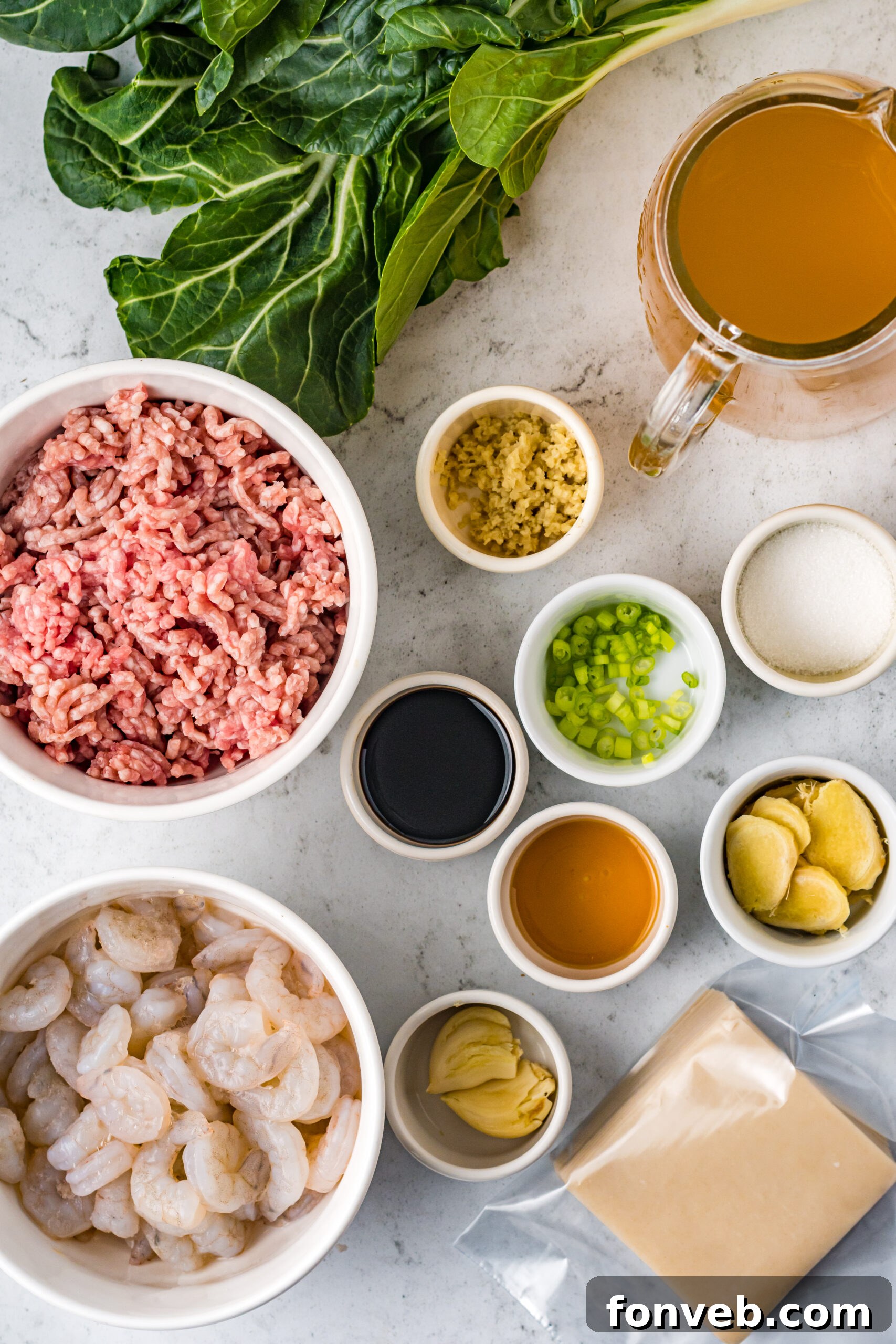
Achieving perfect homemade Wonton Soup is easier than you think, especially with these insider tips to guide you:
- Work Quickly with Wonton Wrappers: Wonton wrappers dry out remarkably fast. To prevent them from cracking and becoming unworkable, keep any unused wrappers covered with a damp cloth or plastic wrap while you work. Only take out a few at a time.
- Don’t Overfill the Wontons: A common mistake is adding too much filling. A small teaspoon (or ½ teaspoon as specified in the recipe) is plenty. Overfilled wontons are harder to seal and more prone to bursting during cooking.
- Seal Wontons Properly: Use a tiny bit of water on the edges of the wrappers as “glue.” Press firmly to create a tight seal, ensuring no air pockets are trapped inside. This prevents the filling from escaping into the broth.
- Cooking Wontons Al Dente (Optional Pre-Boil): While this recipe calls for cooking wontons directly in the broth, an optional technique is to briefly boil them in a separate pot of water for about 3-4 minutes until they float, then transfer them to an ice bath to stop the cooking. This helps them retain their shape and firm up slightly before being added to the hot broth just before serving.
- Timing is Everything for Serving: Wontons absorb liquid and soften quickly. To prevent them from becoming mushy or falling apart, it is crucial to add them to the hot soup only a few minutes before you plan to serve. Serve the soup immediately for the best texture and flavor.
- Batch Cooking & Freezing: Wontons are fantastic for meal prep! You can prepare a large batch of raw wontons, place them in a single layer on a parchment-lined baking sheet, and freeze until solid. Once frozen, transfer them to an airtight freezer bag. They can be cooked directly from frozen (though they may take an extra minute or two).
- Taste and Adjust: Always taste your broth before adding the wontons and adjust seasonings (soy sauce, sugar, salt, pepper) to your preference. This ensures the perfect flavor balance.
Frequently Asked Questions About Homemade Wonton Soup
- What kind of wonton wrappers should I use?
Look for thin, square wonton wrappers in the refrigerated section of your grocery store or Asian market. Egg wonton wrappers are typical and provide a lovely tender texture. Avoid thicker dumpling wrappers, as they are meant for potstickers and won’t give you the delicate chew of a wonton.
- Can I substitute sesame oil in the broth?
While sesame oil provides a distinct and authentic flavor, if you don’t have it, a neutral oil like peanut oil or even a tiny amount of vegetable oil can be used. However, be aware that the overall taste of your Wonton Soup will be slightly altered without the unique nutty aroma of sesame oil.
- Can I make a vegetarian Wonton Soup?
Absolutely! To make this dish vegetarian-friendly, swap the ground pork and shrimp for a finely minced mixture of vegetables such as shiitake mushrooms, carrots, water chestnuts, and firm tofu. Season well with soy sauce, grated ginger, and sesame oil for a flavorful plant-based filling.
- How do I prevent my wontons from falling apart?
The key is a good seal! Ensure the edges of your wrappers are well-dampened with water and pressed firmly together, expelling any air bubbles. Also, avoid overcooking; wontons cook relatively quickly, and prolonged simmering can make them delicate and prone to breaking apart.
- How long can I store leftover Wonton Soup?
Store leftover Wonton Soup in an airtight container in the refrigerator for up to 3-5 days. For best results, it’s often better to store the cooked wontons and broth separately if possible, and combine them just before reheating to prevent the wontons from getting too soggy.
- Can I freeze uncooked wontons?
Yes, uncooked wontons freeze beautifully! Place them in a single layer on a parchment-lined baking sheet and freeze until solid (about 1-2 hours). Once frozen, transfer them to an airtight freezer bag or container. They can be stored for up to 2-3 months and cooked directly from frozen in simmering broth.
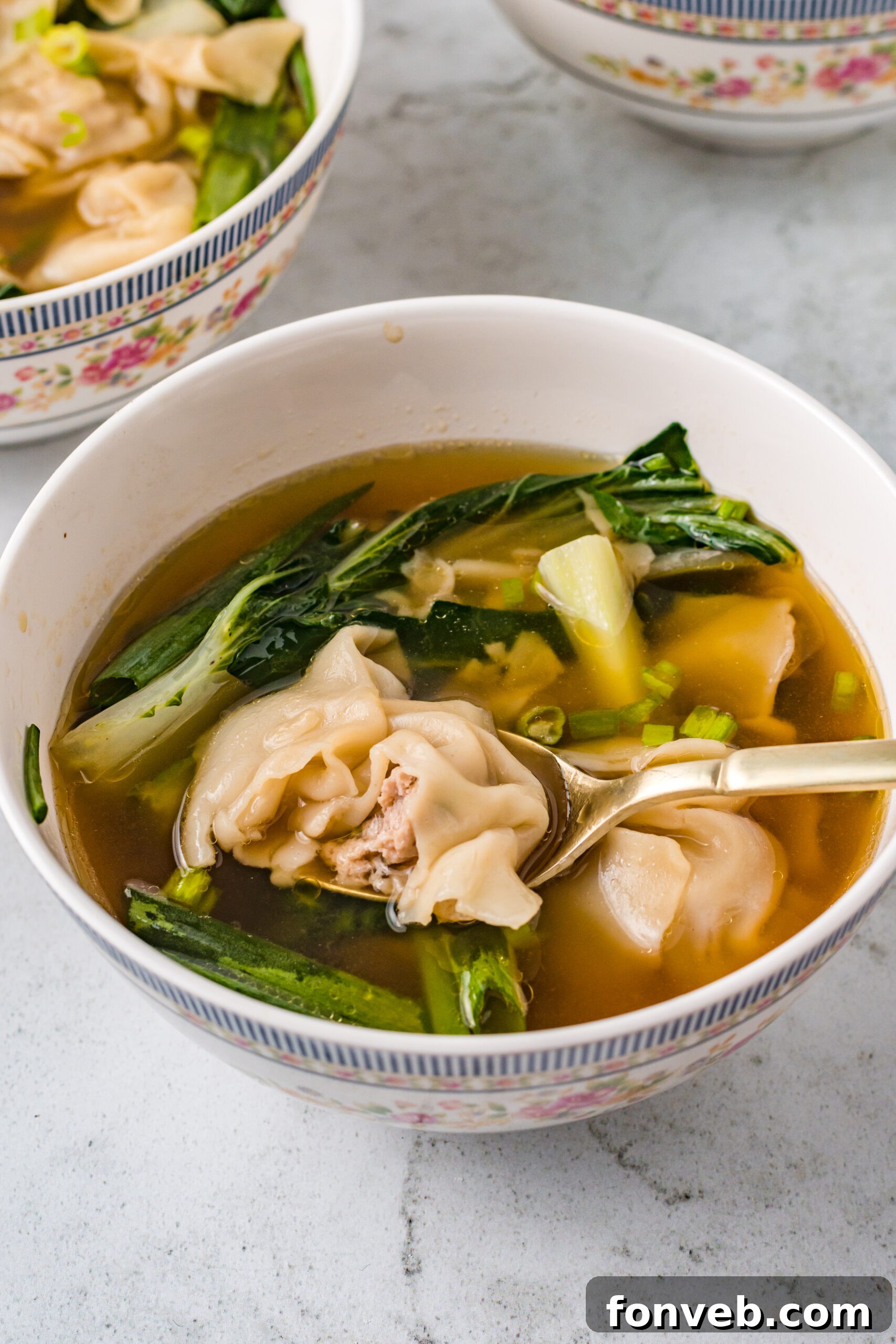
Preparing homemade Wonton Soup is a rewarding experience that brings the flavors of your favorite Asian restaurant directly to your dining table. With this detailed recipe and helpful tips, you’re well on your way to mastering this comforting classic. Enjoy every soothing, flavorful spoonful!
More Asian-Inspired Recipes You Will Love!
Crab Rangoons
Air Fryer Caramel Apple Wontons
Sesame Chicken
Wonton Soup Recipe
Course: Main Course
Prep Time: 40 mins
Cook Time: 15 mins
Total Time: 55 mins
Ingredients
Broth:
- 1 teaspoon sesame oil
- 2 garlic cloves, smashed
- 2 slices fresh ginger, peeled
- 2 tablespoons soy sauce
- 2 teaspoons granulated sugar
- 8 cups chicken broth
- 2 green onions, sliced
Wontons:
- 30 wonton wrappers
- 8 ounces ground pork
- 1 teaspoon grated fresh ginger
- 1 green onion, thinly sliced
- 2 teaspoons soy sauce
- 1 tablespoon sesame oil
- 8 ounces small shrimp, peeled and deveined (can be chopped if large)
For Serving:
- Bok choy, leaves separated
- 2 green onions, sliced (for garnish)
Instructions
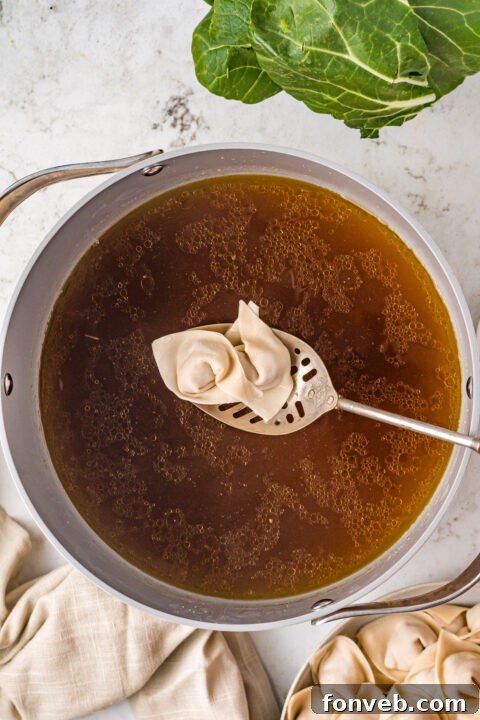
- In a large pot or Dutch oven, combine 1 teaspoon sesame oil, smashed garlic, and ginger. Sauté over medium heat for 1 minute until fragrant.
- Add 2 tablespoons soy sauce, granulated sugar, chicken broth, and 2 sliced green onions to the pot. Bring the mixture to a gentle simmer and let it cook while you prepare the wontons.
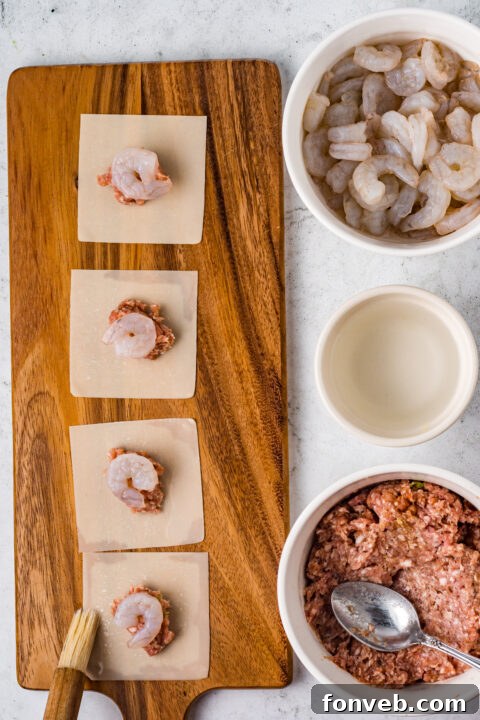
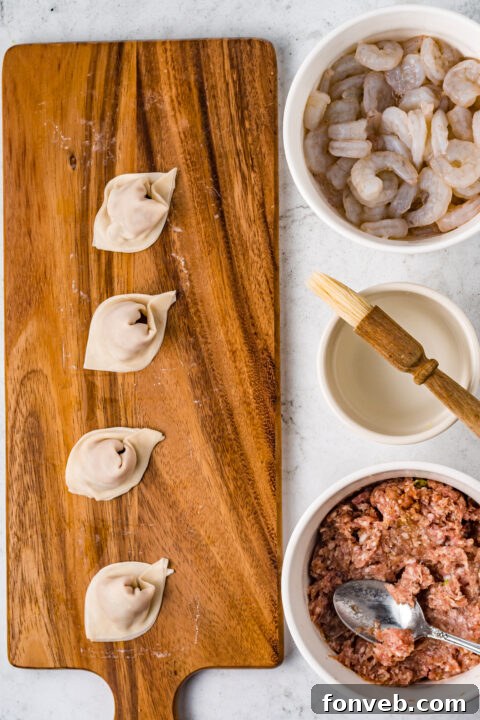
- In a medium bowl, thoroughly combine the ground pork, grated ginger, thinly sliced green onion, 2 teaspoons soy sauce, 1 tablespoon sesame oil, and small shrimp. Mix well to ensure all ingredients are evenly distributed.
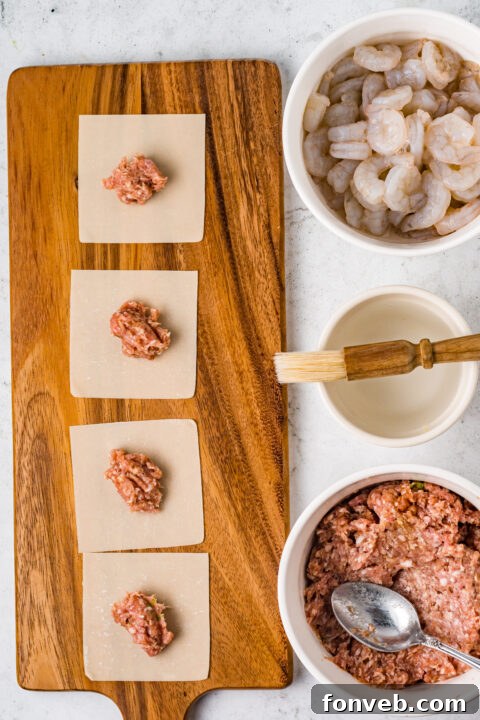
- Prepare your wonton wrappers. Lay out 4-5 wrappers on a clean, dry surface, cornstarch side up. Keep the remaining wrappers covered with a damp cloth or plastic wrap to prevent them from drying out.
- Place approximately ½ teaspoon of the filling mixture in the center of each wonton wrapper.
- Dip your finger or a small brush in water and moisten all four edges of the wrapper.
- Fold one corner of the wrapper over to the opposite corner, forming a triangle. Press the edges firmly together, starting from the center and working outwards, to seal the wonton and remove any air pockets.
- To shape the wonton (optional, but gives a classic look): Dampen one of the base corners of the triangle. Bring the other base corner over and press it onto the moistened corner, forming a ring shape with the filling tucked inside. Flip up the pointed tip of the triangle.
- Repeat the filling and folding process with the remaining wrappers and filling, placing finished wontons on a plate, ensuring they don’t touch each other to prevent sticking.
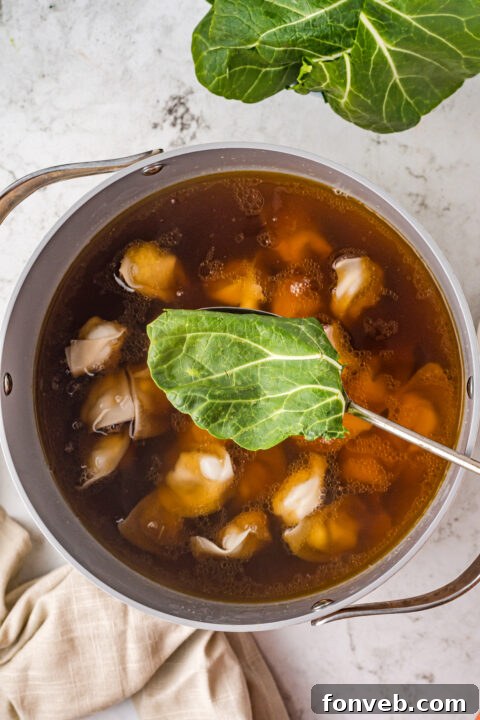
- Once the broth is simmering gently, carefully lower 3-4 wontons per serving into the hot soup. Cook for about 2 minutes, or until the wontons float and are cooked through. Do not overcrowd the pot; cook in batches if necessary.
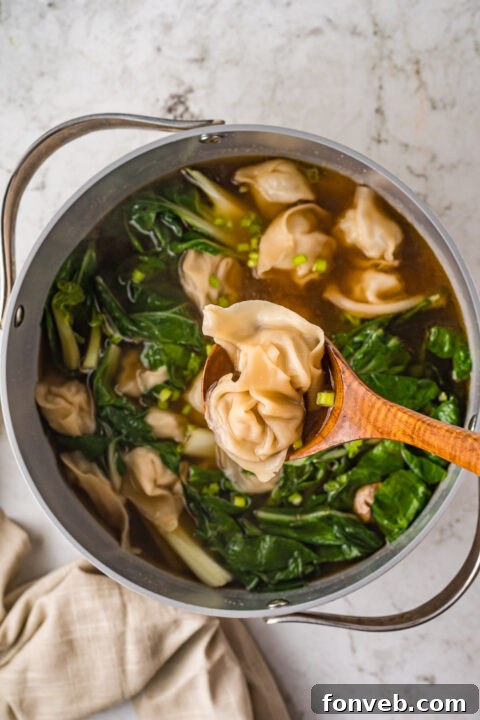
- Add the separated bok choy leaves to the soup during the last 2 minutes of cooking, allowing them to wilt slightly.
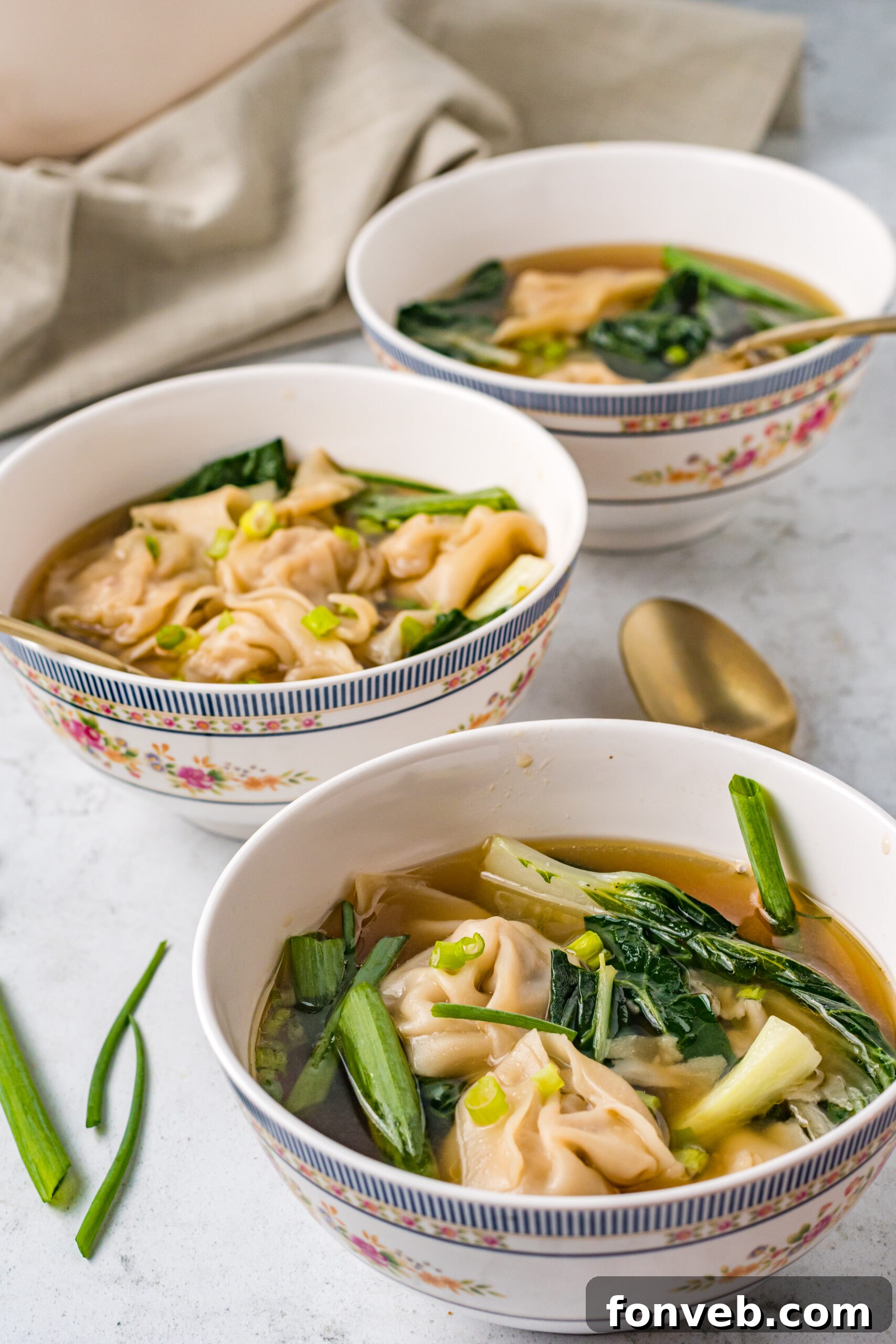
- Remove the soup from the heat immediately. Serve hot, garnished with extra sliced green onions.
- Important Note: For the best texture, avoid adding all wontons to the soup at once if you’re not serving a large group immediately. Overcooked wontons will become soft and may fall apart. Add wontons to individual bowls of hot broth, or cook them in batches just before serving.
Did you make this recipe?
Make sure to follow on Pinterest for more recipes!