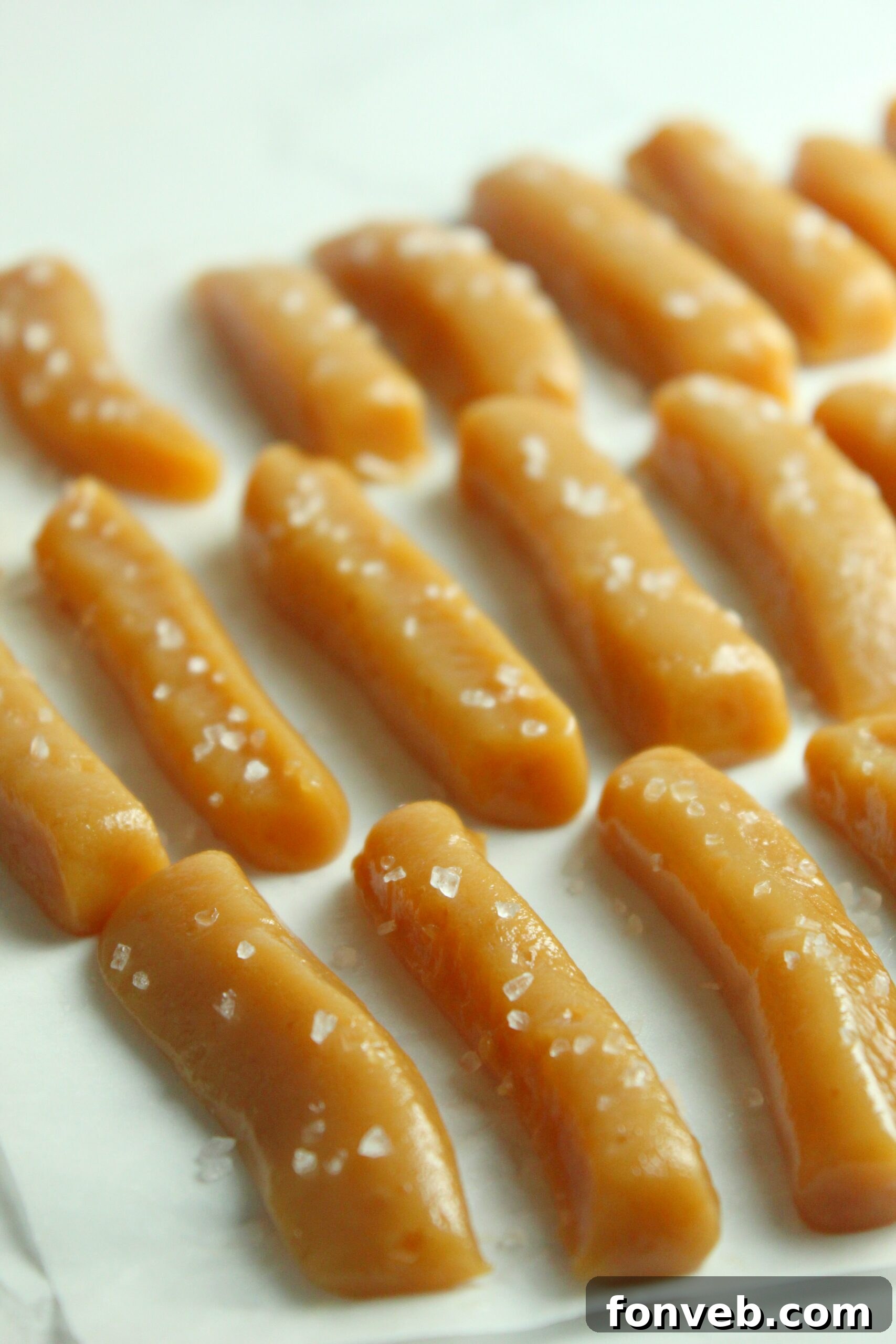
Craving perfectly soft, wonderfully chewy, and irresistibly buttery homemade salted caramels? If the thought of candy thermometers, precise temperatures, or the dreaded burnt sugar has held you back from making your own, this comprehensive guide is designed just for you. Get ready to discover a simple, beginner-friendly method that takes all the stress out of traditional caramel making, delivering delectable results every time. These easy homemade salted caramels are a true weakness – once you taste them, you’ll understand why they’re so incredibly addictive!
This foolproof recipe is engineered for success. You won’t need to chase elusive temperature points or worry about sugar seizing and scorching. Instead, all the magic happens in one pot, with steady stirring and a forgiving cook time. The outcome? Rich, melt-in-your-mouth caramels that slice beautifully and taste just as indulgent as any gourmet confection. Whether you’re preparing a thoughtful homemade gift for the holidays, surprising friends and family, or simply treating yourself to a sweet indulgence, this recipe makes homemade caramel feel approachable, rewarding, and utterly delicious – even if it’s your very first attempt at candy making.
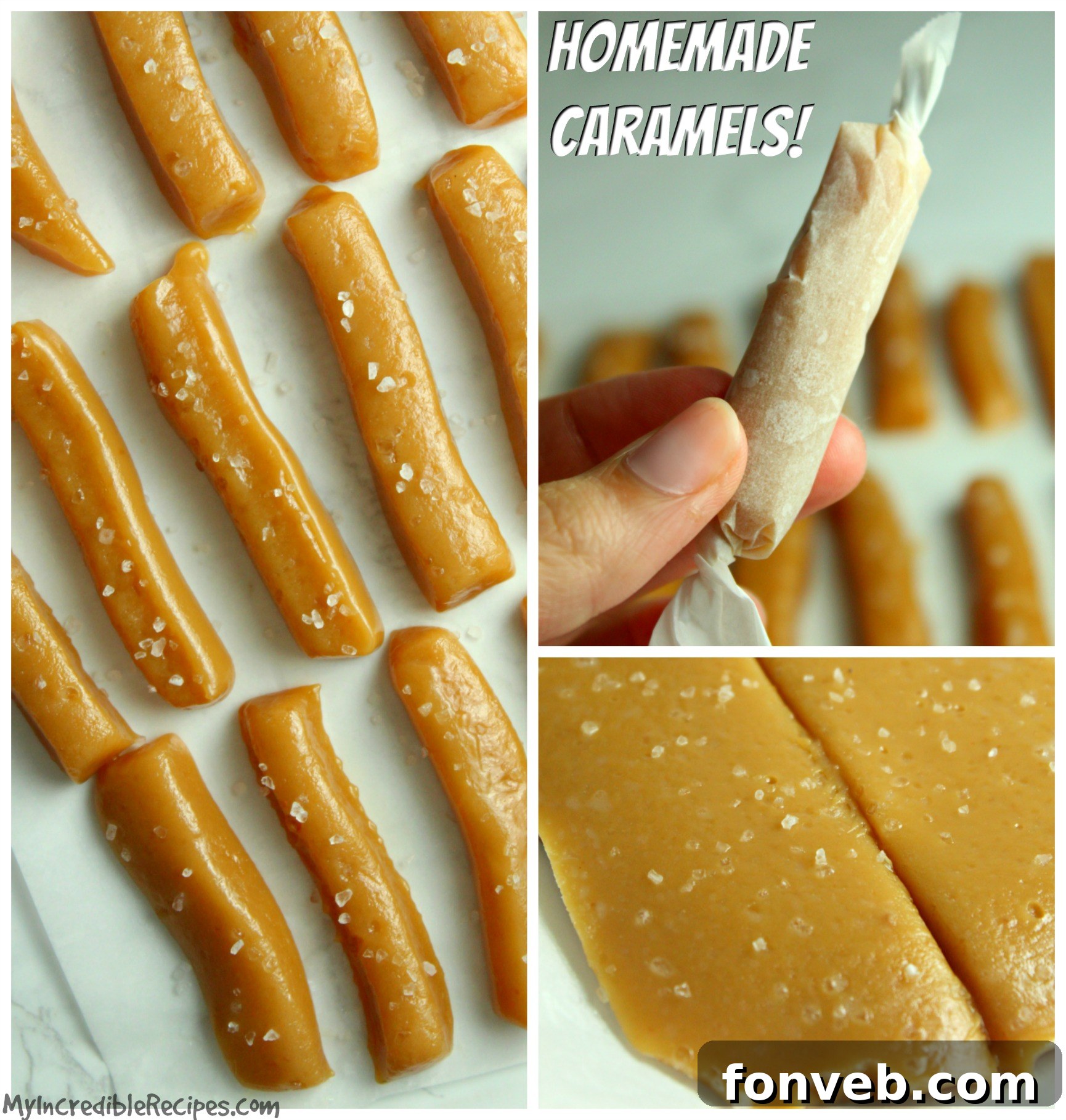
Why This Easy Salted Caramel Recipe Stands Out
What makes this easy salted caramel recipe a game-changer? It ingeniously sidesteps the most common pitfalls of traditional candy making while preserving the rich flavor and desirable soft, chewy texture that everyone loves. Instead of pushing sugar to extreme temperatures where burning or seizing is a constant threat, this method gently cooks all ingredients together at a consistent, moderate heat. This approach naturally creates a smooth, harmonious caramel mixture with significantly less room for error, making it perfect for novice and experienced bakers alike.
The strategic use of brown sugar, alongside light corn syrup, is fundamental to this recipe’s success. Brown sugar not only lends a deeper, more nuanced flavor profile but also aids in preventing crystallization, ensuring a smooth finish. Corn syrup acts as a vital stabilizer, further inhibiting sugar crystals from forming and contributing to the caramel’s signature chewiness. Butter and heavy cream are not just for richness; they are essential for achieving that luxurious, velvety texture that melts delightfully in your mouth. Constant, patient stirring during the cooking process is key. It ensures even heat distribution, prevents hot spots that can lead to scorching, and promotes a uniform caramelization. The beautiful result is a caramel that sets perfectly once cooled, slices cleanly, and delivers that classic buttery, sweet, and salty flavor without any of the usual stress associated with candy making.
This method is intentionally forgiving, built to inspire confidence in first-time candy makers. It’s an ideal choice for busy holiday baking, impromptu gifts, or anyone seeking consistently reliable results without needing specialized equipment or a precise candy thermometer. It truly democratizes the art of homemade caramel.
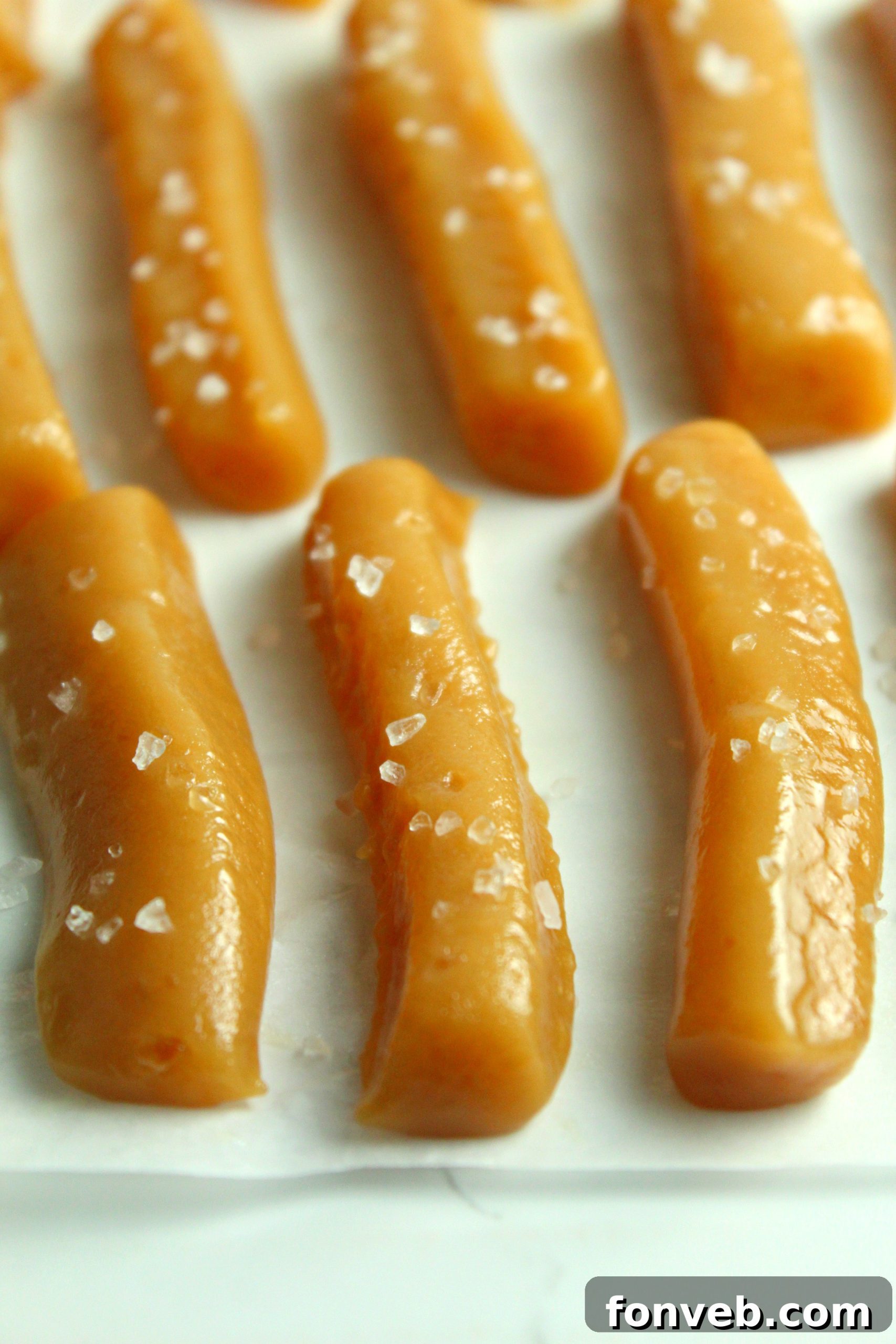
Troubleshooting Tips for Achieving Perfect Homemade Salted Caramels
Even with an easy recipe, minor adjustments can make all the difference. Here are solutions to common issues you might encounter:
My caramel didn’t set fully or is too soft: This is the most frequent issue and almost always means the caramel wasn’t cooked long enough. The mixture needs sufficient time on the heat to evaporate enough moisture and develop its proper structure. A visual cue is crucial: it should visibly thicken and deepen in color to a rich amber. If your batch is still very soft after cooling completely at room temperature, next time, extend the cooking time by a few minutes. Look for the caramel to coat the back of a spoon thickly and drip off slowly in heavy drops, not a thin stream.
My caramels are too hard or brittle: Conversely, caramels that are too firm often result from overcooking or cooking at an excessively high temperature. To avoid this, always maintain the heat at a steady medium to medium-low setting. Stir frequently to prevent localized overheating. The moment the caramel reaches the desired thickness and deep caramel color, remove it from the heat promptly. A few extra minutes can quickly transform soft caramel into a hard candy.
My caramel looks grainy or sugary: A grainy texture typically occurs if the sugar crystallizes. This can happen if the heat is too high, causing sugar to cook unevenly, or if the mixture isn’t stirred consistently. While this recipe uses corn syrup to help prevent crystallization, inconsistent stirring can still allow sugar crystals to form on the sides of the pan and fall back into the mixture. Ensure you’re stirring often and avoid rapid boiling, which can lead to sugar splattering and crystallizing on the pan’s edges. If you see crystals forming on the sides, gently wipe them down with a wet pastry brush.
The caramel tastes burnt: A burnt flavor is usually a sign of cooking too hot or using a pan that doesn’t distribute heat evenly. Always use a heavy-bottomed saucepan. The thick bottom helps to diffuse the heat, preventing scorching. Never turn the heat above medium, and keep stirring to ensure nothing sticks and burns at the bottom of the pot.
The salt melted into the caramel (not visible on top): For that classic, beautiful finish with visible flecks of coarse sea salt, it’s essential to sprinkle the salt *after* pouring the hot caramel into the prepared pan, not while it’s cooking. Adding it post-cooking allows the salt crystals to remain distinct on the surface as the caramel cools and sets, providing both visual appeal and a delightful textural contrast.
Frequently Asked Questions About Easy Homemade Salted Caramels
Here are answers to some of the most common questions about making these delightful caramels:
Do I need a candy thermometer for this recipe?
No, absolutely not! This recipe is specifically formulated to be made without a candy thermometer. We rely on clear visual cues, like the caramel’s thickness, color, and how it drips from a spoon, to confidently determine when it’s perfectly done. This removes one of the most intimidating aspects of traditional candy making.
What kind of pan should I use?
A heavy-bottomed saucepan is your best friend for caramel making. Its robust construction ensures even heat distribution, which is crucial for preventing scorching and promoting steady caramelization. Thin pans are prone to creating hot spots, leading to uneven cooking and a higher risk of burning your caramel.
Can I use half-and-half instead of heavy cream?
While half-and-half might seem like a suitable substitute, heavy cream is strongly recommended for the optimal texture and richness. Its higher fat content is essential for achieving that characteristic soft, chewy, and luscious caramel consistency. Using half-and-half may result in a thinner, softer caramel that doesn’t set as well or has a less luxurious mouthfeel.
How long do homemade caramels take to set?
Patience is a virtue here! Homemade caramels typically require about 2–3 hours to fully set at room temperature. The cooling process allows the caramel to firm up and achieve its ideal chewy texture. For those in a hurry, you can carefully refrigerate them for about 1 hour to speed up the setting process, though room temperature cooling is often preferred for the best texture.
Do these caramels need to be refrigerated?
No, once fully set, these caramels are quite stable and do not require refrigeration. They store beautifully at room temperature, which helps maintain their soft, pliable texture. Just ensure they are kept in an airtight container to prevent them from drying out or absorbing external odors.
How long do homemade salted caramels last?
When stored properly in an airtight container at room temperature, your homemade salted caramels will stay wonderfully fresh and delicious for up to 2 weeks. Their shelf life makes them excellent candidates for advanced preparation or gifting.
Can I freeze these caramels?
Yes, you absolutely can! Freezing is a great option for longer storage. For best results, wrap individual pieces tightly in parchment paper or plastic wrap, then place them in an airtight freezer-safe container or bag. They can be frozen for up to 3 months. When ready to enjoy, thaw them at room temperature, keeping them wrapped to prevent condensation from affecting their texture.
Can I add other flavors to the caramel?
Definitely! This base recipe is a fantastic canvas for flavor experimentation. Vanilla extract is added at the end, but you could also consider stirring in a pinch of ground cinnamon, a touch of cardamom, a splash of high-quality bourbon or rum, or even a hint of espresso powder after the caramel has finished cooking and been removed from the heat.
Why is corn syrup used in this recipe?
Corn syrup plays a critical role as an anti-crystallization agent. It’s an invert sugar that prevents the sucrose from reforming into gritty crystals, ensuring your caramel remains silky smooth and delightfully chewy. It doesn’t make the caramel taste like corn; rather, it’s a structural necessity for perfect candy.
Are these caramels safe to make with kids?
While this recipe is simpler than traditional caramel, it still involves handling a very hot sugar mixture, which can cause severe burns. Therefore, adults should always handle the cooking process. Kids can safely participate by helping with measuring ingredients, lining the pan, and, most excitingly, sprinkling the coarse sea salt on top once the caramel is poured and slightly cooled.
Does the quality of ingredients matter?
Yes, particularly for key ingredients like butter and heavy cream. Using high-quality butter with good flavor will significantly enhance the overall taste of your caramels. Similarly, full-fat heavy whipping cream contributes to the luxurious texture and richness that defines a great caramel. For the sea salt topping, a coarse, flaky sea salt (like Maldon) is recommended for its delightful crunch and burst of briny flavor.
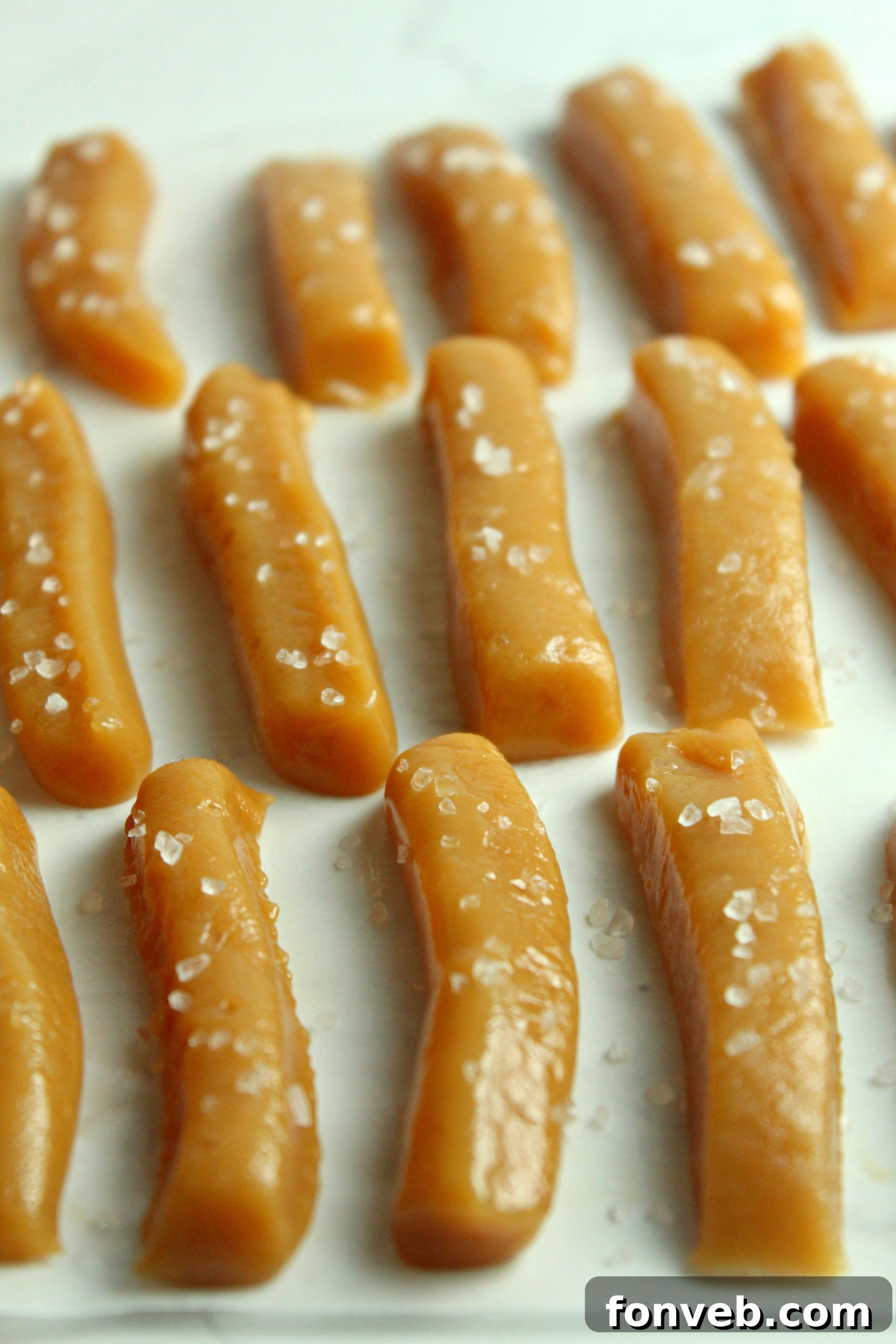
Easy Caramels vs. Traditional Caramels: Which Should You Make?
Both methods of making caramels have their unique appeal, and the best choice ultimately depends on your comfort level, experience, and what you hope to achieve. Here’s a detailed comparison to help you decide:
Easy Salted Caramels (This Recipe)
- No Candy Thermometer Required: This is the defining characteristic. You rely on visual cues (color, thickness, drip test) instead of specific temperature readings, drastically reducing the intimidation factor.
- No High-Temperature Sugar Cooking: The sugar is cooked gently with other ingredients, minimizing the risk of scorching or uneven crystallization.
- Beginner-Friendly: Designed specifically for those new to candy making or anyone who prefers a stress-free process.
- Very Forgiving: The method is more tolerant of slight variations in cook time and temperature, making it harder to “mess up.”
- Ideal For: Holiday baking, homemade gifts, first-time candy makers, or when you want reliable, delicious caramels without fuss.
- Flavor Profile: Rich, buttery, sweet, and chewy with a classic caramel flavor that’s deeply satisfying.
Traditional Salted Caramels
- Requires Precise Temperatures: Typically demands a candy thermometer to monitor exact temperatures, often reaching higher degrees (e.g., 245-250°F / 118-121°C for soft ball stage).
- Deeper, More Complex Caramelized Flavor: The higher cooking temperatures can produce a more intense, nuanced caramel flavor due to a more extensive Maillard reaction in the sugars.
- Higher Risk of Burning or Seizing: The precision required means there’s less room for error. Overcooking by even a few degrees can result in hard or burnt caramel, and incorrect technique can lead to crystallization.
- Best For: Experienced candy makers who enjoy the precision and challenge of traditional methods, or those seeking a caramel with a slightly more pronounced, almost toasted sugar depth.
If you’re embarking on your first candy-making adventure or simply desire consistent, luscious results without the inherent anxieties of traditional methods, the easy version is undoubtedly the clear winner. However, if you relish precision cooking and are chasing that slightly more profound, intricate caramel flavor that only higher heat can achieve, the traditional method might be a rewarding challenge. For most home cooks, the easy method delivers all the joy and flavor with none of the stress.
Final Thoughts: Embrace Your Inner Caramel Maker!
Homemade salted caramels truly don’t have to be an intimidating kitchen project. This incredibly easy recipe stands as proof that you can effortlessly achieve soft, wonderfully chewy, and perfectly buttery caramels with that irresistible classic flavor—all without needing specialized tools or succumbing to candy-making anxiety. It’s a recipe you can confidently trust, joyfully share, and eagerly return to year after year, making it a particularly cherished tradition, especially during the bustling holiday season. Go ahead, unleash your inner confectioner and delight in the sweet success!
Storage, Gifting & Enjoyment Tips for Your Homemade Caramels
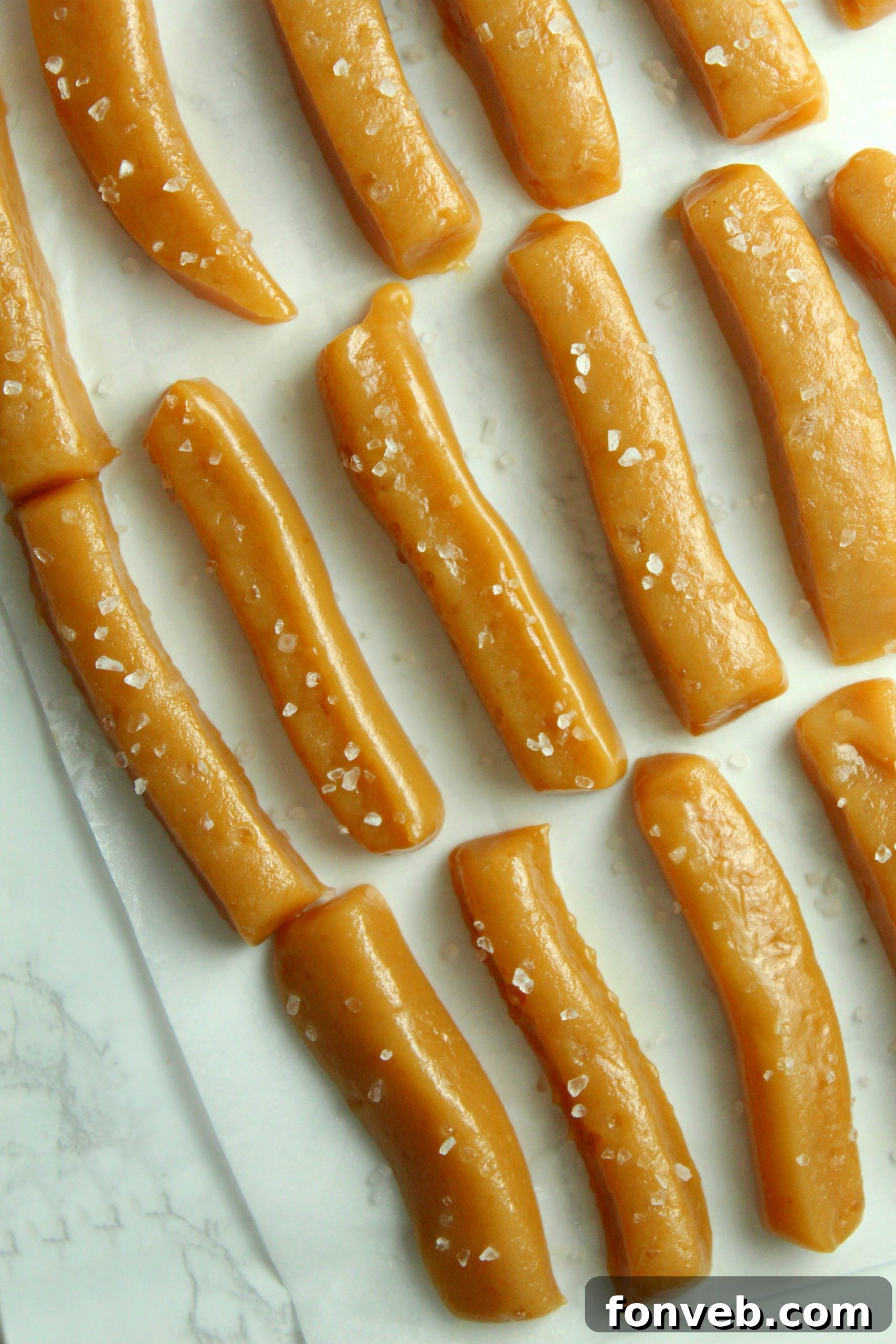
Once your delectable caramels are fully set, they not only store beautifully but also transform into the most thoughtful and impressive homemade gifts. Here’s how to ensure they remain fresh and presentable:
Optimal Storage for Freshness: For everyday enjoyment, keep your caramels in an airtight container at room temperature. They will retain their peak freshness and chewy texture for up to 2 weeks. To prevent them from sticking together, separate layers of caramels with parchment paper or wax paper. It’s crucial to avoid storing them in overly warm or humid environments, as excessive heat can cause the caramels to soften prematurely and lose their desirable shape.
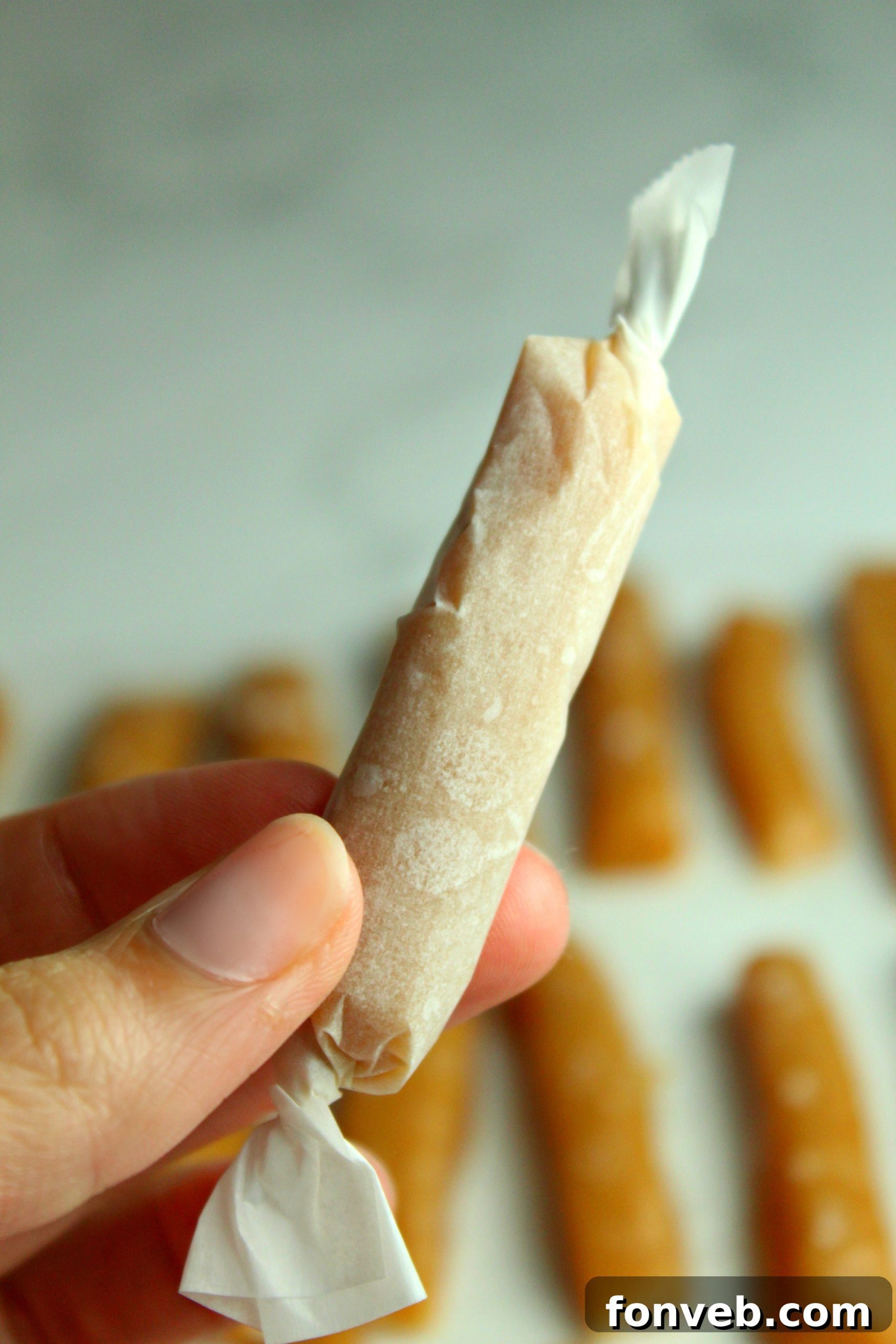
Creative Gifting Ideas: These homemade caramels are absolute showstoppers as gifts. For an elegant presentation, wrap individual pieces snugly in small squares of parchment paper, wax paper, or charming candy wrappers, twisting the ends to secure them. Once wrapped, arrange the caramels in decorative tins, clear cellophane bags tied with a festive ribbon, or rustic treat boxes. They hold up exceptionally well during transport, making them an ideal choice for holiday gifts, bake sales, delightful party favors, or a thoughtful hostess gift.
Freezing for Extended Storage: If you wish to extend their shelf life significantly, wrapped caramels can be frozen for up to 3 months. When you’re ready to savor them, simply thaw the frozen caramels at room temperature. It’s best to keep them wrapped during the thawing process to prevent any condensation from forming directly on the caramel, which could affect its texture.
Serving Suggestions: Beyond enjoying them as stand-alone treats, homemade caramels can elevate many desserts. Chop them up and sprinkle over ice cream, use them as a filling for cookies or brownies, or even melt them gently to create a decadent caramel sauce for dipping apples or drizzling over cakes. The possibilities are endless!
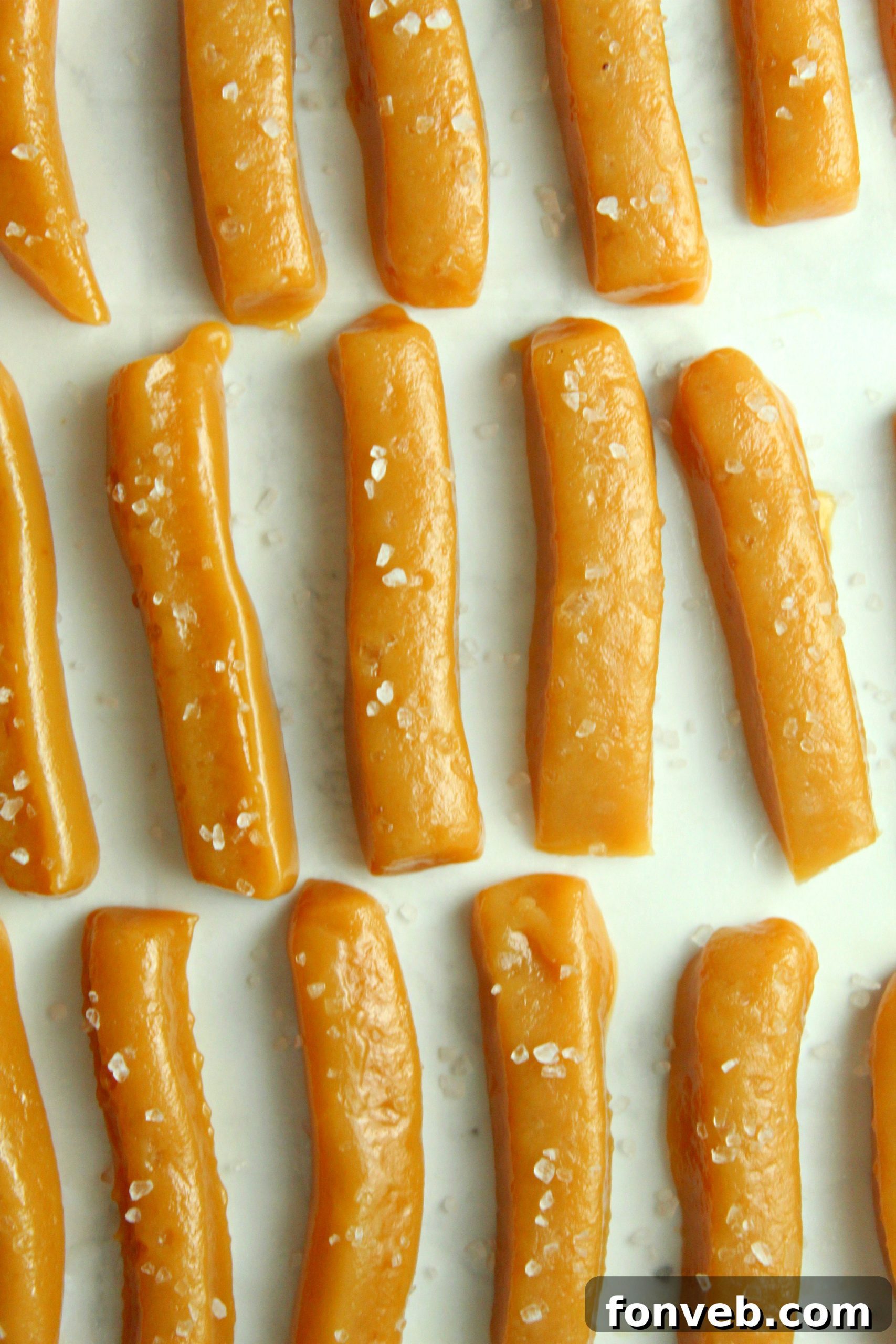
The Sweet Savings: A Budget Breakdown for Homemade Caramels
One of the many delightful advantages of this easy salted caramel recipe isn’t just the incredible taste and simplicity, but also how wonderfully affordable it is to create at home. When you compare the cost of making a batch to purchasing high-end gourmet caramels or specialty candy shop versions, the savings are truly significant, making it an economically smart choice for any sweet tooth.
Estimated Ingredient Costs (Based on U.S. average grocery prices, subject to regional variation):
- Unsalted butter (½ cup): Approximately $1.25
- Packed brown sugar (1 cup): Approximately $0.45
- Light corn syrup (½ cup): Approximately $0.75
- Heavy whipping cream (½ cup): Approximately $1.50
- Salt + vanilla extract: Approximately $0.35
- Coarse sea salt for topping: Approximately $0.45
Estimated Total Cost per Batch: $4.75
Cost per Caramel (assuming approximately 36 pieces per batch):
➡️ Approximately $0.13 per caramel
This represents an enormous saving when juxtaposed with store-bought or artisanal candy shop caramels, which frequently retail for $1 to $2 per individual piece, if not more. This makes crafting homemade caramels an especially budget-friendly endeavor, perfect for grand holiday gifting plans, contributions to bake sales, charming party favors, or simply preparing substantial batches to generously share with loved ones without breaking the bank. Enjoy the delicious taste of homemade luxury for a fraction of the price!
Share the Sweetness!
If you loved this recipe, please consider sharing it with your friends and family!
Connect with us on Facebook and Follow us on Pinterest for more incredible recipes!
Homemade Salted Caramels
These Easy Homemade Salted Caramels are soft, chewy, and perfectly sweet with a sprinkle of sea salt on top — all made with a simple stovetop method that skips the stress of traditional candy making. This beginner-friendly recipe delivers classic caramel flavor without needing a candy thermometer, making it perfect for holidays, gifting, or anytime you want homemade candy without the hassle.
Prep Time: 10 mins
Cook Time: 35 mins
Total Time: 45 mins
Yields: 36 caramels
Ingredients
- ½ cup unsalted butter
- 1 cup packed brown sugar
- ½ cup light corn syrup
- ½ cup heavy whipping cream
- ¼ teaspoon salt
- 1 teaspoon vanilla extract
- Coarse sea salt, for topping
Instructions
- Prepare the pan: Line an 8×8-inch baking pan with parchment paper, ensuring there’s enough overhang on the sides to easily lift out the caramel later. Lightly spray the parchment paper with nonstick cooking spray and set the pan aside.
- Melt and combine: In a heavy-bottomed saucepan, combine the unsalted butter, packed brown sugar, light corn syrup, heavy cream, and ¼ teaspoon salt over medium heat. Stir continuously with a whisk or spatula until the butter is completely melted and all the ingredients are smoothly incorporated.
- Cook the caramel: Bring the mixture to a gentle boil. Once boiling, reduce the heat to medium-low to maintain a steady simmer. Continue cooking, stirring often to prevent sticking and ensure even cooking, for 15–20 minutes. During this time, the mixture will thicken and gradually transform into a rich, deep caramel color.
- Visual Cue for Doneness: The caramel is ready when it thickly coats the back of a spoon and drips off slowly. You’ll notice a significant change in consistency from a thin liquid to a more viscous, syrupy texture.
- Finish the caramel: Carefully remove the saucepan from the heat. Stir in the vanilla extract until fully combined. Be cautious as the vanilla can cause the hot caramel to bubble up slightly.
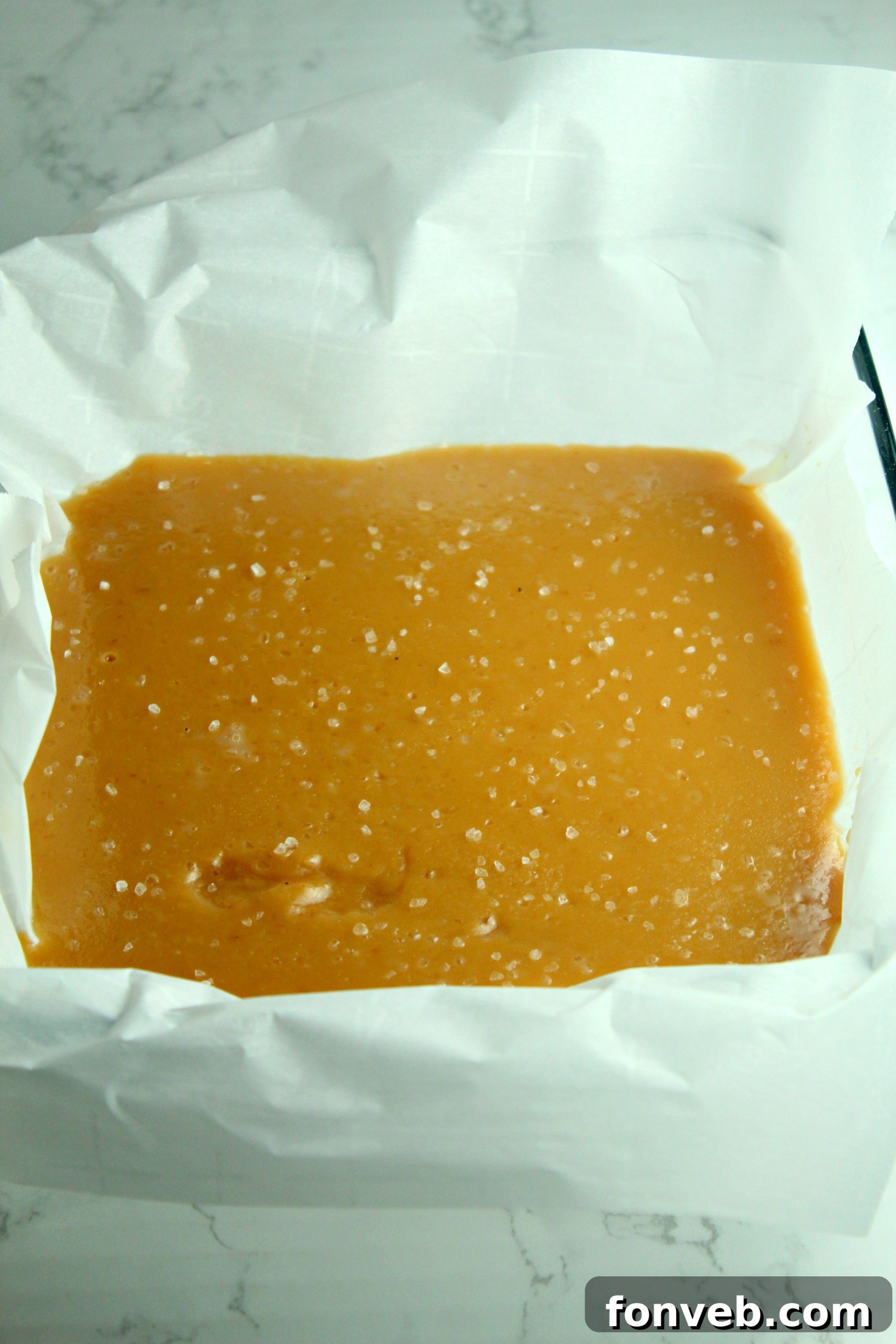
- Pour and cool: Immediately and carefully pour the hot caramel mixture into the prepared 8×8-inch baking pan. If needed, gently smooth the top with a spatula to create an even layer. While the caramel is still warm, evenly sprinkle a generous amount of coarse sea salt over the entire surface.
- Set: Allow the caramel to cool undisturbed at room temperature for 2–3 hours, or until it is completely firm and set. Do not rush this process by refrigerating unless absolutely necessary, as slow cooling results in a better texture.
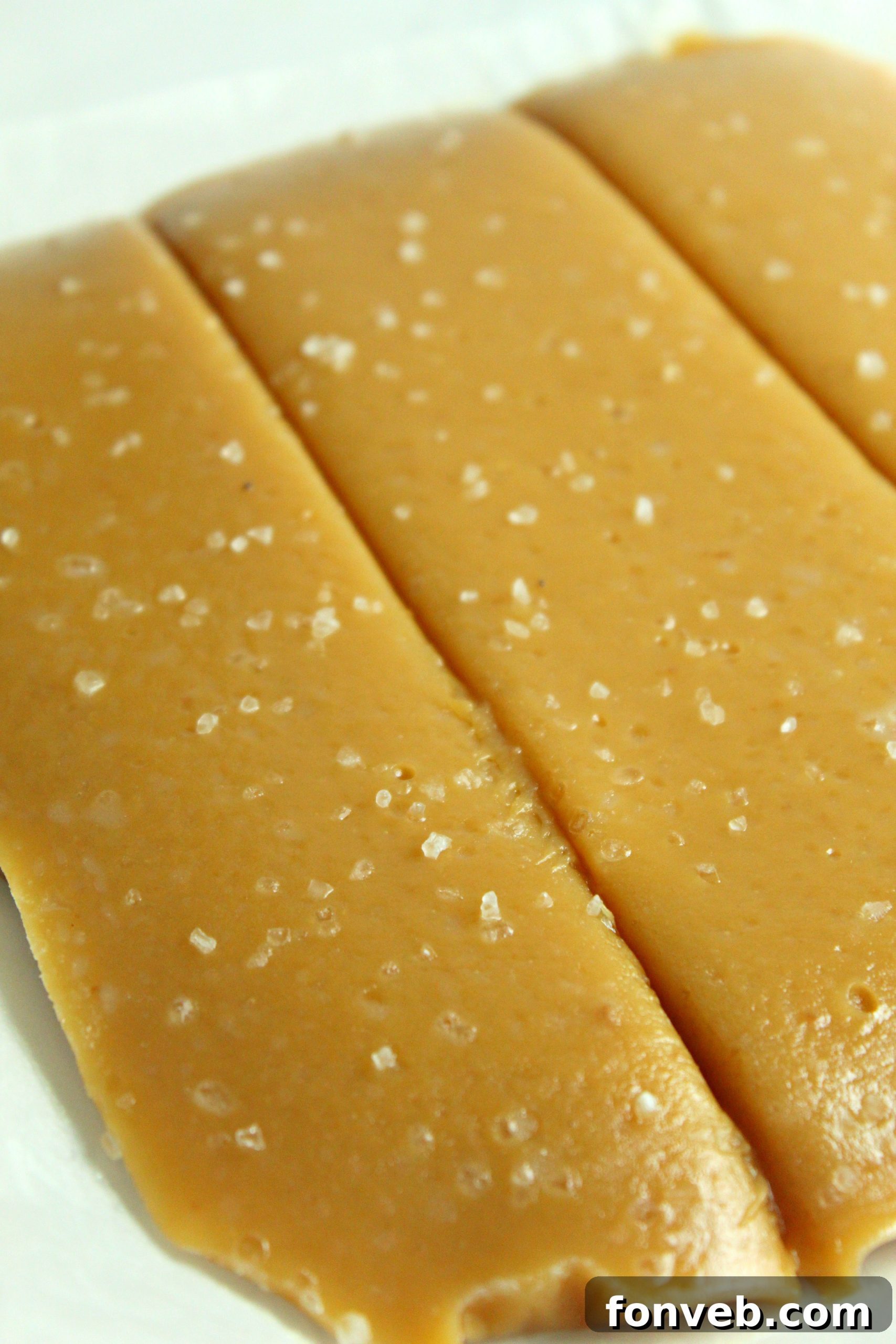
- Slice and serve: Once fully set, use the parchment paper overhang to lift the entire block of caramel out of the pan. Place it on a cutting board and use a sharp, lightly greased knife to cut the caramel into desired squares or roll them into longer candies. Enjoy your delicious homemade salted caramels!
Did you make this recipe?
Make sure to follow on Pinterest for more recipes and tag us in your creations!