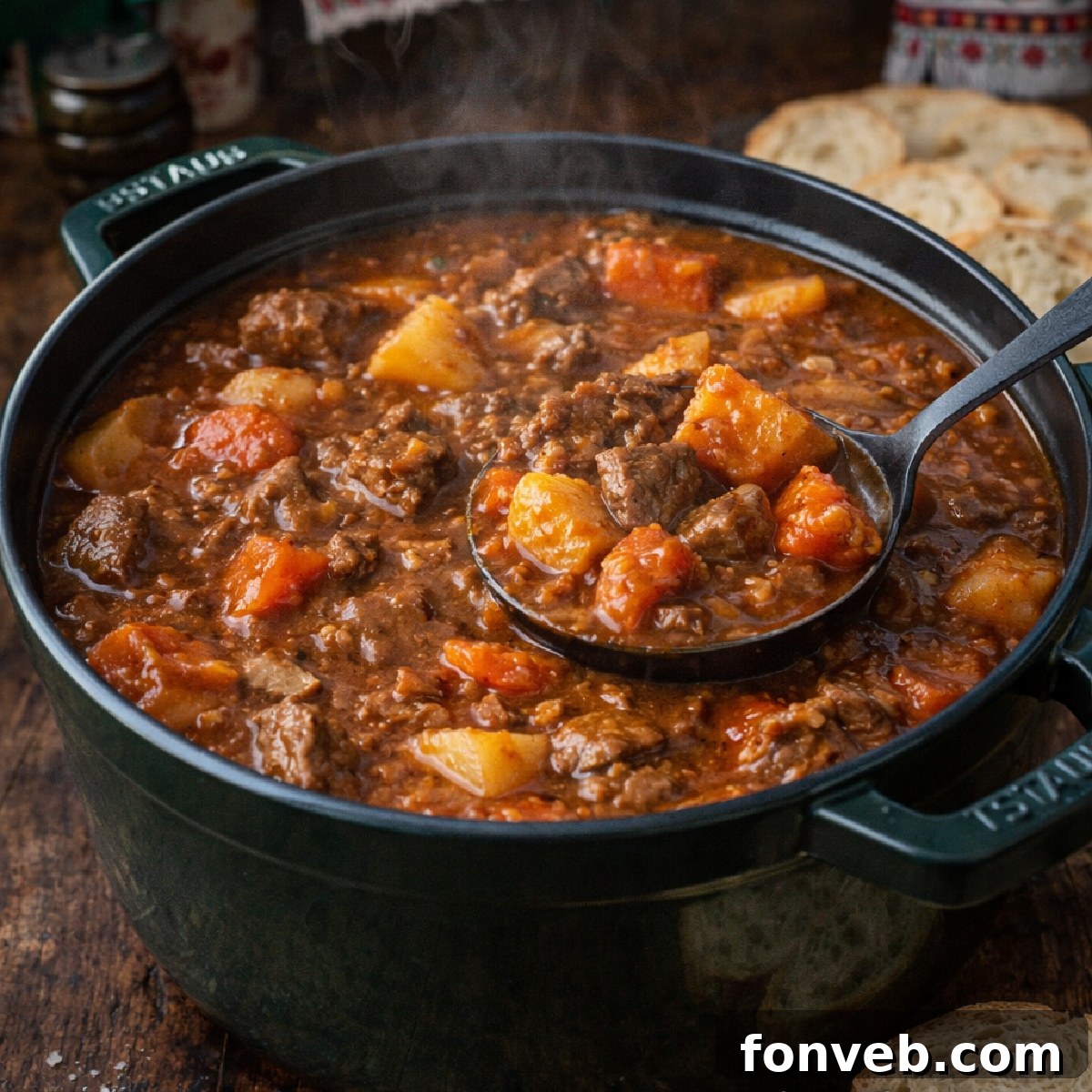
Experience the rich, comforting flavors of authentic Hungarian Goulash – a timeless classic recipe featuring incredibly tender, juicy beef and hearty vegetables, all simmered in a sensational, paprika-infused broth. This traditional stew is a masterpiece of warming, deep flavor that promises to become a cherished favorite in your kitchen.
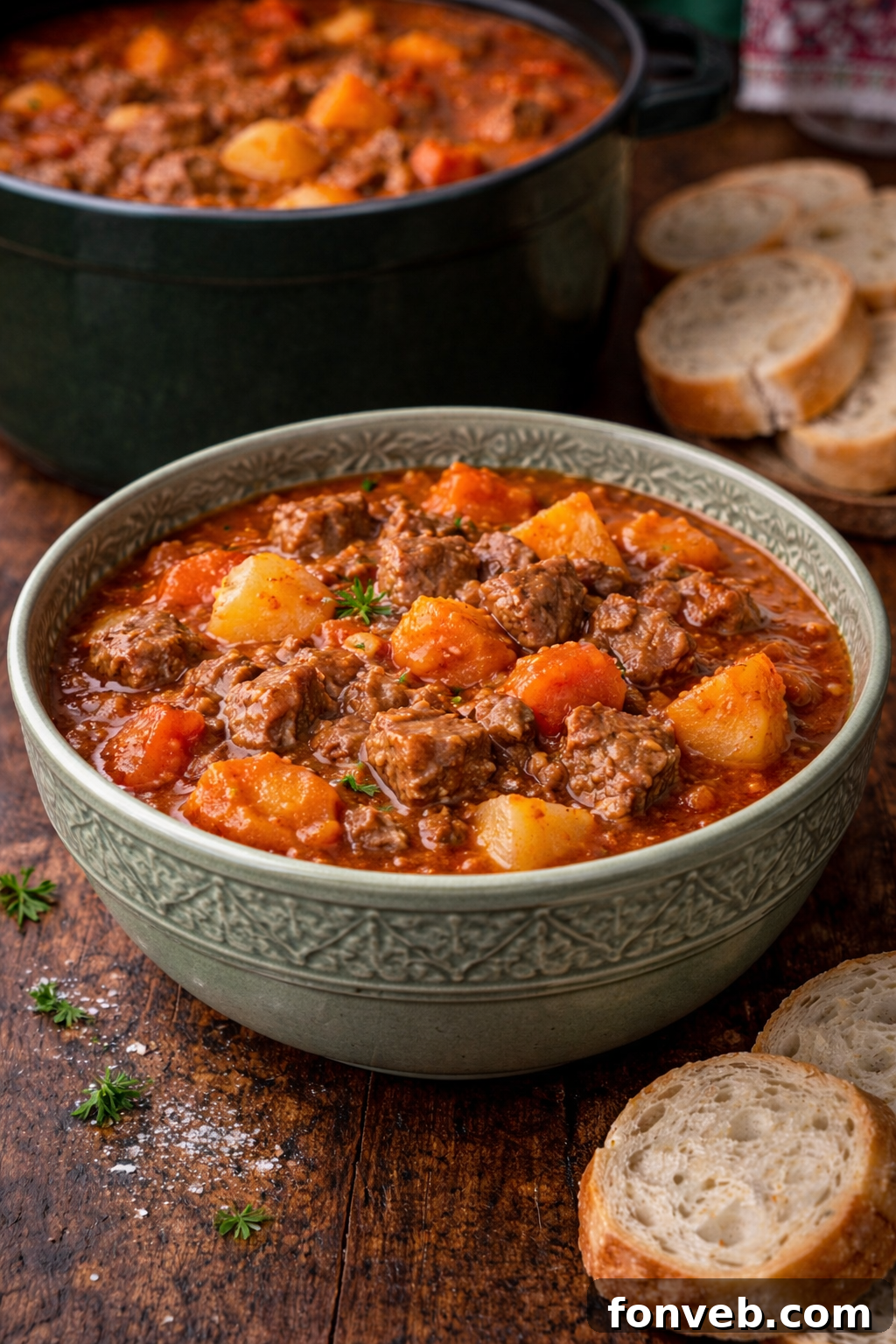
While our American Goulash recipe remains a perennial favorite on our blog, garnering thousands of rave reviews for its comforting simplicity, today we delve into the traditional, robust masterpiece that is Hungarian Goulash. This authentic classic offers a distinctly different, yet equally satisfying, culinary journey that transports you straight to the heart of Central European cuisine.
The True Essence of Authentic Hungarian Goulash
Hungarian Goulash is far more than just a simple stew; it’s a culinary icon, a masterpiece of flavor rooted in centuries of tradition. At its heart lies a harmonious blend of tender, slow-cooked beef and robust root vegetables, all brought to life by the star spice: high-quality Hungarian paprika. This isn’t merely about throwing ingredients into a pot; it’s about layering flavors, allowing time to work its magic, and creating a dish that embodies warmth, comfort, and deep satisfaction. Originating as a hearty meal for shepherds and cowboys on the Hungarian plains, goulash evolved into a national dish, celebrated for its ability to nourish and sustain. Each spoonful delivers a rich, savory experience that speaks to the soul, making it a staple in Hungarian homes and a beloved dish worldwide. Unlike its American cousin, authentic Hungarian goulash is a thick, spoonable soup or stew, never containing pasta, and relying on the natural starches of vegetables and the richness of the beef to create its signature texture and flavor.
Serving Your Goulash: Classic Pairings and Creative Twists
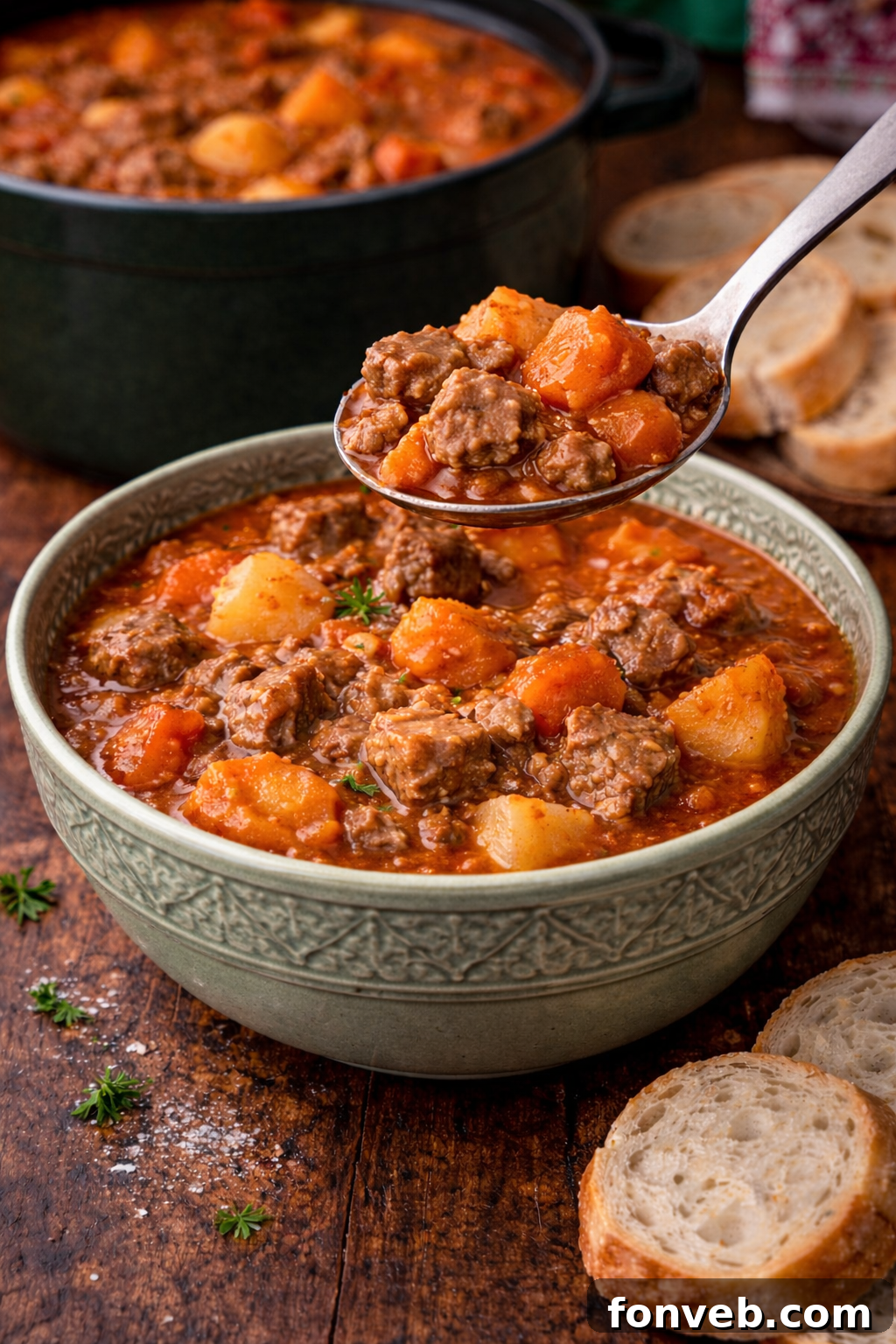
One of the most delightful aspects of Hungarian Goulash is its versatility when it comes to serving. While my personal favorite way to enjoy this hearty stew is spooned generously over creamy mashed potatoes, the possibilities are vast and equally delicious. Imagine the rich, savory broth coating perfectly cooked egg noodles, providing a wonderfully soft counterpoint to the tender beef. Or perhaps you prefer it alongside warm, crusty garlic bread, ideal for dipping and soaking up every last drop of that incredible sauce. For a truly authentic Hungarian experience, consider pairing it with traditional small dumplings known as nokedli or csipetke, which add another layer of texture and tradition. A dollop of cooling sour cream or a sprinkle of fresh parsley on top can also brighten the dish and add a beautiful touch. No matter your preference, Hungarian Goulash promises a deeply satisfying meal that can be tailored to any occasion, from a casual family dinner to a festive gathering.
Effortless Elegance: The Simplicity of a Culinary Masterpiece
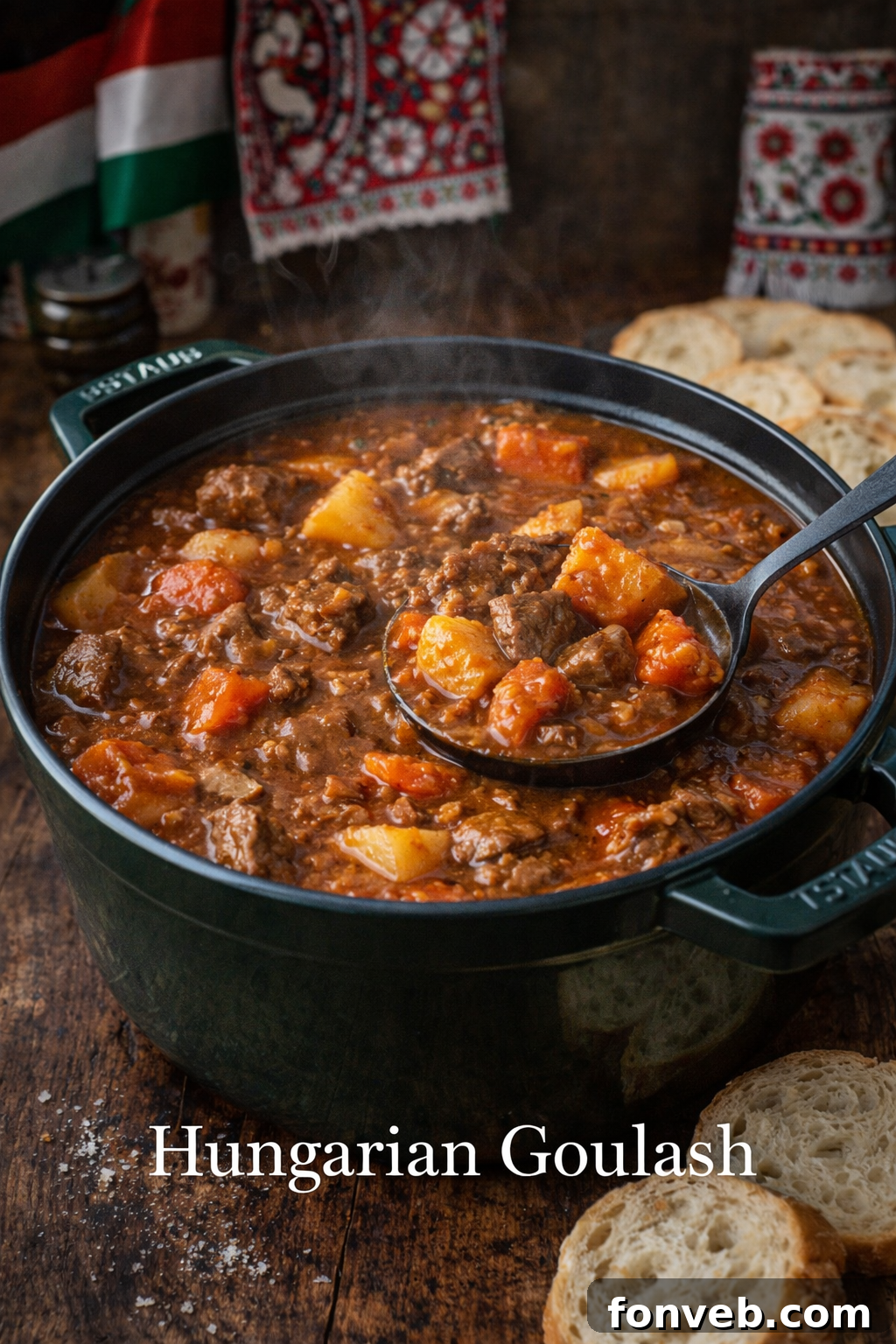
Despite its complex, deep flavors, authentic Hungarian Goulash is deceptively easy to prepare. The magic truly happens through slow simmering, allowing simple, high-quality ingredients to transform into something extraordinary with minimal hands-on effort. This perfect combination of phenomenal taste and straightforward preparation makes it an ideal meal for busy weeknights, cozy weekend dinners, or even entertaining guests. The initial steps involve browning the beef and sautéing onions until sweet and caramelized, then simply adding the remaining ingredients and letting the pot do the rest of the work. You don’t need to be a gourmet chef to achieve a rich, tender, and incredibly satisfying goulash that will impress everyone at your table. It’s truly a testament to the power of traditional cooking methods, proving that sometimes, the best flavors come from patience and quality ingredients, not complicated techniques.
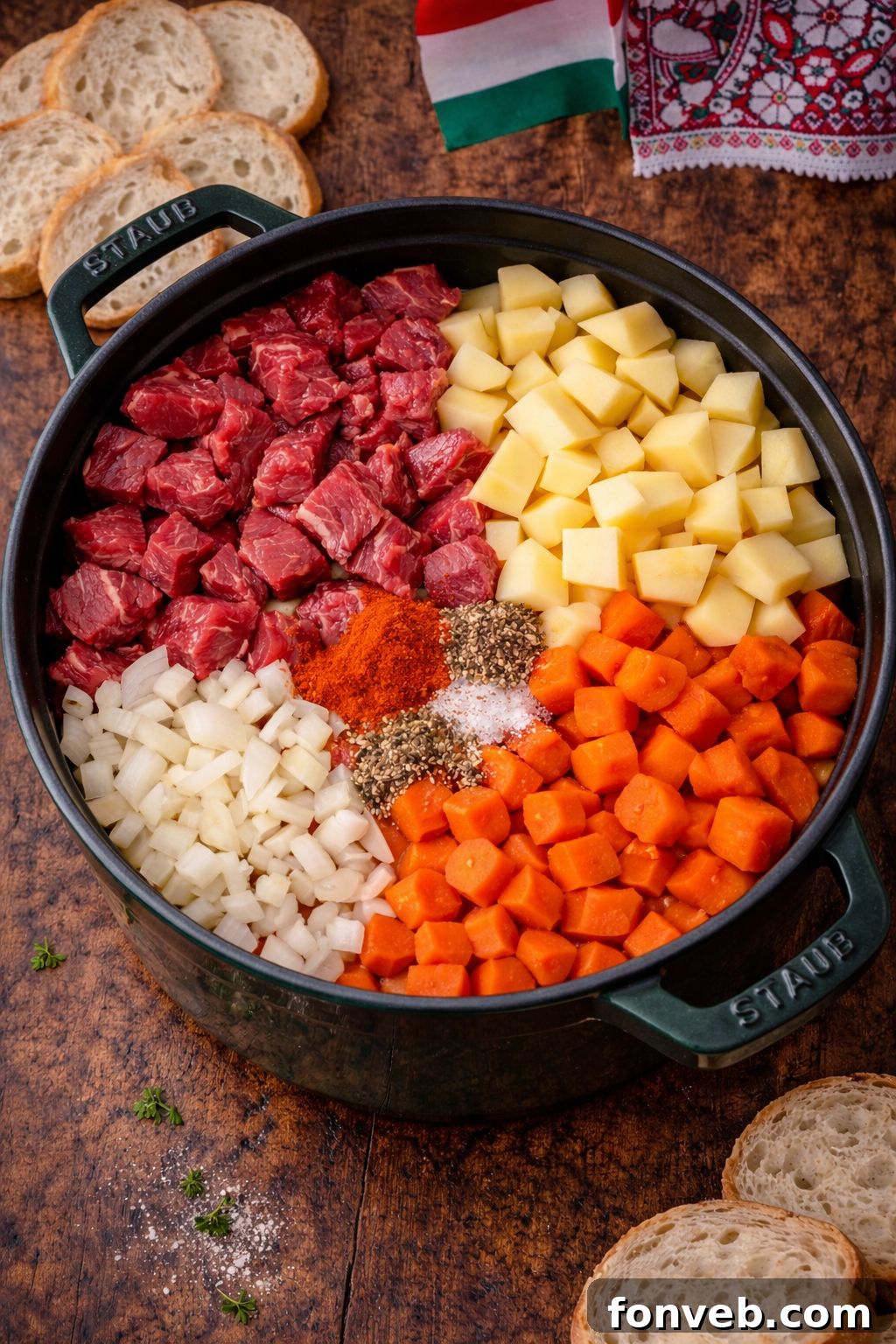
A Warm Embrace: The Ultimate Winter Comfort Food Experience
As the colder months arrive and the chill sets in, there’s nothing quite like a hearty bowl of Hungarian Goulash to warm you from the inside out. This isn’t just a meal; it’s an experience, a culinary embrace that brings comfort and joy to the darkest days. The rich aroma filling your kitchen as it simmers, the tender chunks of beef that melt in your mouth, and the savory, paprika-infused broth create a sense of warmth and coziness that is unparalleled. It’s the kind of food that nourishes not only the body but also the soul, making it the perfect antidote to winter’s bite. This robust stew is a powerful reminder of home, tradition, and the simple pleasure of sharing a delicious meal with loved ones. Gather your family and friends around the table and let this authentic goulash transport you to a world of comforting flavors, creating memories with every spoonful.
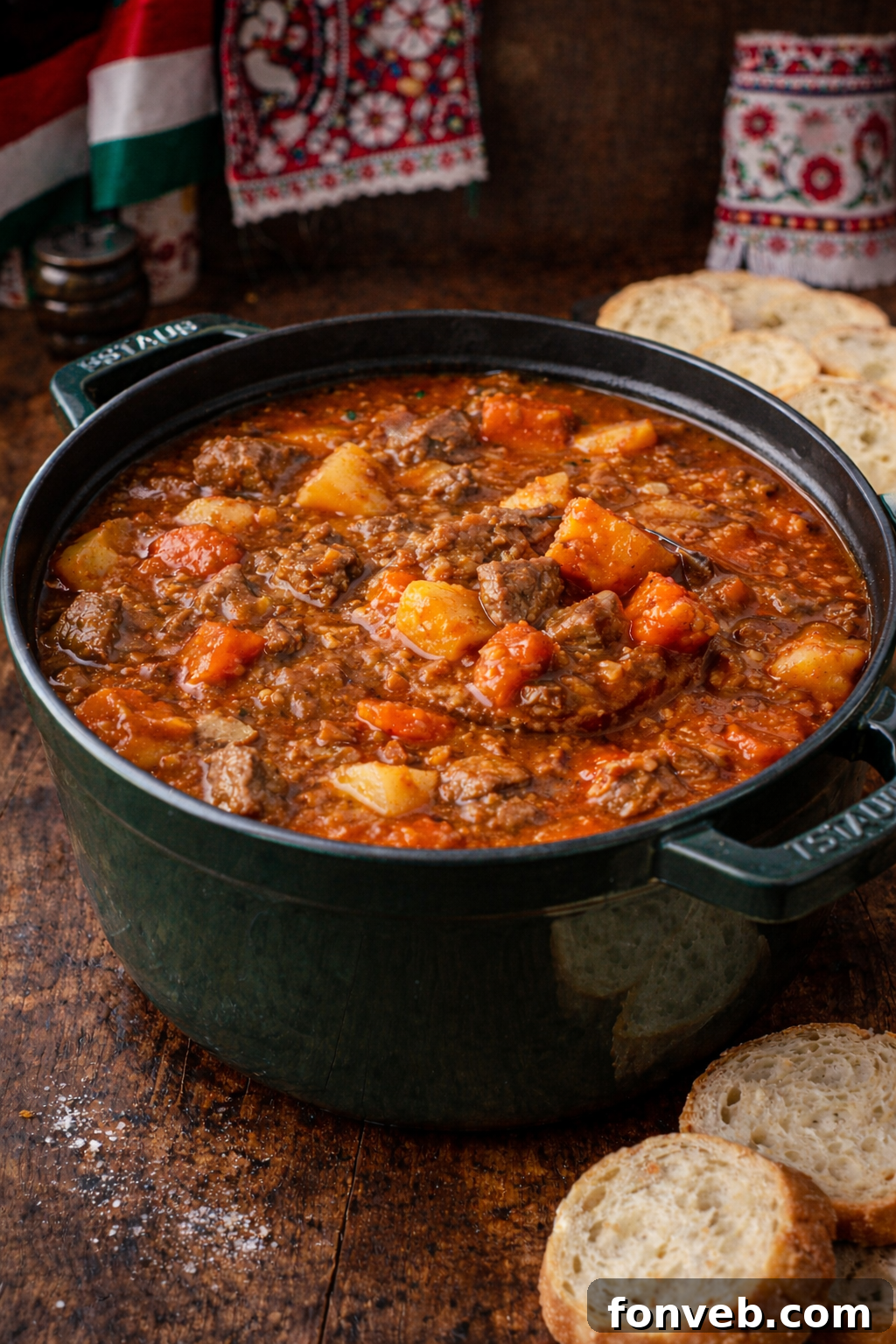
Deep Dive: Hungarian Goulash vs. American Goulash – Understanding the Differences
While both dishes confusingly share the name “goulash,” their origins, ingredients, and preparations are distinctly different, leading to vastly different culinary experiences. Understanding these distinctions is crucial to appreciating the unique charm of authentic Hungarian Goulash.
Traditional Hungarian Goulash (Gulyás) is, first and foremost, a stew or a thick soup. Its identity is built upon tender, slow-cooked chunks of beef (or sometimes pork or veal), an abundance of deeply caramelized onions, hearty root vegetables like potatoes and carrots, and a rich, deeply flavored broth primarily seasoned with liberal amounts of high-quality Hungarian paprika. The magic of Hungarian goulash comes from the slow simmering process, where the beef becomes incredibly fork-tender, and the flavors meld into a complex, savory symphony. There is absolutely no pasta involved in traditional Hungarian goulash, and tomatoes, if used at all, play a supporting, rather than central, role, contributing only a touch of acidity to balance the richness.
In stark contrast, American Goulash, often known by regional names like “chop suey” or “slumgullion,” is typically a pasta-based casserole-style dish. It combines ground beef, elbow macaroni or other small pasta, and a tomato-heavy sauce (often ketchup or tomato soup-based), frequently topped with melted cheese. This version is a quick, budget-friendly, one-pot meal that became a staple in many American households, especially popular for its ease of preparation and appeal to children. The flavor profile is usually sweet-tangy from the tomatoes and rich from the cheese, a stark departure from the earthy, savory, and subtly spicy notes of its Hungarian counterpart. Appreciating these fundamental differences allows you to savor each version for what it truly is – two distinct, delicious dishes bearing a shared, albeit misleading, name.
Essential Tips for Crafting the Best Authentic Hungarian Goulash
Achieving goulash perfection is simpler than you might think, especially when you focus on a few key elements that elevate the dish from good to extraordinary:
- Choose the Right Cut of Beef: The foundation of a great goulash is tender beef. Chuck roast is highly recommended because its marbling and connective tissue break down beautifully during long, slow simmering, resulting in incredibly succulent, melt-in-your-mouth morsels. Leaner cuts will tend to dry out and lack that signature texture. Cut the beef into uniform 1-inch cubes for even cooking.
- Master the Onions: Don’t rush the sautéing of the onions. Caramelizing them properly is crucial as it forms the foundational sweetness and deep umami flavor for the entire stew. Cook them slowly over medium heat until they are soft, translucent, and just beginning to brown.
- Invest in Quality Paprika: This is non-negotiable. Paprika is the defining ingredient and the soul of Hungarian goulash. Use a high-quality, authentic Hungarian sweet paprika (édes nemes paprika) for the best results. It provides a nuanced, earthy sweetness and a beautiful deep red color that distinguishes true goulash. Avoid generic paprika if possible, as it lacks the depth and warmth.
- Embrace the Slow Cook: Patience is a virtue when making goulash. Don’t rush the simmering process. Time allows the beef to tenderize beautifully and all the flavors from the paprika, caraway seeds, onions, and vegetables to fully develop and meld, creating that rich, complex broth that makes goulash so irresistible. Aim for at least 1.5 to 2 hours of gentle simmering.
- Season Thoughtfully: While the paprika provides much of the flavor, don’t forget the supporting cast of salt and pepper. Taste and adjust the seasoning towards the end of cooking. A pinch of sea salt or a grind of fresh black pepper can elevate the entire dish, ensuring every bite is perfectly balanced and seasoned.
- Make Ahead for Enhanced Flavor: Goulash, like many stews, tastes even better the next day. Preparing it ahead allows the flavors to deepen and meld further, resulting in an even more harmonious and delicious meal.
Frequently Asked Questions About Hungarian Goulash
Here are answers to some common questions about this magnificent stew, helping you master your culinary creation:
What makes Hungarian goulash different from American goulash?
Traditional Hungarian goulash is a hearty, rich stew, not a pasta-based dish. It centers on tender beef chunks, deeply caramelized onions, root vegetables like potatoes and carrots, and a flavorful broth primarily seasoned with authentic Hungarian paprika. Unlike its American namesake, it does not typically contain macaroni, ground beef, or a heavy, sweet tomato sauce, focusing instead on simple, quality ingredients and slow cooking to develop profound flavor depth.
What cut of beef works best for Hungarian goulash?
Chuck roast is ideal due to its marbling and connective tissues. These elements break down beautifully during slow cooking, resulting in incredibly tender, succulent beef that melts in your mouth. Stew meat can also be used, but chuck roast generally offers superior texture and a richer flavor profile after simmering.
Is paprika really that important?
Absolutely. Paprika is the defining ingredient of Hungarian goulash. Using a high-quality Hungarian paprika is non-negotiable for achieving the authentic color, deep aroma, and characteristic sweet, earthy flavor. It’s far more than just a spice; it’s the essence of the dish, contributing significantly to its overall character and traditional taste.
Can I make Hungarian goulash ahead of time?
Yes, in fact, goulash is one of those rare dishes that often tastes even better the next day. Preparing it in advance allows all the ingredients to mingle and the flavors to deepen significantly. Simply let it cool completely, store it in an airtight container in the refrigerator, and gently reheat on the stovetop over low heat or in the oven before serving.
Can I freeze Hungarian goulash?
Yes, Hungarian goulash freezes exceptionally well. Once cooled, transfer it to freezer-safe containers or heavy-duty freezer bags, ensuring as much air as possible is removed. Store for up to three months. To serve, thaw it overnight in the refrigerator and reheat slowly on the stovetop or in the oven to preserve the tender texture of the beef and vegetables.
Should goulash be thick or soupy?
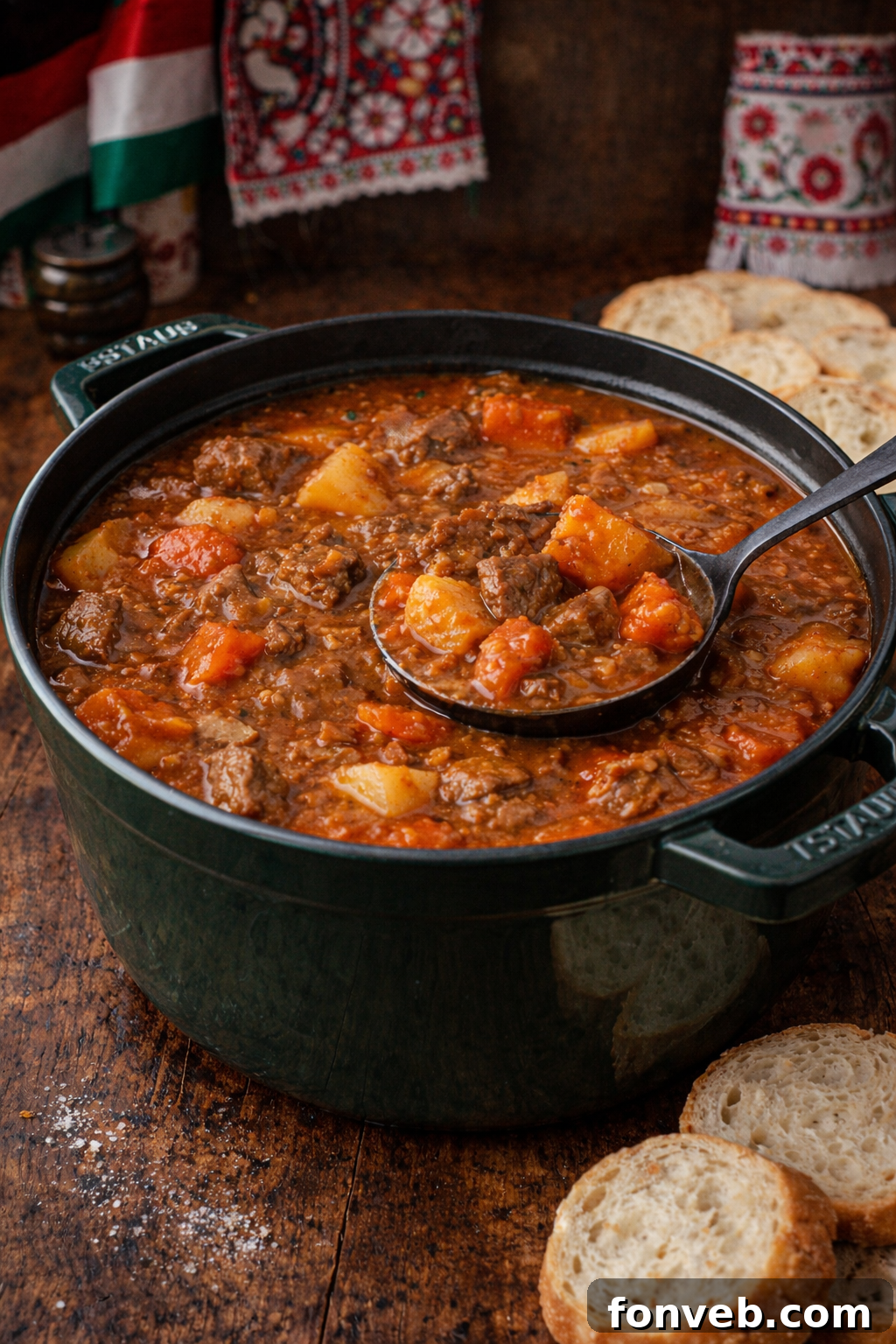
Hungarian goulash strikes a delightful balance between a thick stew and a brothy soup. It should be rich and spoonable, with enough flavorful liquid to generously coat the meat and vegetables without being overly dense or watery. The natural starches from the potatoes and the flour used to dredge the beef typically provide sufficient thickening.
Can I adjust the vegetables?
Certainly! While onions, potatoes, and carrots are traditional and essential for the base, you can customize the vegetable content to your liking. Some prefer a higher ratio of potatoes for a heartier meal, while others might add bell peppers (especially red bell peppers) or parsnips for additional flavor and nutrition. Just maintain a good balance to ensure the stew retains its authentic, rustic essence.
What should I serve with Hungarian goulash?
Crusty bread is absolutely essential for soaking up the exquisite, rich sauce. It also pairs wonderfully with classic accompaniments such as fluffy egg noodles, homemade nokedli (small Hungarian dumplings), or even a simple side salad to provide a fresh contrast to the stew’s richness. A dollop of sour cream or a sprinkle of fresh parsley can also elevate the presentation and flavor profile.
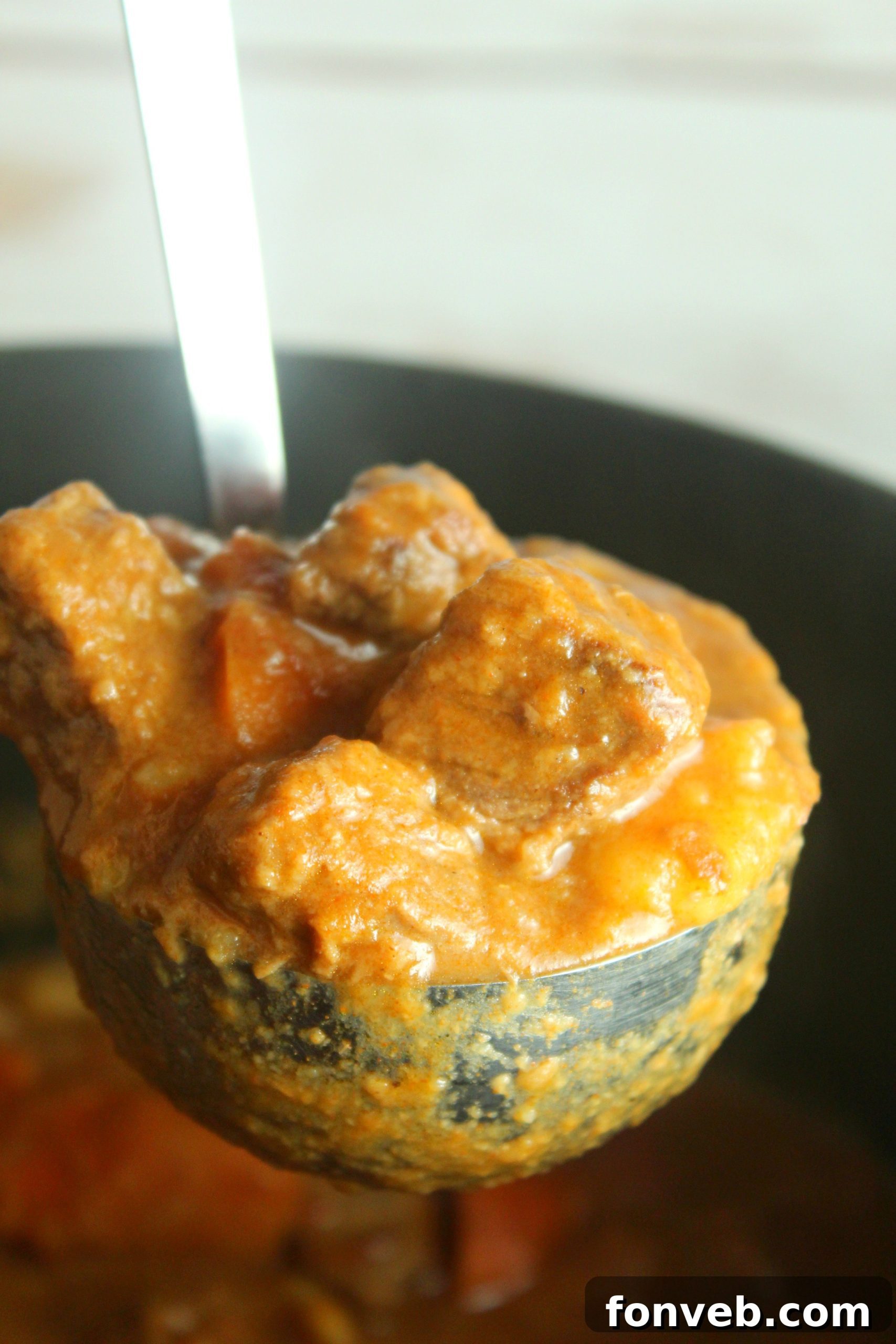
A Recipe Through Time: The Story Behind Our Goulash Photos
You might notice a charming blend of imagery throughout this post, featuring both modern, high-definition shots and a few older, more rustic photographs. This inclusion is entirely intentional and holds a special significance for us. This particular Hungarian Goulash recipe isn’t just a recent addition to our kitchen; it’s a cherished family staple that has been prepared and enjoyed countless times over many years. Some of those original photos were captured long before our food photography style evolved into what it is today.
Instead of replacing them entirely, we chose to retain a selection of these older images as a testament to the recipe’s enduring legacy and its frequent presence in our family meals. These photographs represent genuine moments in our kitchen, capturing the essence of this goulash simmering on the stove for countless dinners, long before considerations of perfect lighting or styled setups were even on our radar. While our newer visuals present the dish in a more polished, contemporary light, the older photos serve as a beautiful reminder. They underscore that this is a recipe deeply rooted in tradition, authentic everyday cooking, and heartfelt gatherings, rather than just aesthetics. The core essence and heartwarming flavor of this dish have remained constant, even as our presentation style has gracefully evolved over time. We believe this blend of old and new truly captures the spirit of a recipe passed down through generations.
This heartwarming stew also boasts fantastic freezer-friendliness, allowing you to prepare large batches and store them for up to two months in an airtight container for quick, comforting meals later, ensuring you always have a taste of Hungary ready to go!
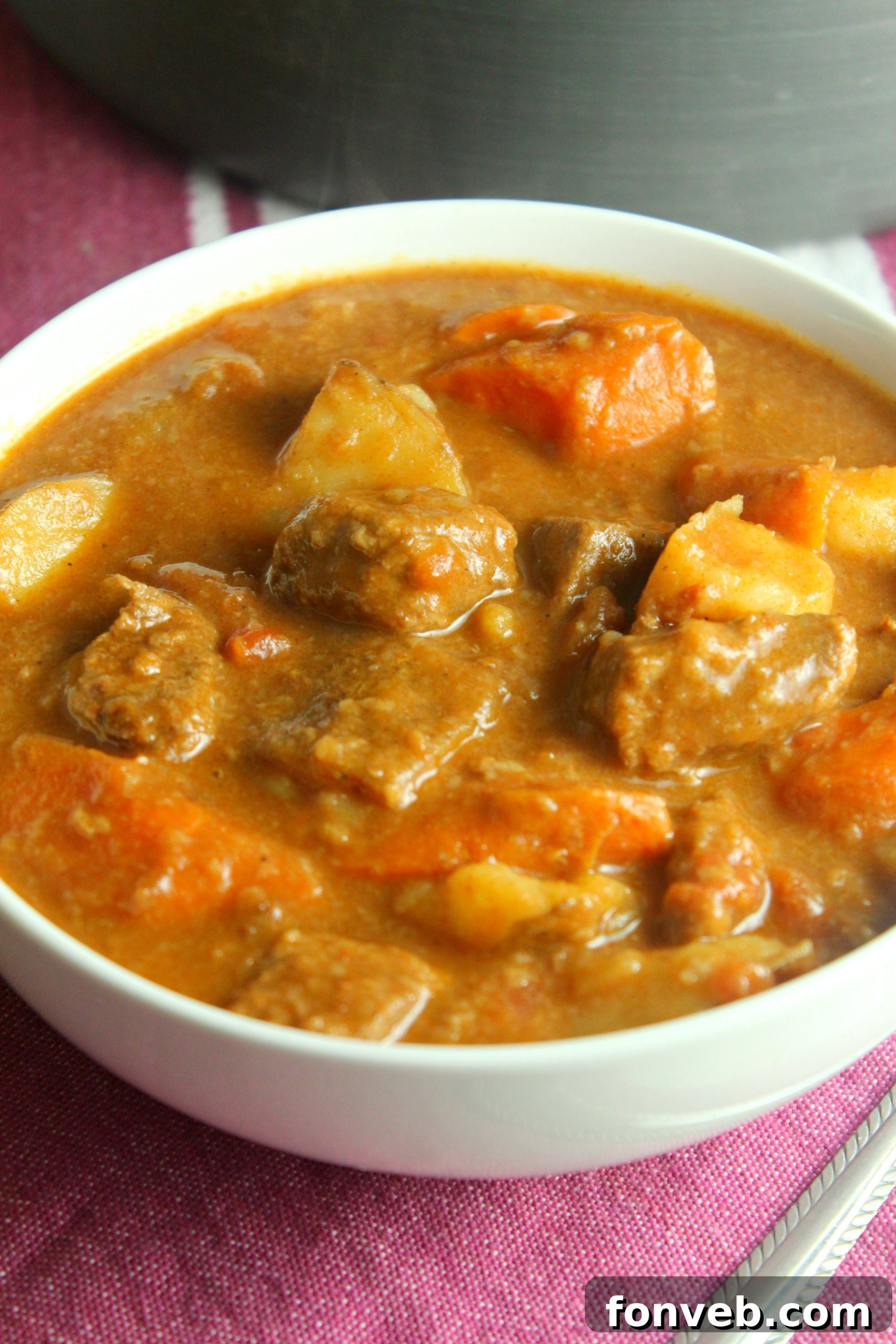
Prepare to be amazed by its sensational flavor profile and incredible tenderness; this is pure comfort food at its absolute finest! The depth and richness of taste are simply outstanding, creating a beloved dish that your entire family will wholeheartedly enjoy and ask for again and again. It truly embodies everything a great, hearty meal should be.
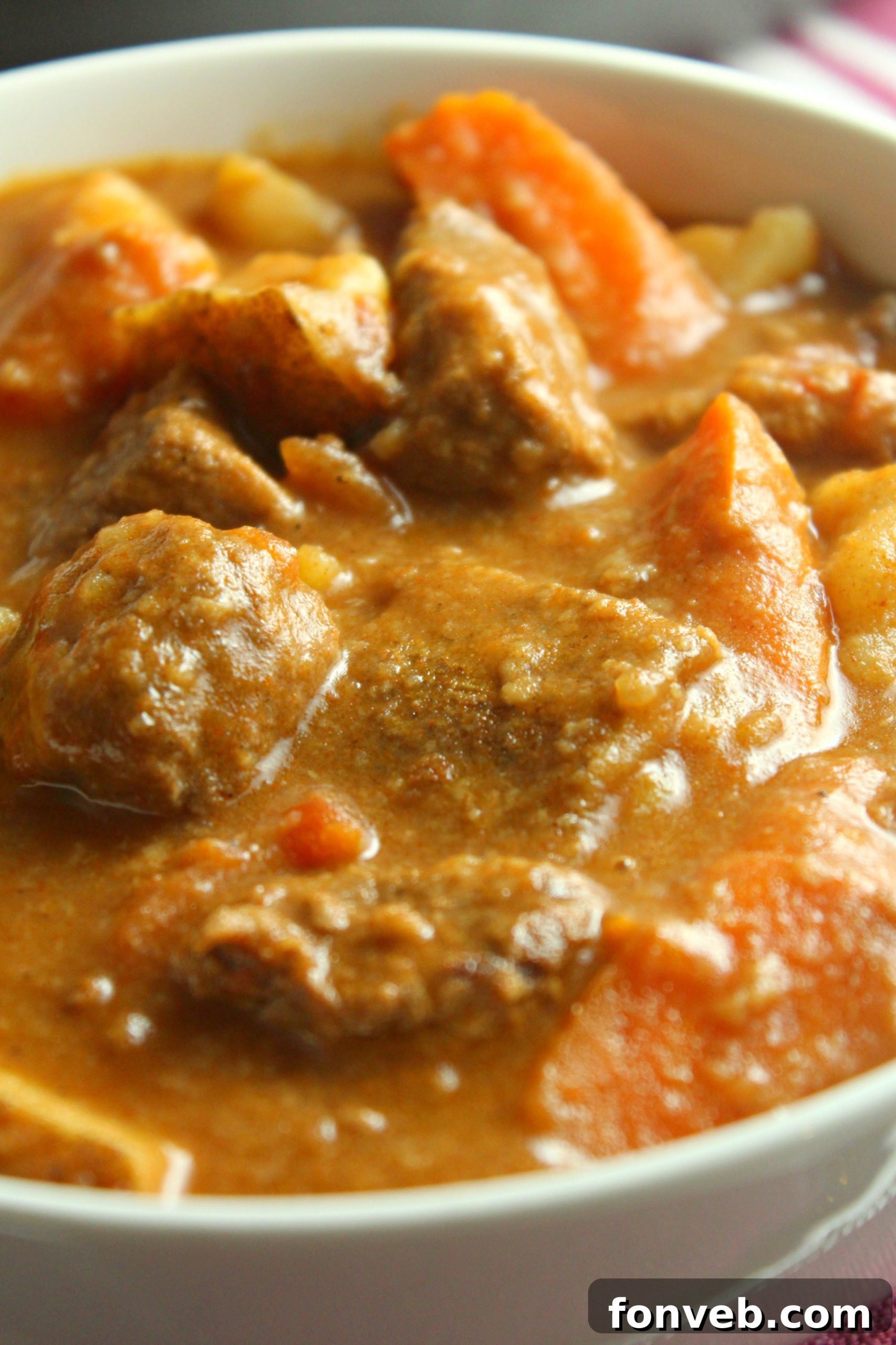
Final Thoughts on This Timeless Classic
Hungarian Goulash stands as a testament to the enduring power of simple ingredients, skillfully transformed through time and care into something truly extraordinary. It’s a dish that goes beyond mere sustenance, offering a profound sense of warmth, comfort, and deep satisfaction with every single bite. Whether you’re simmering a pot for a cherished family dinner on a chilly evening, preparing a comforting meal for unexpected guests, or making a batch to enjoy throughout a busy week, this recipe consistently delivers on its promise of rich flavor, tender perfection, and heartfelt culinary tradition. This rustic, honest food never fades from style, and with just one taste, you’ll understand precisely why it has been adored, celebrated, and lovingly passed down through generations. Embrace the authentic taste of Hungary and make this incredible goulash a staple in your home.
Get More Incredible Recipes and Stay Connected!
If you loved this recipe for authentic Hungarian Goulash, we encourage you to share this culinary delight with your friends and family! Don’t forget to SHARE it on Facebook and PIN IT to your favorite recipe boards for later enjoyment and easy access!
FOLLOW ME ON PINTEREST BY CLICKING HERE <——
Authentic Hungarian Goulash Recipe
A classic Hungarian stew featuring incredibly tender beef, hearty root vegetables, and a rich, deeply flavorful broth infused with traditional Hungarian paprika. Perfect for a comforting and satisfying meal, this recipe brings the authentic taste of Hungary to your kitchen.
Ingredients
- 1 tbsp. salted butter
- 2 medium yellow onions, roughly diced
- 1 tsp. caraway seeds
- 3 tbsp. paprika (preferably authentic Hungarian sweet paprika)
- 1/4 cup all-purpose flour
- 1 1/2 lbs. beef chuck roast, fat trimmed and cut into 1-inch cubes
- 2 cups beef stock
- 1 (14.5 oz.) can diced tomatoes
- 3 large russet potatoes, peeled and diced
- 2 medium carrots, peeled and diced
- 1 tsp. sea salt
- 1/4 tsp. ground black pepper
Instructions
- Melt the salted butter in a large soup pot or Dutch oven over medium-high heat. Add the roughly diced onions and sauté until they are tender and translucent, about 2-3 minutes.
- Stir in the caraway seeds and paprika. Toss gently to coat the onions thoroughly, allowing the spices to bloom and release their aromas for about 1 minute, being careful not to burn the paprika.
- Place the all-purpose flour into a shallow bowl. Dredge the cubed beef chuck roast in the flour until each piece is lightly and evenly coated.
- Transfer the floured beef chuck roast to the pot with the onions and cook for 3-4 minutes, turning occasionally to brown the meat on all sides. This helps seal in the juices and build flavor.
- Pour in the beef stock, then add the diced potatoes, diced carrots, diced tomatoes, sea salt, and ground black pepper to the pot. Stir all ingredients to combine thoroughly, ensuring nothing sticks to the bottom.
- Bring the mixture to a gentle boil. Once boiling, reduce the heat to medium-low, place the lid securely on the pot, and let it simmer gently.
- Continue simmering for 1.5 – 2 hours, or until the beef is incredibly tender and easily pulls apart with a fork. The longer it simmers, the more the flavors will meld and deepen. Ensure the meat is thoroughly cooked before serving.
Did you make this delicious recipe?
We’d absolutely love to see your culinary creations! Share your photos and tag us on social media. For more incredible recipes, cooking tips, and daily inspiration, make sure to follow us on Pinterest – your go-to source for amazing meals!