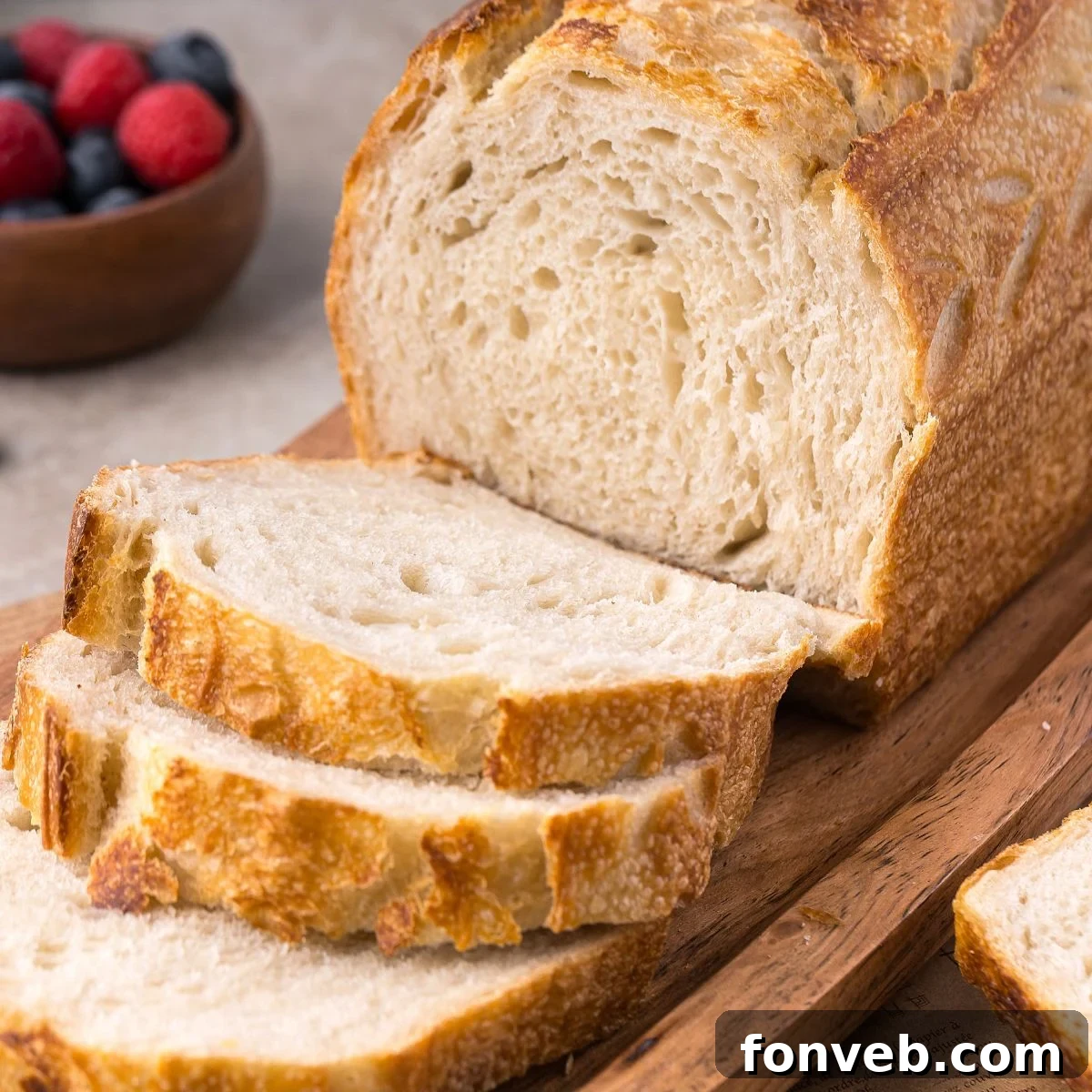
There’s an undeniable magic in baking, especially when it involves pulling a golden, crusty loaf of Homemade Sourdough Bread from your oven. The air fills with an intoxicating aroma, a symphony of rich, yeasty, and subtly tangy notes that signals pure comfort. That satisfying crackle of the crust, the tender, chewy interior, and those beautiful, irregular air pockets – it’s a masterpiece you created with your own hands. If you’re anything like me, you’ll find yourself and your family drawn to the kitchen, eagerly awaiting that first warm slice, asking “Is it ready yet?” on repeat. This isn’t just baking; it’s an experience, a sensory journey that culminates in truly unforgettable bread.
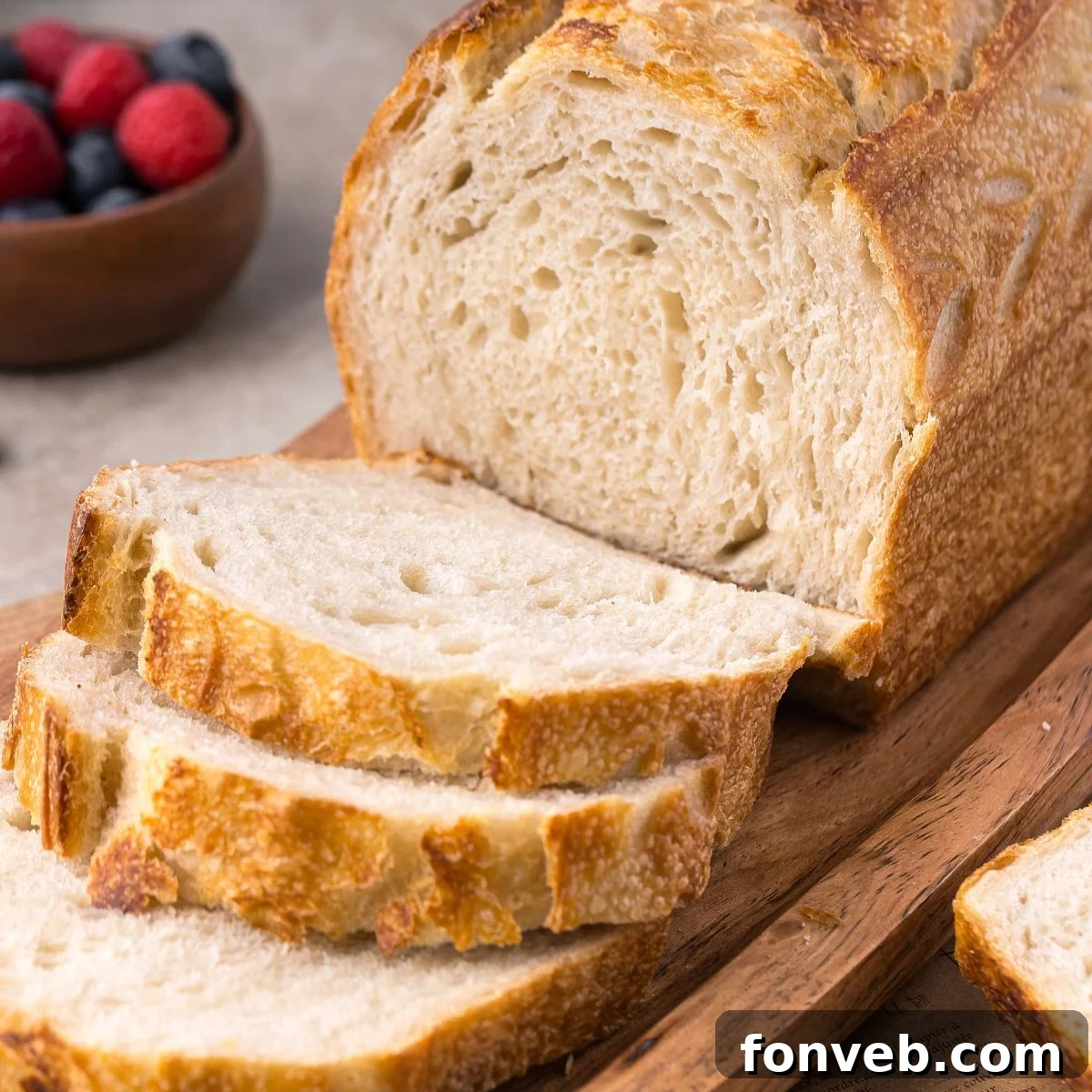
This sourdough recipe is a true keeper, one I return to time and again. It’s incredibly beginner-friendly, forgiving, and remarkably versatile. Whether you enjoy it toasted with a generous slab of butter, as the foundation for a gourmet grilled cheese, or simply for rustic sandwiches, its flavor profile elevates every meal. My husband savors it alongside a hearty bowl of soup, my daughter adores it slathered with peanut butter, and my one-year-old son, Cameron? He’s quite content tearing off chunky pieces and happily gumming them, leaving a delightfully messy trail – such is real life! If you’ve ever felt intimidated by the art of sourdough baking, this is the accessible, rewarding loaf that will transform your perspective and build your confidence.
Bake Your Best Loaf: An Easy Guide to Homemade Sourdough Bread
What Is Authentic Homemade Sourdough Bread?
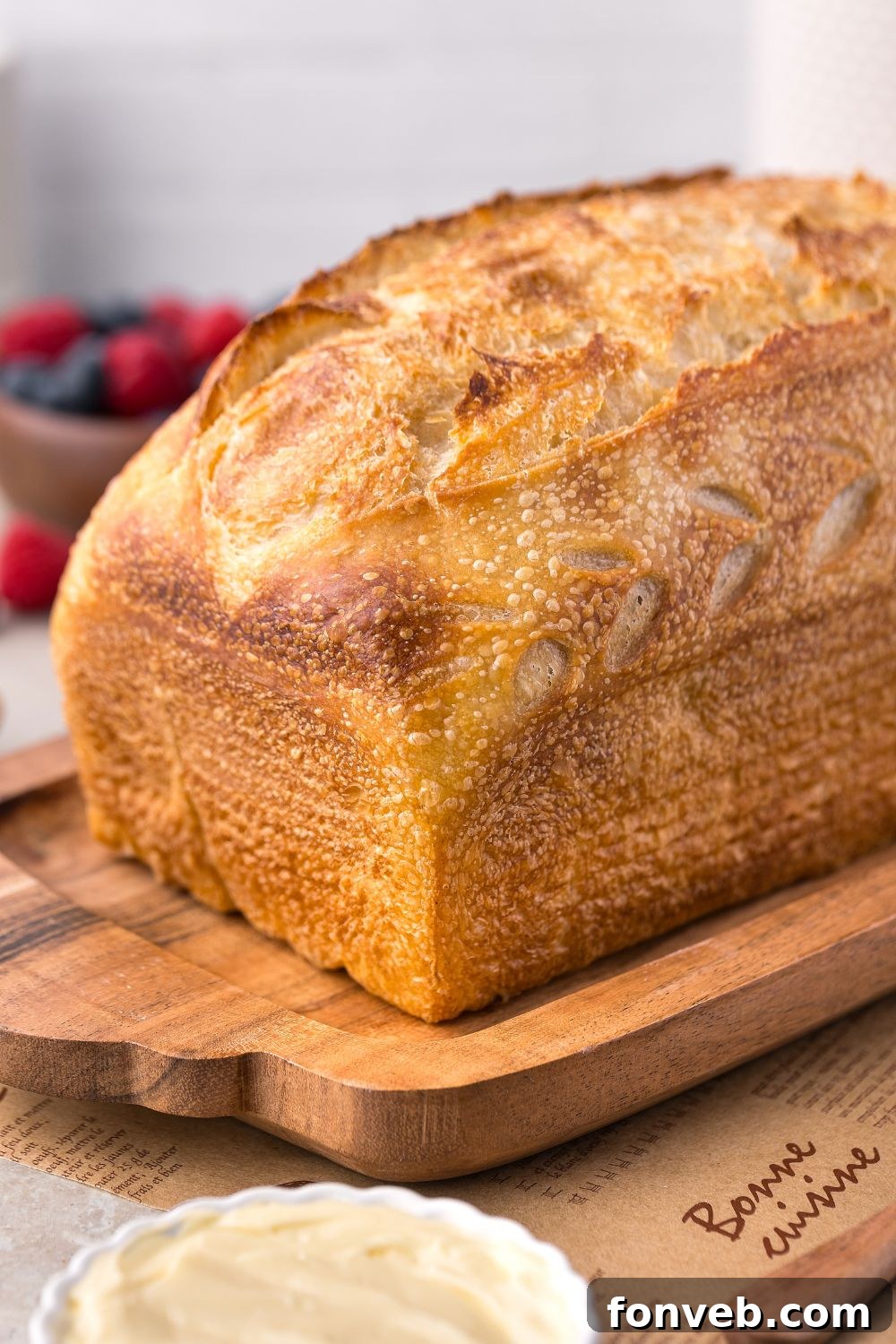
Sourdough bread stands apart as a naturally leavened bread, meaning it uses a fermented blend of flour and water—known as a sourdough starter—instead of commercial baker’s yeast. This traditional method requires no yeast packets, only simple ingredients like flour, water, and the most crucial element: time. The magic lies in the symbiotic relationship of wild yeasts and beneficial bacteria within the starter, which work together to ferment the dough, creating its distinctive flavor and texture.
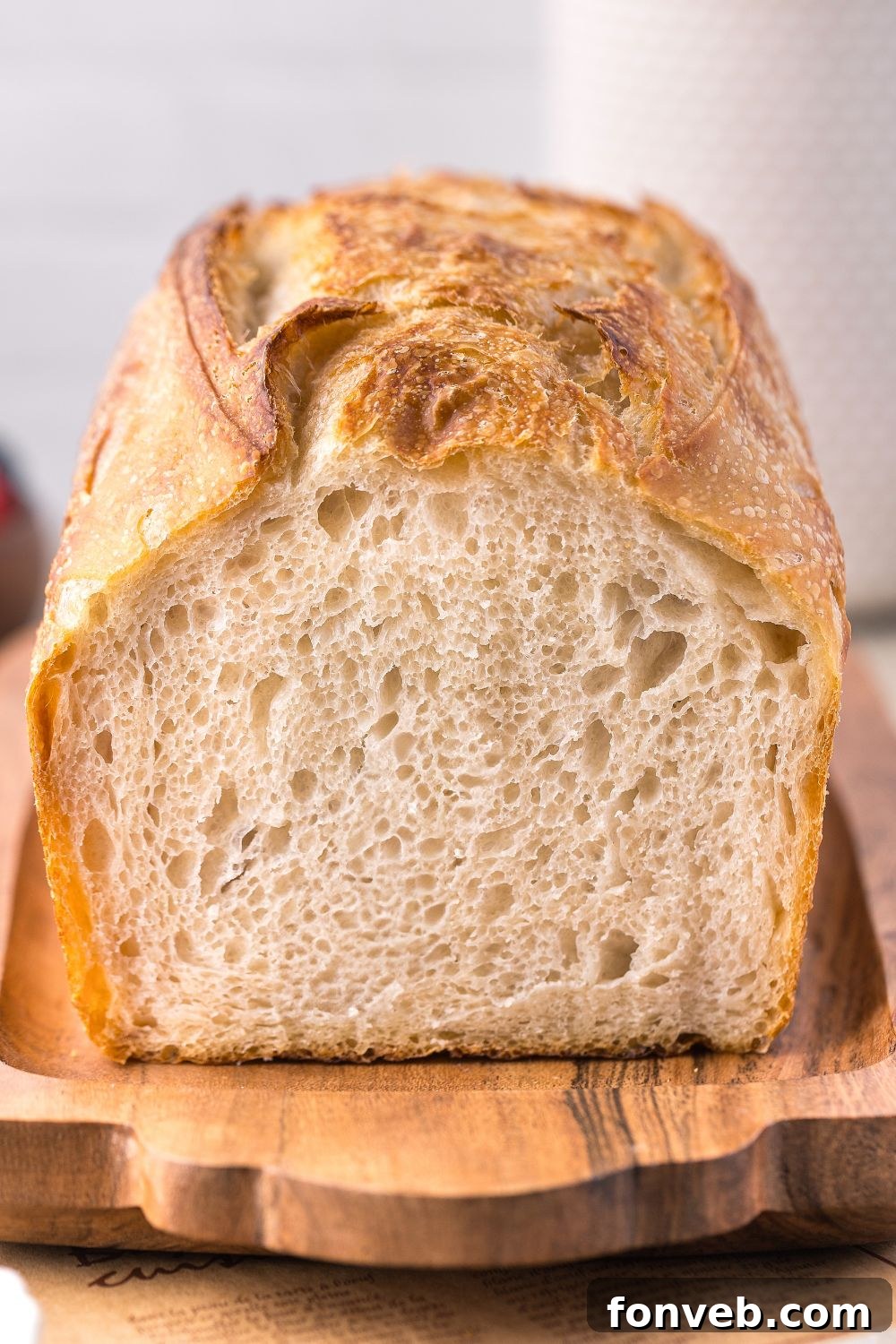
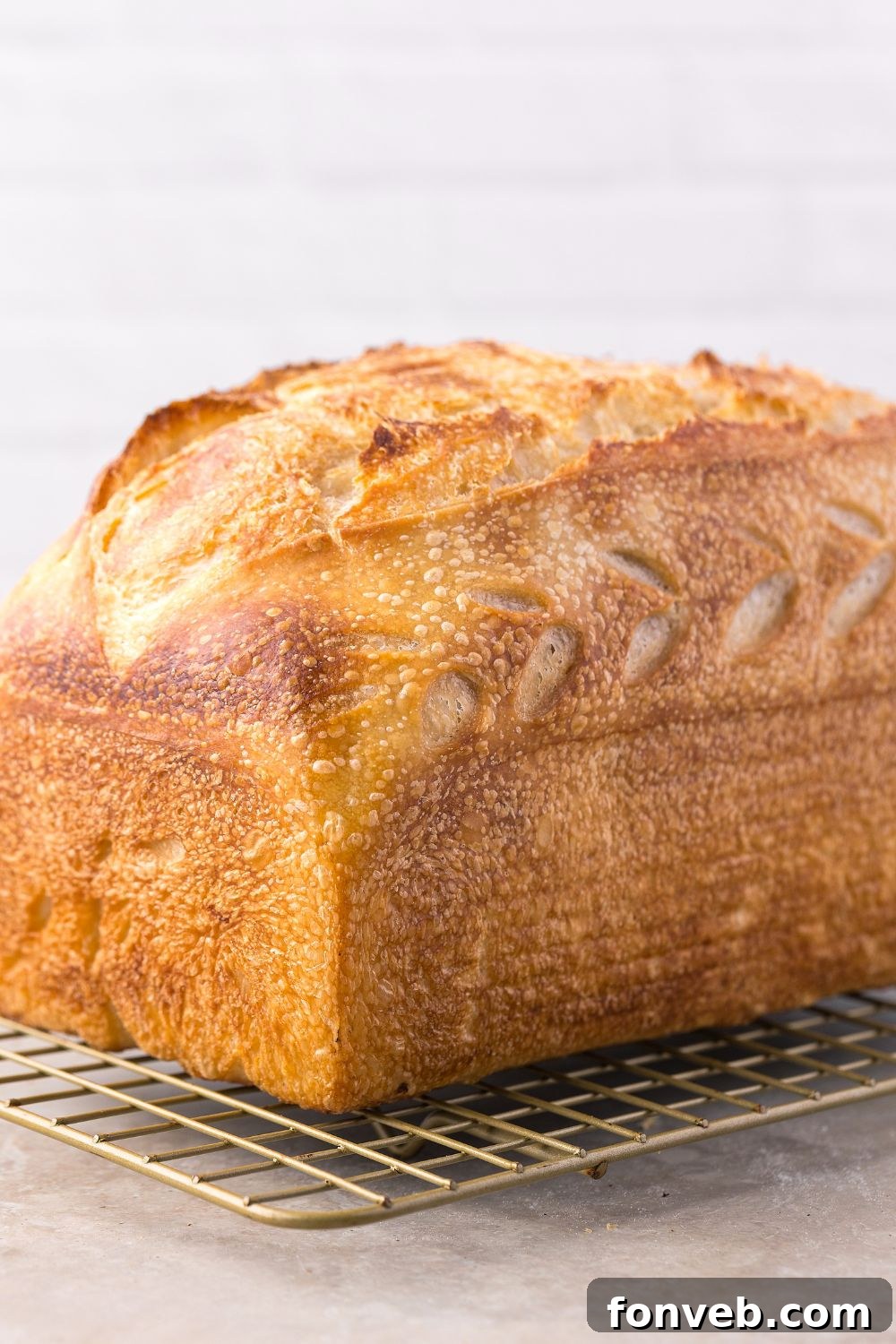
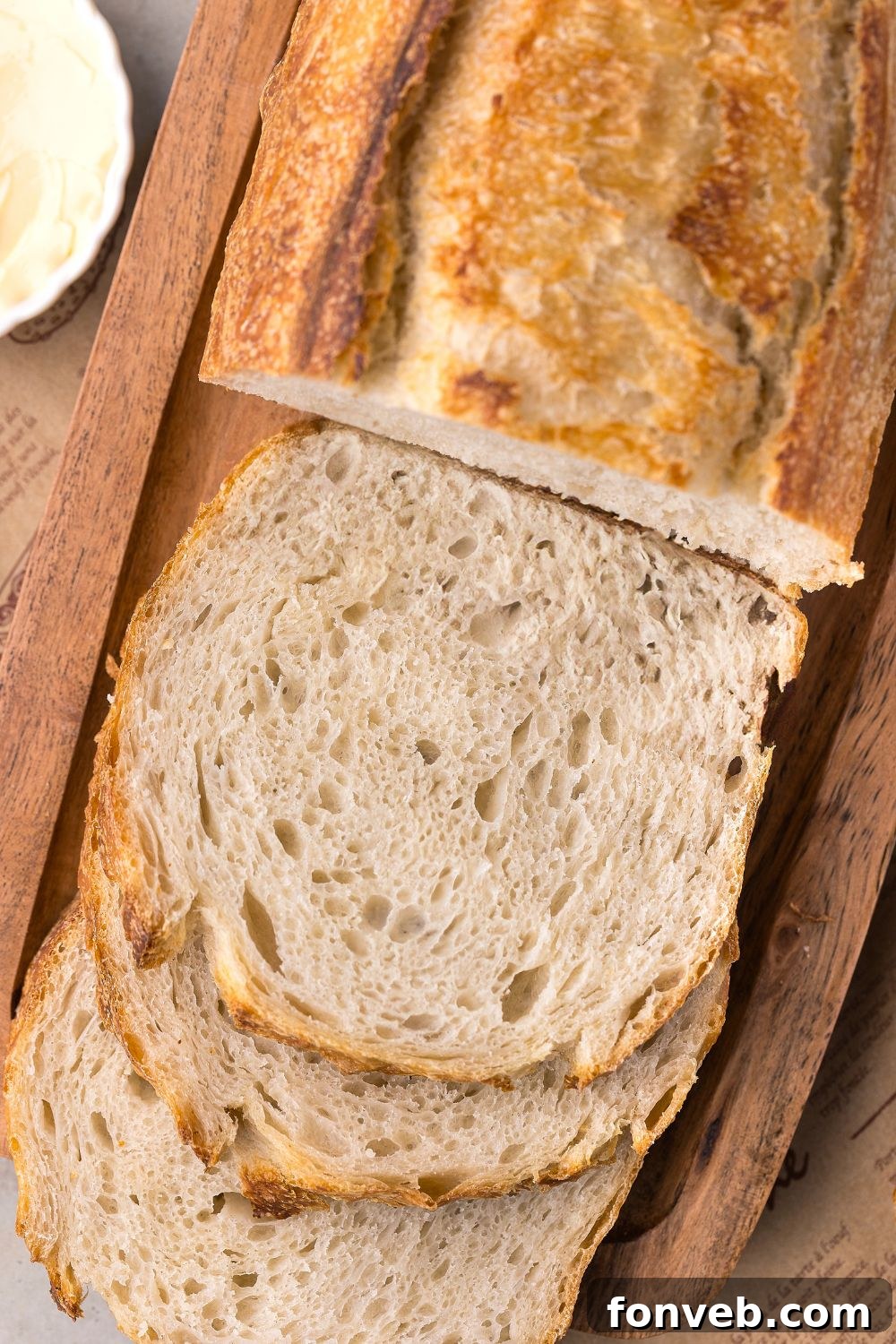
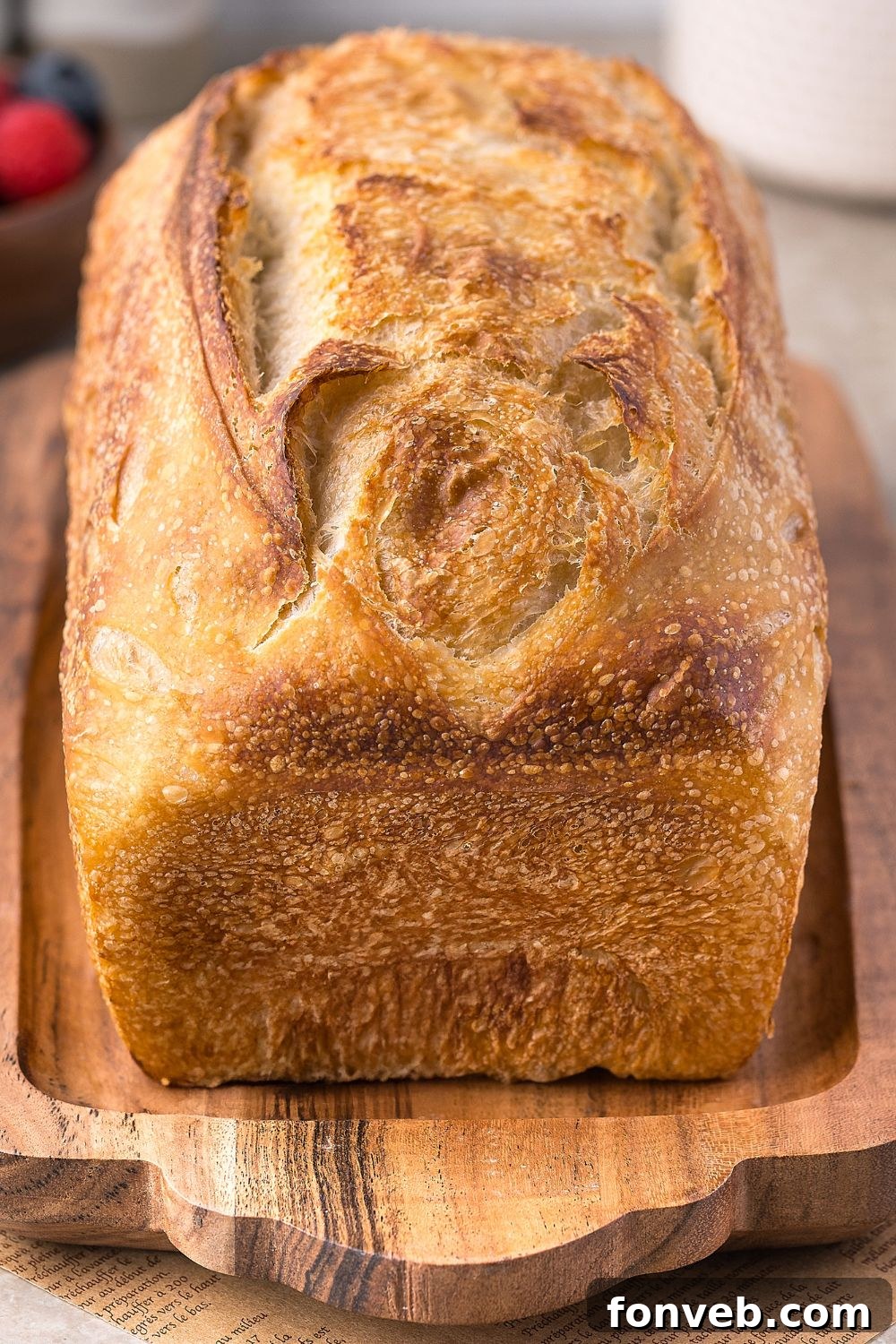
The result of this ancient baking process is a loaf characterized by a wonderfully crusty exterior, a complex tangy flavor, and a satisfyingly chewy interior often riddled with large, irregular air bubbles, known as an open crumb. It boasts an artisanal appearance that feels incredibly rewarding to achieve in your own kitchen. This particular recipe utilizes a straightforward blend of bread flour, water, salt, a touch of honey for depth, and a hint of oil for tenderness, all brought to life by a vigorous, bubbly sourdough starter. It’s intentionally designed to be approachable for beginners, yet it consistently bakes up a loaf that could easily come from your favorite artisan bakery.
Understanding and Optimizing Sourdough Starter Strength
The success of your sourdough bread hinges significantly on the vitality of your sourdough starter. If you’ve ever experienced a loaf that didn’t rise adequately or resulted in a dense, heavy crumb, the first factor to investigate is your starter strength. A strong, active starter is the engine of your bread, responsible for producing the carbon dioxide that gives sourdough its characteristic airy texture.
A healthy, robust sourdough starter should exhibit several key characteristics:
- Vigorous Rise: It should visibly double in size, or even more, within 4 to 6 hours after being fed. This indicates active fermentation.
- Bubbly and Aerated: The surface of your starter should be covered in numerous small and large bubbles, and the interior should feel airy and spongy when stirred.
- Pleasant Aroma: A well-maintained starter will have a slightly sweet, tangy, and yeasty smell. Avoid starters with overly sour, vinegary, or acetone-like (nail polish remover) odors, which can indicate it’s hungry or stressed.
- The Float Test: This simple yet effective test confirms its readiness. Drop a small spoonful of your fed starter into a glass of water. If it floats, it’s packed with enough carbon dioxide to effectively leaven your dough. If it sinks, it likely needs more time to develop strength or an additional feeding.
If your starter isn’t quite meeting these benchmarks, don’t fret! It’s a living culture, and sometimes it needs a little TLC. Consistently feed it at the same time each day, using equal weights of flour and water. Before each feeding, discard about half of your starter to maintain a healthy balance and provide fresh nutrients for the microbes. With consistent care, your starter will typically “wake up” and become strong enough to beautifully leaven your next loaf within a few days. Remember, a thriving starter is the secret to exceptional homemade sourdough.
Bonus Tip: I find it incredibly helpful to mark the level of my starter in its jar with a rubber band immediately after feeding. This visual cue makes it easy to observe when it has doubled, indicating it’s at its peak activity!
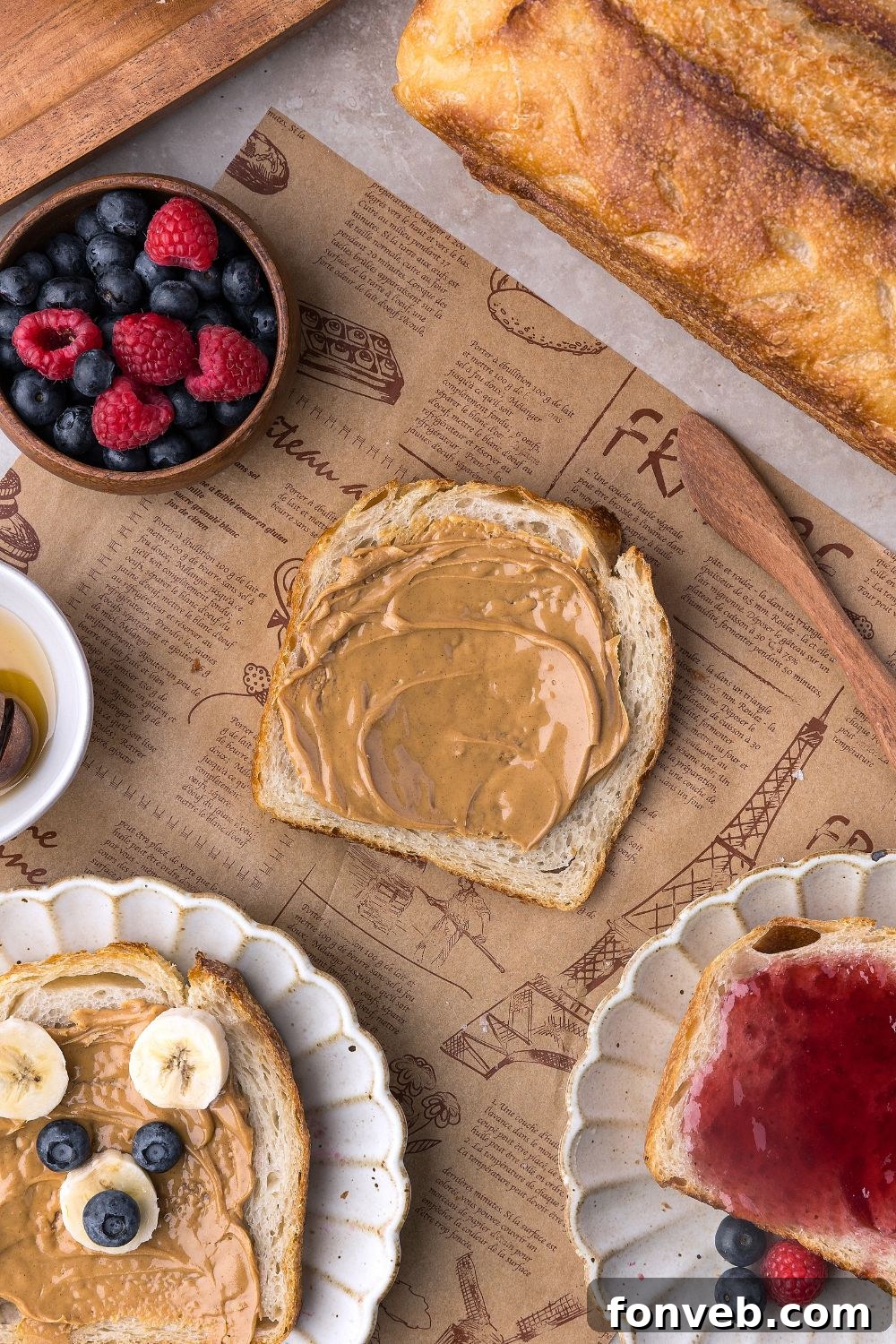
When to Indulge: Versatile Serving Ideas for Sourdough Bread
Homemade sourdough bread transcends mere sustenance; it’s an invitation to savor, fitting seamlessly into almost any occasion or meal. Its robust flavor and satisfying texture make it incredibly versatile:
- Weekend Baking Projects: Transform a leisurely weekend into a rewarding culinary adventure with the delightful process of baking sourdough.
- Family Dinner Sides: A warm, freshly sliced loaf makes an elegant and comforting accompaniment to any family dinner, enhancing soups, stews, and roasts.
- Weekday Sandwiches: Elevate your packed lunches with slices of homemade sourdough, turning an ordinary sandwich into a gourmet experience.
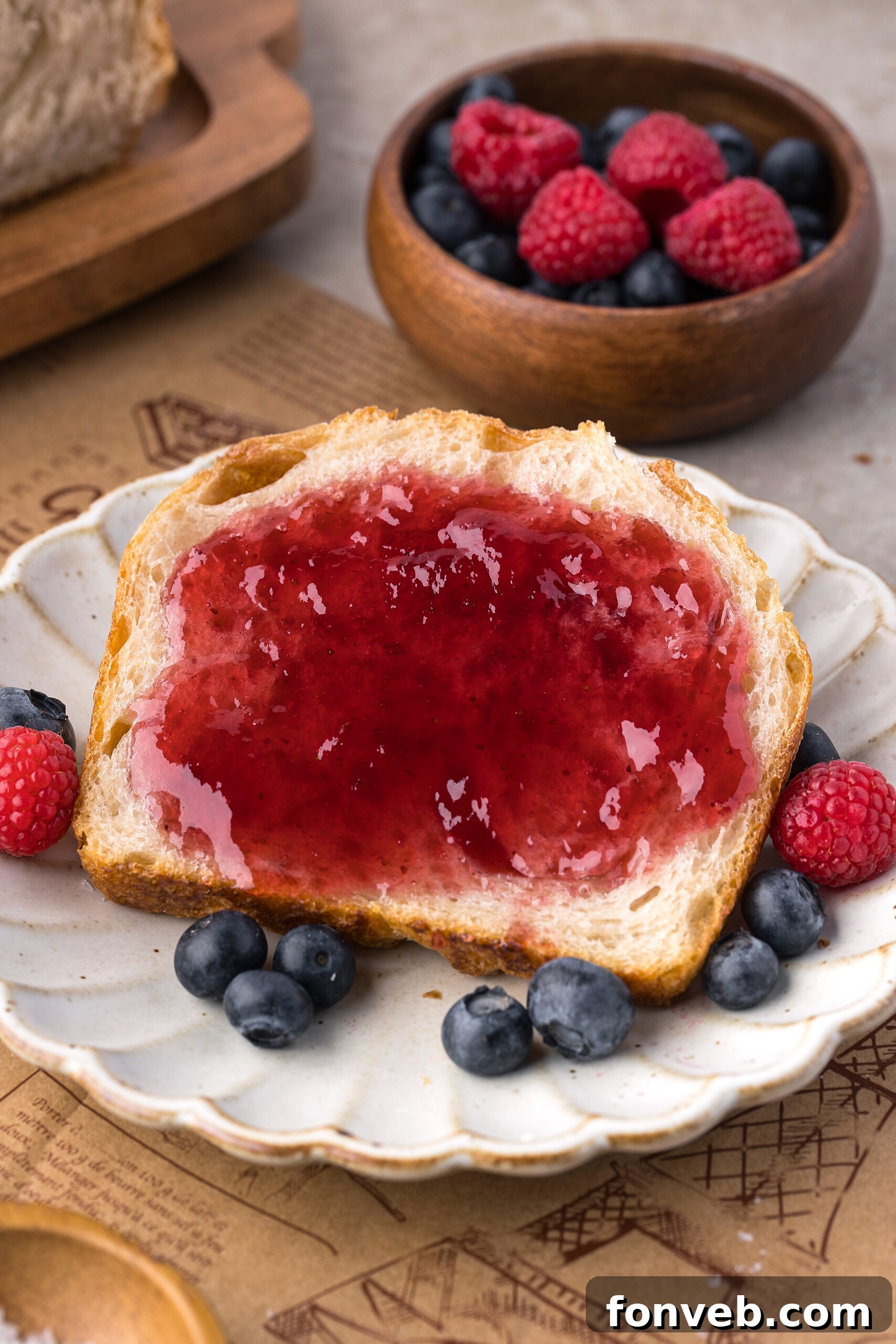
- Breakfast Toast: The perfect canvas for a myriad of toppings! Think creamy avocado and a perfectly fried egg, or simply butter and your favorite jam.
- Bread Baskets for Holidays or Potlucks: Impress your guests and hosts alike by bringing a basket of artisanal sourdough. It’s always a welcome addition.
- Thoughtful Gift Loaves: Share the joy of homemade baking by gifting a beautiful loaf to friends, neighbors, or anyone deserving of a special treat.
There’s a unique joy in baking a fresh loaf when family comes to visit. The anticipation of slicing into that warm, aromatic bread and passing it around the table, seeing everyone enjoy a piece of your labor of love, truly adds an extra layer of warmth and connection to any gathering.
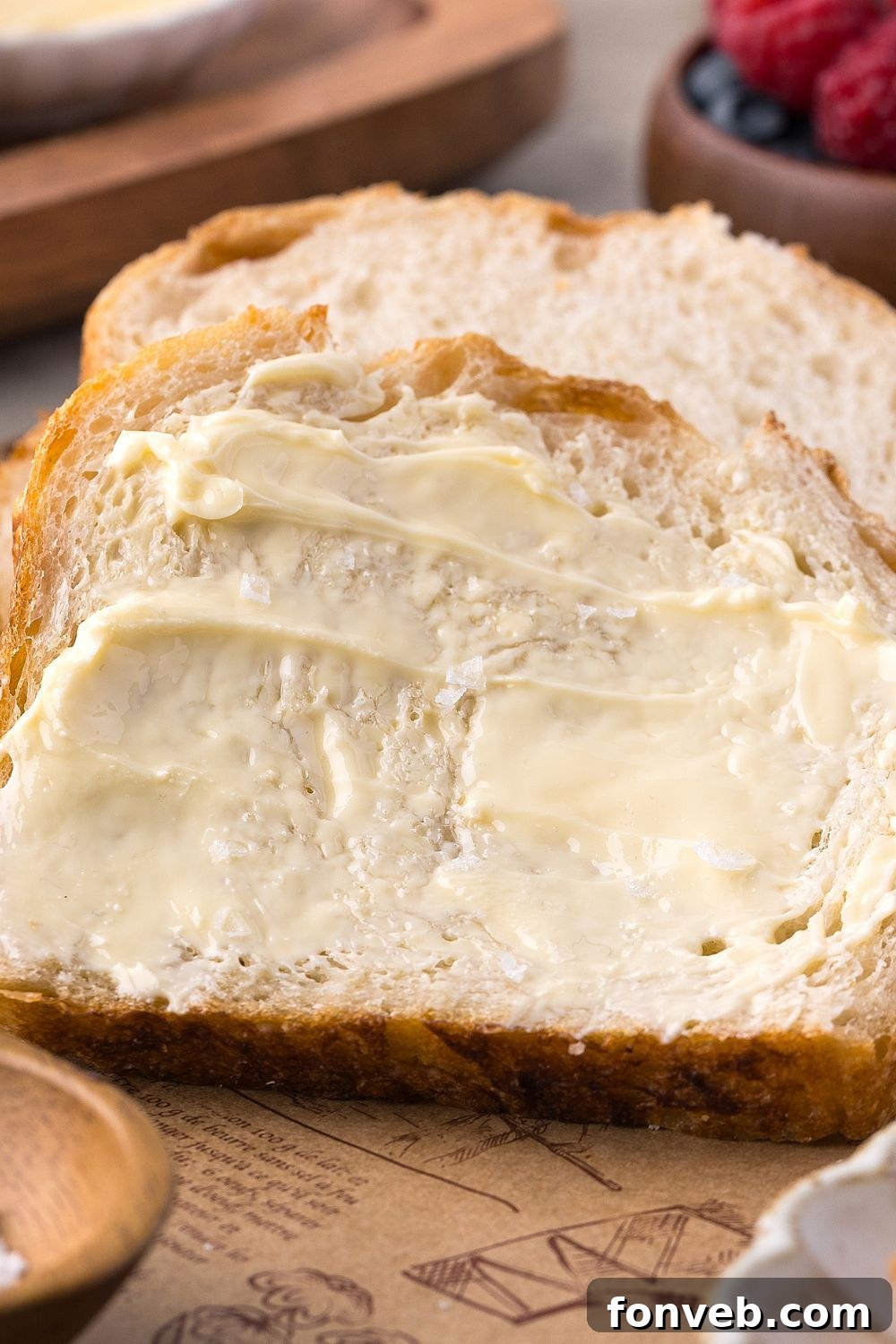
Why This Sourdough Recipe Will Become Your Favorite
This isn’t just another sourdough recipe; it’s a carefully crafted guide designed to make the art of sourdough baking accessible, enjoyable, and consistently successful. Here’s why you’ll undoubtedly fall in love with it:
- The Perfect Texture: Achieve that coveted balance of a gloriously crispy, crackling outside and a wonderfully soft, airy, and delightfully chewy interior.
- Ideal for Beginners: Forget the intimidating complexity often associated with sourdough. This recipe is streamlined for novice bakers, requiring no specialized skills or extensive experience.
- No Fancy Tools Required: You don’t need a high-end stand mixer, a pricey bread lame, or even a banneton. We’ll show you how to use common kitchen items to achieve professional results.
- Customizable to Your Preference: Whether you dream of a super crusty artisan boule or a softer, everyday sandwich loaf, this recipe provides variations to tailor your bread to your exact liking.
- Simple, Accessible Ingredients: You’ll be working with foundational pantry staples—flour, water, salt, and your active sourdough starter. No obscure or hard-to-find components here.
- Flexible Timing: Life happens, and sourdough understands. This recipe allows for refrigeration during the bulk fermentation or final proofing stages, making it adaptable to your schedule. Cold proofing can even enhance the flavor!
- Impressive Results, Low Stress: The finished loaf will look like it came straight from an artisan bakery, yet the process is surprisingly forgiving and enjoyable, making you feel like a baking pro without the pressure.
And trust me, once you experience the profound satisfaction of baking this exceptional loaf, you’ll be eager to make it again and again. There’s truly nothing comparable to the taste, aroma, and pride of homemade sourdough.
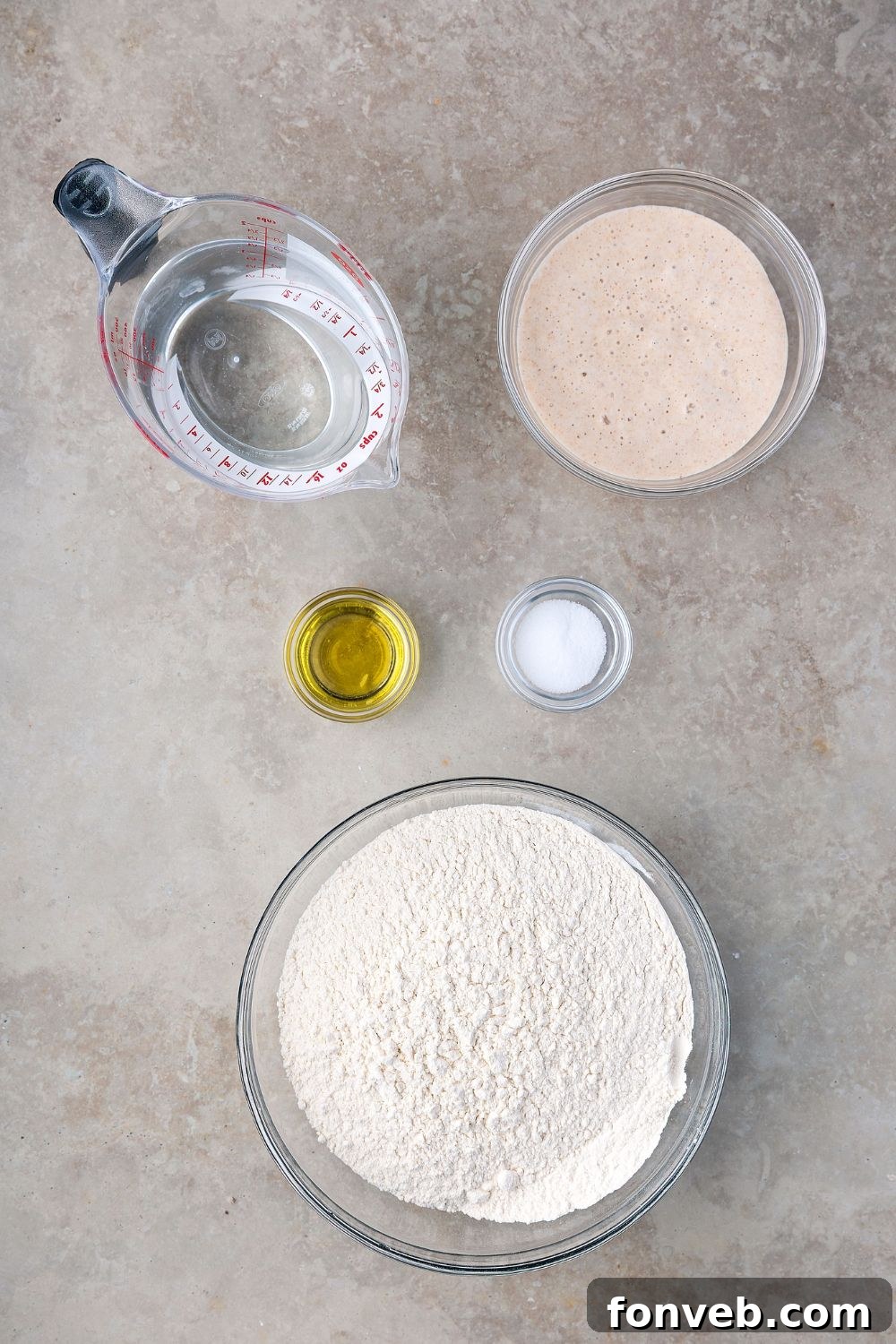
Essential Ingredient Breakdown: What Makes This Loaf Shine
Every ingredient in this sourdough recipe plays a crucial role in achieving that perfect texture, flavor, and crust. Let’s delve into what each component brings to your loaf:
- Active Sourdough Starter: This is the living heart of your bread. It must be vigorous, recently fed, and brimming with active bubbles. The wild yeasts and beneficial bacteria within the starter are responsible for leavening the dough, providing its unique tangy flavor, and contributing to its complex crumb structure.
- Warm Water: Maintaining the correct water temperature, ideally around 90°F (32°C), is vital. Warm water helps to activate the yeasts and bacteria in your sourdough starter, encouraging robust fermentation and proper gluten development, which is essential for a good rise.
- Neutral Oil (Avocado, Olive, or Canola): A small amount of neutral oil adds tenderness and richness to the crumb, making the bread softer and more palatable for everyday use, especially in the sandwich loaf variation. It also contributes to a more pliable dough and a slightly softer crust.
- Honey: Just a touch of honey does more than add subtle sweetness. It provides an additional food source for the yeast, which can contribute to a more active fermentation. Furthermore, it aids in achieving a beautiful golden-brown crust during baking and adds a layer of complex flavor that complements the tang of the sourdough.
- Fine Sea Salt: Salt is indispensable in bread making. Beyond enhancing the flavor, it plays a critical role in controlling the rate of fermentation. It also strengthens the gluten network, helping the dough maintain its structure and achieve a better rise and crumb. Always use fine sea salt for even distribution.
- Bread Flour: This is the preferred flour for sourdough due to its higher protein content (typically 12-14%). The elevated protein levels translate to a stronger gluten network, which is essential for trapping the gases produced during fermentation. This results in a chewier texture and contributes to those desirable large air bubbles (open crumb) in your finished loaf. While all-purpose flour can be used, bread flour provides superior structure and chew.
Understanding the purpose of each ingredient will help you appreciate the alchemy of sourdough baking and make informed adjustments as you become more experienced.
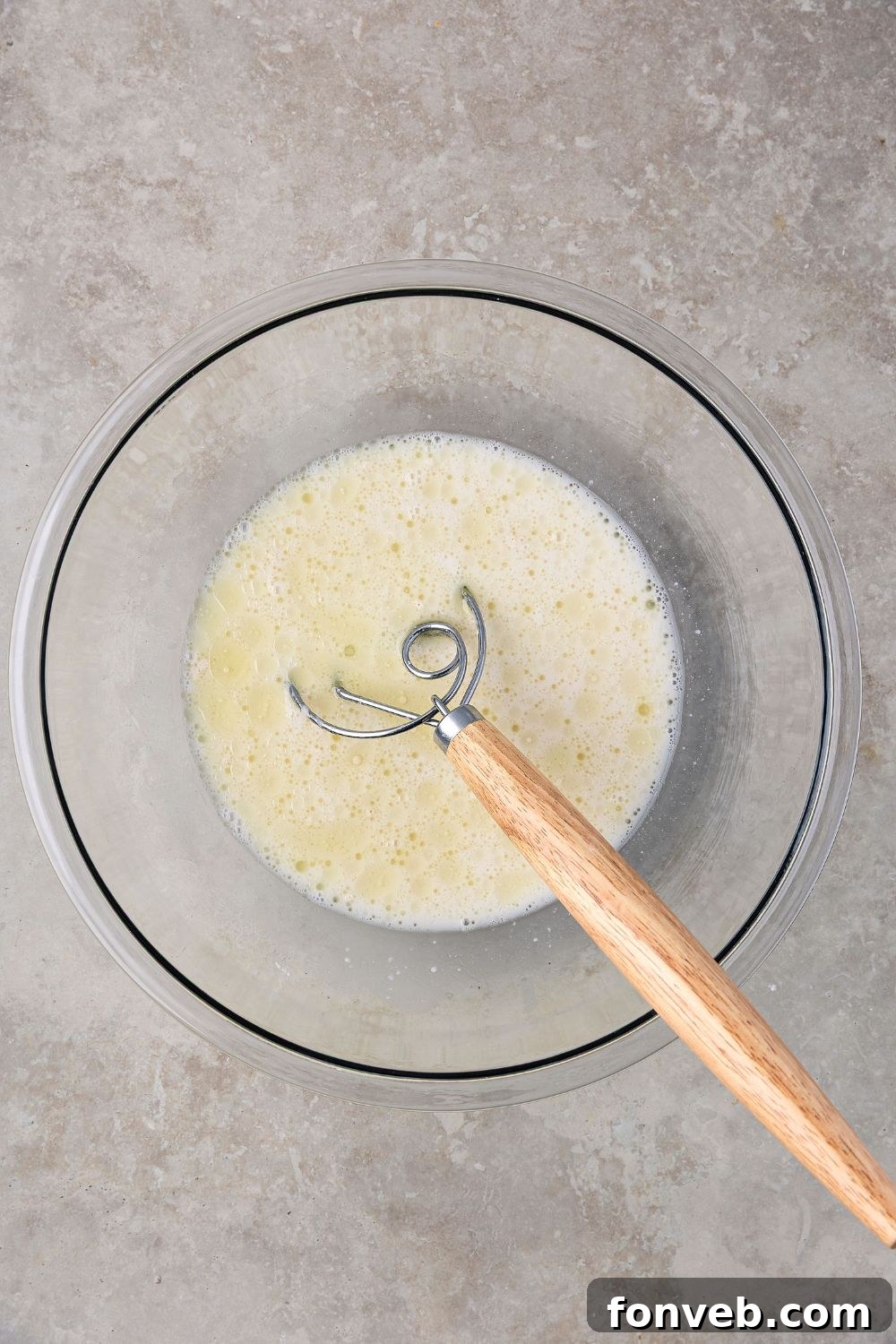
Beginner’s Timeline: A Visual Guide to Sourdough Success
Sourdough baking is a journey, not a sprint. This timeline provides a clear, step-by-step guide to the process, including estimated times and crucial notes to help you understand what’s happening at each stage. Remember that temperatures and starter activity can influence timings, so always observe your dough more than the clock.
| Step | Time Estimate | Notes |
|---|---|---|
| **Mix & Rest (Autolyse)** | 20 min + 30 min | Initially combine wet and dry ingredients (autolyse) to hydrate flour, which naturally begins gluten development without kneading. The subsequent 30-min rest allows flour to fully absorb water, making the dough easier to work with. |
| **Knead & Stretch/Folds** | 1–1.5 hrs (3 sets) | Gentle hand-kneading followed by stretch and folds (3 sets, 30 minutes apart) are crucial for building dough strength and elasticity. Keep your hands wet to prevent sticking and encourage smooth handling. |
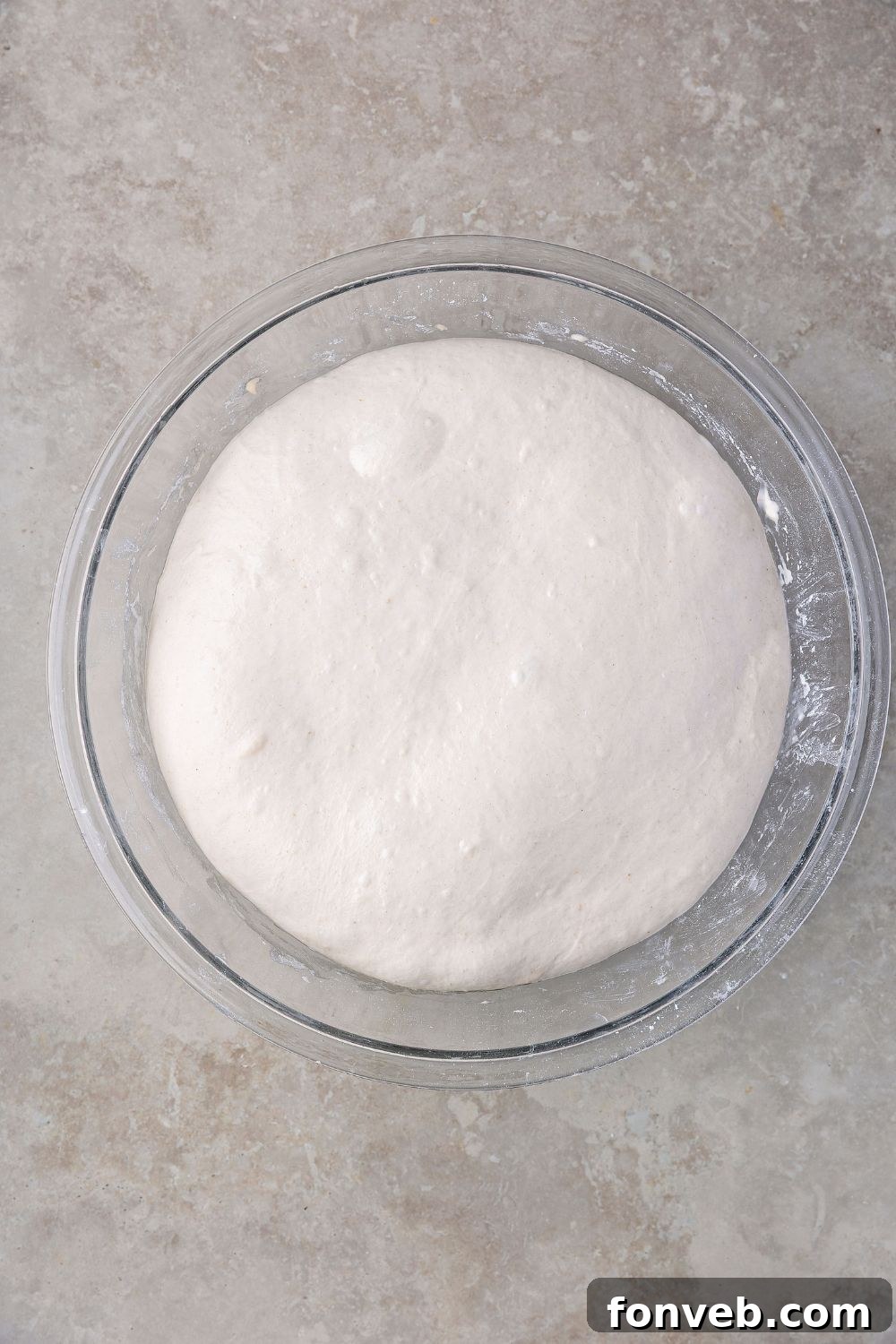
| **Bulk Fermentation (First Rise)** | 5–8 hrs | This is where the magic happens! The dough should rise significantly, typically 60–75% of its original volume, appear slightly domed, and show signs of active bubbles, especially along the sides of the bowl. Ambient temperature plays a large role here. |
| **Shape & Final Rise (Proofing)** | 2–4 hrs | Carefully shape your dough into an artisan boule or sandwich loaf. The final rise (proof) occurs in a proofing basket (banneton) or loaf pan until it’s slightly domed and feels airy. This prepares the dough for its oven spring. |
| **Bake** | 35–45 min | Initial baking covered (e.g., in a Dutch oven or with a second loaf pan) creates steam, crucial for developing that beautiful, blistered crust. Uncovered baking then allows the crust to brown to perfection. |
| **Cool** | 2 hrs (minimum!) | Resist the urge to slice into your warm loaf immediately! Cooling allows the internal structure to set, preventing a gummy crumb. This patience is truly worth the wait for optimal texture and flavor. |
Pro Tip: Life can be unpredictable, but your sourdough doesn’t have to suffer. If your schedule shifts, simply pop your dough into the refrigerator after bulk fermentation or shaping. The cold environment slows down fermentation, allowing you to pick up where you left off up to 48 hours later. This cold proofing can even enhance the complex, tangy flavors of your loaf!
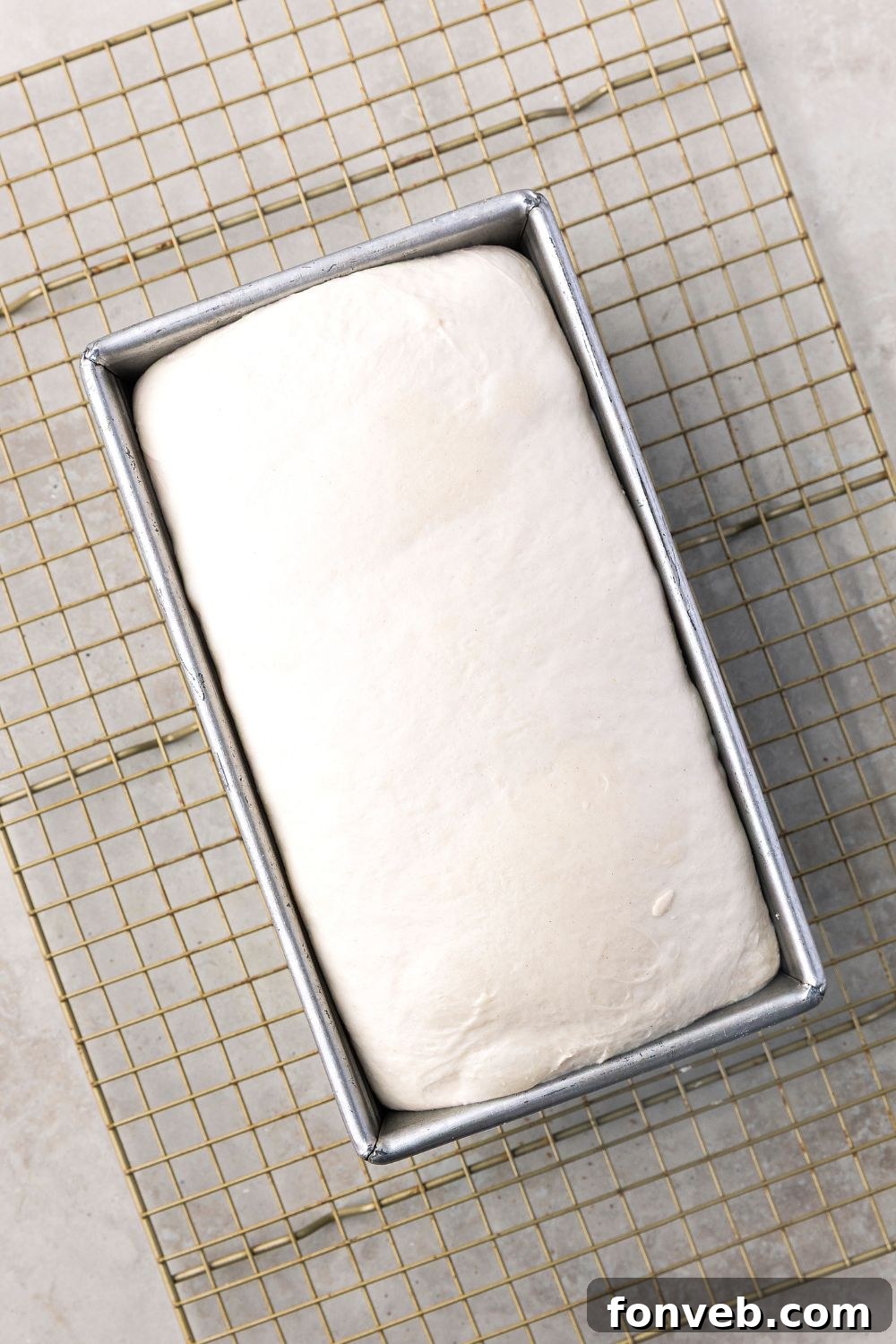
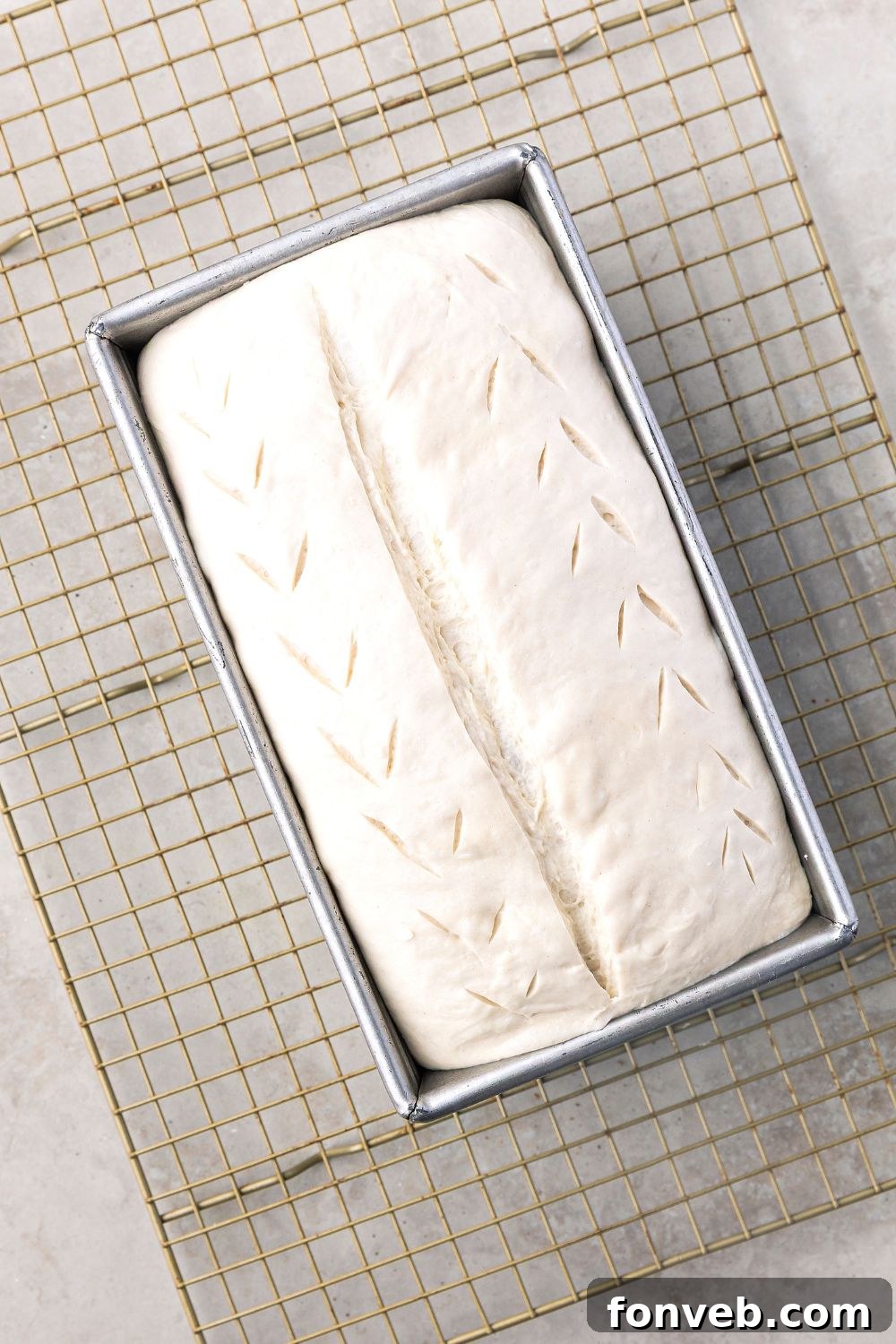
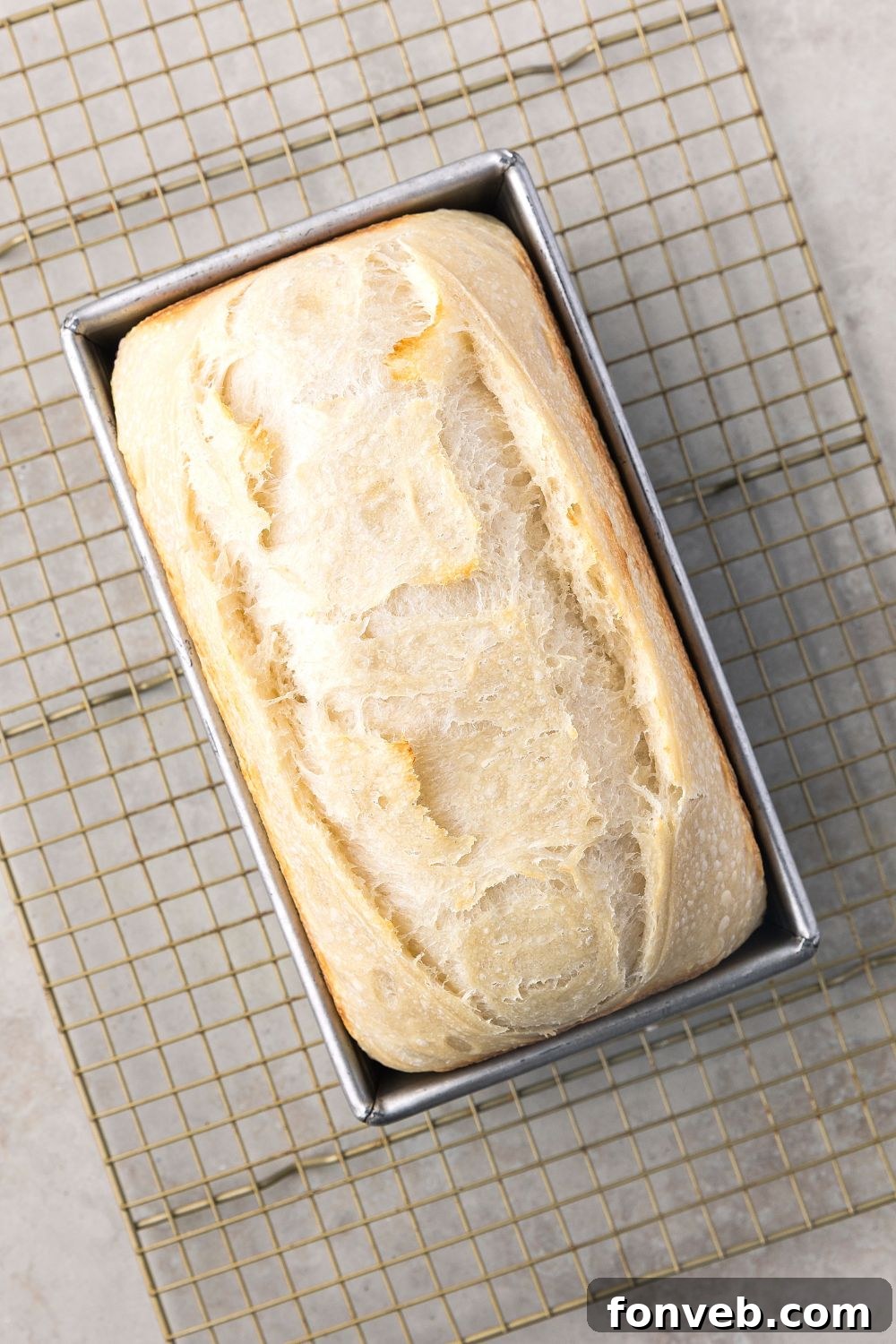
Shaping Your Sourdough: Artisan Loaf or Everyday Sandwich Loaf
One of the beauties of this sourdough recipe is its adaptability to different shapes and textures, allowing you to tailor your bake to your specific preferences. You can opt for the dramatic, crusty artisan boule or a softer, more uniform sandwich loaf. Both are equally delicious, just designed for different purposes.
The Classic Artisan Round Loaf (Boule)
For that quintessential, rustic sourdough look with a truly spectacular crust and an open crumb, the artisan round loaf is your go-to:
- Shaping Technique: After bulk fermentation, gently shape your dough into a tight, round boule. The goal is to create surface tension, which helps the loaf hold its shape and achieve a good oven spring.
- Proofing: Place the shaped boule seam-side up into a well-floured proofing basket (banneton) or a bowl lined with a floured kitchen towel. This supports the dough as it undergoes its final rise and prevents sticking.
- Baking for Optimal Crust: Bake your boule in a preheated Dutch oven or on a baking stone/steel with added steam in the oven. The trapped steam during the initial baking phase is crucial for developing that wonderfully blistered, crackling crust and allowing for maximum oven spring before the crust fully sets.
The Soft Sandwich Loaf Variation
If you prefer a softer, more uniform bread that slices perfectly for toast, sandwiches, or even French toast, this sandwich loaf variation is ideal. It delivers a tender crumb and a less aggressive crust, perfect for everyday enjoyment:
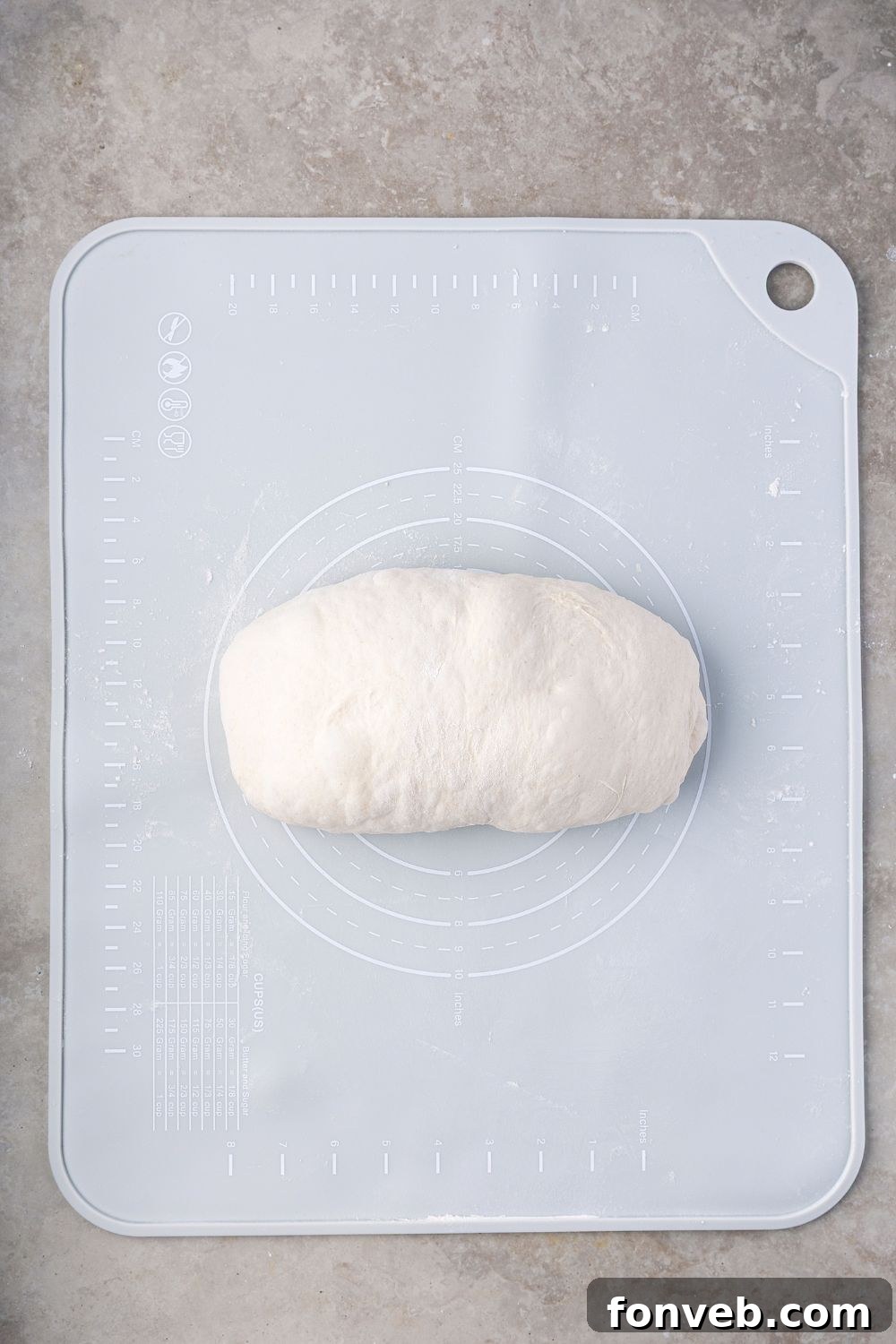
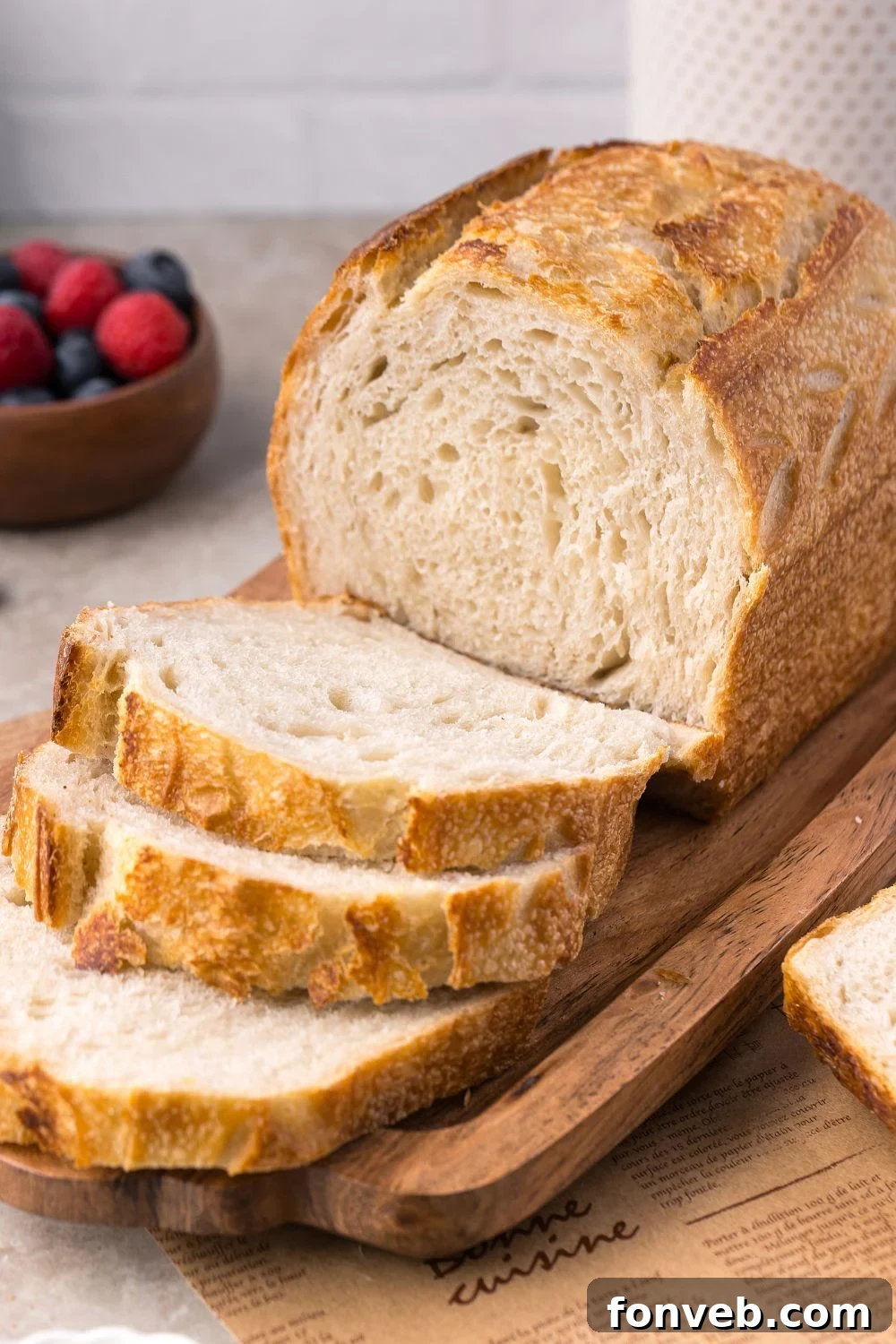
- Shaping for the Pan: After your bulk fermentation is complete, gently shape the dough into a tight log. This log is then placed directly into a lightly greased 9×5-inch loaf pan. This shaping method helps create the classic rectangular shape.
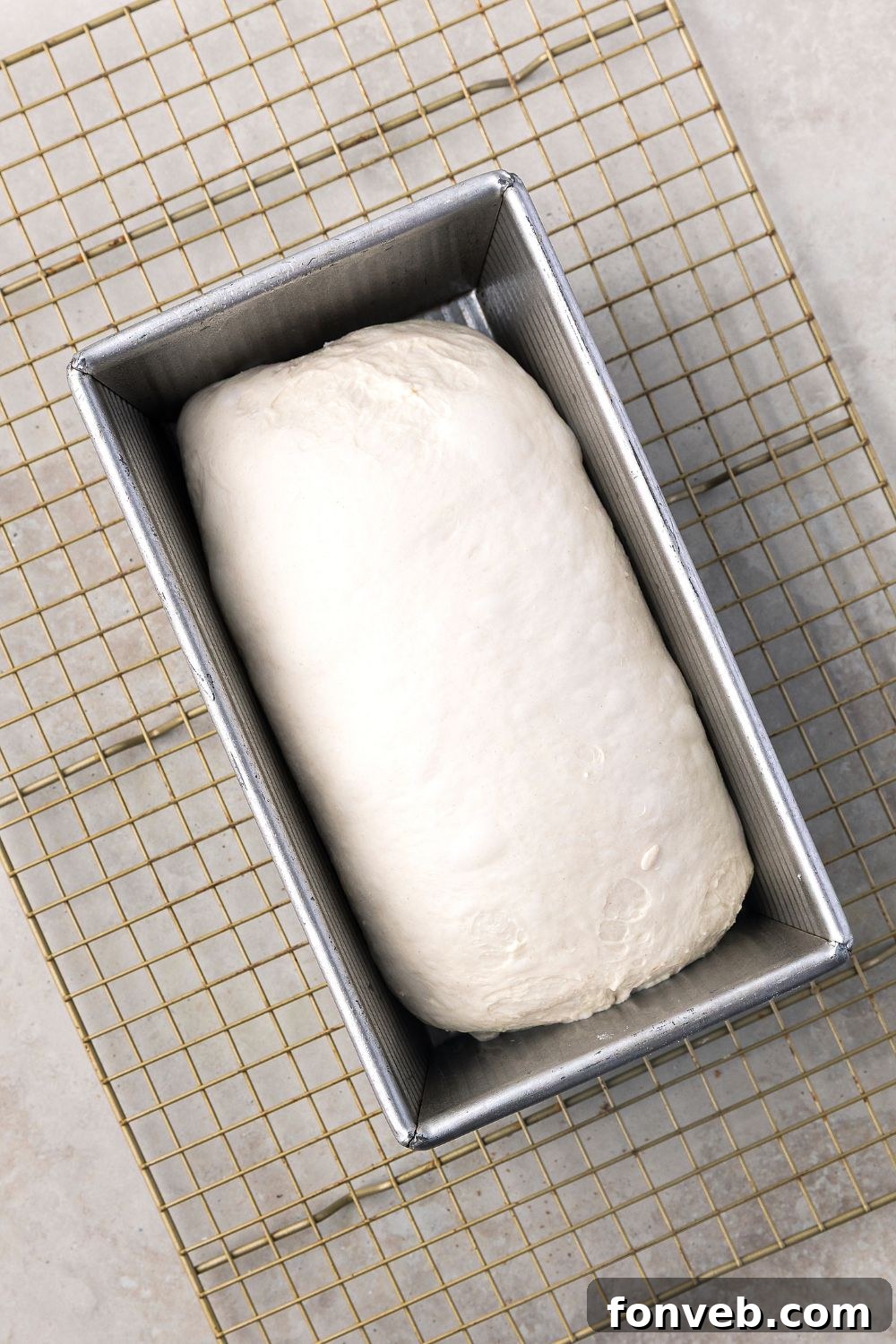
- Final Rise in the Pan: Cover the loaf pan and allow the dough to undergo its final rise. It should typically dome about ½ to 1 inch over the rim of the pan, indicating it’s ready for baking.
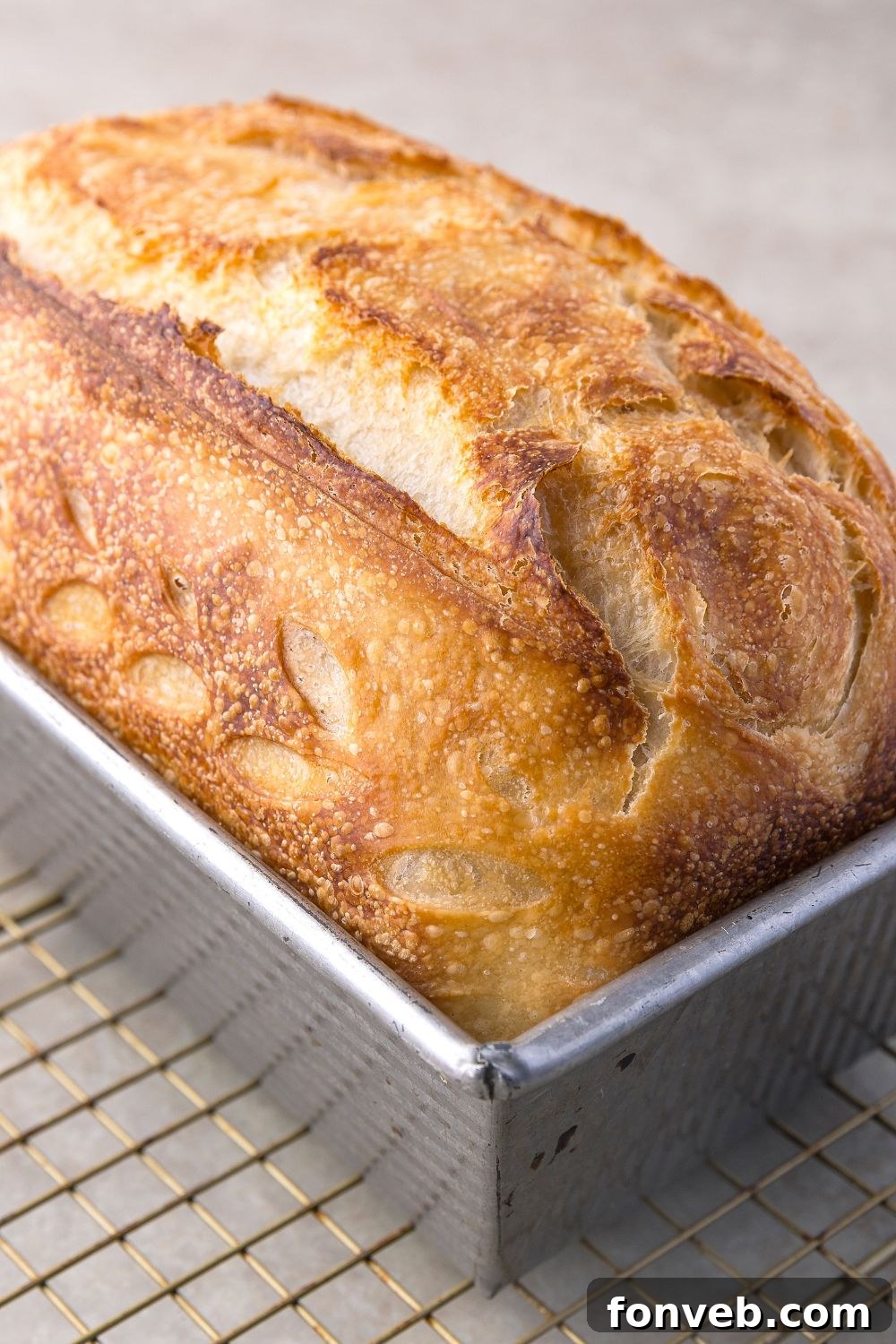
- The Double-Loaf-Pan Method: To create a soft, yet still golden crust without a Dutch oven, lightly mist the surface of the dough with water. Then, invert a second loaf pan directly on top of the first, creating a dome that traps steam.
- Baking Process: Bake the covered loaf at 450°F (232°C) for 25 to 30 minutes. This initial covered bake ensures steam and prevents premature browning. After this time, carefully remove the top pan, reduce the oven temperature to 425°F (218°C), and continue baking for another 10 to 15 minutes, or until the loaf achieves a beautiful golden-brown color and its internal temperature reaches 205-210°F (96-99°C).
My husband often requests the sandwich loaf version for his work lunches, appreciating its softer texture and ease of slicing. Meanwhile, I adore tearing into the crusty boule, dipping chunks into a comforting bowl of soup. Whichever path you choose, you’re guaranteed a winning loaf of homemade sourdough bread.
Equipment Swaps & Budget-Friendly Sourdough Baking
One of the most liberating aspects of baking sourdough is realizing that you don’t need a kitchen full of expensive, specialized gadgets. A perfect loaf can absolutely be achieved with tools you likely already have on hand. Don’t let a lack of “professional” equipment deter you from starting your sourdough journey!
Here are some clever, budget-friendly alternatives for common sourdough tools:
| Tool | Budget-Friendly Alternative |
|---|---|
| Banneton (Proofing Basket) | A medium-sized mixing bowl generously lined with a clean kitchen towel (e.g., a cotton tea towel) and heavily dusted with rice flour or all-purpose flour works perfectly. The towel helps absorb moisture and gives the dough support. |
| Lame (Scoring Blade) | A very sharp kitchen knife (like a paring knife or utility knife) or even a clean razor blade (new, unused, and held carefully) can create precise scores on your dough. The key is a sharp edge for a clean cut. |
| Dough Whisk (Danish Dough Whisk) | A sturdy regular fork or a wooden spoon is perfectly adequate for mixing your wet and dry ingredients. The goal is to combine them until no dry streaks remain, which these common utensils can easily accomplish. |
| Dutch Oven | For the artisan loaf, a deep, oven-safe pot with a tight-fitting lid (like an enameled cast iron pot or even a large Pyrex baking dish with a lid) can mimic the steam environment. For sandwich loaves, the “double-loaf-pan” method (as described above) or simply baking in a loaf pan covered loosely with aluminum foil for the first part of baking works wonders. |
| Bench Scraper | A sturdy, flat spatula or even the flat side of a butter knife can be used to help divide dough, scrape it off surfaces, and assist with shaping. The main purpose is to manage sticky dough without adding too much flour. |
If you’re baking on a budget, prioritize acquiring quality bread flour and focusing on a consistent feeding routine for your sourdough starter. These two elements are far more impactful than any fancy gadget. You genuinely don’t need a $300 Dutch oven or a special bread lame to create a delicious loaf – just your active starter, your hands, and a good dose of patience.
That being said, as you grow in your baking journey, certain tools can make the process even more enjoyable. For instance, I personally love my USA pans for their even heating and non-stick properties, and my Thermapen thermometer is invaluable for quickly checking internal dough temperatures. While optional, these have proven to be durable and worthwhile investments over years of baking.
Troubleshooting Common Sourdough Issues
Even experienced bakers encounter challenges with sourdough, but most issues have straightforward solutions. Don’t be discouraged; troubleshooting is part of the learning process and will make you a better baker!
- My dough is incredibly sticky! Is this normal? Yes, absolutely! This is a high-hydration dough, which is designed to be sticky. Don’t panic or add excessive flour. Instead, use wet hands when handling the dough for stretch and folds, and rely on a dough scraper for moving and shaping it. A lightly floured surface is fine during shaping, but avoid over-flouring, as it can dry out the dough.
- Why is my bread not rising much? There are a few possibilities. Your sourdough starter might be underactive – ensure it’s consistently bubbly and passes the float test before using. Alternatively, the dough could be under-proofed (didn’t get enough time to rise) or, conversely, over-proofed (rose too much and then collapsed).
- My loaf turned out flat and spread out. A flat loaf is often a sign of over-proofing, where the gluten structure has weakened and can no longer hold the gas. Reduce the final rise time slightly next time, or try baking a bit earlier when the dough still feels active and bouncy. Insufficient shaping (lack of surface tension) can also contribute to a flat loaf.
- The inside of my bread is dense, not airy. This typically points to an underactive starter or insufficient bulk fermentation. Ensure your starter is strong and active. Also, allow enough time for the bulk rise, letting the dough increase by 60-75% in volume, not just a small amount. Gentle handling during shaping is also important to preserve air.
- The crust is getting too dark too quickly. If your crust is burning before the inside is fully baked, try tenting the loaf loosely with aluminum foil during the last 10-15 minutes of baking. For sandwich loaves, using a lighter-colored loaf pan instead of dark metal can also prevent over-browning.
Storage & Creative Serving Tips for Sourdough Bread
Once you’ve baked your perfect loaf of homemade sourdough, you’ll want to ensure it stays fresh and delicious for as long as possible, and then enjoy it in countless ways. Here’s how to store and serve your masterpiece:
To store your sourdough bread:
- Room Temperature (Short-term): For the first day or two, simply wrap your completely cooled loaf in a clean tea towel or place it cut-side down on a cutting board. This allows the crust to remain crisp while preventing the interior from drying out too quickly.
- Extended Freshness: For longer storage at room temperature (up to 3-4 days), transfer the loaf to a zip-top bag, a bread box, or an airtight container. This helps keep the interior soft, though the crust may soften slightly.
- Freezing for Future Enjoyment: Sourdough freezes beautifully! Once completely cooled, slice the entire loaf and place the slices in a freezer-safe zip-top bag. Remove as much air as possible before sealing. Frozen slices are perfect for quick toast whenever a craving strikes, or you can freeze a whole loaf to thaw and reheat later.
Delicious ways to serve your homemade sourdough:
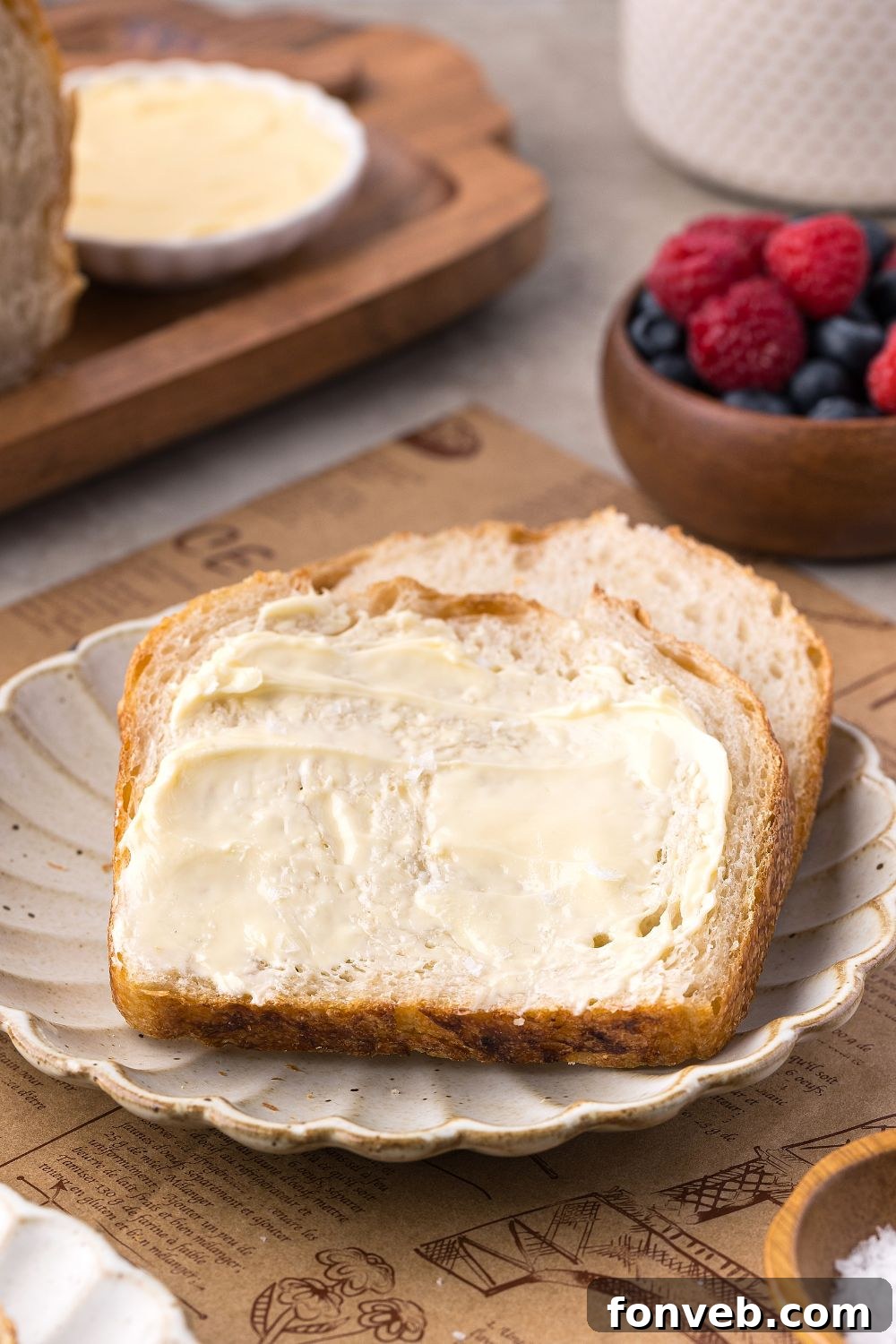
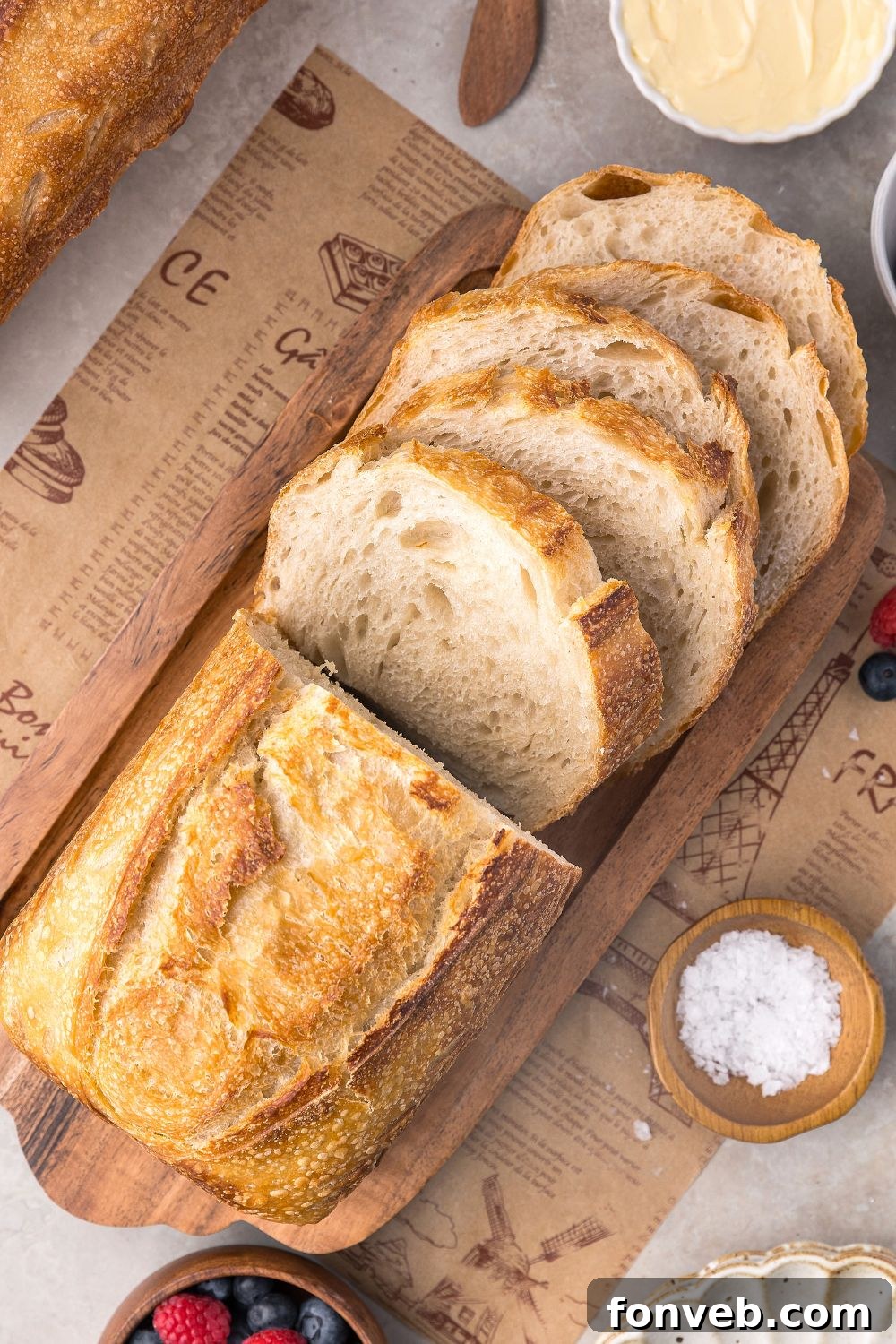
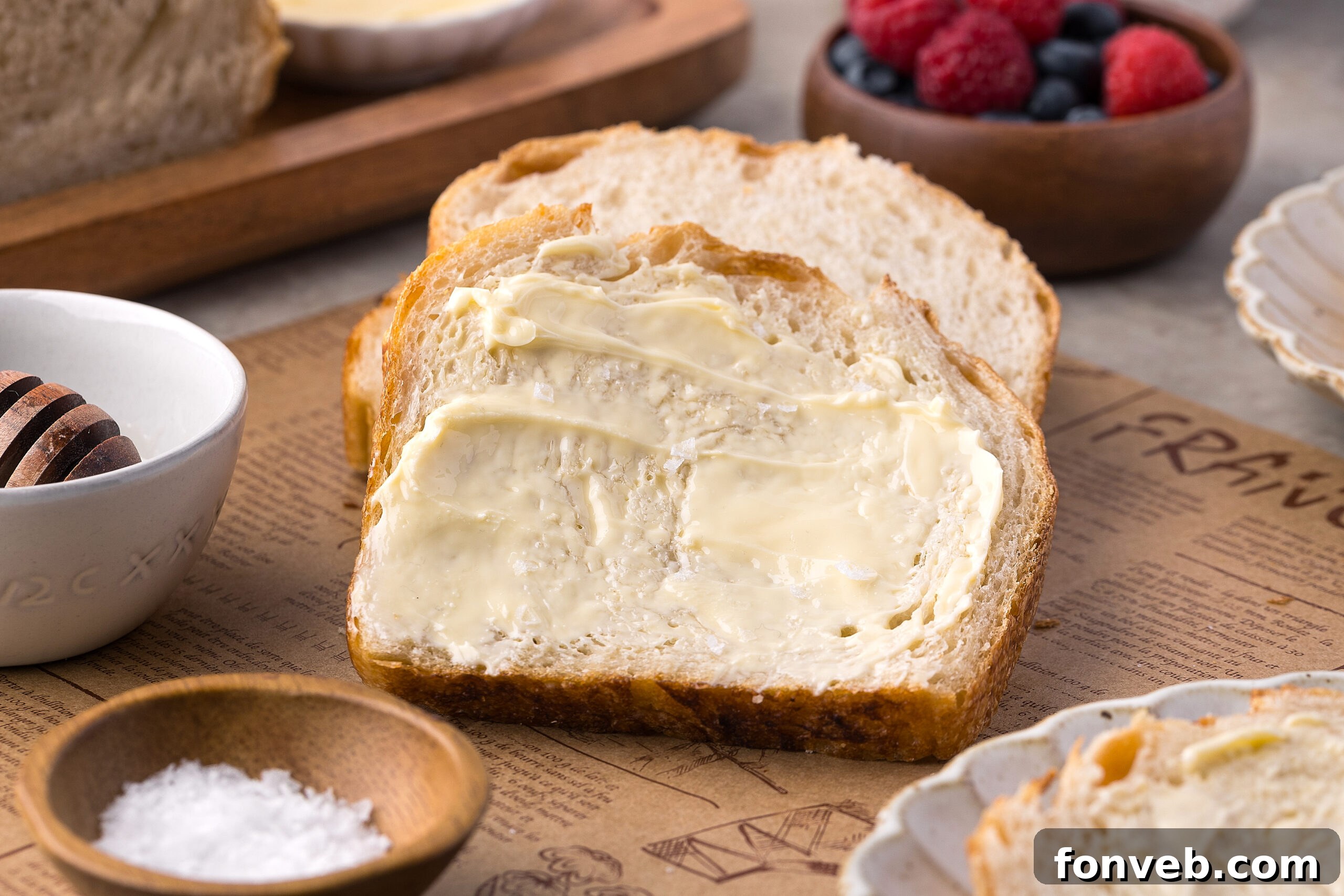
- Simple & Classic: Freshly sliced with high-quality butter and a sprinkle of flaky sea salt – sometimes the simplest preparations are the best.
- Breakfast & Brunch: Toast slices and top with jam, nut butter, honey, or the ever-popular mashed avocado and a poached egg.
- Hearty Sandwiches: Use the sandwich loaf version for incredible deli-style sandwiches, grilled cheese, or an epic BLT.
- Dipping Delight: Its sturdy crumb is perfect for dipping into rich soups, savory stews, or a flavorful olive oil blend.
- Creative Culinary Uses: Transform day-old sourdough into homemade croutons for salads, rustic breadcrumbs, or even a decadent sourdough French toast casserole. It also makes fantastic panzanella (bread salad)!
Make-Ahead & Freezing Tips for Flexible Sourdough Baking
The beauty of sourdough is its inherent flexibility, allowing you to adapt the baking schedule to your life. These make-ahead and freezing tips ensure you can enjoy fresh sourdough on your terms.
Make-ahead strategies:
- Cold Fermentation (Refrigeration): One of the best ways to fit sourdough into a busy schedule is to refrigerate your dough. You can do this after the bulk fermentation stage or after shaping your loaf (covered tightly to prevent drying). The dough can be safely stored in the fridge for up to 48 hours.
- Enhanced Flavor: Not only does cold fermentation provide scheduling convenience, but it also slows down the yeast activity, allowing the beneficial bacteria in your starter more time to produce organic acids. This process actually enhances the sourness and depth of flavor in your finished loaf, leading to a more complex and delicious bread.
- Resuming the Process: When ready to bake, simply remove the dough from the refrigerator and let it come to room temperature for 1-2 hours (or until it has expanded adequately if it’s the final proof) before proceeding with baking.
Freezing for long-term storage:
- Freezing Sliced Loaves: For ultimate convenience, once your sourdough loaf has completely cooled, slice it entirely. Place the slices in a single layer on a baking sheet and flash freeze them for about an hour until firm. This prevents them from sticking together. Then, transfer the frozen slices to a heavy-duty, freezer-safe zip-top bag or airtight container, removing as much air as possible.
- Toasting from Frozen: You can pop slices directly from the freezer into a toaster for quick, delicious toast.
- Reheating a Whole Loaf: If you’ve frozen an entire loaf, allow it to thaw at room temperature for a few hours. Then, reheat it in a preheated 325°F (160°C) oven for 8–10 minutes, or until warmed through and the crust has crisp backed up. This method makes it taste almost freshly baked.

Frequently Asked Questions (FAQ) – Homemade Sourdough Bread
Here are answers to some of the most common questions new sourdough bakers have:
Can I make this bread without a Dutch oven?
Absolutely! For an artisan loaf, you can use a heavy, oven-safe pot with a lid, or even a sturdy cast-iron skillet covered with a heat-safe bowl or aluminum foil tent to trap steam. For a sandwich loaf, use the double-loaf-pan method described above. A baking steel or stone can also help achieve a good crust and oven spring.
What kind of flour works best for sourdough?
Bread flour is ideal due to its higher protein content, which develops a strong gluten network for excellent structure and chew. However, you can substitute up to 20% of the bread flour with whole wheat flour for added flavor and nutrition, or all-purpose flour for a slightly softer crumb. Just be aware that these substitutions may result in a slightly different texture and hydration needs.
Can I skip the oil or honey in the recipe?
Yes, you can omit them. However, the oil contributes to a softer, more tender crumb and a less chewy crust, especially for sandwich loaves. The honey adds a subtle layer of flavor complexity and aids in crust browning. Without them, your loaf may be a bit chewier and have a simpler flavor profile.
Why is my dough so sticky and difficult to handle?
It’s completely normal for sourdough dough, especially high-hydration recipes like this one, to be sticky. This stickiness is a sign of good hydration, which contributes to an open, airy crumb. To manage it, always work with wet hands during stretch and folds, and use a minimal amount of flour only when shaping on a well-floured surface. Don’t add extra flour to the main dough unless specified, as it will alter the hydration ratio.
What if I don’t have a proofing basket (banneton)?
No problem! A medium-sized mixing bowl lined with a clean kitchen towel (like a cotton tea towel) and heavily dusted with rice flour or all-purpose flour works as an excellent substitute. The floured towel helps prevent the dough from sticking and provides support during the final rise.
How do I know when the bread is fully baked?
A good indicator is a deep golden-brown crust. You can also tap the bottom of the loaf; if it sounds hollow, it’s likely done. For the most accurate measure, use an instant-read thermometer to check the internal temperature, which should register between 205–210°F (96-99°C).
Can I bake this recipe into a sandwich loaf?
Yes, absolutely! Refer to the “Sandwich Loaf Variation” section above for detailed instructions on how to shape and bake this recipe into a softer, square loaf that’s perfect for slicing and everyday use.
Why did my bread not rise much in the oven (poor oven spring)?
This can happen for a few reasons. Your dough might have been under-proofed (not enough rise time) or, more commonly, over-proofed (too much rise time, causing the gluten structure to collapse). It could also be due to an underactive starter. Focus on developing a strong, bubbly starter and paying close attention to the dough’s volume increase during bulk fermentation rather than strictly following the clock.
How do I get those beautiful, big air bubbles (open crumb) inside my sourdough?
Achieving an open crumb requires a combination of factors: an active and strong sourdough starter, gentle handling during stretch and folds to build gluten without deflating the dough, proper bulk fermentation (allowing sufficient rise without over-proofing), and careful shaping to create good surface tension. Avoid over-handling the dough, which can expel gases.
How to Gift a Loaf of Homemade Sourdough Bread for the Holidays and Beyond
Homemade sourdough bread makes an exceptionally thoughtful and personal gift. It’s warm, comforting, and utterly delicious – a tangible expression of care and effort that is always appreciated. Whether you’re expressing gratitude to a neighbor, welcoming a new friend to the community, or sharing the joy of homemade goodness during the holiday season, a freshly baked loaf is a gesture that truly resonates.
Here’s how to package your gift loaf beautifully and thoughtfully:
Elegant Wrapping Ideas
- Rustic Charm: Once the loaf has completely cooled, wrap it snugly in parchment paper or classic butcher paper. Tie it with a simple piece of natural twine or baker’s string for a rustic touch. For an extra festive flourish, tuck a fresh sprig of rosemary, thyme, or a few dried orange slices under the twine.
- Simple & Sweet: Place the loaf in a clear bread bag (available at most craft or baking stores) or a plain brown paper bag. Seal it with a personalized sticker, a handwritten label, or a festive ribbon.
- Gourmet Basket: Elevate your gift by creating a small basket. Pair your sourdough loaf with complementary homemade treats like a jar of your favorite jam, a pot of local honey, or a small container of herb-infused butter.
The Importance of a Thoughtful Note
Always include a small, handwritten card with your gifted loaf. This adds a personal touch and provides essential information for the recipient:
- Loaf Type: Mention that it’s homemade sourdough bread.
- Storage Instructions: Advise on how to best store the bread (e.g., “Best enjoyed within 3 days at room temperature, or slice and freeze for longer storage.”).
- Reheating Tips: Include advice on how to refresh the bread (e.g., “To enjoy warm, reheat a thawed loaf in a 325°F oven for 8–10 minutes.”).
I often like to write a message like this: “Baked with love just for you! This homemade sourdough is best enjoyed toasted with butter, dipped in your favorite soup, or as a hearty sandwich. Store at room temperature or freeze slices for later. Enjoy every bite!”
Gifting homemade sourdough is a tradition we cherish in our family. We’ve shared loaves with appreciative teachers, grateful neighbors, and even our hardworking delivery driver during the holiday season – it’s a simple gesture that consistently brings warmth and a genuine smile.

Final Thoughts: Embrace Your Sourdough Journey
This Homemade Sourdough Bread recipe has truly become a cherished staple in our household. Its wonderfully crusty exterior, satisfyingly chewy interior, and complex tangy flavor make every single bite a delight. Whether I’m carving off thick slices for a leisurely avocado toast breakfast or preparing the softer sandwich loaf version for my husband’s lunchbox, each loaf feels like a small, personal triumph.
More than just a recipe, this method fosters a rhythm, an enjoyable ritual that can seamlessly integrate into your weekly routine. While sourdough often carries a reputation for being complicated or intimidating, this approach is thoughtfully designed to be simple enough for real-life busy parents like me – those of us who are often simultaneously fielding endless kid questions while gently folding dough!
I genuinely encourage you to give this recipe a try. Bake it just once, and I am confident that you will discover the profound satisfaction and irresistible taste that will have you returning to it again and again. Happy baking!
Craving More Delicious Carb-Loaded Recipes?
- Amish Bread
- Hawaiian Dinner Rolls
- Homemade White Bread
- Lemon Bread
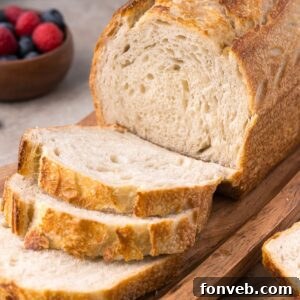
Homemade Sourdough Bread
Course: Breads
Prep Time: 20 mins
Cook Time: 40 mins
Total Time: 15 hrs
Servings: 12 servings
Slice and serve up this homemade sourdough bread. Learn how to make fool-proof sourdough sandwich bread to slice and serve up for anytime of the day.
Ingredients
- 125 g active sourdough starter (fed and bubbly)
- 325 g warm filtered water (around 90°F)
- 20 g neutral oil (avocado, olive, or canola oil)
- 12 g honey
- 12 g fine sea salt
- 500 g bread flour
Instructions
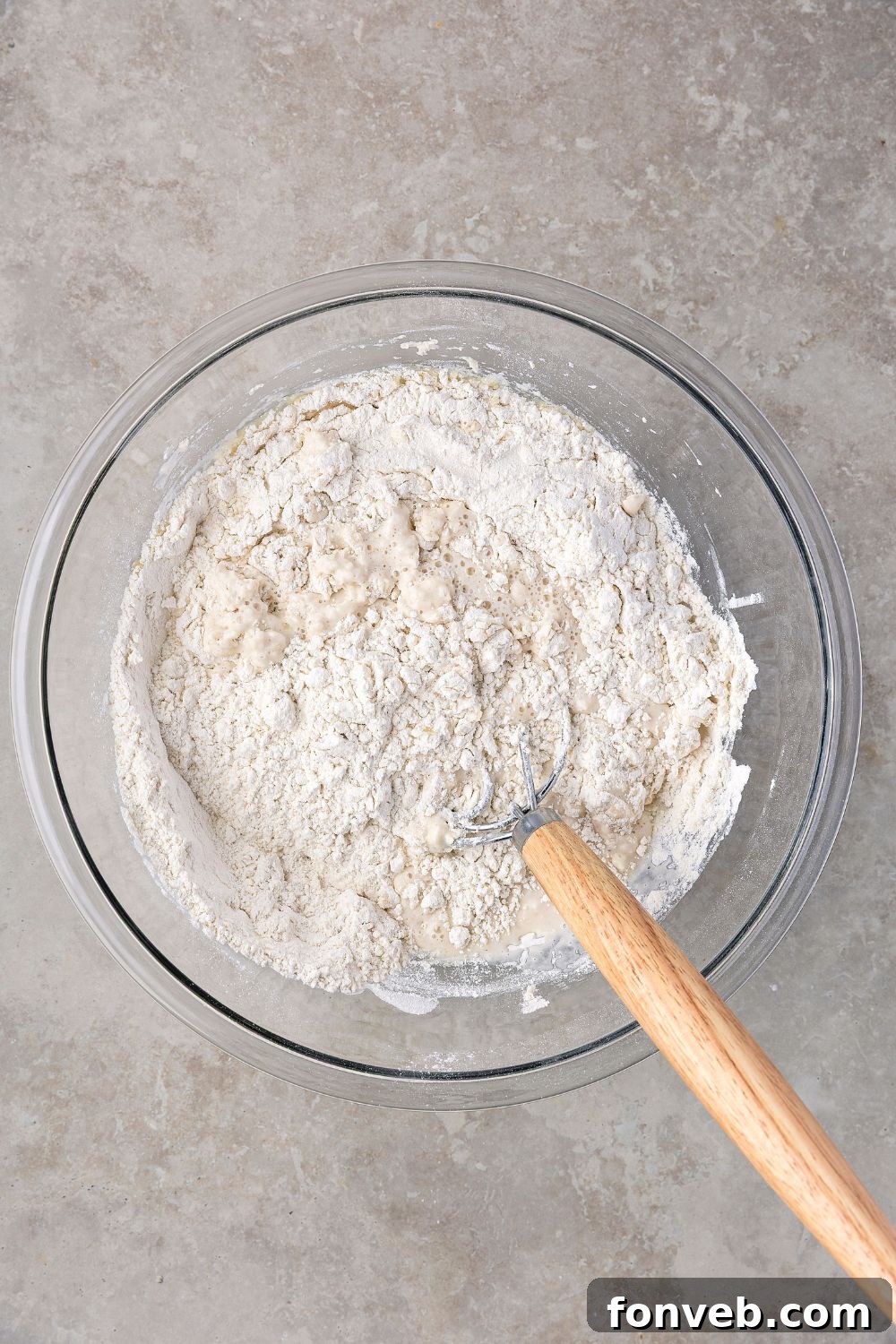
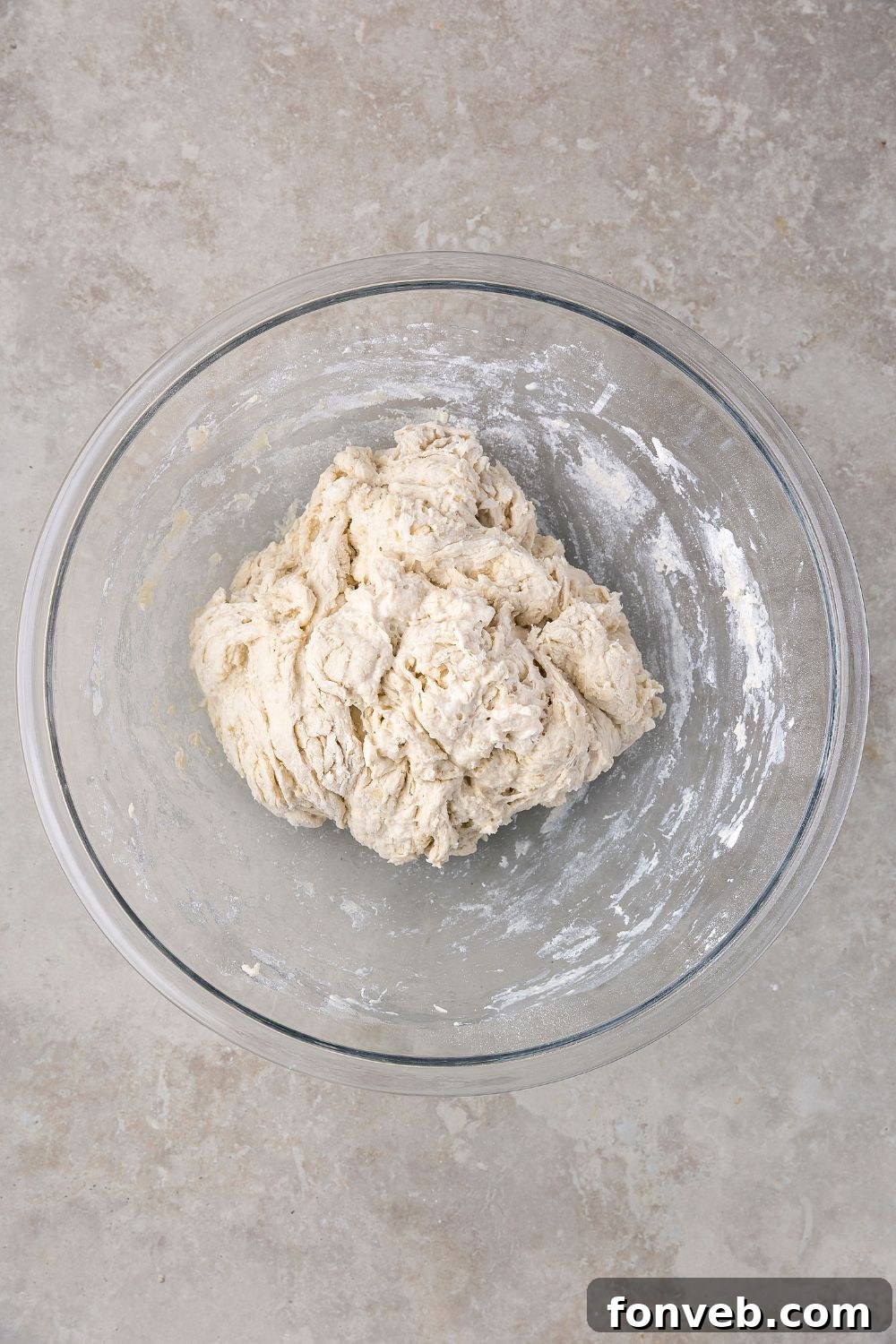
- In a large bowl, combine the starter, warm water, oil, honey, and salt. Stir well to dissolve everything. Add the bread flour and mix until no dry bits remain. The dough will look shaggy and sticky.
- Cover and let rest for 30 minutes to hydrate the flour and start gluten development (autolyse).
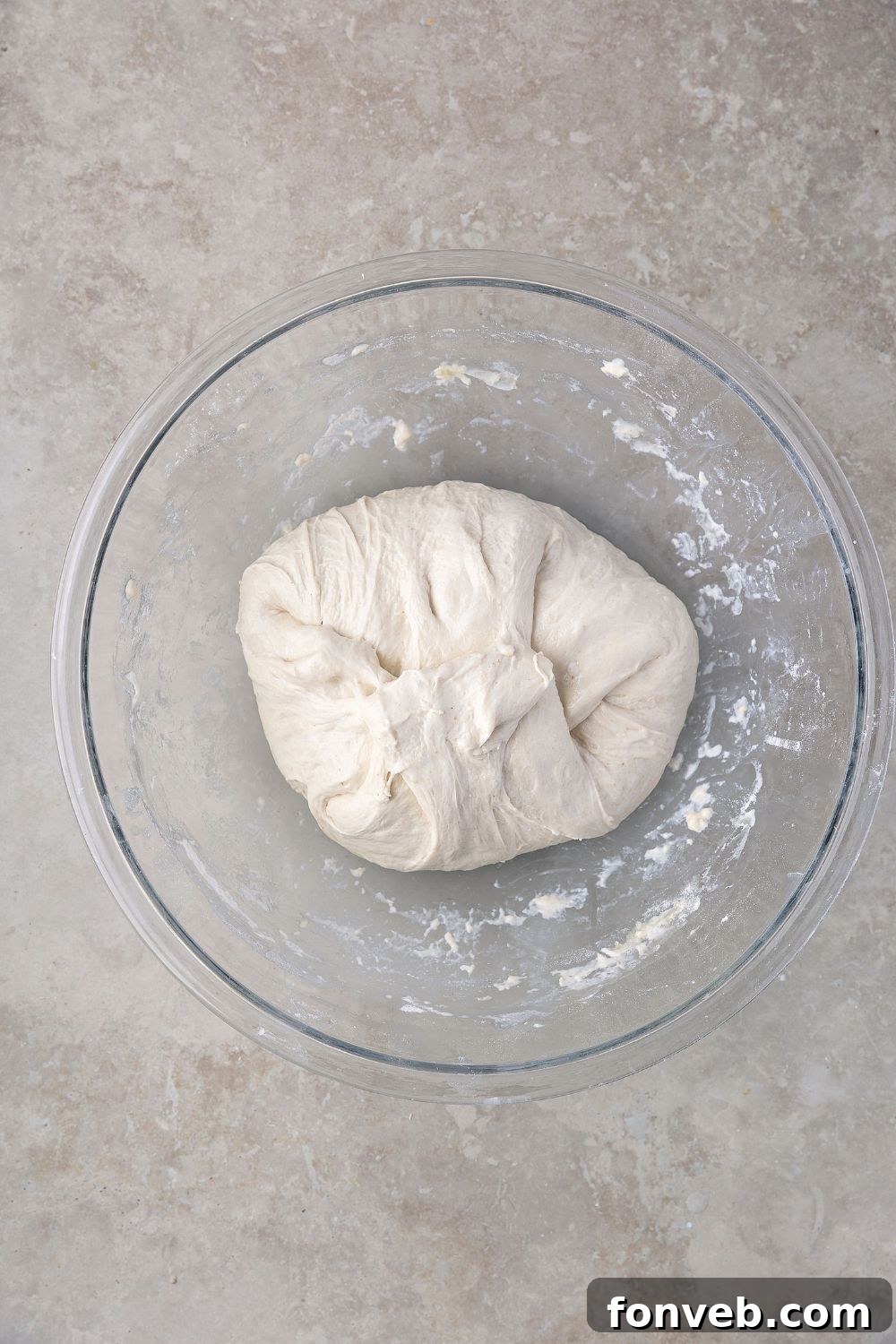
- Wet your hands and gently knead the dough in the bowl for 3 to 4 minutes using a push-pull motion. Wet your hands as needed to keep the dough from sticking.
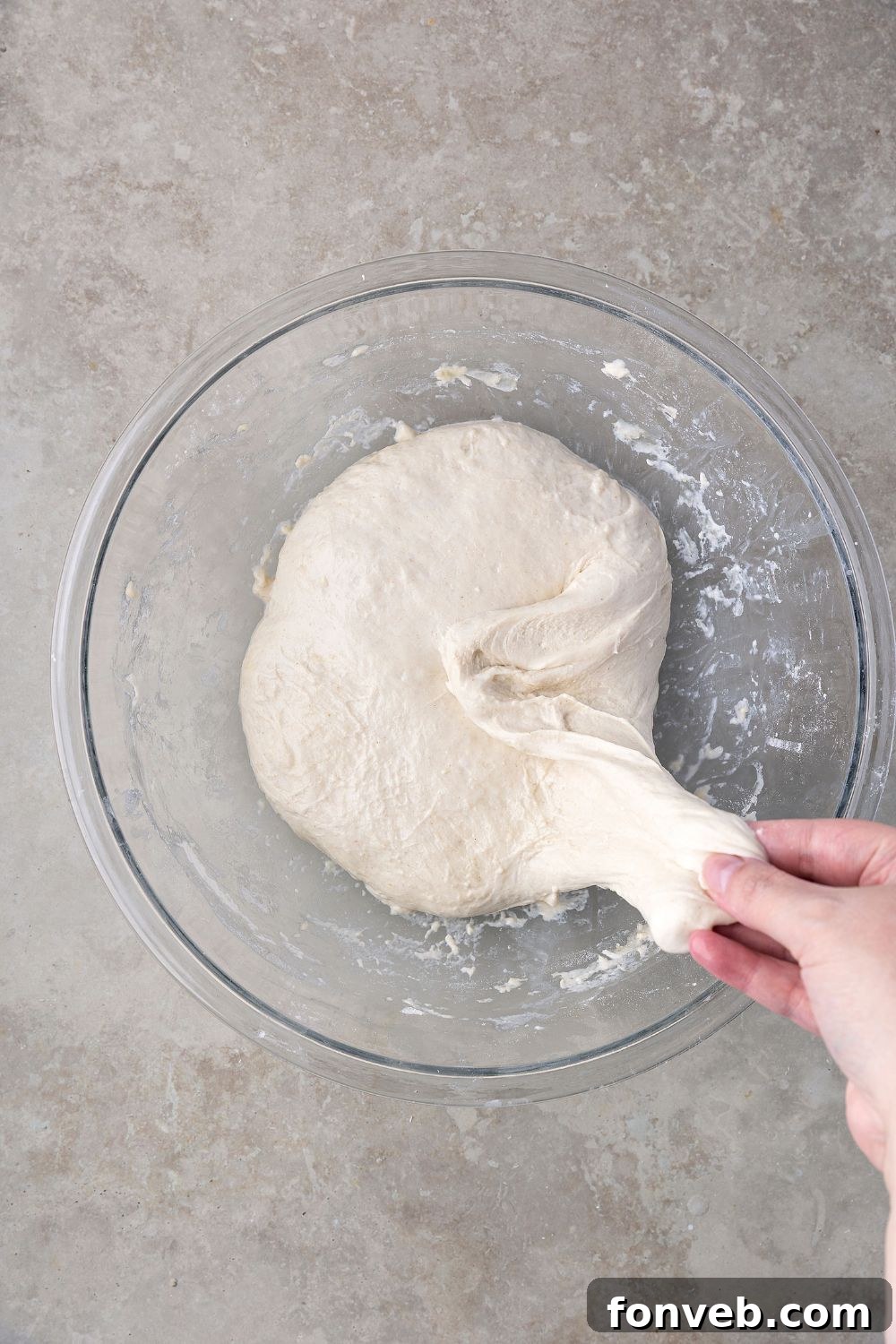
- Cover and rest for 30 minutes. Do your first set of stretch and folds: with wet hands, gently lift one side of the dough, stretch it up, and fold it over. Rotate the bowl and repeat on all sides. Do 4 to 8 stretches per round, depending on how the dough feels. Repeat this for a total of 3 sets, 30 minutes apart.
- After the final fold, cover the bowl and let the dough undergo bulk fermentation until it has grown about 60 to 75 percent, looks slightly domed, and has bubbles along the sides. This usually takes 5 to 8 hours at room temperature, depending on your environment and starter strength.
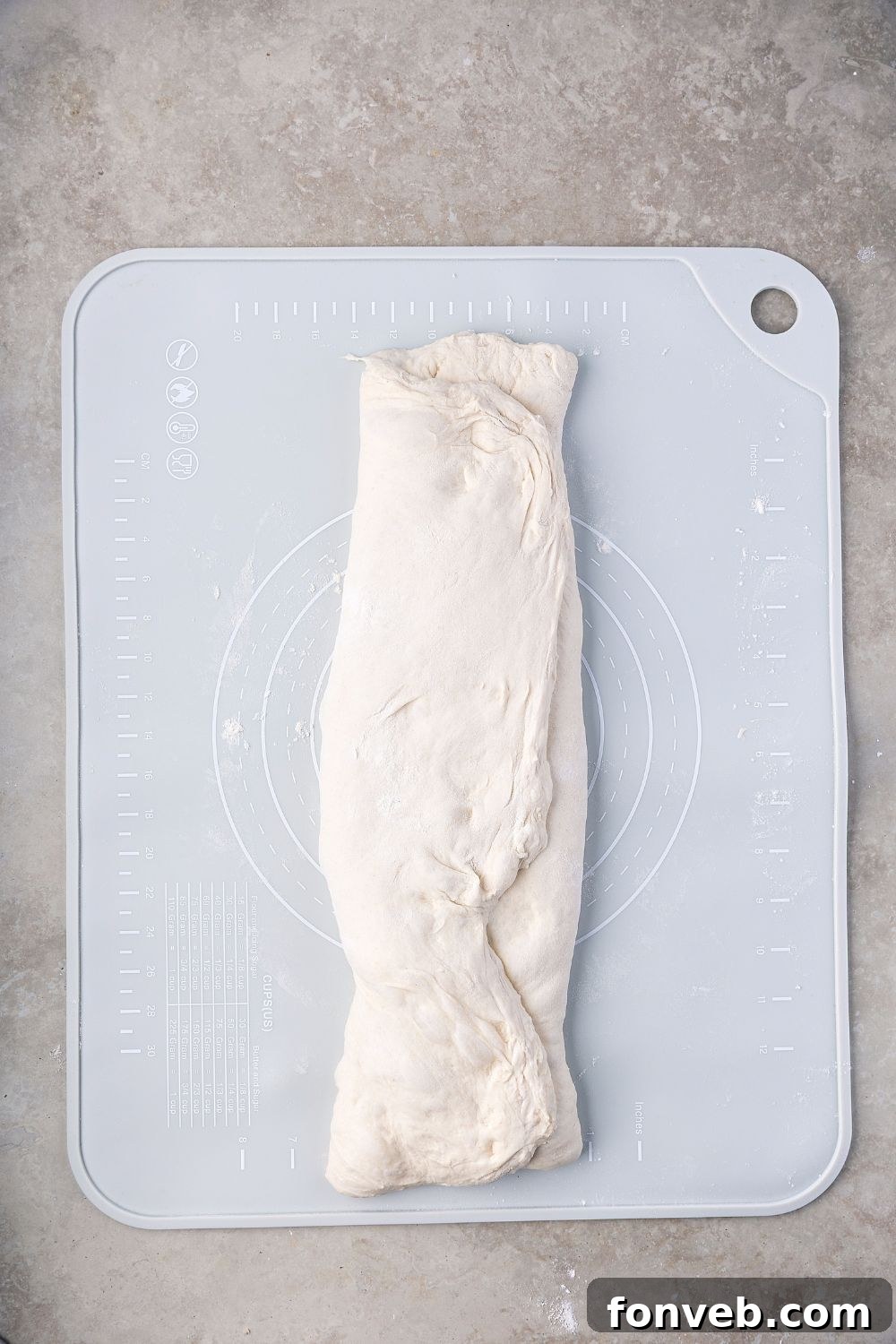
- Turn the dough out onto a lightly floured surface. Additional flour may be needed to keep it from sticking. Gently stretch the dough into a rough rectangle. Fold one side to the middle, then the other side over that. Roll the dough into a tight log, being careful not to press too hard so it stays light and airy. Place it seam-side down into a greased 9×5 loaf pan.
- Cover the pan and let the dough rise (final proof) until it domes about half to one inch over the pan rim. This can take 2 to 4 hours at room temperature. Alternatively, cover and refrigerate the shaped loaf for up to 48 hours, then allow it to finish rising at room temperature before baking.
- Preheat your oven to 450°F (232°C). Score the top of the dough with a sharp blade (lame or razor) using a simple slash or a decorative pattern like a wheat stalk. Scoring allows the bread to expand evenly and helps prevent unwanted tears. Lightly mist the dough with water. Place a second loaf pan upside down on top of the first to trap steam. Bake covered for 25 to 30 minutes. Remove the top pan, reduce the oven temperature to 425°F (218°C), and bake for another 10 to 15 minutes until the loaf is deep golden brown and the internal temperature reaches 205 to 210°F (96-99°C). If it browns too quickly, cover it loosely with aluminum foil so the inside can finish baking. The steam created during the initial bake is essential for that signature bubbly crust. Cool completely for at least 2 hours on a wire rack before slicing to prevent a gummy crumb – but we understand it’s hard to wait when warm bread is around, so use your best judgment and enjoy it when you like!
Did you make this recipe?
Make sure to follow on Pinterest for more recipes!
Pin Recipe
Share on Facebook