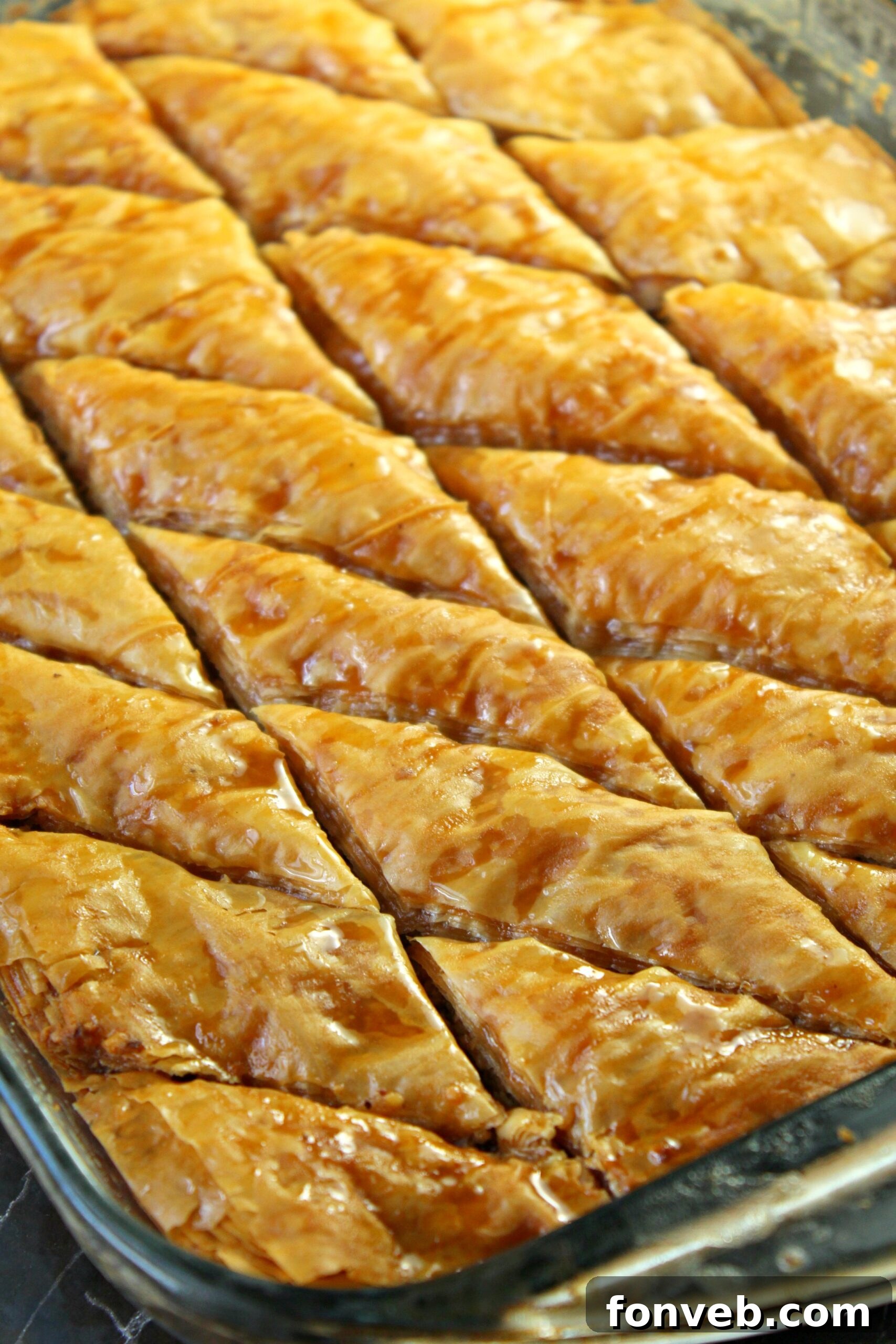
There’s a universally cherished delight that captivates with its golden crunch and sweet allure: Homemade Baklava. This iconic pastry, a testament to culinary artistry, promises an experience that transcends mere dessert. With every bite, you encounter layers of whisper-thin filo dough, a rich, aromatic blend of nuts, and a lavish soaking of honey-lemon syrup that permeates every crevice. This Traditional Baklava Recipe brings the magic of this ancient treat right into your own kitchen, creating an impressive and unforgettable dessert.
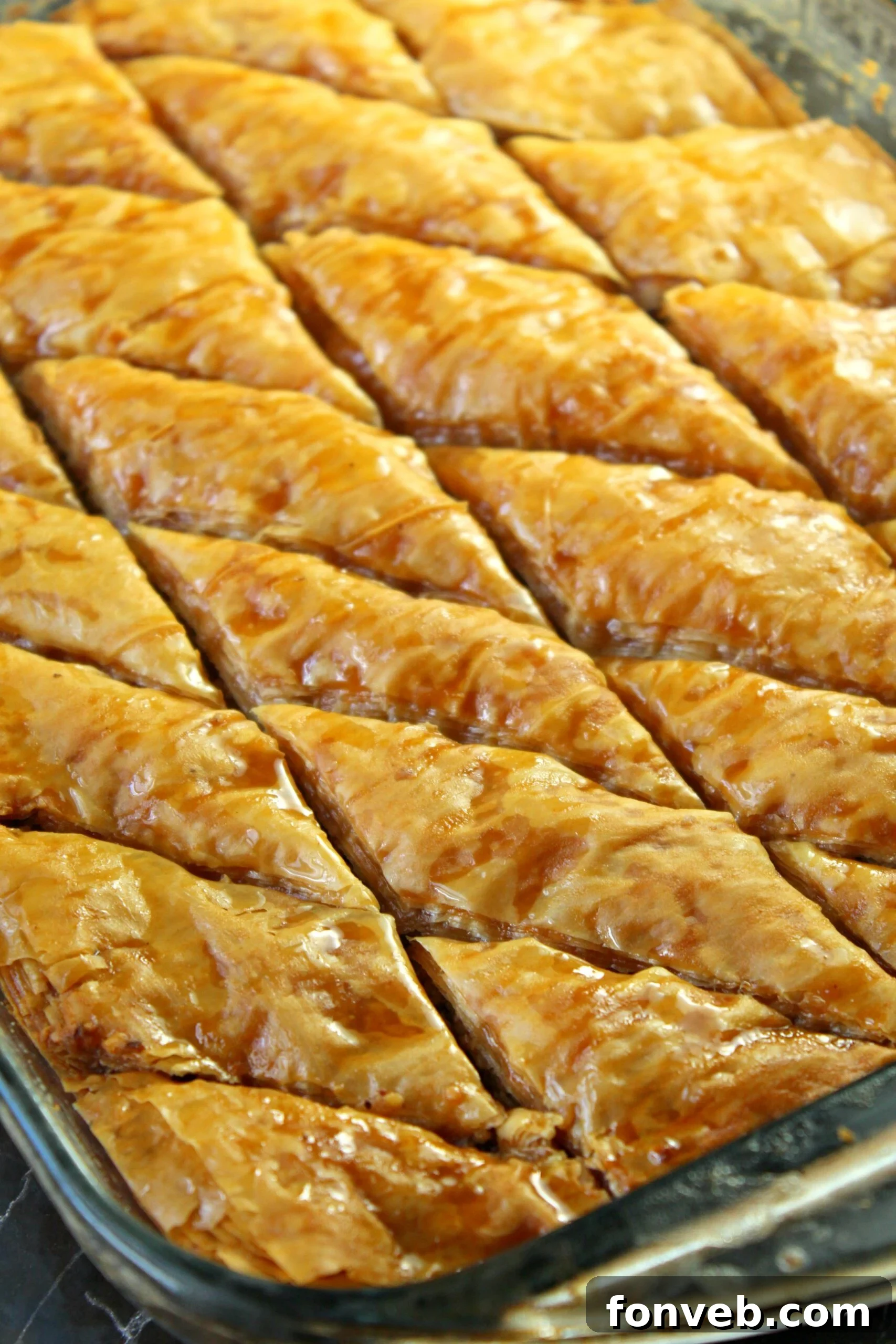
Baklava is renowned for its incredible blend of textures and flavors – delicate, crisp layers giving way to a sweet, nutty filling, all drenched in glistening honey. It’s a timeless classic, especially beloved in Greek and Mediterranean cultures, and a fantastic recipe to have in your repertoire. Making it at home elevates it from a simple pastry to a masterful creation that will impress family and friends. The essential ingredient, phyllo (or filo) dough, is readily available in the freezer section of most supermarkets, making this authentic recipe accessible to all home bakers.
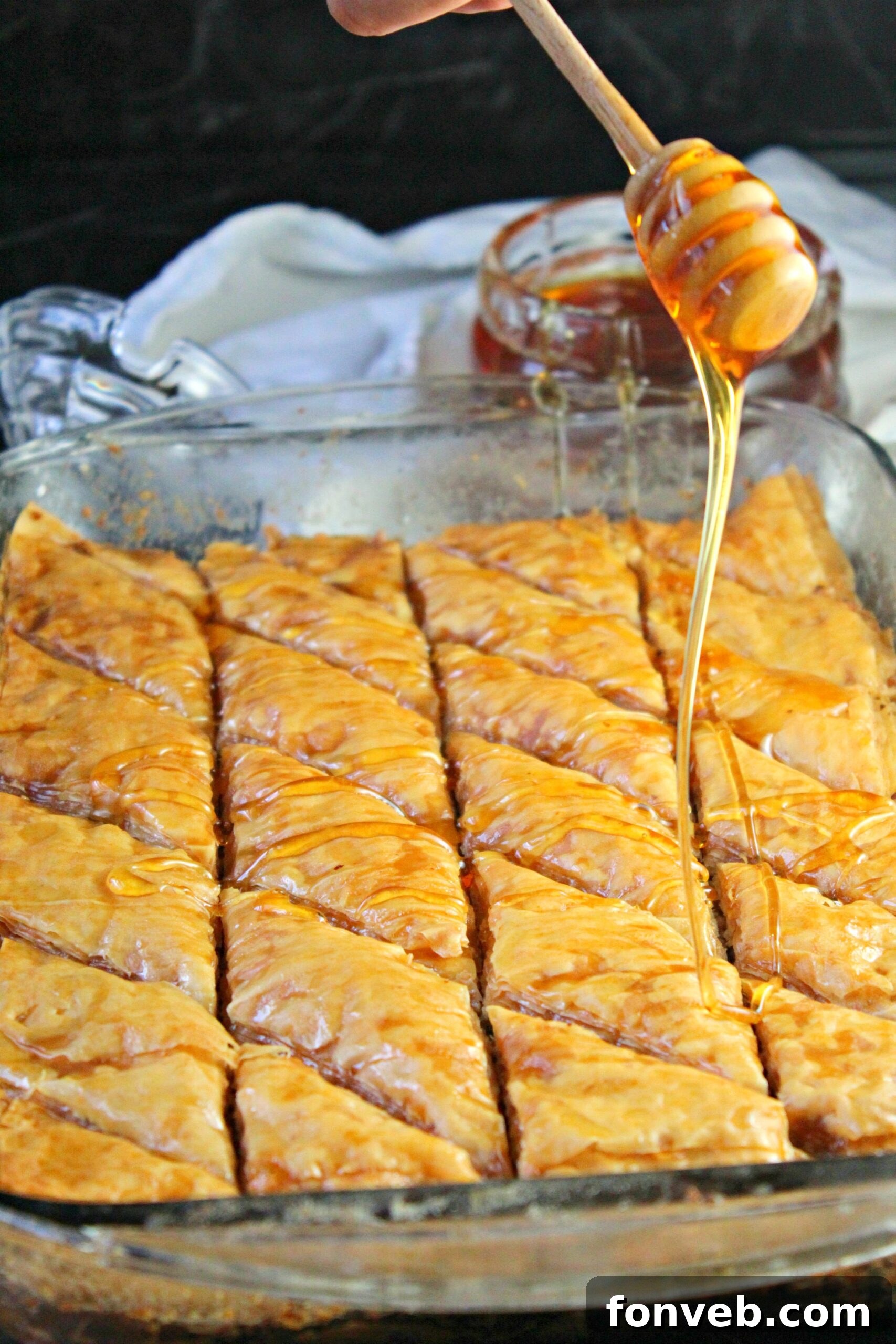
At its heart, Baklava is a rich, sweet pastry constructed from multiple sheets of paper-thin filo dough, generously brushed with melted butter, then filled with finely chopped nuts and sweetened with a pure honey-based syrup. While widely popular in Greek households, its heritage is deeply rooted across many cultures, each adding its unique twist. This recipe embraces the traditional Greek style, focusing on the buttery crispness of the filo and the vibrant lemon notes in the honey syrup.
My earliest memories of this delightful dessert are vivid. I grew up mesmerized, watching my mother meticulously stack those delicate sheets of filo dough, transforming them layer by layer into a golden masterpiece. Each sheet was carefully brushed with melted butter, a rhythmic, almost meditative process that spoke of love and tradition. The aroma that filled our home as she stirred the honey syrup on the stove, a scent of warm spices and sweet citrus, was truly intoxicating. And the ultimate reward? The anticipation of those sticky fingers and the incomparable taste of a freshly baked, homemade baklava.
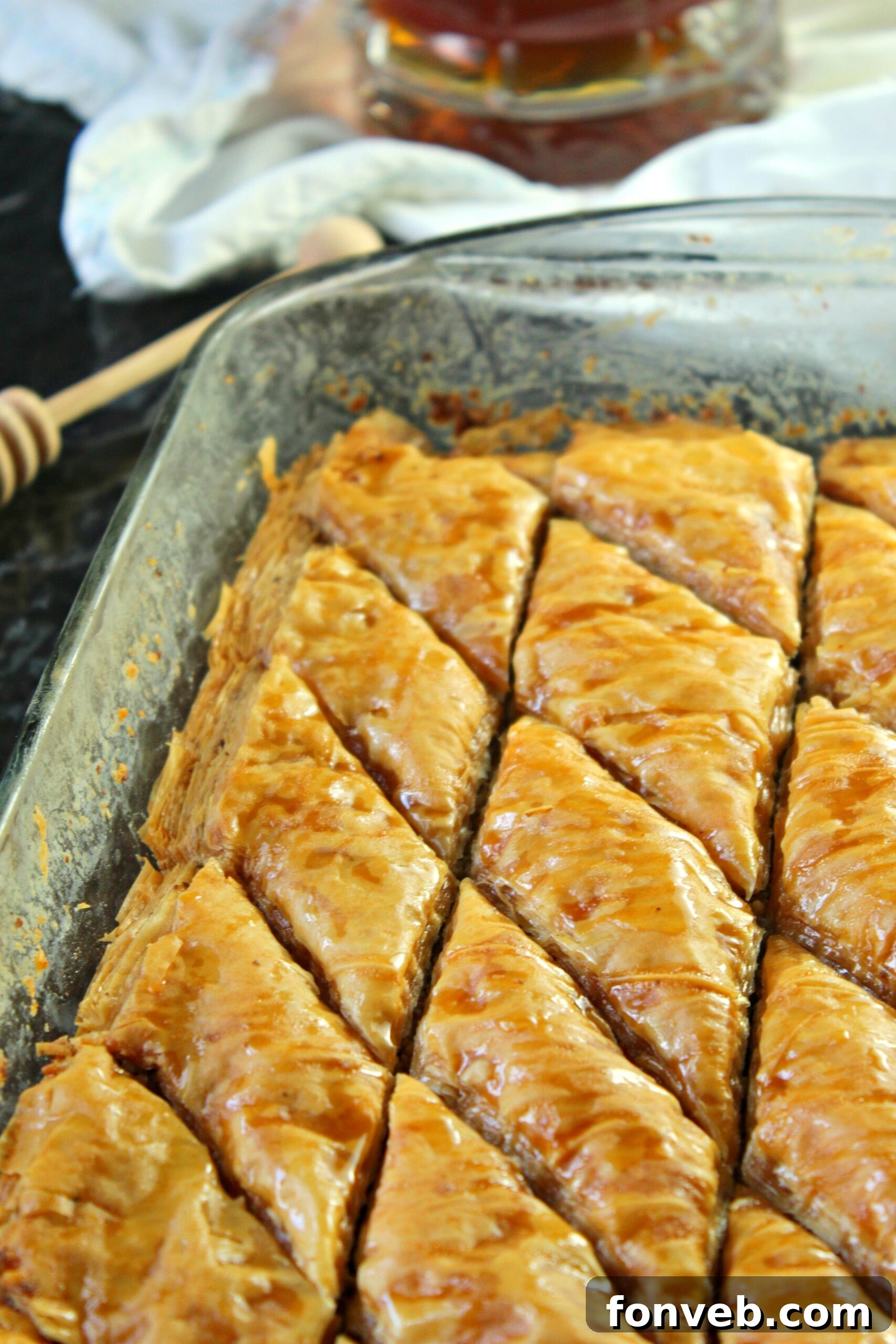
Typically, Baklava is prepared in a large baking pan, building up numerous layers of delicate filo dough, each separated by a light coating of melted butter. These layers sandwich generous fillings of finely chopped nuts, most commonly walnuts or pistachios, though almonds also make a delicious addition. The interplay between the crisp dough and the rich, spiced nuts creates a symphony of textures and flavors.
This classic baklava recipe is both simple and timeless, making it perfect for special occasions, holiday gatherings, or simply when you want to treat yourself and your loved ones to an authentic, made-from-scratch dessert. It’s one of those magical confections that often tastes even better the next day, as the honey syrup has ample time to seep into every flaky layer, enhancing its flavor and texture (if it manages to last that long!). Whether you are a seasoned baklava enthusiast or embarking on your first baking adventure with filo, this recipe will expertly guide you through every buttery, nutty, and exquisitely sweet step of the way.
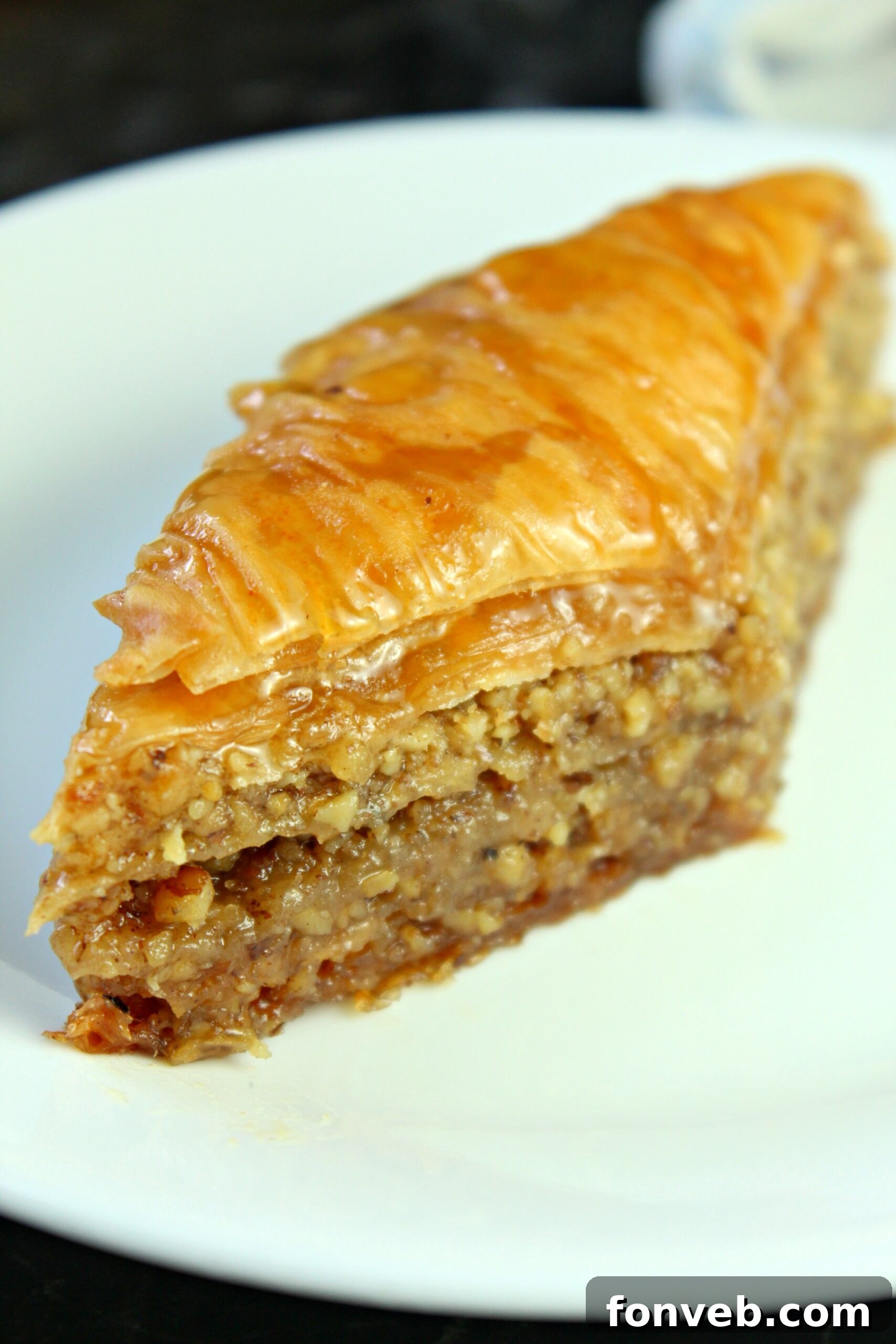
As someone with a deep appreciation for Greek cuisine, thanks to my husband’s family heritage, I can confidently say that this baklava recipe has become a cherished staple at all our holiday gatherings and is always a highly anticipated dessert. It’s the kind of treat that truly brings people together.
Frequently Asked Questions (FAQ) About Baklava
Can I make baklava ahead of time?
Absolutely! Baklava is an exceptional make-ahead dessert. In fact, many believe it tastes even better on the second or third day, allowing the luscious honey syrup ample time to fully absorb into all the flaky layers. Once cooled, simply keep it covered at room temperature for up to 5 days. For slightly longer storage, you can refrigerate it, though this might slightly diminish its crispness.
How should I store leftover baklava?
For best results and to maintain its delightful texture, store baklava in an airtight container at room temperature for 3 to 5 days. If your kitchen tends to be very humid or warm, refrigeration is an option, but be aware that it can make the filo layers less crisp. To revive refrigerated baklava and restore some of its crispness, you can place a piece in a preheated oven at 300°F (150°C) for a few minutes until warmed through.
Can I freeze homemade baklava?
Yes, baklava freezes remarkably well! Once it has completely cooled and the syrup has fully set, wrap it tightly in plastic wrap, then an additional layer of aluminum foil, or place it in a freezer-safe airtight container. It can be frozen for up to 3 months. To thaw, simply transfer it to the refrigerator overnight, then bring it to room temperature before serving to enjoy its full flavor and texture.
Do I need to use walnuts or can I try other nuts?
While walnuts are traditionally used in many Greek baklava recipes, you absolutely have the flexibility to experiment with other nuts. Pistachios, almonds, or even pecans make wonderful substitutions or additions. A blend of walnuts and pistachios, for instance, offers a particularly rich and complex flavor profile that many enjoy.
What’s the best way to cut baklava?
The secret to perfectly cut baklava lies in timing: use a very sharp knife to cut all the way through the layers before baking. Attempting to cut baklava after it’s baked can cause the delicate, crisp filo to crumble and flake excessively. Traditional shapes include diamonds, but simple squares or triangles are also perfectly acceptable and just as delicious.
Why is my baklava soggy?
Sogginess typically occurs when both the baklava and the syrup are hot when combined. For that signature crisp-yet-syrupy texture, a crucial rule is to ensure one component is hot and the other is completely cool. In this recipe, the baklava comes hot out of the oven, and the syrup has been prepared in advance and allowed to cool, which facilitates proper absorption without resulting in a soggy pastry.
Can I make this recipe without honey?
Honey contributes significantly to baklava’s distinctive flavor and sticky texture. While you can certainly use more granulated sugar, or substitute with alternatives like maple syrup or agave nectar for a different twist, be aware that this will alter the traditional taste and potentially the final texture of your baklava.
Is baklava difficult to make?
Baklava, despite its elaborate appearance, is not as difficult as it might seem! The main requirements are patience and a gentle touch, especially when handling the delicate filo sheets. As long as you keep the filo covered with a slightly damp towel to prevent drying and carefully brush each layer with butter, you will achieve those highly coveted crispy, flaky layers every single time.
Is baklava Greek or Middle Eastern?
Baklava enjoys a rich and shared culinary heritage across many cultures, including Greek, Turkish, Lebanese, and Persian cuisines. Each region has developed its own subtle variations—some prefer pistachios, others incorporate fragrant rosewater or orange blossom into the syrup. This particular recipe leans towards the Greek style, characterized by its generous use of buttered filo, a bright lemony honey syrup, and a delicious walnut filling.
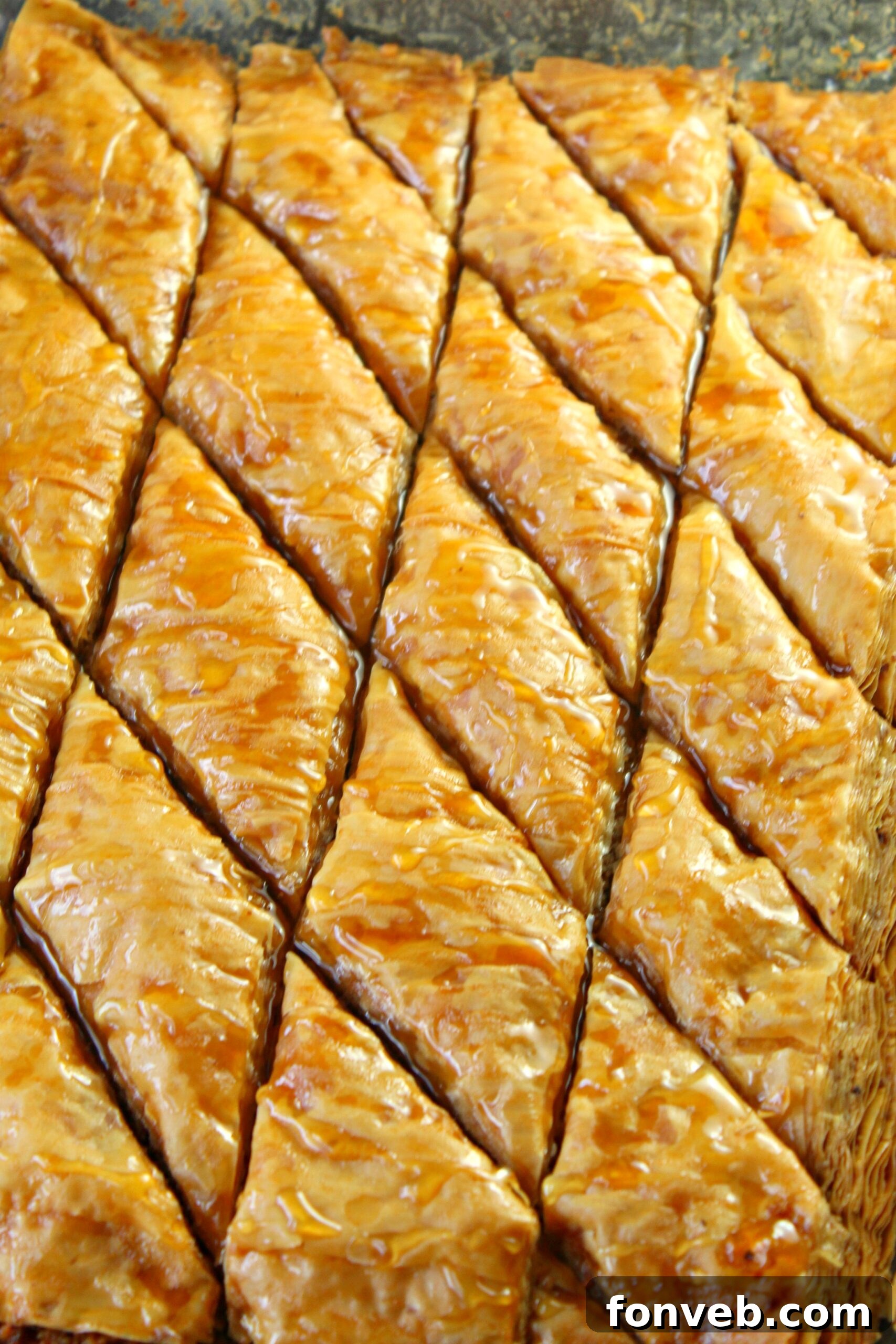
Once you experience the sublime taste of homemade baklava, particularly with a traditional recipe like this, you’ll likely find yourself saying, “I’ll never buy store-bought baklava again!” There’s truly no comparison to the fresh, authentic flavors you can achieve at home.
Essential Tips for Working with Filo Dough (No Stress Involved!)
If the idea of working with paper-thin filo (also spelled phyllo) dough has ever felt intimidating, rest assured, you’re not alone! It’s famously delicate and prone to drying out quickly. However, with a few simple techniques, handling it becomes surprisingly manageable. Here’s how to work with filo like a seasoned pro and ensure your baklava is perfectly crisp:
-
Thaw It Properly: This is a critical first step. Always thaw frozen filo dough slowly in the refrigerator overnight. Never attempt to thaw it at room temperature, as this can cause the sheets to stick together or become gummy and unusable.
-
Keep It Covered: The moment you unroll the filo dough, immediately place it under a slightly damp kitchen towel or paper towel. This acts as a protective barrier, preventing the super-thin edges from drying out and cracking while you meticulously work through the layers.
-
Work Quickly But Gently: Filo is inherently delicate, but it’s also quite forgiving. Don’t panic if a sheet tears a little – simply layer another sheet directly over it. Once baked, no one will ever notice the minor imperfection, and the layers will still bake up beautifully.
-
Brush, Don’t Drench: Utilize a good quality pastry brush to lightly and evenly coat each layer with melted butter. The goal is a light film of butter, not a soaking. Too much butter can make the baklava greasy or overly dense, while too little can cause the filo to dry out and become brittle during baking. A gentle touch is key to achieving that signature crispy texture.
Once you embrace these techniques, working with filo dough will become a much more enjoyable and intuitive part of your baking routine. The effort is absolutely worth it for the stunningly crisp, golden layers and the unparalleled flavor you’ll achieve in every piece of this traditional baklava.
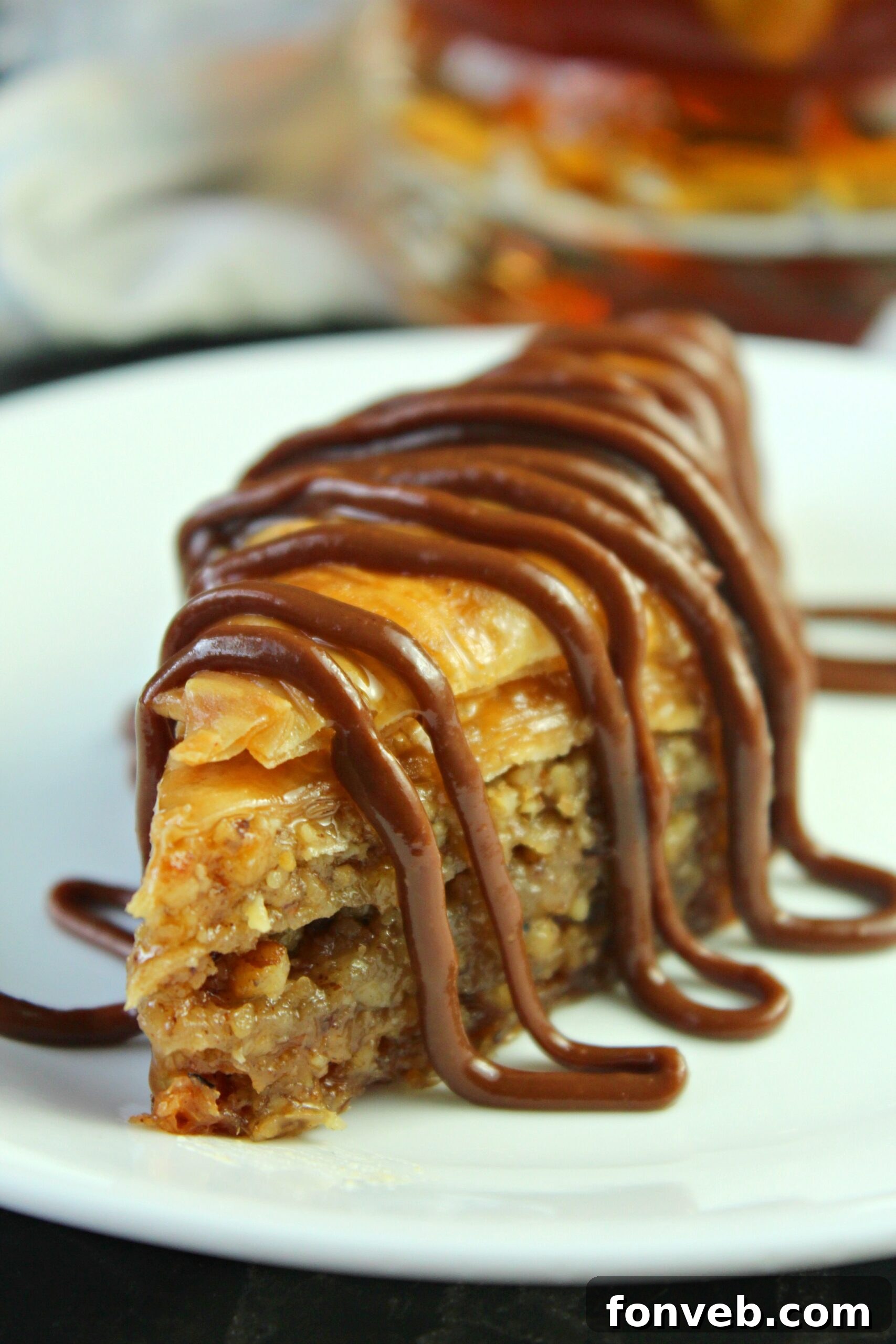
For the absolute best results, I always recommend making this baklava the night before you plan to serve it. While not strictly mandatory, allowing it to rest for at least 8-12 hours at room temperature gives the rich honey syrup ample time to thoroughly penetrate and soften all the delicate layers, ensuring a supremely flavorful and moist baklava.
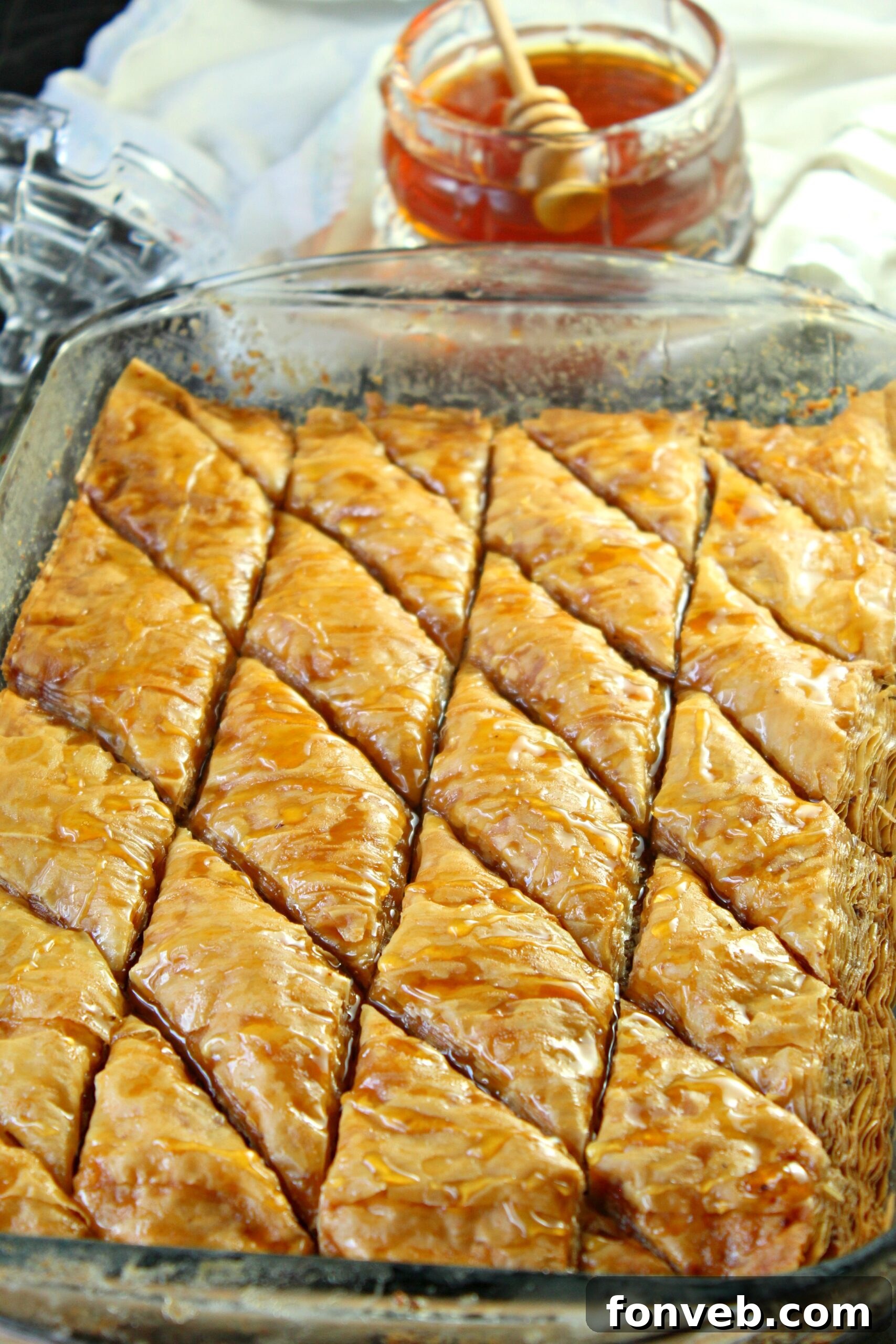
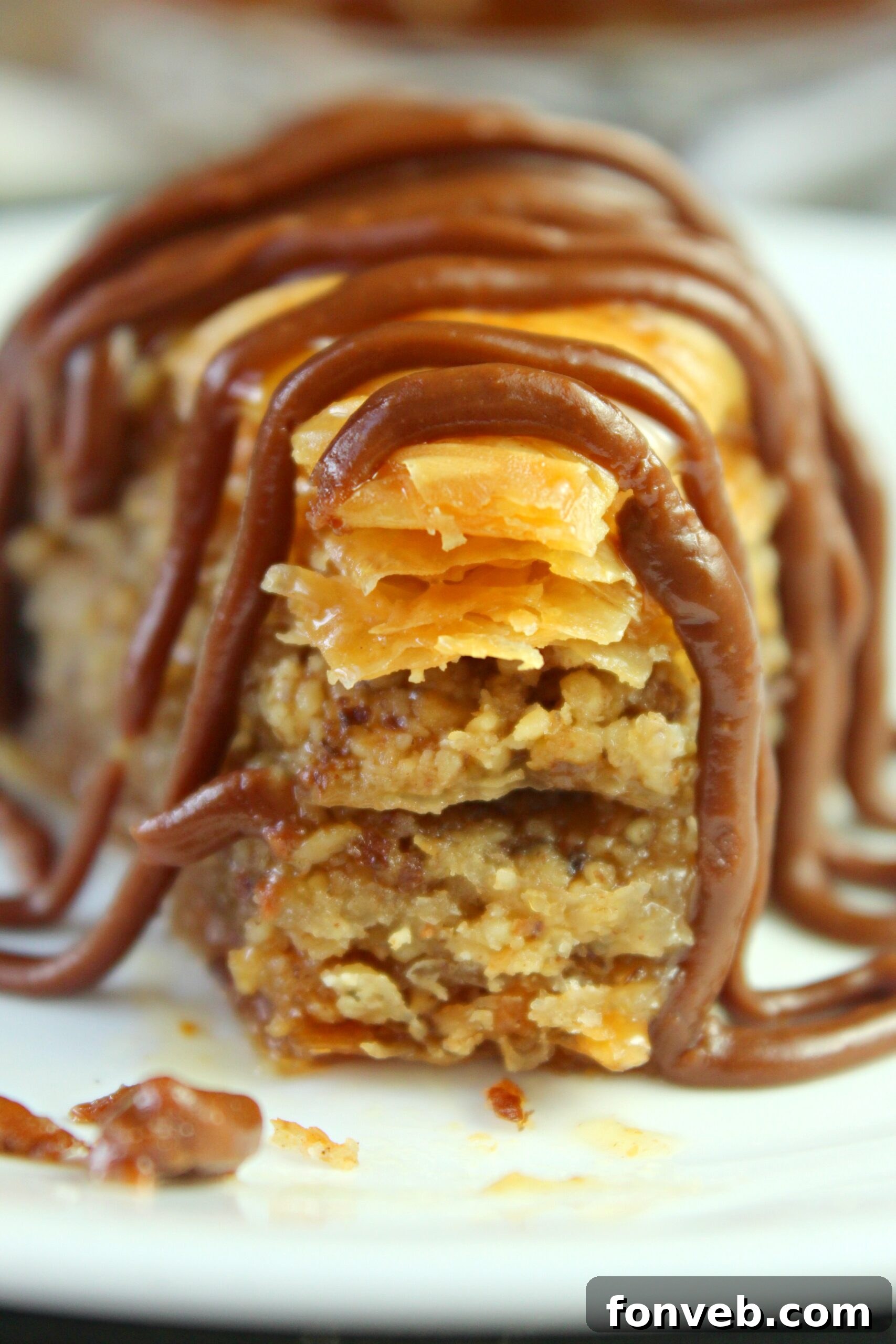
When I prepare baklava, I often make two pans simultaneously. One I’ll finish in the traditional manner with just the honey-lemon syrup, and the other I might drizzle with melted chocolate and additional nuts for a delightful variation. The key to achieving perfect layers is to use a basting brush to spread a very thin, even layer of melted butter between each phyllo sheet. Remember, you want to lightly brush the butter, not drench the sheets. Embrace any natural wrinkles in the filo – they actually contribute to a better, flakier texture. If your baklava ever turns out soggy, it’s almost always due to using too much butter, I promise! Another crucial step: always cut the baklava before you bake it. Use a very sharp knife and cut all the way through the layers, but stop about a half-inch from the bottom of the pan. This allows the cooled honey syrup to perfectly seep into every single layer once poured over the hot, freshly baked baklava, creating pure perfection in every bite.
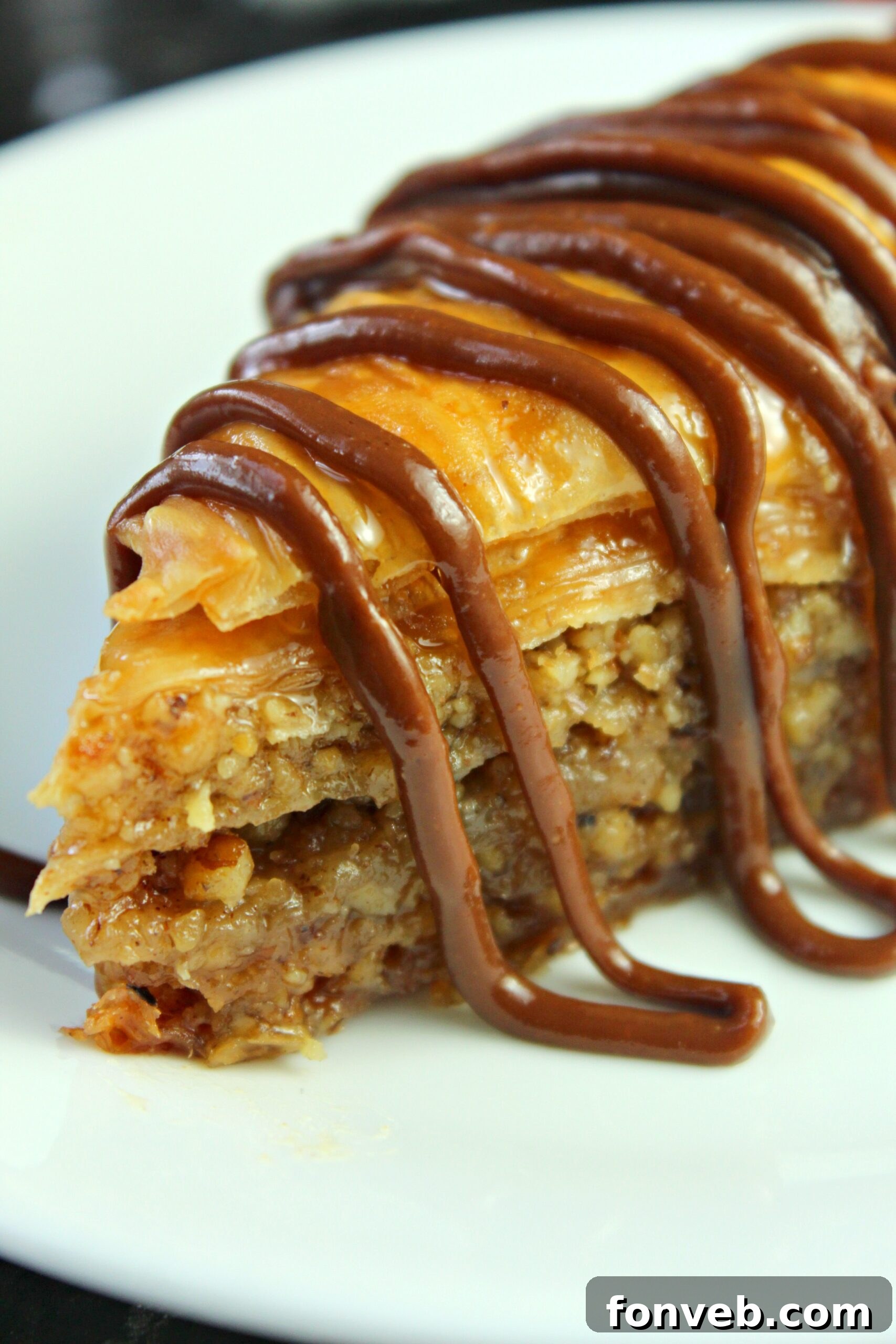
One of the most remarkable qualities of homemade baklava is its excellent shelf life at room temperature – no refrigeration needed! In fact, refrigerating baklava can actually compromise its lovely soft, syrupy texture, which is best preserved at room temperature.
Stored properly in an airtight container at room temperature, your delicious baklava will remain fresh and delightful for up to two weeks.
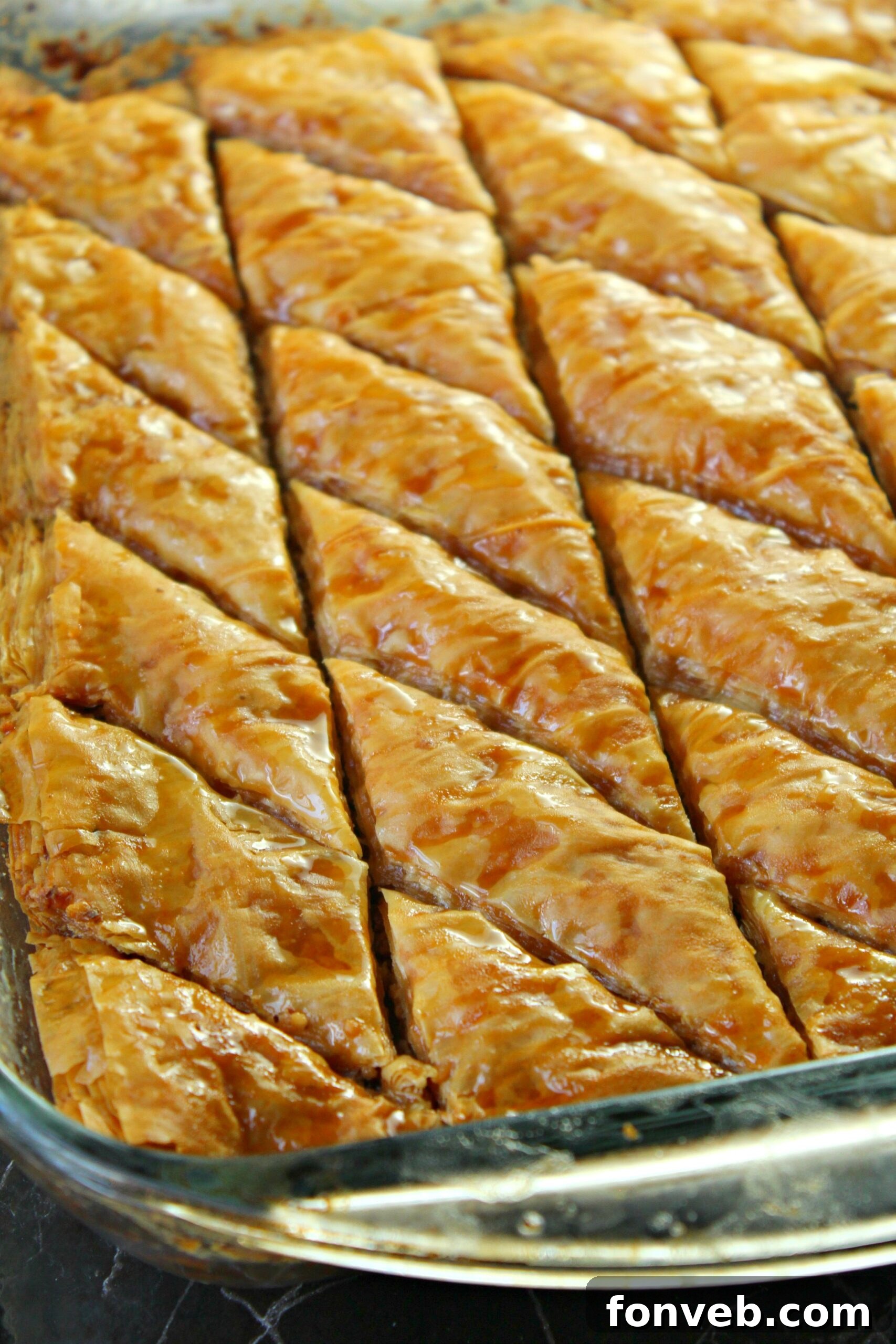
This truly is the best baklava I’ve ever tasted, and it has become a cherished holiday tradition in our home. I make it every year for Christmas, Thanksgiving, and New Year’s celebrations, and it disappears incredibly fast! Family and friends consistently request it, and while it’s certainly not the quickest dessert to assemble, the incredible satisfaction and rave reviews make every moment of effort absolutely worth it. The joy of sharing this golden, sweet delicacy is simply unparalleled.
–
Please remember to SHARE on Facebook and PIN IT!
FOLLOW ME ONPINTERESTBY CLICKING HERE <——
Old Fashioned Baklava
Ingredients
- 1 16 oz. package filo pastry dough, thawed
- 13 tbsp. melted unsalted butter divided
- 4 cups walnuts chopped finely
- 1 tsp. cinnamon
- 1 cup white sugar
- 2 tbsp. fresh lemon juice
- 3/4 cup water
- 1/2 cup pure honey
Instructions
-
Trim filo pastry dough to fit a 13 x 9 inch baking pan, then cover it with a slightly damp towel to prevent drying.
-
Grease a 13 x 9 inch baking dish thoroughly with 1 tbsp. melted butter and set it aside.
-
To prepare the syrup, combine granulated sugar, fresh lemon juice, water, and pure honey in a medium saucepan. Place over medium-high heat and bring to a boil, stirring occasionally to ensure the sugar fully dissolves.
-
Once boiling, reduce the heat to medium-low and let the syrup simmer gently for another 4 minutes without stirring.
-
Remove the saucepan from the heat and allow the syrup to cool completely while you prepare the baklava.
-
Preheat your oven to 325 degrees F (160°C).
-
In a food processor, pulse the walnuts until they are finely chopped but not pulverized into a paste.
-
Transfer the chopped walnuts to a medium bowl and stir in the cinnamon until well combined. This is your nutty filling.
-
Begin assembling the baklava: Carefully lay 10 sheets of filo dough, one at a time, into the prepared baking dish. Brush each individual sheet very lightly with melted butter before laying the next on top. After the 10th sheet, spread 3/4 cup of the walnut mixture evenly over the filo dough.
-
Place another 5 sheets of filo dough over the walnut mixture, again brushing each layer with melted butter. Top this layer with another 3/4 cup of the delicious walnut mixture.
-
Continue this layering process until all the walnut mixture is used up. The final layer should be topped with the remaining 10 sheets of buttered filo dough.
-
Brush the very top layer generously with the remaining melted butter. Using a very sharp knife, carefully slice the pastry into 1 1/2 inch strips vertically, then slice diagonally in both directions to create classic diamond shapes. Ensure you cut almost all the way to the bottom of the pan.
-
Bake the baklava uncovered for approximately 85 minutes (1 hour and 25 minutes), or until the pastry achieves a beautiful golden-brown color and is crisp.
-
Immediately after removing the baklava from the oven, evenly drizzle the completely cooled honey syrup over the hot pastry. The temperature difference is crucial for perfect absorption.
-
Allow the baklava to cool completely at room temperature, ideally for several hours or overnight, so the syrup can fully soak into every layer. Then, it’s ready to serve.
-
ENJOY this incredible homemade baklava!
Did you make this recipe?
Make sure to follow on Pinterest for more recipes!
Pin Recipe
Share on Facebook