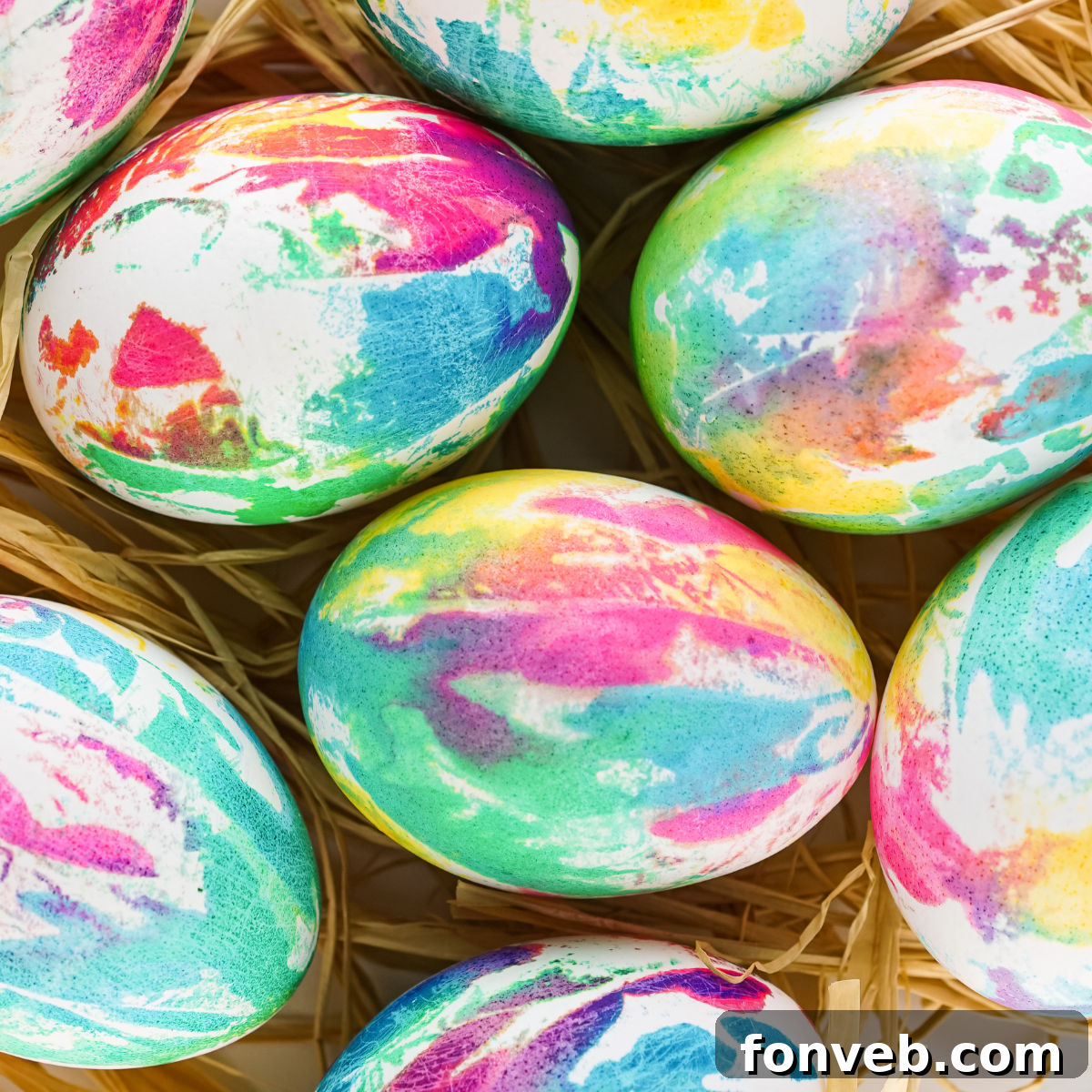
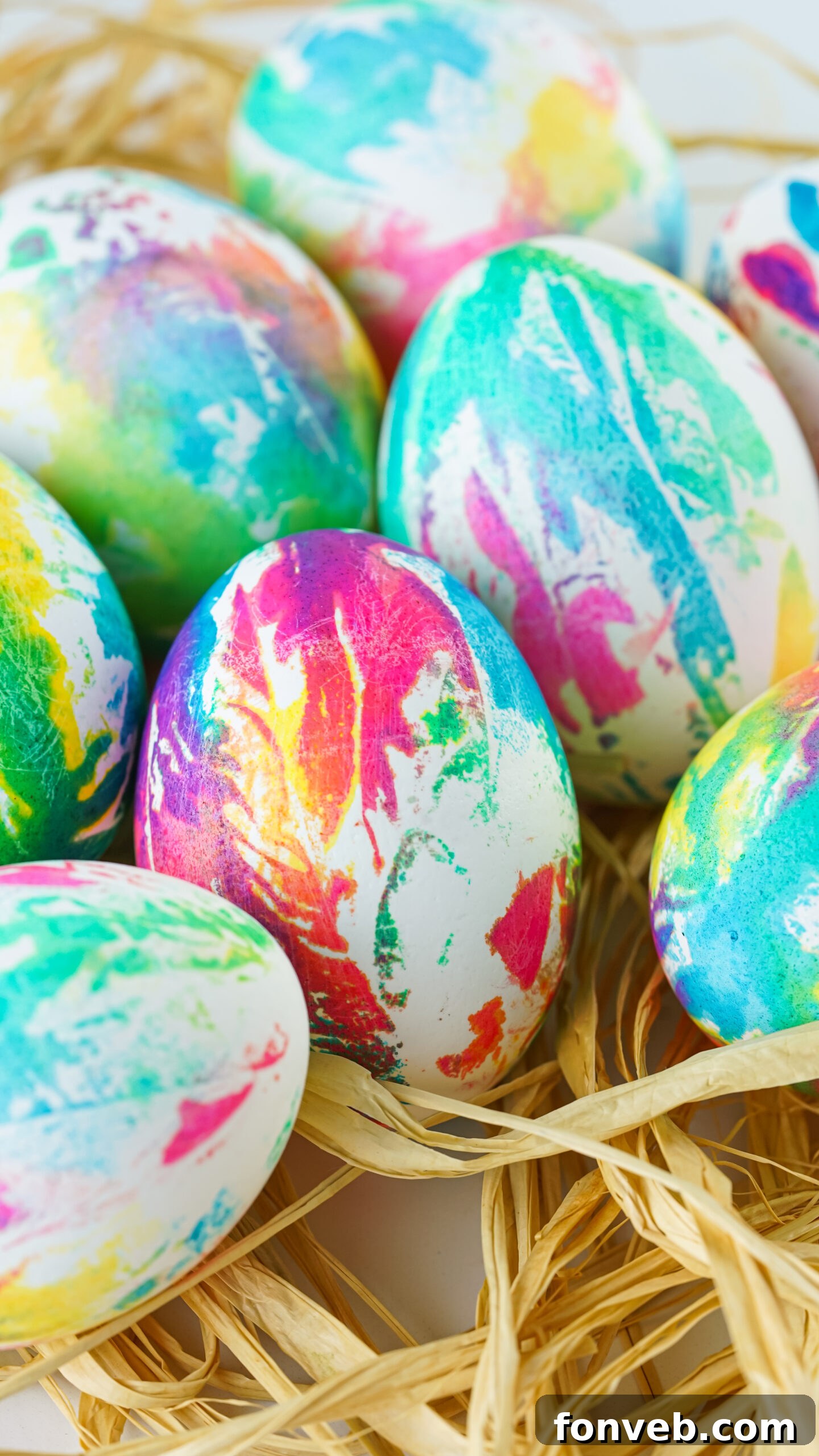
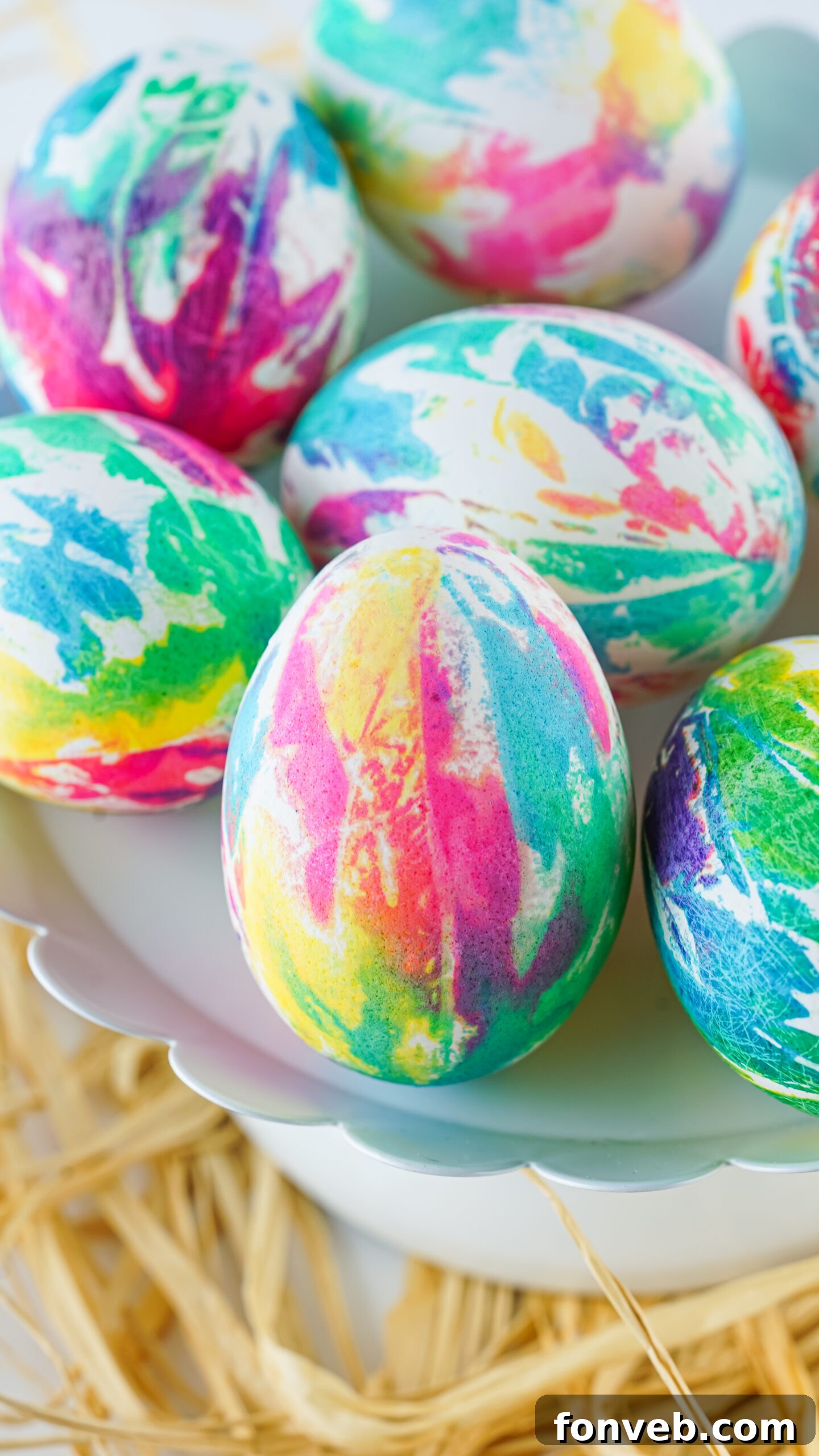
Are you ready to infuse your Easter celebrations with a burst of color and creativity this year? Look no further than these spectacular **Tie Dye Easter Eggs**! This fun, easy-to-create project is perfect for families looking for a unique twist on traditional Easter egg decorating. Imagine the vibrant, swirling patterns of classic tie-dye, but instead of shirts, these mesmerizing designs adorn your Easter eggs, transforming ordinary eggs into dazzling works of art.
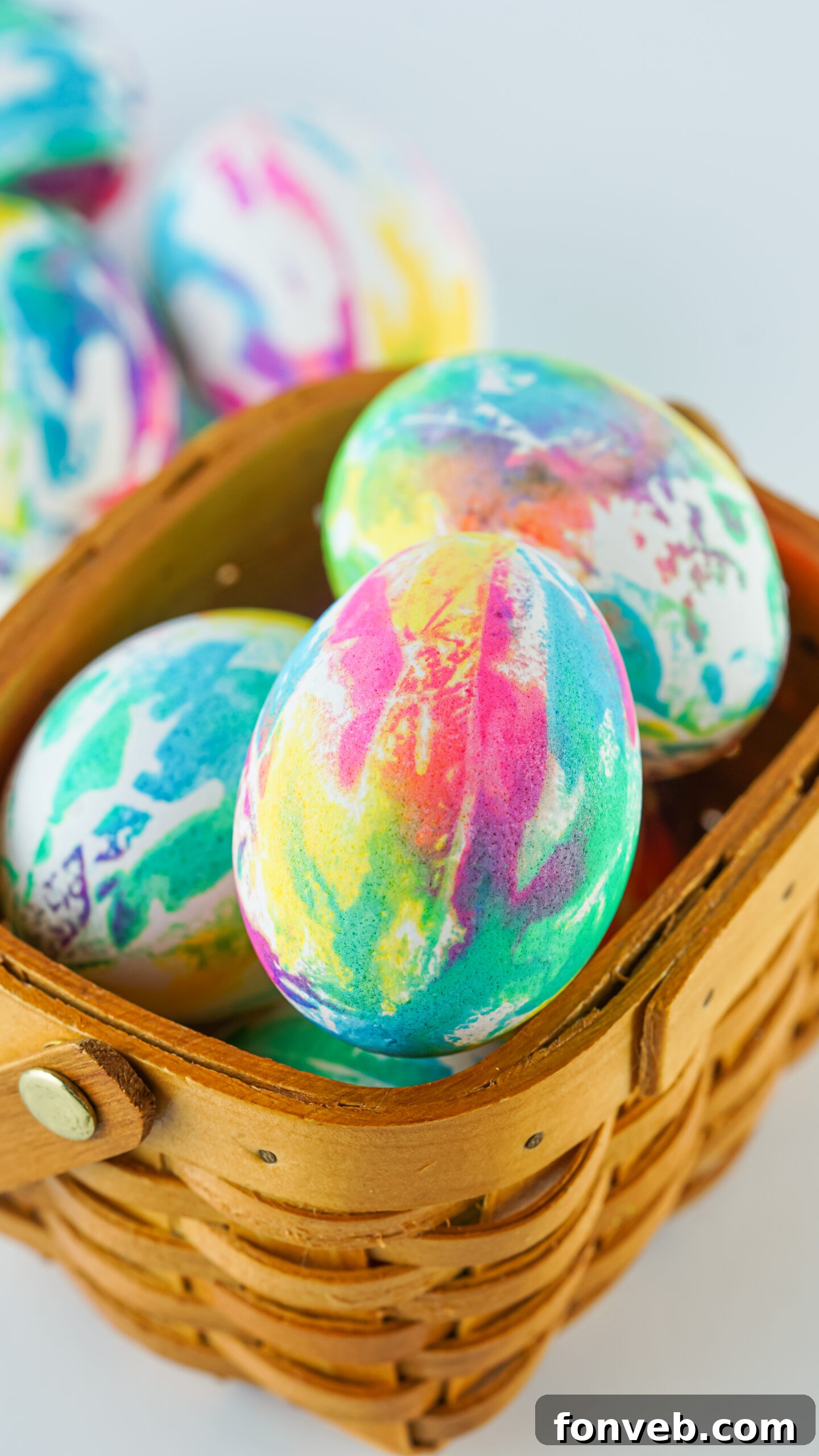
Ditch the monotonous single-color dips and embrace the kaleidoscope effect! With just a few simple supplies and a dash of imagination, you can craft tie-dye Easter eggs that will undoubtedly be the highlight of your holiday table or the star of your annual Easter egg hunt. This guide will walk you through every step of making these eye-catching, unique Easter treasures.
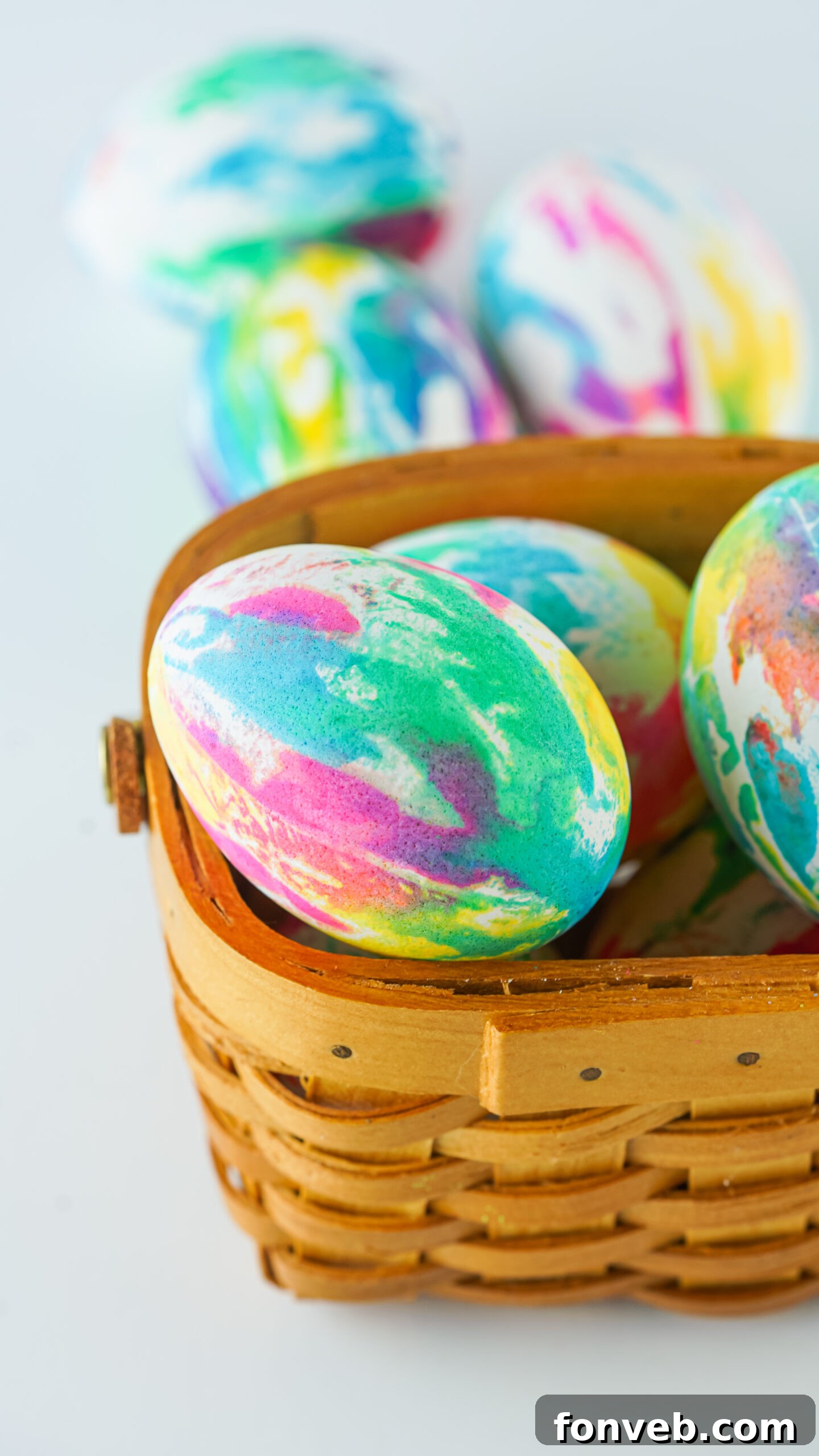
Why You’ll Adore Making Tie Dye Easter Eggs
Tie-dye Easter eggs offer a refreshing departure from conventional decorating methods, bringing a host of benefits that make them a beloved activity for all. Here’s why this vibrant craft will quickly become a cherished Easter tradition:
They’re Incredibly Fun and Effortlessly Easy to Make!
One of the most appealing aspects of tie-dye Easter eggs is their simplicity. You don’t need artistic talent or complicated tools to achieve stunning results. With just a handful of readily available supplies, you can transform plain hard-cooked eggs into something truly extraordinary. The process is straightforward enough for even the youngest decorators, yet offers endless creative possibilities for adults to experiment with colors and patterns. The anticipation of unwrapping each egg to reveal its unique design adds an element of delightful surprise that makes the entire activity enjoyable for everyone involved.
A Fantastic Activity for Kids (and Adults!) of All Ages
Looking for a family activity that truly engages everyone? Tie-dye Easter eggs are the answer! Whether you’re guiding a toddler through their first splash of color or allowing teens to express their sophisticated artistic flair, this project provides an entertaining and inclusive experience. It’s a wonderful way to foster creativity, develop fine motor skills in younger children, and encourage family bonding as you work together to create a basket full of colorful eggs. Beyond the fun, it creates lasting memories and beautiful, tangible keepsakes of your time together.
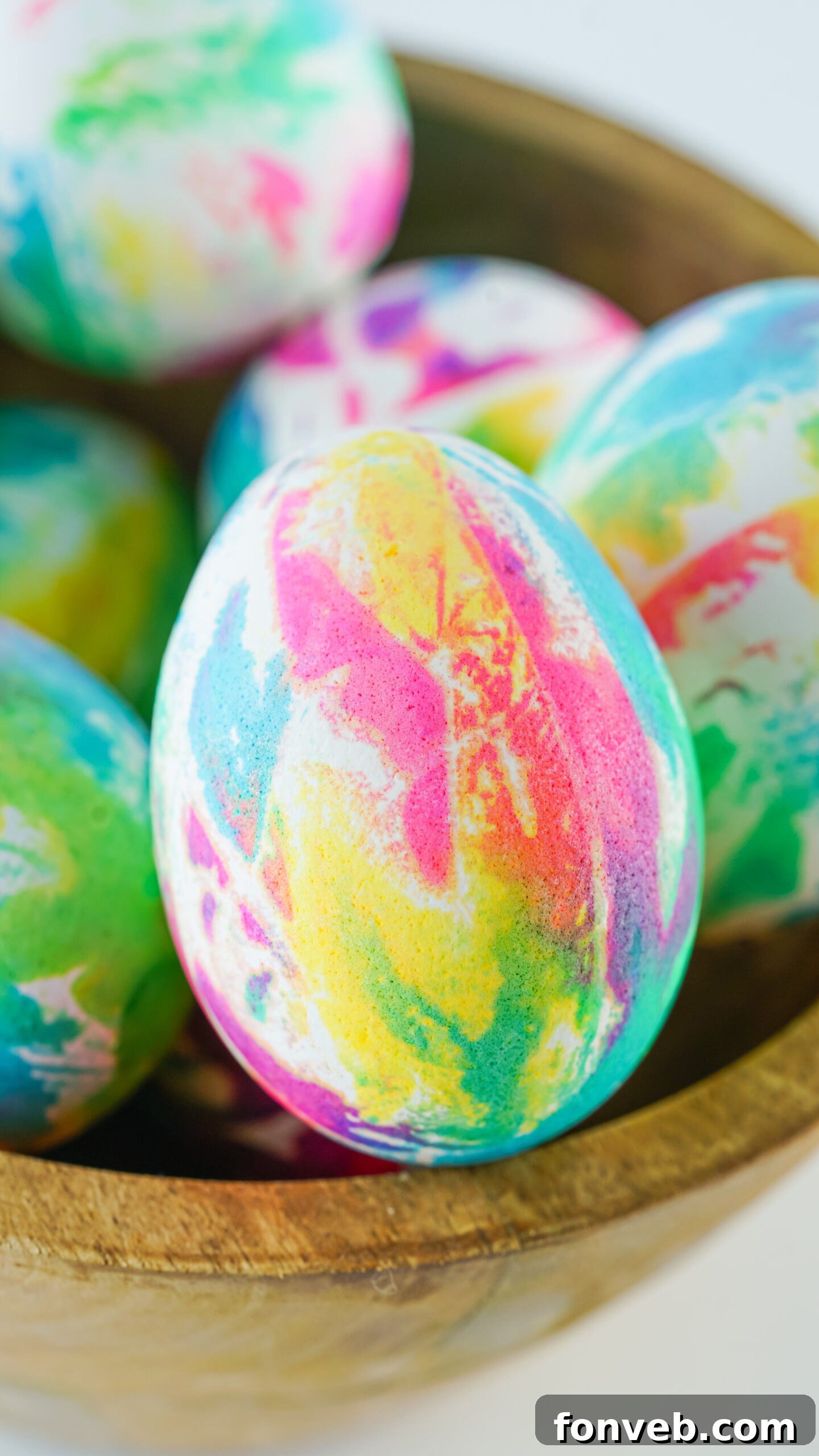
Visually Stunning and Truly Unique Easter Decorations
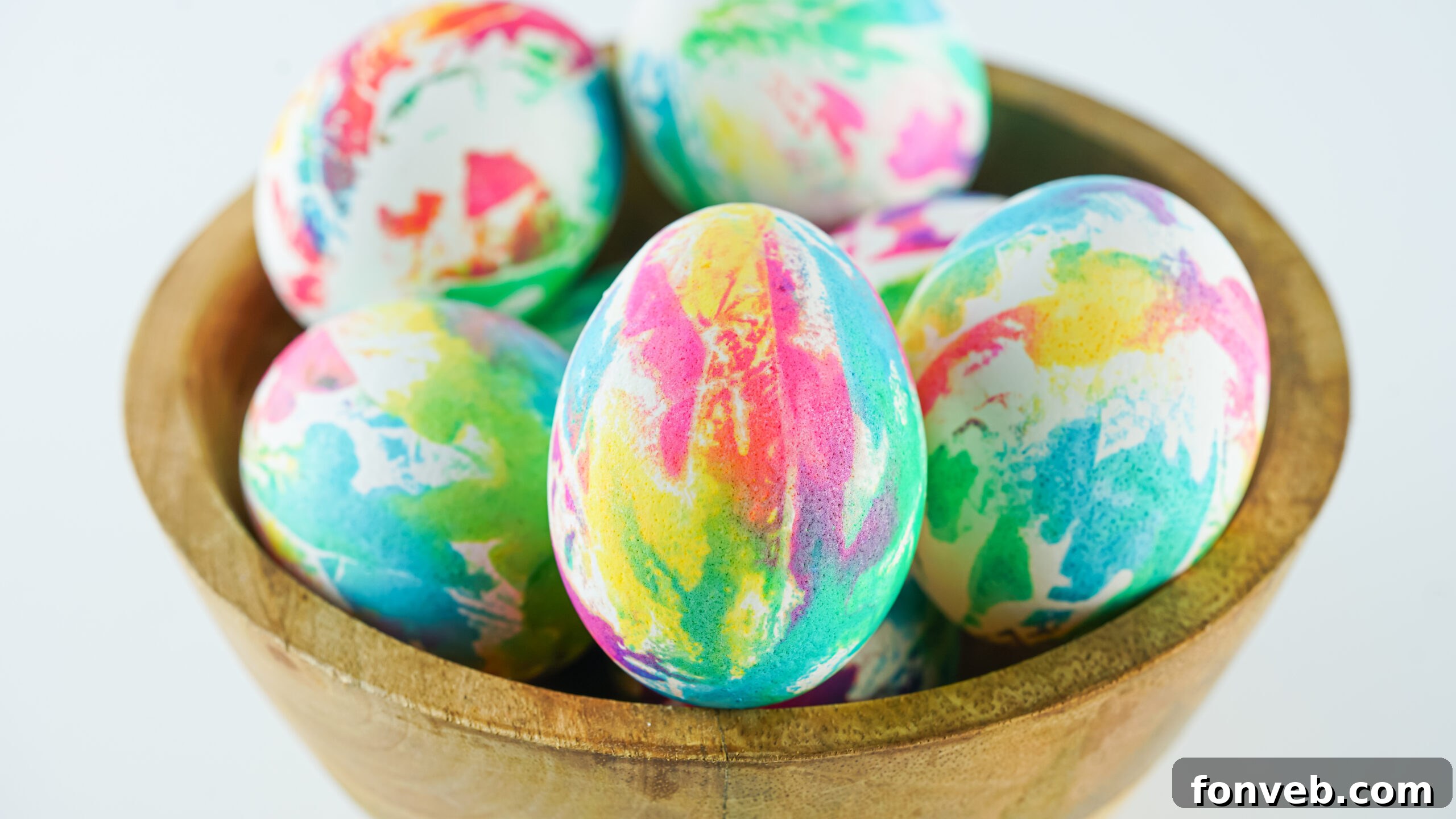
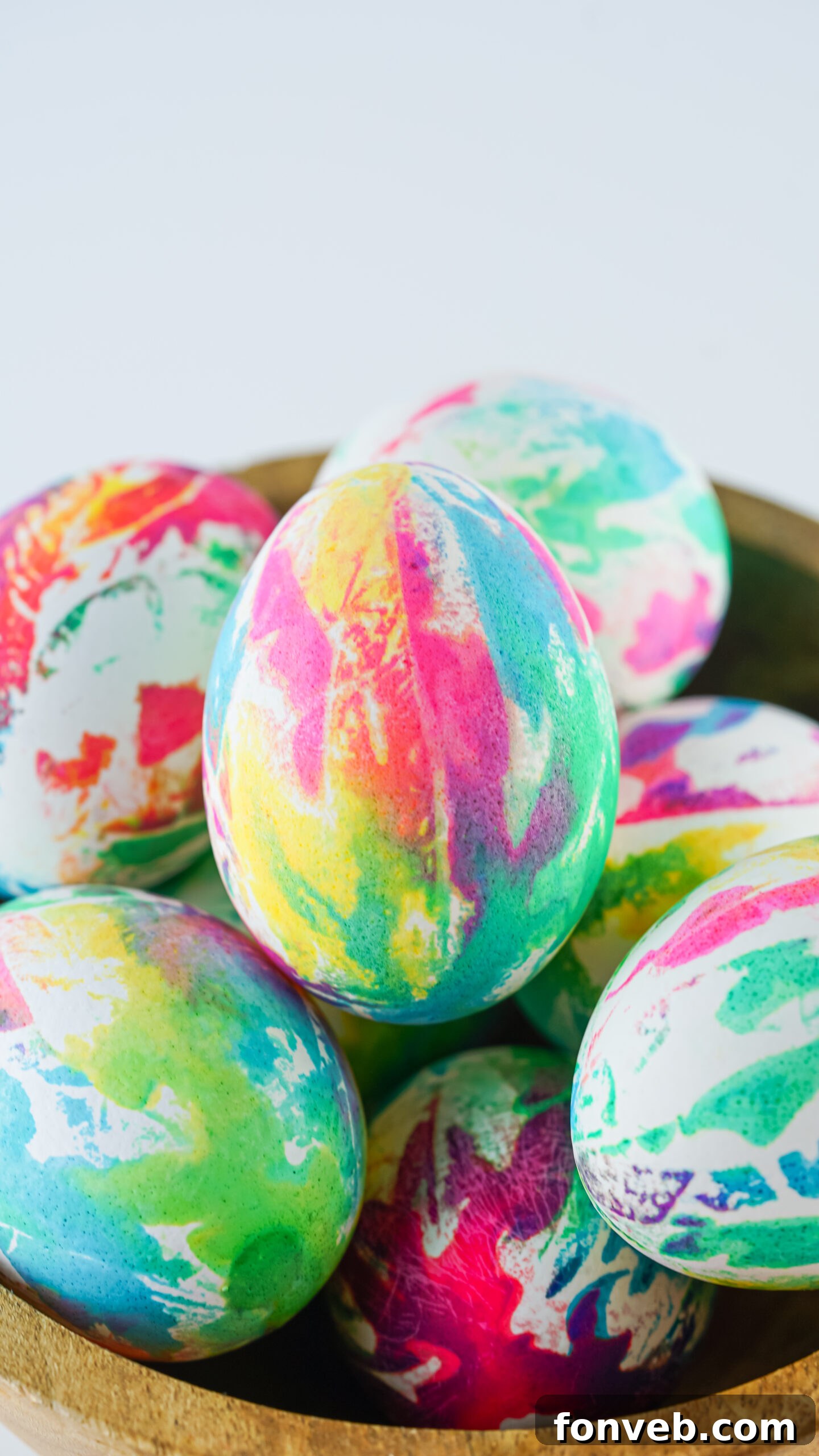
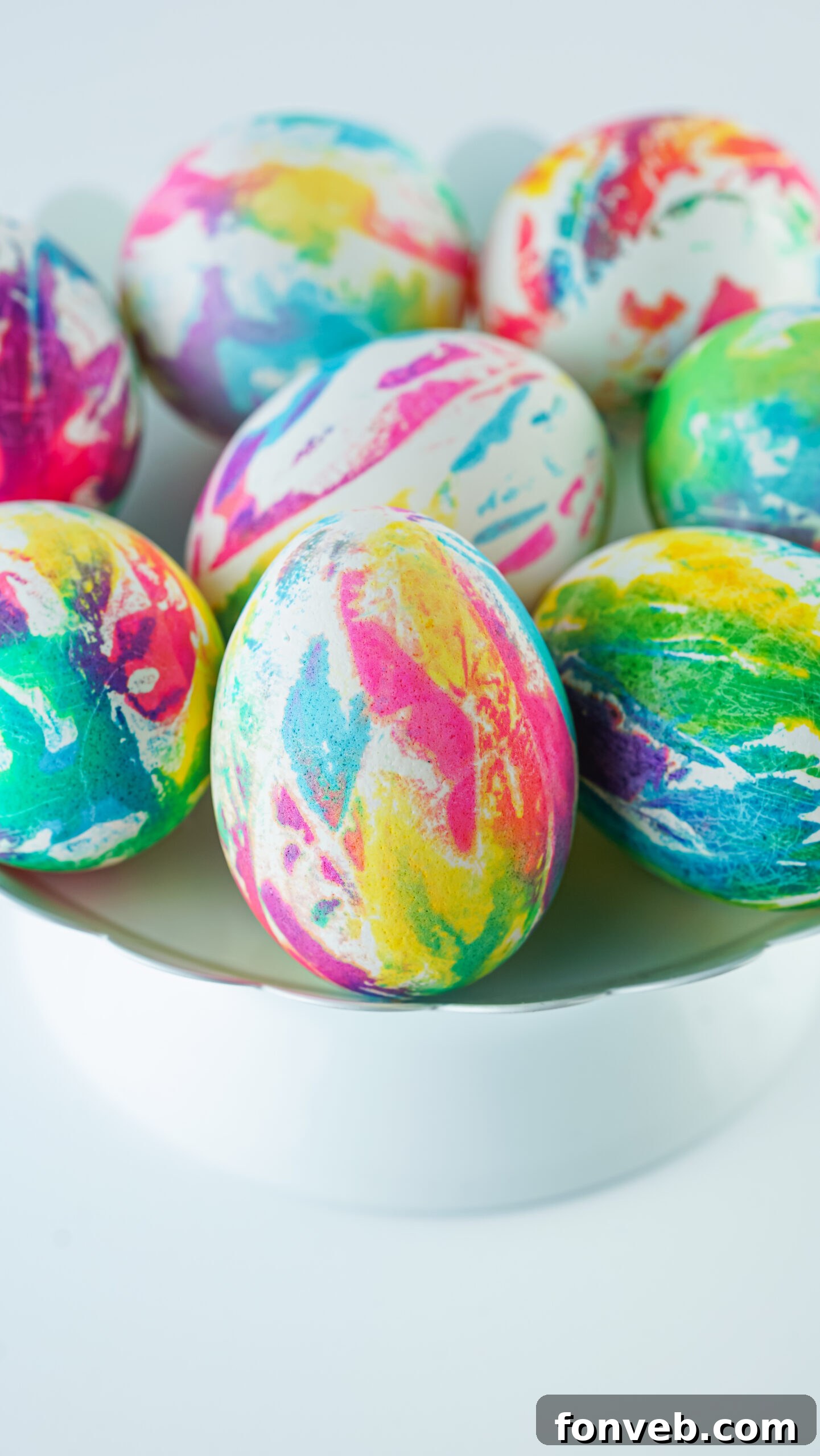
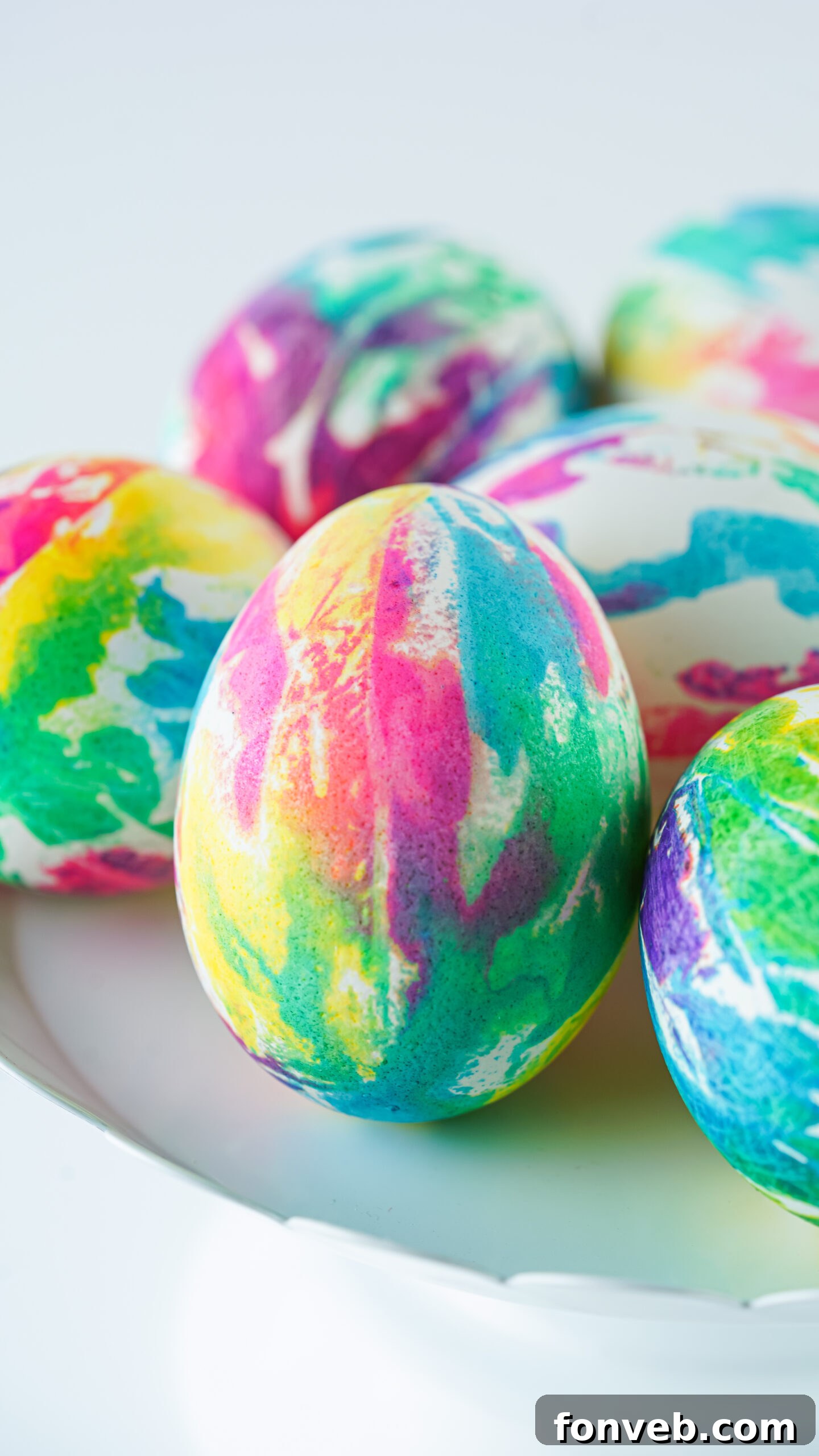
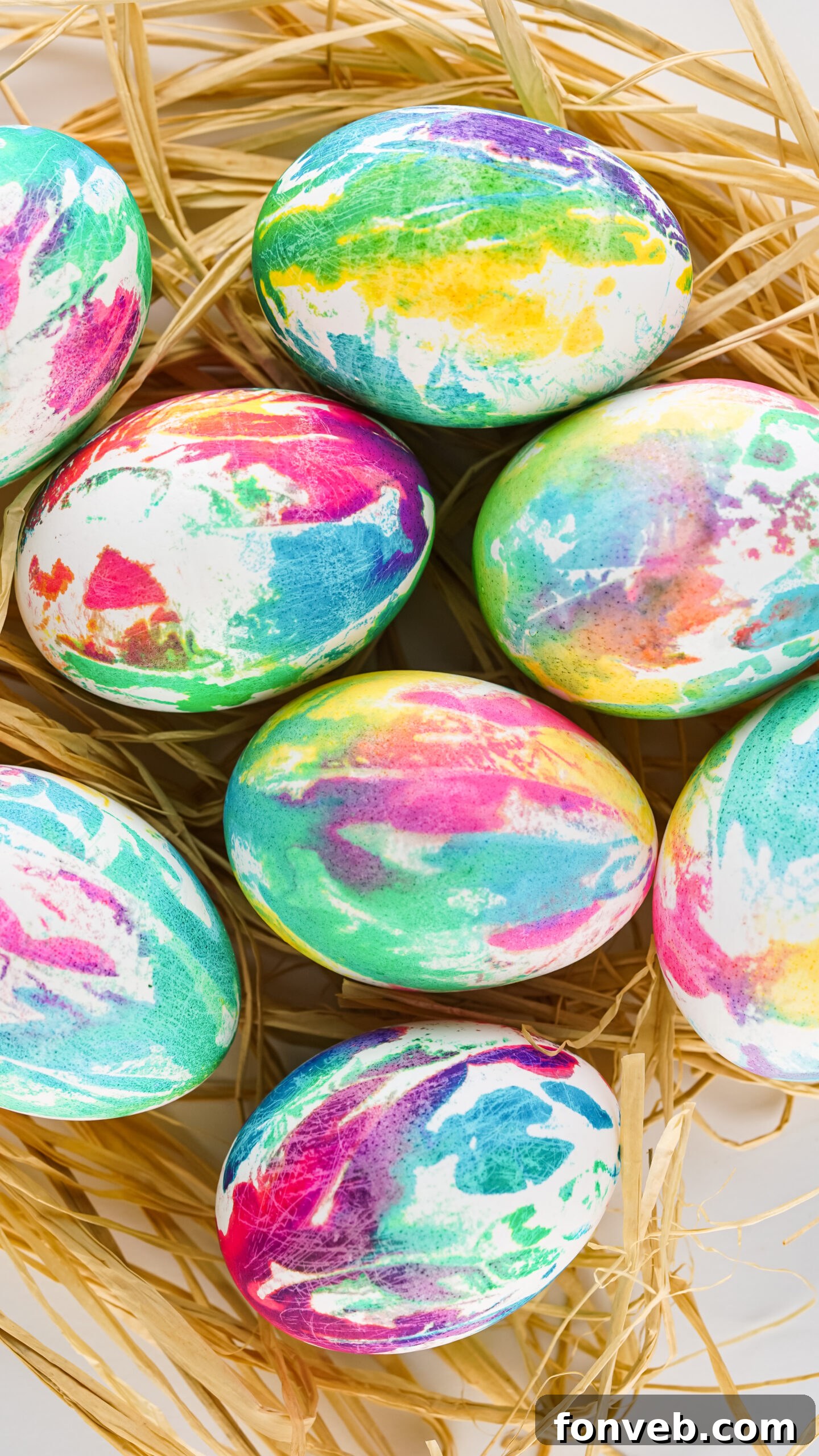
Forget the predictable pastels. Tie-dye Easter eggs are a celebration of bold, spontaneous beauty. Each egg emerges with its own distinct swirl of colors, ensuring no two are exactly alike. These striking creations make for an unforgettable centerpiece on your Easter table, an impressive addition to an Easter basket, or delightful surprises hidden during an egg hunt. Their vibrant, artful appearance is guaranteed to capture attention and spark conversation, elevating your Easter décor far beyond the ordinary.
Delicious Too! Edible Art for Your Easter Feast
Since this method uses food-safe dyes on hard-cooked eggs, your tie-dye masterpieces aren’t just for looking at – they’re also delicious and perfectly safe to eat! Decorating your own hard-boiled eggs means you can enjoy the fruits of your creative labor as a festive snack, a colorful addition to an Easter brunch, or even turn them into vibrant deviled eggs. They taste wonderfully fresh, unlike store-bought dyed eggs, adding another layer of enjoyment to your Easter celebration.
The Secret Behind the Swirl: Why Coffee Filters Work Wonders
The magic of tie-dye Easter eggs lies in a simple, everyday item: coffee filters! These unassuming kitchen staples are the key to achieving those beautiful, diffused patterns. When wrapped tightly around the egg, the porous nature of the coffee filter allows the food coloring to spread and bleed in a controlled manner. As the moisture from the dye soaks through the paper, it creates unique, watercolor-like swirls and blends, giving each egg its distinctive tie-dye look. The coffee filter acts as a temporary canvas that transfers the intricate design directly onto the eggshell, resulting in vibrant, artistic effects that are difficult to achieve with traditional dipping methods.
Essential Ingredients and Supplies for Vibrant Tie Dye Easter Eggs
Gathering your materials is the first step to creating these stunning Easter eggs. You’ll be surprised how few items you need, most of which you likely already have at home:
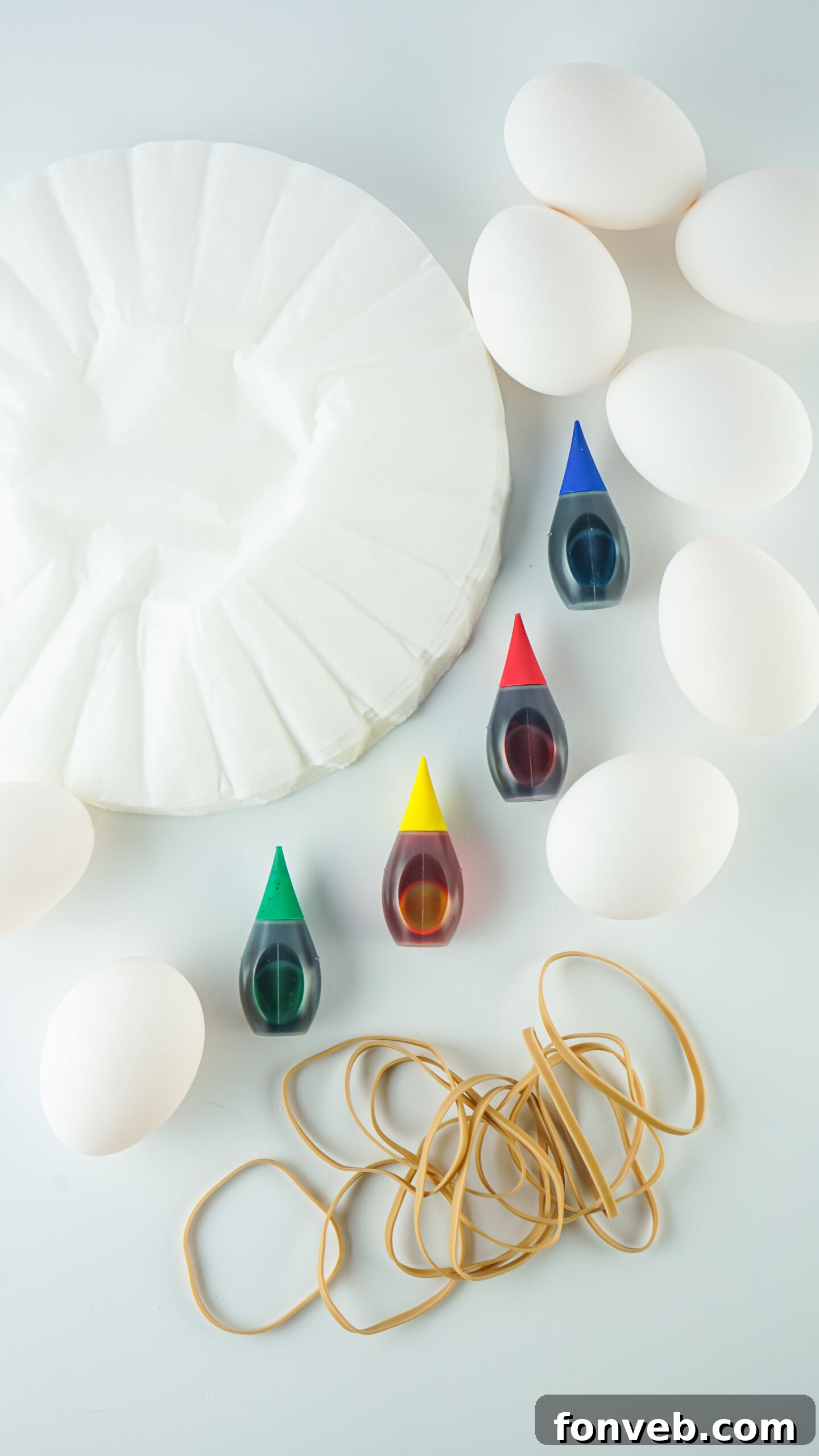
- Boiled Eggs: Hard-cooked eggs are your blank canvas for these beautiful tie-dye masterpieces. For the most vibrant colors, opt for white eggs. Ensure they are completely cooled before dyeing to prevent cracks and allow for better color absorption. For perfect hard-boiled eggs, place them in a single layer in a pot, cover with about an inch of cold water, bring to a rolling boil, then remove from heat, cover, and let sit for 10-12 minutes. Immediately transfer to an ice bath to stop cooking.
- Coffee Filters: Standard basket-style coffee filters work best. They are thin enough to absorb the dye effectively and sturdy enough to wrap around the eggs without tearing. Each egg will need one coffee filter.
- Water-Based Food Coloring: This is where the magic happens! Liquid food coloring is ideal for its ease of spreading and blending. A basic set of red, blue, green, and yellow will give you a fantastic array of colors, and you can mix them to create purples, oranges, and more. Gel food coloring can also work but may require a drop or two of water to help it spread.
- Rubber Bands: Small rubber bands are essential for securing the coffee filters tightly around the eggs. You can also strategically place rubber bands around the egg *before* wrapping it in the filter to create interesting resist patterns, adding another layer to your tie-dye design.
- Paper Towels: Keep a roll handy! Paper towels are invaluable for protecting your workspace, wiping up any accidental spills or drips, and gently patting your dyed eggs dry after unwrapping.
- Rubber Gloves (Optional but Recommended): Food coloring can stain hands. If you prefer to keep your hands clean and stain-free, wearing rubber gloves throughout the dyeing process is highly recommended.
- Baking Sheet or Tray (Optional): A baking sheet lined with foil or parchment paper provides a contained and easy-to-clean surface for your eggs to sit while the dye sets and dries.
- Cooling Rack (Optional): Placing the unwrapped eggs on a cooling rack allows for even airflow, helping them dry thoroughly without any smudging.
Step-by-Step Guide: How to Tie Dye Easter Eggs with Coffee Filters
Get ready to unleash your inner artist! Follow these simple steps to create stunning tie-dye Easter eggs:
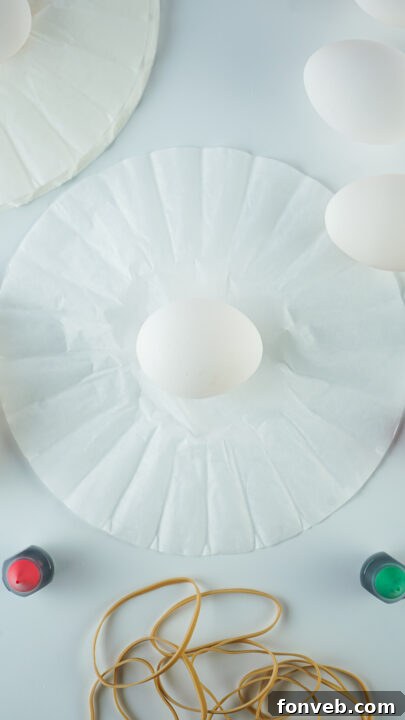
- Prepare Your Workspace and Eggs: Start by covering your work surface with newspaper, wax paper, or an old tablecloth to protect it from dye. Ensure your hard-cooked eggs are completely cooled and dry. Place one egg in the very center of a single coffee filter.
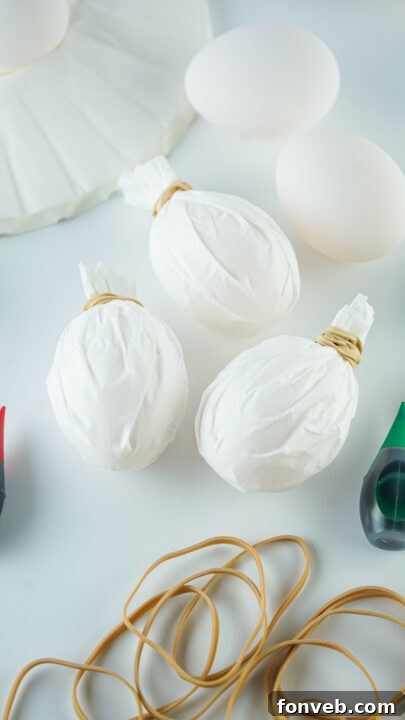
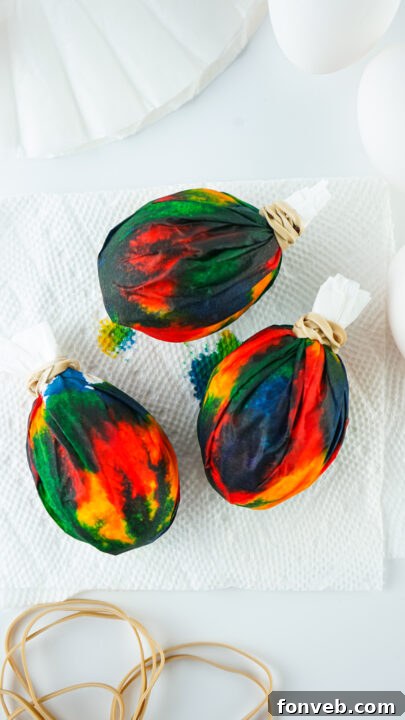
- Wrap and Secure the Egg: Gently gather the edges of the coffee filter up around the egg, pulling it tightly so the filter conforms to the egg’s shape. Bring all the excess coffee filter material to the tip of the egg, creating a small bundle. Secure this bundle tightly with a rubber band, ensuring the filter remains snug against the egg.
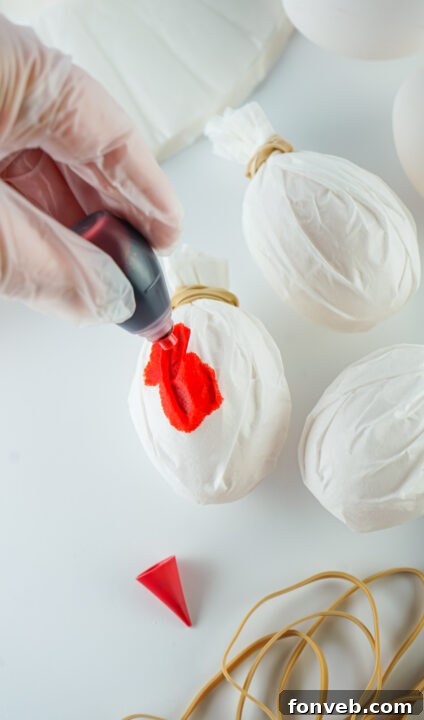
- Apply the Food Coloring: Don your rubber gloves if using. Get your water-based food coloring ready. Start with one color and carefully place 1-2 drops in various random spots around the wrapped egg. Do this with as many colors as you like – typically, 3-5 different colors work wonderfully for a classic tie-dye effect. For instance, basic red, green, blue, and yellow offer fantastic results, as used in this recipe. Continue adding drops of different colors until the coffee filter around the egg is mostly dotted with dye. Remember, a little goes a long way, as the color will spread. You’ll observe the colors beginning to bleed and merge, creating beautiful patterns.
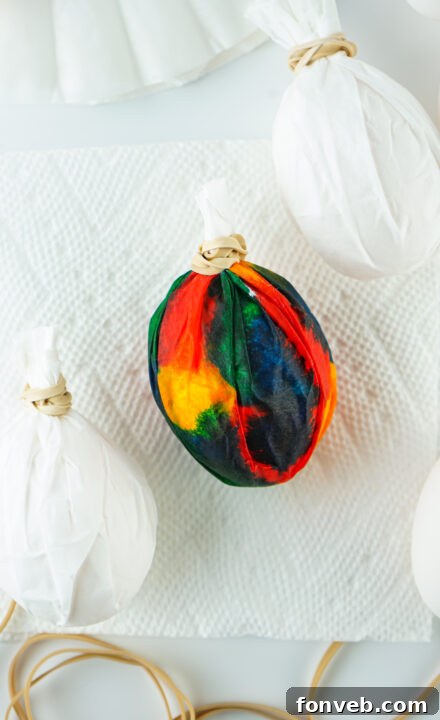
- Let the Colors Set: This is a crucial step for vibrant results. Once you’ve applied all your desired colors, leave the eggs to sit undisturbed for a minimum of 15 minutes. For even more intense and vibrant colors, you can let them sit for up to 30 minutes. This allows the dye to fully absorb into the coffee filter and transfer onto the eggshell, creating rich, deep hues.
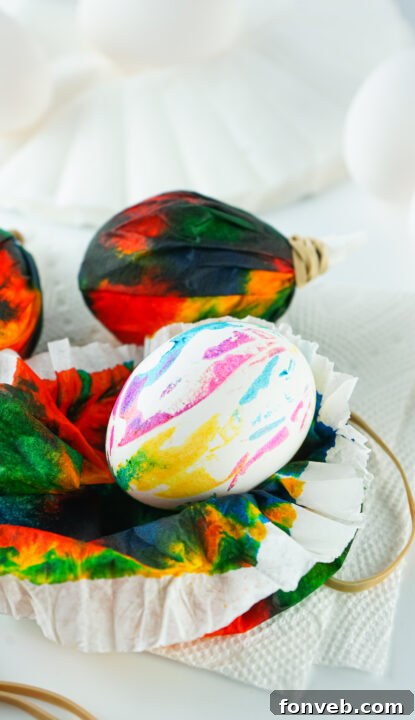
- The Big Reveal: Once the setting time is complete, it’s time for the exciting reveal! Using rubber gloves if desired, gently unwrap the eggs by removing the rubber band and carefully peeling away the coffee filter. You’ll immediately see the beautiful tie-dye patterns.
- Pat Dry and Air Dry: Gently pat the unwrapped eggs dry with a paper towel to remove any excess moisture or dye. Then, set them back into an empty egg carton or onto a cooling rack to air dry completely for about 5-10 minutes. This ensures the colors are fully set and won’t smudge. Once dry, your stunning tie-dye Easter eggs are ready to enjoy, display, or hide!
Expert Tips for Creating Stunning Coffee Filter Tie Dye Easter Eggs
Achieving picture-perfect tie-dye Easter eggs is easy with a few insider tips:
- Use the Right Supplies: Always start with perfectly hard-cooked, completely cooled, and dry white eggs. White eggs provide the best base for colors to truly pop. Ensure you have fresh coffee filters, good quality water-based food coloring, strong rubber bands, and plenty of paper towels.
- Wrap Eggs Tightly in Coffee Filters: The key to distinct patterns is a snug fit. Wrap each egg as tightly as possible in its coffee filter, smoothing out any large wrinkles. Secure it firmly with a rubber band right at the tip. This ensures even absorption and prevents the dye from seeping underneath in unwanted ways.
- Be Strategic with Color Application: Don’t drench the filter with too much dye at once. Start with a few drops of each color in different areas. Watch how the colors spread and blend. For more vibrant colors, you can go back and add more drops, but avoid oversaturation, which can lead to muddy results. Experiment with primary colors for classic tie-dye, or blend neighboring colors on the color wheel (like blue and yellow for green, or red and yellow for orange) for harmonious transitions.
- Allow Ample Setting Time: Patience is a virtue here! While 5 minutes will give you a light pastel effect, for truly bold and vibrant tie-dye patterns, let your eggs sit undisturbed for at least 15-20 minutes. The longer the dye sits, the deeper and more intense the colors will become.
- Gentle Rinse & Thorough Dry: After removing the coffee filters, if there appears to be a lot of excess dye on the egg, you can gently rinse them under cold, running water for a brief moment to wash away any loose dye, being careful not to rub the surface. Then, pat them dry very gently with paper towels. Finally, let them air dry completely on a cooling rack or in an egg carton. This prevents smudging and helps the colors set permanently.
- Protect Your Workspace and Hands: Food coloring can stain! Always cover your work surface and consider wearing rubber gloves, especially when applying the dye and unwrapping the eggs.
Coloring Easter Egg Ideas: FAQs
You’ve got questions, we’ve got answers! Here are some common queries about coloring Easter eggs, especially with the tie-dye method.
What are some creative ideas for coloring Easter eggs beyond tie-dye?
While tie-dye is fantastic, there’s a world of creativity waiting! Consider using bright and bold colors such as red, orange, yellow, green, blue, and purple for a truly festive display. Beyond plain dyeing, you can experiment with glitter glues, self-adhesive stickers, stencils, or even special egg paints to create unique designs. Marbled effects can be achieved with oil and water, while crayon resist techniques add charming patterns. For a more sophisticated look, use metallic markers or natural dyes made from fruits and vegetables for earthy tones.
Are there any safety concerns when it comes to coloring Easter eggs?
Safety is paramount, especially when involving children. It is important to take precautions when coloring Easter eggs. Always ensure you are using food-safe dyes if the eggs are intended for consumption. Many craft dyes or paints may contain non-toxic chemicals that could be harmful if ingested. Make sure to follow all instructions on the dye label carefully. When dyeing, avoid cross-contamination by using separate utensils for handling raw eggs versus dyed eggs. If using non-food-safe materials for decoration, clearly mark those eggs as ornamental only and do not consume them.
How long do dyed Easter egg decorations last?
The longevity of dyed Easter egg decorations depends on several factors: the type of dye used, whether the eggs were hard-boiled (and how thoroughly), and the environment they are kept in. If the eggs are hard-boiled and kept refrigerated, they are typically safe to eat for up to one week after dyeing. For decorative purposes (not consumption), if left at room temperature, the dyes themselves usually won’t fade quickly, but the eggs will spoil within a few days. For longer-lasting decorations, you can blow out the contents of the egg before dyeing, creating hollow shells that can last for several weeks, months, or even years if stored carefully in a cool, dry place away from direct sunlight.
Can I use natural dyes for tie-dye Easter eggs?
Absolutely! For an eco-friendly and food-safe alternative, you can certainly experiment with natural dyes made from common kitchen ingredients. Think red cabbage for blue, onion skins for orange/brown, turmeric for yellow, and spinach for green. The process would be similar: create concentrated natural dye baths, then apply them to the coffee filter-wrapped eggs using droppers. The colors might be more muted than synthetic food coloring, but the results are beautifully organic.
What if my colors aren’t vibrant enough?
If your tie-dye eggs aren’t as vibrant as you’d hoped, try these tips: ensure you’re using white eggs, as they provide the best canvas for bright colors. Increase the amount of food coloring drops you apply to the coffee filter. Most importantly, extend the setting time! Letting the eggs sit for 20-30 minutes will allow the dye to penetrate deeper and result in much bolder hues. Ensure the eggs are completely dry before you start, as any moisture can dilute the dye.
More Festive Recipes You’ll Love!
After you’ve perfected your tie-dye Easter eggs, why not try some other delightful Easter treats? These recipes are sure to add more joy to your holiday table!
Easter Marshmallow Bark
Bunny Bait Easter Munch
Bunny Bum & Easter Egg Cupcakes
Tie Dye Easter Eggs
Total Time: 15 mins
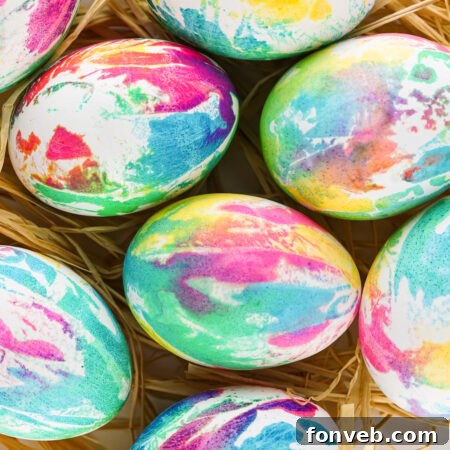
Ready to make Easter eggs with the family this year? Check out these Tie Dye Easter Eggs that are super easy to create.
Ingredients
- Boiled Eggs
- Coffee Filters
- Water Based Food Coloring
- Rubber Bands
- Paper Towels
- Rubber Gloves (optional)
Instructions
- Place one egg in the middle of one coffee filter and wrap it tightly, bringing the excess coffee filter to the tip of the egg and securing it with a rubber band.
- Get your food coloring and start with one color, putting one drop in random spots around the egg. Do this with as many colors as you like, however, I tend to use 4 different colors, the basic red, green, blue, and yellow is what I used for this recipe. Do this until the coffee filter around the egg is mostly filled with food coloring. It spreads, so a little goes a long way.
- Leave the eggs to sit for 15 minutes for best results (or 5 minutes for lighter colors).
- Using rubber gloves if desired, gently unwrap the eggs and pat them dry with a paper towel.
- Set them back in the egg carton or on a cooling rack to dry for about 5 minutes. Enjoy your beautiful tie-dye Easter eggs!
Did you make this recipe?
Make sure to follow on Pinterest for more recipes!