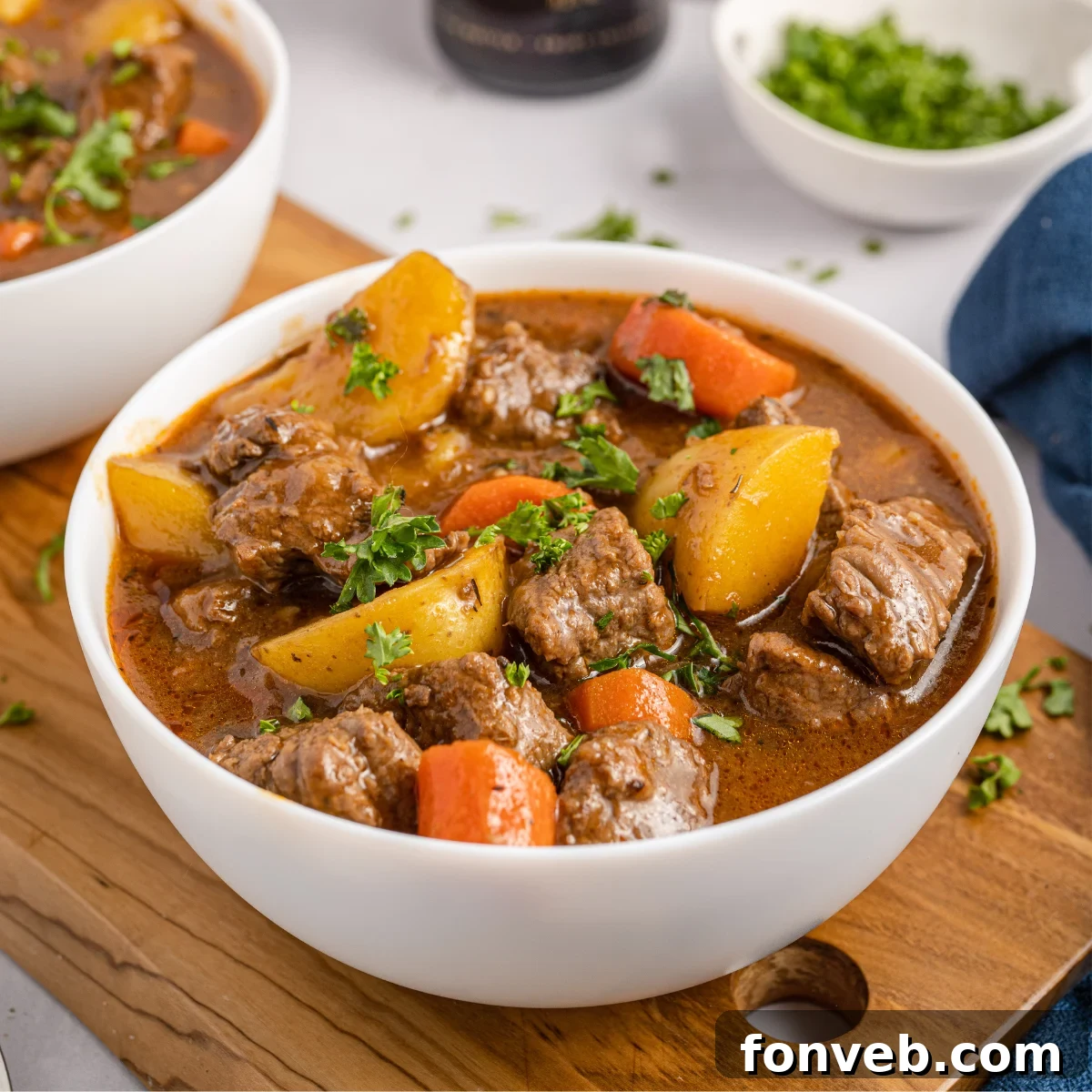
Hearty, cozy, and profoundly satisfying, this is my ultimate Irish Stew recipe! More than just a meal, it’s an experience – a rich, comforting, and deeply flavorful one-pot wonder that transforms your kitchen with an aroma promising something truly extraordinary. Forget takeout; this traditional Irish Stew is the kind of dish that makes you glad to be home, filling you with warmth and contentment from the very first spoonful.
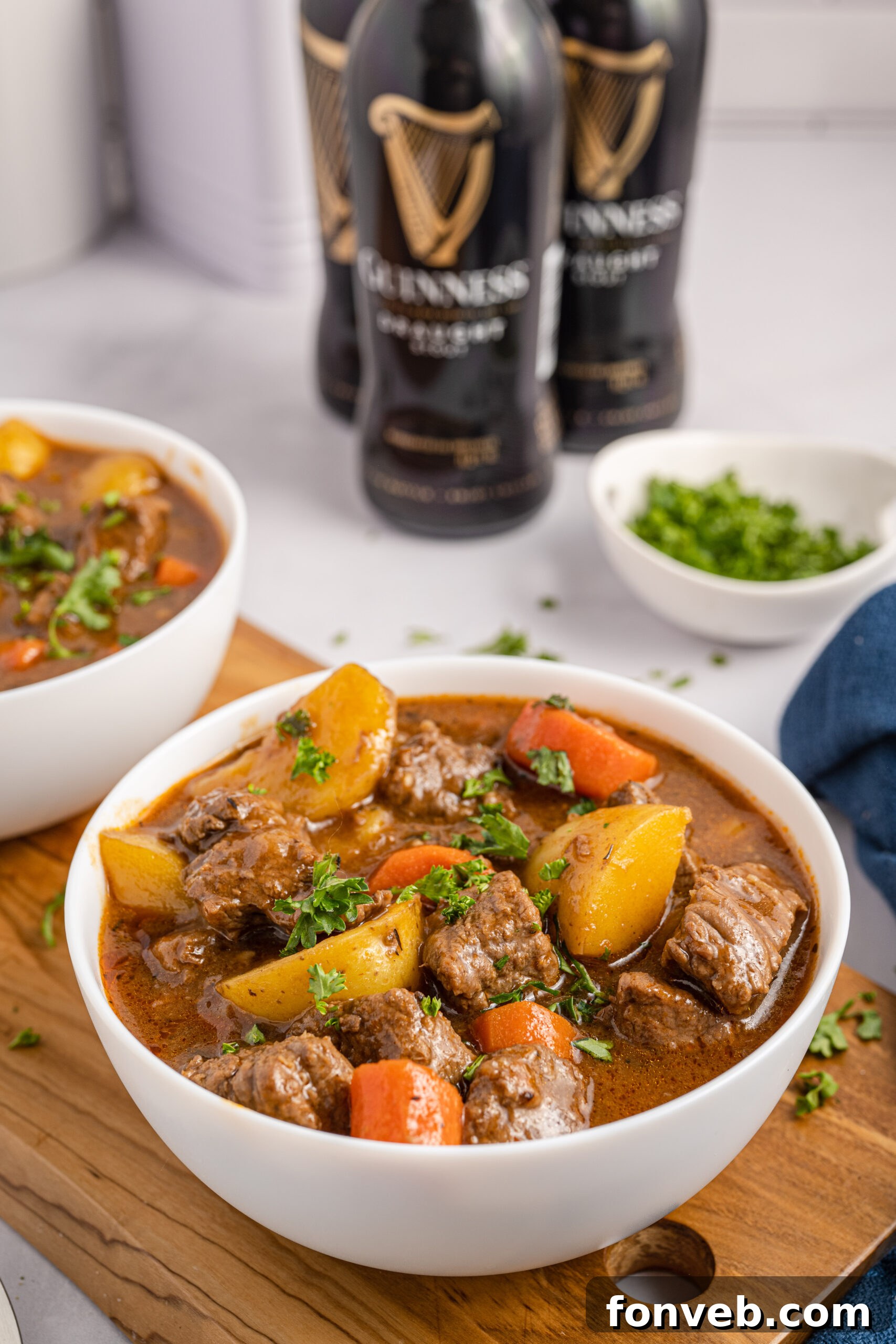
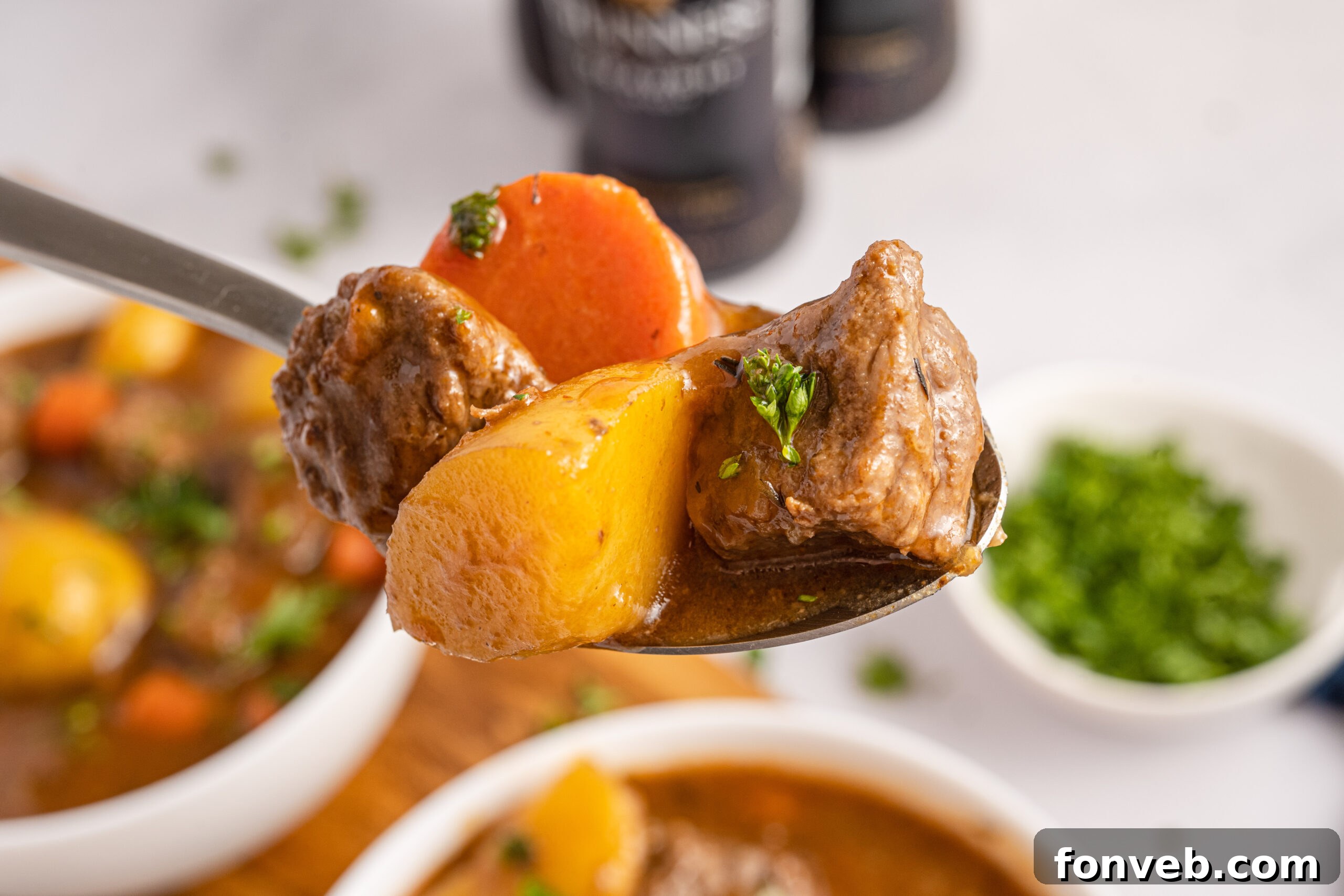
Our journey to this incredible beef Irish Stew begins with succulent, tender chunks of beef, beautifully seared to lock in their juices. These flavorful morsels are then simmered alongside a robust foundation of sweet onions and pungent garlic. Generous quantities of hearty potatoes and naturally sweet carrots join the mix, all swimming in a deep, savory broth. The secret weapon for an unparalleled depth of flavor? A splash of rich Irish stout, like the iconic Guinness, which infuses the stew with a malty, nuanced complexity that elevates every ingredient. This isn’t just any stew; it’s a genuine, stick-to-your-ribs comfort food classic, a perfect harmony of meat, vegetables, and the distinct touch of Ireland.
What truly endears this easy Irish Stew recipe to me is its remarkable approachability. You don’t need obscure cuts of meat, specialized slow cookers, or any fancy kitchen gadgets. All that’s required is a substantial pot, a handful of simple, wholesome ingredients, and a touch of patience to allow the flavors to meld into perfection. The beef, before hitting the pot, is lightly coated in flour. This crucial step not only helps achieve a beautiful, even sear but also acts as a natural thickener, giving the stew a luxurious body and richness without the need for additional ingredients. And that generous pour of Irish stout? It doesn’t impart an alcoholic taste; instead, it deeply enhances the savory notes, creating a cozy, pub-style ambiance that makes each bowl feel like a warm, culinary embrace.
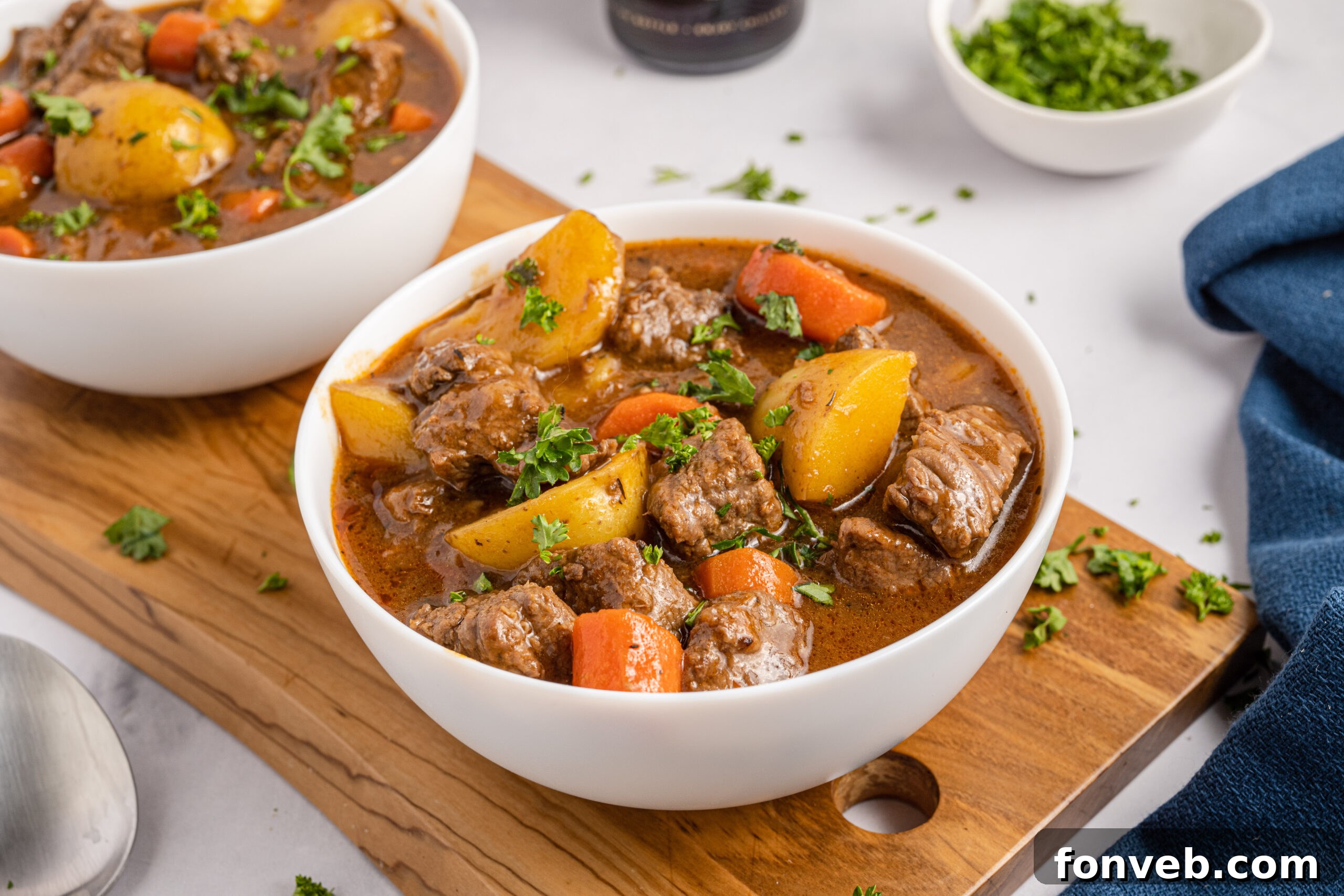
This hearty beef stew is an ideal choice for those evenings when you crave something authentically warm and nourishing on your table. While it’s undeniably perfect for chilly nights, its comforting appeal makes it a welcome addition to your menu year-round. It generously feeds a crowd, making it fantastic for family gatherings or potlucks, and if you’re lucky enough to have leftovers, they only get better with time. Despite its profound flavor, this recipe impressively comes together in approximately 50 minutes from start to finish. There’s nothing fussy or complicated here, just honest, wholesome food that beckons you to grab a spoon, tear off a hunk of crusty bread, and savor every last drop.
The Cultural Significance of Irish Stew: More Than Just a Meal
To truly appreciate Irish Stew, one must understand its roots. This iconic dish isn’t just a recipe; it’s a culinary cornerstone of Irish heritage, deeply intertwined with the country’s history and simple, rustic living. Traditionally, Irish Stew was a peasant dish, born out of necessity and the availability of local ingredients. Mutton or lamb (often from older, less productive animals), potatoes, onions, and carrots were readily available staples, forming the basis of a nourishing and economical meal that could feed an entire family.
Over centuries, Irish Stew evolved from a humble peasant’s fare to a beloved national dish, celebrated for its robust flavors and heartwarming qualities. It represents resilience, community, and the comforting taste of home. Each spoonful connects you to generations of Irish cooks who perfected this recipe, passing down its simple wisdom. While lamb remains the traditional choice in many parts of Ireland, beef has become a popular and delicious alternative, especially outside of Ireland, offering a slightly different but equally rich flavor profile.
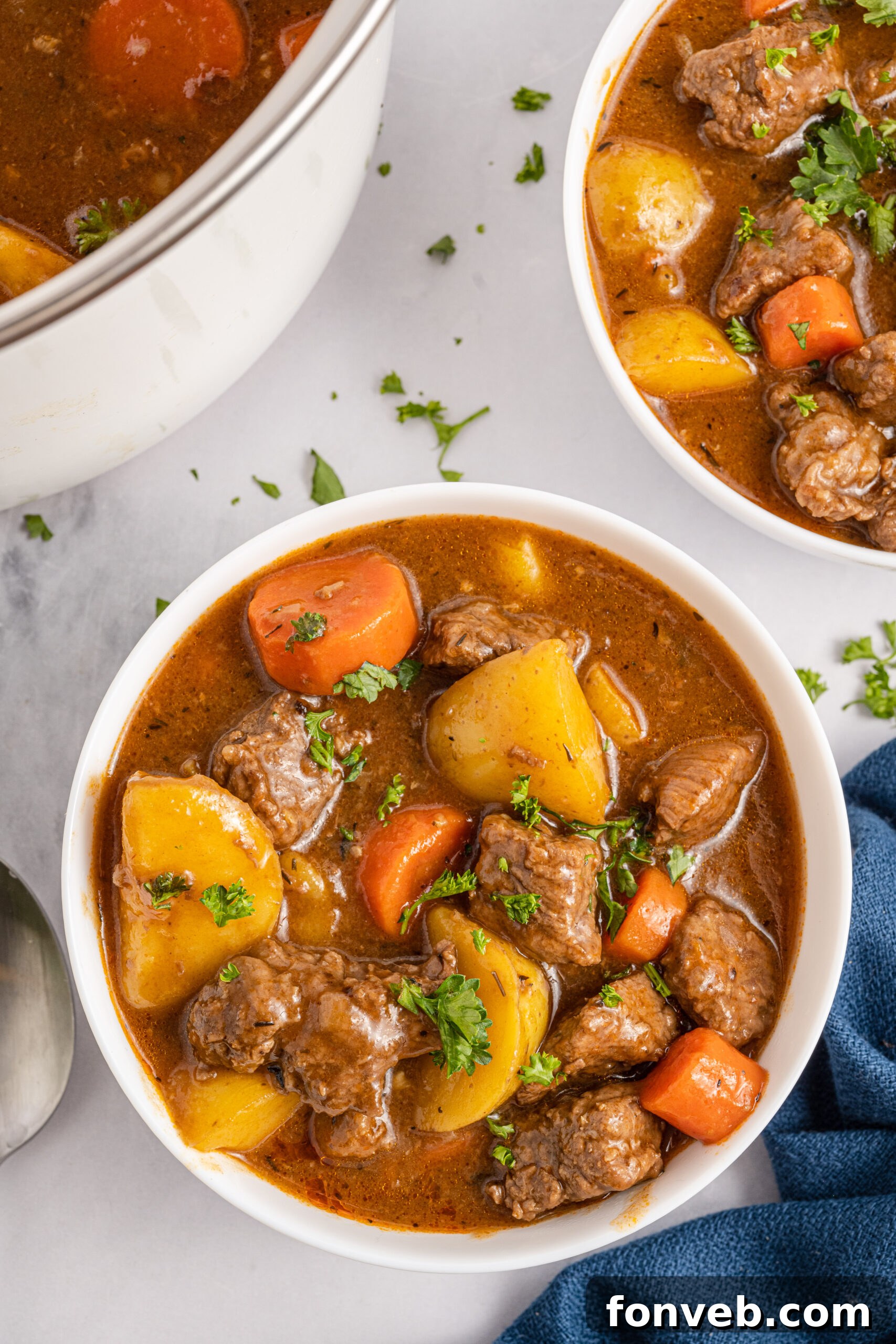
Perfect for St. Patrick’s Day… or Just Any Night In
Undeniably, this traditional Irish Stew emphatically signals St. Patrick’s Day, offering a truly authentic way to celebrate without resorting to artificial green dyes. It’s a festive dish that resonates with genuine Irish spirit, making it the ideal centerpiece for your March 17th festivities. However, its appeal extends far beyond a single holiday; this comforting and satisfying stew makes a killer dinner any time you desire a taste of hearty home cooking. Whether you’re planning to feed the entire family, host a casual dinner party, or simply want to meal-prep something substantial for the week, this recipe has you perfectly covered.
Imagine recreating your own little Irish pub right at home: a steaming bowl of this exquisite stew, paired with a perfectly chilled pint of stout (or a non-alcoholic equivalent), and perhaps a slice of homemade soda bread. This simple combination promises an evening of unparalleled coziness, warmth, and genuine satisfaction. It’s about more than just food; it’s about crafting an experience that’s simple, soulful, and truly unforgettable. This recipe keeps things straightforward and flexible, proving that exceptional flavors don’t require endless hours in the kitchen. It’s truly a dish that makes special occasions feel even more memorable and everyday meals feel like a treat.
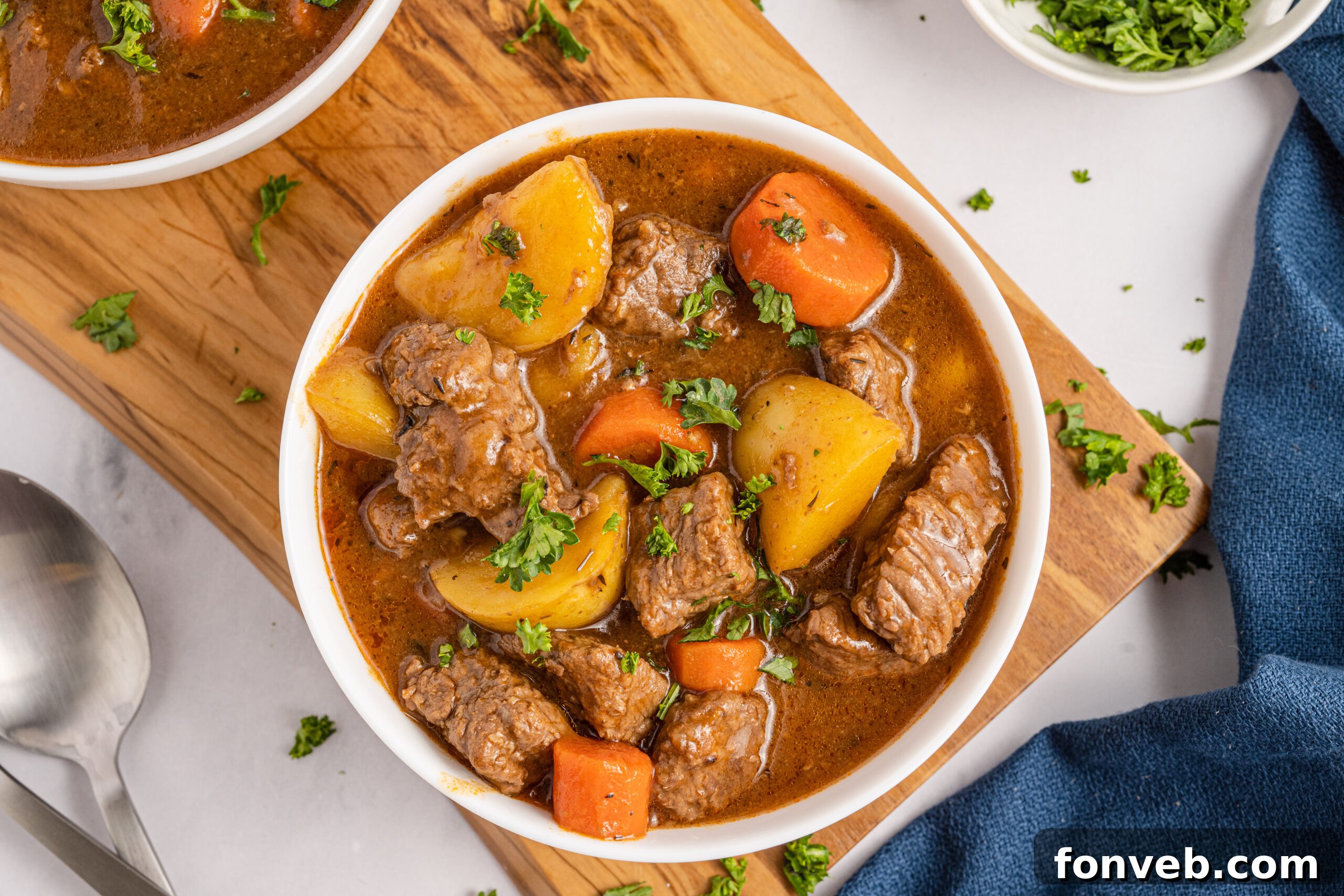
The entire dish comes together in under an hour, making it an entirely feasible option for a busy weeknight dinner. Yet, its rich flavors and comforting presence also make it feel special enough to serve for a leisurely Sunday supper or a laid-back dinner party with friends. The recipe yields approximately four quarts, ensuring ample portions for everyone and, more importantly, delightful leftovers. Like most stews, this Guinness beef stew only improves with age, allowing the flavors to deepen and meld even further overnight, promising an even more delicious experience the next day.
What is Irish Stew?
At its core, Irish Stew is a time-honored Irish dish, a robust and deeply flavorful concoction traditionally featuring tender chunks of lamb or mutton, alongside hearty potatoes, sweet onions, and crisp carrots, all slow-cooked in a savory, aromatic broth. While traditionally lamb-based, many modern versions, like this one, embrace beef for its rich flavor and widespread availability. The stew is typically seasoned with a blend of classic herbs and spices, such as earthy thyme, fragrant bay leaves, fresh parsley, and aromatic garlic, which contribute to its distinctive character. It’s most commonly served piping hot, accompanied by a side of crusty bread to soak up every last drop of the magnificent broth, or with additional boiled potatoes for an extra layer of comfort.
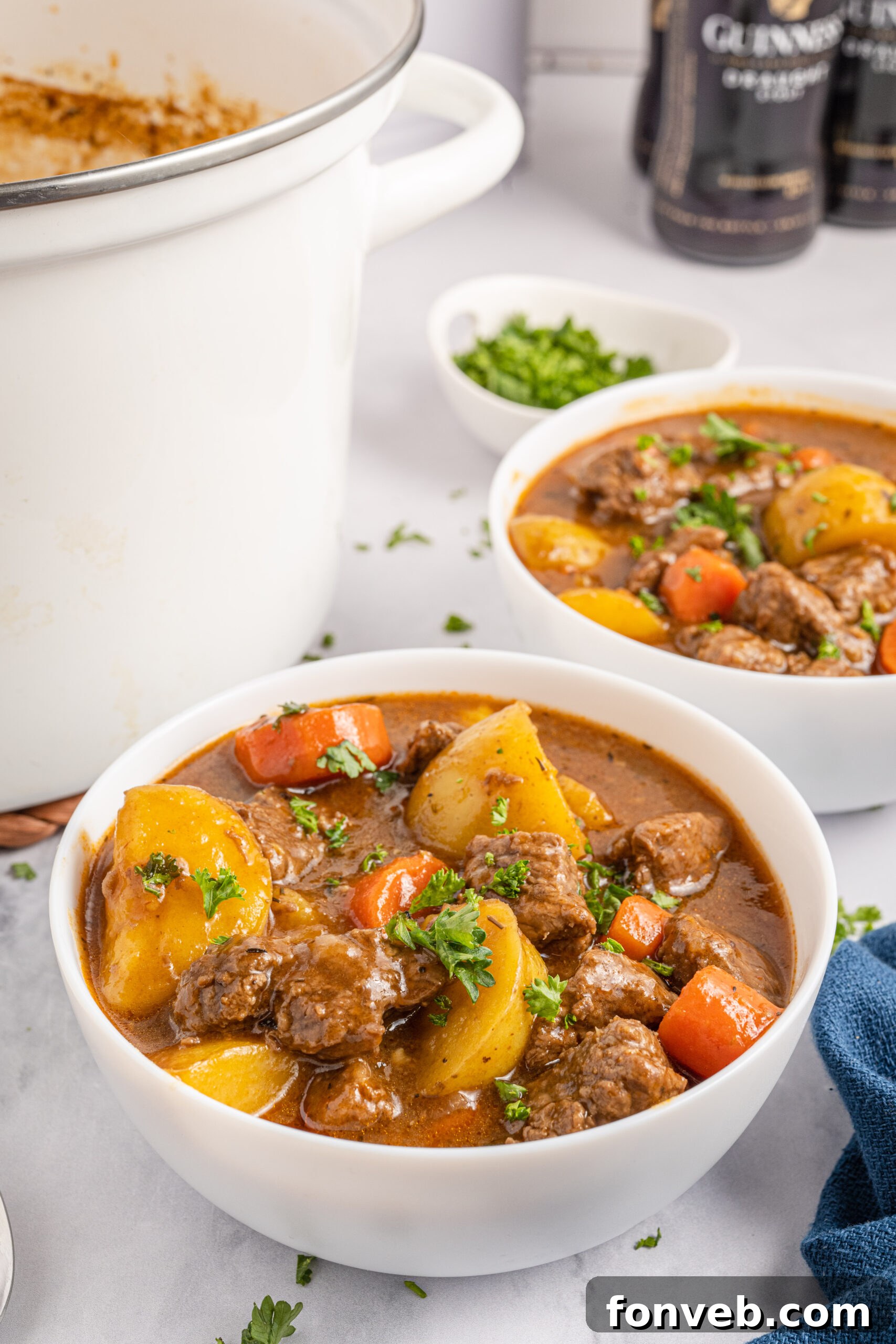
Why You’ll Love This Irish Stew Recipe
- Unmatched Comfort: This hearty stew is one of the most comforting and satisfying meals you’ll ever encounter. It’s incredibly hearty, wonderfully filling, and absolutely packed with layers of rich, savory flavor that will warm you from the inside out.
- Effortlessly Easy: Despite its gourmet taste, this easy Irish Stew recipe is surprisingly simple to make, requiring minimal ingredients and straightforward steps. It’s perfect for both novice cooks and seasoned chefs looking for a delicious, no-fuss meal.
- Highly Customizable: Adapt this recipe to perfectly suit your preferences! Feel free to add extra vegetables like celery or parsnips, experiment with different herbs such as rosemary or marjoram, or even switch out the type of meat to lamb for a more traditional take. The possibilities are endless for creating your signature stew.
- Perfect for Meal Prep & Leftovers: Like many stews, this dish tastes even better the next day as the flavors continue to meld and deepen. It’s an excellent candidate for meal prepping, providing delicious and convenient meals throughout the week.
- Wholesome & Nutritious: Loaded with lean protein, fiber-rich vegetables, and essential nutrients, this beef Irish Stew offers a balanced and nutritious meal that truly satisfies.
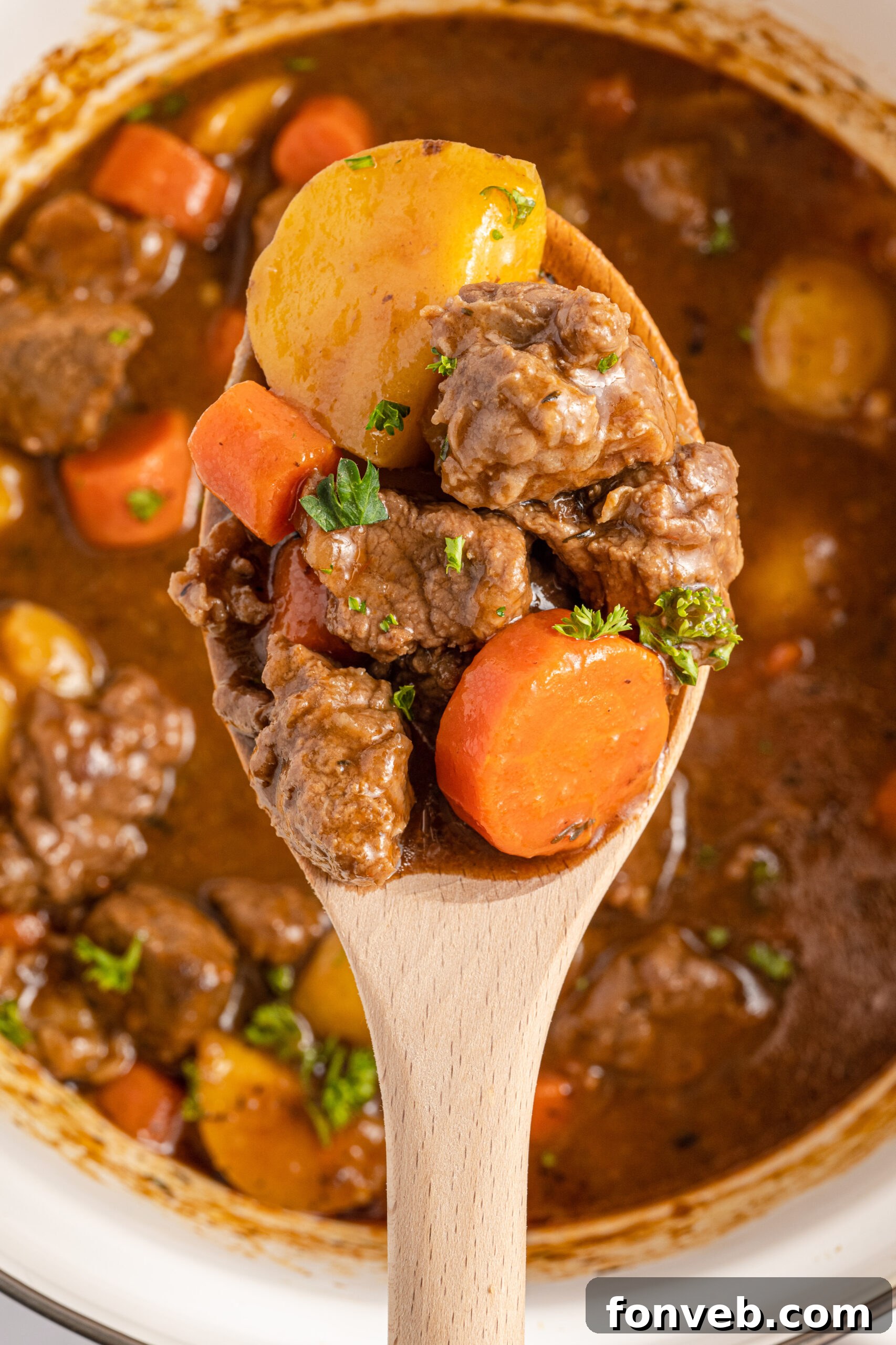
Ingredients Needed for Your Perfect Irish Stew
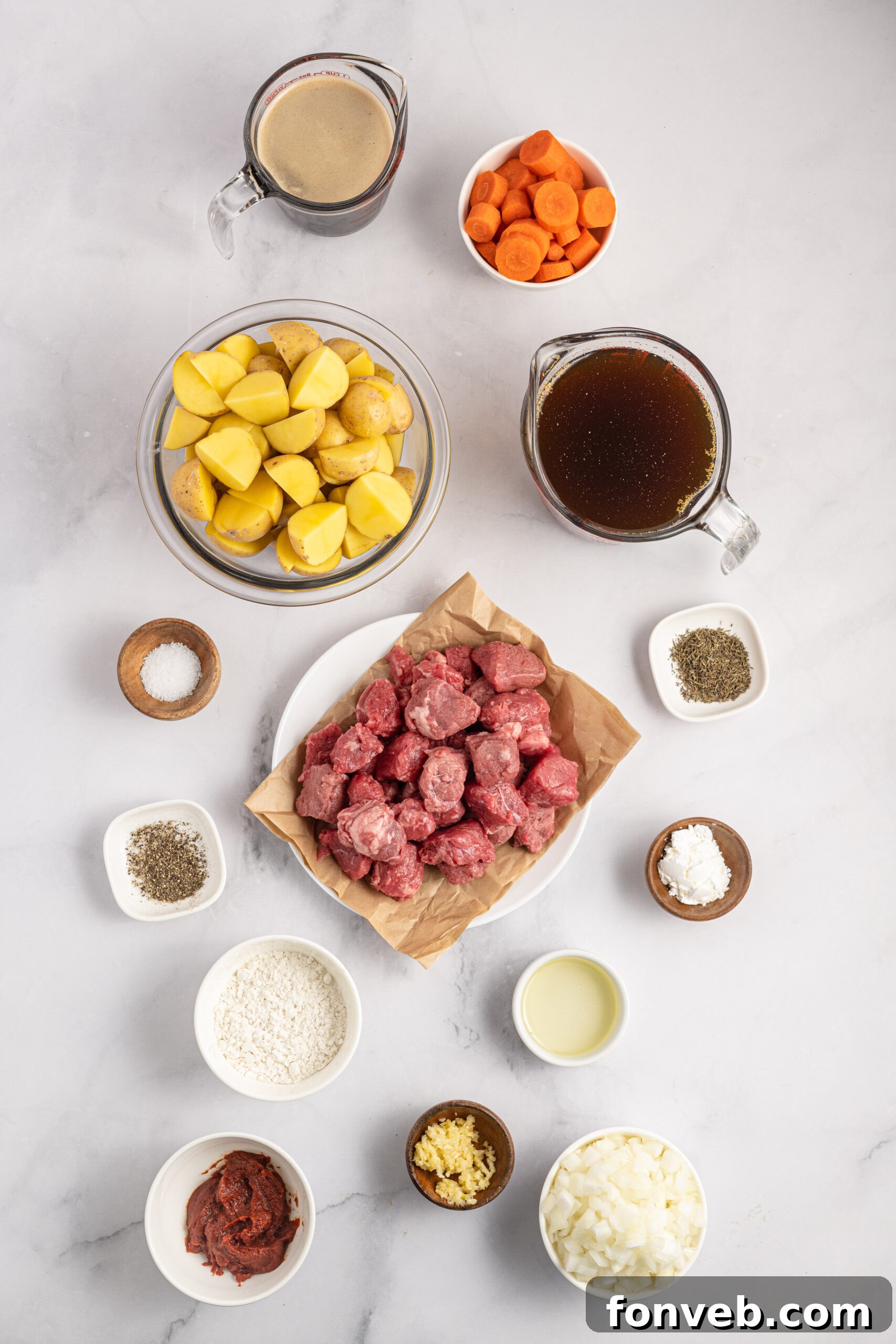
Crafting the perfect traditional Irish Stew relies on a selection of simple yet high-quality ingredients that build layers of deep, satisfying flavor. Here’s a closer look at what you’ll need:
- Beef Stew Meat: Opt for cuts like chuck or round, which are ideal for slow-cooking. These tougher cuts break down beautifully over time, becoming incredibly tender and flavorful, soaking up all the rich broth.
- All-purpose Flour: This essential ingredient serves multiple purposes. It coats the beef, helping it achieve a beautiful sear and forming a crucial base for thickening the stew.
- Kosher Salt: A coarse-grained salt that enhances the natural flavors of the ingredients without making the dish overly salty. It’s crucial for seasoning at every stage.
- Black Pepper: Freshly ground black pepper adds a bold, fragrant warmth and a subtle kick, complementing the rich savory notes of the stew.
- Canola Oil: A neutral-flavored oil with a high smoke point, perfect for searing the beef and sautéing vegetables without imparting any unwanted flavors. Vegetable oil is a suitable alternative.
- Yellow Onion: The quintessential aromatic base for most savory dishes. When slowly cooked, yellow onions caramelize slightly, adding a fundamental sweetness and depth of flavor to the stew.
- Cloves of Garlic: Fresh garlic, pressed or finely chopped, provides an indispensable pungent aroma and robust flavor that is foundational to the stew’s character. Do not skip this!
- Irish Stout (e.g., Guinness™): This is where the magic happens for an authentic Irish Stew. A dark Irish stout like Guinness contributes an unparalleled malty sweetness, a subtle bitterness, and deep umami notes, creating an incredibly complex broth without tasting overtly alcoholic. Any good quality dark beer or stout can be substituted.
- Tomato Paste: A concentrated burst of tomato flavor that adds brightness, a hint of acidity, and a rich umami depth to the stew, balancing the other robust flavors.
- Dried Thyme: Earthy and aromatic, dried thyme is a classic herb pairing for beef and root vegetables, infusing the stew with a quintessential savory fragrance.
- Beef Stock: The primary liquid component, providing a savory foundation for the stew. Use a good quality beef stock or broth for the best flavor.
- Carrots: Peeled and cut into substantial 1/2-inch pieces, carrots add natural sweetness, vibrant color, and a pleasant textural contrast to the tender meat and potatoes.
- Golden Potatoes: Quartered golden potatoes (like Yukon Golds) are perfect for stewing. They hold their shape well, absorb the rich flavors, and release just enough starch to naturally thicken the broth.
- Cornstarch: Used at the very end to create a slurry that provides the perfect velvety thickness to the stew, ensuring it’s comforting and spoon-coating, not watery.
How to Store and Reheat Your Irish Stew
One of the many joys of making a delicious Irish Stew is that it often tastes even better the next day, and it stores beautifully. Here’s how to keep your stew fresh and flavorful:
Refrigeration: To store your cooked beef Irish Stew, allow it to cool completely at room temperature (this usually takes 1-2 hours) before transferring it to an airtight container. Properly stored, the stew will keep fresh and delicious in the refrigerator for up to 3-5 days. This makes it an excellent option for meal prepping throughout the week.
Freezing: For longer storage, Irish Stew freezes exceptionally well. Once the stew has completely cooled, pour it into freezer-safe airtight containers or heavy-duty freezer bags. Be sure to leave a little headspace at the top if using containers, as liquids expand when frozen. Store in the freezer for up to 2-3 months. For best quality, consume within this timeframe.
Reheating:
- From the Refrigerator: Reheat refrigerated stew gently on the stovetop over medium-low heat, stirring occasionally, until it is heated through. You can also microwave individual portions in a microwave-safe bowl, heating in 1-2 minute intervals and stirring in between, until hot.
- From the Freezer: For best results, thaw frozen stew overnight in the refrigerator before reheating. If you’re short on time, you can also reheat it directly from frozen on the stovetop over low heat, stirring frequently and adding a splash of beef stock or water if it appears too thick. Alternatively, microwave from frozen using the defrost setting, then continue heating until piping hot.
Always ensure your stew is reheated to an internal temperature of 165°F (74°C) to ensure food safety.
Expert Tips for the Best Irish Stew
While this easy Irish Stew recipe is straightforward, a few expert tips can elevate your dish from good to absolutely incredible:
- Don’t Rush the Sear: Browning the beef thoroughly is paramount. This step creates a rich fond (caramelized bits) at the bottom of the pot, which, when deglazed with the Irish stout, forms the foundation of the stew’s deep flavor. Work in batches if necessary to avoid overcrowding the pot, which can steam the meat instead of searing it.
- Quality Stout Matters: While any dark stout works, using a good quality Irish stout like Guinness truly makes a difference. Its distinctive malty, slightly bitter, and chocolatey notes contribute unparalleled depth to the broth. Don’t worry about the alcohol content; it cooks off, leaving only pure flavor behind.
- Deglaze Properly: After browning the beef and sautéing the aromatics, pouring in the stout while scraping up the fond from the bottom of the pot is crucial. This process, called deglazing, unlocks all those caramelized flavors and incorporates them into the stew’s liquid base.
- Chop Vegetables Evenly: Ensure your carrots and potatoes are cut into roughly uniform, bite-sized pieces (around 1/2-inch). This guarantees they cook evenly and become perfectly tender at the same time.
- Simmer, Don’t Boil: Once all ingredients are in the pot, reduce the heat to a gentle simmer. This allows the flavors to slowly meld and the beef to become fork-tender without overcooking the vegetables or making the stew cloudy.
- Season in Layers: Don’t just season at the end. Season the beef before searing, and taste the broth periodically as it simmers, adjusting salt and pepper as needed. This builds flavor depth.
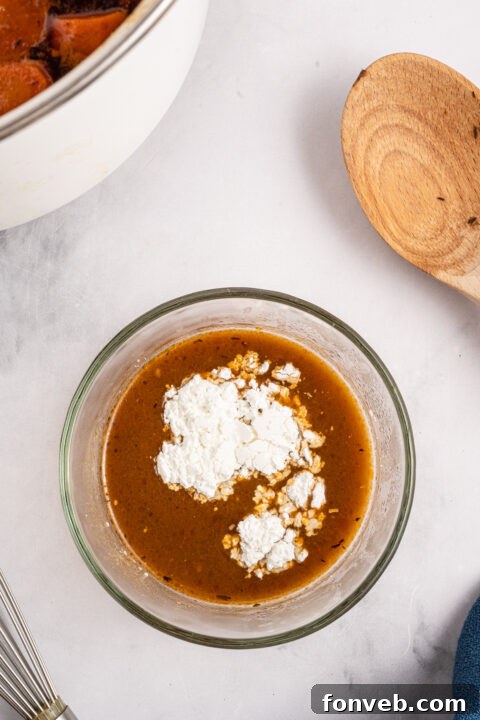
- The Cornstarch Slurry: Mixing cornstarch with a small amount of cold broth before adding it to the stew prevents lumps and ensures a smooth, consistent thickness. Add it gradually until your desired consistency is reached.
- Patience for Perfection: While this recipe is quick for a stew, giving it that full 30-minute simmer (or even a bit longer if you have time) allows the flavors to truly develop and the ingredients to become perfectly tender.
Common Questions & Irish Stew FAQ
What is the difference between stew and Irish stew?
The distinction primarily lies in tradition and specific ingredients. Irish Stew is a traditional dish with a defined set of core components: typically lamb or mutton (though beef is a common modern alternative), potatoes, onions, and carrots. It’s slow-cooked in a flavorful broth, which often includes a distinctive ingredient like Irish Stout (such as Guinness™) for added complexity and robust flavor. Other types of stews, by contrast, are much broader in definition. They can feature a wide variety of meats (chicken, pork, venison), vegetables, and liquids (wine, stock, cream), resulting in an immense diversity of flavor profiles and regional variations.
What thickens Irish stew?
Traditionally, Irish Stew thickens naturally from the starches released by the potatoes and other root vegetables as they break down during the slow cooking process. In many modern recipes, including this one, the beef is coated in all-purpose flour before searing. This flour then blends into the broth, creating a light thickening effect. For a more controlled and guaranteed thickness, a cornstarch slurry (a mixture of cornstarch and cold liquid) is often added at the end of the cooking process, providing a smooth, velvety consistency without any lumps.
Why is my Irish stew bitter?
Several factors can contribute to bitterness in your Irish Stew. One common culprit is using old or stale beer, which can develop off-flavors. Overcooking the stew, particularly the vegetables, can also release bitter compounds. If you’ve used an Irish-style stout like Guinness™, it inherently carries a slight bitterness from the roasted barley. Using too much stout, or not allowing it to simmer long enough for the flavors to meld, can result in a pronounced bitterness. To counteract bitterness, taste the broth and consider adjusting it with a pinch of sugar, a splash more beef stock, or a squeeze of lemon juice to balance the flavors.
Do I have to use Guinness?
Not at all! While Guinness adds a wonderfully authentic depth and complexity to the stew with its rich, malty notes, any dark Irish stout will work beautifully. If you prefer to skip the alcohol entirely, simply substitute the stout with an equal amount of good quality beef stock. The stew will still be incredibly delicious and flavorful, though it will lack some of that distinctive dark malty essence that stout provides.
Can I use lamb instead of beef?
Absolutely, and in fact, lamb is the more traditional meat used in Irish Stew, especially within Ireland itself! If you can find good quality lamb stew meat (such as from the shoulder or leg), it will yield an exceptionally authentic and rich flavor. Simply prepare and cook the lamb stew meat in the exact same manner as the beef outlined in this recipe.
Can I make this ahead of time?
Yes, and you should! Irish Stew is one of those magical dishes that truly improves with time. The flavors deepen, meld, and become even more harmonious after a day or two in the refrigerator. Just store it in an airtight container once completely cooled, and gently reheat it on the stovetop over low heat. It thickens up wonderfully, and the wait is well worth the enhanced taste.
What’s the best way to thicken the stew?
The initial coating of flour on the beef contributes to a slight natural thickening. However, for that perfect, luscious, spoon-coating consistency, the cornstarch slurry added at the end is key. It ensures the stew is neither too soupy nor overly dense. If you desire an even thicker stew, you can gently reduce the broth a bit before incorporating the slurry, or add a touch more slurry until it reaches your preferred richness.
What should I serve this with?
A generous chunk of warm, crusty bread is an absolute must for soaking up every last bit of the incredible broth. For an extra dose of comfort, a side of creamy mashed potatoes or traditional colcannon (mashed potatoes with cabbage or kale) pairs wonderfully. A simple green salad provides a fresh contrast, and of course, a cold pint of Irish stout (for adults) or a refreshing non-alcoholic beverage completes the authentic experience.
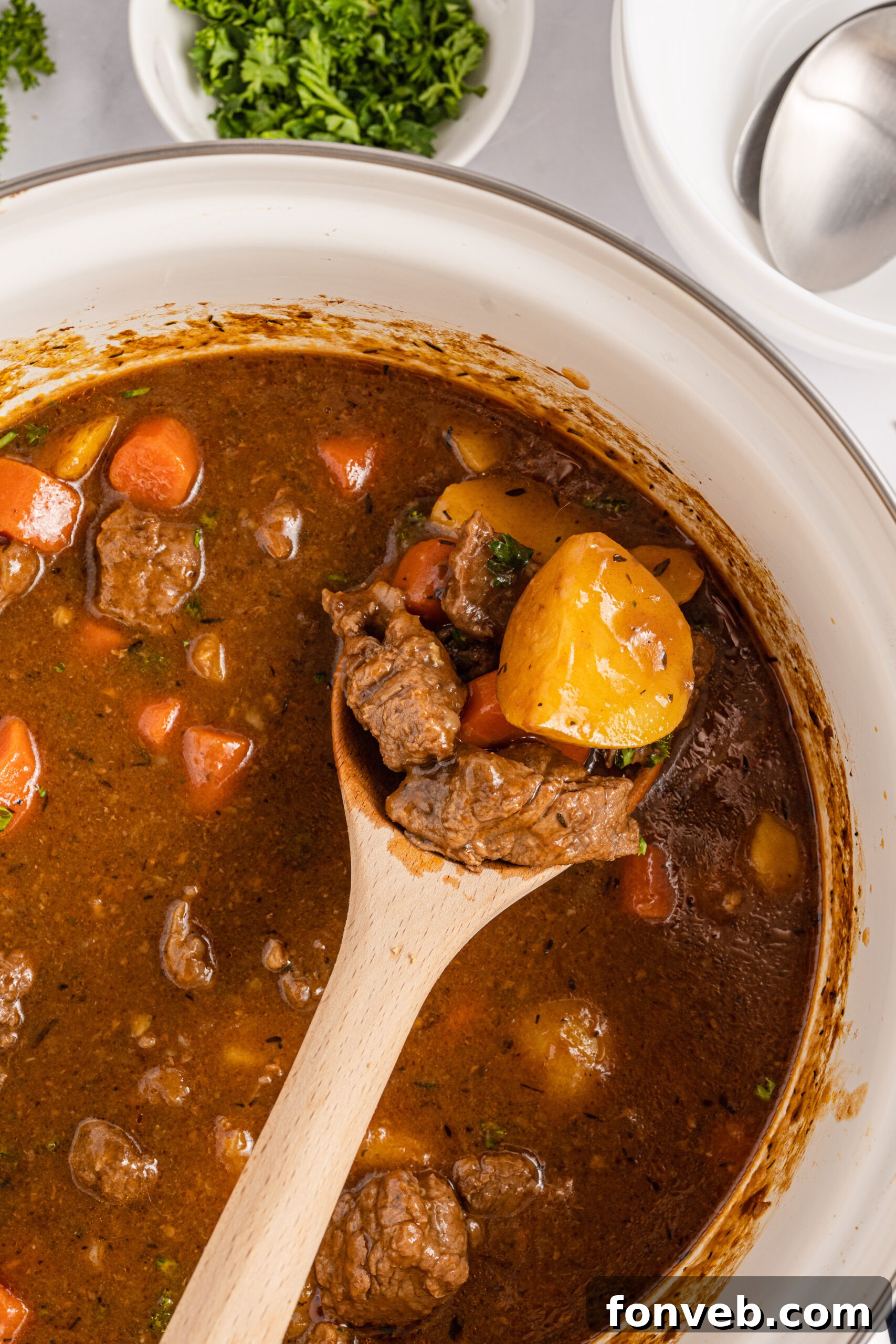
This Irish Stew isn’t about being flashy or complicated; its brilliance lies in its simplicity and the profound comfort it offers. It’s the kind of meal that truly grounds you: warm, filling, and meticulously crafted from real, straightforward ingredients that come together harmoniously in a single pot. It’s the perfect solution for those nights when you crave something incredibly hearty without investing a colossal amount of effort, and as a bonus, it only grows more delicious with time.
Whether you’re cooking for your cherished family, meticulously stocking your fridge with comforting leftovers for the busy week ahead, or simply yearning to fill your entire home with that irresistible, cozy, simmering aroma of something genuinely homemade, this traditional Irish Stew consistently delivers beyond expectation. Embrace the simplicity, allow the rich flavors to slowly build, and whatever you do, never forget the crusty bread—it’s absolutely essential for savoring every last, delectable drop.
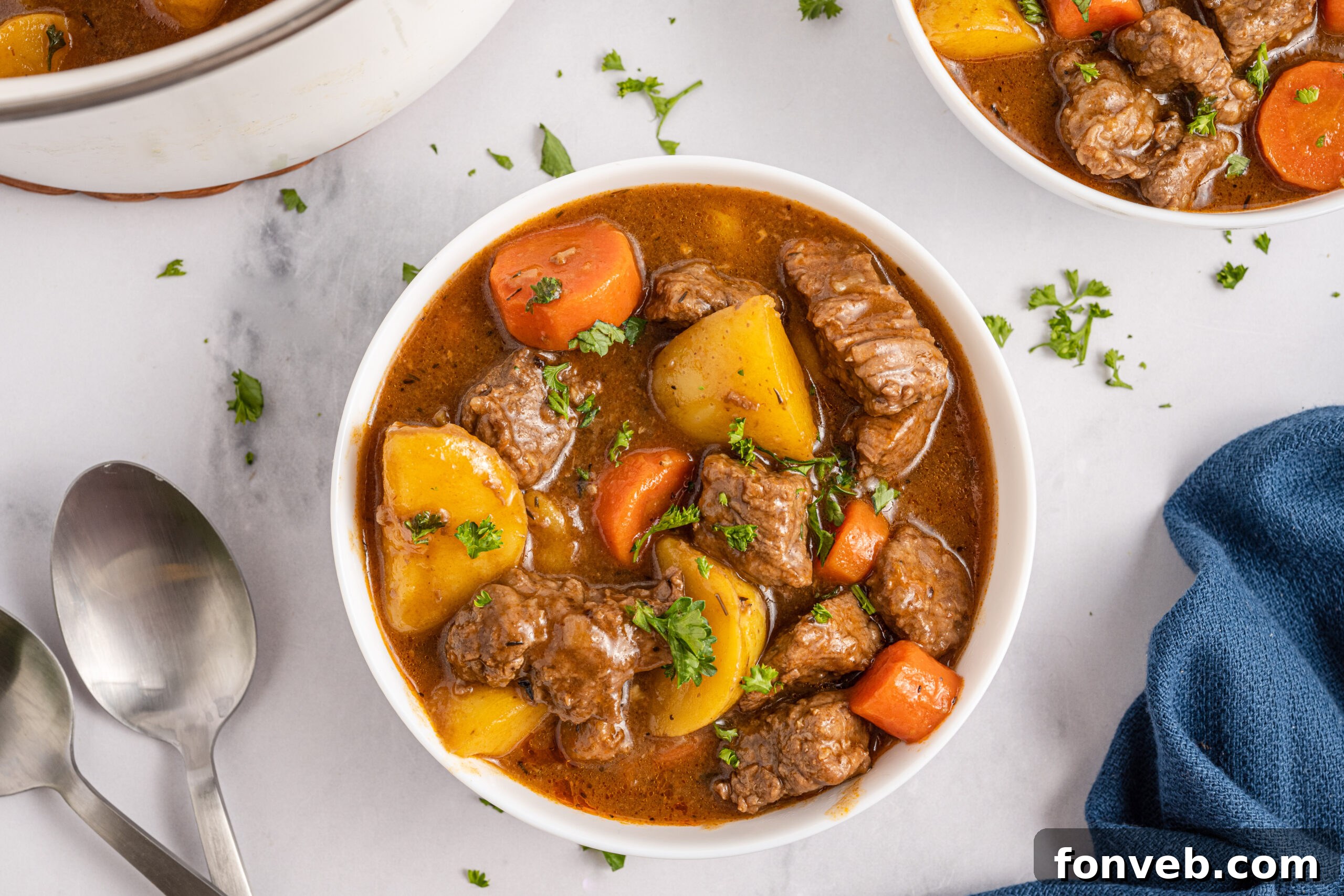
Ready to master the art of this exceptional Irish Stew? This savory and deeply satisfying meal is the ideal choice for any day of the week, offering a taste of tradition and pure comfort. Now that you know exactly how to make the perfect Irish Stew, are you ready to bring this heartwarming classic to your table?
MORE RECIPES YOU WILL LOVE!
Irish Fudge Brownies
Guinness Beef Stew
Bailey’s Irish Cream Cocktail
Irish Stew
Irish Stew is the perfect blend of meat, vegetables, and an Irish stout. Your whole family will love this comforting and traditional soup.
- Course:
- Main Course
- Prep Time:
- 20 mins
- Cook Time:
- 30 mins
- Total Time:
- 50 mins
- Servings:
- 4 quarts
Pin Recipe
Share Recipe
Ingredients
- 2 pounds of beef stew meat
- 1/4 cup all-purpose flour
- 1 teaspoon kosher salt
- 1 teaspoon black pepper
- 2 tablespoons canola oil
- 1 cup yellow onion, chopped
- 3 cloves of garlic, pressed or chopped finely
- 1 cup Irish Stout, such as Guinness
- 3 tablespoons of tomato paste
- 1 teaspoon of dried thyme
- 32 ounces of beef stock
- 2 cups of carrots, peeled and cut into 1/2-inch pieces
- 1.5 pounds golden potatoes, quartered
- 2 tablespoons cornstarch
Instructions
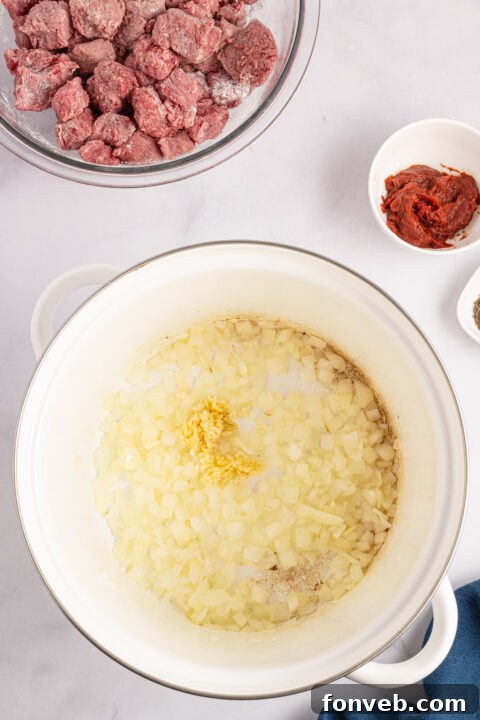
- In a large bowl, add the beef, flour, salt, and pepper, and mix until the beef is well coated in flour. Set aside.
- Heat the canola oil in a large pot (at least 6 quarts) over medium-high heat for about 2 minutes.
- Add the chopped onion, and cook until translucent, about 3 minutes, then add the garlic and cook until fragrant, less than 1 minute.
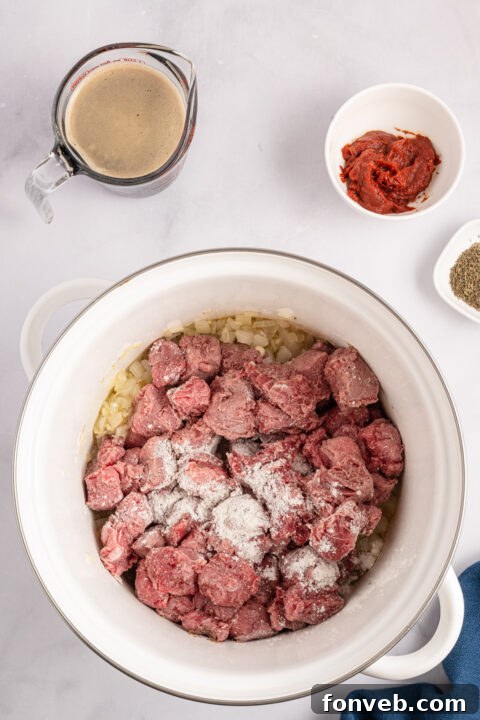
- Pour in the beef, and cook until brown, stirring occasionally to make sure all sides of the beef are browned. This will take about 10 minutes.
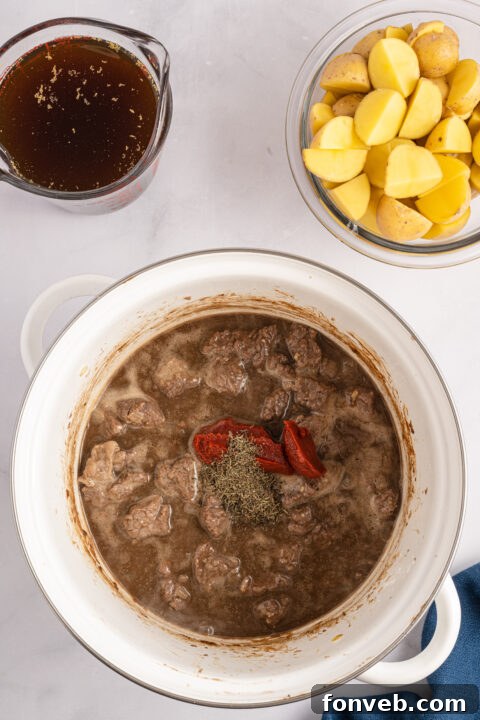
- Pour in the Irish Stout, and boil with the beef for 5 minutes, then stir in the tomato paste and thyme and pour in the beef stock.
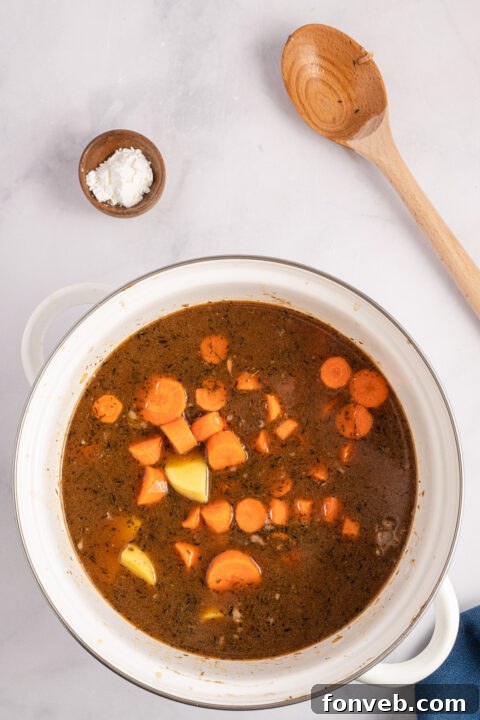
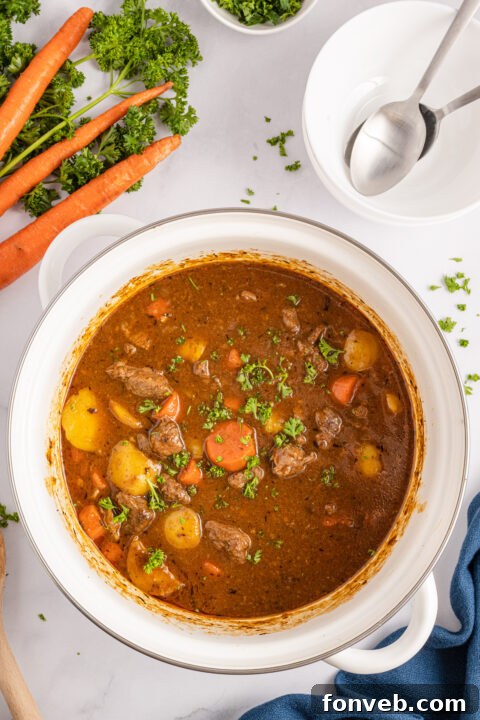
- Add the carrots and potatoes, bring to a boil, then let the stew simmer for 30 minutes or until the potatoes and carrots are tender. Remove from heat.
- Scoop out a 1/4 cup of the stew broth into a small bowl, and whisk in the cornstarch to make a stew slurry, then stir the slurry back into the stew.
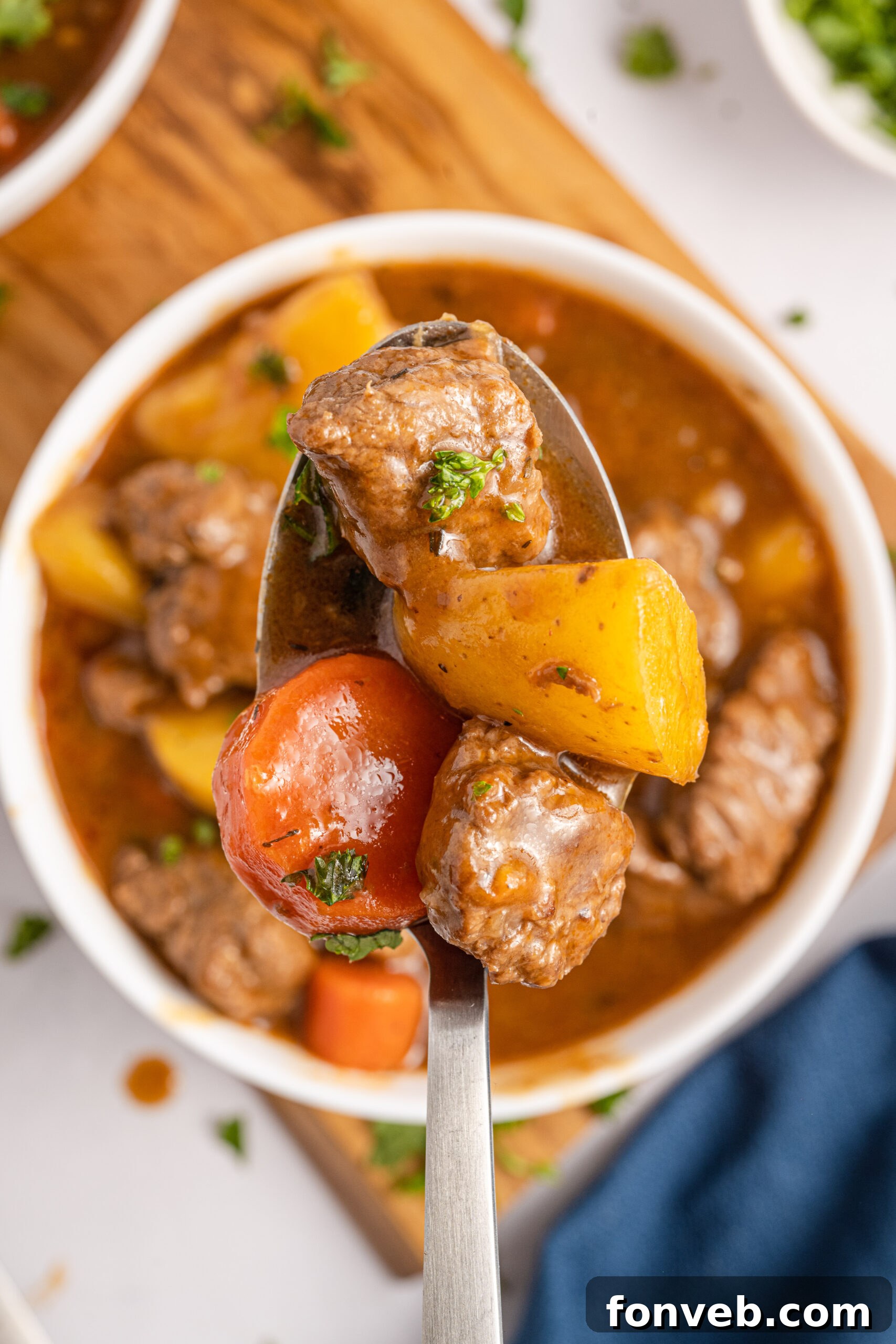
- Serve and top with parsley, if desired.
Did you make this recipe?
Make sure to follow on Pinterest for more recipes!
Pin Recipe
Share on Facebook