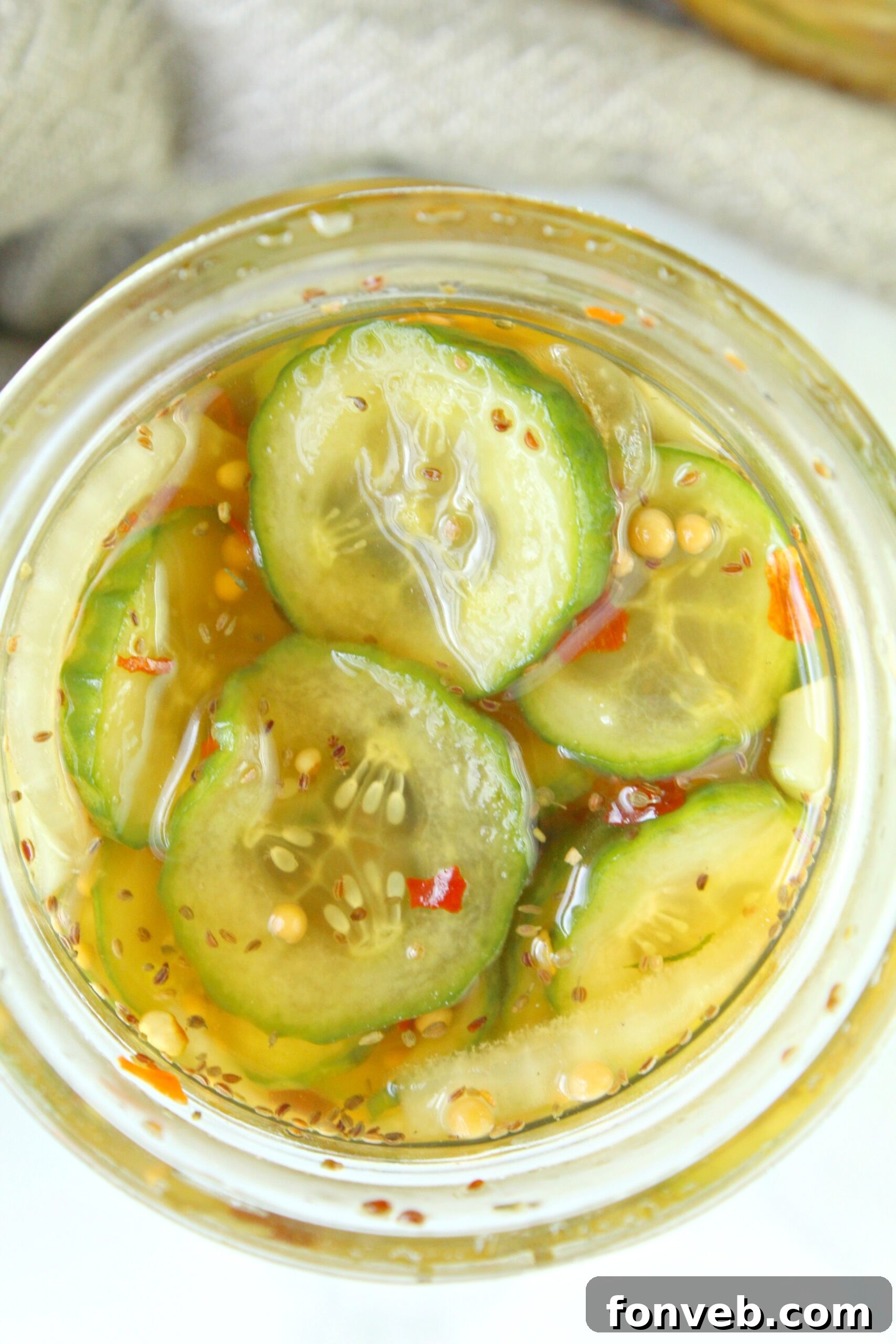
Refrigerator Bread and Butter Pickles: Homemade Sweet & Tangy Perfection
Do you often find yourself craving the unique blend of sweet and tangy flavors that only classic bread and butter pickles can deliver? Imagine being able to enjoy that delightful crunch and vibrant taste without ever having to leave your kitchen. This comprehensive guide will walk you through everything you need to know to make your own delicious Refrigerator Bread and Butter Pickles from scratch. Not only are homemade pickles incredibly fresh and flavorful, but they’re also surprisingly easy to prepare, offering a satisfying project for any home cook looking to add a gourmet touch to their meals.
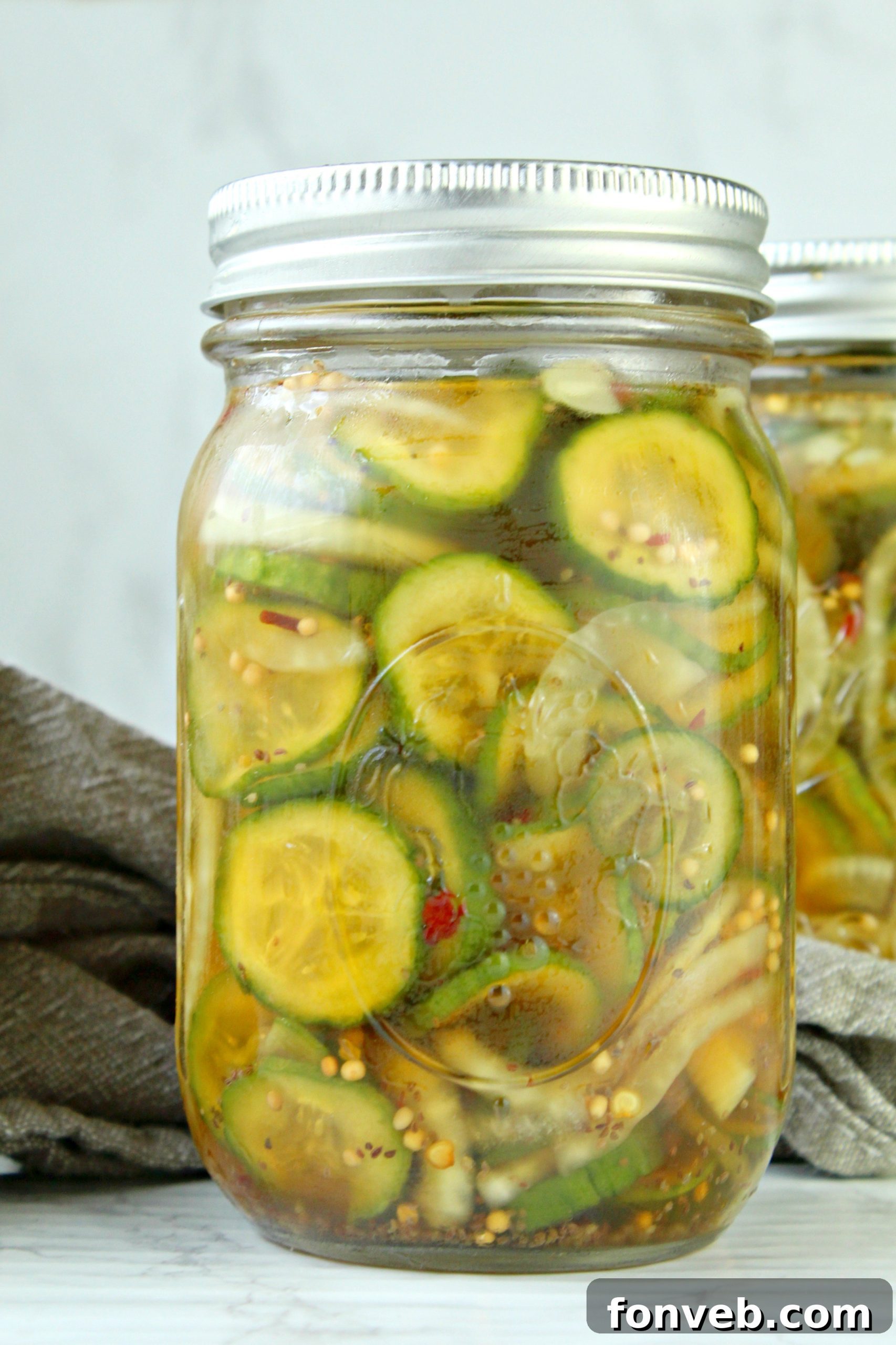
What Are Bread and Butter Pickles? A Brief History
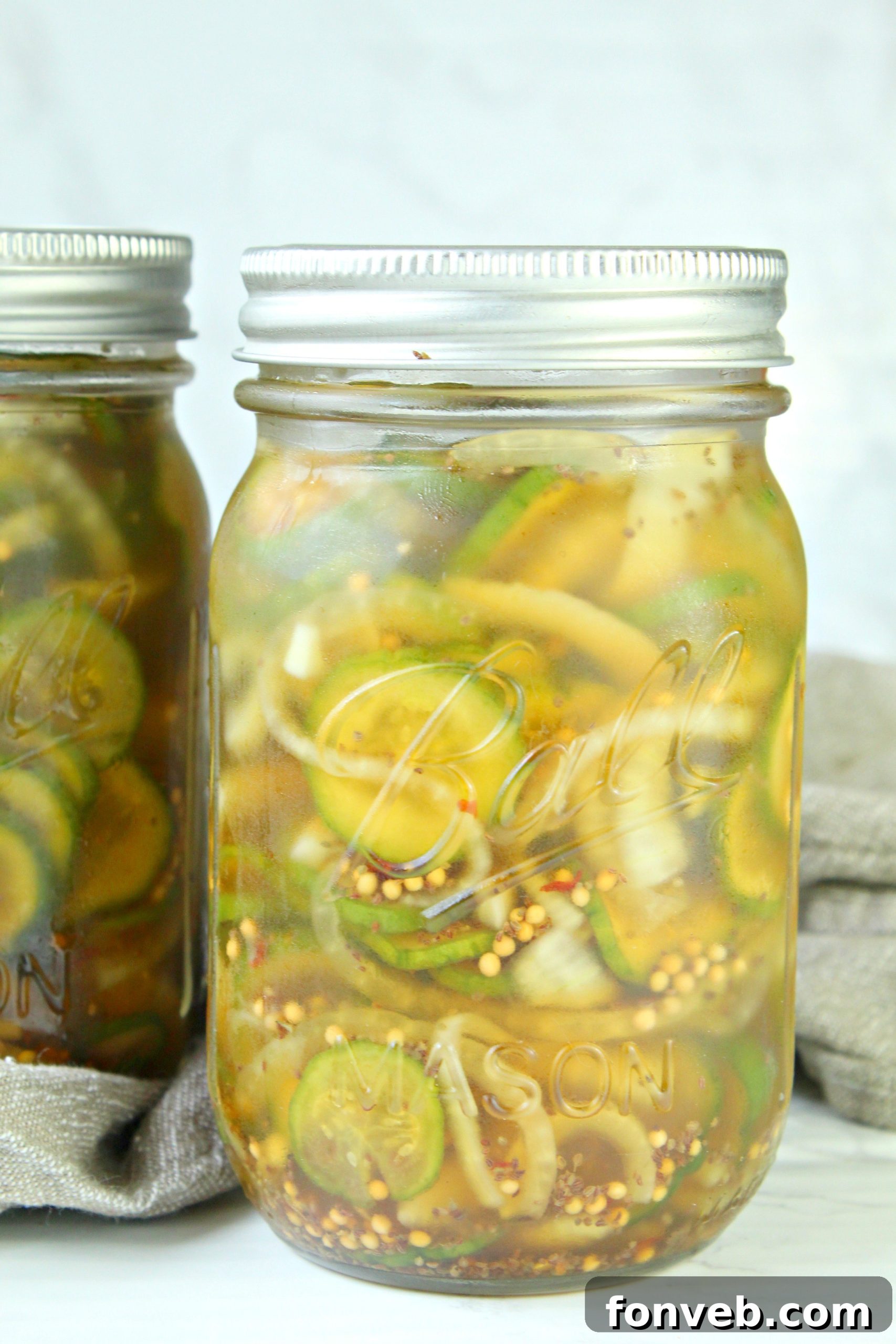
Bread and Butter Pickles are a beloved American condiment, characterized by their distinct sweet, tangy, and slightly savory flavor profile. They are essentially sliced cucumbers that have been preserved in a brine solution primarily composed of vinegar, sugar, and various spices. Unlike traditional fermented pickles, refrigerator pickles are not canned or heat-processed; instead, they are simply stored in the refrigerator, maintaining a crisp texture and bright flavor.
The intriguing name “Bread and Butter Pickles” has a couple of popular origin stories. One theory suggests that during the Great Depression, people often bartered homemade pickles for essential food items like bread and butter. Another, perhaps more straightforward, explanation is that these pickles are a perfect accompaniment to a simple bread and butter sandwich, and indeed, they elevate almost any sandwich or meal they grace.
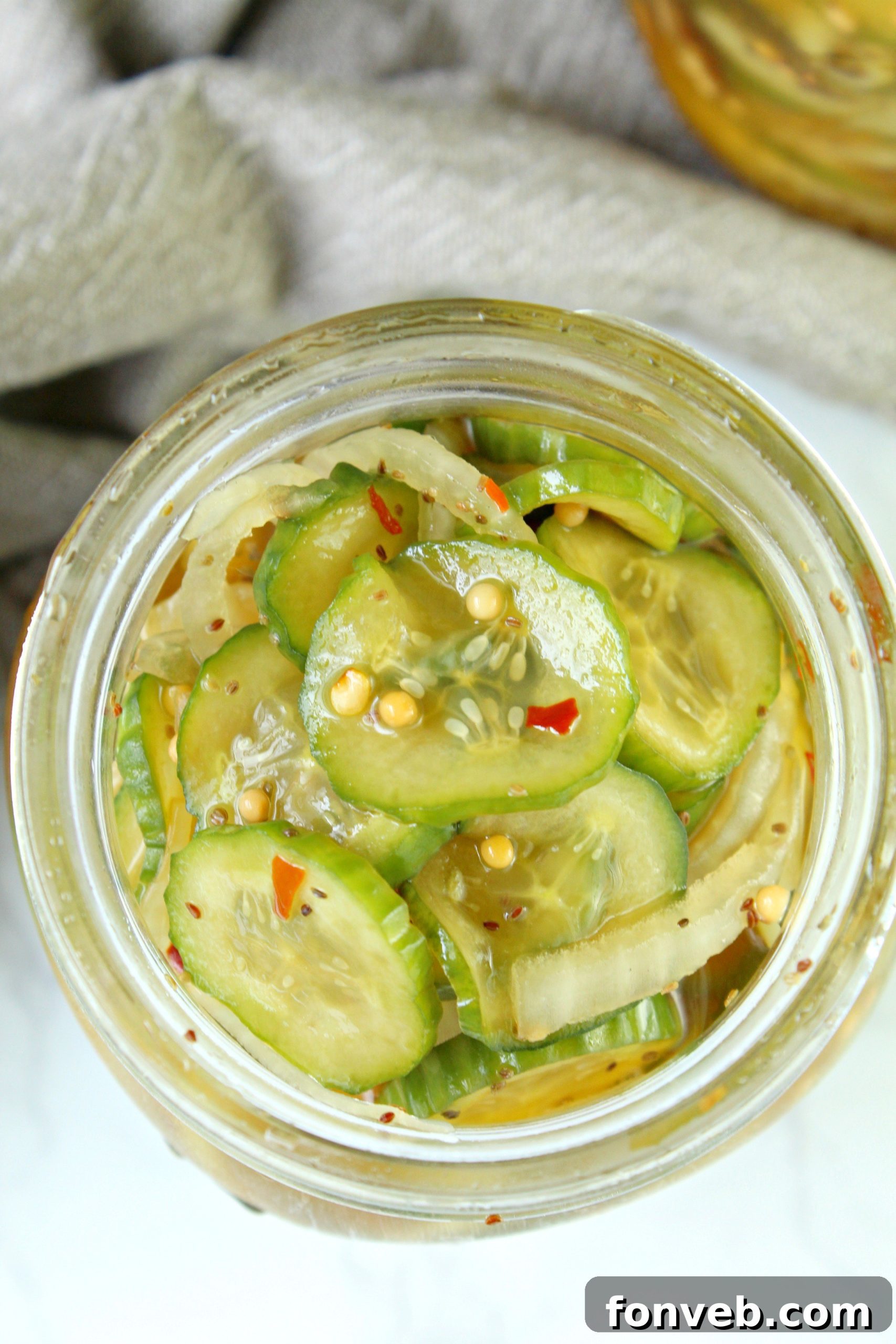
Their unique taste comes from the careful balance of ingredients. The vinegar provides the essential tang, while brown sugar lends a deep, molasses-like sweetness. A blend of spices, commonly mustard seeds, celery seeds, and sometimes red pepper flakes, adds complexity and a subtle warmth, making these pickles an irresistible addition to countless dishes.
Why Make Your Own Refrigerator Bread and Butter Pickles?
While store-bought bread and butter pickles are readily available, there’s nothing quite like the taste and satisfaction of homemade. Here are compelling reasons to start pickling your own:
- Unmatched Freshness: You control the quality of your ingredients, ensuring your pickles are made with the freshest cucumbers and spices. The result is a vibrant flavor and crisp texture that store-bought versions often lack.
- Customizable Flavor: Love a little more heat? Prefer them sweeter or tangier? Making your own allows you to adjust the sugar, salt, and spice levels to perfectly suit your palate. Experiment with different spices like dill, garlic, or turmeric to create your signature blend.
- No Artificial Preservatives: Commercial pickles often contain artificial colors, flavors, and preservatives. With homemade refrigerator pickles, you know exactly what goes into your food – just natural, wholesome ingredients.
- Cost-Effective: Pickling cucumbers and onions, especially when they are in season, can be very economical. Making a large batch at home is often cheaper than regularly buying specialty pickles from the store.
- Simple and Rewarding: The process of making refrigerator pickles is surprisingly straightforward and requires no special canning equipment. It’s a fun and rewarding kitchen project that yields delicious results you can proudly share.
- Perfect for Excess Produce: If you have an abundance of cucumbers from your garden or a farmer’s market, pickling is an excellent way to preserve them and enjoy their goodness for weeks.
Essential Ingredients for Homemade Bread and Butter Pickles
Crafting the perfect batch of Refrigerator Bread and Butter Pickles requires a few key ingredients. Each component plays a vital role in achieving that signature sweet and tangy flavor and crisp texture:
- Pickling Cucumbers: These are crucial for a great pickle. Varieties like Kirby or Persian cucumbers are ideal because they are firm, less watery, and have thinner skins, which absorb the brine beautifully. Aim for at least seven medium-sized cucumbers to start.
- White Onion: Sliced white onion adds a delicate, savory counterpoint to the sweet and tangy brine, enhancing the overall flavor complexity of your pickles.
- Kosher Salt: More than just seasoning, salt is essential in the initial brining process. It draws out excess moisture from the cucumbers, contributing to a crisper pickle texture and preventing them from becoming soggy.
- Brown Sugar: This is the secret to the pickles’ distinctive sweetness and depth of flavor. Brown sugar, with its molasses content, offers a richer, more complex sweetness than granulated white sugar.
- White Vinegar: As the primary pickling agent, white vinegar provides the sharp tang and acidity necessary for preservation and flavor development. Its clean, crisp taste is ideal for this recipe.
- Apple Cider Vinegar: Complementing the white vinegar, apple cider vinegar adds a subtle fruity note and a slightly mellower acidity, rounding out the brine’s flavor profile. The combination of both vinegars creates a balanced and nuanced taste.
- Mustard Seeds: A classic pickle spice, mustard seeds contribute a pungent, slightly spicy, and earthy aroma that is fundamental to bread and butter pickles.
- Celery Seeds: These small seeds impart a mild, earthy, and slightly bitter flavor, reminiscent of celery, which is a traditional and irreplaceable element in the brine.
- Red Pepper Flakes: For a gentle kick and a hint of warmth, red pepper flakes are a wonderful addition. Adjust the amount to control the level of spiciness to your preference.
With these ingredients at hand, you’re well on your way to making a batch of homemade pickles that will impress everyone!
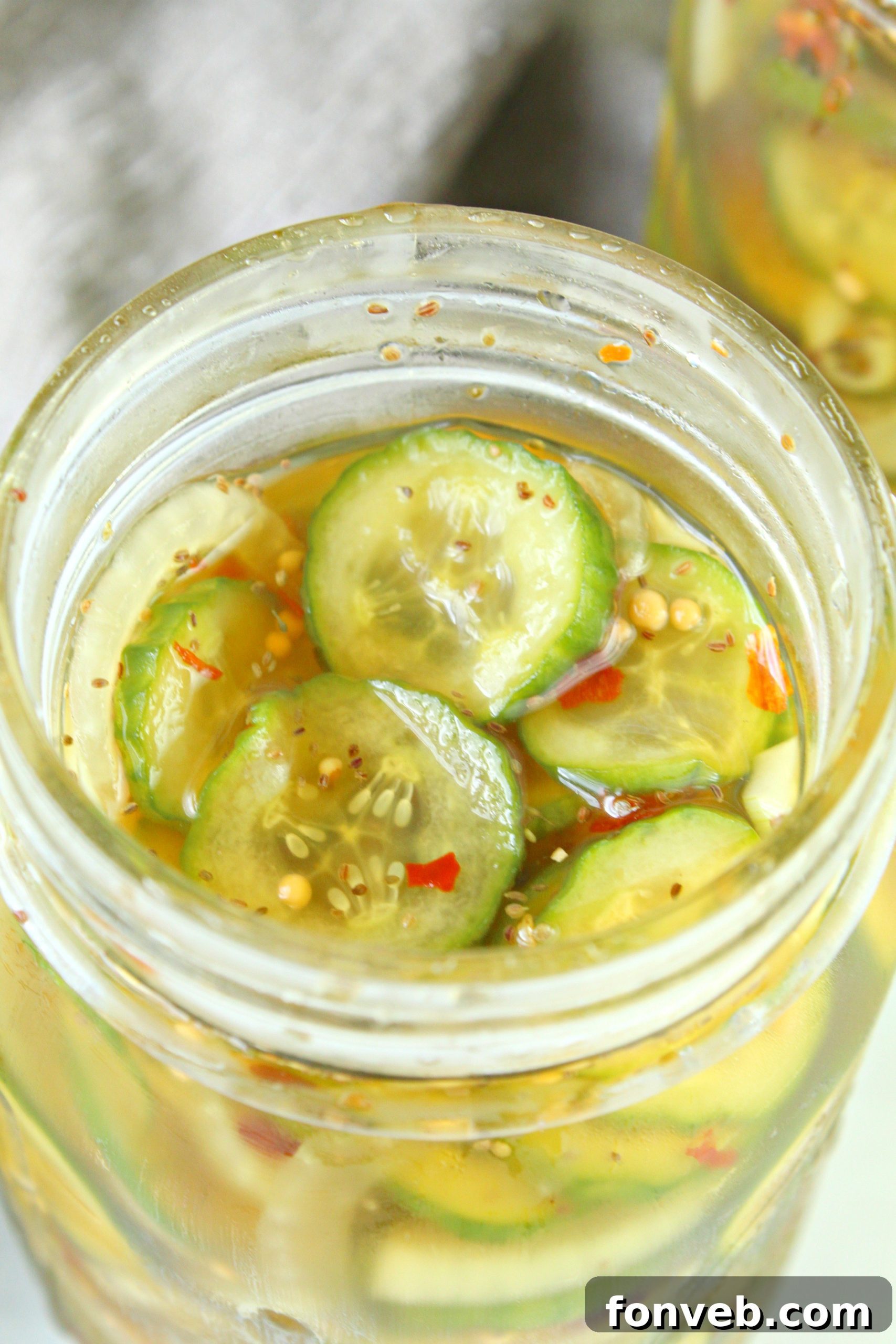
Step-by-Step Guide: How to Prepare Your Refrigerator Pickles
Making Refrigerator Bread and Butter Pickles is a straightforward process that yields incredibly rewarding results. Follow these simple steps to create your own batch of crisp, tangy, and sweet pickles:
- Prepare Cucumbers and Onions: Begin by thoroughly washing your pickling cucumbers. Slice them into thin, uniform rounds – about 1/8 to 1/4 inch thick is ideal. Peel and thinly slice the white onion. The thinner the slices, the better they will absorb the brine.
- Salt and Chill: In a large bowl, combine the sliced cucumbers and onions with the kosher salt. Toss gently to ensure the salt is evenly distributed. Cover the bowl and refrigerate for at least 1 hour. This step is crucial as the salt draws out excess moisture from the vegetables, helping to keep your pickles crisp.
- Rinse and Drain: After chilling, transfer the cucumber and onion mixture to a colander. Rinse them thoroughly under cold running water to remove the excess salt. It’s important to rinse well to prevent your pickles from being overly salty. Once rinsed, shake off as much water as possible and return the vegetables to a clean bowl.
- Prepare the Brine: In a small saucepan, combine the brown sugar, white vinegar, apple cider vinegar, celery seeds, mustard seeds, and red pepper flakes. Heat the mixture over medium-high heat, stirring continuously, until the brown sugar has completely dissolved. Do not boil vigorously; just heat until the sugar integrates fully into the vinegar.
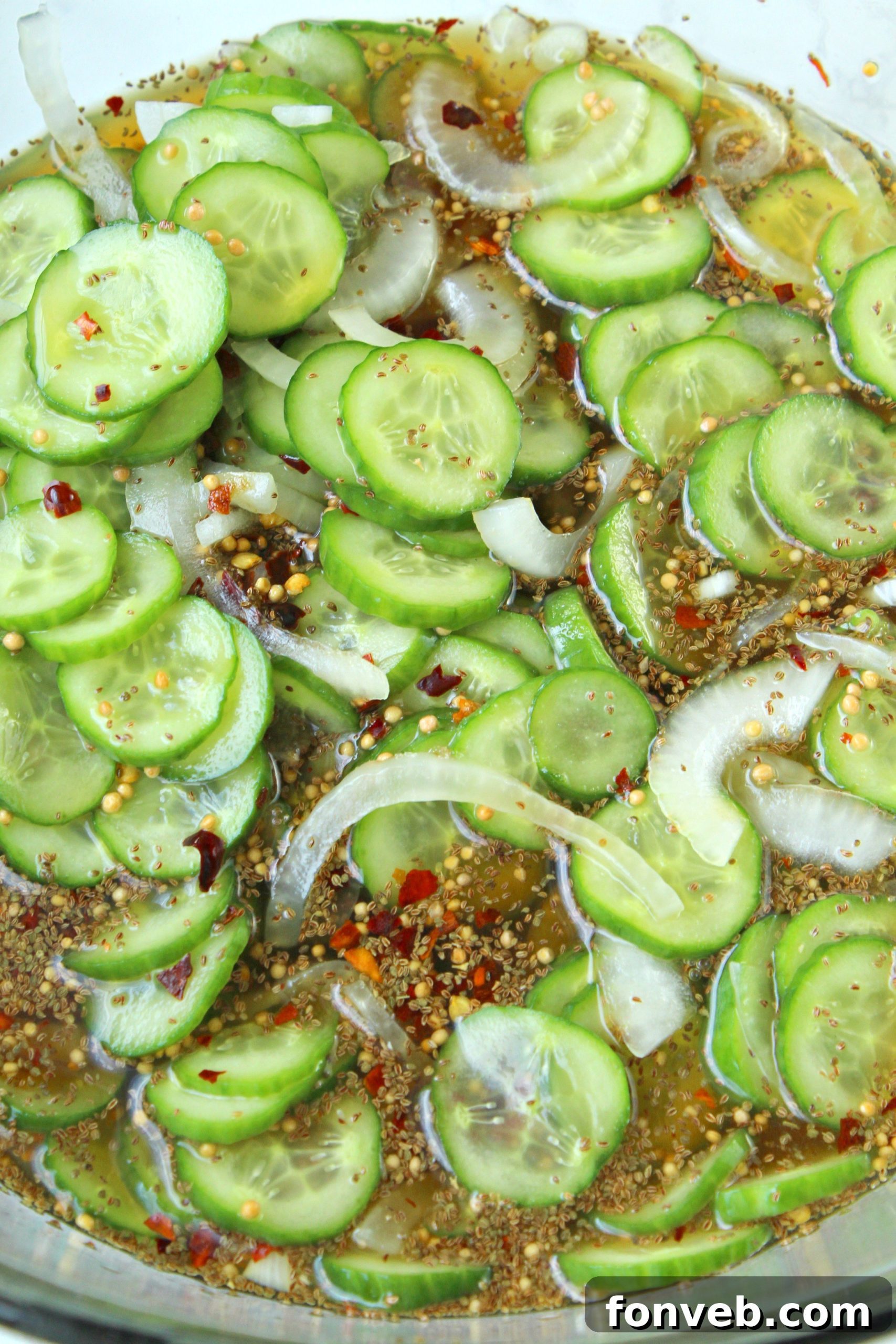
- Combine and Cool: Pour the warm vinegar mixture over the rinsed cucumbers and onions in the bowl. Stir gently to ensure all vegetables are submerged and coated in the brine. Allow the mixture to cool completely to room temperature. This gradual cooling helps the cucumbers begin to absorb the flavors.
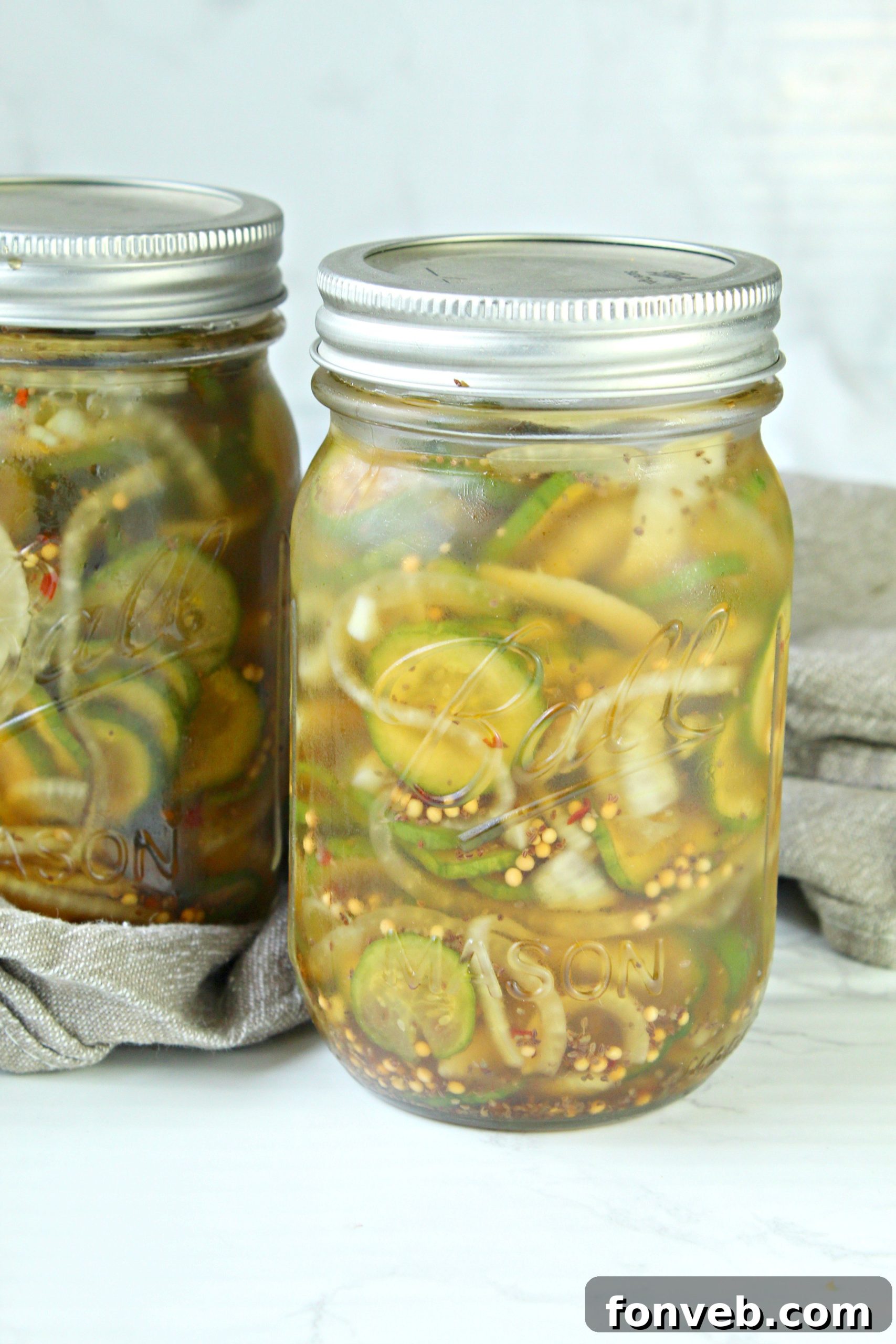
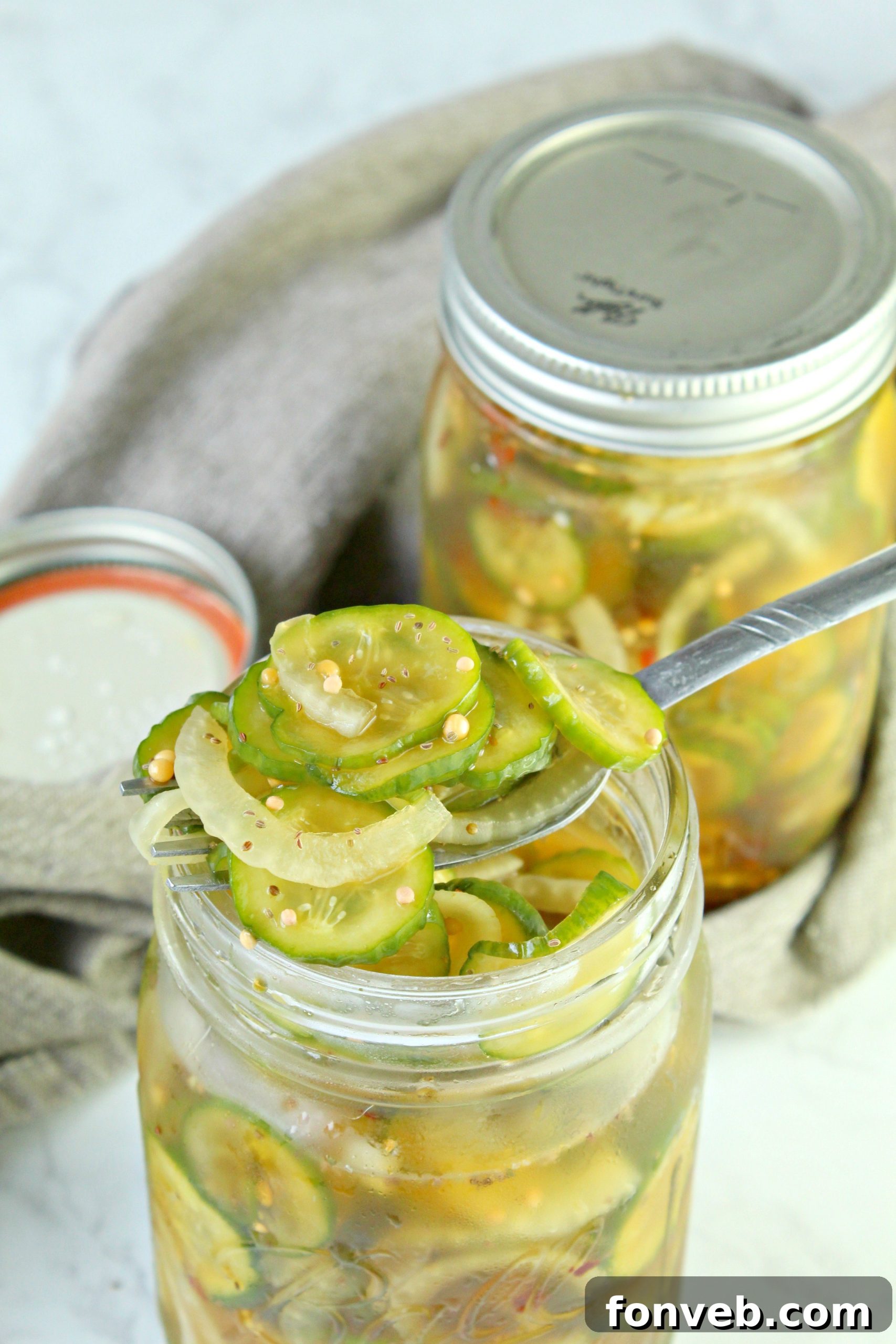
- Jar and Refrigerate: Once cooled, carefully transfer the pickles and brine into clean glass jars. Ensure the cucumbers are fully submerged in the liquid. Seal the jars tightly with lids. Place them in the refrigerator and let them chill for at least 24 hours before serving. This chilling period allows the flavors to meld and the pickles to develop their characteristic taste.
- Enjoy and Store: Your Refrigerator Bread and Butter Pickles are now ready to enjoy! Store them in the refrigerator, and they will remain fresh and delicious for up to two months.
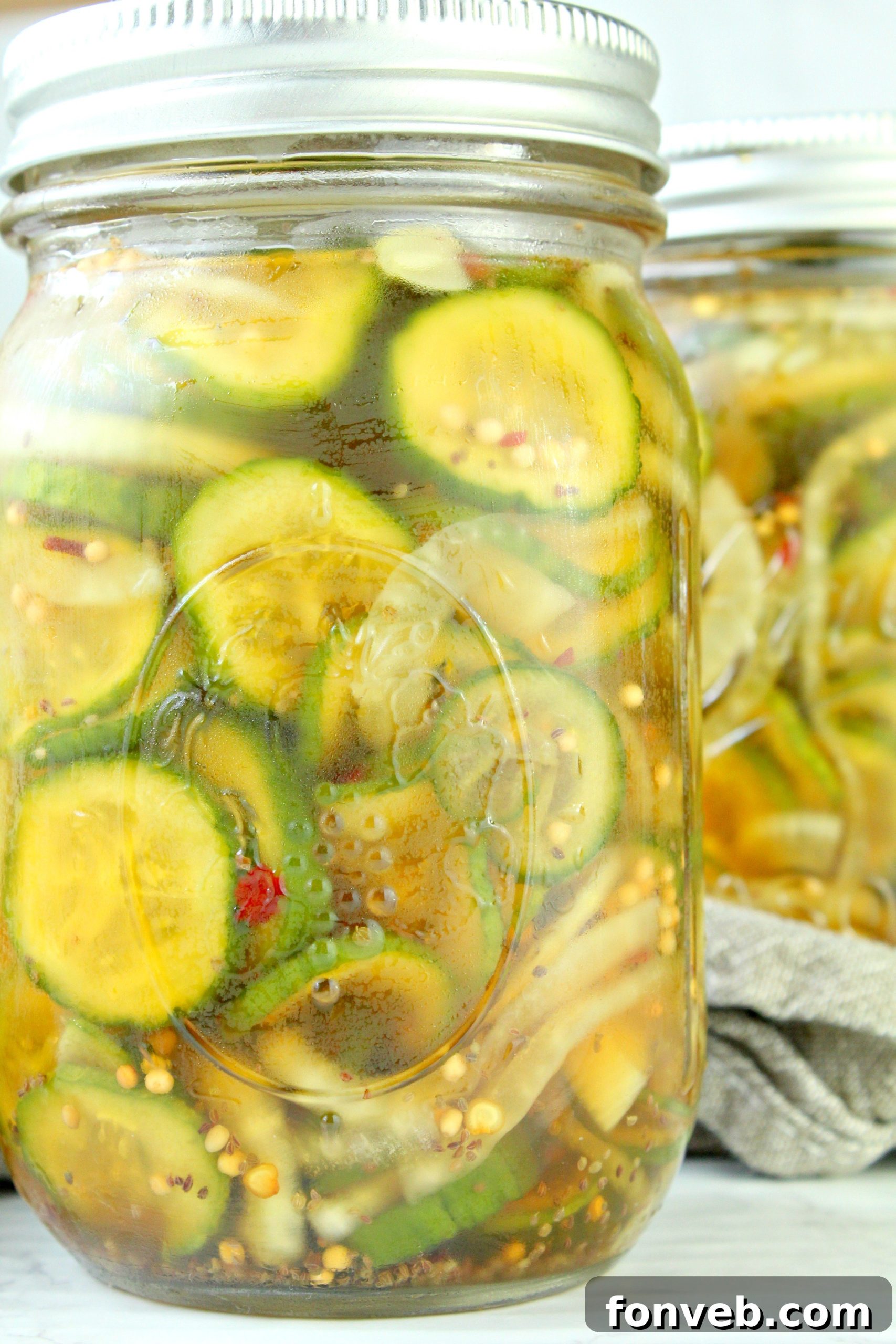
Creative Ways to Enjoy Your Homemade Bread and Butter Pickles
Bread and Butter Pickles are incredibly versatile and can elevate a wide array of dishes with their signature sweet and tangy crunch. Here are some delightful ways to incorporate your homemade pickles into your culinary repertoire:
- Classic Sandwich Enhancer: The most traditional use! Layer them generously on hamburgers, cheeseburgers, hot dogs, pulled pork sandwiches, or deli-style sandwiches for an irresistible boost of flavor and a delightful crunch.
- Salad Star: Dice them finely and mix into your favorite salads. They add a bright, zesty note to chicken salad, tuna salad, macaroni salad, potato salad, or even a simple green salad.
- Fried Pickle Perfection: For a crowd-pleasing appetizer, slice them thicker, dip them in an egg wash, coat them in seasoned breadcrumbs, and fry them until golden brown. You can deep-fry them for ultimate indulgence or use an air fryer for a healthier, crispy treat. Serve with a creamy dipping sauce like ranch or sriracha mayo.
- Charcuterie Board Addition: Arrange them on a cheese and charcuterie board. Their tangy sweetness cuts through rich cheeses and cured meats beautifully, offering a refreshing palate cleanser.
- Snack Straight from the Jar: For true pickle enthusiasts, simply grab a few slices straight from the jar for a satisfying, low-calorie snack. Their refreshing taste makes them a perfect midday treat.
- Egg Dish Upgrade: Chop them and fold them into scrambled eggs or omelets for a surprisingly delicious twist. They also make a fantastic garnish for deviled eggs.
- Garnish for Grilled Meats: Serve alongside grilled chicken, pork chops, or fish. Their acidity complements rich flavors and adds a gourmet touch to your plate.
- In Dressings and Sauces: Finely mince them and stir into homemade salad dressings, tartar sauce, or remoulade for an extra layer of flavor and texture.
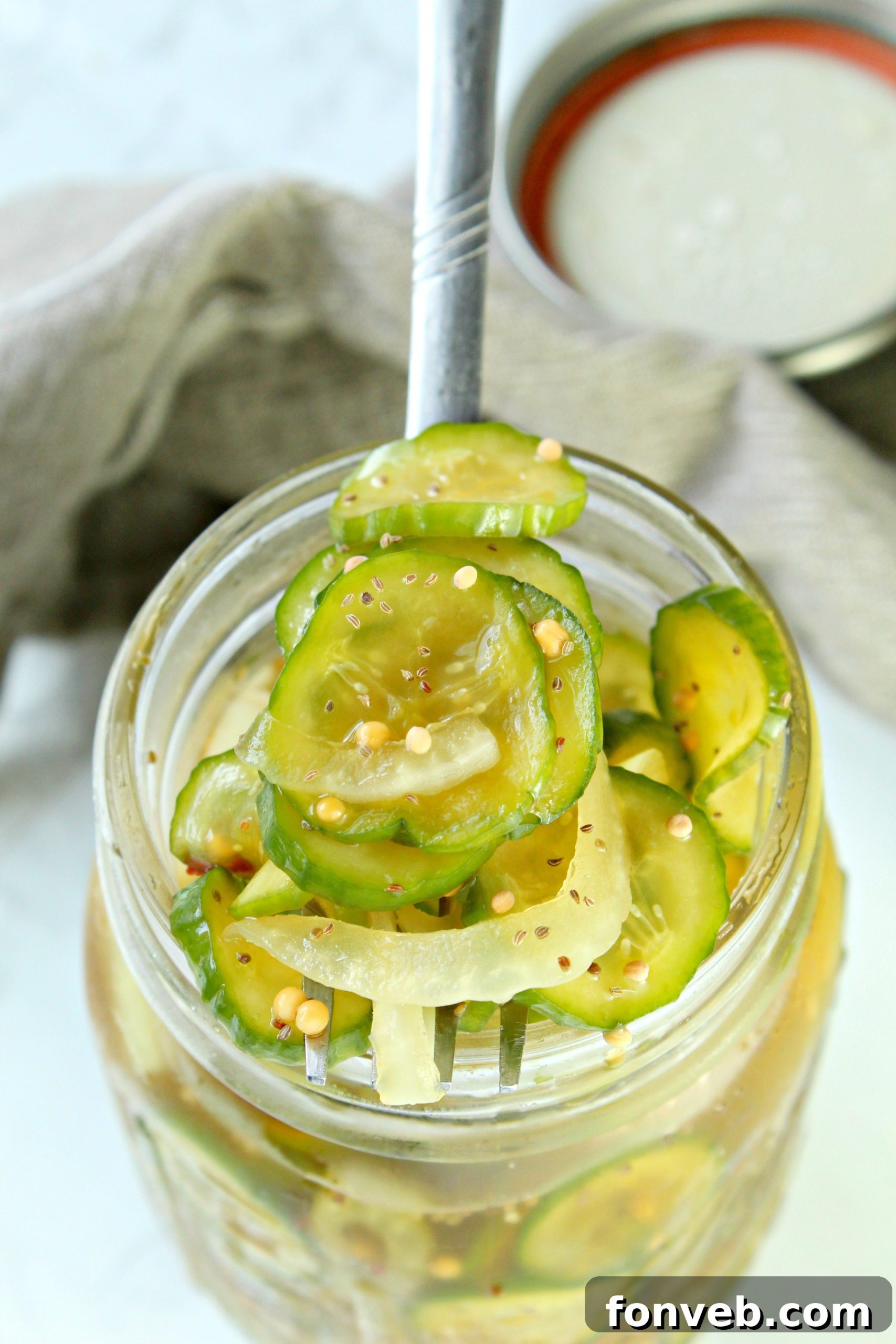
Storing Your Refrigerator Pickles for Optimal Freshness
One of the beauties of refrigerator pickles is their ease of storage. Unlike traditional canned pickles that require a specific sealing process, these homemade delights simply need to be kept cold. When stored properly in clean, airtight containers, your Refrigerator Bread and Butter Pickles can stay fresh and delicious in the fridge for up to two months. Always ensure the cucumbers are fully submerged in the brine, as this helps prevent spoilage and keeps them crisp. Using glass jars with tight-fitting lids is ideal for both storage and presentation. If you notice any unusual odors, discoloration, or mold, it’s best to discard the batch. While they are safe to eat for two months, their peak flavor and crispness are typically best enjoyed within the first few weeks after preparation.
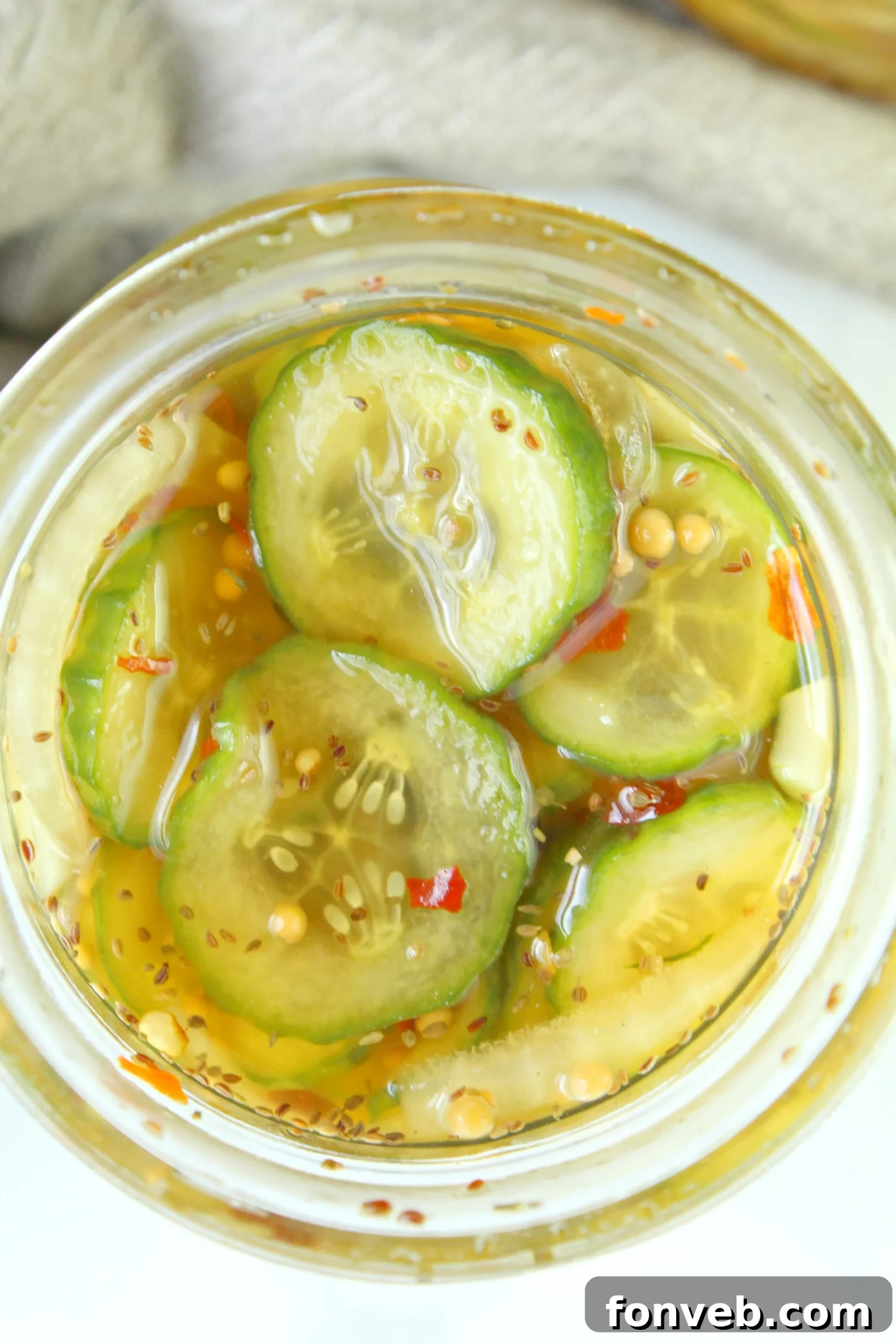
Understanding Vinegar Substitutions for Your Pickles
The combination of white vinegar and apple cider vinegar creates the iconic flavor profile of bread and butter pickles. However, if you find yourself without apple cider vinegar, or simply wish to experiment, there are viable alternatives. While the original recipe is highly recommended for the classic taste, here are some substitutes you can consider:
- Rice Wine Vinegar: This offers a milder, slightly sweeter acidity. If using, you might want to slightly reduce the brown sugar to maintain the desired sweet-tangy balance.
- Sherry Vinegar: Known for its nutty, rich flavor, sherry vinegar can add an interesting depth to your pickles. It’s a good choice if you’re looking for a more gourmet twist.
- Red Wine Vinegar: With a stronger, fruitier, and more robust flavor, red wine vinegar will significantly alter the traditional taste of bread and butter pickles, giving them a bolder profile.
Keep in mind that each substitution will impart a different character to your pickles. For the closest approximation to the traditional taste, it’s always best to stick to the recommended white vinegar and apple cider vinegar blend. However, don’t hesitate to experiment and discover your own favorite variations!
Can You Freeze Bread and Butter Pickles? Tips for Long-Term Storage
While refrigerator pickles are typically enjoyed fresh from the fridge, you might wonder about longer-term storage options, especially if you’ve made a large batch or want to prepare them well in advance. Yes, you can freeze Refrigerator Bread and Butter Pickles, but with some considerations regarding texture.
When frozen, cucumbers tend to lose some of their crispness and become softer due to the water content expanding and breaking down cell walls. However, the flavor will remain intact, making them still suitable for dishes where texture is less critical, such as in relishes, cooked applications, or finely chopped salads. If you plan to freeze them:
- Choose the Right Container: Store your pickles in freezer-safe containers or heavy-duty freezer bags, ensuring there’s minimal air exposure. Leave a little headspace if using rigid containers, as the liquid will expand when frozen.
- Batch Freezing: If you’re a fan of having pickles on hand, consider making multiple batches and freezing them. They can be stored in the freezer for up to 12 months.
- Thawing Process: To thaw, simply transfer the frozen pickles to your refrigerator and let them defrost slowly for 12-24 hours. Avoid thawing at room temperature for food safety.
- Expect Texture Change: Be prepared for a softer texture once thawed. While they won’t be as crisp as fresh refrigerator pickles, they will still retain their delicious sweet and tangy flavor, making them perfect for mixing into potato salads, tuna melts, or as a flavorful condiment.
Frequently Asked Questions About Refrigerator Bread and Butter Pickles
How long do refrigerator pickles last?
When stored in airtight containers in the refrigerator, homemade Refrigerator Bread and Butter Pickles typically last for up to two months. For the best flavor and crispness, it’s recommended to consume them within the first few weeks.
What kind of cucumbers are best for pickling?
Small, firm, and less watery cucumber varieties are best for pickling. Kirby cucumbers are often considered the gold standard due to their thin skin and crunchy texture. Persian or English cucumbers can also work well, especially if you remove some of their seeds.
Do I need to sterilize my jars for refrigerator pickles?
While sterilizing jars is crucial for traditional canning to create a shelf-stable product, it’s not strictly necessary for refrigerator pickles. Since these pickles are kept cold and consumed relatively quickly, thoroughly washing and sanitizing your jars with hot, soapy water is usually sufficient. However, ensuring your jars are impeccably clean is always a good practice to minimize any risk of spoilage.
Can I reduce the amount of sugar in the recipe?
Yes, you can adjust the sugar content to your preference. Keep in mind that “bread and butter” pickles are known for their distinct sweetness. Reducing the sugar will result in a tangier pickle, which some people prefer. Experiment with smaller adjustments first to find your ideal balance.
Refrigerator Bread and Butter Pickles Recipe Card
Ready to make your own? Here’s the complete recipe for perfect homemade Refrigerator Bread and Butter Pickles!
Ingredients:
- 7 pickling cucumbers
- 1 white onion
- 3 Tablespoons kosher salt
- 1 cup brown sugar
- 1 cup white vinegar
- 1/2 cup apple cider vinegar
- 2 teaspoons celery seeds
- 2 teaspoons mustard seeds
- 1/2 teaspoon red pepper flakes
Instructions:
- Slice the cucumbers and onion into thin slices. In a large bowl, toss the cucumber and onion slices with the salt. Cover and chill in the refrigerator for 1 hour.
- Transfer the cucumbers and onions to a colander and rinse off the salt. Drain excess water from the bowl and return the cucumber and onions to the bowl.
- In a small saucepan, combine the remaining ingredients (brown sugar, white vinegar, apple cider vinegar, celery seeds, mustard seeds, red pepper flakes) and heat over medium-high heat just until the sugar has dissolved, stirring continuously.
- Pour the vinegar mixture over the cucumbers and onions and allow to cool completely to room temperature. Once cooled, transfer to clean jars and chill in the refrigerator for at least 24 hours.
- Use them within two months, keeping them stored in the fridge.
- ENJOY!
Did you make this recipe? Share your creations and make sure to follow us on Pinterest for more incredible recipes!