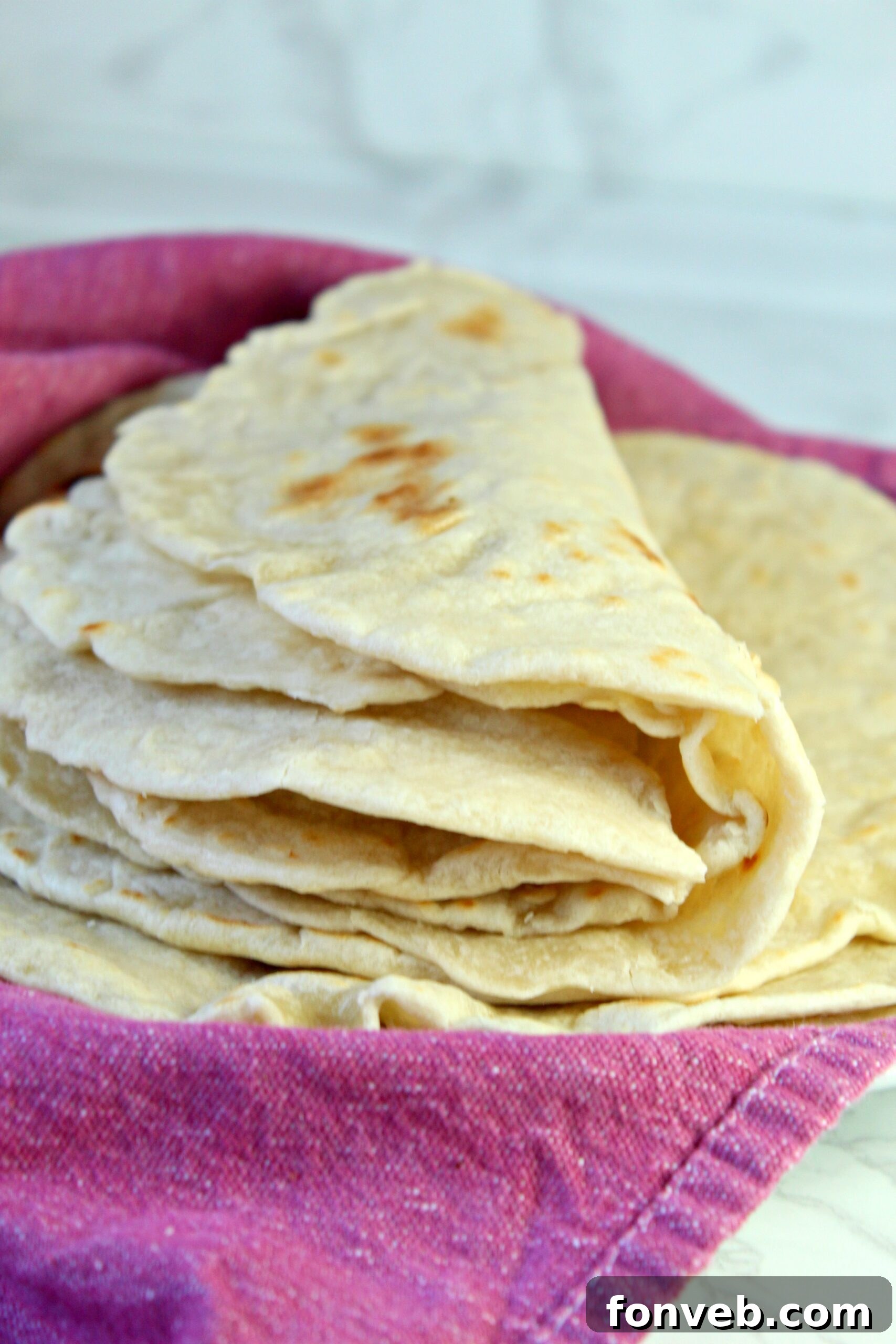
Mastering Homemade Flour Tortillas: Your 5-Ingredient Guide to Soft, Pliable Perfection
Tired of bland, store-bought tortillas filled with unpronounceable ingredients? Imagine warm, pillowy flour tortillas fresh off the skillet, made right in your own kitchen with just five simple ingredients. This comprehensive guide will show you how to create the most incredible homemade flour tortillas that are not only easy to make but also taste undeniably superior to anything you’ll find in a package. Say goodbye to stiff, flavorless wraps and hello to the authentic taste of freshly made perfection!
Why Choose Homemade Flour Tortillas?
The appeal of homemade flour tortillas extends far beyond mere convenience. While it might seem daunting at first, the benefits quickly become apparent, transforming your meals and elevating your culinary experience. There are several compelling reasons why taking a few extra minutes to make your own tortillas is a decision you won’t regret.
Unmatched Freshness and Flavor
The most significant advantage of homemade tortillas is their unparalleled freshness. Unlike their packaged counterparts, which often contain preservatives and additives to extend shelf life, your homemade creations are made with simple, wholesome ingredients. This means a cleaner taste, a more aromatic experience, and a texture that is impossibly soft and tender. The difference is truly night and day; the subtle sweetness of fresh flour combined with the richness of your chosen fat creates a depth of flavor that store-bought options simply cannot replicate.
Superior Texture and Pliability
One of the most common complaints about pre-packaged tortillas is their tendency to crack and break, especially when filled or rolled. Homemade flour tortillas, when made correctly, are wonderfully pliable and resilient. They possess a delicate chewiness and an elasticity that allows them to bend and fold without tearing, making them perfect for stuffing with your favorite fillings. This pliability is a game-changer for dishes like burritos and enchiladas, ensuring every bite is as satisfying as it is delicious.
Control Over Ingredients
When you make tortillas from scratch, you have complete control over what goes into them. This is especially important for those with dietary restrictions or who prefer to avoid certain additives, artificial flavors, or excessive sodium often found in commercial products. Our 5-ingredient recipe ensures you know exactly what you’re serving your family and friends: flour, salt, baking powder, fat, and water. It’s a simple, transparent approach to food preparation that offers peace of mind.
Cost-Effective and Rewarding
Making your own tortillas is surprisingly cost-effective. The basic ingredients are pantry staples and relatively inexpensive, especially when compared to buying specialty brands of tortillas. Beyond the financial savings, there’s immense satisfaction in creating something delicious from scratch. The process itself can be a meditative and enjoyable culinary endeavor, culminating in a product that brings joy to every meal.
The Simple Magic of Just 5 Ingredients
It’s truly remarkable how a handful of basic pantry staples can transform into something as delicious and versatile as a homemade flour tortilla. Our recipe relies on these five essential components, each playing a crucial role in achieving that perfect soft, pliable texture and delightful flavor.
- All-Purpose Flour: The foundation of our tortillas. All-purpose flour provides the structure and elasticity needed for rolling and cooking. Its fine texture contributes to the soft mouthfeel of the finished product.
- Kosher Salt: More than just a seasoning, salt enhances the overall flavor of the tortillas, balancing the richness of the fat and bringing out the natural taste of the flour. Kosher salt is preferred for its pure flavor and larger crystals, which dissolve well.
- Baking Powder: This leavening agent is key to achieving that characteristic tender, slightly airy texture and helps the tortillas puff up beautifully on the griddle. It creates tiny air pockets, ensuring a soft bite.
- Fat (Lard, Crisco, Butter, or Oil): This is perhaps the most critical ingredient for pliability and flavor.
- Lard: Traditionally used, lard yields incredibly soft, tender, and flavorful tortillas. Its unique fat structure contributes to a wonderfully pliable dough.
- Crisco (Vegetable Shortening): A popular alternative to lard, Crisco also produces very soft and flexible tortillas with a neutral flavor profile. It’s often recommended for consistent results.
- Butter: For a richer, buttery flavor, butter can be used. Ensure it’s cold and cut into small pieces for best incorporation. Butter can sometimes make the tortillas a bit firmer than lard or shortening.
- Canola Oil (or other neutral vegetable oil): While it can be used, oil tends to result in slightly chewier tortillas compared to solid fats like lard or shortening. However, it’s a convenient and widely available option.
The choice of fat significantly impacts the texture and flavor, so feel free to experiment to find your personal favorite.
- Warm Water: The warmth of the water is essential for properly hydrating the flour and activating the gluten, making the dough easier to work with and more pliable. It also helps to melt the fat, integrating it smoothly into the mixture.
With these five simple ingredients, you’re well on your way to crafting the best homemade flour tortillas you’ve ever tasted!
The Versatility of Homemade Flour Tortillas
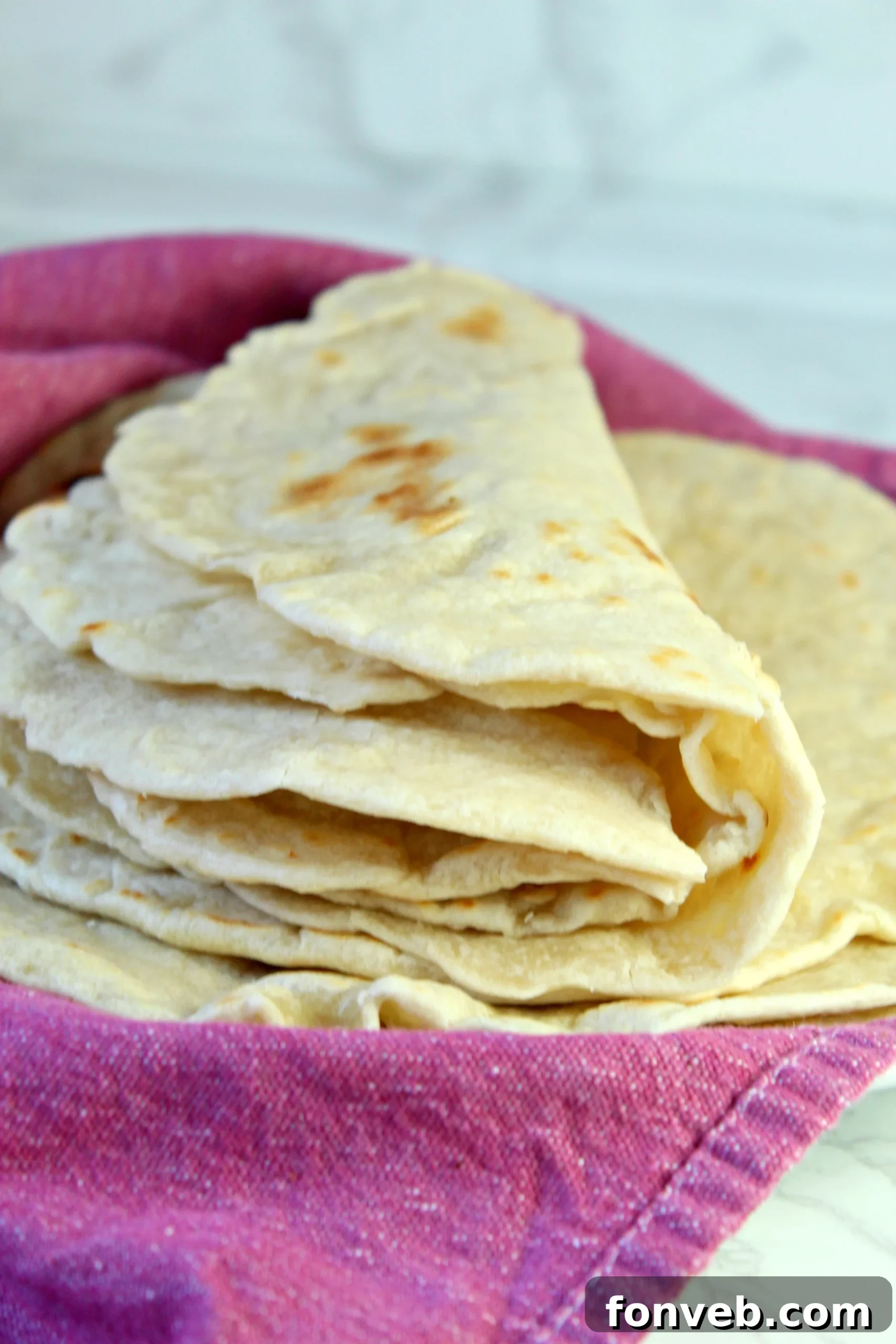
Once you master the art of making homemade flour tortillas, a world of culinary possibilities opens up. These soft, pliable discs are incredibly versatile and can be used in countless dishes, extending far beyond the traditional Mexican fare. Their neutral yet rich flavor makes them a perfect canvas for both savory and sweet creations.
Classic Mexican Delights
Of course, the most common use for flour tortillas is in Mexican cuisine. They are simply indispensable for:
- Soft Tacos: Perfect for your Taco Tuesday celebrations! Fill them with seasoned ground beef, shredded chicken, al pastor, or fresh veggies.
- Fajitas: Wrap up sizzling steak, chicken, or shrimp fajitas with grilled peppers and onions.
- Enchiladas: Roll them around your favorite fillings, smother with sauce and cheese, then bake until bubbly.
- Burritos: Whether it’s a hearty breakfast burrito, a classic bean and cheese burrito, or a loaded carne asada burrito, these tortillas hold everything together beautifully.
- Quesadillas: Melt cheese and other fillings between two tortillas or fold one over for a satisfying snack or light meal.
- Chimichangas and Burrito Bowls: Fry them for chimichangas or use them as the base for deconstructed burrito bowls.
Beyond Mexican Cuisine
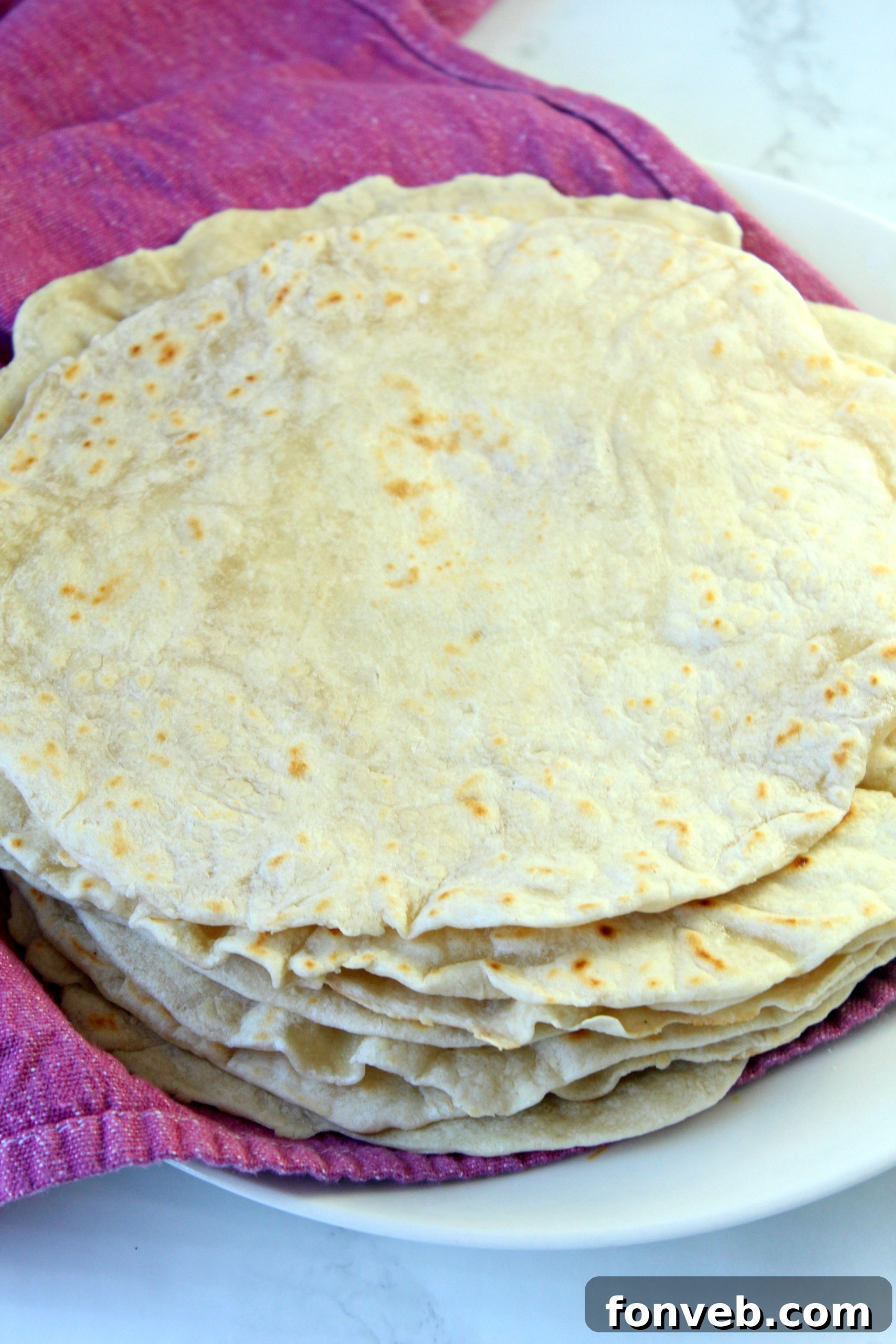
Don’t limit yourself to just Mexican food! Homemade flour tortillas can easily substitute for other bread products or wraps:
- Wraps: Use them for deli meat wraps, chicken Caesar wraps, or vegetarian wraps for a quick and easy lunch.
- Pizzas: A fantastic base for individual pizzas. Top with sauce, cheese, and your favorite toppings, then bake until crispy.
- Crispy Snacks: Cut them into wedges, bake or fry until crispy, and serve with dips like guacamole or salsa, or even hummus.
- Sweet Treats: Spread with Nutella and bananas, or cinnamon sugar and cream cheese for a unique dessert wrap.
With a batch of these homemade tortillas on hand, you’ll always have a quick and delicious solution for any meal or snack!
Homemade Flour Tortillas Recipe
This recipe makes about 16 pliable and delicious flour tortillas, perfect for any meal. The hands-on time is minimal, and the reward is immense!
Perfect Homemade Flour Tortillas (Only 5 Ingredients)
Yields: 16 tortillas | Prep time: 25 minutes | Cook time: 15-20 minutes
Ingredients
- 3 cups all-purpose flour
- 1 tsp. kosher salt
- 1 tsp. baking powder
- 1/3 cup canola oil, lard, or vegetable shortening (shortening often yields the best results)
- 1 cup warm water
Instructions
- In the bowl of a stand mixer fitted with a dough hook, combine the flour, kosher salt, and baking powder. Mix briefly to combine.
- With the mixer running on low speed, gradually add the oil (or melted fat if using lard/shortening) and then the warm water. Mix until a smooth, cohesive dough forms, which typically takes about 2-3 minutes. The dough should be soft but not sticky.
- Turn the dough out onto a lightly floured cutting board. Knead it by hand for an additional minute or two until it’s perfectly smooth and elastic.
- Divide the dough into 16 equal pieces. A kitchen scale can help ensure even sizing, or you can eyeball it.
- Roll each piece of dough into a smooth ball and then gently flatten it slightly.
- Arrange the flattened dough balls on a lightly floured tray, cover them with a clean kitchen towel or plastic wrap, and let them rest for at least 15 minutes. This resting period is crucial as it allows the gluten to relax, making the dough much easier to roll out thinly.
- While the dough is resting, heat a large cast-iron skillet, comal, or non-stick griddle over medium heat. You want it hot enough to cook the tortilla quickly but not so hot that it burns.
- Once rested, take one dough ball at a time and, using a rolling pin on a lightly floured surface, roll it out into a thin circle, approximately 7-8 inches in diameter. Don’t worry if they aren’t perfectly round—homemade charm is part of the appeal!
- Place the rolled tortilla onto the hot, dry skillet. Cook for about 1-2 minutes on the first side, or until you see small bubbles forming on the surface and the edges start to look dry. The underside should have light brown spots.
- Flip the tortilla and cook for an additional 30-60 seconds on the second side, or until it develops a few more brown spots and is cooked through. If using baking powder, you might notice the tortilla puffing up like a balloon – a sign of a perfectly cooked tortilla!
- Transfer the cooked tortilla to a plate and immediately cover it with a clean kitchen towel to keep it warm and soft while you cook the remaining dough. This step is vital for maintaining pliability.
- Repeat with the remaining dough balls, rolling and cooking one by one.
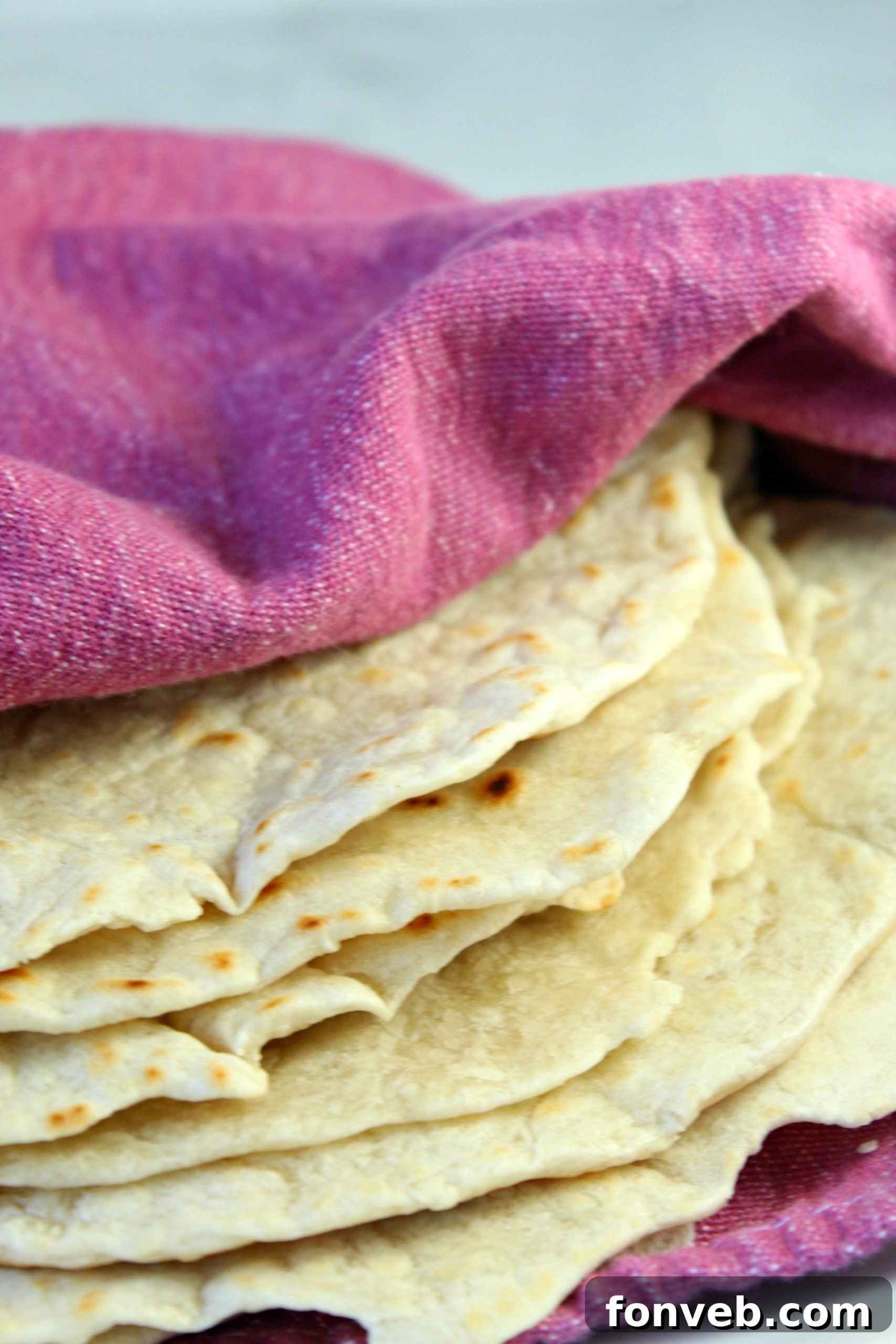
- Serve warm and enjoy your incredibly delicious, soft, and pliable homemade flour tortillas!
Tips for Perfect Homemade Tortillas
While making flour tortillas is relatively straightforward, a few key tips can elevate your results from good to absolutely perfect. Pay attention to these details, and you’ll be churning out soft, pliable tortillas like a pro in no time.
1. Embrace Imperfection in Shape
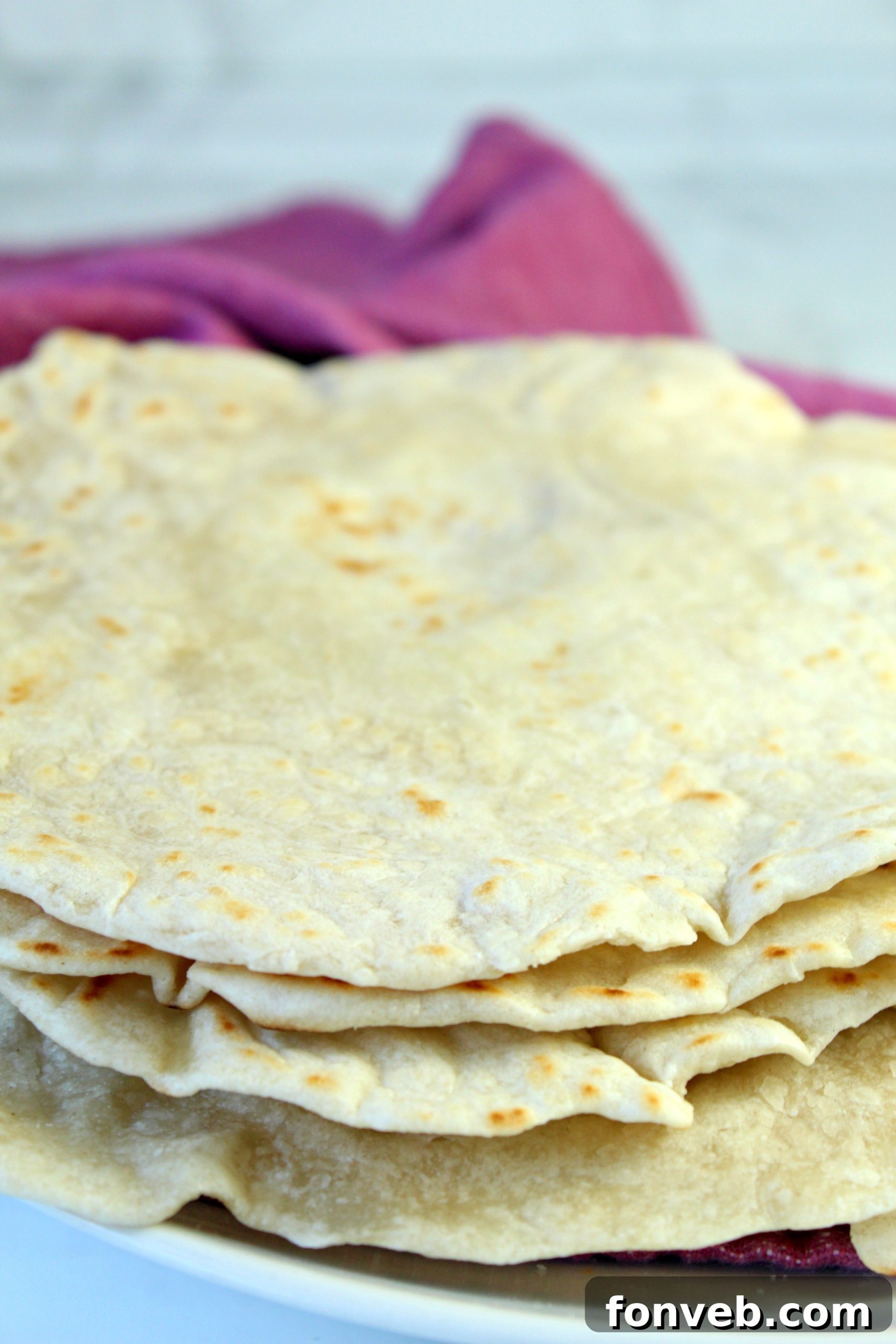
When you first start rolling tortillas, it can be a bit challenging to achieve a perfectly round circle. But guess what? That’s perfectly fine! No one has ever turned down a soft and warm homemade tortilla just because it wasn’t a perfect circle. In fact, slightly irregular shapes add to their rustic, homemade charm. Practice makes perfect, but don’t stress over it. Focus on getting them thin and even. For easier rolling, start with the dough ball pressed into a small disc, then roll from the center outwards, rotating the dough frequently.
2. The Role of Fat: Lard, Shortening, or Oil?
The type of fat you use significantly impacts the texture of your homemade flour tortillas. As mentioned, lard and vegetable shortening (like Crisco) are often preferred for their ability to produce incredibly soft and pliable tortillas. They incorporate well into the dough, creating a tender crumb. If you use oil, you might find the tortillas a bit chewier. Experiment to find what you like best. If your tortillas have jagged or tough edges, it might indicate that too much fat was added, or it wasn’t evenly distributed. The goal is smooth, yielding edges.
3. Dough Consistency is Key
Your dough should be soft, smooth, and slightly elastic. If it’s too sticky, add a tiny bit more flour; if it’s too dry, add a small amount of warm water, a teaspoon at a time. Over-kneading can make the dough tough, while under-kneading won’t develop enough gluten for structure. The 2-3 minutes in a stand mixer, followed by a minute or two by hand, is usually sufficient.
4. Don’t Skip the Resting Time
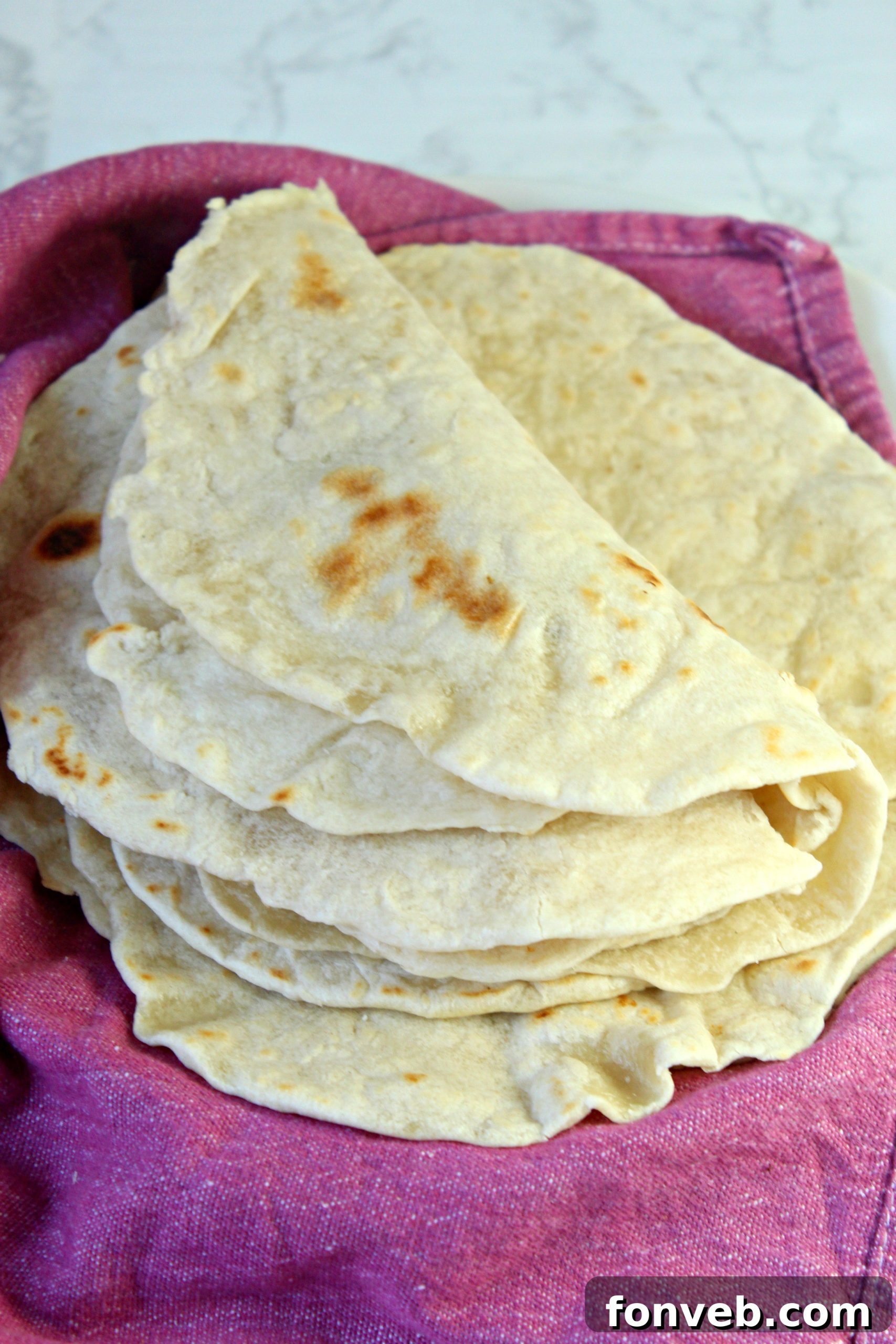
The 15-minute resting period after dividing and shaping the dough balls is absolutely crucial. This allows the gluten in the flour to relax, making the dough much easier to roll out thinly without springing back. If you try to roll them too soon, you’ll find yourself fighting against a very elastic dough, resulting in thick or uneven tortillas. Covering them with a damp towel prevents them from drying out.
5. Proper Griddle Temperature and Cooking
Heat your skillet or griddle to medium heat. It should be hot enough that a drop of water sizzles instantly, but not smoking. Cooking too slowly will dry out the tortilla, making it stiff. Cooking too quickly will burn the outside before the inside is fully cooked. The ideal cook time is about 1-2 minutes per side. Look for small bubbles forming on the surface and light brown spots on the underside before flipping. The best part about this recipe is that the tortillas are pliable and don’t crack! This is a testament to the perfect balance of ingredients and proper cooking technique.
Storing Your Homemade Flour Tortillas
One of the best things about homemade flour tortillas is enjoying them fresh, but knowing how to store them properly ensures you can savor their deliciousness for longer. Proper storage prevents them from drying out and keeps them wonderfully soft.
Short-Term Storage (Room Temperature)
Freshly cooked homemade flour tortillas stay wonderfully soft at room temperature for about 10-12 hours, especially if they are kept covered. Immediately after cooking, stack them on a plate and cover them tightly with a clean kitchen towel or aluminum foil. This traps the steam and keeps them pliable. They will remain warm and soft, ready to be enjoyed.
Refrigeration for Extended Freshness
If you’re not planning to eat all your tortillas within half a day, you’ll want to place them in an airtight container or a heavy-duty resealable plastic bag. Store them in the refrigerator, where they will remain fresh for up to 5-7 days. Be sure to remove as much air as possible from the bag or container to prevent them from drying out.
Freezing for Long-Term Storage
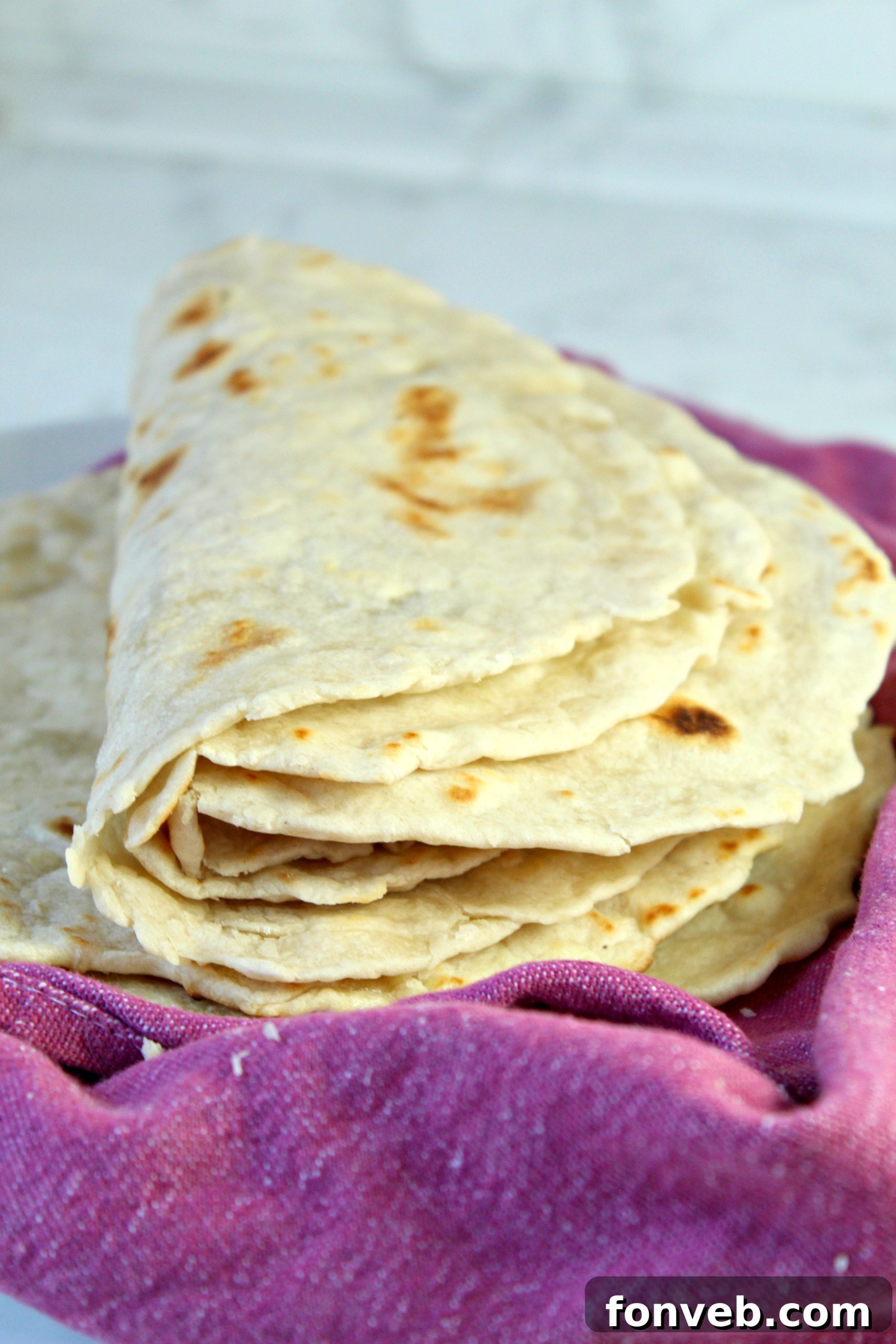
For longer storage, homemade flour tortillas freeze beautifully. Stack them with a piece of parchment paper or wax paper between each tortilla to prevent them from sticking together. Place the stack in a freezer-safe bag or airtight container. They will keep well in the freezer for up to 2-3 months. When ready to use, simply thaw them in the refrigerator overnight or on the counter for a few hours before reheating.
How to Reheat Your Homemade Flour Tortillas
Reheating homemade flour tortillas properly is crucial to restore their soft and pliable texture. Avoid simply microwaving them uncovered, as this can make them tough and rubbery. Here are the best methods to bring them back to life:
Oven Method (Best for Multiple Tortillas)
This is often the preferred method for reheating several tortillas at once, as it helps them retain their softness and warmth.
- Preheat your oven to 350°F (175°C).
- Stack your tortillas and wrap them tightly in aluminum foil.
- Place the foil packet directly on the oven rack.
- Heat for about 5-10 minutes, depending on the number of tortillas, or until they are heated through and pliable.
- Serve immediately.
Skillet Method (Great for a Few Tortillas)
For a quick reheat of one or two tortillas, a dry skillet works wonders.
- Heat a dry cast-iron skillet or non-stick pan over medium heat.
- Place one tortilla at a time directly on the hot skillet.
- Heat for about 15-30 seconds per side, or until warm and soft. You can lightly dampen your fingers and sprinkle a few drops of water on the tortilla before placing it on the pan to help steam it back to softness.
- Serve immediately.
Microwave Method (Quickest, but with Caution)
While the fastest, microwaving can sometimes lead to tougher tortillas if not done correctly.
- Stack up to 5 tortillas.
- Wrap them in a damp paper towel or a clean, damp kitchen towel.
- Microwave on high for 15-30 seconds, or until heated through.
- Check for softness; if needed, microwave for a few more seconds.
- Serve immediately.
Frequently Asked Questions About Homemade Flour Tortillas
Can I use whole wheat flour for this recipe?
Yes, you can substitute some or all of the all-purpose flour with whole wheat flour. Keep in mind that whole wheat flour absorbs more liquid and results in a denser tortilla. You might need to add a little extra water to achieve the right dough consistency, and the tortillas might not be as soft and pliable as those made with all white flour. A common approach is to use a 50/50 blend of whole wheat and all-purpose flour for a good balance of flavor, nutrition, and texture.
Why are my tortillas tough?
There are a few common reasons for tough tortillas:
- Not enough fat: Fat is crucial for tenderness and pliability.
- Too much flour: A dry dough will result in dry, tough tortillas.
- Over-kneading: Developing too much gluten can make the dough overly elastic and tough.
- Not enough resting time: If the gluten isn’t relaxed, the tortillas will be hard to roll thinly and will spring back, resulting in thicker, tougher discs.
- Overcooking: Cooking tortillas for too long on the griddle will dry them out and make them stiff.
- Not covering after cooking: Immediately covering cooked tortillas helps trap steam, keeping them soft.
Why aren’t my tortillas puffing up?
Puffing indicates that the tortilla is cooking quickly and evenly, creating steam pockets. If yours aren’t puffing, consider these factors:
- Griddle temperature: The griddle might not be hot enough. It needs to be hot for the moisture inside to turn to steam quickly.
- Thickness: If the tortillas are rolled too thick, they won’t puff as readily.
- Baking powder activity: Ensure your baking powder is fresh and active.
- Sealing: Sometimes tiny holes or uneven rolling can prevent a complete puff. Don’t worry if they don’t all puff; they’ll still taste delicious!
Can I make the dough ahead of time?
Absolutely! You can prepare the dough, form it into balls, and then store them in an airtight container in the refrigerator for up to 2-3 days. When you’re ready to cook, let the dough balls come to room temperature for about 30 minutes before rolling and cooking. This is a great way to prep for a busy weeknight meal!
Conclusion: Your Journey to Homemade Tortilla Bliss
Making homemade flour tortillas is a deeply rewarding culinary adventure. With just five basic ingredients and a little practice, you can transform simple flour and water into warm, soft, and impossibly pliable wraps that will elevate any meal. Forget those mass-produced, bland alternatives and embrace the authentic flavor and superior texture that only fresh, homemade tortillas can offer. Whether it’s for a festive Taco Tuesday, a hearty breakfast burrito, or a simple snack, these tortillas are sure to impress. So roll up your sleeves, gather your ingredients, and embark on your journey to homemade tortilla bliss!
Don’t forget to share your delicious creations! We’d love to see them.
Connect With Us!
If you enjoyed this recipe, please consider sharing it with your friends and family!
Share on Facebook and Pin It on Pinterest!
FOLLOW ME ON PINTEREST!
Did you make this recipe?
We love to see your culinary creations! Make sure to follow us on Pinterest for more amazing recipes and inspiration!
Print Recipe
Pin Recipe
Share on Facebook